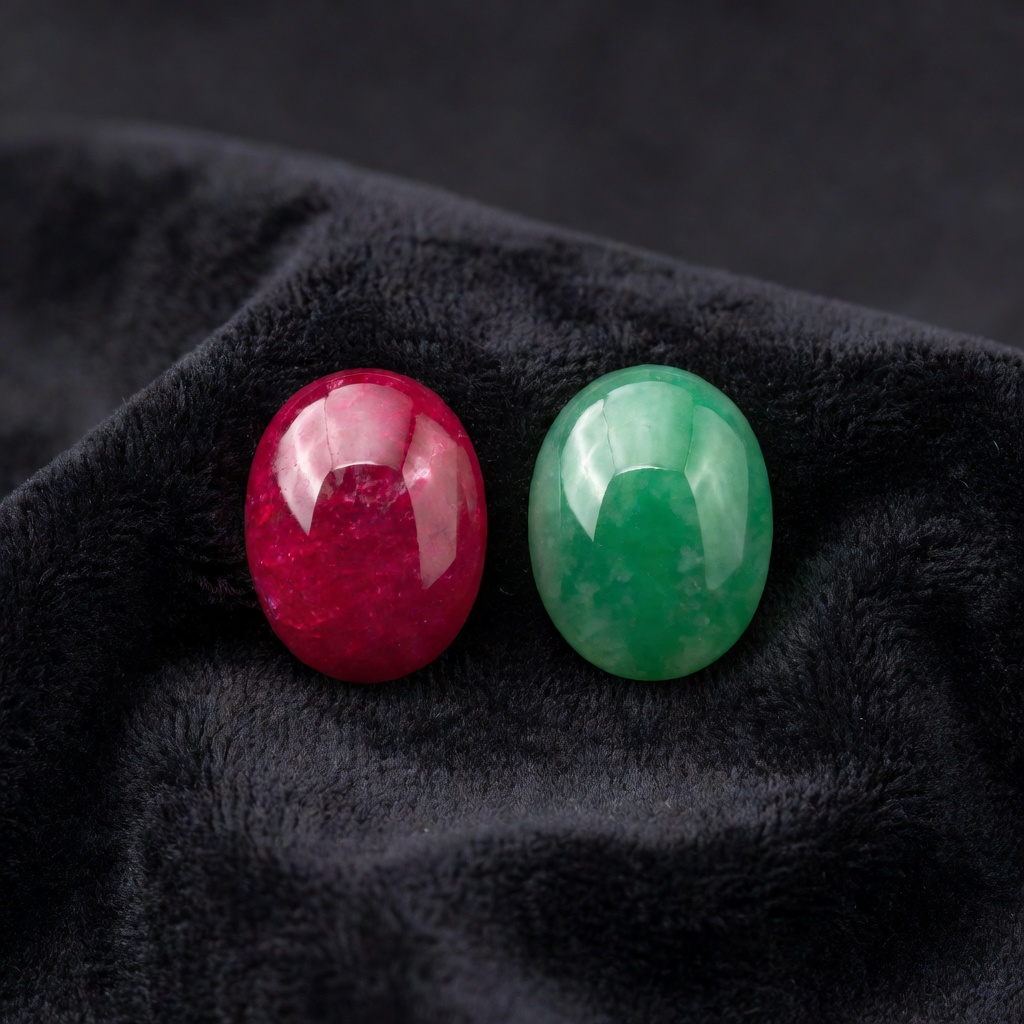
Introduction: Two Giants of the Colored Stone World
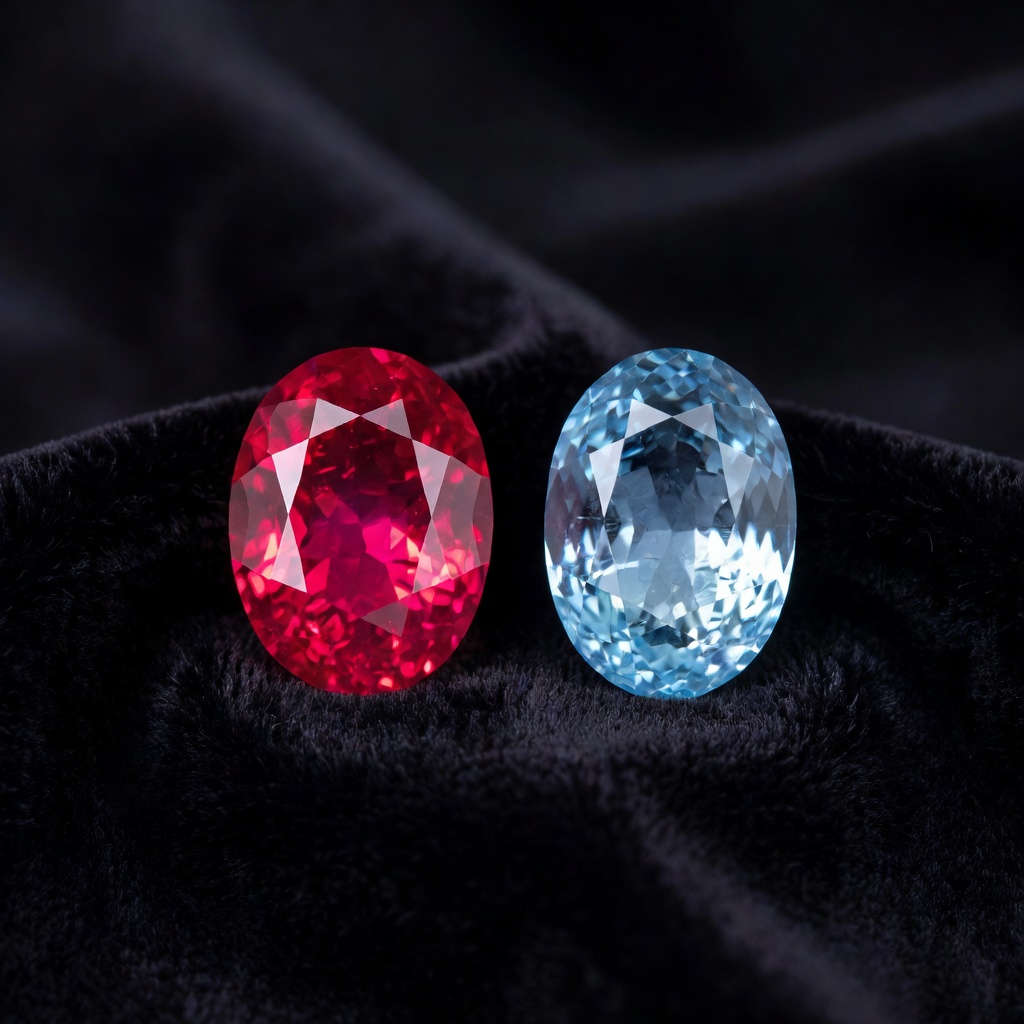
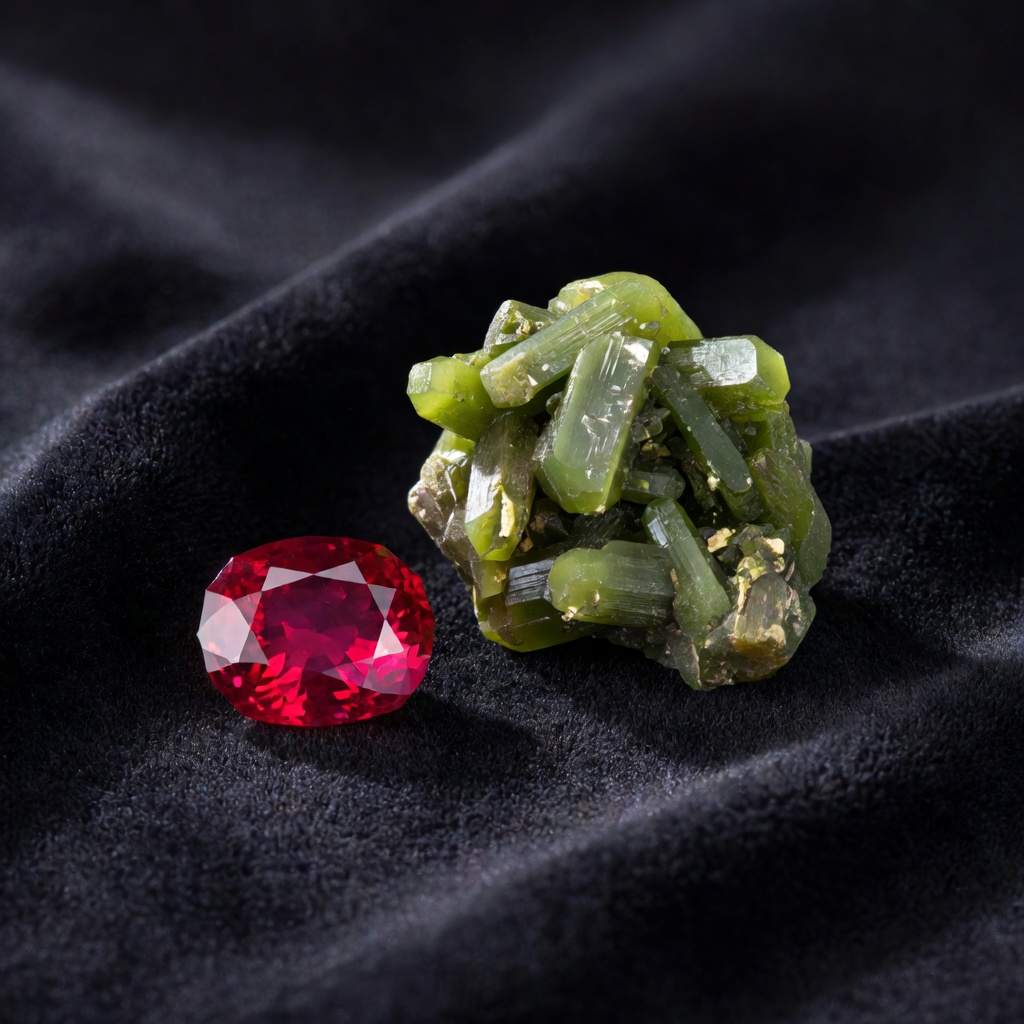
When collectors and investors seek the ultimate expression of natural beauty crystallized over millions of years, the debate of Ruby vs Jade (Jadeite) consistently dominates high-end gemstone conversations. These two extraordinary minerals represent the pinnacle of colored stone achievement, both hailing primarily from the geological treasures of Myanmar (formerly Burma) yet offering distinctly different aesthetic and material properties. While rubies captivate with their fiery red brilliance and association with passion, jadeite commands reverence through its subtle, translucent glow and cultural significance that spans millennia.
A critical distinction must be established immediately regarding terminology, as confusion between jadeite and nephrite creates significant misunderstandings in the marketplace. When discussing Ruby vs Jade (Jadeite) specifically, we refer exclusively to jadeite (the pyroxene mineral), not nephrite (the amphibole mineral), as only jadeite achieves values comparable to fine rubies. Nephrite, while beautiful, remains more abundant and affordable, whereas imperial jadeite rivals and sometimes exceeds the per-carat prices of the finest Burmese rubies. This comparison focuses on the elite tier of colored gemstones where only these two mineral species consistently achieve auction results exceeding millions of dollars per carat.
High-net-worth individuals and serious jewelry investors frequently face the dilemma of choosing between these stones for portfolio diversification and heirloom creation. The decision involves balancing ruby's immediate visual impact and international liquidity against jadeite's exceptional durability and concentrated market strength in Asia. Both stones have demonstrated remarkable appreciation over decades, with certain specimens serving as stores of wealth that transcend currency fluctuations and economic downturns.
Mineralogical Foundations: Corundum Meets Pyroxene
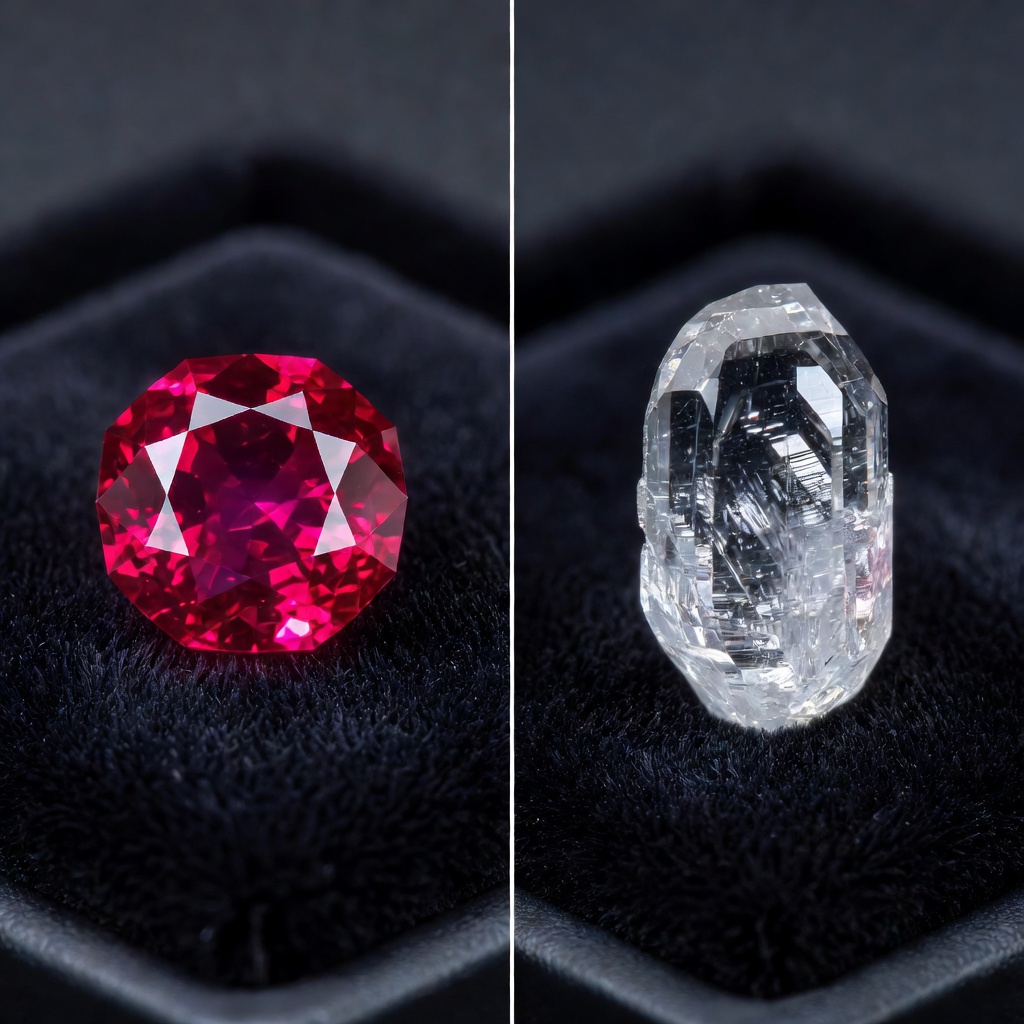
Understanding the fundamental chemical and crystallographic differences between these gemstones illuminates why they behave so differently under various conditions. Corundum vs pyroxene gemstones represents a fascinating study in how mineral structure dictates appearance, durability, and value. Ruby belongs to the corundum family, chemically composed of aluminum oxide (Al₂O₃) crystallizing in the trigonal crystal system. This structure creates the hexagonal barrel-shaped crystals that allow ruby to take brilliant faceted cuts with exceptional light return, while trace amounts of chromium create the distinctive red coloration that defines the finest specimens.
Jadeite presents a completely different mineralogical identity as a sodium aluminum silicate (NaAlSi₂O₆) belonging to the monoclinic pyroxene group. Unlike ruby's distinct crystal habit, jadeite forms through metamorphic processes that create an interlocking granular texture composed of countless microscopic crystals tightly bound together. This massive, cryptocrystalline structure prevents jadeite from displaying the crystalline clarity of ruby but enables the waxy to vitreous luster and remarkable toughness that characterize fine jadeite carvings and cabochons.
The geological formation conditions differ dramatically between these stones, affecting their availability and internal characteristics. Rubies typically form in metamorphosed limestone rocks or marbles under high temperature and pressure conditions, often resulting in crystals with distinct growth patterns and inclusions known as "silk." Jadeite forms exclusively in high-pressure, low-temperature subduction zones where oceanic crust meets continental plates, creating the intense geological forces necessary to produce this rare pyroxene variety. These formation differences explain why both stones occur in Myanmar's complex geological terrain yet require entirely different mining and recovery techniques.
Durability Wars: Hardness Versus Toughness
The comparison of jadeite hardness vs ruby durability reveals one of the most misunderstood concepts in gemology: the crucial distinction between hardness and toughness. On the Mohs scale of mineral hardness, ruby scores an impressive 9, second only to diamond's perfect 10 rating. This exceptional hardness means ruby resists scratching from everyday dust and debris, maintaining its polish and surface integrity even after decades of wear. Jadeite, by contrast, rates only 6.5 to 7 on the Mohs scale, making it susceptible to surface abrasion from harder materials including quartz dust, steel, and of course, ruby itself.
However, hardness tells only half the story when evaluating a gemstone's suitability for jewelry and carving applications. Toughness refers to a material's resistance to breaking, chipping, or fracturing under impact, and here jadeite demonstrates superiority that has astonished gemologists for centuries. Jadeite's interlocking granular structure, composed of countless tiny crystals woven together like a microscopic fabric, distributes force throughout the stone rather than allowing cracks to propagate. This property makes jadeite approximately 30% tougher than steel and significantly more resistant to breakage than ruby, despite its lower hardness rating.
Ruby's crystalline structure contains distinct cleavage planes—directions along which the atomic bonds are weaker—creating vulnerability to sharp impacts. A ruby ring knocked against a hard surface might split cleanly along these cleavage directions, whereas jadeite subjected to the same force would likely remain intact, perhaps showing only surface damage. This durability difference influences jewelry design significantly; ruby requires protective settings that minimize exposure to impact, while jadeite can be fashioned into thin, delicate bangles and intricate openwork carvings that would shatter if attempted in corundum.
Color Grading: Pigeon Blood Red vs Imperial Green
The ultimate expression of quality in both gemstones involves color standards so specific that they have become legendary in the trade, with imperial jade vs pigeon blood ruby representing the apex of colored stone achievement. For rubies, the term "Pigeon Blood" originated in Burma to describe the most vivid, saturated red stones exhibiting a particular fluorescence that makes them appear to glow from within. Modern laboratory standards from GRS (GemResearch Swisslab) and Gübelin Gem Lab require not only specific hue and saturation parameters but also secondary fluorescence under ultraviolet light that enhances the stone's vitality in daylight conditions.
Imperial jadeite operates under equally stringent grading criteria, though the parameters differ fundamentally due to the material's unique optical properties. True imperial green jadeite must display a vivid, evenly distributed emerald-green hue resulting from chromium content, but equally important is the stone's translucency and texture. The finest imperial jadeite exhibits "fine texture," meaning the crystal aggregate is so minute and tightly packed that light penetrates deeply and evenly, creating a glowing effect described as "water" in the Chinese trade. Unlike ruby, where clarity and transparency reign supreme, jadeite's value increases with translucency even when the material is not fully transparent.
Beyond these pinnacle grades, both minerals offer secondary color varieties that occupy important market positions. Pink rubies (or pink sapphires, depending on saturation levels) provide entry points for collectors seeking corundum's durability at lower price points, while lavender jadeite—colored by manganese—has gained significant appreciation among younger collectors who value its distinctive purple hue. However, neither secondary variety approaches the investment-grade status or price premiums commanded by the top-tier red rubies and green jadeite, maintaining the stratified value structure that makes these "Big Two" colored stones so intriguing to market analysts.
The Myanmar Connection: Mining Origins
The geographic concentration of both premier gemstones in Myanmar creates unique market dynamics and supply considerations for collectors evaluating Burmese ruby vs Burmese jadeite. The Mogok Stone Tract, located in north-central Myanmar's Mandalay Region, has produced the world's finest rubies for over 800 years, with mining operations ranging from traditional hand-dug pits to modern mechanized excavations. These deposits yield rubies with the distinctive "pigeon blood" coloration resulting from a combination of high chromium content and low iron levels, a chemical signature unique to this specific geological environment that creates the prized fluorescent red appearance.
In contrast, the world's finest jadeite emerges from the Hpakant region in Kachin State, approximately 350 kilometers north of Mogok, where mining occurs in a completely different geological setting. The jadeite deposits of Myanmar represent the only commercially significant source of gem-quality jadeite on Earth, making these mines irreplaceable in the global gemstone supply chain. Unlike ruby mining, which targets discrete crystals within marble matrices, jadeite mining involves massive boulders encased in secondary deposits, requiring heavy equipment to extract and sophisticated cutting techniques to reveal the quality of the material hidden within weathered rinds.
While Myanmar dominance persists for both stones, emerging sources have altered market dynamics in recent decades. Mozambique has become a significant producer of fine rubies since the 2009 Montepuez discoveries, offering excellent color though generally lacking the fluorescence of Burmese material, while Guatemala produces limited quantities of high-quality jadeite that rivals Myanmar material in color but rarely achieves the same translucency. These alternative sources provide important supply diversity but have not displaced Myanmar's premier position for either gemstone, with Burmese origin still commanding significant premiums at auction for both ruby and jadeite specimens.
Cultural Significance: East Meets West
The divergent cultural histories of these gemstones create fascinating market bifurcations that influence everything from cutting styles to auction locations and investment strategies. Ruby has traditionally dominated Western consciousness, appearing in the crown jewels of European monarchies, featuring as the July birthstone in modern gemology, and symbolizing passion, courage, and romantic love in Western literature. This association with Western royalty and aristocracy established rubies as the premier colored gemstone in Geneva and New York auction houses, with collectors valuing large, faceted stones that display maximum brilliance under electric lighting conditions typical of Western formal events.
Jadeite occupies a position of spiritual and political significance in Chinese culture that exceeds even the reverence afforded to diamonds in Western societies. For over 5,000 years, jadeite (known as "fei cui") has represented the "Stone of Heaven," embodying virtues of compassion, wisdom, courage, and justice in Confucian philosophy. During the Qing Dynasty, imperial jadeite became restricted to the Emperor and highest-ranking officials, with specific belt hooks, buttons, and plaques indicating precise court rankings. This deep cultural embedding means that ruby vs jadeite cultural significance debates often resolve differently depending on whether the collector hails from Beijing or Boston.
These cultural preferences drive distinct market behaviors observable at major auction houses. Christie's and Sotheby's Hong Kong sales consistently achieve record prices for jadeite, particularly during April and October auction seasons when mainland Chinese collectors are most active, while Geneva sales focus heavily on Burmese rubies and Kashmir sapphires appealing to European and Middle Eastern buyers. Savvy investors recognize that liquidity for jadeite remains highest within Asian markets, while rubies offer more geographically diversified resale opportunities, though both stones have demonstrated increasing crossover appeal as global wealth becomes more internationally distributed.
Investment Analysis: Record-Breaking Auction Results
Serious gemstone investors scrutinize ruby vs jadeite value comparison data to understand liquidity, appreciation potential, and portfolio allocation strategies for tangible assets. The record books reveal extraordinary valuations for both stones, with the "Sunrise Ruby"—a 25.59-carat Burmese pigeon blood ruby—selling for $30.3 million at Sotheby's Geneva in 2015, setting a per-carat record of $1.19 million for the species. This cushion-shaped stone mounted by Cartier demonstrated the explosive potential of top-tier rubies when size, color, and provenance align perfectly.
Jadeite countered with the legendary Hutton-Mdivani Necklace, which achieved $27.4 million at Sotheby's Hong Kong in 2014. This Art Deco masterpiece by Cartier features twenty-seven highly translucent imperial green jadeite beads ranging from 15.40 to 19.20 millimeters, demonstrating that while individual jadeite carat prices may vary, exceptional specimens command equivalent absolute values to top rubies. Current market trends suggest that imperial jadeite often exceeds top rubies in per-carat valuations for fine material, though rubies maintain advantages in stones over 10 carats where large clean crystals remain rarer than sizable jadeite boulders.
Liquidity considerations favor rubies for Western investors seeking quick divestment options, as the international market for fine rubies spans New York, Geneva, London, and Hong Kong with established dealer networks. Jadeite investment requires deeper market knowledge and connections within Asian trading centers, though returns can be substantial for those navigating this specialized field. Size limitations present unique considerations: while large rubies over 5 carats of fine quality are exponentially rarer than smaller stones, large jadeite boulders of uniform color and translucency face different scarcity constraints, with material suitable for carving or bead creation becoming increasingly scarce as Myanmar mining faces regulatory and environmental restrictions.
Treatments and Authentication Standards
Understanding enhancement practices proves essential when evaluating treated ruby vs Type A jadeite, as treatment levels dramatically affect value and care requirements. In the ruby trade, heat treatment represents an accepted industry standard that mimics natural geological processes by dissolving rutile silk inclusions to improve clarity and enhance color. The Gemological Institute of America (GIA) and major laboratories distinguish between heated and unheated rubies, with unheated Burmese pigeon blood stones commanding premiums of 300% to 500% over their heated equivalents. However, more invasive treatments such as glass filling (fracture filling with lead glass) or diffusion treatment significantly degrade value and require specific disclosure.
Jadeite operates under a completely different classification system established by the Hong Kong Jade & Stone Laboratory and adopted internationally, categorizing material into Types A, B, and C. Type A jadeite refers to completely natural, untreated material that may be waxed but receives no chemical or dye treatments—this represents the only category suitable for serious investment. Type B jadeite undergoes bleaching with acid to remove brown discoloration followed by polymer impregnation to restore translucency, while Type C involves dyeing to enhance or create green coloration. These treatments fundamentally alter the stone's stability and value, with Type B and C material worth only a fraction of natural Type A prices.
Authentication requires certificates from respected laboratories regardless of which stone you acquire. For rubies, reports from Gübelin, SSEF (Swiss Gemmological Institute), GIA, or GRS provide assurance regarding origin and treatment status, with specific comments on "pigeon blood" color designation from certain labs adding value premiums. Jadeite authentication benefits from specialized Asian laboratories including the Hong Kong Jade & Stone Laboratory, NGTC (National Gemstone Testing Center) in Beijing, or GIA reports specifically noting "Natural Jadeite Jade – Type A" or "Natural Color." Always insist on pre-purchase certification for investment-grade specimens of either stone, as the sophisticated treatment technologies now employed can deceive even experienced dealers without laboratory verification.
Jewelry Applications: Facets vs Cabochons
The physical properties of ruby and jadeite dictate distinctly different approaches to jewelry design, with ruby jewelry vs jadeite jewelry representing two philosophical approaches to adornment. Ruby's high refractive index (1.76-1.77) and hardness make it ideal for faceted cuts that maximize brilliance and fire. Master cutters favor oval, cushion, and emerald cuts for rubies over 3 carats, balancing weight retention with optical performance, while round brilliants appear frequently in smaller accent stones. These faceted rubies excel in engagement rings, earrings, and statement necklaces where light interaction creates the "flash" and "scintillation" prized in Western jewelry traditions.
Jadeite jewelry follows ancient aesthetic principles emphasizing form, texture, and symbolic meaning over reflective brilliance. The material's aggregate structure prevents faceting (which would simply polish the individual crystal faces rather than creating reflective planes), so jadeite is traditionally fashioned into cabochons for rings and pendants, smooth beads for necklaces, or hololith bangles carved from single pieces of rough. Intricate carvings representing auspicious symbols—bixi (mythical tortoises), bi discs symbolizing heaven, or Buddha figures—utilize jadeite's toughness to achieve details impossible in more brittle gemstones.
Setting considerations reflect these material differences. Rubies typically appear in prong settings that allow maximum light entry while protecting the girdle edges, though protective bezels are recommended for daily wear rings to guard against cleavage plane impacts. Jadeite demands protective bezel or enclosed settings that shield the softer material from scratches and impacts, with traditional Chinese mounting styles often using elaborate goldwork that incorporates symbolic motifs around the central jadeite element. When designing pieces combining both stones, jewelers must separate them physically within the design, as ruby's superior hardness would eventually scratch adjacent jadeite, while the contrast of "red and green" (considered complementary and auspicious in Chinese culture) creates striking visual impact in high jewelry compositions.
Final Verdict: Choosing Your Perfect Stone
When choosing ruby or jadeite for personal collection or investment, lifestyle assessment provides the logical starting point for decision-making. Active individuals who engage in sports, manual work, or travel frequently may find jadeite's superior toughness advantageous despite its softer surface, as it withstands accidental impacts better than ruby. Those attending frequent formal events, galas, and evening functions may prefer ruby's brilliance under artificial lighting and its recognized status in Western society. Consider your daily activities honestly: a ruby engagement ring requires more careful handling than a jadeite bangle, though both demand respect as precious natural treasures.
Budget optimization strategies differ significantly between these stones. Entry-level collectors can acquire attractive rubies in the 1-2 carat range with slight heat treatment or from Mozambique sources for accessible prices, while similarly priced jadeite might offer Type A material in smaller cabochons or beads with moderate translucency. At museum-quality levels, both stones require seven-figure investments, though jadeite offers more flexibility in form (bangles, pendants, carvings) compared to ruby's weight-focused valuation. Diversification provides another strategy: consider a portfolio containing both stones to hedge against market fluctuations in either sector.
Ultimately, the decision often resolves through spiritual and personal resonance rather than purely analytical comparison. Jadeite appeals to those seeking harmony, protection, and connection to ancient traditions, with many owners reporting a tactile satisfaction from the stone's smooth, waxy surface that improves with wear through a process similar to "breaking in" fine leather. Ruby attracts individuals drawn to passion, power, and decisive action, with its vivid color stimulating energy and confidence. Both stones have adorned emperors and adorned lovers, served as spiritual talismans and investment vehicles. Whether you choose the fiery crystalline perfection of ruby or the subtle, tough translucency of jadeite, you acquire not merely a gemstone but a piece of geological history that will outlast generations.
Comparative Analysis: Ruby vs Jadeite at a Glance
| Property | Ruby (Corundum) | Jadeite (Pyroxene) | Investment Consideration |
|---|---|---|---|
| Mineral Composition | Aluminum Oxide (Al₂O₃) | Sodium Aluminum Silicate (NaAlSi₂O₆) | Both rare, but jadeite deposits are geographically restricted to Myanmar |
| Mohs Hardness | 9 (Excellent scratch resistance) | 6.5-7 (Moderate scratch resistance) | Ruby better for daily wear rings; jadeite requires protective settings |
| Toughness/Resistance to Breaking | Fair to Good (cleavage planes present) | Exceptional (interlocking granular structure) | Jadeite superior for carvings and thin bangles |
| Pinnacle Color Grade | Pigeon Blood (vivid red with fluorescence) | Imperial Green (vivid emerald green, fine texture) | Both command $1M+ per carat for finest specimens |
| Primary Source | Myanmar (Mogok), Mozambique | Myanmar (Hpakant) only | Jadeite source monopoly creates supply vulnerability |
| Standard Treatment | Heat treatment (widely accepted) | Type A (natural) required for investment grade | Unheated rubies command higher premiums than Type A vs treated jadeite |
| Cutting Style | Faceted (brilliant cuts maximize optics) | Cabochons, beads, carvings (hololith) | Ruby value increases with cutting quality; jadeite value depends on material quality |
| Record Auction Price | $30.3M (Sunrise Ruby, 25.59 cts) | $27.4M (Hutton-Mdivani Necklace) | Both liquid in ultra-high-end markets |
| Primary Market | Global (Geneva, New York, Hong Kong) | Asia-centric (Hong Kong, Beijing, Taipei) | Ruby offers better liquidity for Western investors |
| Care Requirements | Avoid sharp impacts (cleavage risk) | Avoid acids and prolonged sun exposure (Type B/C risk) | Type A jadeite requires less specialized care than treated material |
Frequently Asked Questions
Which is more expensive, ruby or jadeite?
Both can command astronomical prices, but imperial jadeite often exceeds top rubies per carat in the current market. However, record-breaking rubies like the Sunrise Ruby have sold for over $30 million, while the Hutton-Mdivani jadeite necklace fetched $27.4 million. Fine-quality specimens of either can exceed $1 million per carat.
Is jadeite harder than ruby?
No, ruby is harder. Ruby rates 9 on the Mohs hardness scale, while jadeite rates 6.5-7. However, jadeite possesses exceptional toughness due to its interlocking granular structure, making it more resistant to breaking or chipping than ruby, which has distinct cleavage planes.
Can you wear ruby and jadeite together in jewelry?
Yes, combining ruby and jadeite creates striking 'red and green' contrast popular in high jewelry. However, store them separately as ruby's hardness can scratch jadeite. When set together, ensure protective settings prevent the harder ruby from contacting the jadeite directly.
What is the difference between jadeite and nephrite when compared to ruby?
Jadeite and nephrite are both called 'jade' but are different minerals. Jadeite (pyroxene) is rarer, harder (6.5-7), and more valuable, often compared to ruby in value. Nephrite (amphibole) is softer (6-6.5), more common, and generally less expensive. Only jadeite reaches prices comparable to fine rubies.
Which is better for an engagement ring, ruby or jadeite?
Ruby is generally better for daily-wear engagement rings due to its superior hardness (9) and brilliance when faceted. Jadeite, while tougher against impacts, is softer and better suited for protected settings or occasional wear, though jadeite bangles are traditionally worn daily in Asian cultures.
Do rubies and jadeite come from the same place?
Yes, historically both premium rubies and jadeite come primarily from Myanmar (Burma). Rubies are mined in the Mogok Stone Tract, while jadeite comes from the Hpakant region in Kachin State. This geographic proximity explains why both stones dominate the high-end colored gemstone market in Asia.
How can I tell if my jadeite or ruby is real?
For rubies, look for natural inclusions under magnification and consider a refractive index test (1.76-1.77). For jadeite, check for specific gravity (3.30-3.36) and fibrous texture under magnification. Always purchase stones with certificates from reputable labs like GIA, SSEF, or Gübelin, as treatments are common in both.
Is imperial jade more valuable than pigeon blood ruby?
Currently, top-quality imperial jadeite often commands higher per-carat prices than most rubies except the very finest unheated pigeon blood specimens. However, the rarest unheated Burmese pigeon blood rubies over 5 carats can still exceed imperial jadeite values. Both represent the pinnacle of their respective mineral categories.