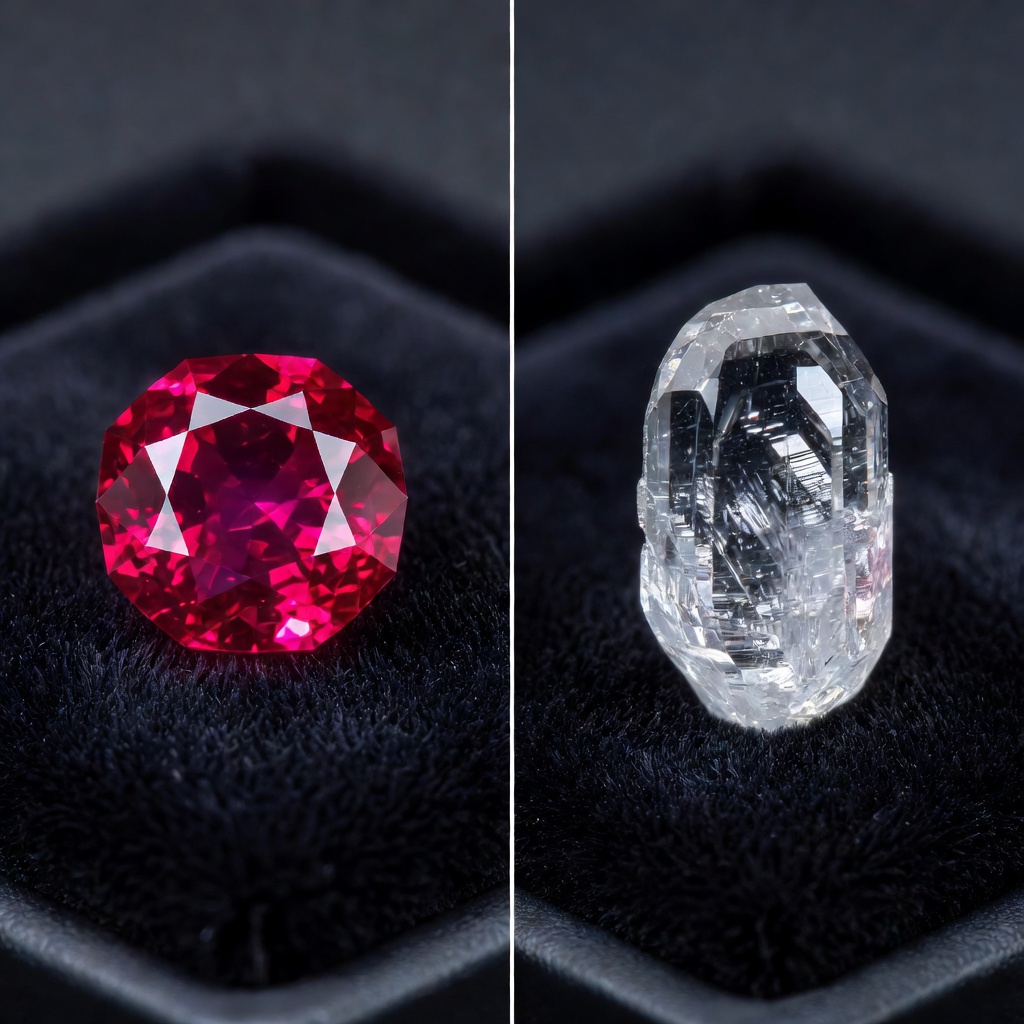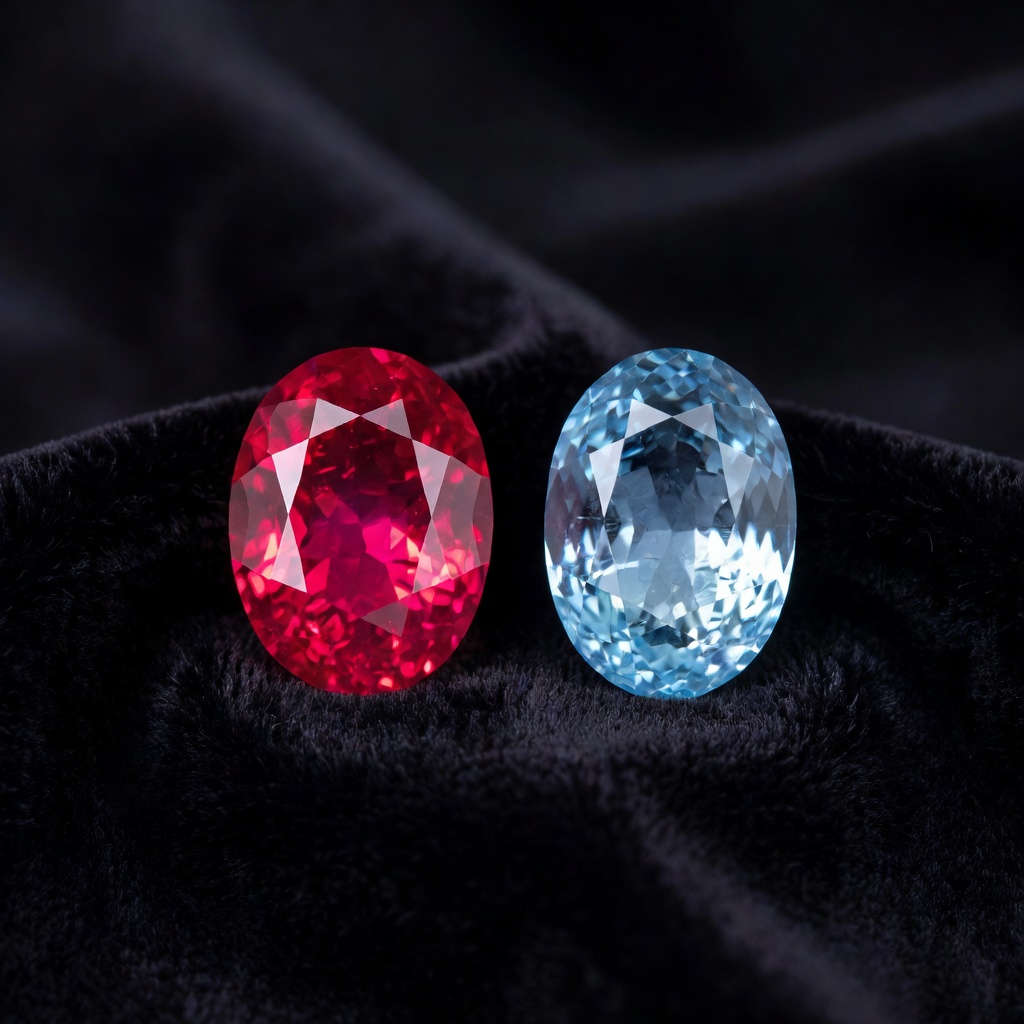
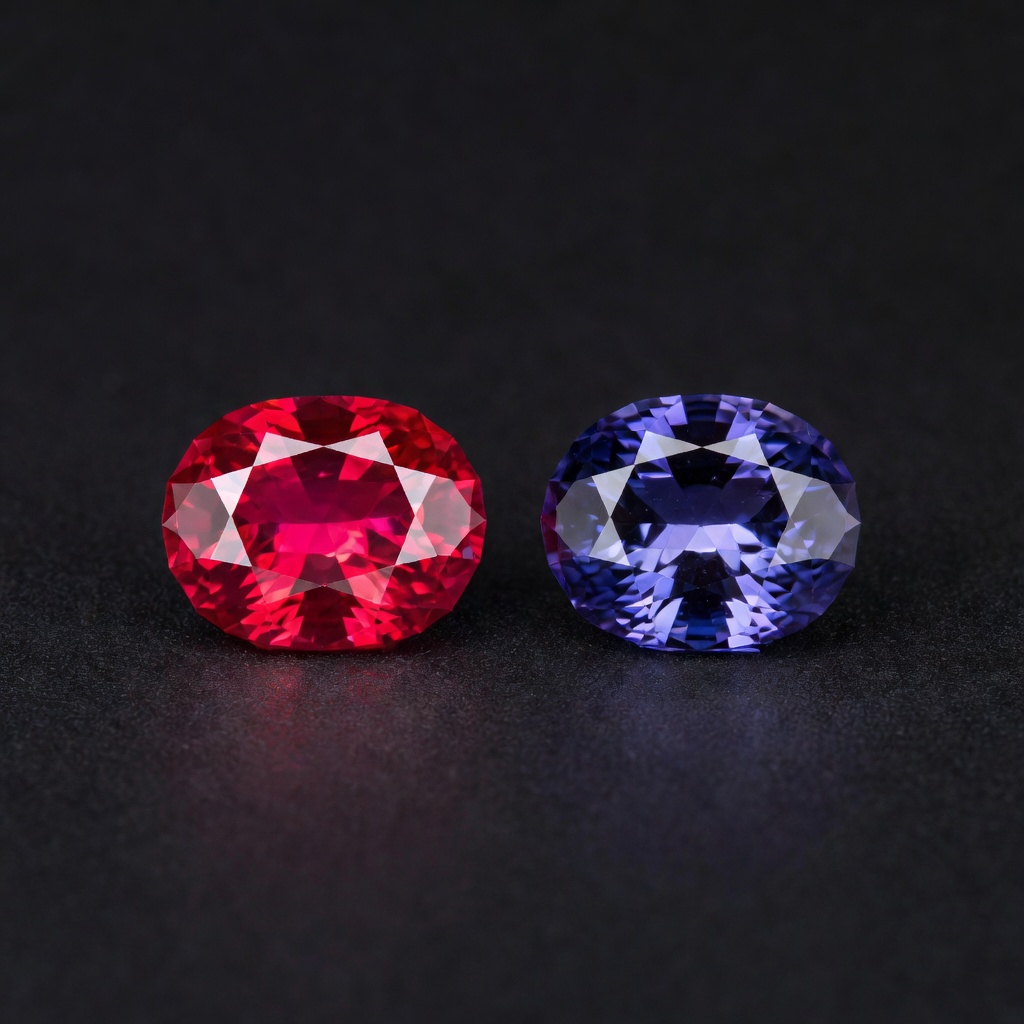
Introduction: Understanding Ruby vs Iolite
When exploring the fascinating world of colored gemstones, the comparison between Ruby vs Iolite presents a compelling study in contrasts between precious and semi-precious categories. Ruby, a variety of corundum composed of crystalline aluminum oxide, stands as one of the most coveted gemstones in human history, renowned for its intense red hues and exceptional durability. Iolite, scientifically known as cordierite, offers a captivating violet-blue alternative that has earned nicknames like "water sapphire" and "Vikings' Compass" due to its distinctive optical properties and historical navigation uses.
These two gemstones are frequently compared despite belonging to entirely different mineral families, primarily because both offer rich, saturated colors that appeal to collectors seeking alternatives to blue sapphires or purple amethysts. While ruby commands attention with its fiery passion and status among the "Big Four" precious stones, iolite attracts those drawn to mysterious, cool-toned beauty at accessible price points. Understanding the distinctions between these gems requires examining their geological formations, physical durability, optical characteristics, and practical applications in fine jewelry.
Whether you are selecting a center stone for an engagement ring, investing in collectible gems, or simply expanding your knowledge of mineralogy, this comprehensive comparison will guide you through essential factors including hardness ratings, pleochroism effects, market valuations, and maintenance requirements. By exploring both the scientific properties and aesthetic qualities of red corundum versus cordierite, you will gain the expertise needed to make informed decisions about which gemstone best suits your lifestyle, budget, and personal style preferences.
Geological Origins and Composition
The Formation of Ruby in Nature
Ruby formation occurs under specific high-pressure, high-temperature conditions typically found in metamorphic marble deposits and alkali basalt environments. These precious crystals develop when aluminum oxide molecules arrange themselves into hexagonal corundum structures, with trace amounts of chromium replacing aluminum atoms to create the signature red coloration. The most legendary deposits emerge from the Mogok Stone Tract in Myanmar, where marble-hosted rubies have formed over millions of years through contact metamorphism between limestone and granite intrusions.
Primary mining locations for high-quality rubies extend beyond Myanmar to include the Montepuez region of Mozambique, which has emerged as a major producer of fine untreated stones, and the Chanthaburi-Trat districts of Thailand, historically significant for basalt-hosted deposits. Other notable sources include Madagascar, Afghanistan, and Vietnam, each producing rubies with slightly different chemical signatures and color profiles. The geological scarcity of chromium-rich environments combined with the specific conditions required for corundum crystallization contributes to ruby's status as one of Earth's rarest gemstones.
Iolite's Distinct Mineral Identity
Iolite crystallizes as magnesium iron aluminum cyclosilicate within metamorphic rocks and granite pegmatites, forming under lower pressure conditions than corundum but requiring specific aluminum-rich host environments. Unlike ruby's single-element color cause, iolite's violet-blue appearance results from the interplay between iron and magnesium content within its orthorhombic crystal system, occasionally displaying gray or yellow undertones depending on trace element variations. This fundamental difference in chemical structure between Red corundum vs cordierite explains their vastly different physical properties and optical behaviors.
Significant iolite deposits occur throughout the gem belt of southern India, particularly in the states of Tamil Nadu and Orissa, where alluvial deposits yield water-worn pebbles with exceptional clarity. Madagascar produces notable transparent crystals suitable for faceting, while Sri Lanka yields iolite alongside its famous sapphires in gem gravels. Other sources include Brazil, Tanzania, and the United States, specifically the Laramie Range in Wyoming. While iolite occurrences are geologically more common than ruby deposits, gem-quality material with high clarity and intense color remains relatively limited in the market.
Visual Characteristics and Optical Properties
Ruby's Spectrum of Red
Ruby gemstone properties include a remarkable range of red hues spanning from delicate pinkish-red tones to the highly prized "pigeon blood" red characterized by vivid saturation and slight blue undertones that enhance depth. Under ultraviolet light, natural rubies typically display strong red fluorescence due to chromium content, a diagnostic feature that helps distinguish natural stones from synthetic counterparts. The most valuable specimens exhibit a pure, vibrant red with medium to medium-dark tone, avoiding excessive darkness that obscures brilliance or excessive lightness that approaches pink sapphire territory.
Clarity characteristics in rubies often include rutile needle inclusions, commonly called "silk," which can create star effects in cabochon cuts or indicate natural origin in faceted stones. Other typical inclusions include crystal inclusions, fingerprint patterns, and color zoning. While eye-clean rubies command premium prices, slight inclusions are generally accepted in fine rubies provided they do not significantly impact transparency or durability. The gemstone's high refractive index of 1.76-1.77 contributes to excellent brilliance when properly cut.
Iolite's Pleochroic Mystique
The defining visual characteristic of iolite involves its strong trichroism or pleochroism, displaying distinctly different colors when viewed from various crystallographic directions. When examining Iolite pleochroism, gemologists observe violet-blue along one axis, pale gray or colorless along another, and pale yellow along the third axis. This optical phenomenon requires skilled cutting orientation to maximize the desirable violet-blue color while minimizing the less attractive yellow or gray directions, making cut quality particularly crucial for iolite's final appearance.
Iolite stone meaning is visually expressed through its deep violet-blue to indigo coloring, often compared to tanzanite or sapphire but typically exhibiting more subdued saturation. Clarity grades vary significantly, with high-quality iolite appearing eye-clean while lower grades may contain visible inclusions such as gas bubbles, hematite plates, or elongated crystals. Unlike ruby, iolite does not fluoresce under UV light, and its refractive index ranges from 1.54-1.56, resulting in less brilliance but a distinctive soft, velvety luster that appeals to those seeking understated elegance.
Durability and Hardness Analysis
Mohs Scale Comparison and Daily Wear Implications
When evaluating Ruby hardness vs iolite, the disparity becomes immediately apparent: ruby ranks 9 on the Mohs hardness scale, second only to diamond, while iolite measures 7 to 7.5. This significant difference translates to practical durability concerns for jewelry applications. Ruby's exceptional hardness renders it highly resistant to scratching from everyday encounters with household dust (which contains silica at 7 hardness), metal objects, or accidental impacts against hard surfaces. This durability makes ruby an excellent candidate for engagement rings, bracelets, and other jewelry subjected to constant wear.
Iolite, while harder than many semi-precious alternatives like opal or pearl, requires more cautious handling due to its position near the threshold where environmental particles can cause surface damage. Daily wear of iolite rings exposes the stone to potential abrasion from common materials, potentially dulling facet junctions over time. Additionally, iolite possesses distinct cleavage planes in one direction, creating a vulnerability to chipping or splitting if struck with sufficient force, whereas ruby lacks cleavage and fractures in a conchoidal pattern that distributes impact energy more effectively.
Thermal Stability and Treatment Considerations
Ruby demonstrates remarkable thermal stability, withstanding the high temperatures used in standard jewelry repair work, steam cleaning, and even ultrasonic cleaning without structural damage. Most commercial rubies undergo heat treatment to improve color and clarity, a process they endure without compromise to their integrity. This stability allows jewelers to resize rings, retip prongs, or perform maintenance without removing the stone, adding practical value to ruby jewelry ownership.
Conversely, iolite exhibits pronounced sensitivity to thermal shock, meaning sudden temperature changes can cause internal fracturing or cleavage separation. A woman wearing an iolite ring while washing hands with hot water after coming in from cold winter air risks damaging her stone through rapid temperature fluctuation. This vulnerability necessitates protective settings and lifestyle awareness, as iolite should never be subjected to steam cleaning or ultrasonic vibration, both of which can exacerbate existing internal stresses within the crystal structure.
Value, Pricing, and Investment Potential
Ruby's Premium Market Position
Ruby maintains its position among the "Big Four" precious gemstones alongside diamond, emerald, and sapphire, commanding prices that can exceed tens of thousands of dollars per carat for fine untreated specimens from Myanmar or Mozambique. The distinction between Precious vs semi-precious gemstones becomes starkly evident when comparing investment-grade rubies, which appreciate consistently due to dwindling supplies of high-quality rough, against more accessible alternatives. A five-carat, unheated "pigeon blood" ruby from a prestigious mine might sell at auction for hundreds of thousands of dollars, reflecting both rarity and enduring cultural demand.
Even commercial-quality rubies with heat treatment and moderate inclusions typically range from $1,000 to $5,000 per carat depending on size and origin, establishing ruby firmly in the luxury category. Collectors and investors prioritize documentation of origin and treatment status, with Burmese rubies commanding premiums over African or Thai stones due to historical prestige and typically finer color saturation. The gemstone's association with royalty, passion, and protection across numerous cultures sustains strong secondary market demand.
Iolite's Accessible Luxury Appeal
Iolite offers an attractive entry point for collectors seeking substantial gemstones without premium investment, typically ranging from $20 to $100 per carat for high-quality faceted stones, with exceptional large specimens rarely exceeding $200 per carat. This affordability allows jewelry enthusiasts to acquire impressive statement pieces featuring ten-carat or larger iolites set in precious metals for the cost of a modest one-carat ruby. While iolite lacks the investment appreciation potential of ruby, it provides immediate aesthetic satisfaction and wearable art accessibility.
The value hierarchy within iolite emphasizes clarity and cutting precision over carat weight, as the stone's pleochroism means poorly oriented cuts display undesirable gray or yellow faces. Unlike ruby, where untreated stones command premiums, iolite is rarely treated, so buyers need not concern themselves with disclosure complexities regarding heat or fracture filling. This transparency in the market, combined with reasonable pricing, makes iolite an excellent choice for fashion jewelry, graduated bead necklaces, or bold cocktail rings where size and color impact matter more than long-term asset appreciation.
Ruby vs Iolite: Comprehensive Comparison Table
| Characteristic | Ruby (Corundum) | Iolite (Cordierite) |
|---|---|---|
| Mineral Species | Aluminum Oxide (Corundum) | Magnesium Iron Aluminum Cyclosilicate |
| Mohs Hardness | 9 (Excellent) | 7-7.5 (Good, requires care) |
| Primary Colors | Red to Pinkish-Red (Pigeon Blood most valued) | Violet-Blue to Indigo (Gray/Yellow pleochroic axes) |
| Pleochroism | None (Single color from all angles) | Strong Trichroism (Blue/Gray/Yellow) |
| Price Range (per carat) | $1,000-$25,000+ (Fine untreated) | $20-$100 (High quality) |
| Toughness | Excellent (No cleavage) | Fair to Good (Distinct cleavage) |
| Thermal Stability | High (Withstands jewelry repair heat) | Low (Vulnerable to thermal shock) |
| Typical Inclusions | Rutile needles, crystals, fingerprints | Gas bubbles, hematite plates, crystals |
| Best Jewelry Use | Engagement rings, daily wear bands | Earrings, pendants, occasional rings |
| Cleaning Methods | Ultrasonic, steam, soap and water | Soap and water only (no heat/ultrasonic) |
| Metaphysical Association | Passion, Vitality, Root Chakra | Intuition, Navigation, Third Eye |
| Birthstone Status | July Birthstone | 21st Wedding Anniversary (Modern) |
Jewelry Applications and Setting Recommendations
Maximizing Ruby's Durability in Design
Ruby jewelry benefits from the stone's exceptional hardness and toughness, allowing for versatile setting styles ranging from delicate four-prong solitaires to elaborate pavé halo designs without structural concerns. For daily wear engagement rings, rubies perform excellently in high-set prong mounts that showcase their brilliance, though bezel settings offer additional protection for active lifestyles. When designing ruby rings for clients who work with their hands, jewelers often recommend low-profile basket settings that minimize protrusion while maximizing light return through the table facet.
The warm undertones of ruby complement yellow gold beautifully, creating a classic aesthetic that enhances the stone's fiery appearance, while platinum and white gold settings provide contemporary contrast that makes the red pop against cooler metal tones. Ruby's stability allows for intricate engraving on surrounding metalwork and withstands the polishing processes required for maintaining high-shine finishes over decades of wear. For bracelets and necklaces, ruby's durability permits link construction without excessive worry about stone-to-stone contact causing damage.
Protective Strategies for Iolite Settings
Iolite ring settings require thoughtful protective measures due to the stone's moderate hardness and cleavage vulnerability. Bezels, partial bezels, or halo settings that surround the girdle with metal provide essential protection against side impacts that might otherwise split the stone along its cleavage plane. For earrings and pendants, where impact risk decreases significantly, prong settings become viable options that maximize light exposure to enhance iolite's violet-blue coloring while minimizing the display of gray or yellow pleochroic directions.
White metals including platinum, white gold, and sterling silver harmonize exceptionally well with iolite's cool color palette, enhancing the stone's sapphire-like appearance without competing for attention. Rose gold creates an intriguing color contrast that reads as modern and artistic, though yellow gold may dull the perception of iolite's blue tones. When designing with iolite, jewelers must avoid exposed girdle edges in ring shanks and should recommend protective storage separate from harder gemstones to prevent scratching during transport or jewelry box storage.
Metaphysical Properties and Symbolism
Ruby's Fiery Energetic Signature
Throughout history, ruby has symbolized passion, vitality, and courage across virtually every culture that encountered this blood-red gem. In Vedic traditions, ruby (manikya) associates with the Sun (Surya), believed to bestow leadership qualities, confidence, and protection from negative energies when worn on the right hand ring finger. Modern crystal healing practices connect ruby to the root chakra (Muladhara), using the stone to ground spiritual energy into physical action, stimulate life force (prana), and encourage zest for life while combating exhaustion or lethargy.
Astrologically, ruby serves as a primary birthstone for July and resonates strongly with Leo and Scorpio sun signs, amplifying Leo's natural leadership and Scorpio's emotional intensity. Historical texts from Medieval Europe recommended rubies for maintaining health, wealth, wisdom, and success in love, while Burmese warriors implanted rubies beneath their skin before battle, believing the stones made them invulnerable in combat. Today, practitioners use ruby in meditation to activate the heart chakra alongside the root, creating a powerful conduit between earthly existence and divine love.
Iolite's Visionary and Navigational Legacy
Iolite stone meaning derives significantly from its historical use as the "Vikings' Compass," wherein Norse navigators used thin iolite lenses as polarizing filters to locate the sun's position on overcast days, facilitating their transoceanic voyages. This practical application translated into metaphysical associations with inner vision, intuition, and the ability to navigate life's spiritual journeys through confusing or obscured circumstances. Crystal practitioners associate iolite with the third eye chakra (Ajna) and crown chakra, using it to enhance psychic awareness, dream recall, and shamanic journeying.
For zodiac associations, iolite particularly benefits Libra and Sagittarius, supporting Libra's quest for balance and truth while aiding Sagittarius in their philosophical explorations and travel adventures. Unlike ruby's activating energy, iolite provides a calming, focusing vibration that helps organize thoughts, manage codependency, and strengthen one's ability to confront uncomfortable truths with clarity. The Birthstone comparison ruby iolite reveals complementary rather than competing energies: ruby energizes and protects the physical body, while iolite illuminates and guides the spiritual mind.
Care, Cleaning, and Maintenance Guidelines
Maintaining Ruby's Brilliance
Ruby's remarkable durability translates to straightforward maintenance routines that keep these gems sparkling for generations. Owners can safely clean ruby jewelry using warm water with mild dish soap and a soft brush to remove accumulated lotions and oils, or utilize professional ultrasonic cleaners and steam cleaners for more thorough sanitation. This cleaning flexibility proves particularly valuable for intricate vintage settings where dirt accumulates in engraving details or beneath gallery work, as the heat and vibration will not damage the stone or its typical heat treatment.
Despite their hardness, rubies should be stored separately from other jewelry to prevent scratching softer stones or being scratched by diamonds. Annual inspections by professional jewelers ensure that prongs remain tight and settings secure, particularly for estate pieces where wear patterns may have developed over decades. For rubies treated with lead glass filling (a treatment more common in lower-quality material), avoid harsh chemicals and ultrasonic cleaning, though high-quality untreated or heat-only treated rubies face virtually no restrictions in maintenance protocols.
Preserving Iolite's Delicate Beauty
Iolite vs Ruby differences become most apparent in their care requirements, as iolite demands gentle, deliberate maintenance to preserve its appearance. Clean iolite using only lukewarm water with a few drops of mild soap, gently wiping with a soft cotton cloth or very soft brush, then patting dry immediately with a lint-free cloth. Never subject iolite to ultrasonic cleaners, steam cleaners, or boiling water, as the vibrations and thermal shock can exacerbate existing inclusions or cleavage planes, potentially causing the stone to crack or shatter.
Storage practices require particular attention: keep iolite pieces in individual soft cloth pouches or separate compartments in jewelry boxes, never allowing contact with harder gemstones like diamonds, sapphires, or rubies that could scratch the surface. Remove iolite rings before engaging in household cleaning with chemical agents, before swimming in chlorinated pools, and before exposure to extreme temperature variations such as entering a sauna or handling snow. When traveling, transport iolite in padded containers rather than loose in luggage, and consider removing iolite rings before rigorous physical activities or hand-intensive work.
How to Choose Between Ruby and Iolite
Aligning Budget with Expectations
Choosing gemstones requires honest assessment of financial parameters alongside aesthetic desires. If your budget accommodates luxury investment pieces and you seek a stone that retains or appreciates in value while serving as a daily wearable asset, ruby clearly outperforms iolite despite the significant cost difference. However, if you desire impressive size and presence without five-figure investments, iolite allows acquisition of substantial, beautifully colored center stones for cocktail rings or statement pendants at accessible price points, freeing budget for elaborate custom settings or complementary diamond accents.
Consider also the long-term cost of ownership: ruby's durability means minimal maintenance expenses and resistance to wear over decades, while iolite may require periodic repolishing or resetting if worn frequently in rings, potentially accumulating service costs over time. For collectors building diverse gemstone portfolios, acquiring both stones serves different purposes—ruby as a blue-chip investment and heirloom piece, iolite as a wearable fashion component that allows trendy experimentation without financial risk.
Evaluating Lifestyle and Wear Patterns
Your daily activities should significantly influence the Ruby vs Iolite decision. Medical professionals, chefs, mechanical workers, or fitness enthusiasts who rarely remove jewelry should prioritize ruby for engagement rings or daily wear pieces, as the stone withstands hospital sterilization procedures, kitchen heat fluctuations, and physical impacts that would damage iolite. Conversely, individuals with office-based professions, those who change jewelry frequently to match outfits, or collectors seeking special-occasion pieces may find iolite perfectly suitable, particularly in protected earring or pendant formats.
Climate considerations also matter: residents of regions with extreme temperature variations between heated interiors and cold exteriors should exercise caution with iolite rings, while those in moderate climates face fewer thermal shock risks. Active travelers who engage in adventure tourism, water sports, or camping should favor ruby for travel jewelry, whereas iolite suits resort wear and urban cultural excursions where physical impact risks remain minimal.
Color Psychology and Personal Aesthetics
Skin tone and personal color palette preferences play crucial roles in gemstone selection. Ruby's warm red spectrum flatters warm skin tones (peach, yellow, or golden undertones) and harmonizes with autumnal color palettes featuring oranges, browns, and creams. The stone's association with passion and power makes it ideal for individuals seeking to project confidence and classic elegance in professional or romantic contexts. Iolite's cool violet-blue tones complement cool skin tones (pink or blue undertones) and align with winter or summer color palettes featuring grays, blues, and jewel tones.
Consider also the symbolic message you wish to convey: ruby communicates traditional luxury, romantic commitment, and fiery vitality, making it ideal for milestone celebrations like fortieth anniversaries (ruby anniversary) or July birthdays. Iolite suggests mystical sophistication, creative intuition, and unique individuality, appealing to those who identify with alternative aesthetics, spiritual practices, or the historical romance of Viking exploration. Many collectors ultimately choose both, allowing wardrobe and mood to dictate whether warm passionate red or cool mysterious violet better serves the occasion.
Frequently Asked Questions
Is iolite as valuable as ruby?
No, iolite is significantly more affordable than ruby. Ruby is one of the 'Big Four' precious gemstones and can command thousands of dollars per carat for fine specimens, while iolite is classified as semi-precious and offers excellent value typically ranging from $20-$100 per carat depending on quality.
Which gemstone is better for daily wear, ruby or iolite?
Ruby is superior for daily wear due to its 9/10 hardness on the Mohs scale, making it extremely resistant to scratching and suitable for engagement rings. Iolite, ranking 7-7.5, requires more careful handling and is better suited for pendants and earrings or rings worn occasionally.
Can you easily tell ruby and iolite apart by appearance?
Yes, they are easily distinguishable. Ruby displays various shades of red with possible fluorescence, while iolite shows distinctive violet-blue to purple colors. Additionally, iolite exhibits strong pleochroism (appearing different colors from different angles), whereas ruby maintains its red color from all viewing angles.
Do ruby and iolite have different metaphysical meanings?
Absolutely. Ruby is associated with passion, energy, courage, and the root chakra, believed to stimulate life force and vitality. Iolite is connected to intuition, inner vision, and the third eye chakra, historically used by Vikings as a polarizing filter to locate the sun on cloudy days.
Is iolite a good substitute for ruby in jewelry?
While iolite offers beautiful violet-blue coloring, it doesn't substitute for ruby's red color. However, iolite is sometimes called 'water sapphire' and can substitute for blue sapphire or tanzanite. For red gemstone alternatives to expensive rubies, consider garnet or red spinel instead.
How should I clean ruby versus iolite jewelry?
Rubies can be cleaned with warm soapy water, ultrasonic cleaners, or steam cleaners due to their durability. Iolite requires gentler care: use only lukewarm water with mild soap and a soft brush, avoiding ultrasonic cleaners and steam which can cause damage due to iolite's heat sensitivity and cleavage planes.
Which stone is rarer, ruby or iolite?
Fine-quality rubies are significantly rarer than iolite. While iolite deposits are more common globally, high-clarity iolite without inclusions is somewhat limited. However, gem-quality rubies, especially untreated 'pigeon blood' specimens from Myanmar, are among the rarest gemstones on Earth.
Can iolite be used in an engagement ring?
Iolite can be used in engagement rings but requires protective settings like bezels or halos due to its 7-7.5 hardness. It's best suited for wearers with less active lifestyles. For daily wear engagement rings, ruby is the more practical choice due to its superior durability and traditional association with eternal love.