Understanding Ruby and Imperial Topaz: A Comprehensive Precious Gemstone Comparison
When discerning collectors evaluate prestigious colored stones for their jewelry collections, the comparison between Ruby vs Imperial Topaz frequently emerges as a compelling study in contrasts. Both gemstones occupy rarefied positions in the hierarchy of precious materials, offering distinctive chromatic appeals that capture the warm end of the spectrum—from ruby's intense crimson depths to imperial topaz's ethereal sunset glows. While ruby has long reigned as one of the "big three" colored gemstones alongside sapphire and emerald, imperial topaz maintains its status as the most valuable and sought-after variety within the topaz family, creating an intriguing dynamic for investors and enthusiasts alike.
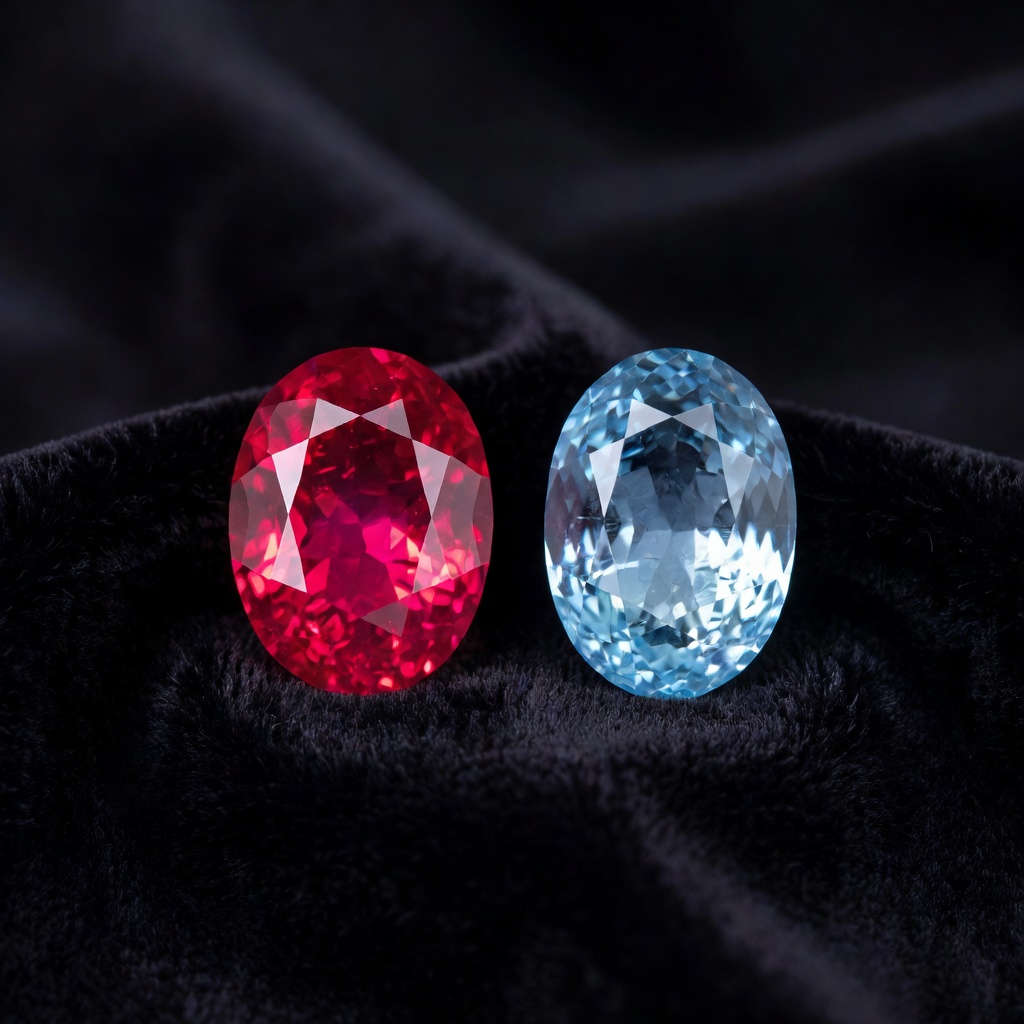
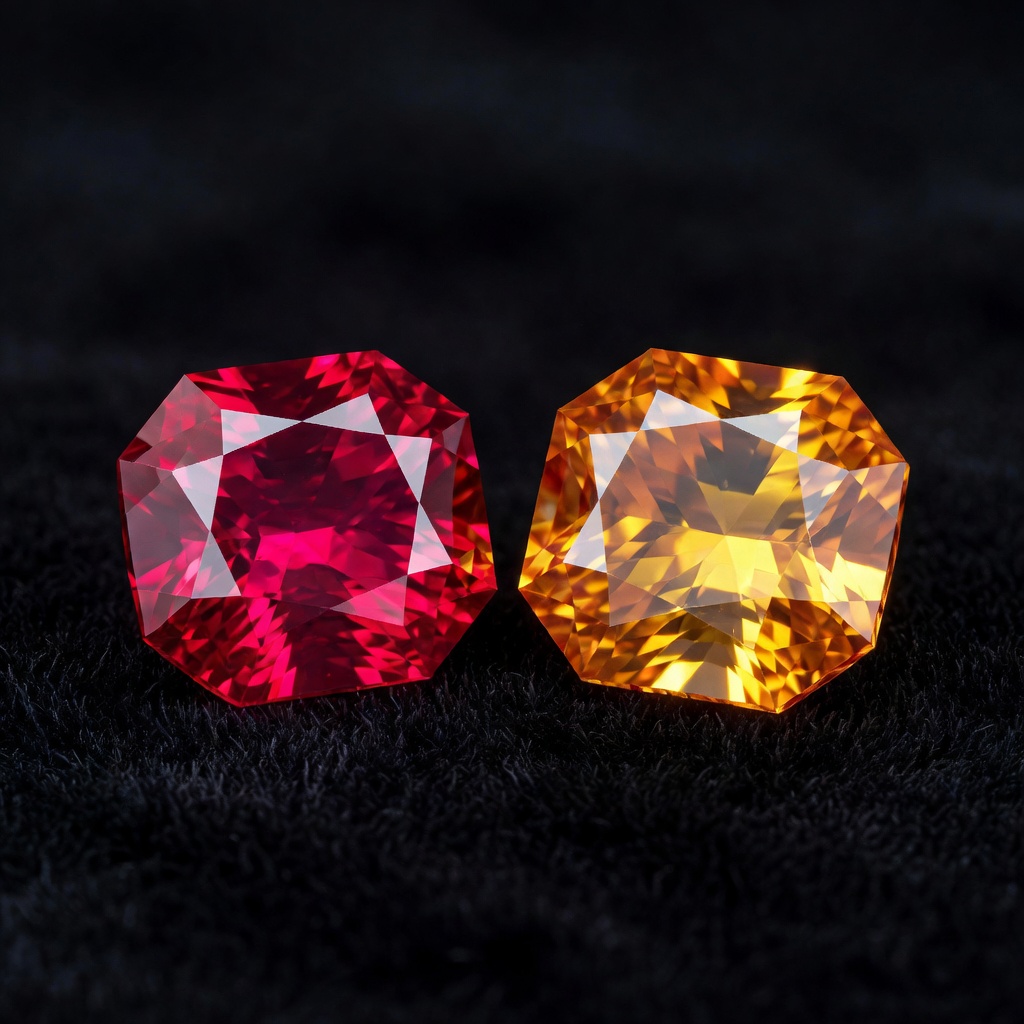
Collectors often draw parallels between these two mineral species because they represent the pinnacle of their respective categories while offering alternatives within the red-to-orange color family. Unlike the stark visual differences between emerald and aquamarine, ruby and imperial topaz can sometimes appear deceptively similar to the untrained eye, particularly when imperial topaz displays its rarest reddish-orange hues. Understanding the fundamental distinctions between these stones requires examining their geological origins, optical properties, and practical wearability characteristics to make an informed acquisition decision that aligns with both aesthetic preferences and lifestyle requirements.
Chemical Composition and Geological Formation
The Corundum Foundation of Ruby
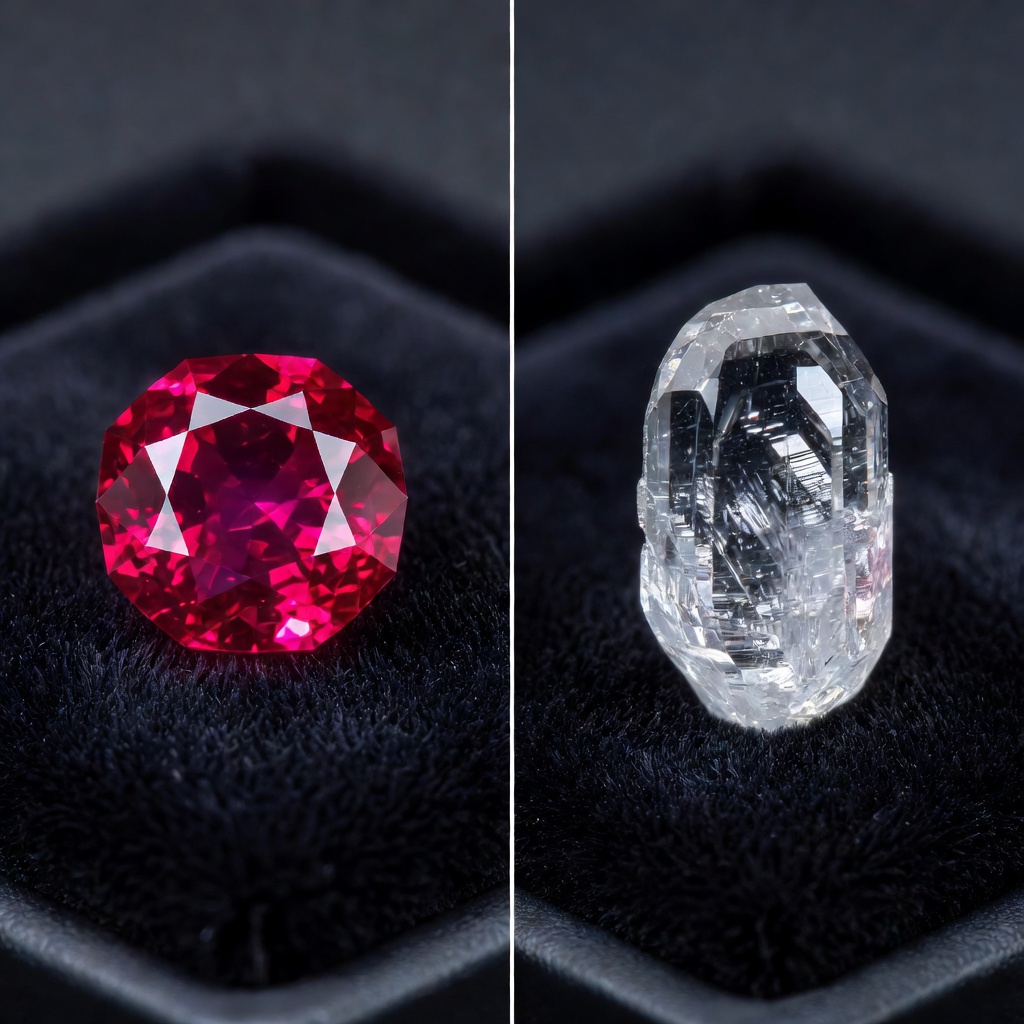
Ruby belongs to the corundum mineral family, chemically composed of aluminum oxide (Al₂O₃) that achieves its iconic red coloration through the presence of chromium ions replacing aluminum in the crystal lattice. This trace element not only imparts the gem's primary body color but also creates the fluorescence phenomenon that makes fine rubies appear to glow from within under natural daylight. The crystallization process occurs under extreme heat and pressure within metamorphic environments, typically in marble or basalt deposits where specific geological conditions allow for the concentration of chromium without the iron content that would darken the stone toward garnet tones.
The trigonal crystal system of corundum produces hexagonal prisms with distinctive barrel-shaped formations, often displaying striations parallel to the crystal's length. Major deposits in Myanmar's Mogok Valley, Mozambique's Montepuez region, and Madagascar's primary deposits each yield stones with slightly different trace element profiles, contributing to subtle variations in fluorescence and color saturation that experienced gemologists can identify.
Imperial Topaz's Silicate Structure
Imperial Topaz represents the premium variety of topaz, chemically classified as an aluminum silicate fluoride hydroxide [Al₂SiO₄(F,OH)₂], with its characteristic warm hues derived from chromium and iron substitutions combined with specific defects in the crystal lattice. Unlike ruby's formation in metamorphic rocks, imperial topaz crystallizes in pegmatites and high-temperature quartz veins within rhyolite deposits, requiring specific fluorine-rich hydrothermal fluids to achieve gem quality. The orthorhombic crystal system produces prismatic crystals with distinctive diamond-shaped cross-sections and chisel-like terminations, frequently achieving much larger crystal sizes than those found in corundum deposits.
The geological specificity of imperial topaz formation explains its extreme rarity compared to other topaz varieties. While blue and colorless topaz occur globally, the distinctive medium reddish-orange to orange-red imperial coloring derives almost exclusively from the Ouro Preto region of Minas Gerais, Brazil, where trace chromium content combines with unique radiation exposure histories during formation to create these coveted sunset hues.
Corundum vs Topaz Hardness and Structural Integrity
The Corundum vs Topaz hardness comparison reveals significant differences in atomic bonding structures despite both materials ranking among the harder natural substances. Ruby's position at 9 on the Mohs scale results from strong oxygen-aluminum bonds in a dense hexagonal close-packed arrangement, creating exceptional resistance to scratching and abrasion. Conversely, imperial topaz registers 8 on the Mohs scale due to the layered nature of its orthorhombic structure, which contains planes of structural weakness despite the material's overall density and resistance to surface wear.
Color Variations and Visual Characteristics
The Spectrum of Red and Orange Hues
The visual distinction between these gemstones centers largely on their respective color families, with ruby pursuing the elusive "pigeon blood" red—a pure, vivid red with medium to medium-dark tone and no brown, purple, or orange overtones. This specific color grade, most famously associated with Burmese stones, represents the zenith of ruby valuation and remains the standard against which all red gemstones are measured. Secondary hues in rubies typically trend toward pink or purple, with orange undertones generally considered less desirable in the finest specimens.
Imperial Topaz rarity manifests most prominently in its color range, which spans delicate peach and champagne tones through intense pinkish-orange to the most valuable reddish-orange and deep sunset colors. Unlike ruby's pursuit of pure red, imperial topaz derives its value from the specific combination of orange and pink modifier tones, with the most prized specimens displaying a balance that shifts between these hues depending on viewing angle and lighting conditions. True red imperial topaz remains exceptionally rare and often commands prices approaching lower-tier rubies, though it typically retains subtle orange or pink undertones that distinguish it from corundum's pure chromatic intensity.
Optical Phenomena and Identification
Professional gemologists distinguish these stones through several optical characteristics beyond basic color observation. Ruby exhibits strong fluorescence under long-wave ultraviolet light due to chromium content, often displaying a vivid red glow that imperial topaz lacks. Conversely, imperial topaz displays pronounced pleochroism—the appearance of different colors when viewed from different crystallographic directions—typically showing combinations of orange, pink, and colorless tones within the same crystal. This optical property requires careful orientation during cutting to maximize the face-up color display, whereas ruby's pleochroism is generally weaker and less critical to cutting decisions.
Clarity expectations differ significantly between the two materials. Fine rubies often contain microscopic rutile needle inclusions known as "silk," which can actually enhance value when they create asterism (the star effect) or improve color distribution through light diffusion. Imperial topaz typically occurs with greater clarity and fewer inclusions, though it may contain characteristic two-phase inclusions or cleavage planes visible under magnification. Eye-clean specimens of imperial topaz are more readily available than equivalent quality rubies, though both materials can contain distinctive fingerprint inclusions or crystal growth zoning that aid in origin determination.
Durability, Hardness, and Wearability Factors
Evaluating Everyday Resilience
When conducting a Precious gemstone comparison for jewelry applications, durability considerations extend beyond simple scratch resistance to encompass toughness—the resistance to breaking, chipping, and cleaving under impact. Ruby's exceptional durability stems not only from its Mohs 9 hardness but also from its lack of cleavage planes, meaning the stone has no natural direction of structural weakness where it might split under stress. This isotropy makes ruby virtually ideal for all jewelry applications, including high-impact settings like rings and bracelets that experience daily wear and potential knocks against hard surfaces.
Imperial topaz, while sufficiently hard at Mohs 8 to resist scratching from most household dust and common materials, presents a more complex wearability profile due to its perfect basal cleavage in one direction. This structural characteristic means that a sharp impact aligned with the crystal's base plane can cause the stone to split cleanly, a risk that increases with stone size and the presence of existing inclusions near the surface. Jewelry designers must account for this property by orienting the stone to protect the cleavage plane and selecting appropriate settings that shield the gem from direct blows.
Setting Recommendations for Longevity
For ruby jewelry, the primary durability concern involves protecting the stone from sharp impacts that could cause chipping at the girdle or facet junctions, though the material's toughness makes it suitable for prong settings and exposed designs. Ultrasonic cleaning poses minimal risk to untreated rubies, making maintenance straightforward for owners. Imperial topaz requires more thoughtful setting architecture, with bezel settings, half-bezels, or protective V-shaped prongs recommended to minimize exposure of the cleavage plane. Stones over five carats in imperial topaz should generally be reserved for pendant or earring designs rather than rings, where the risk of impact increases significantly.
Rarity, Sourcing, and Ethical Considerations
Geographic Origins and Production Volumes
The global distribution of Ruby gemstone value correlates directly with the limited geographic sources capable of producing gem-quality material in significant quantities. Myanmar's Mogok Stone Tract historically supplied the world's finest pigeon blood rubies, though political instability and trade restrictions have complicated sourcing from this region. Mozambique has emerged as the current leading producer of fine rubies, particularly from the Montepuez deposits, while Madagascar, Thailand, and Afghanistan contribute smaller volumes of varying quality. Each origin produces stones with distinctive inclusion patterns and trace element profiles that affect both value and desirability among connoisseurs.
Imperial topaz sourcing remains remarkably concentrated, with Brazil's Ouro Preto mines representing virtually the sole source of true imperial colored material in commercial quantities. This extreme geographic limitation creates supply vulnerabilities and explains the stone's consistent appreciation in value despite fluctuating market conditions. Unlike the widespread availability of treated blue topaz, untreated imperial topaz from Ouro Preto represents a finite resource, with mining depths increasing and production volumes naturally constrained by the specific geological conditions required for imperial color formation.
Treatment Considerations and Market Transparency
Heat treatment plays a ubiquitous role in the ruby market, with an estimated 95% of commercial rubies undergoing controlled heating to improve color saturation and clarity by dissolving rutile silk inclusions. This treatment is generally stable, permanent, and accepted within the trade, though untreated rubies command significant premiums when accompanied by reputable laboratory documentation. Conversely, the Imperial Topaz rarity factor means that untreated status is actually preferred and expected; heating imperial topaz typically destroys its delicate color rather than enhancing it, making untreated stones the standard for investment-grade material.
Ethical sourcing concerns affect both gemstones, though ruby mining faces heightened scrutiny due to historical associations with conflict financing in Myanmar and challenging working conditions in artisanal African operations. Responsible buyers should seek stones accompanied by blockchain-verified provenance documentation or purchase from dealers participating in initiatives like the Responsible Jewellery Council. Imperial topaz mining in Brazil generally operates under more regulated conditions, though environmental impact assessments remain important given the ecologically sensitive regions surrounding Ouro Preto.
Price Analysis and Investment Potential
Market Valuation and Price Per Carat
Investment grade gemstones require careful evaluation of price trajectories, liquidity, and storage considerations, with rubies generally outperforming imperial topaz in absolute value retention and appreciation potential. Fine untreated Burmese rubies exceeding five carats can command prices from $10,000 to over $100,000 per carat at auction, with exceptional specimens like the "Sunrise Ruby" achieving record-breaking prices exceeding $1 million per carat. Mozambique rubies offer a more accessible entry point, ranging from $5,000 to $50,000 per carat for fine quality untreated stones, while heated commercial-grade rubies provide options in the hundreds to low thousands per carat range.
Imperial topaz pricing operates on a different scale, with fine untreated specimens ranging from $1,000 to $5,000 per carat for stones under ten carats, and exceptional large crystals or those with intense reddish-orange coloring potentially reaching $10,000 to $20,000 per carat. The price differential reflects both absolute rarity and market liquidity; while fewer imperial topaz crystals exist in nature compared to rubies, the global demand for rubies significantly exceeds that for imperial topaz, creating stronger price support and easier resale markets for corundum.
Liquidity and Portfolio Diversification
From an investment perspective, rubies offer superior liquidity due to established auction house interest, consistent collector demand across Asian, Middle Eastern, and Western markets, and standardized grading systems that facilitate international trade. Imperial topaz appeals to specialized collectors seeking diversification within the orange-pink color spectrum, with value appreciation driven primarily by increasing mining costs and decreasing yields from established Brazilian mines rather than speculative demand. Investors should consider imperial topaz as a long-term hold asset requiring specialized marketing for resale, whereas important rubies maintain immediate liquidity through major auction channels.
Symbolic Meaning and Historical Significance
Birthstone Traditions and Cultural Associations
The November birthstone vs July birthstone distinction highlights different cultural narratives surrounding these gems, with ruby's July designation associating it with summer's peak intensity, passion, and vitality across Western astrology traditions. Ancient Burmese warriors implanted rubies beneath their skin to confer invincibility in battle, while Hindu traditions regarded ruby as the "king of precious stones," associating it with the sun and the power to protect against evil. Medieval European royalty prized rubies for their alleged ability to predict danger by darkening in color when peril approached the wearer.
Imperial topaz as November's primary birthstone carries associations of strength, wisdom, and courage, with ancient Greeks believing it increased physical strength and the Renaissance courts of Europe associating it with the ability to break enchantments. The "imperial" designation itself derives from nineteenth-century Russian royal patronage, when the Ural Mountain mines (now depleted) supplied pink topaz exclusively to the Czar's family, establishing the gem as a symbol of imperial privilege and exclusivity that continues to influence its marketing today.
Metaphysical Properties and Modern Crystal Healing
Contemporary crystal healing practitioners attribute distinct energetic properties to each stone, with ruby associated with the base chakra, believed to stimulate life force energy, enhance motivation, and promote leadership qualities. Practitioners recommend ruby for those seeking to overcome exhaustion and lethargy, citing its intense vibrational frequency as a stimulant for both physical and emotional vitality. Imperial topaz connects to the solar plexus and sacral chakras in metaphysical traditions, believed to facilitate manifestation, attract abundance, and support emotional healing through its gentle, warming energy that contrasts with ruby's more intense stimulation.
Jewelry Design Applications and Metal Pairings
Maximizing Optical Performance Through Cut
Optimal cutting styles differ significantly between these materials due to their optical properties and durability concerns. Rubies perform exceptionally well in mixed cuts that combine step-cut crowns with brilliant-cut pavilions, maximizing color saturation while maintaining brilliance. Oval, cushion, and round shapes predominate in fine ruby jewelry, though emerald cuts appear in cleaner stones where the step facets emphasize clarity and color purity. Designers often orient rubies to minimize the appearance of extinction (dark areas within the stone) while maximizing the face-up red fluorescence that distinguishes fine material.
Imperial topaz cutting requires careful consideration of pleochroism, with skilled lapidaries orienting the table perpendicular to the crystal's c-axis to blend the orange and pink color directions into a unified peach or salmon face-up appearance. Emerald cuts, scissor cuts, and elongated cushions prove particularly effective for imperial topaz, maximizing the stone's natural clarity and creating broad flashes of color that emphasize its unique hue. Due to cleavage concerns, sharp corners should be avoided or protected in princess or baguette cuts intended for ring wear.
Metal Selection and Design Strategies
Red gemstone alternatives like imperial topaz influence metal pairing decisions significantly, as the gem's subtle orange and pink undertones create different complementary relationships than ruby's pure red. White metals—platinum and white gold—enhance the pink flashes in imperial topaz while providing a contemporary aesthetic that distinguishes it from traditional ruby settings. Yellow and rose gold amplify the orange and warm peach tones, creating vintage-inspired appearances that reference the gem's imperial Russian heritage. Ruby traditionally pairs with yellow gold in Asian markets to emphasize its "pigeon blood" intensity, while Western designs increasingly favor white metals or rose gold to create modern contrast with the deep red body color.
Protective setting architecture becomes crucial for imperial topaz in daily wear pieces. Bezel settings that wrap the stone's girdle provide the best protection against cleavage-inducing impacts, while V-prong designs offer security for corners without obscuring excessive carat weight. Ruby's superior toughness allows for more delicate claw settings and open gallery designs that maximize light return and finger coverage without structural compromise.
Care, Cleaning, and Maintenance Requirements
Appropriate Cleaning Methods
Professional maintenance protocols differ substantially between these gemstones due to their structural variations. Ruby jewelry generally tolerates ultrasonic cleaning and steam cleaning methods, provided the stone is untreated and free of significant fractures filled with glass or resin (a treatment sometimes seen in lower-quality material). The combination of high hardness and lack of cleavage makes ruby resilient to the vibrations and thermal shock associated with professional jewelry cleaning equipment, though sudden temperature extremes should still be avoided to prevent thermal shock to any included crystals within the stone.
Imperial topaz requires gentler handling due to its cleavage plane vulnerability. Ultrasonic cleaning poses significant risk of inducing cleavage fractures through vibrational stress, particularly in larger stones or those with visible inclusions. Warm soapy water with a soft brush remains the safest cleaning method, followed by thorough rinsing and drying with a lint-free cloth. Steam cleaning is contraindicated due to both cleavage risks and potential thermal shock from rapid temperature changes.
Storage and Long-term Preservation
Storage recommendations emphasize protecting imperial topaz from harder stones that might scratch its surface or, more critically, deliver impact forces that could activate cleavage. Individual soft pouches or compartmentalized jewelry boxes prevent contact with diamonds, sapphires, and rubies that could damage the topaz. Ruby, while harder and more durable, should still be stored separately from other rubies to prevent abrasion between stones and away from imperial topaz to protect the softer material.
Annual professional inspections prove essential for both gemstones, with particular attention to prong wear in ruby settings and structural integrity checks for imperial topaz. Jewelers should examine imperial topaz for developing cleavage cracks, especially in rings worn daily, and verify that protective settings maintain their structural integrity. Retipping worn prongs and checking for loose stones prevents loss of these valuable materials during wear.
Making Your Decision: Which Gemstone Suits You Best?
Selecting between Ruby vs Imperial Topaz requires honest assessment of budget parameters, lifestyle factors, and aesthetic preferences. Buyers seeking maximum durability for daily wear rings, particularly engagement rings or significant cocktail pieces, should prioritize ruby due to its superior toughness and resistance to cleavage. Those drawn to warm sunset hues and peachy-orange tones that shift in different lighting will find imperial topaz offers unique chromatic characteristics unavailable in corundum, albeit with the requirement for protective settings and mindful wear habits.
Budget considerations often drive the decision, as imperial topaz provides larger carat weights and cleaner clarity at price points where rubies of equivalent size might prove prohibitively expensive. A collector might acquire a stunning 10-carat imperial topaz for the price of a 2-carat fine ruby, making the topaz attractive for statement pendant or earring designs where impact risk remains minimal. Conversely, those prioritizing investment value, liquidity, and traditional prestige will find ruby's established market position and historical significance justify the premium pricing.
Color psychology and wardrobe coordination also influence selection, with ruby's intense red making bold statements against neutral wardrobes and complementing cooler skin tones, while imperial topaz's warm peach-orange harmonizes with autumnal color palettes and gold jewelry collections. Ultimately, neither gemstone represents a compromise—each offers distinct advantages that cater to different collector personalities, from the ruby's passionate intensity to the imperial topaz's sunset serenity.
Comprehensive Comparison: Ruby vs Imperial Topaz
| Characteristic | Ruby (Corundum) | Imperial Topaz |
|---|---|---|
| Chemical Composition | Aluminum Oxide (Al₂O₃) with chromium | Aluminum Silicate Fluoride Hydroxide [Al₂SiO₄(F,OH)₂] |
| Crystal System | Trigonal (Hexagonal) | Orthorhombic |
| Mohs Hardness | 9 | 8 |
| Cleavage | None (conchoidal fracture) | Perfect basal cleavage (one direction) |
| Primary Sources | Myanmar, Mozambique, Madagascar, Thailand | Brazil (Ouro Preto, Minas Gerais) |
| Color Range | Pigeon blood red, pink-red, purplish-red | Peach, pink, orange, reddish-orange |
| Pleochroism | Weak (orange-red to purplish-red) | Strong (orange/pink/colorless) |
| Typical Clarity | Often included ("silk," crystals, fingerprints) | Typically eye-clean to lightly included |
| Common Treatments | Heat treatment (95% of market) | Usually untreated (heat destroys color) |
| Price Range (Fine Quality) | $5,000–$100,000+ per carat | $1,000–$20,000 per carat |
| Best Jewelry Applications | Rings, bracelets, daily wear | Pendants, earrings, protected ring settings |
| Ultrasonic Cleaning | Safe (if untreated) | Risky (cleavage hazard) |
| Birthstone Month | July | November |
Frequently Asked Questions About Ruby vs Imperial Topaz
Which is more valuable, ruby or imperial topaz?
Fine quality rubies typically command higher prices per carat than imperial topaz, with untreated Burmese rubies reaching tens of thousands per carat. However, rare untreated imperial topaz with intense reddish-orange hues can approach lower-tier ruby prices, though rubies generally hold better investment value long-term.
Can imperial topaz be confused with ruby?
While both can display reddish tones, imperial topaz typically exhibits orange, pink, or peach undertones rather than ruby's pure red. Professional gemologists distinguish them through refractive index testing, as ruby (corundum) reads 1.76-1.77 while imperial topaz reads 1.61-1.62.
Is imperial topaz durable enough for an engagement ring?
With a Mohs hardness of 8, imperial topaz is suitable for engagement rings but requires protective settings due to its perfect basal cleavage. Ruby, rated 9 on the Mohs scale with no cleavage planes, offers superior durability for daily wear without special setting considerations.
What makes imperial topaz 'imperial' compared to regular topaz?
True imperial topaz displays medium reddish-orange to orange-red colors, historically reserved for Russian royalty. Unlike common blue or colorless topaz, imperial variety occurs naturally in these warm hues and commands premium pricing due to its rarity and untreated status.
Do rubies and imperial topaz have different care requirements?
Yes. Rubies can safely undergo ultrasonic cleaning and steam cleaning (if untreated), while imperial topaz should avoid ultrasonic vibration due to cleavage risks. Both should avoid sudden temperature changes, but topaz requires gentler handling and protective storage separate from harder stones.
Which gemstone is rarer in nature?
Fine quality untreated rubies are significantly rarer than imperial topaz. While both are precious gemstones, gem-quality rubies over 5 carats are exceptionally scarce, whereas imperial topaz crystals exceeding this size, though uncommon, do appear more frequently in the market.
Can imperial topaz be a good alternative to ruby for red gemstone lovers?
Imperial topaz offers an excellent alternative for those seeking warm sunset tones with pinkish-red flashes at a lower price point. However, it cannot replicate ruby's pure red 'pigeon blood' color or its exceptional hardness, making it ideal for those prioritizing peach-orange-red hues over pure red.
How do treatments affect the value comparison between these stones?
Heat treatment is common and accepted in rubies, slightly affecting value, while truly untreated imperial topaz is actually preferred and commands higher prices. A treated high-quality ruby still typically exceeds the value of untreated imperial topaz, except in cases of exceptional topaz specimens.