Introduction: The Classic Meets the Extraordinary
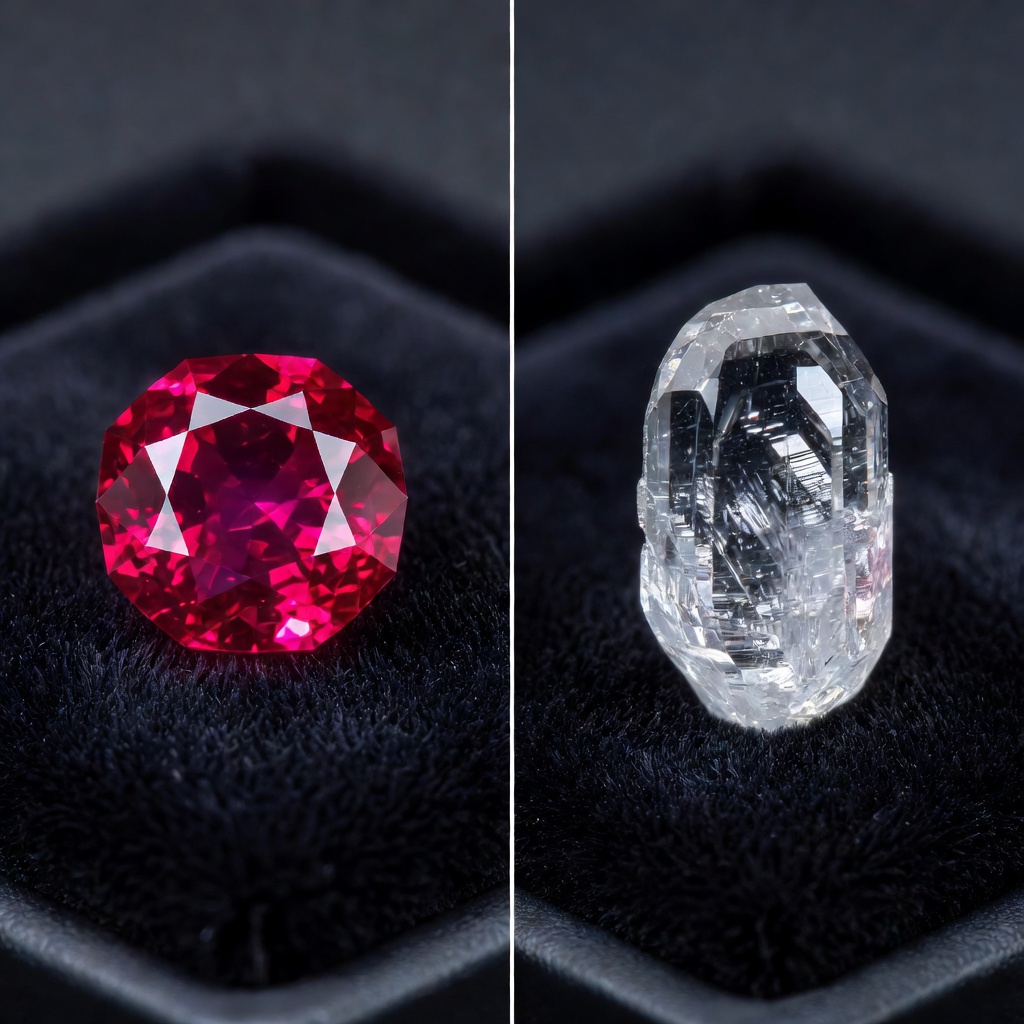
When exploring the fascinating world of precious stones, few comparisons capture the imagination quite like analyzing Ruby vs Hyalite Opal. Ruby stands as one of the prestigious "Big Three" colored gemstones, celebrated for centuries for its saturated crimson hues and remarkable resilience in fine jewelry. This aluminum oxide crystal, colored by traces of chromium, has adorned the crowns of monarchs and symbolized passion across countless cultures, establishing itself as the definitive red gemstone in the luxury market.
In stark contrast, Hyalite Opal—often called Water Opal—presents a completely different proposition for collectors and jewelry enthusiasts. This rare, colorless variety of opal possesses an almost ghostly transparency under normal lighting conditions, yet transforms into a spectacular display of bright green luminescence when exposed to ultraviolet light. Understanding the distinctions between these two extraordinary gems helps collectors appreciate different value propositions, from the classic durability of corundum to the ephemeral beauty of fluorescent gemstones.
This precious stone comparison examines how these minerals, formed through vastly different geological processes, offer unique aesthetic and practical benefits. Whether you seek a heirloom-quality center stone for daily wear or a conversation-starting collector's specimen that reacts to UV light, understanding the fundamental differences between these gems ensures you make an informed decision aligned with your lifestyle and aesthetic preferences.
Geological Origins and Formation
The journey of each gemstone from raw mineral to polished jewel begins deep within the Earth under radically different conditions. Ruby gemstone characteristics are defined by their formation within high-pressure, high-temperature metamorphic environments where aluminum oxide minerals undergo intense transformation. When chromium atoms replace aluminum within the corundum crystal structure, they create the vivid red spectrum that makes rubies so desirable. These formations typically occur in marble or basalt host rocks, with the Mogok Valley in Myanmar producing some of the most historically significant specimens known for their "pigeon blood" coloration.
Hyalite opal properties derive from an entirely different geological narrative involving volcanic activity and silica-rich solutions. Unlike crystalline gems, hyalite forms as an amorphous solid when superheated silica-laden water percolates through volcanic rock cavities and rapidly cools. This process traps water molecules within the silica structure, creating a glass-like substance that lacks the ordered atomic arrangement seen in crystalline gems. Primary deposits of this UV reactive gem emerge from Mexico's volcanic regions, particularly the Zimapán mining district, as well as historical localities in Hungary's Tokaj Mountains and select Australian volcanic fields.
The source locations significantly impact availability and collecting potential. While Myanmar, Thailand, and Madagascar dominate the ruby trade with established mining operations, hyalite deposits remain sporadic and often limited to mineral specimen collecting rather than commercial gemstone production. This distinction affects not only market availability but also the typical size and clarity of specimens available to consumers and collectors.
Physical Properties and Chemical Composition
Understanding the molecular architecture of these gems reveals why they behave so differently in jewelry applications. Ruby represents the crystalline form of aluminum oxide (Al₂O₃) arranged in a trigonal crystal system, creating a dense, orderly structure that contributes to its exceptional durability. With a specific gravity ranging from 3.97 to 4.05 and a refractive index between 1.76 and 1.78, rubies possess the optical density necessary for brilliant faceting and high polish retention. These ruby gemstone characteristics make it one of the most technically suitable minerals for jewelry that withstands daily impacts and environmental exposure.
Conversely, hyalite opal contains hydrated silicon dioxide (SiO₂·nH₂O) with water content potentially reaching 21% by weight. Its amorphous structure lacks the organized atomic lattice of crystalline gems, resulting in a lower specific gravity of approximately 1.9 to 2.2 and a refractive index around 1.45. These hyalite opal properties create a lower density material that feels noticeably lighter than comparably sized crystalline gems and interacts with light through transmission rather than refraction. The absence of crystal structure also means hyalite lacks cleavage planes, though this does not translate to toughness due to its inherent brittleness and water content.
Ruby vs Hyalite Opal: Physical Comparison
| Property | Ruby | Hyalite Opal |
|---|---|---|
| Chemical Composition | Aluminum Oxide (Al₂O₃) | Hydrated Silicon Dioxide (SiO₂·nH₂O) |
| Crystal Structure | Trigonal (Crystalline) | Amorphous (Non-crystalline) |
| Gemstone Hardness Scale | 9 (Mohs) | 5-6.5 (Mohs) |
| Specific Gravity | 3.97-4.05 | 1.9-2.2 |
| Refractive Index | 1.76-1.78 | 1.44-1.46 |
| Fluorescence | None to weak red | Strong green under UV |
| Water Content | None | Up to 21% |
| Best Setting Style | Any, including exposed prongs | Bezel or protective settings |
Visual Characteristics and Optical Phenomena
The aesthetic distinction between Water opal vs ruby becomes immediately apparent upon visual inspection. Rubies present a color spectrum ranging from the coveted "pigeon blood" red—a pure, vivid crimson with subtle blue undertones—to lighter pinkish-red varieties often associated with Sri Lankan deposits. This coloration results specifically from chromium content, with higher concentrations producing deeper reds. Natural rubies frequently contain rutile needle inclusions known as "silk," which can create star effects (asterism) in cabochon cuts or indicate untreated natural origins in faceted stones. The stone's high refractive index and strong luster create a glowing appearance even under subdued lighting, contributing to its reputation as the "gem of the sun" in ancient Sanskrit texts.
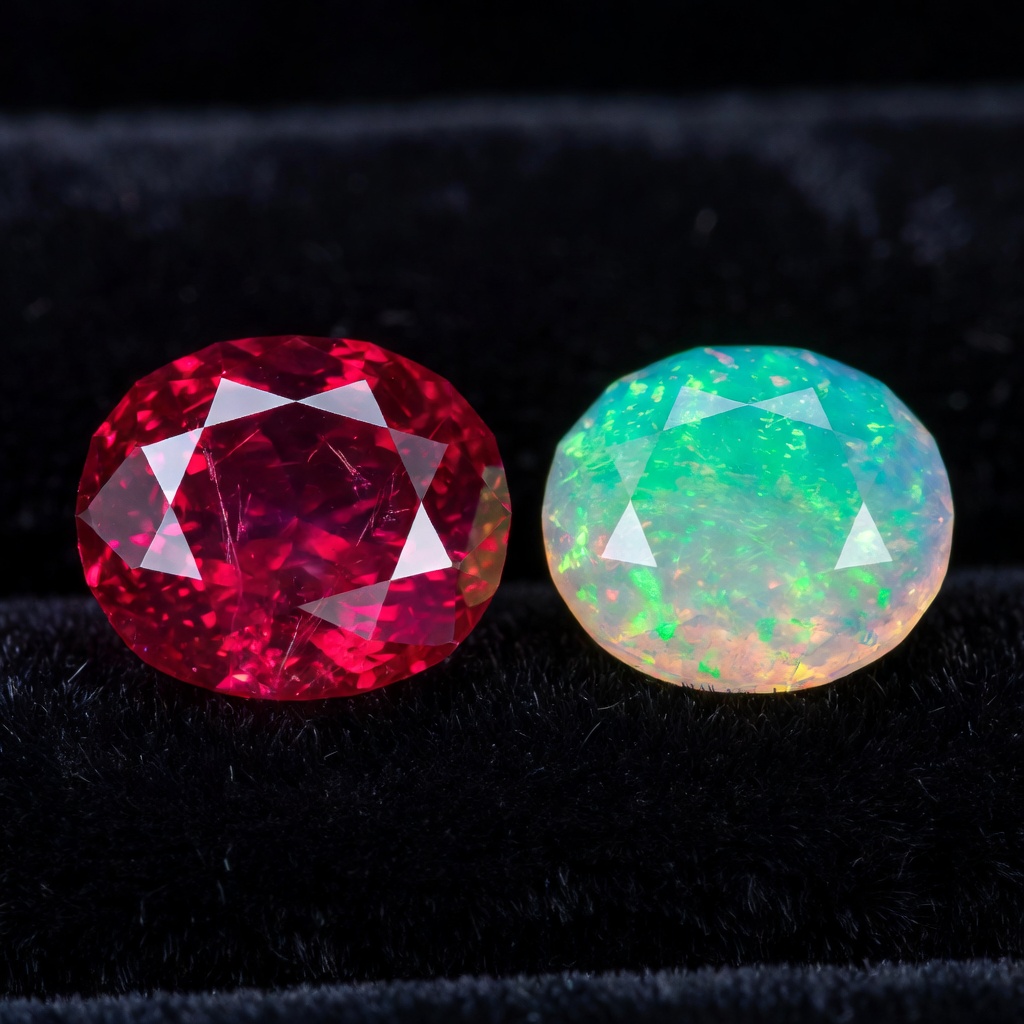
Hyalite Opal offers a completely different visual experience characterized by transparent to translucent colorless appearance with a distinctive glass-like or greasy luster. Unlike precious opal varieties that display play-of-color through diffraction, hyalite presents as a clear, colorless "water stone" with botryoidal (grape-like) surface formations in its rough state. However, the true magic of this fluorescent gemstone emerges under ultraviolet light, where trace uranium content causes an intense bright green fluorescence that seems to emanate from within the stone itself. This dramatic transformation from invisible to incandescent makes hyalite one of the most spectacular UV reactive gems available to collectors, creating a "glow-in-the-dark" effect that captivates viewers at mineral shows and in darkened display cases.
Practical tip for collectors: When evaluating rubies, examine the stone under magnification to identify natural inclusions that confirm authenticity, as synthetic rubies often appear too perfect. For hyalite specimens, always request demonstration under short-wave UV light (254 nm) to verify the characteristic bright green fluorescence, as some colorless chalcedony or glass imitations lack this definitive reaction.
Durability and Wearability Considerations
When selecting jewelry for daily use, the gemstone hardness scale serves as a critical predictor of longevity and maintenance requirements. Ranking 9 on the Mohs scale, rubies possess exceptional toughness second only to diamond, making them ideal candidates for engagement rings, tennis bracelets, and other pieces subject to constant wear. This crystalline structure resists scratching from household dust (which contains silica at 7 hardness) and maintains polish through decades of handling. The stone's stability allows jewelers to use aggressive cleaning methods without damage, providing practical advantages for busy lifestyles where jewelry maintenance time is limited.
Hyalite Opal demands significantly more cautious handling due to its 5-6.5 hardness rating and unique vulnerabilities inherent to its composition. The stone's high water content creates sensitivity to dehydration; exposure to heat, direct sunlight, or dry storage conditions can cause "crazing"—a network of fine surface cracks that permanently damage clarity. Additionally, the amorphous structure lacks the fracture resistance of crystalline gems, making hyalite susceptible to chipping from sharp impacts. Jewelry designers must accommodate these hyalite opal properties by incorporating protective bezel settings rather than exposed prongs, and owners should avoid wearing hyalite during activities involving temperature changes or physical impact.
Cleaning protocols highlight these durability differences dramatically. Rubies tolerate ultrasonic cleaners, steam cleaning, and vigorous brushing with warm soapy water, allowing for easy removal of accumulated lotions and environmental grime. Hyalite Opal requires gentle wiping with a damp soft cloth only; ultrasonic vibrations can cause structural damage, while heat from steam cleaners accelerates dehydration. Store hyalite specimens in slightly humid environments or with occasional mineral oil applications to prevent water loss, whereas rubies require no special environmental controls beyond standard jewelry box storage.
Rarity, Value, and Investment Potential
The economic dynamics of Ruby vs Hyalite Opal reflect their respective positions in the gemstone hierarchy and collector markets. Fine untreated rubies command extraordinary per-carat prices, particularly stones originating from Myanmar's Mogok mines or recently from Mozambique. Investment-grade rubies exceeding five carats with "pigeon blood" coloration and no heat treatment can achieve prices rivaling high-quality diamonds, with auction records regularly exceeding $100,000 per carat for exceptional specimens. This value retention stems from both historical prestige and genuine scarcity, as mining yields decrease and demand from Asian markets continues expanding.
Hyalite Opal occupies a niche market position characterized by affordability for serious collectors but limited commercial jewelry presence. While exceptional specimens with intense fluorescence and large, clear crystal formations command premium prices among mineral enthusiasts, most hyalite remains accessible to entry-level collectors. The stone rarely appears in mainstream jewelry because its delicacy contradicts consumer expectations for wearable gems, keeping demand concentrated among specimen collectors and alternative jewelry designers who prioritize aesthetic impact over durability. This precious stone comparison reveals that while rubies function as portable wealth and inflation hedges, hyalite offers value through geological rarity and optical uniqueness rather than investment liquidity.
Treatment disclosures further differentiate these markets. Heat treatment remains standard and accepted in the ruby trade, with approximately 95% of commercial rubies undergoing controlled heating to improve color and clarity. Reputable dealers disclose these treatments, though unheated stones carry significant premiums. Conversely, the hyalite market values completely natural specimens, with treatments limited to occasional oiling to prevent dehydration. Any enhancement beyond protective oiling would significantly diminish collector interest, making authentication of natural origin less complex than with rubies.
Jewelry Design and Setting Recommendations
Ruby's exceptional versatility allows jewelry designers unlimited creative freedom across all categories. For engagement rings, solitaire settings showcase the gem's color purity, while three-stone designs pairing rubies with diamonds create dramatic contrast. Tennis bracelets and eternity bands exploit ruby's durability, allowing daily wear without the anxiety associated with softer gems. Statement cocktail rings featuring large Burmese rubies serve as portfolio pieces and heirlooms, while smaller accent stones complement colored metal trends. When pairing with metals, yellow gold enhances the warm undertones of rubies, creating a classic royal aesthetic, though contemporary designers increasingly set rubies in rose gold for romantic appeal or platinum for maximum color contrast.
Designing with Hyalite Opal requires protective strategies that acknowledge its physical limitations while showcasing its unique optical properties. Bezel settings provide the security necessary for earrings and pendants, where the stone receives less impact than ring applications. Some avant-garde designers create "UV jewelry" featuring hyalite in hinged compartments with built-in LED black lights, activating the fluorescence at will. Occasional-wear rings should feature protective halos of harder stones or deep bezels that elevate the hyalite above potential impact surfaces. White metals—sterling silver, white gold, or platinum—complement hyalite's water-clear transparency, creating an icy, modern aesthetic that contrasts with the gem's warm green fluorescence.
Case study: A contemporary jewelry designer recently created a convertible pendant featuring hyalite opal suspended within a geode-like silver structure containing a hidden UV LED. This design protects the stone while allowing the wearer to activate its fluorescent properties at social events, demonstrating how innovative settings can mitigate durability concerns while maximizing the "wow factor" of UV reactive gems.
Metaphysical Properties and Cultural Significance
Throughout history, civilizations have attributed profound metaphysical significance to rubies, establishing complex symbolic associations that persist in modern crystal healing practices. Known as the stone of passion and courage, rubies are said to stimulate the heart chakra, increase energy levels, and promote leadership qualities. As the July birthstone, it connects to summer vitality and the fire element, with ancient Burmese warriors embedding rubies into their flesh for invincibility in battle. Royal regalia across Europe and Asia featured prominent rubies, including the Black Prince's Ruby in the British Imperial State Crown (actually a spinel, but historically believed to be ruby), reinforcing associations with power and protection. These ruby gemstone characteristics extend beyond aesthetics into personal empowerment, with practitioners recommending the stone for overcoming exhaustion and apathy.
Hyalite Opal carries more subtle but equally fascinating metaphysical associations centered on clarity, transparency, and inner illumination. Crystal practitioners value this water opal for its ability to enhance clear thinking and emotional transparency, suggesting it helps remove confusion and reveal hidden truths. The stone's UV reactivity translates symbolically to "illumination in darkness," representing the revelation of one's authentic self when exposed to higher frequencies or truth. Unlike ruby's historical connection to royalty and external power, hyalite resonates with introspection and personal insight, making it popular among meditation practitioners and those seeking to enhance intuitive abilities. Its popularity among mineral collectors dates to the 18th century, when European naturalists marveled at its unusual glow, associating it with phosphorescent phenomena and the emerging science of luminescence.
Practical application: When gifting these stones, consider the recipient's personality and needs. Ruby suits individuals embarking on ambitious endeavors or seeking confidence boosts, making it ideal for graduation or promotion gifts. Hyalite appeals to spiritual seekers, scientists, or those who appreciate natural curiosities, serving as an excellent conversation piece for academic or artistic personalities.
How to Choose Between Ruby and Hyalite Opal
Selecting between these distinct gems requires honest assessment of your lifestyle, budget, and aesthetic priorities. For active individuals seeking daily-wear jewelry, the Water opal vs ruby debate resolves decisively in favor of corundum. Nurses, mechanics, fitness enthusiasts, or anyone working with their hands should choose ruby for rings and bracelets, as hyalite's fragility would necessitate constant removal and storage. Conversely, if your jewelry collection focuses on special-occasion pieces, art objects, or mineral specimens displayed in controlled environments, hyalite offers unique optical properties that ruby cannot match.
Budget considerations extend beyond initial purchase price to long-term value retention and maintenance costs. While high-quality rubies require significant investment, they appreciate historically and require minimal maintenance beyond occasional professional cleaning. Hyalite offers entry-level affordability but functions better as a collector's item than a financial investment. Consider whether you prioritize the prestige and liquidity of a classic precious stone comparison winner (ruby) or the specialized appeal of a niche collector's gem (hyalite).
Aesthetic preferences ultimately drive the decision for many buyers. Those drawn to classic elegance, romantic symbolism, and the enduring appeal of red gemstones will find ruby satisfies timeless desires. Individuals fascinated by optical phenomena, fluorescent minerals, or contemporary avant-garde jewelry will discover that hyalite provides the distinctive, conversation-starting element missing from traditional collections. Some collectors ultimately choose both, assigning ruby to high-impact daily jewelry while reserving hyalite for protected display pieces that demonstrate the full spectrum of gemstone diversity.
Final Verdict: Which Gemstone Wins?
Declaring an absolute winner in the Ruby vs Hyalite Opal comparison proves impossible because these gems serve fundamentally different purposes and appeal to distinct collector sensibilities. Ruby emerges as the undisputed durability champion, offering heirloom-quality resilience, investment-grade value retention, and versatile wearability across all jewelry categories. For engagement rings, daily wear pieces, or portfolio investments, ruby provides security and timeless beauty that transcends passing trends.
Hyalite Opal claims victory in the realm of optical novelty and collector specialization, offering one of nature's most dramatic fluorescent displays and geological uniqueness. While unsuitable for the rigors of daily wear, it provides extraordinary beauty for protected display cases, occasional statement jewelry, and educational collections demonstrating mineral luminescence. Neither gemstone supersedes the other; rather, they complement one another by representing opposite ends of the durability spectrum and aesthetic expression.
Ultimately, both gemstones offer extraordinary beauty tailored to different personalities and purposes. The practical romantics and active jewelry wearers should embrace ruby's enduring fire, while the curious collectors and optical phenomena enthusiasts will find endless fascination in hyalite's hidden glow. Whether chosen for its crown jewel pedigree or its scientific curiosity value, each stone rewards its owner with a unique connection to Earth's geological creativity.
Frequently Asked Questions
What Is the Main Difference Between Ruby and Hyalite Opal?
The primary difference lies in their composition and durability. Ruby is a crystalline corundum with a hardness of 9 on the Mohs scale, famous for its red color, while Hyalite Opal is an amorphous, water-containing silica with a hardness of 5-6.5, known for being colorless and glowing bright green under UV light.
Does Hyalite Opal Actually Glow in the Dark?
Hyalite Opal doesn't glow in complete darkness on its own, but it exhibits strong fluorescence under ultraviolet (UV) light, appearing to glow bright green. This is due to trace amounts of uranium within its structure, making it one of the most UV-reactive natural gemstones available.
Which Is More Expensive, Ruby or Hyalite Opal?
High-quality Rubies are significantly more expensive, often commanding thousands of dollars per carat for fine specimens, especially untreated Burmese stones. Hyalite Opal is generally more affordable due to lower demand and availability, though exceptional specimens with intense fluorescence can command premium prices among collectors.
Can I Wear Hyalite Opal Every Day Like a Ruby?
No, Hyalite Opal is not suitable for daily wear in rings or bracelets due to its lower hardness (5-6.5) and sensitivity to dehydration, heat, and chemicals. Ruby, with its hardness of 9 and excellent toughness, is ideal for daily wear including engagement rings and everyday jewelry.
Is Hyalite Opal Considered a Real Opal?
Yes, Hyalite Opal is a legitimate variety of opal, specifically a transparent to translucent type of common opal (potch) that lacks the play-of-color seen in precious opal. It is composed of hydrated silicon dioxide like all opals and is highly valued by mineral collectors for its unique optical properties.
Which Gemstone Is Better for an Engagement Ring?
Ruby is the superior choice for engagement rings due to its exceptional durability (9 on Mohs scale), resistance to scratching, and suitability for daily wear. Hyalite Opal is too soft and fragile for the constant impact that engagement rings typically endure, making it better suited for earrings or pendants.
Do Ruby and Hyalite Opal Require Different Care Routines?
Absolutely. Rubies can be cleaned with ultrasonic cleaners, steam, and warm soapy water. Hyalite Opals require gentle care with only damp cloth cleaning, avoidance of heat and direct sunlight (to prevent dehydration), and storage in slightly humid environments or with occasional mineral oil application to prevent crazing.
Where Are the Best Places to Buy Authentic Ruby and Hyalite Opal?
Rubies should be purchased from reputable jewelers who provide certification from labs like GIA or AGL, especially for high-value stones. Hyalite Opals are best sourced from specialized mineral dealers, gem shows, or reputable online mineral marketplaces where UV reactivity can be demonstrated, as they are rarely found in traditional jewelry stores.