Introduction to Ruby and Hematite
When exploring the world of red gemstones, collectors and jewelry enthusiasts often encounter two strikingly different minerals that share little beyond their occasional reddish appearance. Ruby stands as one of the "big three" precious gemstones, a variety of corundum that has captivated royalty and connoisseurs for millennia with its intense pigeon blood red fluorescence and exceptional durability. In contrast, hematite serves as an iron oxide mineral prized for its distinctive metallic luster and gunmetal sheen, frequently appearing in beaded bracelets and men's jewelry rather than high-end cocktail rings.
The confusion between these stones typically arises when shoppers encounter red-tinged hematite specimens or rough rubies with metallic inclusions, leading to misconceptions about their relative value and properties. Understanding the fundamental distinctions between these materials requires examining their geological origins, physical characteristics, and appropriate applications in jewelry design. Whether you are selecting an engagement center stone or seeking grounding crystals for meditation, recognizing the differences between precious corundum and semi-precious iron oxide ensures you make an informed investment aligned with your lifestyle needs.
Chemical Composition and Crystal Structure
Ruby derives its remarkable properties from aluminum oxide (Al₂O₃) crystallized in the trigonal crystal system, with chromium traces substituting for aluminum atoms to create the gemstone's signature red coloration. This corundum structure forms under intense heat and pressure within metamorphic rocks such as marble or basalt, typically requiring specific geological conditions found in regions like Myanmar, Mozambique, and Sri Lanka. The chromium content not only produces the red hue but also enables the stone's characteristic fluorescence under ultraviolet light, creating that coveted inner glow that distinguishes fine specimens from inferior imitations.
Hematite, conversely, represents iron oxide (Fe₂O₃) crystallizing in the hexagonal or trigonal system, though it frequently appears in massive, botryoidal, or micaceous forms rather than distinct crystals. This mineral develops primarily within sedimentary deposits, hydrothermal veins, and banded iron formations, making it significantly more abundant globally than gem-quality corundum. The iron content responsible for hematite's density and metallic appearance also makes it vulnerable to oxidation when exposed to moisture, fundamentally differentiating its chemical behavior from the inert aluminum oxide structure of ruby.
Visual Identification and Color Analysis
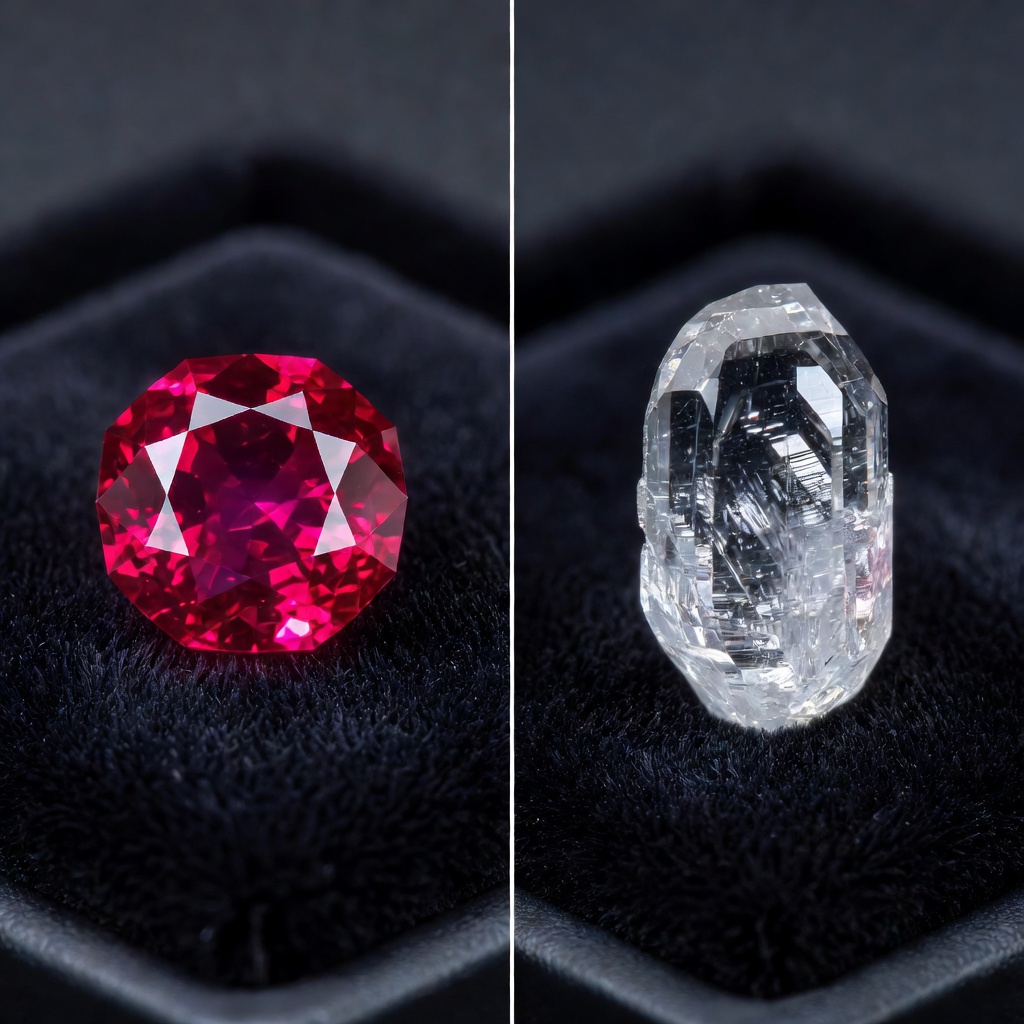
Distinguishing between these stones requires careful observation of optical properties under proper lighting conditions. Fine rubies exhibit a vitreous, glass-like luster with transparency ranging from transparent to translucent, allowing light to penetrate and reflect from internal crystal facets. The most prized specimens display "pigeon blood" red—a pure, vibrant red with subtle blue undertones that appears to glow from within due to chromium fluorescence under UV light. When examining a genuine ruby, you may observe silk-like rutile inclusions or color zoning, but the stone will never display metallic reflections.
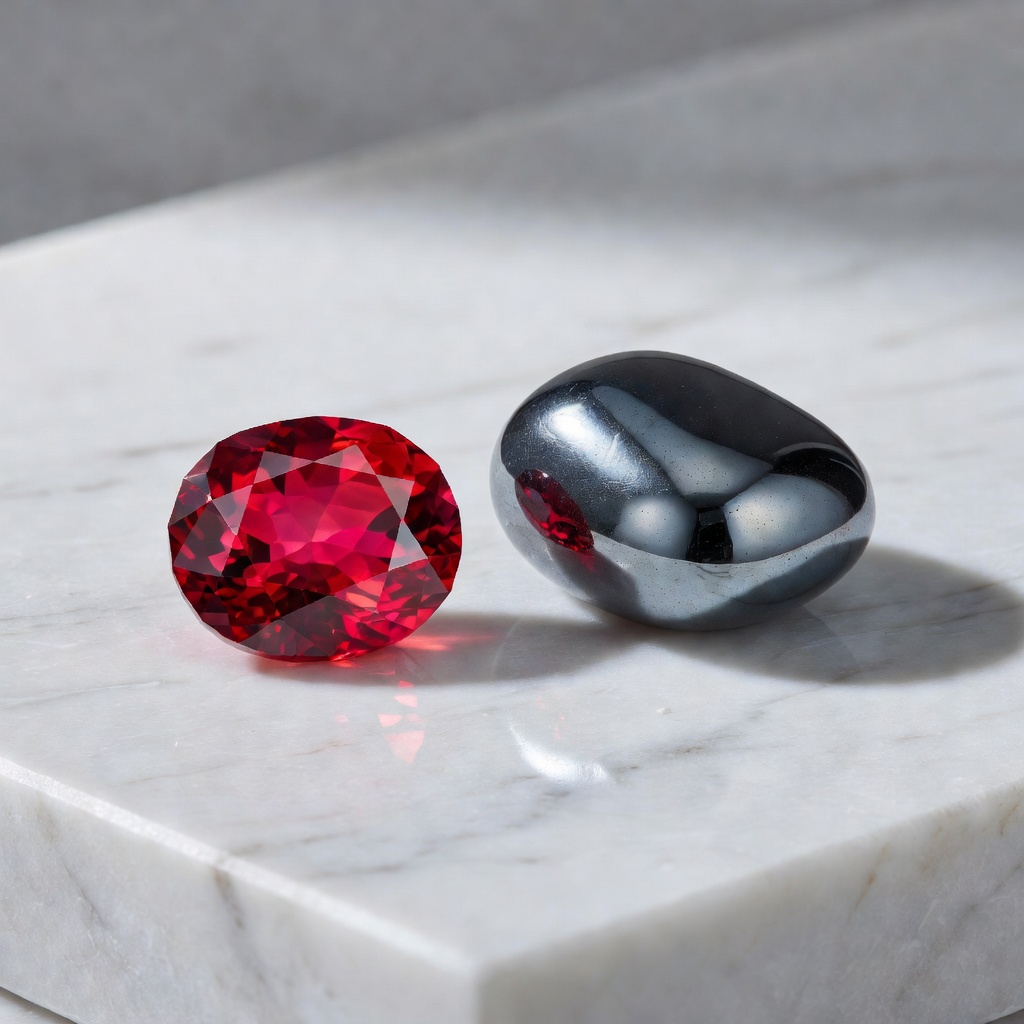
Hematite presents a dramatically different visual profile, characterized by its opaque nature and distinctive metallic to submetallic luster that resembles polished steel or gunmetal. While some specimens exhibit a reddish-brown streak when scratched on unglazed porcelain, the stone itself typically appears steel-gray to black with a mirror-like surface when polished. Unlike ruby's warm, glowing red, hematite's color remains cool and steely, lacking any transparency even in thin slices. Practical tip for collectors: place the stone over printed text—ruby may allow blurred letters to show through, while hematite blocks all light completely.
Mohs Hardness and Durability Factors
The gemstone hardness scale reveals dramatic differences in these materials' suitability for daily wear, with ruby ranking 9 on the Mohs scale—second only to diamond in natural mineral hardness. This exceptional hardness enables rubies to withstand decades of wear in engagement rings and heirloom jewelry without scratching, though cutters must account for perfect cleavage planes that can cause splitting if struck at specific angles. For example, the legendary Sunrise Ruby, which sold for $30 million at auction, remains wearable today despite being centuries old, demonstrating corundum's remarkable longevity when properly set.
Hematite measures significantly lower at 5.5 to 6.5 on the Mohs scale, comparable to ordinary glass or steel, making it vulnerable to scratches from daily activities like typing, cooking, or accidental impacts against hard surfaces. Unlike ruby's cleavage, hematite exhibits conchoidal fracture and brittleness, meaning it can shatter or crumble when dropped on tile floors or knocked against countertops. Case study: A jewelry repair shop reported that 40% of hematite ring repairs involved cracked cabochons or chipped beads, whereas ruby repairs typically involved loose prongs rather than stone damage. For this reason, jewelers recommend reserving hematite for pendants, earrings, or occasional-use bracelets rather than daily-wear rings.
Ruby vs Hematite: Comprehensive Comparison
| Characteristic | Ruby (Precious Corundum) | Hematite (Iron Oxide) |
|---|---|---|
| Chemical Composition | Aluminum oxide (Al₂O₃) with chromium | Iron oxide (Fe₂O₃) |
| Mohs Hardness | 9 (Excellent for daily wear) | 5.5-6.5 (Requires protection) |
| Appearance | Transparent to translucent, vitreous luster, fluorescent red | Opaque, metallic to submetallic luster, steel-gray to black |
| Price Range | $1,000-$100,000+ per carat (depending on origin/treatment) | $1-$10 per carat (abundant supply) |
| Primary Uses | High-end jewelry, engagement rings, investment pieces | Men's jewelry, beaded bracelets, grounding pendants, decorative objects |
| Care Requirements | Ultrasonic and steam cleaning safe (untreated); durable | Avoid water exposure; clean with soft dry cloth only |
| Metaphysical Associations | Heart chakra, passion, vitality, life force energy | Root chakra, grounding, protection, stability |
Market Value and Investment Potential
The economic disparity between these stones reflects their relative scarcity and cultural prestige within the precious vs semi-precious stones hierarchy. Fine unheated Burmese rubies command premium prices ranging from $1,000 per carat for commercial quality to over $100,000 per carat for exceptional pigeon blood specimens exceeding five carats. These stones function as legitimate alternative investments, with documented price appreciation of 5-8% annually for untreated Mogok material, comparable to blue sapphires and emeralds. However, buyers must demand certification regarding heat treatment, as 95% of modern rubies undergo thermal enhancement to improve clarity and color, significantly affecting resale value.
Hematite remains accessible to all budgets, typically retailing between $1 and $10 per carat for cabochons and beads, with even large sculptural pieces rarely exceeding a few hundred dollars. This affordability stems from abundant global deposits in locations like Brazil, Australia, and the Lake Superior region, where the mineral occurs in massive formations suitable for industrial and decorative use. While hematite lacks investment potential, its value lies in accessibility and aesthetic versatility, allowing designers to create bold statement pieces without financial risk. Practical consideration: When building a jewelry collection, allocate budget toward ruby for milestone pieces (anniversaries, engagements) while using hematite for trendy fashion jewelry that follows seasonal styles.
Jewelry Design Applications and Settings
Ruby's exceptional hardness and brilliance make it the quintessential center stone for high-end ruby jewelry including engagement rings, tennis bracelets, and cocktail earrings designed for generational transfer. Master jewelers typically set fine rubies in 18k yellow gold to enhance their warm red tones, or platinum for modern aesthetics that emphasize the stone's purity. The gem's durability allows for delicate prong settings, bezel mounts, and intricate pavé work without fear of edge chipping during the setting process. Design example: The Cartier Panther ring featuring a 10-carat Burmese ruby surrounded by onyx and diamonds demonstrates how this stone anchors luxury designs that withstand daily scrutiny.
Hematite jewelry dominates alternative fashion and men's accessory markets, frequently appearing as beaded bracelets, cufflinks, and shield-shaped pendants that emphasize the mineral's metallic coolness. Designers favor hematite for bold, architectural pieces that pair with oxidized silver, gunmetal finishes, or black titanium to create cohesive monochromatic statements. However, the stone's brittleness necessitates protective settings—bezel mounts with full backs or thick glue-on bails for pendants—to prevent edge chipping. Style tip: Combine hematite beads with turquoise or lapis lazuli for complementary color contrast, or pair with black spinel for textural variation in all-black jewelry suites. Avoid using hematite in rings with exposed edges or thin bands that flex during wear.
Metaphysical Properties and Healing Benefits
Crystal practitioners associate ruby healing properties with the heart chakra, attributing to this stone the ability to stimulate life force energy (chi), enhance passion, and promote courage during challenging transitions. Historical texts from ancient India describe ruby as "ratnaraj" or "king of precious stones," believed to protect warriors in battle while warning owners of impending danger by darkening in color. Modern energy workers recommend placing ruby on the heart center during meditation to overcome emotional lethargy or placing specimens on office desks to stimulate creative ambition and leadership qualities. Case study: A corporate executive reported wearing a ruby pendant during high-stakes negotiations, citing the stone's warm energy as a confidence anchor comparable to power dressing.
Hematite serves distinctly different energetic purposes, connecting primarily to the root chakra to provide grounding, stability, and psychic protection against electromagnetic frequencies and negative environmental energies. Ancient Romans associated hematite with Mars, the god of war, carving the mineral into signet rings and amulets believed to confer invincibility in combat. Contemporary crystal healing practices utilize hematite during anxiety management, with practitioners recommending holding tumbled stones during panic attacks or placing specimens near electronic devices to absorb electromagnetic pollution. Practical application: Create a "grounding grid" by placing four hematite stones at the corners of your workspace to maintain focus during intensive tasks, while keeping a ruby nearby to inspire creative problem-solving—together they balance earthly stability with fiery innovation.
Care and Maintenance Requirements
Maintaining ruby's brilliance requires minimal effort due to the stone's chemical inertness and hardness. Untreated natural rubies tolerate ultrasonic cleaners and steam cleaning, though treated stones require gentler methods using warm soapy water and soft brushes to avoid damaging fracture fillings or glass residues. Store ruby jewelry separately from softer gems like opals or pearls to prevent the corundum from scratching neighboring pieces, but feel confident wearing ruby rings during most daily activities including hand washing and light gardening. Professional tip: Schedule annual inspections with a jeweler to check prong security, as the metal settings may wear before the stone shows any degradation.
Hematite jewelry care demands significantly more vigilance due to the mineral's iron content and porosity. Never submerge hematite in water or expose it to harsh chemicals, humidity, or sweat, as moisture triggers oxidation that creates reddish rust stains and surface degradation. Clean specimens using only a soft, dry microfiber cloth to remove skin oils and dust, storing pieces in airtight containers with silica gel packets to prevent atmospheric moisture absorption. If rust appears, gentle buffing with a dry jeweler's polishing cloth may restore luster, though heavily oxidized stones require professional repolishing. Warning example: A collector stored a hematite pendant in a bathroom jewelry box, where shower steam caused irreversible rust pitting within three months—always store hematite in bedroom dresser drawers away from bathroom humidity.
Making Your Choice: Lifestyle and Budget Considerations
Selecting between these stones ultimately depends on aligning material properties with intended use, budget constraints, and symbolic meaning. For engagement rings or daily-wear heirloom pieces, ruby offers unparalleled durability and appreciation potential, justifying the higher initial investment through decades of wear and potential value increase. Consider your recipient's activity level—if they work with their hands, participate in sports, or lead active lifestyles, ruby's hardness of 9 provides security that hematite cannot match. Budget strategy: If a fine Burmese ruby exceeds current means, consider a heated Thai or African ruby as a starter stone that can be upgraded later, rather than compromising on a soft stone unsuitable for daily wear.
Hematite suits buyers seeking affordable metaphysical tools, fashion-forward statement pieces, or jewelry for occasional formal events where the metallic luster complements evening wear. This stone particularly appeals to those drawn to grounding and protection symbolism or individuals with metal allergies seeking alternatives to traditional silver and gold. Gifting guidance: Present hematite to friends beginning meditation practices or recovering from illness (as a grounding aid), while reserving ruby for romantic partners, significant milestones, or professional achievements requiring recognition. Decision matrix: Choose ruby for "forever pieces" and investment; choose hematite for spiritual practice, trendy accessories, and budget-conscious fashion experimentation.
Frequently Asked Questions
Is hematite a type of ruby?
No, hematite is not a type of ruby. While both can appear reddish, they are completely different minerals. Ruby is a precious corundum (aluminum oxide) valued for its transparency and fluorescence, while hematite is an iron oxide mineral known for its metallic luster and opaque appearance.
Which is more valuable, ruby or hematite?
Ruby is significantly more valuable than hematite. High-quality rubies can command thousands to hundreds of thousands of dollars per carat, especially Burmese stones. Hematite is an abundant mineral typically priced at a few dollars per carat, making it an affordable option for fashion jewelry.
Can I wear hematite jewelry every day?
Hematite is not ideal for everyday wear, especially in rings or bracelets, due to its 5.5-6.5 hardness rating and brittle nature. It scratches easily and can crack upon impact. Ruby, with a hardness of 9, is much better suited for daily wear and heirloom pieces.
How do I distinguish between ruby and red hematite?
Check the luster and transparency: rubies have a glassy (vitreous) luster and are often transparent to translucent with internal clarity, while hematite has a distinctive metallic shine and is completely opaque. Ruby glows red under UV light; hematite does not fluoresce.
Do rubies and hematite have similar healing properties?
No, they serve different energetic purposes. Ruby is associated with the heart chakra, stimulating passion, courage, and life force energy. Hematite connects to the root chakra, providing grounding, protection, and stability. They can actually complement each other in crystal healing practices.
Which stone is better for an engagement ring?
Ruby is the superior choice for engagement rings due to its exceptional hardness (9/10), durability, and symbolism of eternal love. Hematite is too soft and brittle for daily wear in rings, risking damage during everyday activities.
Can you combine ruby and hematite in the same jewelry piece?
Yes, ruby and hematite create striking contrast in jewelry designs, combining ruby's fiery red with hematite's metallic coolness. However, ensure settings protect the softer hematite from rubbing against the harder ruby, and consider occasional wear rather than daily use to preserve both stones.