The Titans of Rare Gemstones: An In-Depth Analysis of Ruby vs Grandidierite
When collectors and investors discuss the pinnacle of colored gemstones, two names consistently emerge as the ultimate prizes: the legendary Ruby, long celebrated as the "King of Gems," and the elusive Grandidierite, a rare blue gemstone that remains unknown even to many seasoned jewelry enthusiasts. While Rubies have adorned the crowns of emperors and the fingers of Hollywood royalty for millennia, Grandidierite represents one of the most recent additions to the pantheon of precious stones, discovered only in the early 20th century in the remote reaches of Madagascar. Comparing these two extraordinary gems reveals fascinating insights about geological rarity, market dynamics, and the evolving definition of value in the high-end jewelry market. Whether you are building a serious investment portfolio or selecting a once-in-a-lifetime engagement stone, understanding the distinct characteristics that separate these mineralogical marvels will guide your decision-making process and ensure your acquisition aligns with both your aesthetic preferences and practical lifestyle needs.
Origins and Geological Formation
The journey of both Ruby and Grandidierite from deep within the Earth's crust to jewelry showcases involves dramatically different geological processes that fundamentally influence their availability and characteristics. Rubies form as varieties of corundum under intense heat and pressure within metamorphic rocks, specifically developing in both marble and basalt deposits across Myanmar, Thailand, Mozambique, and Vietnam. The most prized specimens originate from Myanmar's legendary Mogok Valley, where marble-hosted deposits have yielded stones with the coveted "pigeon's blood" hue for over 800 years, while more recent Mozambique discoveries in the Montepuez region have provided the market with larger, cleaner stones that offer accessible entry points for collectors.
Grandidierite presents an entirely different geological narrative, having formed exclusively in high-pressure, low-temperature metasomatic rocks in southern Madagascar's Andrahomana region, with later discoveries in Sri Lanka's Ratnapura district. Named after French explorer Alfred Grandidier who documented Madagascar's natural history, this rare blue gemstone requires very specific conditions involving boron-rich pegmatites interacting with surrounding metamorphic rocks, a combination so unique that viable deposits have been found in only two locations worldwide. The extreme specificity of these formation conditions means that unlike Ruby, which benefits from multiple productive mining regions, Grandidierite deposits remain frustratingly limited and unpredictable in their yield.
Mining challenges for both stones extend beyond mere geological difficulty into complex ethical and political territories. Burmese Ruby mining has faced decades of controversy regarding military junta involvement and labor practices, leading many Western dealers to favor certified ethical sources in Mozambique or Thailand. Meanwhile, Grandidierite extraction faces challenges related to Madagascar's political instability and informal mining sector, where artisanal miners often lack proper safety equipment while working in treacherous cliff-side deposits. Responsible collectors should always demand documentation proving ethical sourcing, whether acquiring red corundum properties from established dealers or seeking this ultra-rare blue treasure from verified Madagascar operations.
Physical Properties and Durability
Understanding the structural differences between these gemstones proves essential for anyone considering them for jewelry applications, as their physical characteristics dictate everything from daily wearability to setting requirements. Ruby boasts exceptional durability with a ranking of 9 on the Ruby hardness Mohs scale, making it second only to diamond in terms of scratch resistance and suitable for even the most demanding daily wear scenarios including engagement rings and bracelets. This remarkable toughness stems from its trigonal crystal structure and strong atomic bonding within the corundum family, allowing it to withstand impacts that would shatter softer stones while maintaining its polish through decades of continuous wear.
Grandidierite presents a more delicate profile with a Mohs hardness of 7.5, which while respectable among gemstones, places it in a category requiring thoughtful protection and careful handling. Its orthorhombic crystal system features perfect cleavage in one direction, meaning that a sharp blow along specific planes could cause the stone to split or chip, a vulnerability absent in Ruby's more robust structure. Additionally, while Ruby lacks cleavage planes entirely, Grandidierite's crystallographic structure demands protective settings such as bezels or halo designs that shield the girdle and corners from direct impact during daily activities.
These physical distinctions extend to manufacturing processes, as lapidaries must approach each stone with different techniques to maximize beauty while minimizing risk. Ruby's exceptional toughness allows for intricate cutting styles including sharp-edged step cuts and high-relief cabochons, while Grandidierite requires more conservative approaches that avoid thin girdles or exposed points that could serve as stress concentrators. When evaluating Grandidierite vs Ruby value from a practical standpoint, one must factor in the long-term maintenance costs and insurance considerations associated with owning a stone that cannot withstand the rigors of daily wear without protective precautions.
Color Spectrum and Visual Characteristics
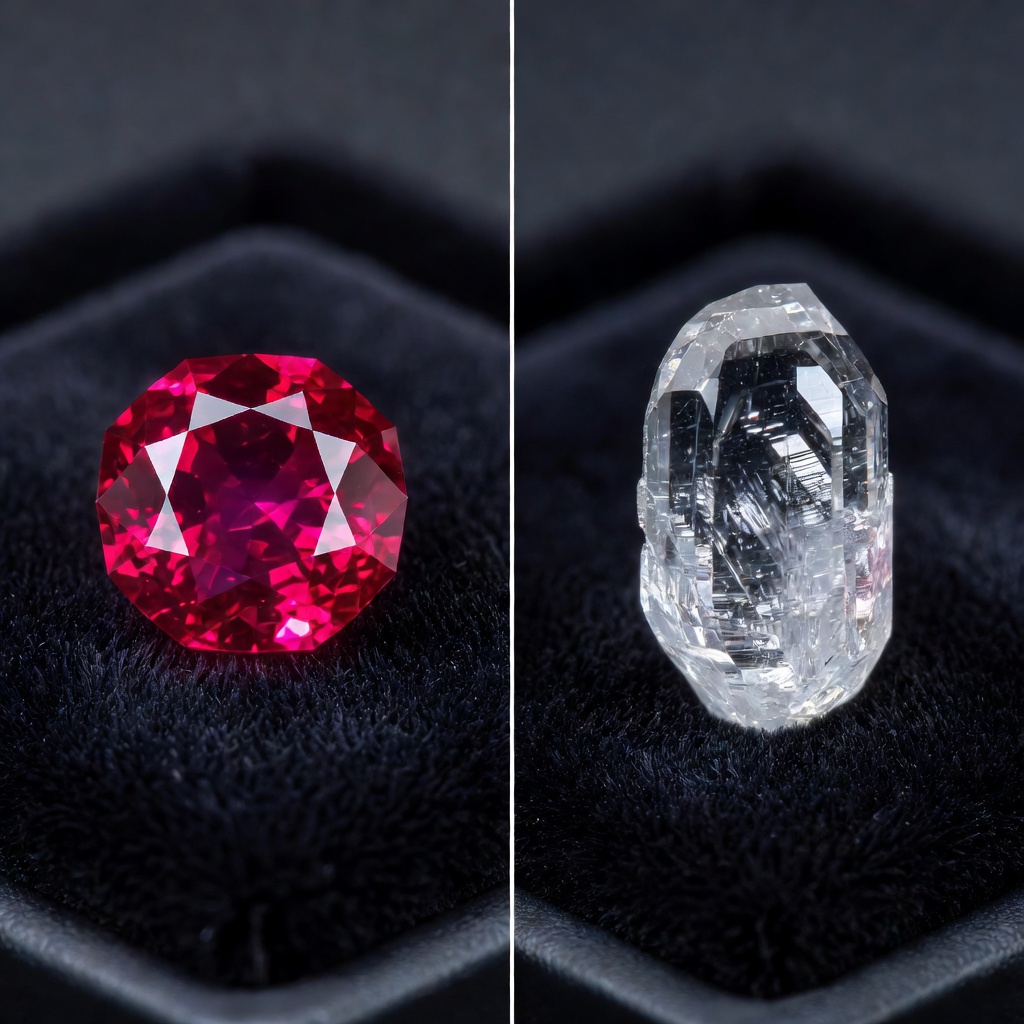
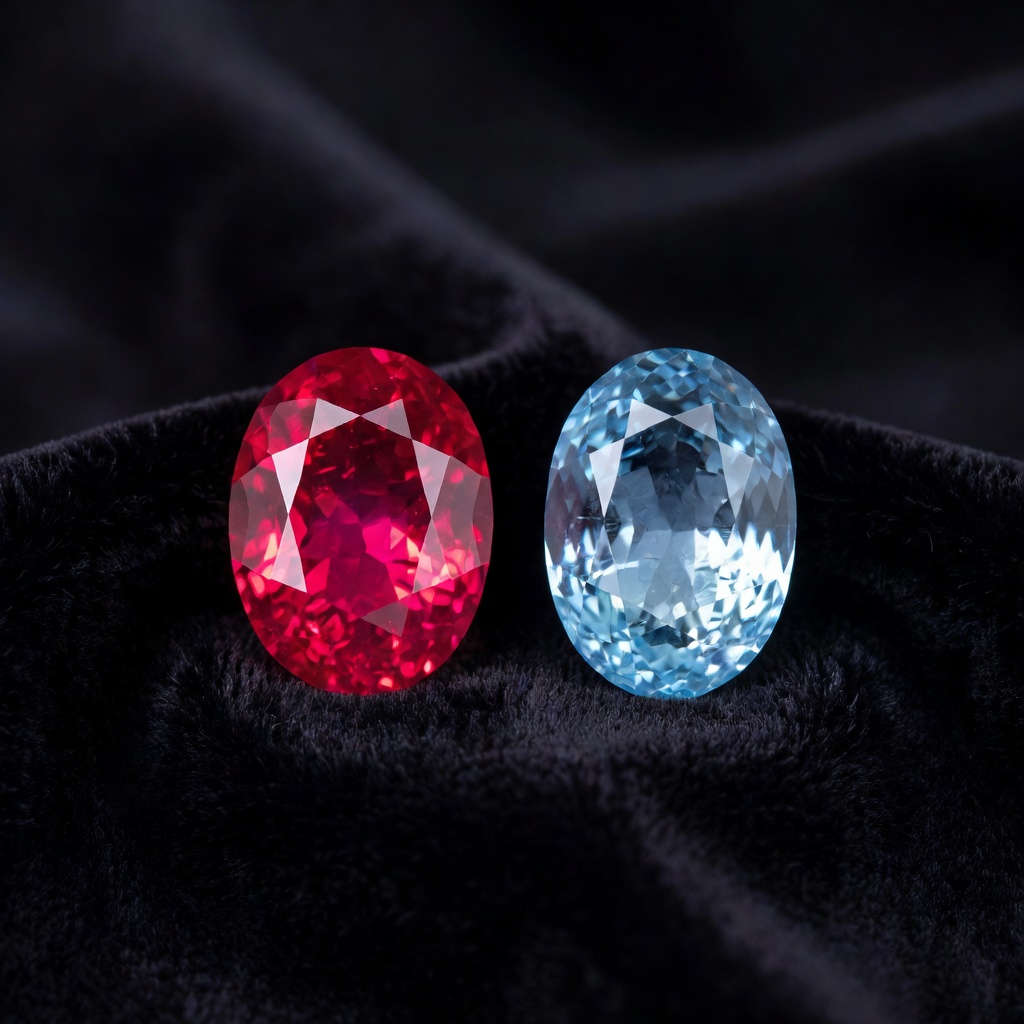
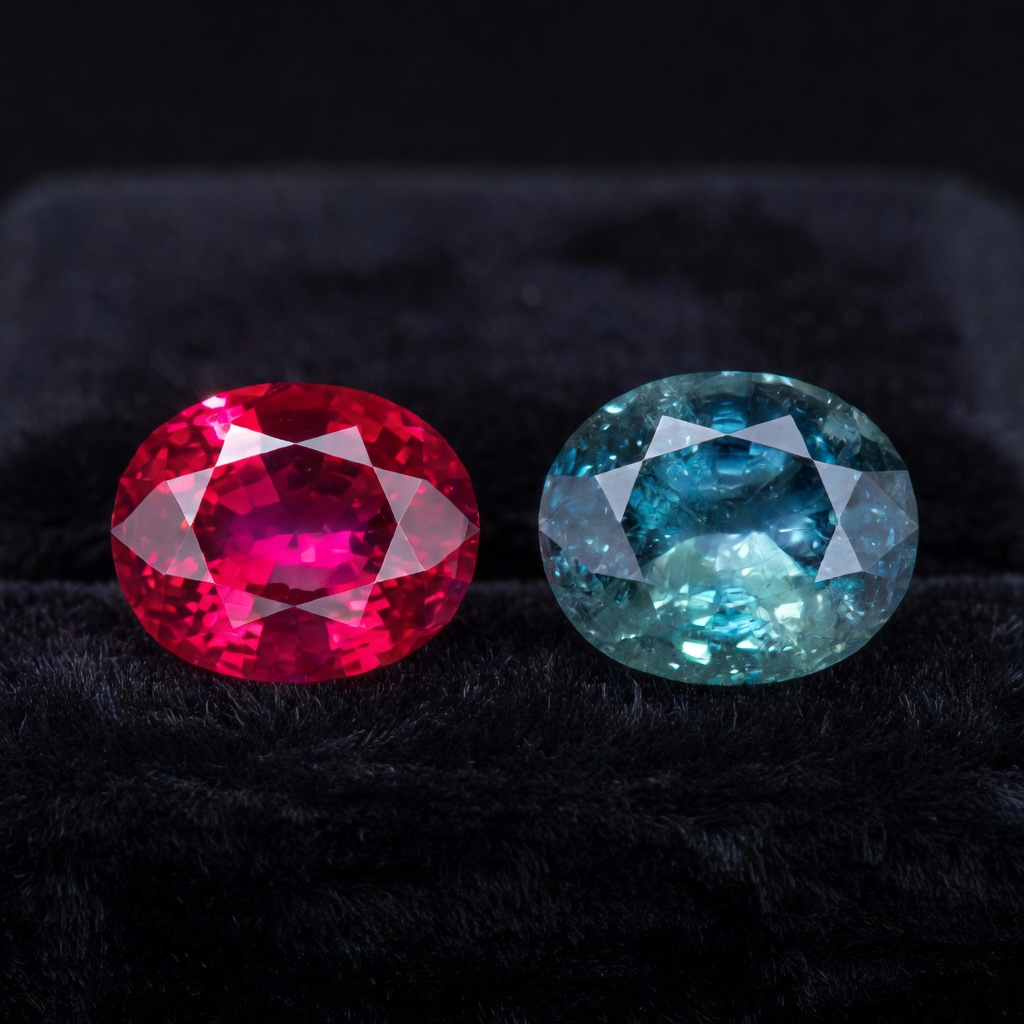
The visual allure of these gemstones derives from fundamentally different optical phenomena that create distinct aesthetic experiences for the viewer. Ruby's iconic red coloration results from chromium ions replacing aluminum within the corundum crystal lattice, with the most valuable specimens exhibiting the legendary "pigeon's blood" red—a pure, vibrant hue with a hint of blue that appears to glow from within due to chromium-induced fluorescence under natural daylight. This fluorescence, combined with subtle silk inclusions of rutile needles, creates a velvety texture that distinguishes fine Burmese stones from their Thai or African counterparts, which often appear darker or more garnet-like due to higher iron content dampening the fluorescent effect.
Grandidierite offers a completely different chromatic experience through its remarkable trichroic properties, displaying three distinct colors—blue, green, and white or colorless—when viewed from different crystallographic directions. This pleochroism results from iron and magnesium content within its complex borosilicate chemical composition, requiring master cutters to orient the stone carefully to maximize the desirable blue face-up appearance while minimizing the green or white directions that detract from value. Unlike Ruby, which maintains relatively consistent color from all angles, a poorly cut Grandidierite might appear murky or greenish rather than exhibiting the electric blue that makes this rare blue gemstone so coveted among connoisseurs.
Clarity expectations differ dramatically between these stones, influencing both their appearance and value propositions. Rubies typically contain characteristic inclusions known as "silk" (rutile needles), "fingers" (healing fractures), and color zoning, with untreated eye-clean stones over five carats commanding astronomical prices due to their extreme scarcity. Grandidierite, conversely, is almost never completely transparent in large sizes, with facet-grade material typically showing a desirable translucent to semi-transparent quality that actually enhances its mystical appearance by creating depth and glow rather than the "glassy" look of perfectly clear stones. When examining red corundum properties versus this Madagascar rarity, collectors must adjust their expectations: Ruby perfection means minimal inclusions with strong color, while Grandidierite beauty often embraces a dreamy, aqueous quality where slight haziness actually enhances rather than detracts from the stone's otherworldly appeal.
Rarity and Market Availability
The supply dynamics governing these two gemstones reveal stark contrasts that directly impact their investment potential and collector accessibility. Grandidierite represents one of the rarest gem-quality minerals on Earth, with facet-grade material constituting less than one percent of all rough recovered from Madagascar's limited deposits, and virtually no new significant discoveries since the original 1902 find until recent minor yields in Sri Lanka. Annual global production of fine Grandidierite rarely exceeds a few hundred carats of cuttable material, making large, clean specimens over two carats genuine museum pieces that appear on the market perhaps once or twice per year through exclusive dealers or high-end auction houses.
Ruby, while certainly rare in fine qualities, maintains a more robust supply chain through established mining operations in Mozambique, Myanmar, and secondary deposits across Africa and Asia. However, the market faces increasing pressure as Myanmar's legendary Mogok mines deplete their alluvial deposits, forcing miners into deeper, more expensive hard-rock operations that yield fewer of the historic "pigeon's blood" quality stones. Mozambique has emerged as the dominant producer of commercial-quality Rubies, yet even these prolific mines cannot satisfy global demand for untreated, vivid red stones over three carats, creating a bifurcated market where exceptional Burmese specimens become progressively rarer while African material provides more accessible entry points.
The geopolitical landscape significantly influences availability for both stones, though in different ways. Madagascar's political instability and weak infrastructure have prevented systematic exploration and development of Grandidierite deposits, leaving the gemstone vulnerable to supply shocks if the primary Andrahomana deposit plays out or becomes inaccessible. Ruby markets similarly suffer from Myanmar's complex political situation, where American sanctions historically restricted the import of Burmese stones, though recent regulatory changes have reopened some trade channels. Savvy collectors monitoring Grandidierite vs Ruby value trends must track these geopolitical factors, as a new Madagascar discovery could theoretically flood the niche Grandidierite market, while continued depletion of Asian Ruby sources will likely drive prices for fine red stones ever higher.
Price Analysis and Investment Potential
The financial trajectories of these gemstones reflect their distinct positions within the luxury market, with both commanding impressive per-carat prices while serving different investment strategies. Record-breaking auction results demonstrate Ruby's established status among the most expensive gemstones, with the 25.59-carat "Sunrise Ruby" selling for over $30 million in 2015 (approximately $1.2 million per carat) and untreated Burmese specimens consistently achieving six-figure sums per carat when they appear at Sotheby's or Christie's. These prices reflect centuries of established demand from Asian collectors, European royalty, and American industrialists who view fine Ruby as a store of wealth comparable to blue diamonds or Kashmir sapphires.
Grandidierite occupies a more volatile but potentially lucrative niche, with fine blue specimens commanding between $10,000 and $50,000 per carat depending on size and clarity, placing it among the highest-priced colored gems despite its relative obscurity to the general public. The Grandidierite price per carat has appreciated dramatically over the past decade as awareness spreads among gemologists and collectors, with early investors who acquired stones in the 1990s seeing values increase tenfold or more. However, this market lacks the liquidity of Ruby trading, where established dealers maintain waiting lists for fine stones and auction houses feature them regularly, whereas selling a Grandidierite quickly might require significant discounts or patience to find the right specialist collector.
Investment portfolios benefit from different attributes of each stone: Ruby offers stability, provenance prestige, and immediate liquidity for those holding certified Burmese or high-quality Mozambique material, functioning similarly to blue-chip stocks in the gemstone world. Grandidierite presents higher risk but potentially exponential returns should the stone gain mainstream recognition comparable to Paraiba tourmaline's trajectory from obscure mineral to $50,000-per-carat phenomenon. Certification from prestigious laboratories such as the Gemological Institute of America (GIA), American Gemological Laboratories (AGL), or Swiss Gemmological Institute (SSEF) proves absolutely essential for both stones, as untreated Rubies command premiums of 300-500% over heated stones, and Grandidierite's rarity makes it a target for simulants and misrepresented specimens. Serious investors should acquire both: Ruby for portfolio stability and Grandidierite for speculative growth in the ultra-rare gemstone sector.
| Characteristic | Ruby (Red Corundum) | Grandidierite |
|---|---|---|
| Hardness (Mohs Scale) | 9.0 (Excellent for daily wear) | 7.5 (Requires protective settings) |
| Color Cause | Chromium ions (+ iron in some deposits) | Iron and magnesium content; trichroic properties |
| Crystal System | Trigonal (no cleavage) | Orthorhombic (perfect cleavage in one direction) |
| Primary Sources | Myanmar, Mozambique, Thailand, Vietnam | Madagascar (primary), Sri Lanka (secondary) |
| Rarity Level | Rare in fine qualities; moderate commercial availability | Extremely rare; facet-grade represents <1% of findings |
| Price Range (High Quality) | $10,000–$1,000,000+ per carat | $10,000–$50,000+ per carat |
| Best Jewelry Applications | Engagement rings, bracelets, daily wear pieces | Pendants, earrings, special occasion rings with bezels |
| Care Requirements | Ultrasonic cleaning safe; highly durable | Avoid ultrasonic; protect from sharp impacts |
| Market Liquidity | High; established auction presence | Limited; specialized collector market |
| Investment Profile | Stable, blue-chip asset | High-risk, high-reward speculative asset |
Jewelry Applications and Setting Considerations
The divergent physical properties of these gemstones dictate distinct approaches to jewelry design, with Ruby's exceptional durability allowing for versatile applications that Grandidierite's more delicate nature cannot accommodate. Ruby's toughness and lack of cleavage make it the premier choice for engagement rings and daily-wear bracelets, capable of withstanding the knocks and abrasions of active lifestyles while maintaining its brilliance for generations. High jewelry houses such as Cartier and Van Cleef & Arpels frequently feature Rubies in elaborate bracelets and rings designed for continuous wear, secure in the knowledge that these stones will outlast their metal settings and remain pristine through decades of daily use.
Grandidierite demands more thoughtful placement within jewelry collections, excelling in protected settings that showcase its unique color while safeguarding its vulnerabilities. Pendant necklaces and earrings represent ideal applications, as these pieces experience less physical trauma than rings while allowing light to pass through the stone's translucent body, maximizing its ethereal glow. When set in rings, this rare blue gemstone requires protective bezels or substantial halos that extend slightly above the girdle to prevent edge chipping, with designs that avoid high-profile settings that could snag on clothing or strike hard surfaces during daily activities. Contemporary designers increasingly favor Grandidierite for statement cocktail rings intended for special occasions rather than everyday wear, acknowledging that its fragility makes it a "jewelry box treasure" rather than a daily companion.
Metal selection and design aesthetics further differentiate how these stones are presented to maximize their inherent beauty. Traditionalists often pair Rubies with yellow gold, which enhances the warmth of "pigeon's blood" specimens and creates a classic, regal appearance reminiscent of Mughal jewelry and Victorian-era designs. White metals such as platinum or white gold better serve Grandidierite, providing a cool backdrop that emphasizes its oceanic blue tones without the color competition that yellow gold might create. Current trends show increasing appreciation for Grandidierite in Art Deco-inspired settings that echo the stone's 1920s discovery period, while untreated Rubies continue to dominate contemporary minimalist settings that highlight the gem's natural beauty without elaborate metalwork distractions.
Care, Maintenance, and Longevity
Proper maintenance protocols vary significantly between these stones due to their differing hardness levels and internal structures, requiring owners to adopt specific care routines that preserve value and appearance. Ruby's exceptional hardness of 9 on the Mohs scale allows for safe cleaning in ultrasonic devices and steam cleaners, making maintenance convenient for owners of Ruby engagement rings or frequently worn pieces. However, owners should note that fracture-filled or heavily included Rubies may still suffer damage from ultrasonic vibrations, and all stones benefit from gentle cleaning with warm soapy water and soft brushes to remove accumulated oils and debris from setting crevices.
Grandidierite requires significantly more cautious handling, with strict avoidance of ultrasonic cleaning due to its perfect cleavage and potential internal stress fractures that could propagate under vibrational stress. Owners should clean this rare blue gemstone using only lukewarm water with mild detergent and soft microfiber cloths, taking care to rinse thoroughly to prevent soap film buildup that could dull its surface luster. Storage presents another critical consideration: while Rubies can be stored alongside other hard gemstones like sapphires and diamonds, Grandidierite must be kept separately in padded compartments to prevent scratching from harder stones, and should never be tossed loosely into jewelry boxes where contact with metal findings or other gems could abrade its surface.
Heat sensitivity concerns affect both stones, though Rubies generally withstand the high temperatures used in jewelry repair and retipping processes without damage, whereas Grandidierite requires jeweler awareness of its presence in pieces undergoing maintenance to avoid thermal shock. Insurance considerations differ markedly as well; while standard jewelry riders adequately cover most Ruby pieces, high-value Grandidierite may require specialized fine art insurance policies with agreed-value clauses due to the difficulty of replacement and appraisal challenges associated with this obscure gem. Professional appraisals should occur every two to three years for investment-grade specimens of either stone, with documentation updated to reflect current market conditions and any changes in treatment disclosure standards that might affect valuation.
Cultural Significance and Metaphysical Properties
Beyond their physical beauty and investment value, these gemstones carry distinct cultural weights and metaphysical associations that influence buyer preferences and gifting traditions. Ruby maintains one of the most illustrious histories in human civilization, revered across ancient Sanskrit texts as "Ratnaraj" (King of Precious Stones) and believed by Burmese warriors to render them invincible in battle when inserted beneath the skin. European royalty adopted Ruby as symbols of passion, protection, and power, with the British Crown Jewels featuring massive Burmese Rubies that supposedly warned their wearers of impending danger by darkening in color—a property actually caused by changes in ambient lighting conditions but interpreted as mystical foresight.
Grandidierite lacks the millennia of historical attribution enjoyed by Ruby, having been discovered only in 1902, yet it has rapidly acquired a devoted following among modern crystal healing practitioners who associate this rare blue gemstone with enhanced communication, self-confidence, and spiritual growth. Metaphysical practitioners believe the stone's trichroic nature—showing blue, green, and white simultaneously—aligns it with the throat chakra (communication), heart chakra (emotional healing), and crown chakra (spiritual connection), making it a versatile tool for holistic practitioners. While these properties lack scientific validation, they drive significant demand among New Age collectors who value Grandidierite not merely as a mineralogical curiosity but as a tool for personal development and meditation practices.
Birthstone traditions further differentiate these gems in the consumer market. Ruby serves as the official birthstone for July and the traditional gift for 40th wedding anniversaries, ensuring steady commercial demand from family members seeking meaningful presents. Grandidierite holds no traditional calendar assignment, limiting its mainstream appeal but enhancing its exclusivity among collectors who specifically seek non-traditional stones. Contemporary chakra alignment theories place Ruby firmly in the root chakra category for grounding and vitality, while some modern practitioners associate it with the heart due to its red color, creating interesting overlap with Grandidierite's purported heart-healing properties. Whether approached from a historical, spiritual, or purely aesthetic perspective, both stones offer rich narrative possibilities that enhance their desirability beyond mere mineralogical specifications.
Final Verdict: Which Gemstone Should You Choose?
Selecting between these exceptional gemstones ultimately requires honest assessment of lifestyle factors, budget constraints, and collecting objectives rather than simply choosing the "better" stone. For individuals seeking a daily-wear engagement ring or heirloom piece intended for constant use, Ruby emerges as the clear winner due to its superior hardness, toughness, and ability to withstand decades of continuous wear without degradation. Active professionals, parents with young children, or anyone prone to knocking their hands against desks and doorframes should prioritize Ruby's durability, accepting that while top-tier Burmese stones command premium prices, even commercial-quality Mozambique Rubies offer better long-term value than a chipped or scratched Grandidierite.
Collectors and investors with diverse portfolios should strongly consider acquiring both stones to balance stability with speculative growth potential. Budget considerations play a crucial role: while $50,000 might secure a modest Grandidierite of exceptional rarity, the same investment could acquire a significant, untreated Ruby with established resale markets and documented appreciation history. First-time buyers entering the rare gemstone market should establish relationships with reputable dealers through Ruby purchases first, as the established certification standards and market transparency for red corundum provide safer learning experiences than the wild-west atmosphere surrounding Grandidierite authentication, where undocumented rough occasionally appears on the market with questionable provenance.
Seasoned collectors seeking portfolio diversification should view Grandidierite as a calculated risk with asymmetric upside potential: the stone's extreme scarcity and growing awareness among gemologists suggest significant appreciation if major jewelry houses begin featuring it in high-profile collections, similar to the trajectory experienced by alexandrite or Paraiba tourmaline. Ultimately, the ideal collection includes Ruby for its historical significance, liquidity, and durability, complemented by Grandidierite for its exclusivity and mineralogical rarity. Whether choosing the fiery passion of red corundum properties or the oceanic mystery of this Madagascar discovery, both stones represent the pinnacle of natural artistry—selecting between them means choosing between two different expressions of Earth's geological magnificence.
Frequently Asked Questions
Which is more expensive, Ruby or Grandidierite?
While high-quality Burmese Rubies consistently command higher prices at auction (often exceeding $1 million per carat for exceptional specimens), fine Grandidierite ranges from $10,000 to $50,000 per carat. However, Grandidierite's extreme rarity makes it potentially more valuable per carat for investment-grade pieces due to limited supply.
Is Grandidierite rarer than Ruby?
Yes, Grandidierite is significantly rarer than Ruby. Gem-quality Grandidierite has been found in only two locations worldwide (Madagascar and Sri Lanka), with facet-grade material representing less than 1% of all finds. While fine Rubies are rare, they are mined in multiple countries with greater overall production.
Can you wear Grandidierite every day?
Grandidierite is not recommended for daily wear in rings due to its 7.5 hardness on the Mohs scale and perfect cleavage, making it susceptible to chipping and scratching. It's best suited for pendants, earrings, or occasional wear pieces with protective settings, whereas Ruby's 9 hardness makes it ideal for everyday jewelry.
What causes the color difference between Ruby and Grandidierite?
Ruby's red color comes from chromium ions replacing aluminum in the corundum crystal structure, sometimes enhanced by iron and fluorescence under UV light. Grandidierite's blue-green color results from iron and magnesium content within its complex borosilicate composition, displaying pleochroism (showing different colors from different angles).
Which gemstone is better for investment purposes?
Rubies offer better liquidity and established market demand, particularly Burmese untreated stones. Grandidierite represents higher risk but potentially greater appreciation due to extreme scarcity. Savvy investors often include both: Ruby for portfolio stability and Grandidierite for speculative rare asset growth.
How can I tell if a Ruby or Grandidierite is authentic?
Authentic Ruby should show strong fluorescence under UV light and characteristic inclusions like silk (rutile needles). Grandidierite exhibits distinct trichroism (blue, green, and colorless) when viewed through a dichroscope. Always demand certification from reputable labs like GIA or SSEF, as both stones have synthetic and treated simulants on the market.
What is the hardness difference between Ruby and Grandidierite?
Ruby ranks 9 on the Mohs hardness scale, making it extremely durable and suitable for all jewelry types including engagement rings. Grandidierite ranks 7.5 on the Mohs scale, requiring more careful handling and protective settings to prevent surface scratches and damage from daily wear.
Where can I buy authentic Ruby or Grandidierite?
Purchase only from established dealers who provide independent laboratory certification (GIA, AGL, SSEF). Reputable auction houses like Sotheby's and Christie's offer investment-grade stones, while specialized gemstone dealers in Bangkok, Geneva, and Tucson provide collector specimens. Avoid online marketplaces without verification guarantees, as both stones are frequently imitated or treated.