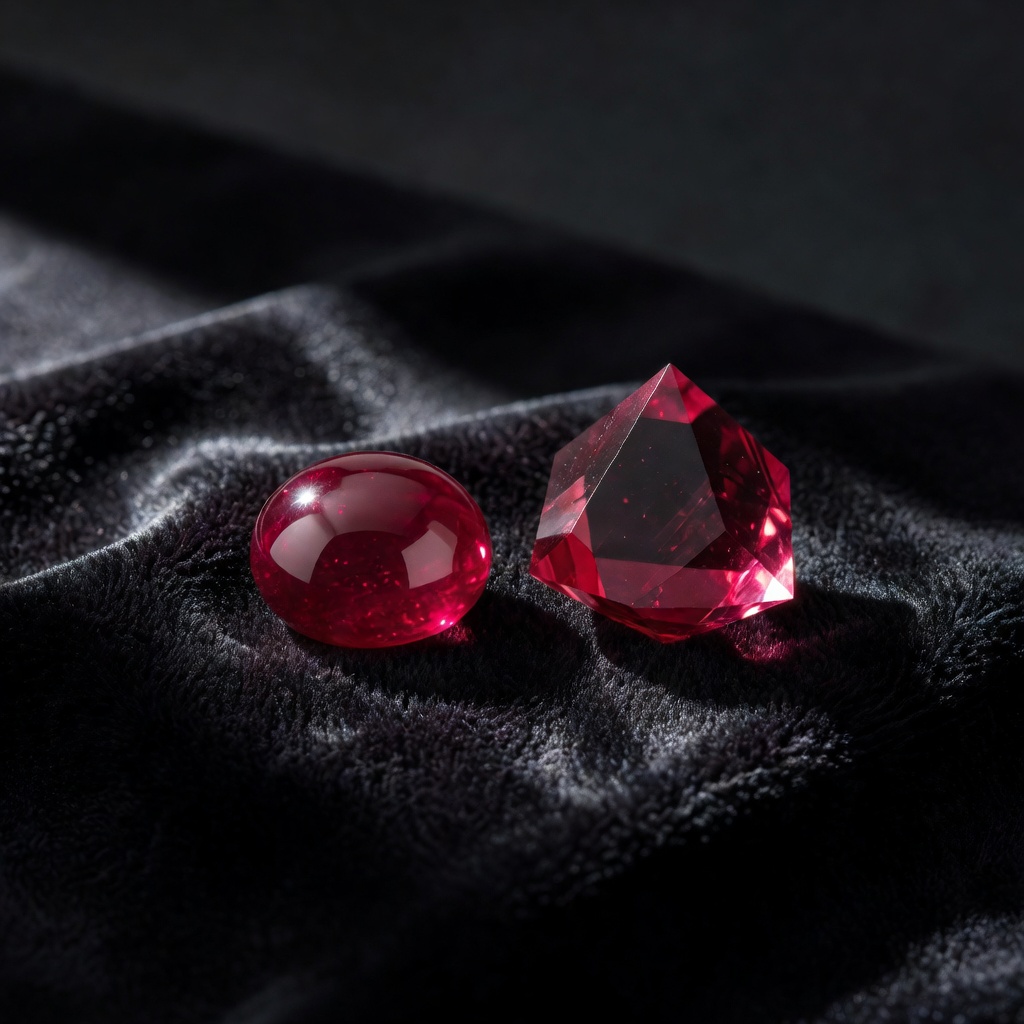
Introduction: Understanding Ruby and Fluorite
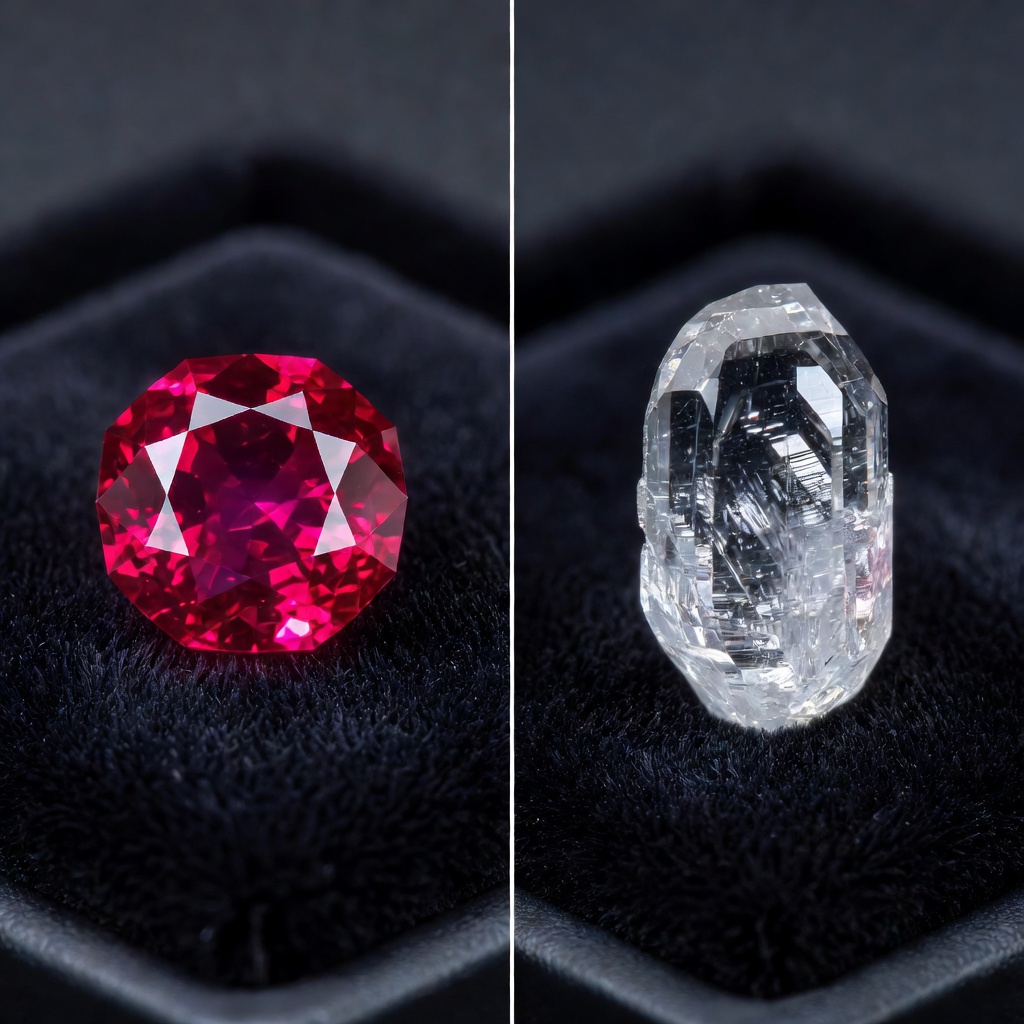
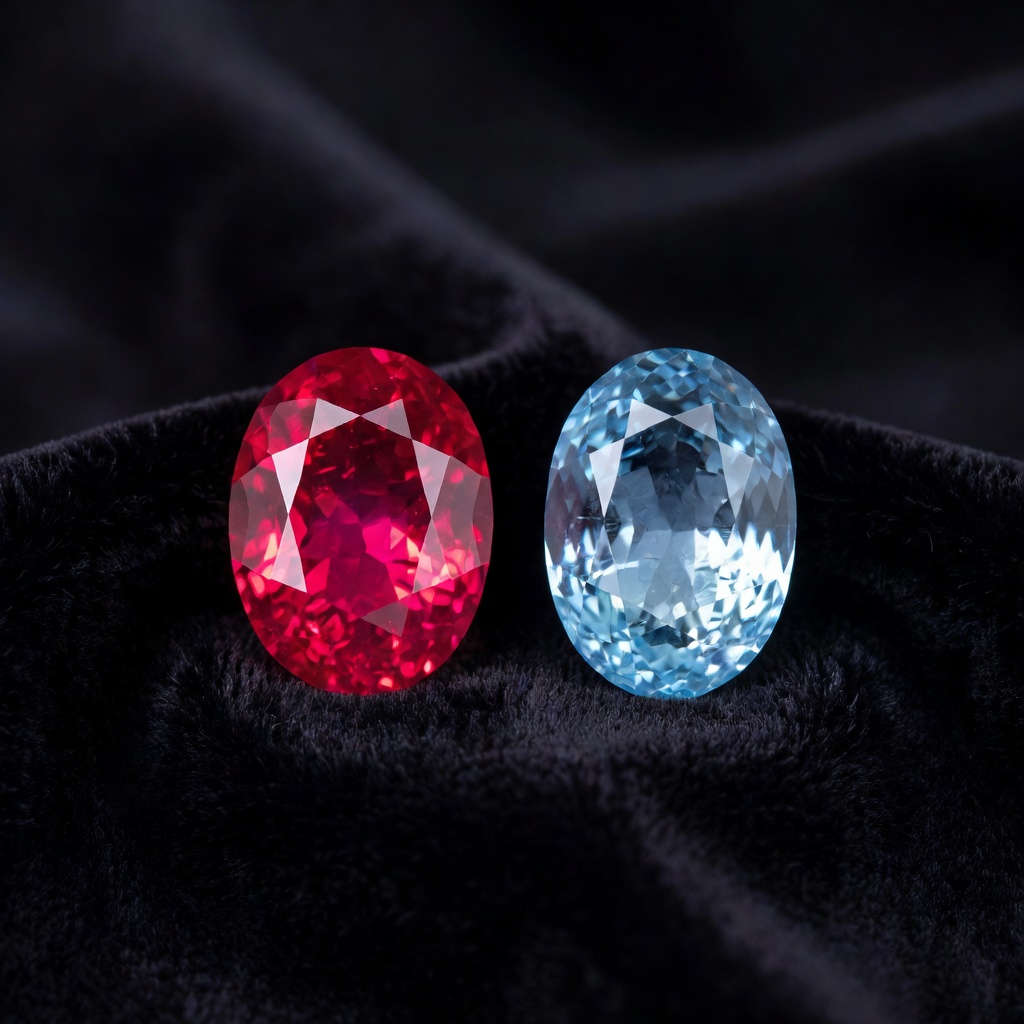
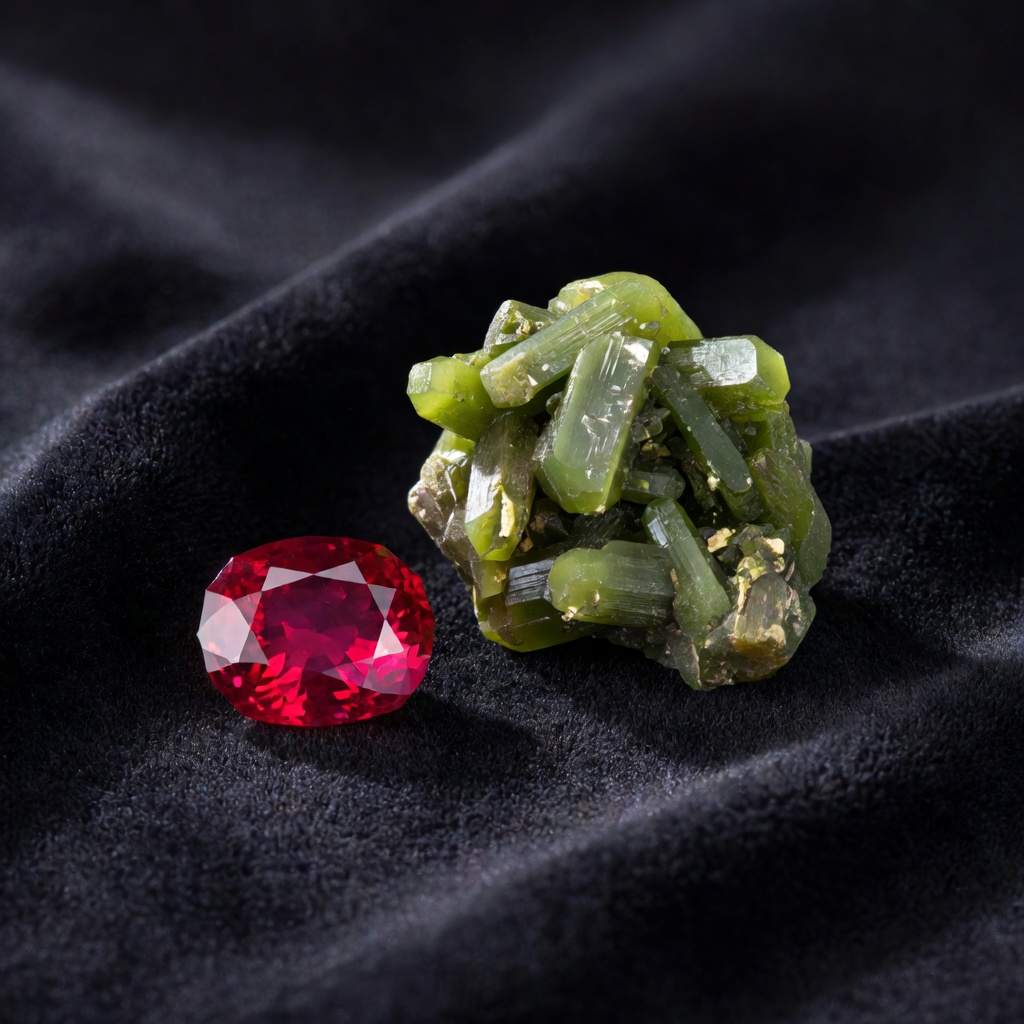
When examining the fascinating world of red gemstones, the comparison between Ruby vs Fluorite reveals two distinctly different minerals that occasionally confuse novice collectors and jewelry enthusiasts. Ruby represents the pinnacle of precious corundum, a mineral species that has commanded reverence throughout human history for its exceptional hardness and vivid coloration. In contrast, fluorite serves as calcium fluoride, a beautifully colorful but significantly softer mineral prized primarily by collectors and those seeking affordable ornamental stones. The confusion between these materials often arises when specimens of red fluorite crystals display saturation levels that momentarily rival the appearance of lower-quality rubies, creating potential pitfalls for uninformed purchasing decisions.
Understanding the fundamental differences between these stones becomes crucial when considering jewelry applications and investment strategies. While both minerals can exhibit captivating red hues, their divergent physical properties, market values, and care requirements place them in entirely different categories within the gemstone hierarchy. Whether you are selecting an engagement ring, building a mineral collection, or seeking investment-grade precious stones, distinguishing between these red gemstone identification candidates protects both your financial interests and aesthetic expectations.
Chemical Composition and Geological Formation
The geological origins of these minerals illustrate the dramatic differences between Corundum vs calcium fluoride formation processes. Ruby crystallizes as aluminum oxide (Al2O3) within metamorphic environments where extreme heat and pressure transform limestone and clay deposits over millions of years. Chromium traces infiltrating the crystal lattice during formation create the signature red coloration, with the most prized specimens emerging from marble host rocks in Myanmar, Thailand, and Mozambique. These formation conditions require specific tectonic pressures that limit viable mining locations worldwide, contributing to ruby's rarity and value.
Fluorite develops through entirely different geological mechanisms, crystallizing as calcium fluoride (CaF2) within hydrothermal veins and sedimentary rock deposits. Unlike ruby's high-pressure metamorphic genesis, fluorite forms when fluoride-rich solutions percolate through limestone cavities and precipitate into cubic or octahedral crystals at relatively lower temperatures and pressures. Significant deposits occur in China, Mexico, and Illinois, USA, often alongside lead and zinc ores. The crystal system differences prove immediately apparent upon examination: ruby exhibits trigonal symmetry with hexagonal prismatic crystals, while fluorite displays isometric cubic symmetry with perfect octahedral cleavage planes that create distinctive geometric shapes.
Mineral Classification Distinctions
These compositional differences place ruby firmly within the oxide mineral class alongside sapphire, while fluorite represents the halide mineral category. Ruby's aluminum oxide structure creates exceptional chemical stability, resisting acids and environmental weathering that might degrade lesser minerals. Fluorite's calcium fluoride composition, while visually striking, reacts negatively to hydrochloric acid and demonstrates perfect cleavage in four directions, making it structurally vulnerable despite its aesthetic appeal.
Hardness and Durability: The Critical Difference
Perhaps no factor distinguishes these gemstones more dramatically than the Mohs hardness scale comparison, which reveals why ruby dominates high-end jewelry while fluorite remains a collector's curiosity. Ruby ranks 9 on the Mohs hardness scale, placing it second only to diamond among natural gemstones and making it suitable for daily wear in rings, bracelets, and other pieces subject to constant mechanical stress. This exceptional hardness enables ruby to resist scratching from household dust (which contains silica particles ranking 7 on the scale), metal jewelry components, and incidental contact during normal activities.
Fluorite presents a starkly different durability profile, ranking merely 4 on the Mohs hardness scale—significantly softer than ordinary window glass, which typically measures 5.5. This gemstone durability guide red flag means fluorite scratches easily from everyday encounters with household items, jewelry boxes, and even prolonged contact with skin and clothing fibers containing abrasive particles. Furthermore, fluorite exhibits perfect octahedral cleavage, meaning it splits cleanly along specific planes when subjected to impact, creating fracture risks that ruby's tenacious crystal structure avoids entirely.
Practical Wear Implications
When selecting jewelry for active lifestyles, these hardness differences dictate radically different setting strategies and wear patterns. Ruby engagement rings withstand decades of daily handwashing, typing, and household chores without significant surface degradation, maintaining their polish and facet integrity through generations. Conversely, fluorite jewelry requires protective bezel settings and removal during activities involving potential impact, temperature changes, or chemical exposure, limiting its practicality to occasional wear pieces rather than heirloom investments.
Color Variations and Visual Characteristics
The visual distinction between these red gemstones extends beyond simple hue comparison into complex optical phenomena and color stability factors. Pigeon blood ruby identification focuses on stones exhibiting pure, vivid red with medium to medium-dark tone and no visible brown or orange overtones, primarily sourced from Myanmar's Mogok region. These exceptional rubies display strong red fluorescence under ultraviolet light due to chromium content, creating an internal glow that enhances their apparent color saturation even in suboptimal lighting conditions. Lesser rubies may show pinkish-red, purplish-red, or orangey-red hues, with asterism (star effects) appearing in cabochon-cut stones containing aligned rutile inclusions.
Red fluorite crystals present a different chromatic character, often displaying deeper, more brick-red or wine-red colors that lack the electric vibrancy of fine ruby. Unlike ruby's consistent coloration, fluorite frequently exhibits color zoning with bands of purple, green, or blue intermingling with red areas, along with distinctive internal cleavage planes visible to the naked eye. Perhaps most diagnostic, fluorite demonstrates intense fluorescence under UV illumination—often glowing bright blue, purple, or green—which actually provided the namesake for the phenomenon of fluorescence itself. This property creates immediate visual differentiation when both stones are examined under black light.
Optical Property Comparisons
Ruby's trigonal crystal structure produces a refractive index ranging from 1.762 to 1.778, creating significant brilliance and fire when properly faceted, while fluorite's isometric system yields a lower refractive index of approximately 1.434, resulting in a more glassy, subdued luster. Gemologists utilize these optical differences along with specific gravity measurements—ruby averages 4.00 while fluorite measures only 3.18—to definitively separate the minerals during laboratory analysis.
Market Value and Investment Considerations
The Precious vs semi-precious gemstones distinction becomes starkly apparent when examining market valuations and investment potential between these materials. Ruby investment value stems from its status as one of the "Big Three" colored gemstones (alongside sapphire and emerald), with fine Burmese specimens commanding prices exceeding $100,000 per carat for unheated, intensely colored stones over five carats. Even commercial-quality rubies maintain substantial value due to limited supply, geological rarity, and consistent global demand driven by cultural significance in Asian markets and Western bridal traditions.
Fluorite occupies an entirely different economic tier, classified strictly as a collector's mineral or lapidary material rather than an investment gemstone. Even exceptional red fluorite crystals with museum-quality clarity rarely exceed $50-100 per carat, with most jewelry-grade material available for mere dollars per carat. This price differential reflects not only hardness limitations but also abundant supply, with significant deposits worldwide ensuring consistent availability. While rare fluorite specimens displaying unique color combinations or exceptional size may appreciate modestly among mineral collectors, they lack the liquidity and value retention characteristics that make ruby a legitimate alternative investment vehicle.
Value Determination Factors
Ruby valuation considers origin (Burmese commanding premiums over African or Thai stones), treatment status (unheated natural stones worth exponentially more than heat-treated or glass-filled equivalents), and color saturation intensity. Fluorite valuation prioritizes crystal size and perfection, color intensity and uniformity, and absence of visible cleavage damage, with transparent red specimens from specific localities like Weardale, England, or China commanding modest premiums among collectors.
Jewelry Applications and Setting Requirements
Ruby's exceptional hardness enables versatile jewelry applications spanning from delicate pavé settings to substantial solitaire statement pieces. Ruby engagement rings represent popular alternatives to diamonds, withstanding the mechanical stresses of daily wear while offering distinctive color symbolism. Jewelers utilize ruby in bracelets, cufflinks, and rings without excessive concern for setting protection, though prong settings should be checked periodically for wear. The stone pairs magnificently with platinum, white gold, and yellow gold, with metal selection often depending on the ruby's specific color temperature—cooler blue-red stones complementing white metals while warmer orange-red varieties enhancing yellow gold settings.
Fluorite jewelry demands significantly more restrictive design parameters due to fragility constraints. This mineral best suits pendants, earrings, and brooches where impact probability remains minimal, avoiding rings and bracelets entirely unless set in protective bezels that shield edges from direct contact. When incorporated into jewelry, fluorite requires substantial metal surrounding the girdle and pavilion to prevent chipping during setting and wear. Design considerations must account for the stone's perfect cleavage by avoiding sharp corners and ensuring the setting absorbs rather than transfers impact forces to the gemstone.
Setting Recommendations and Metal Pairings
For ruby, four-prong or six-prong settings maximize light return while providing secure positioning for daily wear, with tension settings gaining popularity for modern aesthetic preferences. Rose gold creates striking contrasts with Burmese pigeon blood varieties, while vintage-inspired filigree settings showcase the gem's timeless appeal. Fluorite settings should incorporate full bezels or halo designs with protective rails, preferably in silver or white gold to complement the stone's often cooler color tones, though the metal choice matters less than the structural protection provided.
Care, Cleaning, and Maintenance Protocols
Proper gemstone care tips vary dramatically between these minerals due to their divergent chemical stability and hardness characteristics. Ruby tolerates standard jewelry cleaning methodologies including ultrasonic cleaners, steam cleaning, and commercial jewelry solutions containing mild ammonia or detergent bases. This durability allows owners to maintain brilliance through simple home cleaning routines or professional jeweler services without risking structural damage. However, heavily included rubies or those with glass-filled fractures (a common treatment) require gentler approaches to avoid disturbing filler materials.
Cleaning fluorite requires extreme caution and restrictive protocols to prevent irreversible damage. Warm soapy water using mild dish detergent and a soft brush represents the only safe cleaning method, as ultrasonic vibrations can exploit cleavage planes causing internal fractures, while steam heat may induce thermal shock. Acidic cleaning solutions, including those containing vinegar or lemon juice, actively dissolve calcium fluoride surfaces, permanently etching polish and creating cloudy appearances. Owners must also protect fluorite from prolonged sunlight exposure, which can fade certain color varieties, and store pieces separately from harder gemstones to prevent scratching.
Storage and Maintenance Schedules
Ruby jewelry can be stored alongside other hard gemstones (diamond, sapphire) in standard jewelry boxes, though individual pouches prevent scratching of softer adjacent pieces. Annual professional inspections ensure prong integrity and setting security. Fluorite requires isolated storage in padded compartments, with silica gel packets controlling humidity that might promote surface etching over time. Owners should inspect fluorite settings before each wearing, checking for loose stones or metal fatigue that might expose edges to impact.
Authentication: How to Distinguish Ruby from Fluorite
Gemstone authentication between these materials relies on observable physical characteristics accessible to both professionals and informed consumers. Visual inspection begins with crystal habit examination: natural ruby crystals form hexagonal prisms with flat tabular faces, while fluorite displays cubic or octahedral geometries with distinct cleavage planes. Under magnification, ruby typically contains rutile needle inclusions (silk), mineral crystals, or fingerprint patterns, whereas fluorite shows internal cleavage cracks, color zoning lines, and often multiphase inclusions containing liquid and gas bubbles.
Simple hardness testing provides definitive field identification without sophisticated equipment. How to identify ruby using the scratch test involves attempting to scratch a piece of ordinary glass: ruby (hardness 9) easily scratches glass and even hardened steel files, while fluorite (hardness 4) cannot scratch glass and will itself be scratched by a copper coin (hardness 3). Specific gravity testing offers another diagnostic method—ruby feels noticeably heavier than fluorite of equivalent dimensions when held in the hand.
Professional Verification Methods
While home testing provides preliminary indicators, purchasing high-value red gemstones demands professional certification from recognized laboratories such as GIA (Gemological Institute of America) or AGL (American Gemological Laboratories). These institutions utilize spectroscopic analysis to detect chromium absorption lines characteristic of ruby, refractive index measurements, and fluorescence testing to definitively distinguish between the minerals. Spectroscopes reveal ruby's distinctive chromium absorption spectrum with lines at 694nm and 668nm, completely different from fluorite's absorption characteristics.
Metaphysical Properties and Symbolism
Beyond physical attributes, these gemstones carry distinct energetic associations and cultural significance spanning millennia. Ruby meaning encompasses passion, protection, and vitality, serving as the July birthstone and traditional 40th anniversary gift. Ancient Burmese warriors implanted rubies into their flesh believing the stones conferred invincibility in battle, while Hindu traditions associate ruby with the sun and root chakra, promoting grounding and life-force energy. Medieval Europeans believed rubies warned of impending danger by darkening in color, and the stone remains synonymous with romantic love, courage, and emotional intensity.
Fluorite healing properties center on mental acuity and energetic purification, earning the designation "Genius Stone" among crystal practitioners. Unlike ruby's physical vitality associations, fluorite connects primarily with the third eye and crown chakras, believed to enhance concentration, decision-making capabilities, and the absorption of new information. Its varied color spectrum leads to specific applications: purple fluorite for meditation and spiritual awakening, green for emotional healing and connecting with nature, and red or pink varieties for heart chakra activation and emotional balance. Practitioners often utilize fluorite in crystal grids or place specimens on workspaces to neutralize electromagnetic stress and negative environmental energies.
Historical and Cultural Contexts
Ruby maintains prominent positions in royal regalia across cultures, from the Black Prince's Ruby in the British Imperial State Crown to the elaborate Burmese treasures of Southeast Asian monarchies. Fluorite, while less historically prominent in jewelry due to softness, served practical purposes in ancient metallurgy as flux for welding metals—a application reflected in its name derived from the Latin "fluere" meaning "to flow." Renaissance lapidaries carved fluorite into ornamental vessels and decorative objects, valuing its wide color range and relative workability compared to harder gemstones.
Final Verdict: Which Gemstone Should You Choose?
Selecting between these materials requires honest assessment of budget parameters, lifestyle constraints, and intended applications. Choosing gemstones for investment or heirloom purposes clearly favors ruby, which appreciates value over time while withstanding generational transfer and daily wear. Active individuals, healthcare professionals, or those seeking engagement jewelry should prioritize ruby exclusively, accepting the higher initial cost as compensation for decades of durability and status recognition.
Fluorite suits collectors, metaphysical practitioners, and jewelry enthusiasts seeking affordable statement pieces for occasional wear. Those drawn to fluorite should commit to protective settings, limited wear schedules, and careful maintenance protocols that acknowledge the material's fragility. Budget-conscious buyers attracted to red fluorite's color might consider it for pendants or earrings where damage risks remain minimal, while reserving significant expenditures for harder, more durable gemstones.
Comprehensive Comparison Overview
The following comparison table summarizes critical differences between these red gemstones to facilitate informed purchasing decisions:
| Characteristic | Ruby (Corundum) | Red Fluorite (Calcium Fluoride) |
|---|---|---|
| Chemical Formula | Al₂O₃ (Aluminum Oxide) | CaF₂ (Calcium Fluoride) |
| Mohs Hardness | 9 (Excellent for daily wear) | 4 (Very soft, scratches easily) |
| Crystal System | Trigonal (Hexagonal prisms) | Isometric/Cubic (Cubes, octahedrons) |
| Specific Gravity | 3.97-4.05 (Heavy, substantial feel) | 3.18 (Lighter than ruby) |
| Refractive Index | 1.762-1.778 (High brilliance) | 1.434 (Glassy luster) |
| UV Fluorescence | Red or none (Weak to moderate) | Strong blue, purple, or green glow |
| Price Range (Per Carat) | $1,000-$100,000+ (Investment grade) | $5-$100 (Collector material) |
| Best Jewelry Applications | Rings, bracelets, daily wear | Pendants, earrings, display pieces |
| Cleaning Methods | Ultrasonic, steam, soap safe | Warm soapy water only; no heat/ultrasonic |
| Classification | Precious Gemstone | Collector's Mineral/Semi-precious |
Frequently Asked Questions
Is red fluorite the same as ruby?
No, red fluorite and ruby are completely different minerals. Ruby is corundum (aluminum oxide) with a hardness of 9, while fluorite is calcium fluoride with a hardness of only 4. Though both can appear red, ruby is significantly harder, more valuable, and suitable for daily wear jewelry.
Can fluorite be used in an engagement ring like ruby?
Fluorite is not recommended for engagement rings or daily wear jewelry due to its softness (4 on the Mohs scale). It scratches and chips easily with normal wear. Ruby, ranking 9 on the Mohs scale, is an excellent choice for engagement rings and heirloom jewelry that withstands daily use.
How can I tell if my red stone is a ruby or fluorite at home?
Perform a simple scratch test: try to scratch a piece of glass. Ruby (hardness 9) will easily scratch glass, while fluorite (hardness 4) cannot. Additionally, check under UV light—many fluorites glow blue or purple, while rubies typically fluoresce red or not at all. Examine the crystal shape: fluorite often forms perfect cubes or octahedrons, while rubies have hexagonal prisms.
Why is ruby so much more expensive than fluorite?
Ruby commands higher prices due to its rarity as a precious gemstone, exceptional hardness suitable for jewelry, cultural significance, and limited supply of high-quality stones. Fluorite is relatively abundant, soft (making it less suitable for most jewelry), and classified as a collector's mineral rather than a precious gemstone.
Does fluorite glow differently than ruby under special lighting?
Yes, fluorescence differs significantly. Fluorite often displays strong fluorescence under UV light (typically blue, purple, or green), which is actually how fluorescence got its name. Natural rubies may show weak to moderate red fluorescence under UV light, but many show no reaction. This property helps gemologists distinguish between the two.
Which gemstone is better for daily wear, ruby or fluorite?
Ruby is far superior for daily wear due to its exceptional hardness (9 on Mohs scale) and toughness. It resists scratching and chipping during normal activities. Fluorite requires protective settings and is best reserved for occasional wear in earrings or pendants where it won't encounter impact or abrasion.
Can fluorite scratch glass like ruby can?
No, fluorite cannot scratch glass. With a hardness of 4, fluorite is actually softer than glass (which ranks 5.5 on the Mohs scale). Ruby, with a hardness of 9, easily scratches glass and even steel. This hardness difference is one of the quickest ways to distinguish between the two stones.
Is fluorite considered a precious gemstone?
No, fluorite is classified as a semi-precious gemstone or collector's mineral, not a precious gemstone. The traditional 'precious' category includes only diamond, ruby, sapphire, and emerald. Fluorite's softness and abundance place it in the ornamental stone category, though high-quality specimens are valued by mineral collectors.