Introduction to Ruby and Enstatite
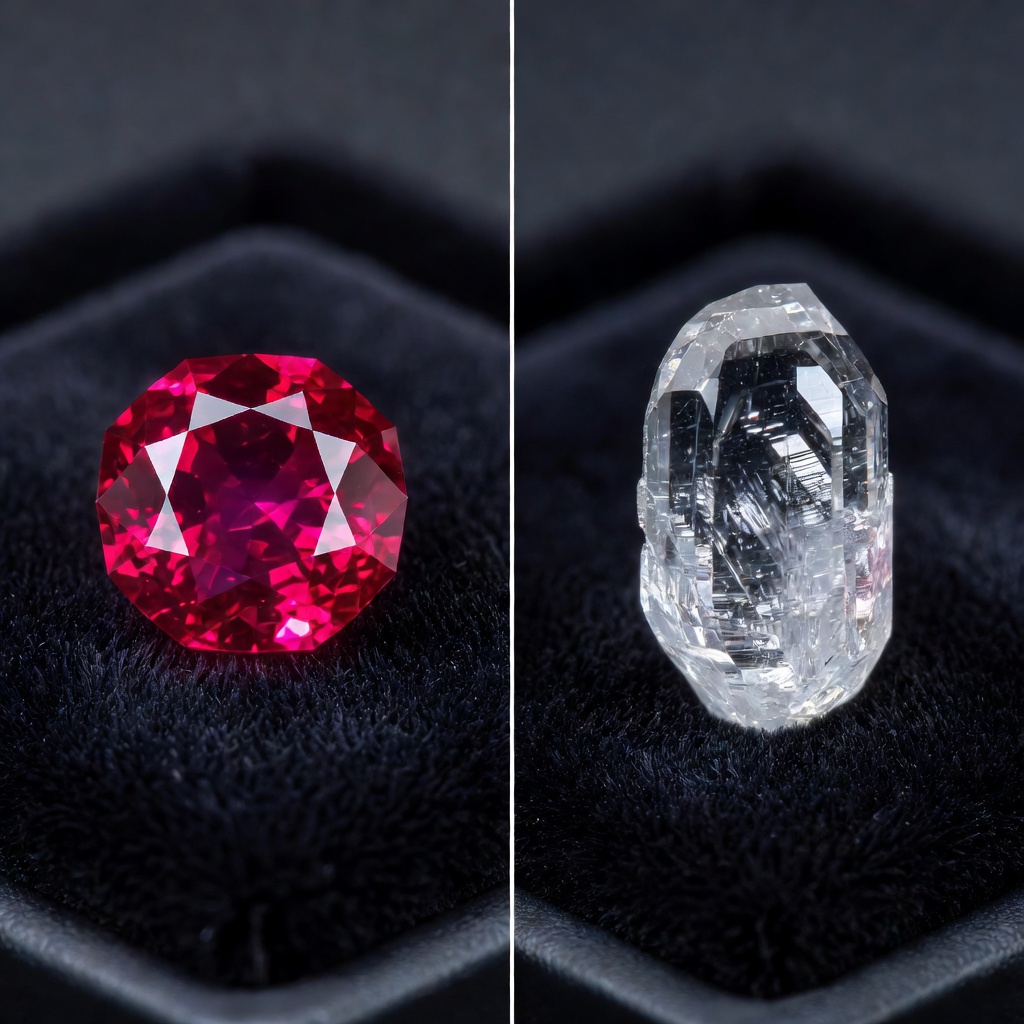
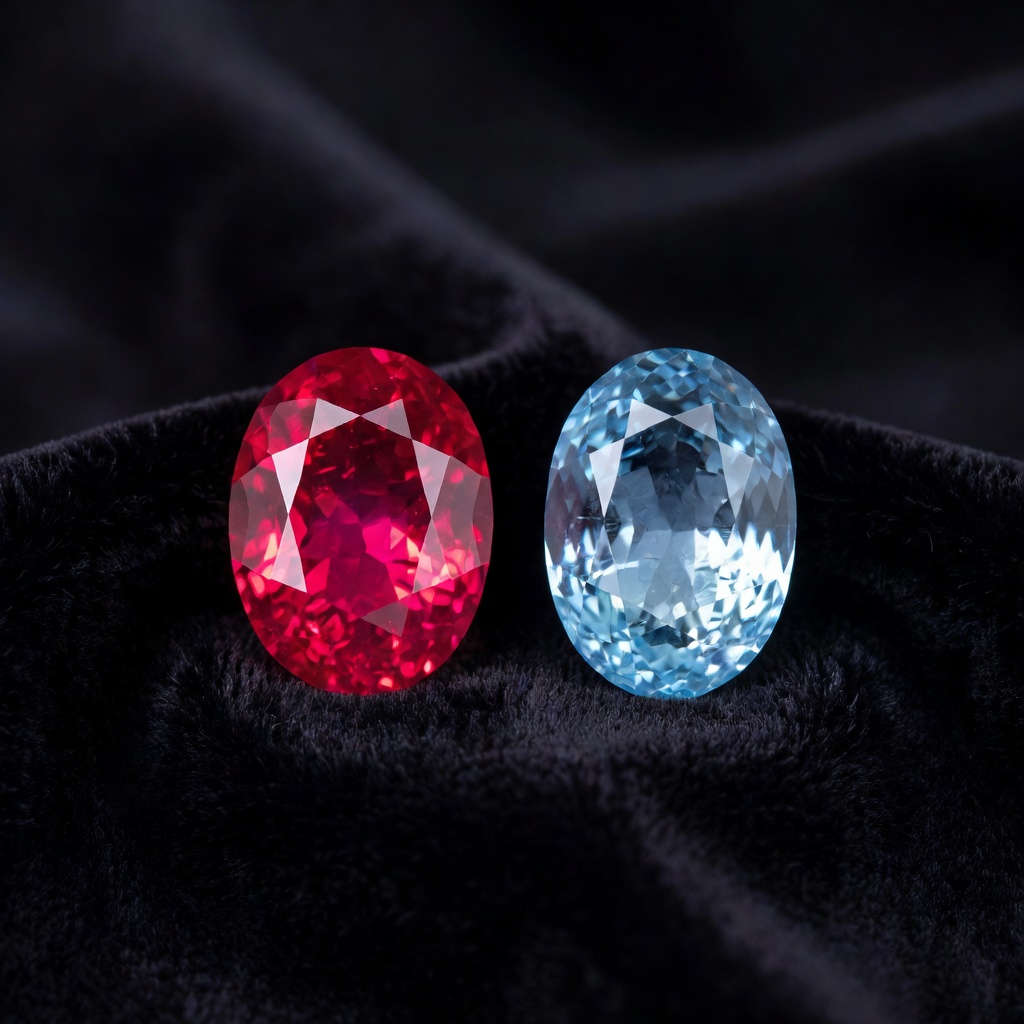
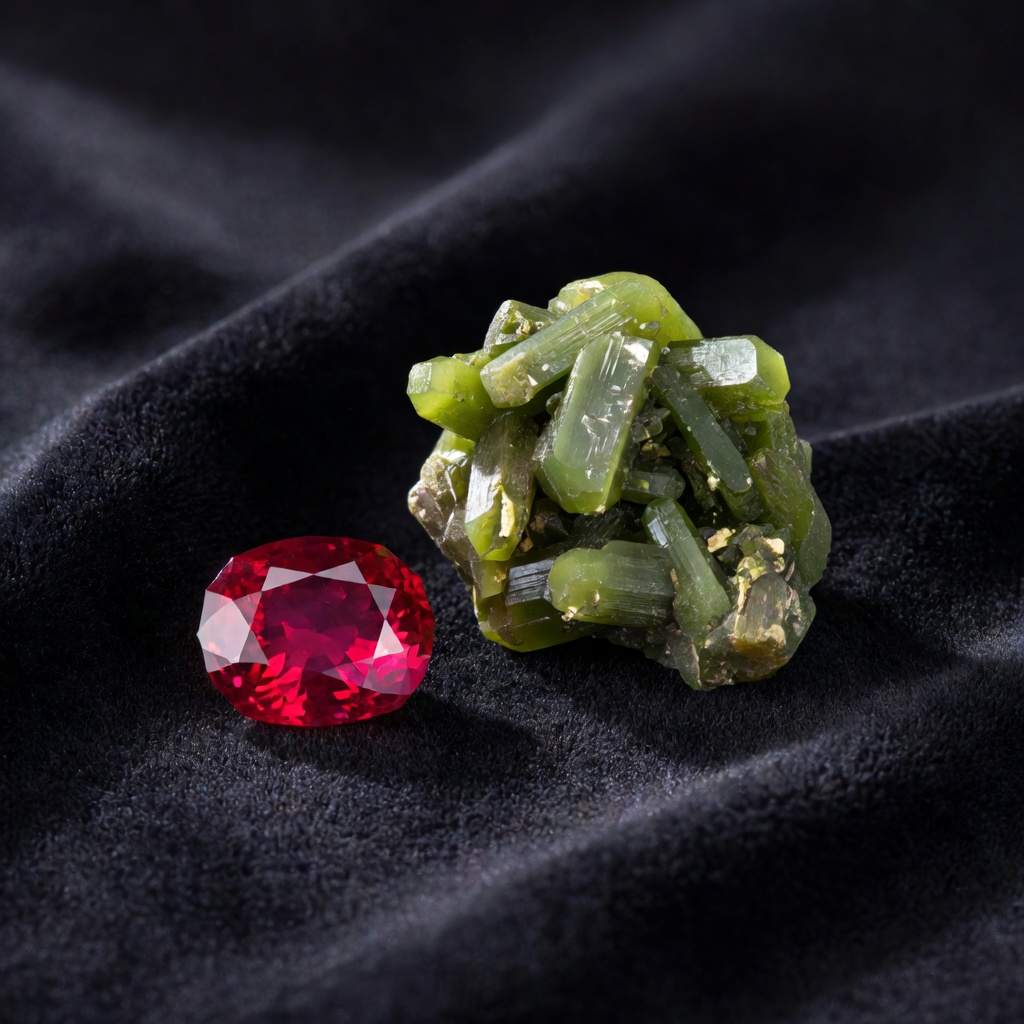
Ruby stands as one of the most celebrated precious gemstones throughout human history, belonging to the corundum mineral family and prized for its exceptional hardness and vivid red coloration that has captivated civilizations across millennia. This magnificent gemstone has adorned the crowns of monarchs, inspired countless legends and literary works, and maintained its position as one of the "big three" colored stones alongside sapphire and emerald for centuries of recorded history. In contrast, enstatite remains a relatively obscure mineral to the general public, classified scientifically as a magnesium silicate belonging to the orthopyroxene group, typically encountered by geology enthusiasts and specialized gemstone collectors rather than mainstream jewelry consumers. The fundamental distinction between these materials lies in their classification within the gem world: ruby represents the pinnacle of precious gemstones suitable for heirloom jewelry and significant investment, while enstatite occupies a specialized niche as a collector's mineral with limited but interesting jewelry applications. Recent years have witnessed growing interest in enstatite among gem enthusiasts seeking unique alternatives to conventional jewelry stones, drawn by its distinctive bronze and greenish hues that offer an earthy aesthetic distinct from the fiery red traditionally associated with precious gems.
Chemical Composition and Crystal Structure
Ruby derives its chemical composition from aluminum oxide (Al₂O₃) with trace amounts of chromium substituting for aluminum in the crystal lattice, which creates the intense red color that defines this precious gemstone and distinguishes it from all other red stones. This hexagonal crystal system forms under high-pressure, high-temperature metamorphic conditions or in specific igneous environments, resulting in the prismatic hexagonal crystals familiar to gemologists and mineral collectors worldwide. Enstatite presents a fundamentally different chemical formula represented as MgSiO₃, crystallizing in the orthorhombic system as a member of the pyroxene mineral family, specifically the orthopyroxene subgroup that includes related species such as hypersthene and bronzite. The formation environments differ significantly between these materials, with rubies typically forming in contact metamorphic zones or marble host rocks under intense geological pressure, while enstatite commonly crystallizes from mafic and ultramafic magmas or forms during the metamorphism of magnesium-rich rocks in the Earth's mantle. Crystal habit provides immediate visual distinction for mineralogists, as ruby presents as hexagonal prisms or bipyramids with distinct basal parting, whereas enstatite forms prismatic orthorhombic crystals often displaying distinct cleavage angles of approximately 87 and 93 degrees that reflect its internal atomic arrangement.
Color Variations and Visual Characteristics
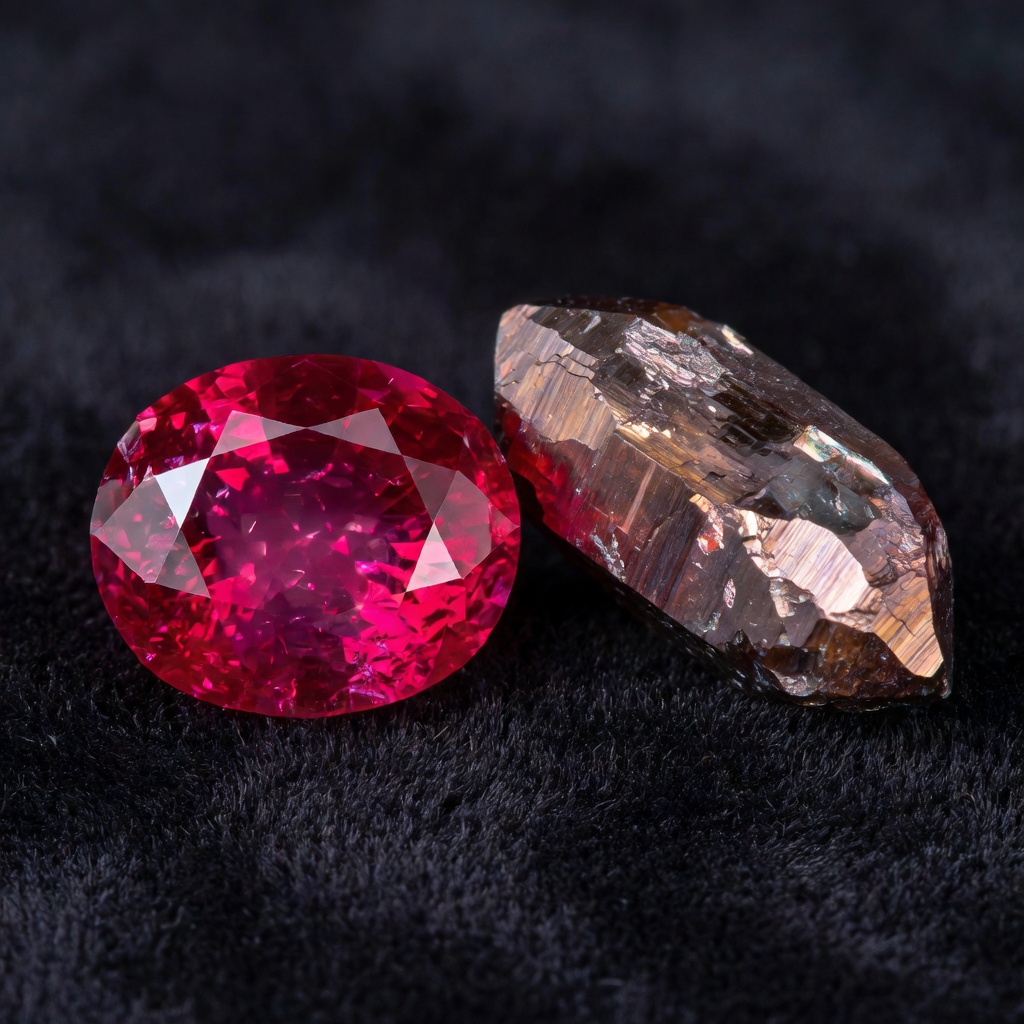
The color spectrum of fine rubies ranges from the legendary "pigeon blood" red—characterized by a pure, vivid red with a subtle hint of blue—to pinkish-red and purplish tones, with the most valuable stones exhibiting strong saturation and medium-dark tone without appearing too dark or blackish. Burmese rubies traditionally set the standard for the finest color, displaying a fluorescent red that appears to glow from within due to chromium content and specific trace element chemistry that interacts with light in unique ways. Enstatite presents an entirely different color palette, typically appearing in brown, bronze, greenish, or yellowish hues that reflect its iron content and orthopyroxene mineralogy, with the bronze-colored variety sometimes referred to as bronzite when displaying distinctive schiller effects caused by oriented exsolution lamellae. Unlike ruby, which is essentially isotropic in its color presentation from most viewing angles, enstatite frequently displays pleochroism, showing different colors when viewed from different crystallographic directions, typically ranging from colorless to pale green or brown depending on the orientation of the crystal. Fluorescence properties provide another diagnostic distinction between these materials, as ruby typically exhibits strong red fluorescence under long-wave ultraviolet light due to chromium activation, while enstatite remains inert or shows only weak fluorescence, lacking the characteristic glow that helps identify high-quality rubies in gemological laboratories.
Hardness and Durability for Daily Wear
Ruby ranks 9 on the Mohs hardness scale, making it one of the hardest natural substances second only to diamond, and possesses excellent toughness due to the lack of cleavage planes, allowing it to withstand daily wear in rings and bracelets without scratching, chipping, or showing signs of abrasion. This exceptional durability explains why ruby has remained a preferred choice for engagement rings and heirloom jewelry pieces that must endure decades of continuous wear while maintaining their polish and brilliance through everyday activities. Enstatite measures significantly lower at 5 to 6 on the Mohs scale, comparable to feldspar or orthoclase, and possesses two distinct directions of cleavage that create planes of structural weakness within the crystal that can lead to catastrophic failure under stress. These cleavage planes make enstatite vulnerable to splitting or chipping upon impact, particularly when struck against hard surfaces or subjected to pressure during jewelry setting procedures that might apply force to vulnerable points. When considering jewelry applications, rubies excel in high-impact settings such as rings and bracelets worn during active lifestyles, while enstatite requires protective mounting in pendants or earrings where physical impact remains minimal; attempting to wear enstatite in a ring setting risks damaging the stone during everyday activities like typing, gardening, or household chores.
Comparative Specifications
| Characteristic | Ruby (Corundum) | Enstatite (Orthopyroxene) |
|---|---|---|
| Chemical Formula | Al₂O₃ (Aluminum Oxide) | MgSiO₃ (Magnesium Silicate) |
| Crystal System | Hexagonal | Orthorhombic |
| Mohs Hardness | 9 | 5-6 |
| Specific Gravity | 4.00 | 3.25-3.35 |
| Refractive Index | 1.76-1.77 | 1.66-1.67 |
| Typical Colors | Red, Pinkish-Red, Purplish-Red | Brown, Bronze, Greenish, Yellowish |
| Fluorescence | Strong Red (LW UV) | Inert to Weak |
| Cleavage | None (Parting only) | Perfect in two directions |
| Price Range (per carat) | $1,000 - $1,000,000+ | $20 - $200 |
Geographic Sources and Rarity Factors
The most prestigious rubies originate from the Mogok Stone Tract in Myanmar (Burma), where centuries of mining have produced the legendary pigeon blood stones characterized by intense saturation and strong fluorescence, though significant deposits also exist in Mozambique, Thailand, Sri Lanka, and Madagascar. Burmese rubies command premium prices due to their historical significance and superior color characteristics, though ethical sourcing concerns have complicated the trade in recent decades, leading to increased interest in well-documented African sources that offer traceable supply chains. Enstatite deposits occur globally, with notable gem-quality material emerging from Burma (Myanmar), Sri Lanka, Tanzania, and the United States, often found as accessory minerals in peridotite masses or as alluvial deposits in gem gravels alongside spinel and garnet. While enstatite as a mineral species remains relatively common in Earth's crust, transparent, facetable crystals of gem quality remain quite rare, making fine specimens desirable to mineral collectors despite their modest monetary value compared to precious gems. Mining challenges for ruby often involve difficult terrain, political instability in producing regions, and the increasing scarcity of fine material, whereas enstatite mining typically focuses on alluvial deposits where weathering has freed crystals from host rocks, though finding clean, inclusion-free material suitable for faceting remains challenging for both materials.
Market Value and Investment Potential
Ruby pricing spans an enormous range from commercial-grade material available for hundreds of dollars per carat to record-breaking auction prices exceeding one million dollars per carat for exceptional untreated Burmese stones with documented provenance and certificates from major laboratories. The Sunrise Ruby, a 25.59-carat Burmese stone that sold for over $30 million in 2015, exemplifies the investment potential of fine rubies, which have historically outperformed many traditional investments in terms of value retention and appreciation over multi-decade periods. Enstatite maintains an accessible price point, typically ranging from $20 to $200 per carat for fine specimens, making it an attractive option for budget-conscious collectors seeking unusual gemstones without the financial commitment required for precious gems. Long-term value retention favors ruby significantly, as the global demand for high-quality red gemstones consistently outstrips supply, while enstatite remains primarily of interest to niche collectors with limited resale markets compared to the liquid, established ruby trade that benefits from international auction houses and dealer networks. Factors affecting ruby prices include the intensity of red color (with pure red commanding substantial premiums), clarity characteristics (with some silk accepted but heavy inclusions discounted), carat weight (with significant premiums for stones over 3 carats), and treatment status (with untreated stones commanding 300-400% premiums over heated material), whereas enstatite pricing depends primarily on transparency, size, and the intensity of bronzy or greenish coloration.
Optical Properties and Brilliance
The refractive index of ruby ranges from 1.76 to 1.77, creating substantial brilliance and fire that contributes to the stone's lively appearance, while enstatite exhibits lower values between 1.66 and 1.67, resulting in more subdued light return and less obvious dispersion that might otherwise create rainbow flashes. Ruby displays an adamantine to vitreous luster that contributes to its "alive" appearance in jewelry settings, particularly when cut with precise facet angles designed to maximize internal reflection and minimize windowing or "fish-eye" effects that detract from beauty. Enstatite typically shows a vitreous to somewhat pearly luster on cleavage surfaces, and due to its lower hardness and cleavage concerns, requires careful cutting orientation to avoid cleavage planes that could lead to breakage during or after the cutting process. Transparency levels vary significantly in enstatite, with most material being translucent to opaque, while fine ruby strives for transparency with only minor inclusions; optimal cutting styles for ruby include oval and cushion shapes that retain weight while maximizing color, whereas enstatite is often cut into step-cut or mixed-cut styles that minimize cleavage risks while showcasing any available transparency. Inclusion characteristics provide important identification features, with ruby frequently containing rutile needle inclusions called "silk" that create star effects in cabochons or indicate unheated status in faceted stones, while enstatite typically shows cleavage traces, iron staining, or lamellar twinning under magnification.
Jewelry Applications and Setting Recommendations
Ruby's exceptional hardness and toughness make it suitable for virtually any jewelry application, including high-impact pieces like engagement rings, tennis bracelets, and dress rings that withstand daily wear while maintaining their beauty for generations without requiring special precautions. Platinum and white gold settings complement ruby's red color by providing a cool-toned contrast that enhances the stone's saturation, though yellow gold remains traditional for Burmese rubies as it harmonizes with their slightly warmer tones and historic association with Asian jewelry traditions. Enstatite requires restricted application in jewelry design, best reserved for protective settings such as pendants, brooches, and earrings where the stone receives minimal physical contact and impact during wear. When setting enstatite, yellow gold provides a complementary backdrop for the stone's typical brown or bronze tones, while bezel settings or protective halo designs help shield the gem's vulnerable edges from chipping or cleaving during normal use. Designers working with enstatite must consider the stone's perfect cleavage by avoiding prong settings that concentrate pressure on specific points, instead opting for protective mountings that distribute pressure evenly around the girdle while keeping the stone elevated slightly to prevent scratching from contact with harder surfaces.
Identification and Authentication Methods
Spectroscopic analysis provides definitive identification when comparing these materials, with ruby displaying distinct chromium absorption lines in the red end of the spectrum at approximately 694.2 nm and 692.8 nm, creating a characteristic "doublet" visible in high-quality spectroscopes, while enstatite shows iron-related absorption features in the blue and green regions without the chromium spectrum. Specific gravity testing offers a quick diagnostic method for separating these stones, with ruby exhibiting a heavy specific gravity of 4.00 compared to enstatite's lighter range of 3.25 to 3.35, easily distinguishable using heavy liquid sets or hydrostatic weighing methods in gemological laboratories. The vast majority of rubies on the commercial market undergo heat treatment to improve color saturation and dissolve rutile silk inclusions, a practice accepted in the trade but requiring disclosure to consumers, whereas enstatite is rarely treated due to its collector-oriented market and the lack of treatment methods that significantly improve its appearance or marketability. Distinguishing synthetic counterparts requires careful examination: synthetic rubies often show curved growth lines or specific inclusion patterns under magnification, while synthetic enstatite remains extremely rare in the market; simulants such as red spinel or garnet may resemble ruby but lack the specific gravity and refractive index, and glass imitations of enstatite can be identified by their lower hardness and conchoidal fracture patterns versus enstatite's distinct cleavage.
Final Verdict: Making Your Selection
Selecting between ruby and enstatite ultimately requires honest assessment of your lifestyle and intended jewelry use, with active individuals or those seeking daily-wear engagement rings finding ruby the only practical choice due to its superior durability and hardness that withstands modern living. Budget allocation strategies should consider that a modest ruby purchase might yield a smaller but more durable stone suitable for daily wear and potential value appreciation, while enstatite allows for larger, more distinctive specimens at accessible price points suitable for occasional wear or collection purposes without significant financial risk. Aesthetic preferences play a crucial role in the decision-making process, with those drawn to classic red brilliance, historical significance, and traditional luxury gravitating toward ruby, while individuals seeking unique bronze-green uniqueness and earthy mineral aesthetics may prefer enstatite's distinctive appearance that stands out from typical jewelry store offerings. Building a comprehensive gemstone collection might reasonably include both stones for different purposes: acquiring a fine ruby for significant jewelry pieces, milestone celebrations, and investment value, while adding quality enstatite specimens for mineralogical interest and occasional wear in protective settings that showcase the diversity of the mineral kingdom.
Frequently Asked Questions
Is Enstatite as valuable as Ruby?
No, ruby is significantly more valuable due to its status as one of the 'big three' precious gemstones, exceptional hardness, and centuries of cultural significance. While gem-quality enstatite is rare among mineral specimens, it remains affordable and appeals primarily to collectors rather than luxury jewelry markets.
Can Enstatite display red colors like Ruby?
While enstatite typically appears in brown, bronze, or green hues, rare specimens may show reddish-brown colors. However, these lack the vivid saturation, fluorescence, and pure red tone that characterize fine rubies. Enstatite never achieves the 'pigeon blood' red that makes rubies so prized.
Which gemstone is better for daily wear jewelry?
Ruby is far superior for daily wear due to its 9/10 Mohs hardness and excellent toughness. Enstatite, measuring only 5-6 on the Mohs scale with perfect cleavage, is too soft and brittle for rings or bracelets. Enstatite is best limited to earrings or pendants that receive minimal physical impact.
How can I distinguish between Ruby and Enstatite?
Ruby exhibits a higher refractive index (1.76-1.77) creating more brilliance, strong red fluorescence under UV light, and often contains rutile needle inclusions called 'silk.' Enstatite shows lower brilliance, lacks fluorescence, displays distinct cleavage planes, and has a characteristic bronze or greenish body color rather than pure red.
Is Enstatite considered a rare gemstone?
Enstatite as a mineral is relatively common in Earth's crust, but transparent, gem-quality crystals suitable for faceting are quite rare. However, even high-quality enstatite remains more accessible and affordable than fine rubies, which command premium prices due to extreme scarcity and sustained global demand.
Why is Ruby more expensive than Enstatite?
Ruby commands premium prices due to the extreme rarity of fine specimens with vivid color and high clarity, its historical prestige dating back thousands of years, superior durability suitable for heirloom jewelry, and consistent demand in luxury markets. Enstatite, while interesting to collectors, lacks these market drivers.
Can Enstatite scratch easily?
Yes, with a hardness of 5-6, enstatite can be scratched by common household dust (which contains quartz at 7 hardness), steel knives, and harder gemstones. It requires protective storage away from other jewelry and should never be stored in direct contact with harder stones like ruby, sapphire, or diamond.
Are both Ruby and Enstatite treated or enhanced?
The vast majority of rubies on the market undergo heat treatment to improve color and clarity, with disclosure required by ethical dealers. Enstatite is rarely treated due to its niche collector status and the fact that treatments do not significantly improve its appearance. Some enstatite may be lightly oiled to mask surface-reaching fractures.