The Battle of the Precious Stones
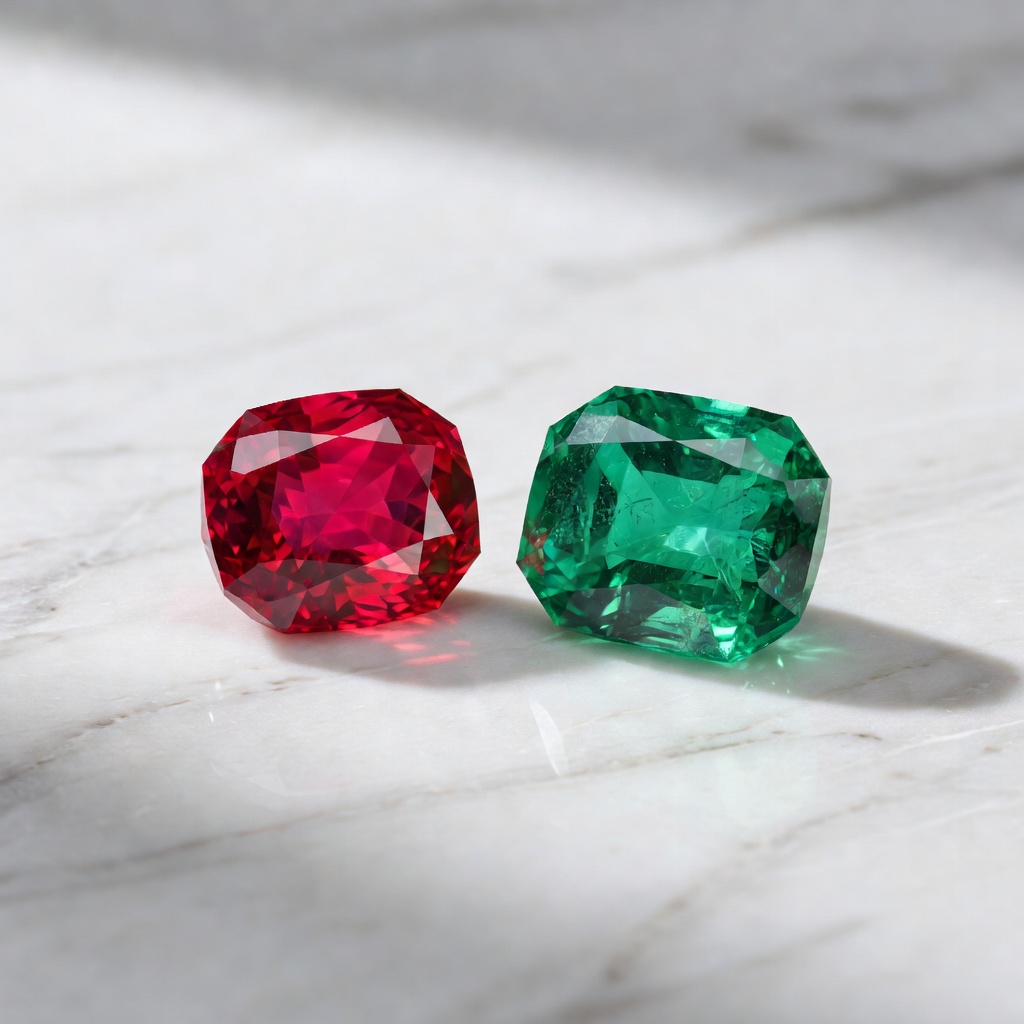
When collectors and jewelry enthusiasts evaluate the crown jewels of the colored gemstone world, the comparison of Ruby vs Emerald inevitably rises to the forefront. As two of the prestigious "Big Four" precious stones alongside diamond and sapphire, these gems represent the pinnacle of natural beauty, rarity, and desirability in the fine jewelry market. While diamonds may dominate engagement ring sales, connoisseurs often gravitate toward the vivid personalities of rubies and emeralds, seeking alternatives that express individual style through saturated color rather than brilliant white light.
Consumers frequently pit these stones against one another because they occupy similar price brackets in the luxury market while offering dramatically different aesthetic appeals and physical properties. Both gems have captivated royalty and aristocracy for millennia, yet they serve distinct purposes in modern wardrobes and investment portfolios. This comprehensive precious gemstone comparison examines critical criteria including geological formation, durability metrics, clarity standards, treatment protocols, and long-term value retention to guide your acquisition decision. Whether you are selecting a center stone for a daily-wear engagement ring, building a generational investment collection, or seeking the perfect birthstone gift, understanding the nuanced differences between these crimson and verdant treasures ensures you make an informed, satisfying choice.
Geological Origins: Corundum vs Beryl
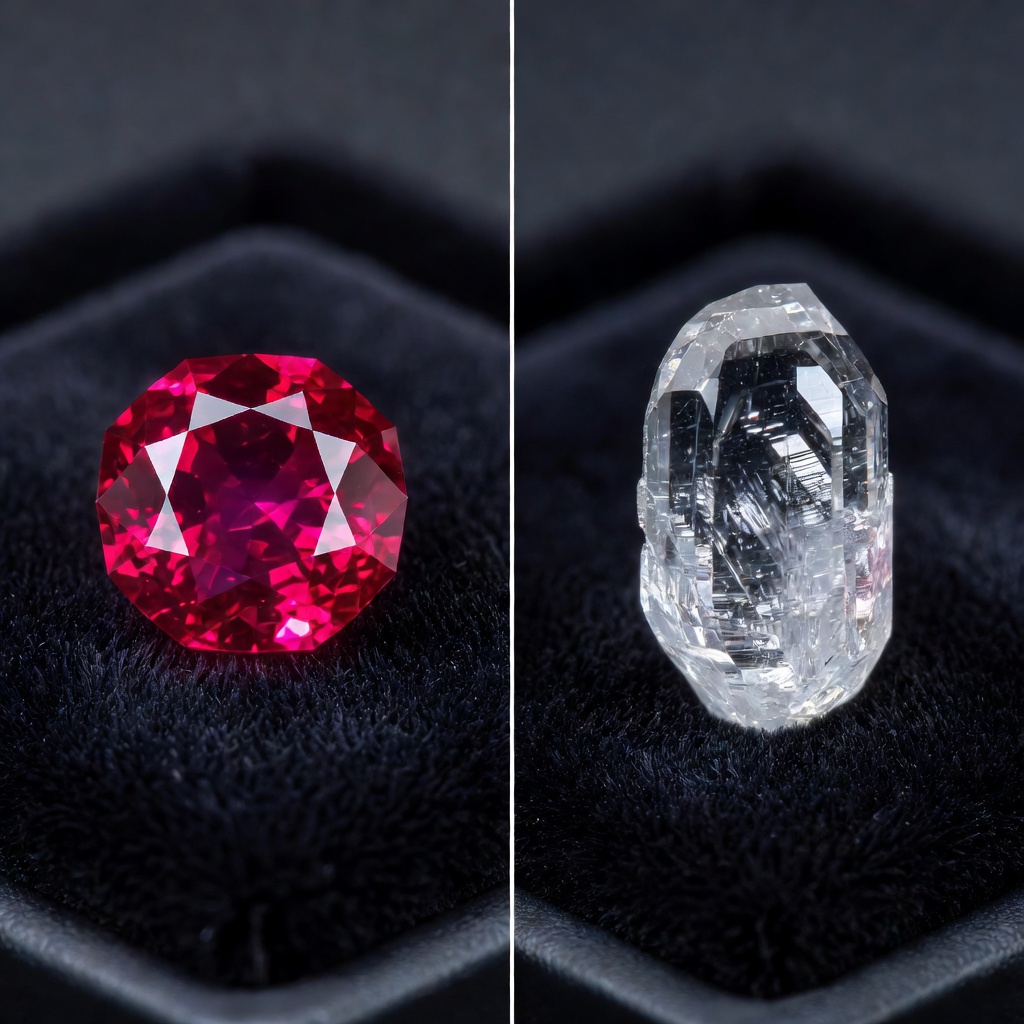
Understanding the fundamental mineralogical distinction between these gems provides essential context for their divergent physical characteristics and value profiles. Ruby belongs to the corundum family, chemically composed of crystallized aluminum oxide (Al₂O₃) that achieves its signature red coloration through traces of chromium replacing aluminum atoms in the crystal lattice. This same mineral family produces sapphires in every color except red; the moment corundum exhibits sufficient chromium content to appear red, gemological laboratories classify it as ruby rather than pink sapphire. The distinction between corundum vs beryl represents one of the most significant mineralogical divergences in the gemstone world, directly influencing hardness, cleavage properties, and inclusion patterns.
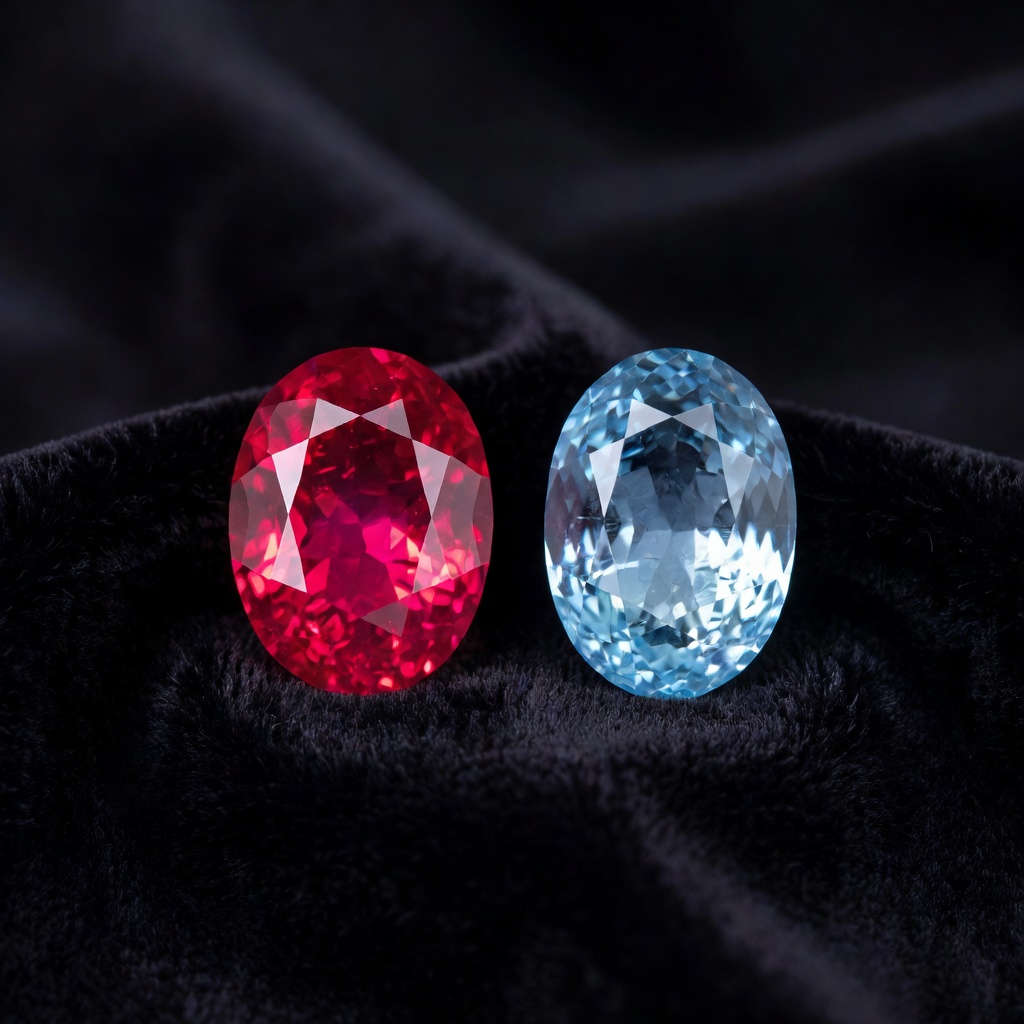
Emerald, conversely, constitutes a variety of the beryl species (Be₃Al₂Si₆O₁₈), a beryllium aluminum silicate mineral that requires chromium and vanadium impurities to develop its characteristic green hue. While beryl also produces aquamarine (blue) and morganite (pink), only intensely green specimens achieve emerald status. These geological differences create distinct formation environments: rubies typically crystallize in metamorphic rocks like marble or basalt under high pressure and temperature, while emeralds form in hydrothermal veins or pegmatites where beryllium-rich fluids interact with chromium-bearing rocks.
Primary Mining Locations and Geological Signatures
The geographic provenance of these stones significantly influences their market value and visual characteristics. For rubies, Myanmar (historically Burma) produces the legendary "Pigeon Blood" varieties prized for their pure red fluorescence and historical cachet, while Mozambique has emerged as the dominant modern source offering larger, cleaner stones with slightly darker tones. Other significant deposits include Thailand, Sri Lanka, and Madagascar, each imparting subtle color variations based on local trace element chemistry.
Emerald mining concentrates heavily in Colombia's Muzo, Chivor, and Coscuez mines, which yield the most coveted bluish-green specimens with exceptional transparency. Zambian emeralds from the Kafubu area offer darker, more saturated greens with iron content that sometimes suppresses fluorescence, while Brazilian operations in Minas Gerais and Goiás produce stones ranging from light to deep green. These geological formation differences directly affect inclusion patterns; Colombian emeralds typically form under gentler conditions resulting in more complex three-phase inclusions (gas, liquid, and crystal), whereas Zambian stones often display cleaner crystals with different mineral inclusions like biotite mica.
Color Grading and Quality Standards
Color evaluation represents the primary value determinant for both gemstones, yet the criteria differ substantially between the red gemstone vs green gemstone paradigms. Ruby color assessment follows a hierarchical system where "Pigeon Blood" commands supreme premiums—this term specifically describes stones exhibiting a vivid, saturated red with a subtle fluorescent glow that appears to illuminate the stone from within. According to standards established by leading laboratories like Gübelin and GRS, true pigeon blood ruby designation requires the absence of brown, pink, or purple modifiers that would detract from the pure red sensation. Secondary hues range from pinkish-red (often commanding lower prices) to purplish-red (historically associated with Siamese stones), with orangey-red modifiers typically considered least desirable in the current market.
Emerald color evaluation employs a more nuanced approach examining hue, tone, and saturation across the green spectrum. The ideal emerald exhibits a bluish-green to pure green hue with medium-dark tone and vivid saturation, avoiding the overly dark "closed" appearance that masks brilliance or the too-light "grass green" that lacks depth. Unlike rubies where fluorescence enhances value, emeralds face complex evaluation regarding their bluish undertones; while Colombian stones prized for their bluish-green balance, excessive blue can push a stone toward the less valuable "teal" category, while excessive yellow creates an olive appearance that significantly reduces desirability.
Lighting Considerations and Visual Performance
Practical evaluation requires understanding how each gem interacts with light sources. Rubies containing chromium exhibit strong red fluorescence under daylight or fluorescent lighting, causing fine stones to literally glow and appear more vivid indoors than under incandescent bulbs. This phenomenon means that a pigeon blood ruby purchased under jewelry store spotlights may appear slightly different in natural daylight—always request viewing under multiple lighting conditions before acquisition. Emeralds, conversely, often appear darker and more saturated under incandescent lighting, while daylight reveals their true bluish-green character. When comparing these stones side-by-side, examine them under consistent, balanced lighting (ideally north daylight or 5500K LED) to avoid color distortion that could influence your preference between the warm, fiery red and cool, verdant green options.
Durability and Wearability Comparison
When selecting jewelry intended for daily wear, the ruby hardness vs emerald hardness differential becomes a critical decision factor with long-term implications for maintenance and replacement costs. Ruby ranks 9 on the Mohs hardness scale, placing it second only to diamond (10) and equal to sapphire in scratch resistance. This exceptional hardness allows rubies to withstand decades of daily wear without showing surface abrasion, making them ideal candidates for engagement rings, bracelets, and other high-contact jewelry pieces. More importantly, rubies possess excellent toughness—the resistance to breaking and chipping—due to their hexagonal crystal structure lacking cleavage planes, meaning they do not have natural weak directions where the stone might split under impact.
Emeralds present a more complex durability profile despite their respectable 7.5-8 Mohs hardness rating. While resistant to scratching from dust and everyday contact, emeralds exhibit distinct cleavage in one direction, creating a natural weakness that makes them significantly more brittle than corundum. This structural vulnerability means that emeralds can chip or fracture when subjected to sharp blows, thermal shock, or even pressure changes during jewelry repair. For active individuals or those working with their hands, an emerald engagement ring requires protective settings and mindful removal during physical activities, whereas a ruby can typically withstand the rigors of modern life with minimal precautions.
| Characteristic | Ruby (Corundum) | Emerald (Beryl) |
|---|---|---|
| Mineral Family | Corundum (Aluminum Oxide) | Beryl (Beryllium Aluminum Silicate) |
| Mohs Hardness | 9 (Excellent scratch resistance) | 7.5-8 (Good scratch resistance) |
| Toughness | Excellent (no cleavage, resistant to breaking) | Poor to Fair (distinct cleavage, brittle) |
| Color Range | Pigeon Blood red, pinkish-red, purplish-red, orangey-red | Bluish-green, pure green, yellowish-green |
| Primary Sources | Myanmar, Mozambique, Thailand, Madagascar | Colombia, Zambia, Brazil |
| Typical Inclusions | Rutile needles (silk), fingerprints, crystals | Three-phase inclusions, jardin (garden), fractures |
| Common Treatments | Heat treatment (permanent and stable) | Oil/fracture filling (may require re-treatment) |
| Price Range (High Quality) | $10,000-$1,000,000+ per carat | $5,000-$100,000+ per carat |
| Best Setting Type | Prong, bezel, or tension settings (versatile) | Bezel or protective halo settings recommended |
| Care Requirements | Ultrasonic cleaning safe (if untreated); durable for daily wear | Avoid ultrasonics and heat; gentle cleaning only; remove during activities |
| Birthstone Month | July | May |
Practical Wear Scenarios and Risk Assessment
Consider the case of a client choosing between these stones for a platinum engagement ring to be worn by a medical professional. The ruby option allows the wearer to scrub hands, handle equipment, and occasionally bump the ring against surfaces without significant risk of damage. An emerald in the same scenario requires a fully protective bezel setting that covers the girdle and pavilion, with the understanding that the stone might require professional re-oiling or polishing after several years of wear. For bracelets and rings subjected to frequent impact, rubies offer peace of mind that emeralds simply cannot match without compromising design aesthetics through heavy protective mountings.
Clarity Characteristics and Inclusions
Acceptable clarity standards diverge dramatically between these gemstones, requiring buyers to adjust their expectations based on mineralogical realities. In the ruby market, "eye-clean" stones—those appearing inclusion-free to the naked eye from a standard viewing distance of 6-12 inches—command significant premiums and represent the ideal for fine jewelry. However, rubies frequently contain needle-like rutile inclusions known as "silk," which can actually enhance value when present in specific concentrations. This silk creates the asterism (star effect) in star rubies and can indicate that a stone has not undergone high-temperature heat treatment that would dissolve these delicate inclusions. Experienced collectors use 10x magnification loupe examinations to distinguish between harmful inclusions that threaten durability (surface-reaching fractures or large crystals near the girdle) and aesthetically acceptable internal features.
Emeralds operate under entirely different clarity paradigms where inclusions are not merely tolerated but expected as proof of natural origin. Gemologists and dealers refer to the typical inclusion pattern of natural emeralds as jardin (French for "garden"), describing the mossy, vegetative appearance of internal fractures and crystal inclusions. Unlike diamonds or rubies where inclusions detract from value, emeralds are graded with the assumption that they will contain visible characteristics. A "clean" emerald without visible inclusions immediately raises suspicion of synthetic origin or extreme rarity commanding astronomical prices. When evaluating gemstone clarity grades for emeralds, buyers should seek stones where inclusions do not significantly impact transparency or create structural weaknesses, rather than pursuing inclusion-free specimens that likely do not exist in nature.
Impact on Light Performance and Brilliance
Inclusions affect how each gemstone interacts with light in distinct ways. In rubies, heavy silk can create a sleepy, translucent appearance that reduces brilliance and transparency, though fine silk can enhance color by scattering light throughout the stone. Large crystal inclusions or fractures in rubies create "windows" or dead spots where light leaks out rather than returning to the eye. For emeralds, the emerald inclusions and internal fractures naturally limit brilliance compared to rubies; rather than exhibiting the glassy luster of corundum, fine emeralds display a softer, velvety glow described as "bloom." When selecting an emerald, examine the stone face-up to ensure that inclusions do not create obvious dark spots or interfere with the even distribution of color across the table facet. A practical tip for evaluating both stones: tilt the gem under a single light source to observe how inclusions affect light return—desirable stones maintain relatively even color and brightness across viewing angles despite internal characteristics.
Treatments, Enhancements, and Ethics
The treatment histories of these gemstones differ significantly in terms of prevalence, stability, and market acceptance, making disclosure documentation essential for any significant purchase. Heat treatment dominates the ruby market, with estimates suggesting that 90-95% of rubies on the market have undergone high-temperature heating to improve color and clarity. This process, which dissolves rutile silk and enhances red saturation, is considered permanent and stable, requiring no special care or maintenance. A heat treated ruby represents excellent value for jewelry purposes, though untreated stones command 2-10x premiums from collectors seeking rarity. Advanced treatments like lead glass filling (composite rubies) or diffusion treatment require careful avoidance, as these temporary enhancements significantly compromise durability and value.
Emerald treatments focus on clarity enhancement through oiling or resin filling of surface-reaching fractures. Traditional cedar oil treatment, which has ancient origins, improves apparent clarity by filling fractures to reduce their visibility, though these oils may dry out or leak over time, necessitating professional re-oiling. Modern permanent fillers like epoxy resins offer stability but must be disclosed, as they affect cleaning methods and long-term care. When purchasing treated gemstones, insist on reports from reputable laboratories (GIA, SSEF, Gübelin, AGL) that specifically comment on treatment extent (minor, moderate, significant) for emeralds or heating confirmation for rubies.
Ethical Sourcing and Traceability
Both gemstones face scrutiny regarding mining ethics, though recent industry initiatives have improved transparency. Burmese rubies historically faced sanctions due to political concerns, though market dynamics have shifted with increased Mozambican production offering traceable alternatives. Colombian emerald mining has made significant strides in ethical sourcing, with major mines implementing fair labor practices and environmental protections. When building a collection, consider requesting origin reports and purchasing from dealers who participate in the Responsible Jewellery Council or similar oversight organizations. For investment-grade stones, documented ethical provenance increasingly adds premium value as consumers prioritize sustainability alongside aesthetic beauty.
Market Value and Investment Potential
Understanding gemstone investment value requires analyzing auction records, liquidity factors, and rarity metrics that differentiate these markets. Fine rubies consistently achieve higher per-carat prices than comparable emeralds at the pinnacle of the market. The record-breaking 25.59-carat "Sunrise Ruby" sold for over $30 million in 2015 (exceeding $1 million per carat), while top Colombian emeralds typically range between $100,000-$200,000 per carat for exceptional specimens. This ruby price vs emerald price differential reflects the extreme rarity of large, untreated, vividly colored rubies compared to emeralds, where fine stones over 10 carats appear more frequently at auction.
However, the investment calculus changes at commercial quality levels. Medium-grade emeralds (1-3 carats with good color and moderate inclusions) often offer more accessible entry points than equivalent rubies, which command premiums even at lower quality grades due to sustained demand from Asian markets. For portfolio diversification, Burmese rubies represent "blue-chip" assets with consistent appreciation, while Colombian emeralds offer strong performance particularly among European collectors. Liquidity considerations favor rubies, which enjoy broader international demand and easier resale through auction houses, whereas emerald markets concentrate more heavily in specific regional preferences.
Rarity Factors and Size Considerations
Fine rubies exceeding 5 carats without heat treatment represent extreme rarities, with perhaps fewer than a dozen significant specimens appearing on the market annually worldwide. This scarcity drives exponential price increases per carat as size increases. Emeralds, while also rare in fine quality, occur more frequently in larger sizes, though clean stones over 20 carats remain exceptional. When investing, prioritize provenance documentation: Burmese rubies with SSEF or Gübelin "Pigeon Blood" reports and Colombian emeralds with Muzo or Chivor origin certificates from major labs retain value best during market fluctuations. Avoid stones with unclear treatment histories or synthetic origins, as these lack the scarcity required for long-term appreciation.
Symbolism, History, and Cultural Significance
The metaphysical associations and historical narratives surrounding these stones influence their selection for ceremonial jewelry and personal talismans. Ruby carries powerful associations with passion, protection, and vital life force energy. Ancient Burmese warriors embedded rubies into their flesh to render themselves invulnerable in battle, while medieval Europeans associated the stone with prophecy and banishment of sorrow. Known as the "Stone of Kings," rubies adorned the crowns and regalia of monarchs from England's Black Prince's Ruby (actually a spinel) to the stunning ruby parures of the Myanmar royal family. These associations make rubies particularly appropriate for anniversary gifts celebrating passionate love or for individuals seeking stones that symbolize courage and leadership.
Emerald resonates with themes of rebirth, fertility, and divine wisdom, deeply connected to spring renewal and the verdant growth of nature. Cleopatra's legendary obsession with emeralds—she reportedly wore them to enhance her vision and seductive powers—established the stone as an emblem of feminine power and eternal youth. In birthstone meanings, emerald as the May birthstone captures the essence of spring's return, while ruby as the July birthstone embodies the height of summer's fiery energy. Emerald also serves as the traditional gift for 20th and 35th wedding anniversaries, whereas ruby marks the 15th and 40th milestones, reflecting the stone's associations with enduring passion through different life stages.
Royal Collections and Historical Case Studies
The British Crown Jewels showcase both stones' regal status: the Imperial State Crown features the Black Prince's Ruby alongside diamonds, while the Cambridge Emerald Parure includes some of the finest Colombian emeralds inherited by Queen Mary. The Duke of Westminster's collection included a legendary 40-carat Burmese ruby that demonstrated the stone's status as a portable store of wealth for aristocratic families. When selecting between these stones for heirloom jewelry, consider the narrative you wish to create: rubies communicate intensity and protective power, making them suitable for commemorating significant achievements or protective talismans, while emeralds suggest growth, healing, and prosperous new beginnings, ideal for marking career milestones or recovery from life challenges.
Jewelry Setting and Maintenance Guidelines
Proper setting selection and maintenance protocols extend the lifespan and beauty of these precious gems, with specific requirements dictated by their durability differences. For emeralds, protective settings become essential rather than optional; bezel settings that wrap the girdle with metal provide the security needed to prevent chipping during daily wear, while halo settings offer additional protection for the vulnerable corners. V-prong settings, popular for emeralds' rectangular step cuts, require careful inspection every six months to ensure the prongs remain tight, as emerald brittleness makes them susceptible to loosening if the setting sustains impact. Rubies offer greater flexibility, accommodating delicate prong settings, tension mounts, and even channel settings for wedding bands without the same structural concerns.
Gemstone jewelry care protocols differ substantially between these stones. Untreated rubies can typically withstand ultrasonic cleaning and steam cleaning, making maintenance convenient for busy owners. However, if your ruby has been glass-filled or diffusion-treated (indicated by suspiciously low prices or fracture patterns), avoid ultrasonics entirely. Emerald maintenance requires gentler handling: never expose emeralds to ultrasonic waves, steam, or high heat, as these can damage oil treatments or cause existing fractures to expand. Instead, clean emerald jewelry using only warm water, mild dish soap, and a soft-bristled baby toothbrush, drying immediately with a lint-free cloth to prevent water spots.
Professional Care and Insurance Protocols
Schedule professional inspections every 12 months for ruby jewelry and every 6 months for emerald pieces, checking for loose prongs, worn mountings, or changes in clarity enhancement appearance. Insure high-value pieces through specialized jewelry insurance rather than generic homeowner's policies, ensuring that coverage includes "mysterious disappearance" and provides replacement value based on current market conditions. Store these gemstones separately in soft pouches—rubies can scratch emeralds if stored together, while emeralds can suffer damage from contact with harder stones. When traveling, carry jewelry in hard cases with individual compartments, and remove rings before applying lotions, perfumes, or household cleaners that might accumulate in emerald fractures or dull ruby luster.
Final Verdict: Which Gemstone Should You Choose?
Deciding between Ruby vs Emerald ultimately requires honest assessment of your lifestyle, aesthetic preferences, and symbolic intentions. Active individuals, healthcare workers, athletes, or those who rarely remove their jewelry should strongly favor ruby for its superior durability and low-maintenance requirements. The stone's Mohs 9 hardness and excellent toughness accommodate the realities of modern life without constant vigilance. Conversely, if you are drawn to emerald's mysterious, verdant depths and are willing to treat your jewelry with the care afforded to fine art—removing it during physical activities and scheduling regular maintenance—emerald offers unparalleled color saturation in the green gem category.
Color psychology plays a significant role in this decision. Rubies project warmth, energy, and assertive confidence, making them ideal for individuals who want their jewelry to make bold statements or who feel energized by red's associations with vitality and passion. Emeralds convey sophistication, growth, and serene balance, suiting those who prefer cooler color palettes or who connect with nature and renewal symbolism. Budget optimization strategies also differ: if maximizing carat weight matters, commercial-grade emeralds often provide larger stones for the investment than equivalent rubies, though at the high end, rubies offer stronger value retention.
Occasion-Based Recommendations
For engagement rings intended for daily wear, ruby provides the practical durability that modern lifestyles demand, though emerald remains viable for those committed to protective settings and mindful wear. For investment or legacy collection building, prioritize untreated Burmese rubies or fine Colombian emeralds over 3 carats with impeccable documentation. When choosing choosing gemstones for specific celebrations, select ruby for occasions marking passion, protection, or achievements (perfect for July birthdays or 40th anniversaries), while emerald suits milestones representing new beginnings, healing, or growth (ideal for May birthdays or career transitions). Ultimately, neither stone represents a compromise—both rank among earth's rarest treasures—but matching the gem's physical properties to your practical needs ensures decades of enjoyment without regret.
Frequently Asked Questions
Which is more expensive, ruby or emerald?
Fine-quality rubies typically command higher prices per carat than emeralds of similar quality. Record-breaking rubies have sold for over $1 million per carat, while top Colombian emeralds usually range between $100,000-$200,000 per carat. However, commercial-grade emeralds are often more affordable than commercial rubies.
Is ruby harder than emerald?
Yes, ruby is significantly harder than emerald. Ruby ranks 9 on the Mohs hardness scale (second only to diamond), while emerald ranks 7.5-8. Additionally, rubies have better toughness due to the absence of cleavage planes, whereas emeralds have distinct cleavage that makes them more susceptible to chipping and breaking.
Can you wear ruby and emerald together?
Yes, rubies and emeralds can be worn together, creating a striking red-green complementary color contrast. However, avoid storing them together as the harder ruby (9) can scratch the softer emerald (7.5-8). When set in jewelry together, ensure protective settings prevent the stones from rubbing against each other.
Which is better for an engagement ring, ruby or emerald?
Ruby is generally better for daily-wear engagement rings due to its superior hardness (9) and toughness. Emeralds require more protective settings (like bezels) and gentler care to prevent damage. However, if you prefer emerald's color and are willing to remove the ring during physical activities, emeralds can work with proper maintenance.
What do ruby and emerald symbolize?
Ruby symbolizes passion, love, courage, and vitality. It has been called the 'Stone of Kings' and represents the heart's desire. Emerald symbolizes rebirth, growth, fertility, and wisdom. It is associated with spring renewal, successful love, and enhanced intuition. Both stones carry powerful protective properties in various cultural traditions.
Which months have ruby and emerald as birthstones?
Ruby is the birthstone for July, while Emerald is the birthstone for May. Ruby is also the traditional gift for 15th and 40th wedding anniversaries, whereas Emerald represents the 20th and 35th wedding anniversaries. Both are considered precious gemstones suitable for marking significant life milestones.
How do I clean ruby vs emerald jewelry?
Untreated rubies can typically withstand ultrasonic cleaners and steam cleaning. However, emeralds should never be placed in ultrasonic cleaners or exposed to high heat due to their fracture-filled treatments and inherent brittleness. Clean emeralds using only warm water, mild soap, and a soft brush, drying immediately with a lint-free cloth.
Are treated rubies and emeralds worth buying?
Treated stones represent the vast majority of the market and offer excellent value for jewelry wearers. Heat-treated rubies are widely accepted and stable. Oil-treated emeralds are standard but require periodic re-oiling. Untreated stones command premium prices (2-10x higher) and are better suited for investment collecting rather than daily wear.