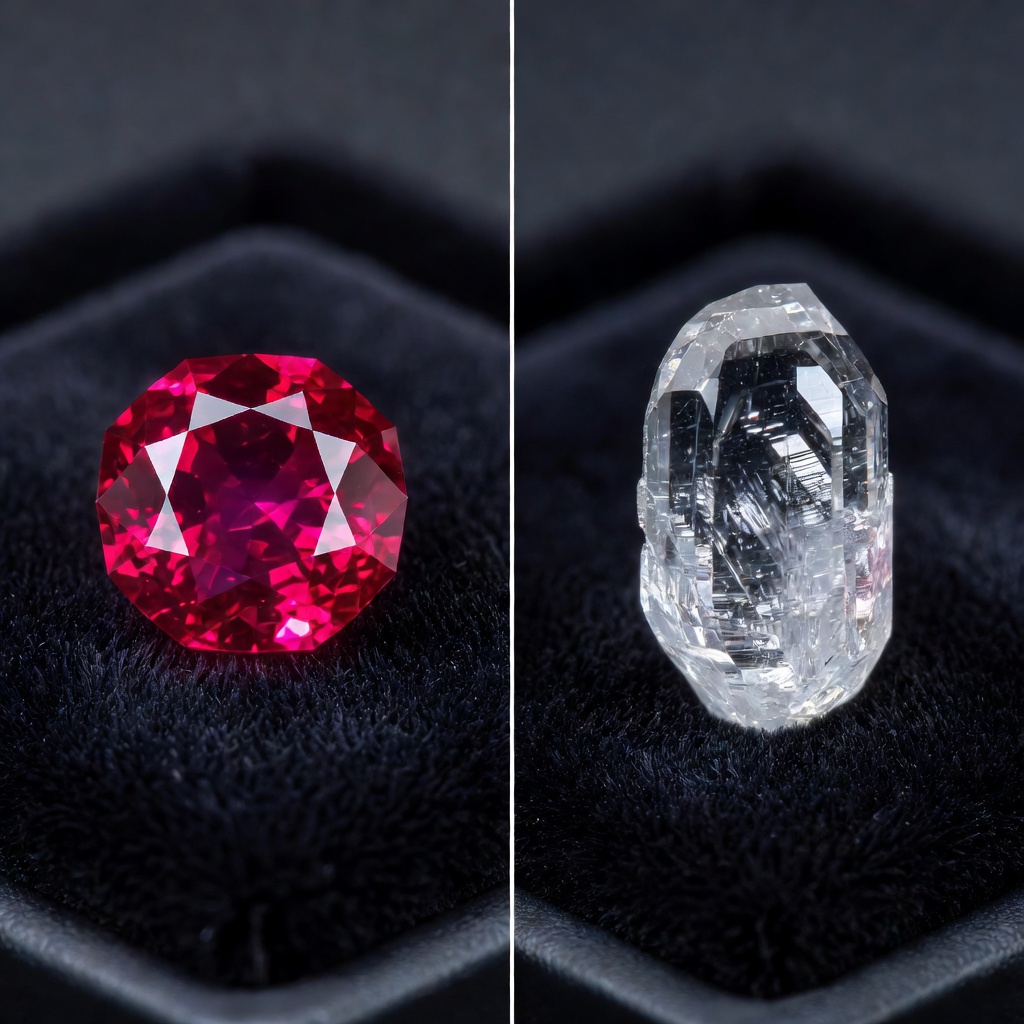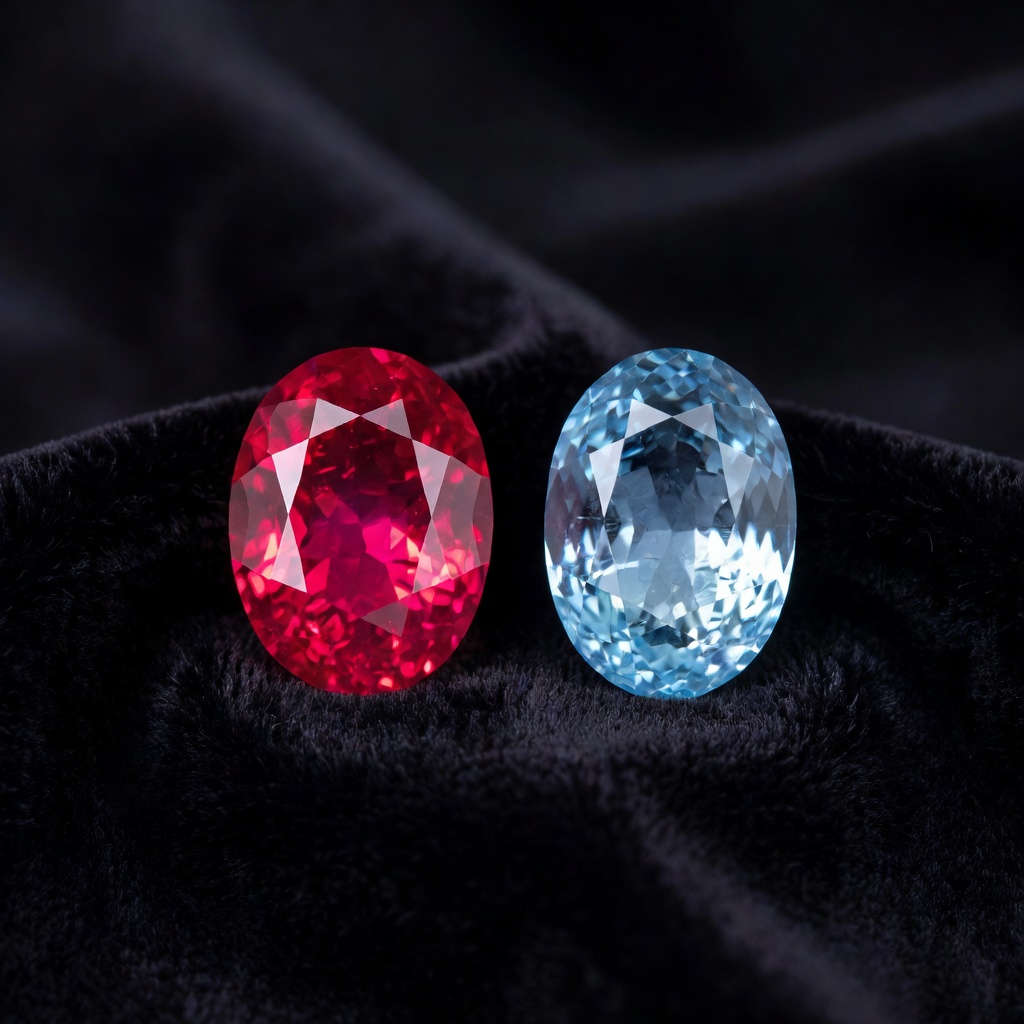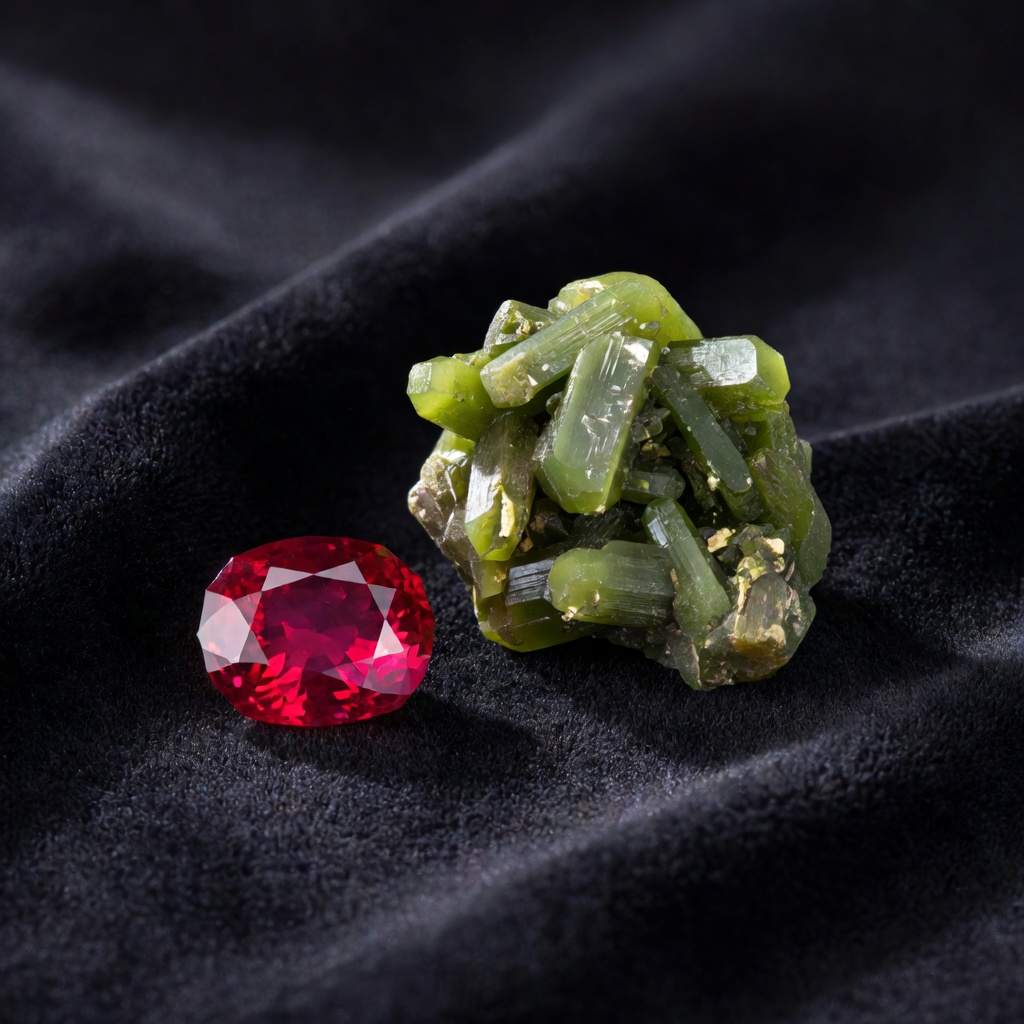
Introduction: Red Majesty vs Green Fire
When collectors and investors face the choice between a natural ruby gemstone and the rare green demantoid garnet, they are essentially choosing between two distinct masterpieces of geological artistry. Rubies have earned the regal title "King of Gems" throughout centuries of human history, adorning the crowns of monarchs and symbolizing passion and power across cultures. In contrast, demantoid garnets, often called the "Emerald of the Urals," represent one of the most spectacular discoveries in gemstone history, captivating enthusiasts with their otherworldly brilliance since their discovery in Russia's Ural Mountains during the mid-19th century. The fundamental debate between Ruby vs Demantoid Garnet stems from their belonging to entirely different mineral families—corundum for rubies and andradite for demantoids—creating distinct optical properties, durability profiles, and investment trajectories that serious collectors must carefully evaluate.
Chemical Composition and Crystal Structure
Understanding the atomic architecture of these gemstones reveals why they behave so differently under light and stress. Natural ruby gemstone specimens crystallize as aluminum oxide (Al₂O₃) in the trigonal crystal system, with chromium ions substituting for aluminum to create the iconic red coloration that defines this precious stone. Demantoid, as the green variety of andradite garnet, forms as calcium iron silicate (Ca₃Fe₂Si₃O₁₂) within the cubic isometric system, allowing for different light interaction and cleavage properties. The trigonal structure of ruby creates perfect basal parting planes that can affect toughness during cutting and setting, while demantoid's isometric structure provides uniform optical properties in all directions but contributes to its relative softness compared to corundum minerals.
The gemstone chemical composition directly influences how these materials interact with light and respond to wear. Ruby's chromium content not only produces the red color but also creates strong fluorescence under ultraviolet light, contributing to the stone's perceived "glow" in daylight conditions. Demantoid's chemical makeup includes iron and chromium in different oxidation states within the silicate matrix, producing the green color while maintaining the high refractive index (1.88-1.94) that contributes to its diamond-like brilliance. These structural differences mean that ruby cutters must orient stones carefully to avoid cleavage planes, whereas demantoid can be cut in any orientation but requires protection of vulnerable edges.
Visual Characteristics: Color and Brilliance
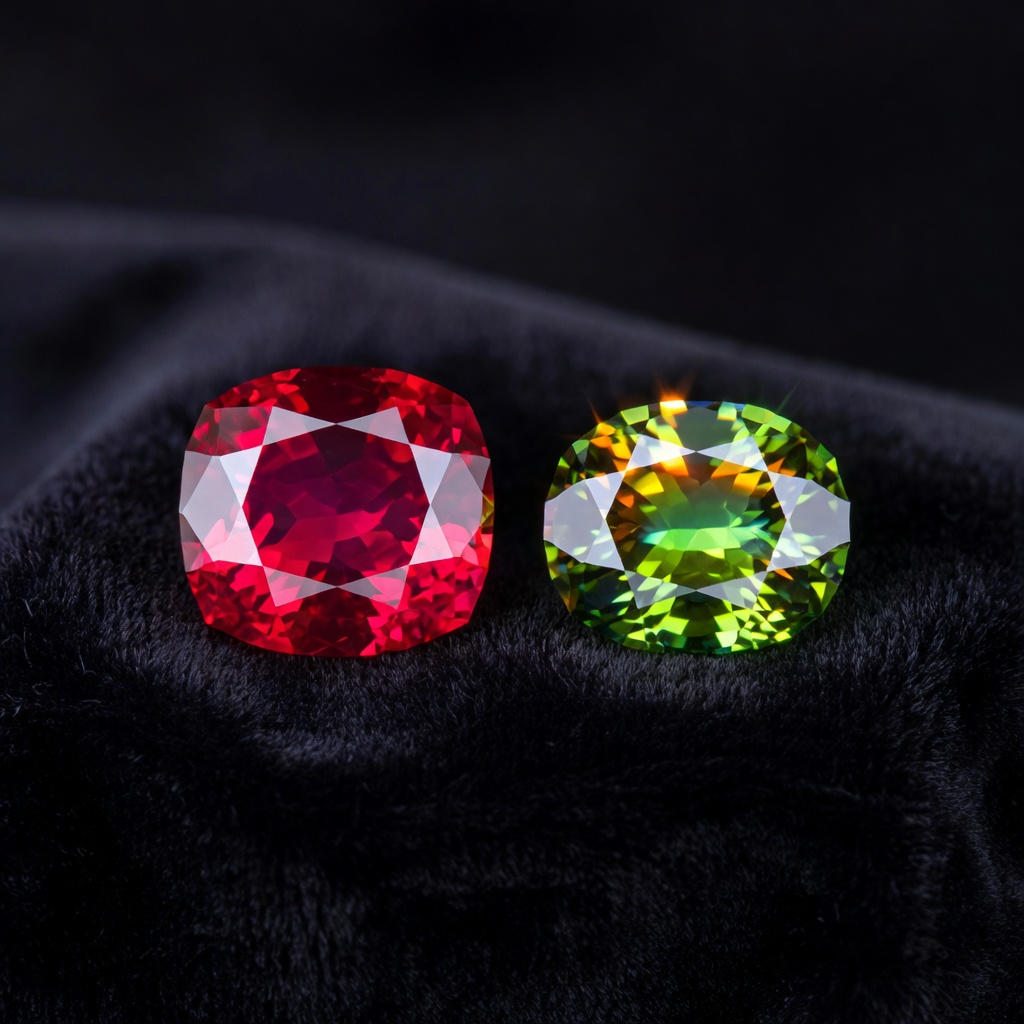
The visual distinction between these gemstones extends far beyond their obvious color contrast into the realm of optical physics and light behavior. Pigeon blood ruby specimens display the most coveted pure red hue with a slight blue undertone, creating an intense saturation that seems to glow from within, while green demantoid garnet ranges from vivid emerald green to slightly yellowish or olive tones depending on chromium and iron content. Where demantoid truly distinguishes itself is through its extraordinary gemstone dispersion rating of 0.057, which actually exceeds diamond's 0.044, producing spectacular rainbow fire that separates white light into spectral colors with every movement. Ruby exhibits a vitreous to adamantine luster but minimal dispersion, though fine Burmese specimens may display a soft, velvety glow caused by silk inclusions that diffuse light differently than the fiery brilliance of demantoid.
Fluorescence patterns provide another immediate visual distinction between these stones under appropriate lighting conditions. Natural rubies typically exhibit strong red fluorescence under long-wave ultraviolet light due to chromium content, creating a distinctive glow that enhances their appearance in sunlight, which contains UV rays. Demantoid garnets remain inert or show very weak fluorescence under UV light, though some Russian material may display weak yellowish or orange reactions. When examining both stones side by side in daylight, the demantoid will display flashes of red, blue, and yellow fire across its facets, while the ruby maintains a more consistent pure red appearance with depth and saturation rather than spectral separation.
Durability and Wearability Comparison
Practical jewelry applications depend heavily on understanding the gemstone hardness comparison between these two prized materials. Ruby ranks 9 on the Mohs hardness scale, second only to diamond, making it exceptionally resistant to scratching and suitable for daily wear in engagement rings, bracelets, and other high-contact jewelry pieces. Demantoid garnet measures 6.5 to 7 on the Mohs scale, comparable to tanzanite or peridot, meaning it can be scratched by harder materials like quartz (7) or topaz (8) that ruby would resist easily. While ruby durability is generally excellent, gem cutters must account for potential brittleness along twin planes and parting directions, whereas demantoid requires protection from direct impacts due to its lower overall toughness and tendency to chip along crystal edges.
When selecting jewelry for active lifestyles or daily wear, these hardness differences dictate appropriate setting choices and wearing habits. A ruby ring can withstand the occasional bump against door frames or desk surfaces without visible damage, making it ideal for wedding bands or statement pieces worn throughout the day. Demantoid jewelry requires more mindful wear, with earrings and pendants representing safer choices than rings for daily use, though protected ring settings can accommodate occasional wear. Professional jewelers recommend removing demantoid rings before activities involving household cleaning chemicals, gardening, or exercise, whereas ruby jewelry can remain in place during most daily activities without significant risk.
Identifying Inclusions: Diagnostic Features
Microscopic examination reveals the most diagnostic features that separate these gemstones and often determines their value in the collector market. Demantoid's most celebrated characteristic appears in the form of horsetail inclusions—radiating fibrous bundles of byssolite or chrysotile that resemble golden horse tails spreading from a central point, found predominantly in Russian material and considered desirable rather than detracting from value. Natural ruby gemstone specimens frequently contain ruby silk inclusions composed of rutile needles that can create asterism in star rubies or soft color diffusion in fine stones, alongside calcite crystals, zircon halos, and color zoning patterns that indicate natural origin. Unlike most gemstones where clarity perfection commands premium prices, demantoid with prominent horsetail inclusions often sells for higher prices than clean specimens because these inclusions confirm Russian origin and natural formation, whereas ruby value typically decreases with visible inclusions unless they create desirable phenomena like stars.
Gemstone identification professionals use these inclusion patterns to determine geographic origin and authenticity for both stones. Russian demantoid horsetails appear as delicate, feathery sprays of golden fibers, often curved and radiating from a central point or scattered throughout the stone like tiny fireworks, and their presence immediately distinguishes natural Russian material from Namibian or Madagascar stones which typically appear cleaner. Ruby inclusions vary by source, with Burmese stones showing short, fine rutile needles that create a velvety appearance, while Thai rubies may display long, coarse rutile or apatite crystals, and Mozambique rubies often contain partially healed fissures known as "fingerprint" inclusions. Advanced gemological laboratories use these inclusion patterns along with spectroscopic analysis to issue origin reports that significantly affect market pricing and collector interest.
Geographic Origins and Rarity Factors
The geographic provenance of these stones significantly influences their rarity, value, and historical significance in the gemstone investment guide for serious collectors. Burmese ruby from Myanmar's Mogok Stone Tract has commanded the highest prices for decades due to its exceptional fluorescence and pure red color, though new deposits in Mozambique now provide excellent alternatives with slightly different chemical signatures. Russian demantoid garnet from the Ural Mountains represents the historical benchmark for quality, particularly stones from the Kladovka and Babka river regions, though modern deposits in Namibia and Madagascar now supply the market with material that often lacks the characteristic horsetail inclusions. Mining challenges including political instability in Myanmar, depletion of classic Russian deposits, and the difficulty of finding large clean crystals in any demantoid locality ensure that both gemstones remain scarce, though fine untreated Burmese rubies over five carats are arguably among the rarest gemstones on earth.
Exploration efforts continue to uncover new sources, though none have replicated the prestige of historic deposits. Mozambique rubies discovered in the Montepuez region since 2009 now dominate the market in terms of volume, offering fine red colors that rival Burmese material but typically lacking the strong fluorescence that gives Burmese stones their distinctive "pigeon's blood" appearance. Namibian demantoid from the Green Dragon mine produces bright green stones with excellent clarity but generally without the horsetail inclusions that collectors prize, while Madagascar material tends toward yellowish-green tones. The finite nature of Russian demantoid deposits, largely exhausted by the early 20th century, means that fine antique Russian stones with documented provenance appreciate rapidly as they become increasingly unavailable on the open market.
Market Value and Investment Potential
Investment potential varies significantly between these gemstones based on market availability, treatment prevalence, and historical auction performance. Untreated Burmese rubies regularly command $15,000 to over $1 million per carat for exceptional specimens, with the record-breaking Sunrise Ruby selling for over $30 million at Sotheby's, demonstrating the extraordinary andradite garnet value gap that favors top-tier rubies. Fine demantoid garnets typically range from $3,000 to $10,000 per carat for excellent Russian material with horsetail inclusions, though prices can exceed this for exceptional large stones, making them more accessible to serious collectors while still offering strong appreciation potential. Long-term investment trends suggest that untreated natural ruby gemstone specimens will continue appreciating due to mine depletion and increasing demand from Asian markets, while Russian demantoid with documented provenance represents a finite resource that becomes more valuable as historic material becomes unavailable.
Collector strategies differ based on entry budget and liquidity requirements. High-net-worth investors often focus on unheated Burmese rubies above three carats with SSEF or Gübelin certificates of origin, treating these as hard assets comparable to fine art or rare wines, with the understanding that liquidity requires specialized auction channels. Demantoid collectors might adopt a "quality over size" approach, acquiring smaller Russian stones (under two carats) with prominent horsetail inclusions and antique cuts, which represent more liquid markets while still offering historical significance. Both categories require proper documentation and storage, with rubies benefiting from independent laboratory reports verifying lack of heat treatment, and demantoids requiring provenance documentation distinguishing Russian from African material.
Treatments and Enhancements
Treatment history dramatically affects the value and desirability of these gemstones in fundamentally different ways that buyers must understand before purchasing. Over ninety percent of rubies on the market undergo heat treatment to dissolve rutile silk and improve color saturation, a stable and accepted practice that still requires disclosure, while lower-grade material may receive fracture filling with lead glass or oil to mask surface-reaching inclusions. Most green demantoid garnet enters the market completely natural and untreated because heating typically destroys the stone's desirable green color or causes instability, meaning collectors can often purchase these gems without concerns about treatment disclosure affecting value. When evaluating treated ruby versus natural demantoid garnet, investors should note that untreated Burmese rubies command premiums of 300% or more over heated material, whereas demantoid prices focus primarily on color intensity, dispersion quality, and inclusion characteristics rather than treatment history.
Detection of treatments requires different approaches for each stone. Heat-treated rubies may show melted crystal inclusions, discolored fractures, or altered silk patterns under magnification, with lead-glass filled stones displaying a blue flash effect when viewed with diffused lighting and magnification. Demantoid treatments are rare but may include oiling to mask surface-reaching feathers, though this is uncommon and easily detected by observing how the stone appears "wet" or shows trapped oil bubbles under magnification. Buyers should insist on laboratory reports from recognized institutions such as GIA, SSEF, or AGL for significant purchases, as these documents provide essential verification of treatment status that affects insurance values and resale potential.
Jewelry Design and Setting Considerations
Designing jewelry for these gemstones requires distinct approaches that account for their hardness differences and optical properties. Yellow gold and rose gold settings enhance the warmth and intensity of pigeon blood ruby, creating classic combinations that have adorned royalty for centuries, while white metals such as platinum and white gold better complement the verdant fire of demantoid by providing neutral backgrounds that emphasize green saturation. Protective settings prove essential for demantoid garnet ring designs, with bezel settings, halo designs, or recessed mounts shielding the girdle and crown from direct impact, whereas ruby accommodates traditional prong settings that maximize light exposure due to its superior hardness. Size limitations also influence design choices, as clean demantoids over two carats are extraordinarily rare and typically reserved for pendant or earring designs, while rubies are available in larger sizes more frequently, though still commanding exponential price increases per carat as size increases.
Gemstone jewelry settings must also account for the distinct optical personalities of these stones. Demantoid's high dispersion benefits from open settings that allow light entry from multiple angles, maximizing the rainbow fire that distinguishes this gem, though designers must balance this with protective elements like V-prongs at the corners. Ruby settings often aim to maximize the apparent depth of color, with closed-back settings or foil backing historically used to enhance color, though modern transparency preferences favor open-back designs that allow light penetration. When designing matching sets or suites, jewelers note that demantoid pairs are exceptionally difficult to match for color and dispersion, whereas ruby pairs, while expensive, are more readily available in matching qualities for earrings or cufflinks.
Comprehensive Comparison: Ruby vs Demantoid Garnet
| Characteristic | Ruby (Corundum) | Demantoid Garnet (Andradite) |
|---|---|---|
| Chemical Composition | Aluminum Oxide (Al₂O₃) with Chromium | Calcium Iron Silicate (Ca₃Fe₂Si₃O₁₂) |
| Crystal System | Trigonal | Cubic Isometric |
| Mohs Hardness | 9 (Excellent) | 6.5-7 (Moderate) |
| Refractive Index | 1.76-1.77 | 1.88-1.94 |
| Dispersion (Fire) | Low (0.018) | Very High (0.057) |
| Primary Color | Red to Pink-Red | Vivid Green to Olive Green |
| Signature Inclusions | Rutile Silk, Calcite, Zircon Halos | Horsetail Inclusions (Byssolite) |
| Fluorescence | Strong Red under UV | Inert to Weak |
| Common Treatment | Heat Treatment (90%+ of market) | Typically None |
| Premium Sources | Myanmar (Burma), Mozambique | Russia (Urals), Namibia |
| Price Range (Fine Quality) | $10,000 - $1M+ per carat | $3,000 - $10,000+ per carat |
| Best Jewelry Applications | Rings, Bracelets, Daily Wear | Earrings, Pendants, Occasional Wear |
| Investment Liquidity | High (Established auction market) | Moderate (Specialized collectors) |
Final Verdict: Which Gemstone Should You Choose?
Selecting between these magnificent gemstones ultimately depends on personal priorities regarding wearability, budget constraints, and aesthetic preferences rather than absolute superiority of one over the other. For daily wear jewelry such as engagement rings or heavy bracelets, ruby provides unmatched durability and scratch resistance that will maintain its beauty through generations of continuous use, while demantoid suits collectors who prioritize extraordinary brilliance and exclusivity in pieces designed for occasional wear or protected settings. Collector considerations often center on whether one values the deep historical significance and cultural cachet of Burmese ruby, which has adorned imperial regalia for millennia, or the exclusivity of Russian demantoid with horsetail inclusions that represents a finite geological occurrence unlikely to be replicated. When considering heirloom potential, both stones offer excellent value retention provided they are properly set and maintained, though ruby's superior hardness gives it a practical advantage for jewelry intended to survive decades of active family use without requiring re-polishing or resetting.
This gemstone buying guide suggests creating a decision matrix based on your specific circumstances. If your budget exceeds $20,000 and you seek a daily-wear statement piece with established investment liquidity, prioritize an untreated Burmese or fine Mozambique ruby above two carats. If you appreciate unique optical phenomena, prefer green gemstones, and can accommodate careful wearing habits, a Russian demantoid with visible horsetail inclusions offers exceptional character at a lower entry point while still appreciating in value. For the serious collector with substantial resources, acquiring both stones represents the ideal approach—ruby for its regal history and durability, demantoid for its incomparable fire and geological rarity—creating a collection that spans the spectrum from red majesty to green fire.
Frequently Asked Questions
Which Is More Expensive, Ruby or Demantoid Garnet?
Fine untreated Burmese rubies typically command higher prices per carat ($10,000-$1M+) compared to demantoid garnets ($1,000-$10,000 per carat). However, rare Russian demantoids with prominent horsetail inclusions can exceed prices of commercial-grade rubies. The price gap widens significantly for stones over three carats, where fine rubies become exponentially rarer and more valuable than even the finest demantoids.
What Are Horsetail Inclusions in Demantoid Garnet?
Horsetail inclusions are radiating fibrous bundles of byssolite or chrysotile asbestos found exclusively in demantoid garnets, particularly from Russia. Unlike most gemstones where inclusions reduce value, these golden 'horsetails' are prized diagnostic features that confirm authenticity and often increase the stone's value. These inclusions create distinctive spray-like patterns that resemble horse tails or fireworks frozen within the green crystal, serving as fingerprint evidence of the stone's Ural Mountain origin.
Can Demantoid Garnet Be Worn Daily Like Ruby?
Demantoid garnet (6.5-7 Mohs) is significantly softer than ruby (9 Mohs) and requires more careful handling. While ruby is suitable for daily wear in rings and bracelets, demantoid is better reserved for earrings, pendants, or occasional-wear rings with protective settings to prevent scratches and chips. If you choose a demantoid ring for regular wear, select a bezel or halo setting that protects the girdle and avoid wearing it during activities that might cause impact against hard surfaces.
How Can I Tell Ruby and Demantoid Apart Without Gemological Equipment?
Observe the color and fire: demantoid displays vivid green color with exceptional rainbow-like dispersion (fire), while ruby shows pure red with vitreous luster and no fire. Demantoid also appears slightly 'sleepy' or velvety due to inclusions, whereas fine ruby appears more transparent and glass-like. Under direct sunlight, demantoid will flash rainbow colors across its facets, while ruby maintains a consistent deep red appearance with possible red fluorescence glow in strong daylight.
Do Rubies and Demantoids Receive Similar Treatments?
No. While over 90% of rubies on the market undergo heat treatment to improve color and clarity, most demantoid garnets are completely natural and untreated. High-value demantoids are prized specifically for their natural state, whereas heat-treated rubies are industry standard. This distinction makes demantoid particularly appealing to collectors seeking untreated gemstones, while ruby buyers must specifically request unheated material and expect to pay significant premiums for documented natural stones.
Which Gemstone Has Better Brilliance and Sparkle?
Demantoid garnet actually exhibits higher brilliance and dispersion (0.057) than diamond (0.044), creating exceptional 'fire' with rainbow flashes. Ruby has lower dispersion but possesses a distinctive vitreous luster and can display silk inclusions that create soft glow effects, particularly in Burmese specimens. If you prioritize spectral fire and rainbow sparkle, demantoid is the clear winner; if you prefer deep, saturated color with a glass-like shine, ruby provides the desired aesthetic.
Are Both Rubies and Demantoids Considered Birthstones?
Ruby is the official birthstone for July, while demantoid (as a variety of garnet) represents January births. Demantoid is specifically the anniversary gemstone for the 2nd wedding anniversary, whereas ruby celebrates 15th and 40th anniversaries. This makes ruby the more traditional choice for July birthdays or significant wedding milestones, while demantoid offers a unique alternative for January births or second anniversary celebrations seeking something beyond traditional red garnets.
Which Is Rarer: Burmese Ruby or Russian Demantoid?
Both are extremely rare, but fine untreated Burmese rubies over 5 carats are arguably rarer than any demantoid. However, Russian demantoids with classic horsetail inclusions are finite resources since Ural Mountain mines are largely depleted, making museum-quality specimens virtually irreplaceable. The rarity calculation depends on specific criteria: Burmese rubies of exceptional quality face ongoing supply constraints due to political and mining challenges, while Russian demantoids represent a closed chapter of mining history with no significant new production for over a century.