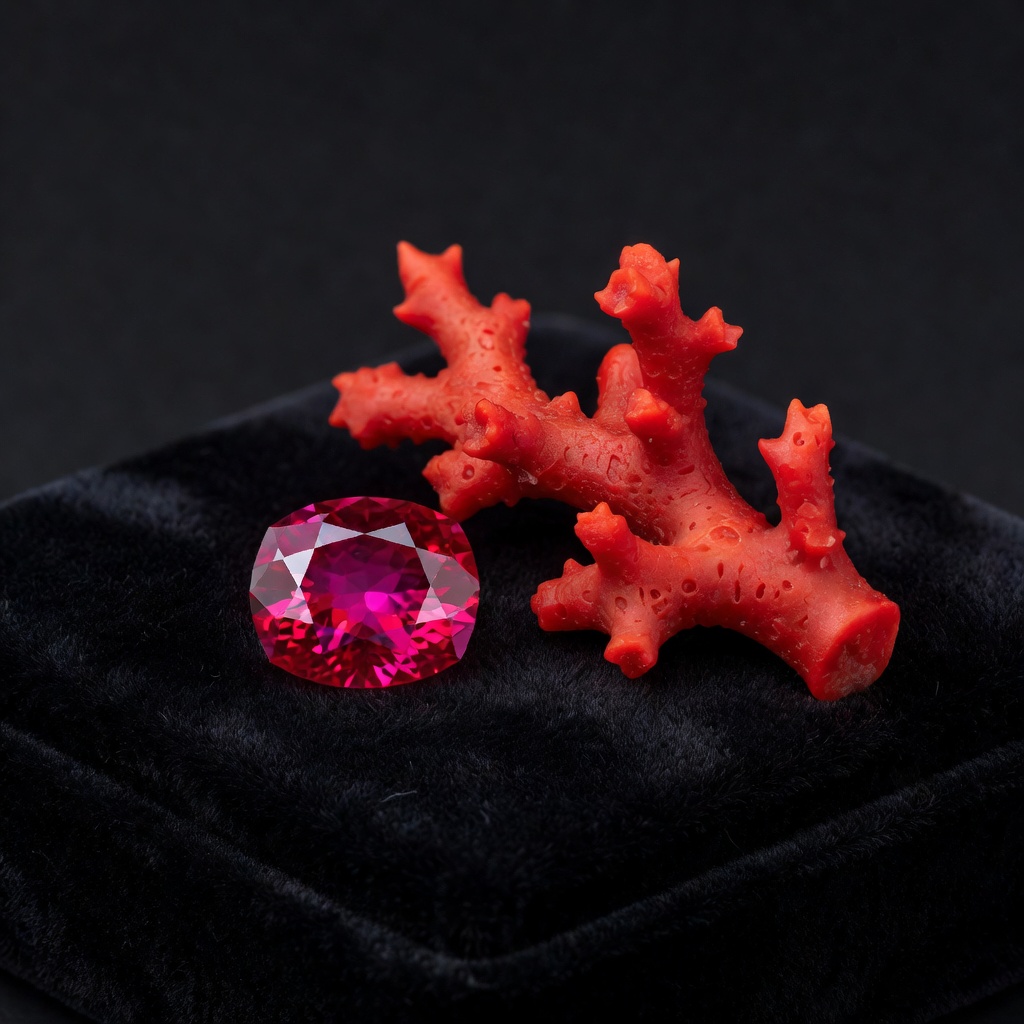
Introduction: Understanding Ruby and Coral
When selecting a vibrant red gemstone for jewelry or astrological purposes, buyers often find themselves debating the merits of ruby versus coral, two materials that share striking visual similarities yet differ fundamentally in their composition and characteristics. Ruby represents the pinnacle of precious mineral gemstones, belonging to the corundum family and serving as the coveted July birthstone prized for its exceptional hardness and rich red hues. In contrast, coral emerges as a fascinating organic gemstone formed through the biological processes of marine polyps over decades, creating a calcium carbonate structure that captures the essence of oceanic life. Despite both stones displaying captivating red coloration and holding significant cultural importance across various civilizations, they occupy distinctly different categories in gemology, price points, and practical applications.
The confusion between these materials often stems from their shared association with passion, protection, and prosperity in various cultural traditions, leading many collectors and first-time buyers to assume interchangeable utility. However, understanding the critical distinctions between these precious versus organic gemstones proves essential for making informed purchasing decisions, whether you seek a durable daily-wear ring, a specific astrological remedy, or a long-term investment piece. This comprehensive comparison examines every aspect of ruby and coral, from their geological origins to their market values, providing actionable insights for jewelry enthusiasts, Vedic astrology practitioners, and gemstone investors alike.
Origins and Formation: Mineral vs Organic
The fundamental distinction between ruby and coral begins at their very genesis, illustrating the dramatic difference between mineral crystallization and biological accretion. Rubies form deep within the Earth's crust under extreme conditions of high pressure and temperature, typically developing in metamorphic rocks such as marble or basalt over millions of years as aluminum oxide crystals grow and incorporate trace chromium to achieve their signature red color. Major mining operations for high-quality rubies concentrate in Myanmar's Mogok Valley, Mozambique's Montepuez mines, and Madagascar's deposits, where geological activity has created the perfect environment for corundum crystallization.
Coral, conversely, represents one of the few organic gemstones recognized by the jewelry industry, formed when colonies of tiny marine polyps (Corallium rubrum) extract calcium carbonate from seawater to build protective skeletons over 7-10 years to reach harvestable size. The finest precious coral, particularly the deep ox-blood variety, traditionally comes from the Mediterranean Sea near Italy, Sardinia, and Tunisia, while Pacific waters near Japan and Taiwan produce the delicate pink "angel skin" varieties. This biological formation process makes coral particularly vulnerable to environmental changes, with ocean warming and acidification threatening supplies, whereas ruby mining faces concerns regarding ethical sourcing and fair labor practices in conflict zones.
From a sustainability perspective, both materials present unique challenges that conscientious buyers must consider. The coral industry operates under strict CITES regulations and harvesting quotas to prevent ecosystem destruction, making certified sustainable coral increasingly rare and expensive. Ruby mining, particularly in Myanmar, has faced international scrutiny regarding human rights violations, leading many buyers to prefer ethically sourced Mozambique or Madagascar stones with documented chain-of-custody certification. When choosing between these organic versus mineral gemstones, understanding these provenance issues helps collectors align their purchases with their ethical values while ensuring the longevity of both ecosystems and mining communities.
Physical Properties and Durability Analysis
Perhaps the most significant practical difference between ruby and coral manifests in their physical durability, directly impacting their suitability for various jewelry applications and daily wear scenarios. On the Mohs scale of mineral hardness, ruby ranks an impressive 9, second only to diamond, making it extraordinarily resistant to scratching and ideal for engagement rings, bracelets, and other pieces subject to constant impact. Coral, measuring merely 3 to 4 on the Mohs scale, shares hardness similarities with calcite or fluorite, rendering it significantly more vulnerable to surface damage from everyday dust particles, which typically contain quartz (hardness 7) capable of scratching coral upon contact.
Beyond simple scratch resistance, toughness—the resistance to breaking or chipping—further distinguishes these materials, with ruby's crystalline structure providing excellent toughness despite its high hardness, while coral's porous organic composition makes it prone to cracking under pressure or thermal shock. Chemically, rubies consist of aluminum oxide (Al₂O₃) with chromium inclusions, creating an inert material resistant to acids and heat treatments used in jewelry manufacturing. Coral comprises primarily calcium carbonate (CaCO₃), making it reactive to household acids like vinegar or lemon juice, susceptible to damage from perfumes and cosmetics, and vulnerable to fading when exposed to prolonged sunlight or heat.
For collectors examining Mohs scale gemstones for investment purposes, these durability factors carry significant implications for long-term value retention. A ruby ring worn daily for decades may maintain its polish and structural integrity with minimal maintenance, while a coral ring subjected to similar treatment would likely show significant surface wear, pitting, or color degradation within months. Practical testing demonstrates this disparity clearly: rubbing a ruby against steel leaves no mark on the gem, whereas coral scratches easily with a fingernail or copper coin, providing a simple field test for differentiation.
Case Study: The Active Lifestyle Dilemma
Consider Sarah, a yoga instructor who purchased a coral engagement ring based on its organic aesthetic and astrological recommendations for Mars energy, only to discover within three months that the stone had developed surface scratches from her kettlebell workouts and showed etching from contact with cleaning solutions. After consulting a gemologist, she replaced the coral with a Burmese ruby in a protective setting, which has maintained flawless condition through two years of identical activity levels, illustrating how ruby hardness versus coral softness directly impacts real-world wearability.
Color Variations and Visual Identification
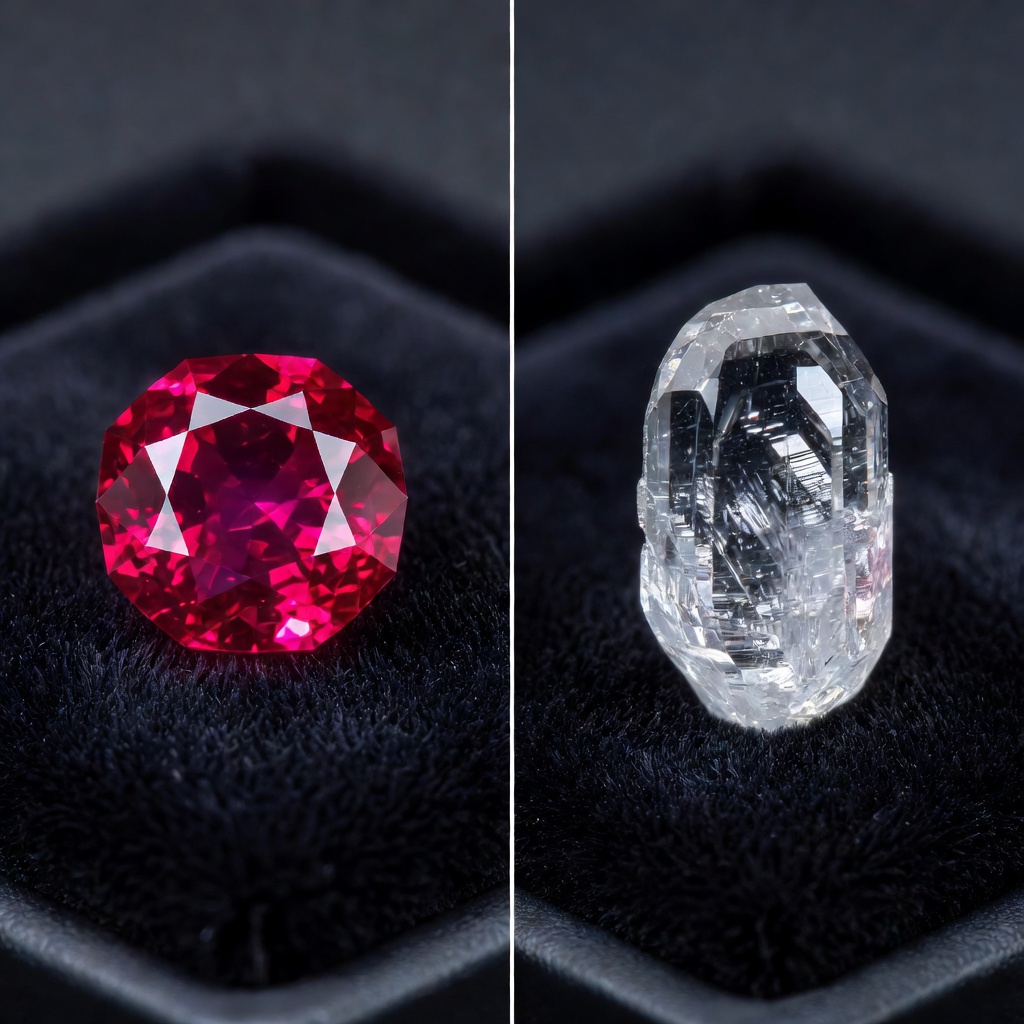
While both stones display the coveted red spectrum, trained eyes can distinguish between ruby and coral through subtle variations in hue, saturation, and optical properties that reflect their distinct material compositions. Rubies offer a diverse color palette ranging from the highly prized "pigeon blood" red—a pure, vivid red with a hint of blue undertone that commands premium prices—to pinkish-red and purplish-red varieties that result from varying chromium and iron content. Fine rubies exhibit vitreous luster, meaning they possess a glass-like brilliance and transparency that allows light to penetrate and refract within the crystal structure, creating depth and fire.
Natural red coral presents a distinctly different visual character, typically appearing in shades of ox-blood (deep dark red), salmon pink, pale pink "angel skin," and occasionally white or black in rare varieties. Unlike ruby's crystalline transparency, coral displays an opaque to slightly translucent waxy or dull luster, often revealing characteristic surface patterns such as longitudinal striations, growth lines, or tiny pitting that betray its organic origins. Under magnification, rubies typically show internal characteristics like rutile needle inclusions (silk), crystal inclusions, or color zoning, whereas coral reveals structural patterns resembling wood grain or tree rings formed by the growth of polyp colonies.
Practical identification techniques for red gemstone comparison include observing how light interacts with each material: ruby will show double refraction when viewed through a dichroscope and may display asterism (star effect) in cabochon cuts, while coral remains singly refractive and may show fluorescent reactions under UV light depending on treatment history. The specific gravity test provides another diagnostic tool, with ruby feeling substantially heavier (3.97-4.05 specific gravity) than coral (2.60-2.70) when held in the hand, a difference immediately apparent to experienced dealers and collectors handling loose stones.
Astrological Significance and Healing Properties
In Vedic astrology and crystal healing traditions, ruby and coral serve as powerful planetary gemstones, yet they channel distinctly different cosmic energies that correspond to specific birth charts and spiritual needs. Ruby, known as Manikya in Sanskrit, represents the Sun (Surya), embodying solar energy that promotes leadership qualities, self-confidence, vitality, and professional authority, making it particularly beneficial for individuals seeking recognition in governmental or administrative positions. Those with Leo ascendants or weak Sun placements in their natal charts traditionally wear rubies set in gold on the right hand's ring finger to strengthen the Sun's positive influences and mitigate ego-related challenges.
Red coral, called Moonga in Vedic tradition, corresponds to Mars (Mangal), the planet of courage, energy, and physical strength, offering red coral astrology benefits specifically related to overcoming fear, enhancing marital harmony (particularly for managing Manglik dosha), and boosting athletic performance. Unlike the Sun's illuminating, authoritative energy, Mars provides protective, grounding forces that benefit Aries and Scorpio ascendants or those experiencing Mars-related delays in marriage or professional conflicts. Healers often recommend coral for root chakra alignment, believing its organic oceanic origins help ground scattered energies and improve blood circulation, while ruby targets the heart chakra and solar plexus to enhance personal power and emotional resilience.
Practitioners of metaphysical healing distinguish between these stones based on their energy signatures: ruby emits a warming, activating vibration suitable for combating depression or lethargy, while coral provides stabilizing, nurturing energy ideal for anxiety or emotional volatility. When selecting between these Vedic astrology gemstones, practitioners emphasize the importance of personalized consultation, as wearing the wrong planetary stone—such as ruby when Mars dominates your chart, or coral when the Sun requires strengthening—can potentially exacerbate rather than alleviate astrological challenges, making professional chart analysis essential before purchase.
Practical Example: Career Transition Support
Michael, a mid-level manager seeking promotion to executive leadership, consulted a Vedic astrologer who noted his weak Sun placement in the tenth house of career, recommending a untreated pigeon blood ruby set in yellow gold. Within six months of wearing the stone, he reported increased confidence during board presentations and secured the promotion, attributing part of his success to the stone's solar energy, whereas his colleague with a dominant Mars placement found similar career benefits from wearing red coral to enhance competitive drive and physical stamina during high-pressure quarterly reviews.
Market Value and Investment Considerations
The financial landscapes for ruby and coral differ dramatically, reflecting their relative rarity, durability, and historical status within the precious gem trade. Investment-grade rubies, particularly untreated Burmese stones exceeding five carats with pigeon blood coloration, command prices ranging from $1,000 to over $100,000 per carat at auction, with record-breaking stones selling for millions, establishing them as serious alternative investments comparable to fine diamonds or colored diamonds. Mozambique rubies offer slightly more accessible entry points at $500-$5,000 per carat for fine quality, though they rarely achieve the price premiums of Burmese origin stones due to market perceptions regarding color purity.
Fine red coral typically trades between $100 and $500 per carat for high-quality Mediterranean ox-blood material, with angel skin varieties commanding premium prices up to $1,000 per carat in the Japanese market, though these figures pale in comparison to top-tier ruby valuations. Rarity factors affecting coral pricing include increasing scarcity due to environmental regulations and climate change, while ruby rarity centers on the diminishing availability of untreated Burmese material following international sanctions and mining depletion. From a gemstone investment perspective, rubies demonstrate stronger historical price appreciation and liquidity in resale markets, whereas coral, while appreciating steadily due to supply constraints, offers lower volatility but reduced market depth for quick liquidation.
Transparency regarding treatments significantly impacts value for both materials, with heat-treated rubies (the industry standard) requiring disclosure but still retaining substantial value, while glass-filled or lead-glass-filled rubies represent budget alternatives with limited investment potential. Coral treatments present more complex valuation challenges, as natural untreated coral commands premium prices, while stabilized (resin-impregnated), dyed, or plastic-coated coral—common in the market—holds significantly lower value and may deteriorate over time. Savvy investors prioritize GIA or SSEF certification for rubies documenting origin and treatment status, while coral buyers seek documentation verifying Mediterranean origin and absence of artificial color enhancement to ensure long-term value retention.
Jewelry Applications and Wearability
The extreme hardness differential between these materials dictates fundamentally different approaches to jewelry design, setting styles, and appropriate usage scenarios that protect the stones while maximizing aesthetic impact. Rubies accommodate virtually any jewelry application, thriving in high-wear items like engagement rings, tennis bracelets, and statement necklaces where their Mohs 9 hardness resists abrasion from daily activities, metals, and environmental exposure. Jewelers frequently set rubies in prong, bezel, or tension settings using platinum, white gold, or yellow gold, with the stone's durability allowing for intricate cutting styles including step cuts, brilliant cuts, and cabochons that maximize color and brilliance.
Coral demands protective, conservative jewelry approaches due to its softness and porosity, with gemstone jewelry designers typically employing bezel or halo settings that encase the stone's edges and minimize exposure to impacts. High-quality coral works beautifully in pendants, earrings, and brooches—pieces that experience minimal physical contact during wear—while rings and bracelets require protective designs with raised bezels and occasional wear schedules rather than daily use. Metal pairing preferences also diverge: coral traditionally pairs with yellow or rose gold that complements its warm organic tones, while rubies often suit white gold or platinum settings that accentuate their cool, vivid red fluorescence, though vintage pieces frequently feature rubies in yellow gold for a regal, classical appearance.
Lifestyle compatibility assessment proves crucial when choosing between these stones for personal adornment. Active individuals, healthcare workers, or those with hands-on professions should select ruby for daily-wear pieces, as the stone withstands hand sanitizer exposure, minor impacts, and constant friction without damage. Coral suits collectors with sedentary lifestyles, those seeking occasional statement pieces for special events, or individuals willing to maintain strict coral care protocols including removal before washing hands, applying cosmetics, or engaging in physical activity. Understanding these wearability constraints prevents costly disappointments and ensures the longevity of both materials in their intended applications.
Design Case Study: The Anniversary Gift Decision
When James sought a 40th anniversary gift for his wife, a retired librarian who gardens occasionally but primarily attends cultural events, the jeweler presented two options: a Burmese ruby cocktail ring for $15,000 suitable for daily wear, or a carved coral cameo pendant featuring ox-blood material for $3,200 perfect for her monthly concert attendance. Given her lifestyle and existing jewelry collection, the coral pendant provided unique artistic value appropriate for her activity level, while saving significant budget, whereas a similarly priced ruby would have been smaller and less impactful, illustrating how occasion appropriateness and lifestyle analysis should drive material selection.
Authentication and Avoiding Imitations
The significant price differentials between genuine ruby, coral, and their simulants have fostered sophisticated markets for imitations, making professional authentication essential for serious purchases and insurance purposes. Ruby simulants include synthetic corundum (chemically identical to natural ruby but lab-grown), doublets or triplets with red glass crowns, and entirely different materials like red spinel, garnet, or glass filled with lead to simulate weight and brilliance. Red coral faces substitution threats from dyed bone, plastic resins, bamboo coral (often bleached and dyed), and compressed coral powder reconstituted with binders—all significantly less valuable than natural precious coral.
Visual inspection techniques provide initial screening, as genuine rubies exhibit specific inclusions, birefringence (double refraction), and fluorescent reactions under long-wave UV light (typically red, though Burmese stones may show weak orange). Real coral displays characteristic surface texture under 10x magnification, including tiny parallel ridges or pitting, and may show chalky fluorescence under UV light, whereas plastic simulants appear too perfect with mold marks or air bubbles. Simple field tests include the hot point test (coral smells of burning protein/organic material, plastic smells chemical) and microscopic examination for cellular structures in coral versus crystalline structures in ruby.
For definitive real vs fake gemstones verification, laboratory testing remains the gold standard, with facilities like GIA (Gemological Institute of America), IGI (International Gemological Institute), and SSEF (Swiss Gemmological Institute) offering comprehensive reports documenting refractive index, specific gravity, spectroscopic analysis, and treatment detection. Ruby certification should specify origin (Burmese, Mozambique, etc.), presence of heat treatment, and clarity enhancement status, while coral reports verify natural origin, species identification (Corallium rubrum vs other species), and absence of dye or polymer impregnation. Buyers should insist on GIA certification for rubies exceeding $1,000 and seek reputable gemological evaluation for coral purchases over $500 to ensure authenticity and protect their investment.
Making Your Decision: Lifestyle and Budget Guide
Selecting between ruby and coral requires honest assessment of your financial parameters, daily activity levels, astrological needs, and aesthetic preferences to ensure satisfaction with your purchase for decades. Budget-conscious buyers entering the fine jewelry market might consider high-quality coral as an accessible entry point, with $500-$2,000 purchasing impressive, sizable specimens suitable for pendants or earrings, whereas similar investments in ruby typically yield smaller stones under one carat or treated material with limited resale value. Those with $5,000+ budgets seeking long-term appreciation and heirloom potential should prioritize certified, untreated rubies from reputable origins, which historically outperform coral in investment returns and liquidity.
Activity level assessment proves equally critical when choosing gemstones for wearable art: athletes, medical professionals, parents of young children, or tradespeople should exclusively consider ruby for rings or bracelets, reserving coral for protected earring or pendant applications if they admire its organic aesthetic. Astrological requirements may override practical considerations for some buyers, necessitating consultation with qualified Vedic astrologers to determine whether your birth chart requires Sun (ruby) or Mars (coral) strengthening, though practical wearers might compromise by wearing coral pendants during meditation or specific astrological periods while choosing ruby for daily wear rings.
Personal style alignment ultimately guides the final selection, with coral appealing to bohemian, nature-inspired aesthetics and those valuing organic, historically significant materials used in Victorian and Mediterranean jewelry traditions. Ruby suits individuals drawn to regal luxury, classic elegance, and the prestige associated with precious gemstones, particularly those who appreciate the stone's association with royalty and its status as a July birthstone. By balancing these factors—budget constraints, durability needs, spiritual purposes, and stylistic preferences—buyers can make informed decisions that align with their values while avoiding the common pitfall of selecting a beautiful but impractical stone for their specific lifestyle requirements.
Conclusion: Which Red Gemstone Is Right for You?
This comprehensive Ruby vs Coral guide reveals that while both stones offer captivating red beauty and cultural significance, they serve distinctly different purposes in the realms of jewelry, investment, and spiritual practice. Your ideal choice depends on prioritizing durability and investment potential (favoring ruby) versus organic uniqueness and accessibility (favoring coral), while astrological requirements may mandate one specific stone regardless of practical considerations. For daily wear engagement rings or active lifestyles, ruby's superior hardness and toughness make it the only sensible choice, whereas coral excels as an artistic, occasional-wear statement piece for collectors who appreciate marine organic gemstones and can provide the careful handling these delicate materials require.
When making your final decision, prioritize purchasing from certified dealers who provide full disclosure regarding treatments, origins, and care requirements, ensuring you receive authentic material rather than simulants or heavily treated stones misrepresented as natural. Maintain your chosen gemstone according to its specific needs: rubies tolerate ultrasonic cleaning and professional polishing to restore brilliance, while coral demands gentle wiping with damp cloths, avoidance of chemicals, and storage in soft cloth away from harder jewelry that might scratch its surface. Whether you select the regal crystalline fire of ruby or the warm organic depth of coral, proper care and informed purchasing ensure your red gemstone remains a treasured possession for generations.
Ruby vs Coral Comparison Table
| Characteristic | Ruby | Red Coral |
|---|---|---|
| Origin Type | Mineral (Aluminum Oxide) | Organic (Calcium Carbonate) |
| Mohs Hardness | 9 (Excellent) | 3-4 (Soft/Porous) |
| Luster | Vitreous (Glass-like) | Waxy to Dull |
| Primary Color | Pigeon Blood Red to Pinkish-Red | Oxblood to Salmon Pink |
| Transparency | Transparent to Translucent | Opaque |
| Astrological Planet | Sun (Leo) | Mars (Aries/Scorpio) |
| Price Range (Per Carat) | $1,000 - $100,000+ | $100 - $500+ |
| Best Jewelry Use | Rings, Bracelets, Daily Wear | Pendants, Earrings, Occasional |
| Durability | Excellent (Heat/Chemical Resistant) | Delicate (Acid/Heat Sensitive) |
| Investment Potential | High (Strong appreciation) | Moderate (Supply limited) |
Frequently Asked Questions
Which is more expensive, ruby or coral?
High-quality rubies are significantly more expensive than coral, often commanding $1,000 to $100,000+ per carat for fine specimens, while premium red coral typically ranges from $100 to $500 per carat. However, rare antique coral or specific Mediterranean varieties can be valuable, though they rarely match the investment potential of Burmese or Mozambique rubies.
Can ruby and coral be worn together in the same jewelry piece?
While physically possible, wearing ruby and coral together is generally not recommended in Vedic astrology as they represent different planetary energies (Sun and Mars) that may conflict. From a practical standpoint, the extreme hardness difference (Mohs 9 vs 3-4) means the ruby can easily scratch and damage the coral when stored or worn together.
Is coral considered a precious stone like ruby?
No, coral is classified as an organic gemstone or semi-precious material, while ruby is one of the four precious gemstones (along with diamond, sapphire, and emerald). This distinction is based on rarity, hardness, and historical classification in the gemstone trade, though fine coral remains highly valued in jewelry and cultural traditions.
Which gemstone is better for astrological purposes, ruby or coral?
The choice depends on your astrological needs: Ruby is prescribed for Sun-related issues, boosting confidence and authority, beneficial for Leo ascendants. Coral is recommended for Mars-related concerns, enhancing courage and reducing Manglik dosha, suitable for Aries and Scorpio. Consult a qualified astrologer to determine which planet needs strengthening in your birth chart.
How can I tell if my red stone is a ruby or coral?
Key differences include: Ruby has a glass-like luster and crystalline structure, feels cool and heavy, and shows double refraction under magnification. Coral has a waxy or dull luster, visible organic texture or growth lines, feels warmer and lighter, and may show tiny holes or pores. A simple hardness test (coral scratches with a knife, ruby does not) can also help distinguish them.
Is coral jewelry durable enough for daily wear?
Coral is relatively soft (Mohs 3-4) and porous, making it unsuitable for daily wear in rings or bracelets where it faces impact and abrasion. It's best reserved for occasional wear in pendants, earrings, or brooches. Ruby, with a hardness of 9, is excellent for daily wear including engagement rings and withstands normal activities without scratching.
Do rubies and corals require different cleaning methods?
Yes, cleaning methods differ significantly. Rubies can be cleaned with warm soapy water, ultrasonic cleaners (if untreated), or steam (with caution). Coral is extremely delicate: avoid ultrasonic cleaners, steam, acids, and prolonged water exposure. Clean coral only with a damp soft cloth and mild soap, drying immediately to prevent damage to its organic structure.
Which red gemstone is rarer, ruby or red coral?
Fine-quality rubies, particularly untreated Burmese stones over 5 carats, are among the rarest gemstones on earth, rarer than diamonds. While natural red coral is becoming increasingly scarce due to ocean warming and harvesting restrictions, high-quality coral is more readily available than top-tier rubies. However, specific coral varieties like angel skin or deep ox-blood Mediterranean coral are quite rare.