Ruby vs Citrine: Understanding the Fundamental Differences
When exploring the vibrant world of colored gemstones, the comparison between Ruby vs Citrine presents a fascinating study in contrasts that extends far beyond their shared warm color palette. Ruby stands as one of the "big three" precious gemstones, belonging to the corundum mineral family composed of aluminum oxide crystallized under extreme geological conditions. In stark contrast, Citrine represents the quartz family, specifically silicon dioxide that forms under comparatively milder volcanic environments, classifying it definitively within the semi-precious category despite its undeniable beauty.
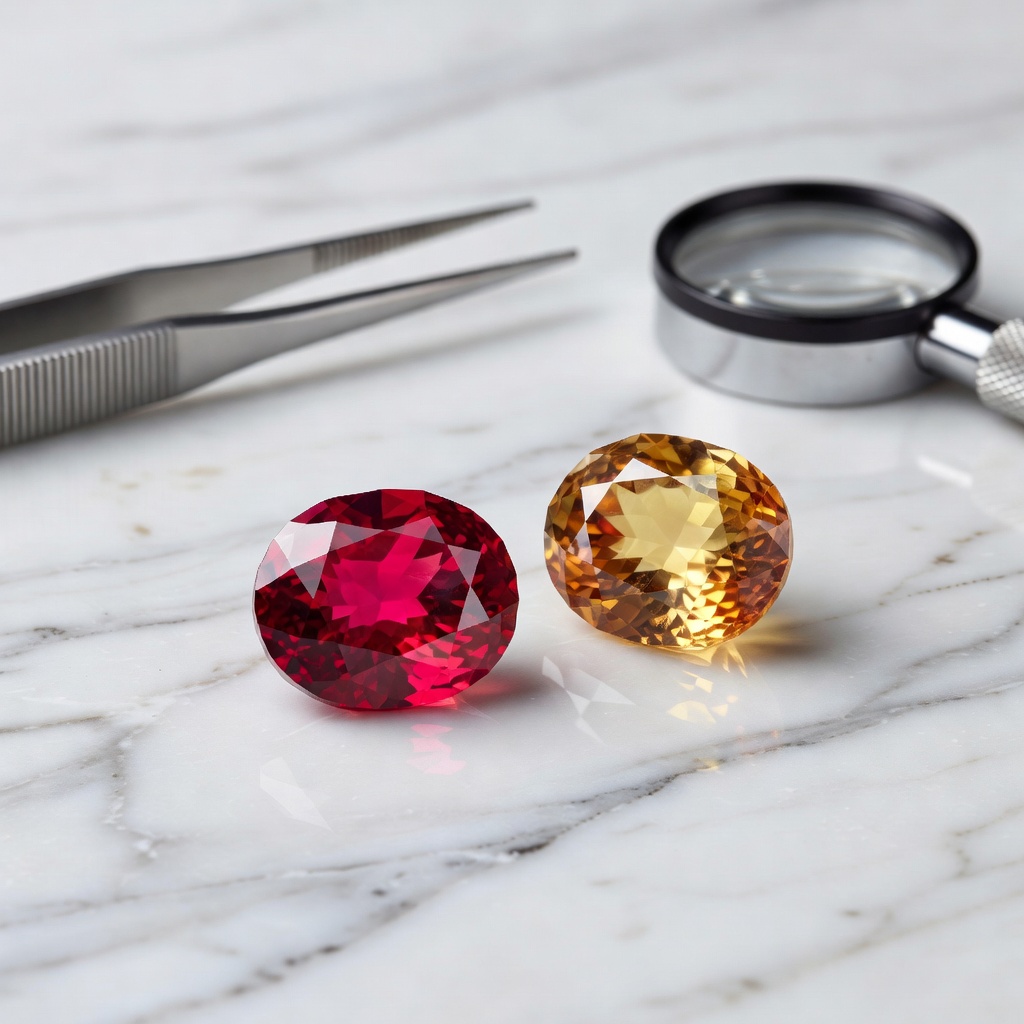
The visual distinction between these two gemstones immediately captures attention, with Ruby displaying intense red to pinkish-red hues that have captivated royalty and collectors for millennia, while Citrine offers a sunny spectrum ranging from pale lemon yellow to deep amber and Madeira orange tones. This red orange gemstone comparison reveals how color saturation and rarity drive market perception, as Ruby's pigeon blood varieties command astronomical prices due to their extreme scarcity and cultural prestige. Citrine, conversely, provides an accessible entry point for collectors seeking substantial carat weights and warm aesthetics without the investment-grade price barriers associated with precious corundum specimens.
Price positioning fundamentally separates these stones in the jewelry marketplace, with high-quality Rubies fetching anywhere from $1,000 to over $100,000 per carat depending on origin and treatment status, positioning them as serious investment vehicles and heirloom pieces. Citrine maintains democratic accessibility, typically retailing between $10 to $100 per carat for commercial quality stones, with rare natural specimens occasionally reaching $500 per carat for exceptional material. This dramatic precious vs semi-precious gemstones divide influences not only acquisition strategies but also design applications, insurance considerations, and long-term care protocols that discerning buyers must understand before making significant purchases.
| Characteristic | Ruby (Precious Corundum) | Citrine (Quartz Variety) |
|---|---|---|
| Mineral Composition | Aluminum Oxide (Al₂O₃) with chromium traces | Silicon Dioxide (SiO₂) with iron impurities |
| Crystal System | Hexagonal (Trigonal) | Hexagonal (Trigonal) |
| Mohs Hardness | 9 (Second only to diamond) | 7 (Softer, requires protective settings) |
| Specific Gravity | 4.00 (Feels substantial/heavy) | 2.65 (Lightweight in comparison) |
| Refractive Index | 1.76 - 1.77 (High brilliance) | 1.54 - 1.55 (Glassy luster) |
| Primary Color Range | Pigeon blood red to pinkish-red | Lemon yellow to Madeira orange-brown |
| Market Classification | Precious Gemstone (Big Three) | Semi-Precious Gemstone |
| Price per Carat | $1,000 - $100,000+ | $10 - $100 (Rare natural: $500+) |
| Birthstone Month | July (15th & 40th anniversaries) | November (13th anniversary) |
| Primary Sources | Myanmar (Burma), Mozambique, Thailand | Brazil, Madagascar, Uruguay |
| Common Treatments | Heat treatment, glass filling, flux healing | Heat treatment (amethyst to citrine conversion) |
Geological Origins: Corundum vs Quartz Formation
The geological narrative behind corundum vs quartz formation reveals why these gemstones occupy vastly different positions in the hierarchy of valuable minerals. Rubies crystallize deep within the Earth's crust under extraordinary conditions of high temperature and intense pressure, typically forming in metamorphic rocks such as marble or basaltic environments over millions of years. The Mogok Stone Tract in Myanmar (formerly Burma) produces the world's most coveted specimens, where specific trace elements of chromium replace aluminum in the crystal lattice to create that signature red fluorescence, while newer deposits in Mozambique and Thailand offer alternative sources with distinct chemical fingerprints and optical characteristics.
Citrine formation follows a dramatically different geological pathway, occurring primarily within volcanic rock cavities and pegmatites where silicon-rich solutions slowly cool and crystallize. Natural Citrine remains relatively rare in the marketplace, as most commercial material begins life as purple amethyst or smoky quartz that undergoes controlled heat treatment at approximately 470-560 degrees Celsius to transform into golden yellow to orange-brown varieties. Brazil dominates global production, particularly the Rio Grande do Sul region, where massive geodes yield abundant material that satisfies worldwide demand for affordable yellow gemstones, while Madagascar produces notable specimens with distinctive color zoning patterns.
These divergent formation processes directly impact crystal structure and optical properties that gemologists use for identification and valuation. Corundum's dense atomic packing creates a specific gravity of 4.0, making Ruby feel noticeably heavier than Citrine when held in the hand, while quartz's lower density of 2.65 results in a lighter, sometimes hollow sensation. The crystal systems, though both hexagonal, exhibit different growth habits and inclusion patterns; Rubies often contain silk-like rutile inclusions that can create asterism (star effects) when cut en cabochon, whereas Citrine typically shows color zoning, fluid inclusions, or Brazil-law twinning that distinguishes natural material from heat-treated amethyst.
Durability and Hardness: Mohs Scale Reality Check
Understanding gemstone hardness Mohs scale ratings proves crucial when selecting jewelry intended for daily wear versus occasional display pieces. Ruby achieves an impressive 9 on the Mohs hardness scale, ranking second only to diamond and sharing this distinction with its corundum sibling, sapphire. This exceptional hardness translates to remarkable scratch resistance, making Ruby an ideal candidate for engagement rings, bracelets, and other jewelry subjected to frequent impact and abrasion during everyday activities. The crystalline structure of corundum creates strong atomic bonds that resist surface damage even after decades of continuous wear, explaining why antique Ruby pieces often maintain their polish and facet edges despite centuries of use.
Citrine presents a more modest 7 on the Mohs scale, occupying the same hardness tier as other quartz varieties like amethyst and smoky quartz, as well as tourmaline and garnet. While this hardness suffices for most jewelry applications, it introduces vulnerability to scratching from harder materials including dust particles (which often contain quartz), household cleaning products, and accidental contact with harder gemstones. Practical testing demonstrates that Citrine rings worn daily will eventually show surface abrasions on facet junctions and tables, requiring periodic repolishing by skilled lapidaries to restore original brilliance. For active individuals or those working with their hands professionally, this durability differential significantly influences stone selection for ring settings.
However, hardness represents only one aspect of durability, as toughness—the resistance to breaking and chipping—presents a more nuanced picture between these materials. Despite its superior hardness, Ruby possesses a brittle tenacity and perfect cleavage in one direction, making it susceptible to chipping if struck sharply against hard surfaces or subjected to thermal shock. Citrine, while softer, demonstrates greater toughness and resistance to fracturing under impact due to quartz's cryptocrystalline structure and lack of cleavage planes. Jewelry designers account for these properties by recommending bezel or protective halo settings for Citrine to shield vulnerable edges, while Ruby can safely utilize delicate prong settings that showcase maximum light return and visual presence.
Color Spectrum Analysis: Pigeon Blood Red vs Golden Honey
The color evaluation protocols for Ruby and Citrine illustrate how market preferences and rarity factors create distinct value hierarchies within warm-hued gemstones. Ruby color grading centers on three primary attributes: hue, saturation, and tone, with the coveted "pigeon blood" designation representing the pinnacle of desirability. This term specifically describes Rubies exhibiting vivid, saturated red with a slight blue undertone that creates a fluorescent, almost glowing appearance under natural daylight, primarily found in Myanmar's Mogok mines. Pigeon blood ruby value escalates exponentially with size, as stones exceeding three carats with this color grade and no heat treatment can command prices rivaling high-quality diamonds, while Thai Rubies typically display darker, more garnet-like tones with brown overtones that reduce market value despite excellent clarity.
Citrine offers a broader, more forgiving color palette that ranges from pale, almost colorless lemon yellow through golden honey to deep Madeira orange and whiskey brown tones. Unlike Ruby, where pure red commands premium prices, the Citrine market shows particular preference for medium to dark saturated golden yellows with reddish undertones, often called "Madeira" or "burnt orange" Citrine. Pale, washed-out yellow specimens carry minimal value and may actually represent heat-treated material that failed to achieve optimal color saturation. Natural Citrine typically exhibits subtle color zoning visible under magnification, appearing as alternating bands of lighter and darker yellow, whereas heat-treated material often displays uniform color distribution or distinctive reddish-brown discoloration at crystal terminations.
Fluorescence plays a fascinating role in this red orange gemstone comparison, particularly for Rubies which often exhibit strong red fluorescence under long-wave ultraviolet light due to chromium content. This fluorescence contributes to the "pigeon's blood" appearance in daylight, creating that desirable "glow from within" effect that collectors prize. Citrine generally shows inert to weak yellow-green fluorescence, lacking the luminescent qualities that enhance Ruby's visual impact. When selecting between these stones for jewelry design, consider that Ruby's color intensity remains consistent under various lighting conditions, while Citrine's yellow-orange tones may appear more brown or dull under incandescent lighting, requiring careful setting selection and metal pairing to maximize color presentation.
Investment and Value: Price Per Carat Breakdown
The economic realities separating Ruby from Citrine reflect fundamental supply and demand dynamics that investors and collectors must understand before allocating significant capital. Fine untreated Rubies from Myanmar represent genuine investment-grade assets, with documented price appreciation consistently outpacing inflation and many traditional investment vehicles over the past three decades. Current market data indicates that exceptional pigeon blood rubies exceeding five carats can achieve prices between $50,000 to $100,000 per carat at international auction houses, while commercial-quality heated Rubies from Mozambique or Thailand typically range from $1,000 to $5,000 per carat depending on color saturation and clarity characteristics. The ruby value per carat escalates non-linearly with size, meaning a five-carat fine Ruby commands substantially more than five times the price of a one-carat stone of equivalent quality.
Citrine occupies the opposite end of the value spectrum, offering accessibility rather than appreciation potential for most specimens. Standard heat-treated Citrine from Brazilian sources retails between $10 to $30 per carat for commercial quality material suitable for fashion jewelry and silver settings. Even exceptionally large specimens exceeding twenty carats remain affordable, rarely exceeding $100 per carat unless exhibiting rare natural color without treatment indicators. True natural Citrine, identifiable by subtle color zoning and specific inclusion patterns, commands premiums reaching $500 per carat for museum-quality specimens, though this still represents a fraction of mid-tier Ruby pricing. This affordability allows collectors to acquire impressive, museum-sized Citrine cabochons or faceted stones without the insurance and security concerns associated with high-value Ruby collections.
Market rarity factors drive these divergent pricing structures, as untreated Burmese Rubies become increasingly scarce due to mining depletion and geopolitical restrictions, while heat-treated Brazilian Citrine remains abundantly available with predictable supply chains. Treatment disclosure significantly impacts Ruby valuations, with unheated stones commanding 300-400% premiums over heated equivalents, whereas the Citrine market largely accepts heat treatment as standard practice without severe price penalties. For portfolio diversification, consider that fine Ruby requires specialized insurance, secure storage, and professional appraisal updates, while Citrine collections offer wearable enjoyment without the stress associated with high-value asset management.
Metaphysical Properties: Passion Energy vs Abundance Magnetism
Crystal healing practitioners and energy workers distinguish sharply between the vibrational signatures of Ruby and Citrine, attributing distinct metaphysical properties to each stone based on color frequency and mineral composition. Ruby resonates with the root chakra (Muladhara) and heart chakra (Anahata), serving as a stone of vitality, courage, and passionate love that stimulates the life force energy (prana) within the physical body. Historical texts from ancient India describe Ruby as "ratnaraj" or "king of precious stones," believed to protect warriors in battle, enhance leadership qualities, and stimulate the heart's desires with unwavering confidence. Modern crystal healers recommend placing Ruby on the lower abdomen during meditation to address adrenal fatigue and low vitality, or wearing it near the heart to attract romantic partnerships and deepen existing emotional bonds.
Citrine healing properties center on the solar plexus chakra (Manipura), earning this gemstone the traditional titles of "Merchant's Stone" or "Success Stone" due to its alleged ability to manifest abundance, prosperity, and business success. Unlike most crystals that require regular cleansing, Citrine is said to be self-cleansing, transmuting negative energy rather than absorbing it, making it ideal for placement in cash registers, wallets, or home offices to attract financial opportunities. The golden yellow frequency associates with the sun's energy, promoting mental clarity, creative visualization, and the confidence necessary to pursue ambitious goals. Healers often recommend Citrine for individuals experiencing seasonal affective disorder or depression, as its warm color spectrum theoretically stimulates serotonin production and optimistic thinking patterns.
Astrological associations further differentiate these stones, with Ruby traditionally linked to the Sun and assigned to Leo and Scorpio zodiac signs, enhancing these signs' natural intensity, loyalty, and transformative capabilities. Citrine aligns with Jupiter and the signs of Sagittarius and Aries, supporting expansion, optimism, and entrepreneurial ventures. Practical application examples include entrepreneurs keeping Citrine specimens on their desks to maintain focus during financial negotiations, while couples might exchange Ruby jewelry during 15th or 40th wedding anniversaries to rekindle passion and commitment. When combining these stones in crystal grids or energy work, practitioners often place Ruby at the base to ground spiritual energy while positioning Citrine at the crown or solar plexus to facilitate manifestation and mental clarity.
Birthstone Connections: July vs November Significance
The designation of birthstones creates cultural narratives that influence gifting traditions and personal jewelry collections across generations. Ruby stands as the traditional July birthstone, representing the height of summer with its fiery red hues that mirror the season's intensity and warmth. This association extends to anniversary celebrations, where Ruby marks both the 15th and 40th wedding anniversaries, symbolizing enduring passion, prosperity, and the deepening of love over decades of partnership. When selecting July birthstone gifts, consider that recipients often appreciate Ruby's status as a precious gemstone that can be passed down as family heirlooms, carrying sentimental value alongside monetary worth. Historical birthstone charts from the 15th century consistently feature Ruby for July, indicating centuries of established tradition that modern jewelry marketing continues to reinforce.
Citrine serves as the modern November birthstone, sharing this month with topaz and offering an affordable alternative to the often more expensive blue or imperial topaz varieties. The November birthstone vs November birthstone comparison (when considering topaz as the alternative) highlights Citrine's accessibility for younger recipients or those building initial jewelry collections. Citrine commemorates 13th wedding anniversaries, representing the sunny optimism needed to navigate the transitional "teenage" years of marriage where couples often face significant life changes including career shifts, empty nesting preparations, or relocation decisions. The golden hues appropriately symbolize the harvest season in the Northern Hemisphere, where November marks Thanksgiving and gratitude practices that align with Citrine's abundance associations.
Zodiac alignment differences offer additional personalization opportunities for gift-givers seeking meaningful connections beyond birth months. Ruby particularly resonates with Cancer and Leo natives born in July, enhancing Cancer's emotional depth and Leo's natural charisma, while Citrine supports Sagittarius (late November) and Scorpio (early November) with its expansive, truth-seeking energy. Practical gifting scenarios include presenting a Ruby pendant to a July-born graduate signifying courage for new beginnings, or gifting Citrine earrings to a November bride for her wedding day to ensure a prosperous union. When creating family birthstone jewelry incorporating multiple generations, the striking color contrast between red July and golden November stones creates visually compelling designs that tell stories of lineage and connection.
Jewelry Design Applications: Settings and Style Compatibility
The divergent physical properties and color profiles of Ruby and Citrine dictate specific design approaches that maximize each stone's aesthetic potential while ensuring longevity. Ruby's exceptional hardness and prestige status make it extraordinarily versatile across jewelry eras, from intricate Art Deco geometric settings featuring calibré-cut Rubies channel-set in platinum to sleek modern minimalist designs that showcase a single Burmese oval solitaire. Yellow gold remains the traditional metal of choice for Ruby, as the warm tones enhance the stone's red fluorescence and create a cohesive color story that references Victorian and Edwardian preferences. Contemporary designers increasingly pair Rubies with rose gold for romantic, feminine aesthetics or with white gold and diamond halos to create contrast and amplify the red center stone's visual impact.
Citrine finds its greatest expression in large statement pieces and Art Nouveau inspired designs that celebrate organic forms and substantial carat weights impossible with precious corundum at similar price points. The gemstone's affordability allows designers to create bold cocktail rings featuring 10-carat cushion cuts or dramatic pendant drops exceeding 20 carats without prohibitive material costs. Rose gold complements Citrine particularly well, creating a monochromatic warm palette that flatters most skin tones, while sterling silver settings make large Citrine pieces accessible to younger collectors or fashion-forward consumers seeking seasonal trends. Art Nouveau revival pieces often feature Citrine carved into floral motifs or set within whiplash curves that reference the style's naturalistic ethos.
Protective setting requirements vary significantly between these materials due to their hardness differential. Jewelers universally recommend bezel settings, full or partial, for Citrine rings intended for regular wear, as the metal rim protects vulnerable girdles and corners from chipping during daily activities. Prong settings work adequately for Citrine earrings and pendants that experience less trauma, though six-prong configurations provide superior security compared to four-prong styles. Ruby tolerates delicate four-prong settings and even tension settings that expose maximum surface area to light, though protective v-prongs at corners prevent chipping on emerald-cut or pear-shaped specimens. Case studies from jewelry repair shops indicate that Citrine stones in unprotected prong settings require resetting or tightening twice as frequently as Ruby due to wear on the softer material.
Care and Maintenance: Cleaning Protocols for Longevity
Proper maintenance protocols ensure that both Ruby and Citrine retain their optical properties and structural integrity across decades of ownership, though each material demands specific care considerations. Ruby cleaning typically involves warm soapy water and a soft-bristled brush to remove accumulated oils and debris from behind the stone and within setting crevices. Ultrasonic cleaners present a divided recommendation: while untreated, unfractured Rubies generally tolerate ultrasonic vibrations, stones that have undergone fracture-filling treatments (glass or leaded glass filling) or contain significant inclusions may suffer damage or lose filling materials during ultrasonic cleaning. Steam cleaning remains safe for most natural Rubies but should be avoided for treated stones or those with surface-reaching inclusions that might expand under thermal stress.
Citrine care requires heightened awareness of thermal sensitivity and color stability issues that do not affect Ruby. Prolonged exposure to direct sunlight or ultraviolet radiation can cause color fading in some Citrine specimens, particularly heat-treated amethyst that lacks natural irradiation stability, potentially transforming vibrant golden stones into pale, almost clear quartz over years of window display or beach wear. Thermal shock presents another risk, as sudden temperature changes from hot tubs, saunas, or cooking activities can cause Citrine to crack due to quartz's moderate thermal conductivity. Practical tips include removing Citrine rings before washing hands with hot water, storing pieces away from windowsills, and avoiding steam cleaning entirely to prevent internal fracturing.
Storage recommendations emphasize separation by hardness to prevent accidental scratching, particularly protecting Citrine from harder gems including Ruby, Sapphire, Diamond, and even harder garnets. Jewelry boxes with individual fabric-lined compartments prevent contact damage, while soft pouches provide adequate protection for travel. Professional maintenance should include annual inspections of setting integrity, particularly for Citrine rings where metal wear occurs faster due to the need for protective bezels or heavy prongs. For collectors owning both stones, consider maintaining separate cleaning cloths—microfiber for Ruby to prevent scratches on its polished surface, and slightly more absorbent materials for Citrine that may accumulate more surface oils due to its frequent wear as everyday jewelry.
Final Verdict: Choosing Between Ruby and Citrine
Determining whether to invest in Ruby or Citrine ultimately depends on aligning gemstone characteristics with personal lifestyle, budget parameters, and intended usage scenarios. Choose Ruby when seeking heirloom-quality investment pieces that appreciate over time, particularly for engagement rings, significant anniversary gifts, or milestone celebrations where the precious gemstone's rarity and hardness justify premium pricing. Active individuals who wear rings daily during physical activities, medical professionals who wash hands frequently, or those seeking jewelry that transcends fashion trends will find Ruby's durability and timeless prestige unmatched. The intense red symbolism suits individuals drawn to passion, power, and traditional luxury aesthetics, while the stone's status as July birthstone creates meaningful connections for summer birthdays.
Select Citrine for affordable everyday luxury that allows for larger carat weights and bold fashion statements without financial anxiety or insurance burdens. Budget-conscious collectors, students building initial jewelry wardrobes, or individuals who prefer changing their accessories seasonally will appreciate Citrine's accessibility and versatility across casual and formal settings. The sunny disposition aesthetics and association with abundance make Citrine particularly appropriate for entrepreneurs, artists seeking creative inspiration, or November-born individuals celebrating their birth month. Those drawn to Art Nouveau aesthetics, vintage-inspired statement pieces, or warm metal palettes (yellow and rose gold) will find Citrine's honey tones perfectly complementary to their style preferences.
Lifestyle considerations should ultimately drive this decision: active wearers, medical professionals, and outdoor enthusiasts should favor Ruby's superior hardness and scratch resistance for rings and bracelets, while office workers or those who remove jewelry during physical tasks can safely enjoy Citrine's beauty with proper setting protection. Consider also the emotional resonance—Ruby carries the weight of history, romance, and significant investment, requiring mindful wearing and secure storage, whereas Citrine offers carefree enjoyment and the freedom to wear substantial gemstones without constant vigilance. For the ultimate collection, both stones serve complementary roles: Ruby for precious, protected heirlooms marking life's milestones, and Citrine for joyful, abundant self-expression accessible for everyday wear.
Frequently Asked Questions
Is citrine as valuable as ruby?
No, citrine is significantly less valuable than ruby. While high-quality rubies can command $1,000 to $100,000+ per carat, citrine typically ranges from $10 to $100 per carat. Ruby is one of the 'big three' precious gemstones (along with sapphire and emerald), whereas citrine is classified as semi-precious quartz, making it more abundant and affordable.
Can you wear ruby and citrine together in the same jewelry piece?
Yes, ruby and citrine can be worn together, creating a stunning warm color palette transitioning from red to orange-yellow. However, be mindful of the hardness difference—ruby (9 Mohs) can scratch citrine (7 Mohs). In multi-stone settings, ensure protective mounting or separate placement to prevent contact damage.
Which is better for an engagement ring: ruby or citrine?
Ruby is generally better for engagement rings due to its superior hardness (9 Mohs) that withstands daily wear, exceptional durability, and timeless prestige as a precious gemstone. Citrine, while beautiful, ranks 7 on the Mohs scale and is more prone to scratching and chipping during everyday activities, making it better suited for occasional wear or protective settings.
How can I tell the difference between ruby and citrine?
The easiest distinction is color—ruby displays red to pinkish-red hues, while citrine shows yellow to orange-brown tones. Ruby has higher brilliance and a vitreous to adamantine luster compared to citrine's glassy luster. Additionally, ruby feels heavier due to corundum's higher specific gravity (4.0) versus citrine's quartz density (2.65). A gemological refractometer will show different readings: ruby at 1.76-1.77 and citrine at 1.54-1.55.
Why is ruby so much more expensive than citrine?
Ruby commands higher prices due to extreme rarity of fine specimens, mining challenges in regions like Myanmar, and its status as a precious gemstone requiring specific geological conditions to form. Citrine is abundant, often heat-treated from inexpensive amethyst, and belongs to the common quartz family. Ruby's hardness, cultural significance, and limited supply of untreated high-quality stones drive its investment-grade pricing.
Do rubies and citrines have different meanings in crystal healing?
Yes, they possess distinct metaphysical properties. Ruby is associated with passion, courage, vitality, and heart chakra activation, believed to stimulate life force energy and romantic love. Citrine is known as the 'merchant's stone' or 'success stone,' associated with solar plexus chakra, abundance, manifestation, and positive energy. Ruby energizes physically while citrine focuses on wealth and mental clarity.
Which gemstone is more durable for daily wear?
Ruby is significantly more durable for daily wear, ranking 9 on the Mohs hardness scale with excellent toughness suitable for rings and bracelets subjected to knocks. Citrine, at 7 Mohs, is softer and requires more care to prevent scratches and chips, making it better suited for pendants and earrings rather than daily-wear rings.
Is heat-treated citrine less valuable than natural citrine?
Natural citrine is actually rarer and more valuable than heat-treated citrine, contrary to many assumptions. Most commercial citrine on the market is heat-treated amethyst (purple quartz turned golden), which is abundant and inexpensive. Genuine natural citrine, which forms through natural earth heating, displays subtle color zoning and commands premium prices, though still far below ruby values.