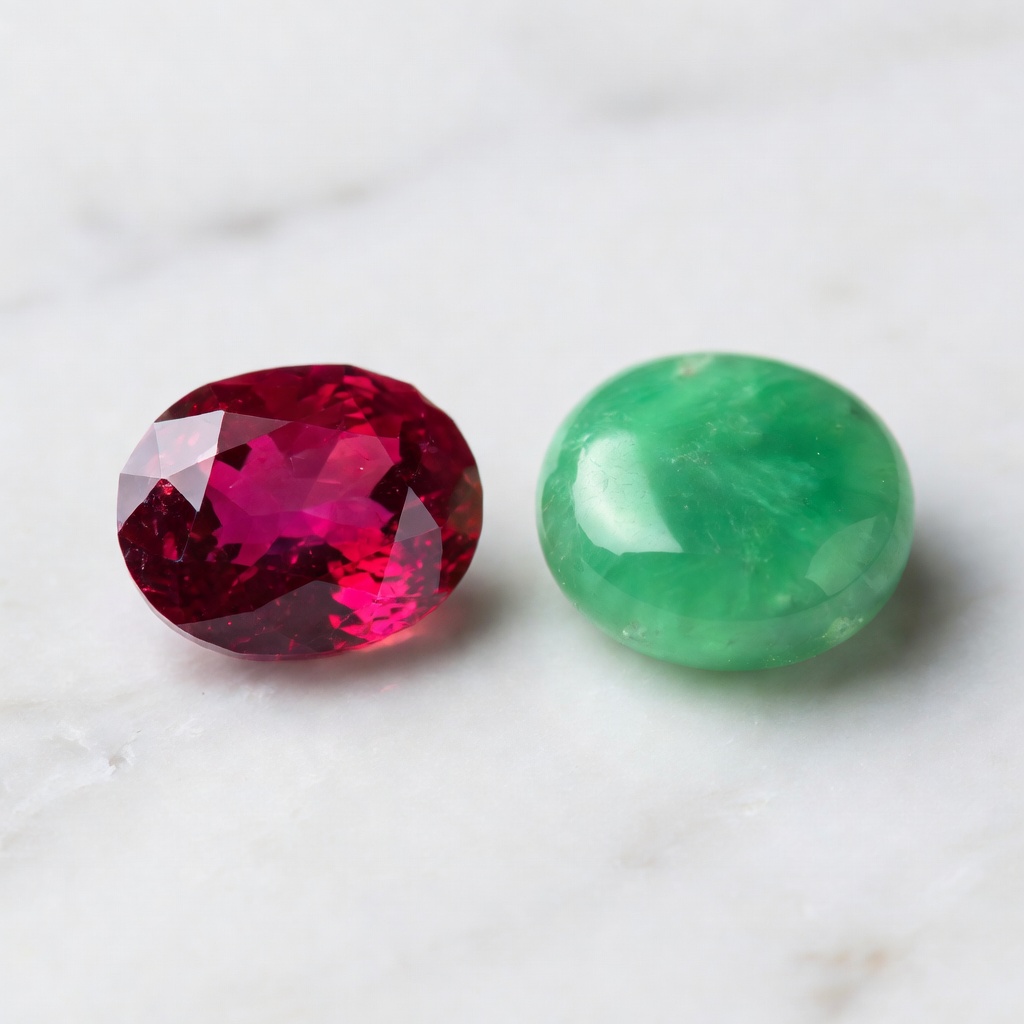
Introduction: Understanding Ruby vs Chrysoprase
When selecting the perfect gemstone for fine jewelry, the comparison between ruby vs chrysoprase presents a fascinating study in contrasts that extends far beyond their opposing positions on the color wheel. Rubies have captivated human civilization for over two millennia as one of the cardinal precious gemstones, prized by monarchs and collectors for their intense crimson fire and exceptional durability derived from the corundum mineral family. In stark contrast, chrysoprase emerges as a hidden treasure within the chalcedony group, offering jewelry enthusiasts an accessible entry point into rare green gemstones characterized by their distinctive apple-green translucency and waxy luster.
These two stones appeal to distinctly different sensibilities within the jewelry market, with the red ruby gemstone commanding attention as a symbol of passion and luxury, while green chrysoprase jewelry attracts those seeking organic, nature-inspired aesthetics with metaphysical undertones. Understanding the fundamental differences between these gems requires examining their geological formations, physical properties, and market positioning to determine which stone best aligns with your personal style, budget constraints, and lifestyle requirements. Whether you are a first-time buyer exploring options for a meaningful gift or a seasoned collector diversifying your portfolio, this comprehensive gemstone buying guide will provide the technical knowledge and practical insights necessary to make an informed decision.
Chemical Composition and Geological Origins
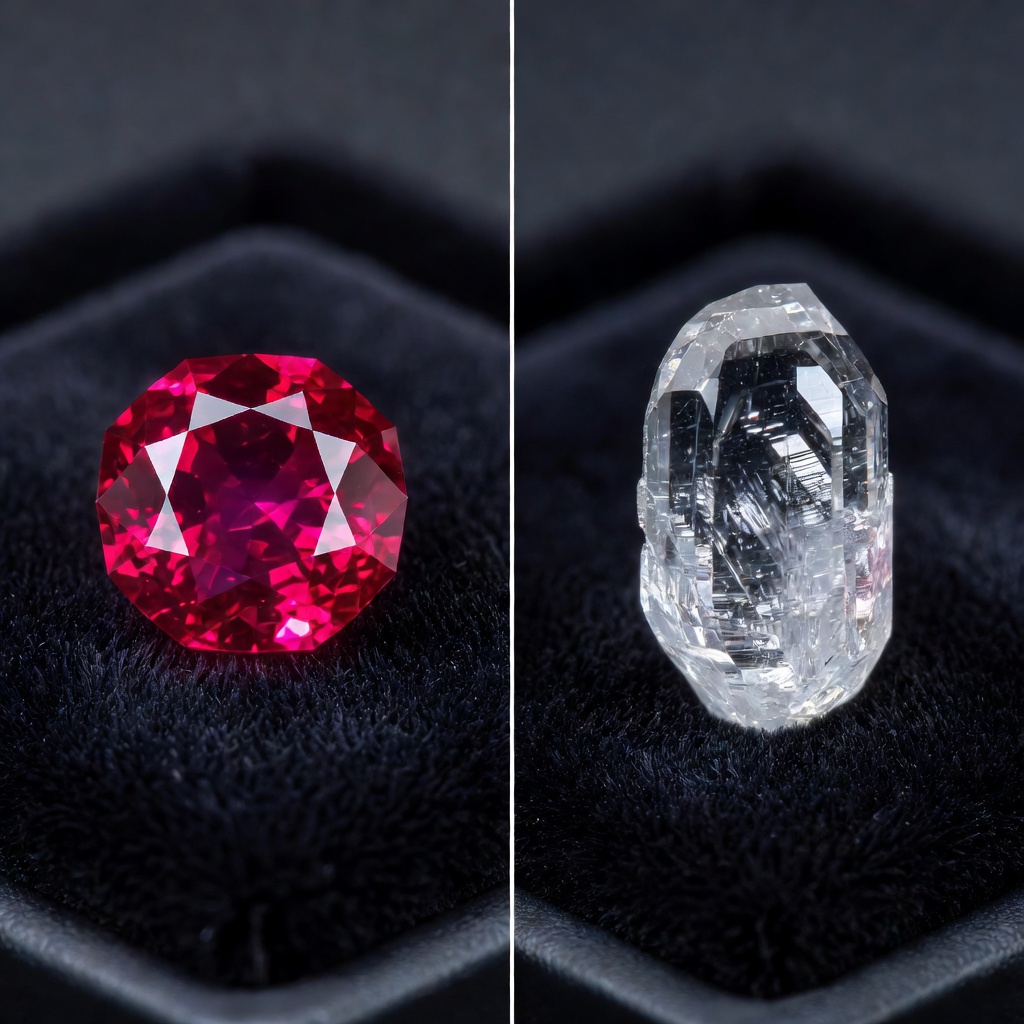
The dichotomy between corundum vs chalcedony represents one of the most significant distinctions in gemology, fundamentally determining how these stones form, appear, and perform in jewelry settings. Rubies crystallize from aluminum oxide (Al₂O₃) in the trigonal crystal system, with their signature red coloration resulting from chromium ions replacing aluminum atoms within the crystal lattice; this chromophore can comprise up to 3% of the gemstone's composition in the most vivid specimens. The formation process requires specific metamorphic conditions involving high temperatures and pressures typically found in marble or basalt host rocks, resulting in the hexagonal prismatic crystals that cutters transform into brilliant gems.
Chrysoprase belongs to the cryptocrystalline silica family, specifically forming as a variety of chalcedony composed of microscopic quartz crystals too small to be seen with the naked eye, with the chemical formula SiO₂ containing nickel impurities that create its characteristic green palette. Unlike rubies that form in distinct crystalline pockets, chrysoprase typically develops within weathered laterite deposits and nickel-bearing serpentinite rocks through the slow deposition of silica-rich solutions percolating through host formations. Primary mining locations for fine rubies include the legendary Mogok mines of Myanmar, the Montepuez region of Mozambique, and deposits in Thailand and Sri Lanka, whereas the finest chrysoprase historically originated from the Marlborough district of Queensland, Australia, with additional significant deposits found in Tanzania, Brazil, and Poland.
Gemstone Formation Case Study: The Journey from Rough to Polished
Consider the path of a Burmese ruby extracted from the Mogok Stone Tract, where miners carefully extract marble-hosted crystals that may have formed over 500 million years ago during the Himalayan orogeny, preserving inclusions known as "silk" that can actually enhance value through asterism or desirable color softening. Conversely, Australian chrysoprase often occurs as nodules and veins within iron-stone matrices, requiring artisans to carefully carve and stabilize rough material due to its tendency to fracture along curved surfaces during the cutting process. These geological distinctions explain why rubies typically present as individual prismatic crystals suitable for faceting, while chrysoprase is frequently fashioned into cabochons, beads, or carved cameos that showcase its uniform color and translucency rather than brilliance.
Durability, Hardness, and Wearability
Understanding gemstone hardness comparison metrics proves essential when evaluating daily wear potential, as the Mohs scale reveals dramatic differences between these two materials that directly impact their suitability for various jewelry applications. Rubies score an impressive 9 on the Mohs hardness scale, second only to diamond, meaning they resist scratching from virtually all other materials except top-tier abrasives and can withstand decades of daily wear in engagement rings and bracelets without showing surface damage. Chrysoprase registers between 6.5 and 7 on the same scale, comparable to ordinary glass or steel, making it susceptible to scratching from household dust (which contains silica particles), harder gemstones, and metal jewelry components when stored improperly.
Beyond hardness, toughness—or resistance to breaking and chipping—presents another critical consideration, with rubies possessing excellent toughness despite their crystalline structure, though they can cleave along specific planes if struck with sufficient force. Chrysoprase, while microscopically granular and thus lacking cleavage planes, tends toward brittleness in some specimens due to internal stresses and microscopic fractures that developed during its sedimentary formation process. For active individuals or those seeking heirloom pieces intended for generational transmission, rubies offer superior security for settings exposed to potential impact, while chrysoprase performs admirably in protected settings such as pendants, earrings, and brooches that experience minimal contact with hard surfaces.
Practical Wearability Guidelines
Jewelry designers typically recommend ruby for cocktail rings and tennis bracelets subjected to frequent contact with countertops, car keys, and office equipment, whereas chrysoprase excels in statement necklaces and dangle earrings where the stone remains relatively protected during normal activities. If you work in manual labor, healthcare, or fitness instruction, a ruby engagement ring provides peace of mind against occupational hazards, while chrysoprase pieces require conscious removal before gym sessions, gardening, or household cleaning involving abrasive agents. Always inspect chrysoprase settings quarterly for loose prongs, as the material's relative softness allows metal claws to gradually cut into the stone's surface under pressure, potentially compromising the security of the setting over time.
Color Variations and Visual Characteristics
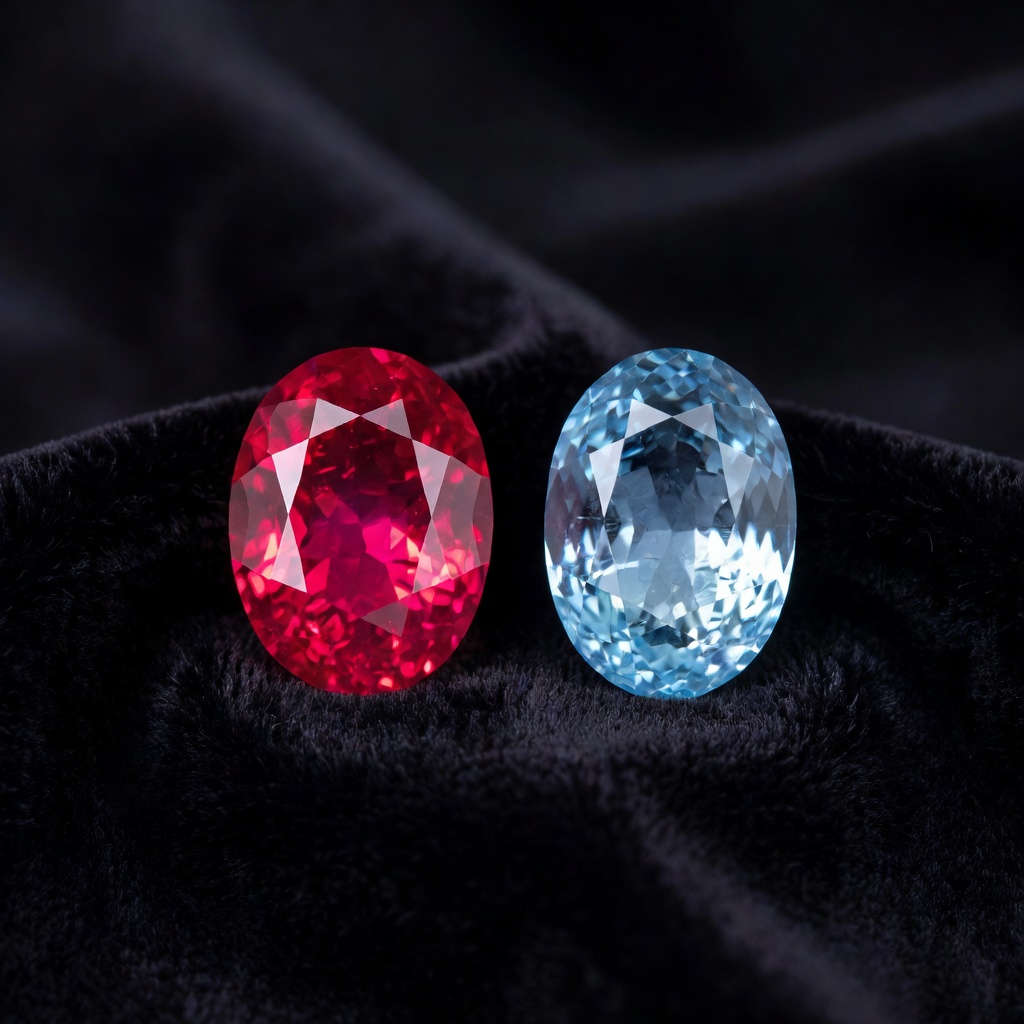
The visual distinction between red ruby gemstone specimens and green chrysoprase color varieties extends into complex interactions with light that affect how these stones appear under different illumination conditions and setting styles. Premium rubies display the coveted "pigeon blood" red—a vivid, slightly purplish-red with medium-dark tone and strong saturation that seems to glow from within due to chromium's fluorescence under ultraviolet light—with secondary pinkish or orangey modifiers reducing value proportionally. Inclusions in rubies, often rutile needles or mineral crystals, are generally accepted by collectors when they do not significantly impair transparency or durability, with some silk inclusions actually desired for their ability to scatter light and enhance the velvety appearance highly prized in Burmese varieties.
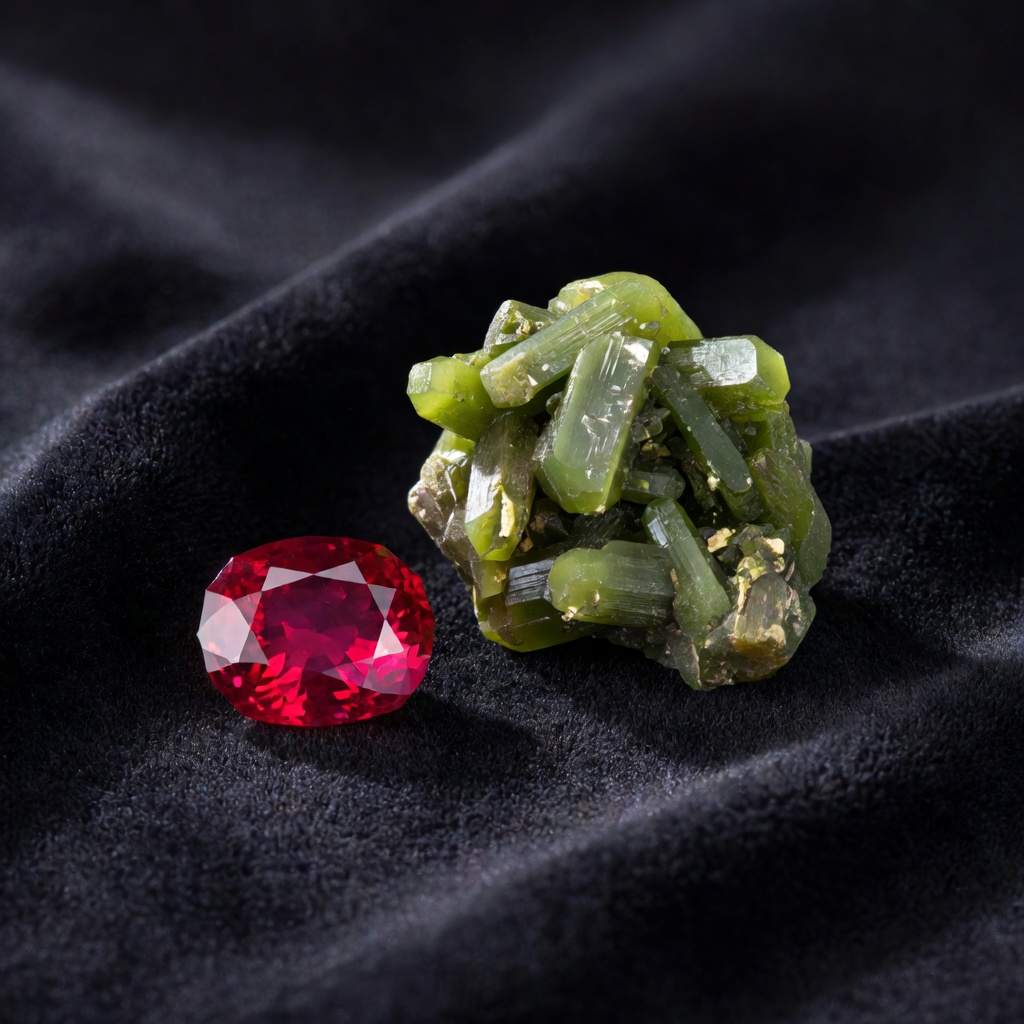
Chrysoprase presents a more limited but equally captivating color spectrum ranging from pale mint to deep apple-green, with the most valuable specimens displaying an intense, uniform color reminiscent of high-quality jadeite without the crystalline structure or high price point. Unlike the vitreous (glass-like) luster of faceted rubies, chrysoprase exhibits a waxy to greasy luster when polished, with translucent to opaque body transparency that creates a soft, glowing effect particularly striking in vintage-inspired silver settings. Under incandescent lighting, rubies typically appear richer and more saturated, while chrysoprase may show slight brownish tones; conversely, fluorescent lighting can emphasize the blue component in some rubies while making chrysoprase appear more vividly green, considerations that should influence your selection of viewing environments when making purchase decisions.
Lighting Optimization Techniques
When photographing or displaying ruby jewelry, position pieces near north-facing windows or under 5000K LED lights to minimize the orange cast that can obscure subtle color variations, whereas chrysoprase displays optimally under natural daylight that highlights its translucency without the harsh reflections that can make the stone appear plastic-like under direct spotlighting. For retail environments, reputable dealers showcase rubies against black velvet to absorb extraneous light and emphasize the stone's inherent fire, while chrysoprase benefits from white or pale wood backgrounds that complement its organic color palette and suggest its natural origins.
Market Value, Rarity, and Investment Potential
The classification of precious vs semi-precious stones significantly impacts market valuation, with rubies traditionally occupying the upper echelons alongside diamond, emerald, and sapphire, frequently achieving prices exceeding $100,000 per carat for untreated, top-color specimens from Myanmar or Mozambique. Chrysoprase, while undeniably beautiful, remains firmly in the semi-precious category, with fine material typically retailing between $20 and $100 per carat, making it accessible for statement pieces and artisan collections without the financial barrier associated with precious gems. This dramatic price differential stems not from availability alone—fine chrysoprase with intense, unblemished color is actually rarer than commercial-grade ruby—but from historical market structures, cultural significance, and the durability factors that make ruby suitable for high-value heirloom pieces.
Investment potential diverges sharply between these materials, with untreated, certificated rubies from prestigious origins appreciating steadily over decades, particularly as Burmese mines face depletion and political instability restricts supply, whereas chrysoprase values remain relatively stable, serving better as wearable art than speculative investment vehicles. When evaluating ruby pricing, consider the "four Cs" with particular attention to origin documentation (Burmese rubies commanding 20-30% premiums over African sources), treatment disclosure (heat treatment being acceptable while glass-filling or dyeing dramatically reduces value), and clarity characteristics that indicate natural versus synthetic origins. For collectors entering the market, a fine 2-carat unheated Burmese ruby might represent a significant portfolio addition, while chrysoprase allows for the acquisition of impressive 20-carat cabochons or carved specimens that provide substantial visual impact without proportional financial risk.
Comparative Analysis: Ruby vs Chrysoprase Specifications
| Characteristic | Ruby | Chrysoprase |
|---|---|---|
| Chemical Composition | Aluminum Oxide (Al₂O₃) with Chromium | Microcrystalline Quartz (SiO₂) with Nickel |
| Mineral Class | Corundum | Chalcedony |
| Mohs Hardness | 9 | 6.5 - 7 |
| Primary Color Range | Vivid Red to Pinkish-Red | Apple Green to Pale Mint |
| Luster | Vitreous (Glass-like) | Waxy to Greasy |
| Typical Transparency | Transparent to Translucent | Translucent to Opaque |
| Price Range (Per Carat) | $1,000 - $100,000+ | $10 - $100 |
| Common Treatments | Heat Treatment (Common/Accepted) | Rarely Treated (Occasionally Dyed) |
| Optimal Jewelry Use | Engagement Rings, Daily Wear Pieces | Pendants, Earrings, Occasional Wear |
| Primary Sources | Myanmar, Mozambique, Thailand | Australia, Tanzania, Poland |
| Market Classification | Precious Gemstone | Semi-Precious Gemstone |
Jewelry Design Applications and Settings
Ruby engagement rings represent the pinnacle of romantic symbolism and practical durability, with designers frequently showcasing these gems in platinum or 18-karat yellow gold settings that either contrast dramatically with the red stone or create warm, monochromatic harmonies depending on metal selection. High jewelry houses like Cartier and Van Cleef & Arpels utilize rubies in elaborate statement pieces featuring calibré-cut stones arranged in floral or geometric patterns, often accentuated with diamonds to enhance the visual drama through complementary color theory. For contemporary minimalist aesthetics, bezel-set rubies in matte rose gold offer a modern twist on classic luxury, while vintage reproduction rings frequently feature milgrain detailing and halo settings that reference Edwardian and Art Deco periods when ruby jewelry reached peak popularity among European aristocracy.
Green chrysoprase jewelry excels in bohemian, Art Nouveau revival, and nature-inspired design contexts where its organic color palette suggests moss, spring foliage, or sea glass, making it particularly popular among independent artisans and sustainable jewelry brands. Unlike rubies that typically undergo precision faceting to maximize brilliance, chrysoprase is often carved into floral motifs, leaves, or animal figures, or polished into smooth cabochons that showcase the material's translucency and uniform color without the light reflection patterns associated with crystalline gems. Silver and rose gold provide optimal metal pairings for chrysoprase, with silver emphasizing the stone's cool green tones for casual, everyday pieces, while rose gold creates sophisticated, vintage-inspired combinations that recall the 1940s and 1950s when chrysoprase experienced significant popularity in costume and fine jewelry alike.
Design Integration Strategies
When commissioning custom pieces, consider that rubies support intricate under-gallery work and delicate prong settings due to their hardness, allowing for elevated designs that maximize light return, whereas chrysoprase requires protective bezel or half-bezel settings with substantial metal rims that guard the stone's edges against chipping. For mixed-gemstone designs, ruby pairs spectacularly with diamonds, sapphires, or emeralds in "traffic light" arrangements or patriotic themes, while chrysoprase combines harmoniously with moonstone, rose quartz, or amber for earth-toned, chakra-alignment jewelry popular in wellness communities.
Symbolism, History, and Metaphysical Properties
Throughout recorded history, the red ruby gemstone has maintained associations with vitality, protection, and passion across virtually every major civilization, with ancient Hindus referring to rubies as "Ratnaraj" or "King of Precious Stones," believing that offering fine rubies to the god Krishna ensured rebirth as an emperor. Burmese warriors embedded rubies into their flesh before battle, convinced that the stones rendered them invulnerable to weapons, while medieval Europeans wore rubies to guarantee health, wealth, wisdom, and success in love, with the stone eventually becoming designated as the July birthstone in modern gemological calendars. The famous "Black Prince's Ruby" set in the British Imperial State Crown—actually a spinel rather than true ruby—demonstrates the historical confusion and reverence surrounding red gems, while the Sunrise Ruby (a 25.59-carat Burmese stone sold for $30 million in 2015) represents the modern pinnacle of ruby desirability among collectors.
Chrysoprase carries equally rich historical significance despite its more modest market position, with Alexander the Great reputedly wearing a chrysoprase into battle for protection and victory, while the stone features prominently in ancient Greek and Roman glyptography (gem engraving) for seals and signet rings. Metaphysically, chrysoprase is associated with the heart chakra, believed to promote emotional balance, compassion, and the release of ego-based behaviors, making it popular among crystal healers for meditation practices and energy work aimed at fostering forgiveness and relationship harmony. Unlike the stimulating, energizing vibrations attributed to ruby—which is said to enhance motivation, leadership qualities, and sexual energy—chrysoprase offers calming, grounding properties that support deep sleep, prevent nightmares, and encourage acceptance of change.
Contemporary Metaphysical Applications
Modern wellness practitioners often recommend ruby for entrepreneurs and athletes seeking enhanced confidence and physical stamina, suggesting placement on the root chakra during meditation, while chrysoprase is prescribed for therapists, counselors, and caregivers who require emotional resilience and the ability to maintain healthy boundaries with clients. When creating intention jewelry, consider wearing ruby on the right hand or dominant side to project energy outward into the world, whereas chrysoprase jewelry worn near the heart center or on the left side is thought to facilitate internal healing and self-acceptance.
Care, Cleaning, and Maintenance Requirements
Proper gemstone care protocols differ significantly between these materials due to their chemical and physical disparities, with rubies generally tolerating more aggressive cleaning methods while chrysoprase requires delicate handling to prevent color fading and surface damage. For routine maintenance of ruby jewelry, ultrasonic cleaning machines provide safe and effective removal of accumulated lotions and oils in most cases, though stones with significant inclusions or fracture-filling treatments should be cleaned using only warm soapy water and soft brushes to avoid dislodging internal substances. Steam cleaning represents another viable option for untreated rubies, though sudden temperature changes should be avoided to prevent thermal shock that could exploit existing internal fractures.
Chrysoprase demands significantly more cautious treatment, as prolonged exposure to direct sunlight, heat sources, or dry environments can cause dehydration that results in color fading from vivid green to disappointing gray or brown tones—a phenomenon known as "color bleeding" in the trade. Clean chrysoprase using only lukewarm water with mild dish soap and a soft microfiber cloth, avoiding ultrasonic cleaners, steamers, and chemical jewelry dips that can penetrate microscopic pores and alter the stone's appearance. Store chrysoprase pieces separately in soft cloth pouches away from harder gemstones, particularly diamonds, sapphires, and rubies that could scratch the surface during drawer storage, and maintain moderate humidity levels in storage areas to prevent the dehydration that particularly affects Australian material.
Professional Maintenance Schedules
Schedule professional inspections for ruby jewelry every six to twelve months to check for loose prongs and wear patterns on setting components, with professional polishing recommended every few years to remove micro-scratches that accumulate on metal surfaces surrounding the stone. For chrysoprase, annual professional assessments should include checking for "crazing" or surface cracking that might indicate internal stress, with occasional re-oiling performed by specialists to restore luster to pieces that have become desiccated through exposure to harsh lighting or climate-controlled environments.
How to Choose Between Ruby and Chrysoprase
Navigating the gemstone buying guide landscape requires honest assessment of your budget parameters, lifestyle demands, and aesthetic preferences to determine whether ruby or chrysoprase better serves your immediate needs and long-term satisfaction. If you seek an investment-grade heirloom piece capable of daily wear across decades—perhaps for an engagement ring or milestone anniversary gift—ruby represents the unambiguous choice despite higher initial costs, offering proven value retention and the durability necessary for active lifestyles. Conversely, if you prioritize acquiring substantial carat weights, unique carved artistry, or bohemian styling without significant financial outlay, chrysoprase provides exceptional value, allowing collectors to experiment with bold designs and statement pieces that would be prohibitively expensive with precious gemstones.
Consider your personal color psychology and wardrobe composition when making final selections, as ruby's intense red commands attention in professional and formal settings, pairing elegantly with navy, black, and ivory while making a definitive statement about confidence and luxury. Chrysoprase suits individuals drawn to organic, nature-inspired aesthetics, complementing earth tones, soft pastels, and casual wardrobes while offering subtle sophistication that transitions easily from office environments to weekend gatherings without appearing ostentatious. First-time buyers should prioritize purchasing from dealers who provide gemological certifications for rubies (GIA, AGL, or SSEF reports verifying origin and treatment status) while ensuring chrysoprase purchases disclose any dye treatments or stabilization processes that might affect long-term value.
Decision Matrix for Buyers
Create a priority list ranking hardness, color preference, budget, and symbolism; if durability and prestige rank highest, select ruby with a protective setting appropriate to your daily activities, whereas if uniqueness, affordability, and metaphysical properties dominate your criteria, chrysoprase offers distinctive beauty without compromise. Remember that both stones can coexist harmoniously in a well-curated jewelry collection, with ruby serving as your "forever" investment piece for significant occasions and chrysoprase providing versatile, artistic options for creative everyday expression.
Frequently Asked Questions
Which is more valuable, ruby or chrysoprase?
Rubies are significantly more valuable, often commanding thousands per carat for high-quality specimens, while chrysoprase remains an affordable semi-precious stone typically priced under $100 per carat for fine qualities. This valuation difference reflects rubies' status as one of the "big four" precious gemstones, their superior hardness suitable for generational heirloom pieces, and historically restricted supply from premier mining locations like Myanmar. While exceptional chrysoprase with intense, uniform color is genuinely rare and increasingly difficult to source, the market has not assigned it the same investment premiums accorded to precious gems, making it an excellent choice for those seeking beauty without substantial financial risk.
Can chrysoprase be used in engagement rings like ruby?
While chrysoprase can be used in engagement rings, its lower hardness (6.5-7) makes it susceptible to scratching over time, potentially requiring re-polishing or replacement within five to ten years of daily wear. Ruby, with a hardness of 9, is far superior for daily wear in engagement settings, resisting abrasion from household dust, metal contact, and accidental impacts that would mar softer gemstones. If you specifically desire chrysoprase for an engagement ring due to its unique color or metaphysical associations, consider protective bezel settings, reserving the ring for occasional wear, or selecting it as a "promise ring" rather than a primary daily-wear engagement piece.
What causes the color difference between ruby and chrysoprase?
Rubies appear red due to chromium inclusions in the corundum crystal structure, where chromium ions replace aluminum atoms and absorb specific wavelengths of light while transmitting red spectra, occasionally creating fluorescence that enhances the stone's glow under daylight. Chrysoprase gets its apple-green color from nickel impurities embedded within the microcrystalline quartz matrix, where nickel silicate compounds create the distinctive green hue without the crystalline structure that produces brilliance in faceted gems. These different chromophores—chromium versus nickel—result not only in different colors but also in distinct chemical stability, with chrysoprase being more vulnerable to color change through dehydration or chemical exposure than the stable chromium coloring in ruby.
Is chrysoprase rarer than ruby?
High-quality rubies are actually rarer than chrysoprase in nature, though fine chrysoprase with intense color is becoming increasingly scarce as Australian mines deplete and environmental regulations restrict new mining operations. However, rubies command much higher prices due to their precious gemstone status, historical significance in royal collections, and superior durability that justifies investment-grade valuations. Commercial-grade rubies are relatively abundant and treated extensively to improve appearance, whereas untreated, vividly colored chrysoprase represents a smaller percentage of total chalcedony production than many consumers realize, creating niche scarcity for collectors of fine material.
Can you wear ruby and chrysoprase together in jewelry?
Yes, the complementary red and green colors create striking Christmas or nature-inspired combinations that leverage color theory principles of complementary opposition to make both stones appear more vivid when worn simultaneously. However, store them separately as ruby's hardness can scratch chrysoprase if stored together in jewelry boxes, and avoid designing rings where the two stones might contact each other during wear. When set together in necklaces or earrings, ensure adequate spacing or protective metal dividers prevent abrasion, and consider this combination for holiday jewelry or pieces symbolizing balance between passion (ruby) and growth (chrysoprase).
Which gemstone is better for daily wear?
Ruby is superior for daily wear due to its exceptional hardness of 9 and excellent toughness, allowing it to withstand the abrasion, impacts, and chemical exposures encountered during normal activities including office work, household tasks, and social events without showing significant wear. Chrysoprase requires more careful handling and is better suited for occasional wear or protected settings such as pendants and earrings that do not contact hard surfaces during normal use. If you lead an active lifestyle, work with your hands professionally, or simply prefer low-maintenance jewelry, ruby offers worry-free durability that chrysoprase cannot match.
How do I tell ruby and chrysoprase apart?
Rubies typically show glass-like luster, higher brilliance when faceted, and often visible inclusions such as rutile needles or mineral crystals under magnification, while chrysoprase has a waxy luster, is typically translucent to opaque, and shows uniform color without crystalline sparkle or refraction. A simple visual inspection often suffices for loose stones, as ruby's hexagonal crystal structure and pleochroism (showing different colors when viewed from different angles) contrast sharply with chrysoprase's amorphous, conchoidal fracture patterns and consistent coloration. For set stones, a loupe examination revealing crystalline structure indicates ruby, while a wax-like surface appearance without visible crystal faces suggests chrysoprase, though professional gemological testing provides definitive identification through refractive index measurement and spectroscopic analysis.
Are both rubies and chrysoprase treated or enhanced?
Most rubies on the market undergo heat treatment to improve color and clarity, which is accepted in the trade and does not require disclosure in many commercial contexts, though high-temperature heating that leaves residues or fracture-filling with glass or lead significantly impacts value and should always be disclosed. Chrysoprase is rarely treated, though some specimens may be dyed to enhance pale color or waxed/oiled to improve luster and mask surface imperfections, treatments that should be disclosed by reputable dealers but may not affect the stone's suitability for jewelry if properly maintained. When purchasing either gemstone, request documentation from recognized laboratories regarding treatment status, as untreated, naturally vivid rubies command extreme premiums while treated chrysoprase should be priced accordingly lower than natural-color material.