Introduction: Understanding Ruby and Chrysocolla
When exploring the vast spectrum of colored gemstones, the comparison of Ruby vs Chrysocolla presents a fascinating study in contrasts that illuminates fundamental differences between precious and semi-precious stone categories. Ruby stands as one of the cardinal precious gemstones, a variety of corundum crystallized under extreme geological pressure to produce the coveted red hues that have adorned royal crowns and engagement rings for millennia. In stark contrast, chrysocolla emerges as a captivating copper silicate mineral prized for its ethereal blue-green coloration that evokes tropical waters and desert skies, offering an accessible entry point for collectors seeking distinctive beauty without premium investment.
Understanding the distinction between these stones helps buyers navigate gemstone categories effectively, particularly when assessing durability requirements, budget constraints, and aesthetic preferences. While ruby commands attention as a symbol of luxury and permanence suitable for daily heirlooms, chrysocolla serves as an excellent example of how semi-precious stones can deliver exceptional visual impact through unique color patterns and organic matrix formations. Whether you are selecting a center stone for an engagement ring or curating a collection of crystal healing specimens, recognizing the value propositions inherent in each stone ensures satisfaction with your gemstone investment.
Geological Origins and Chemical Composition
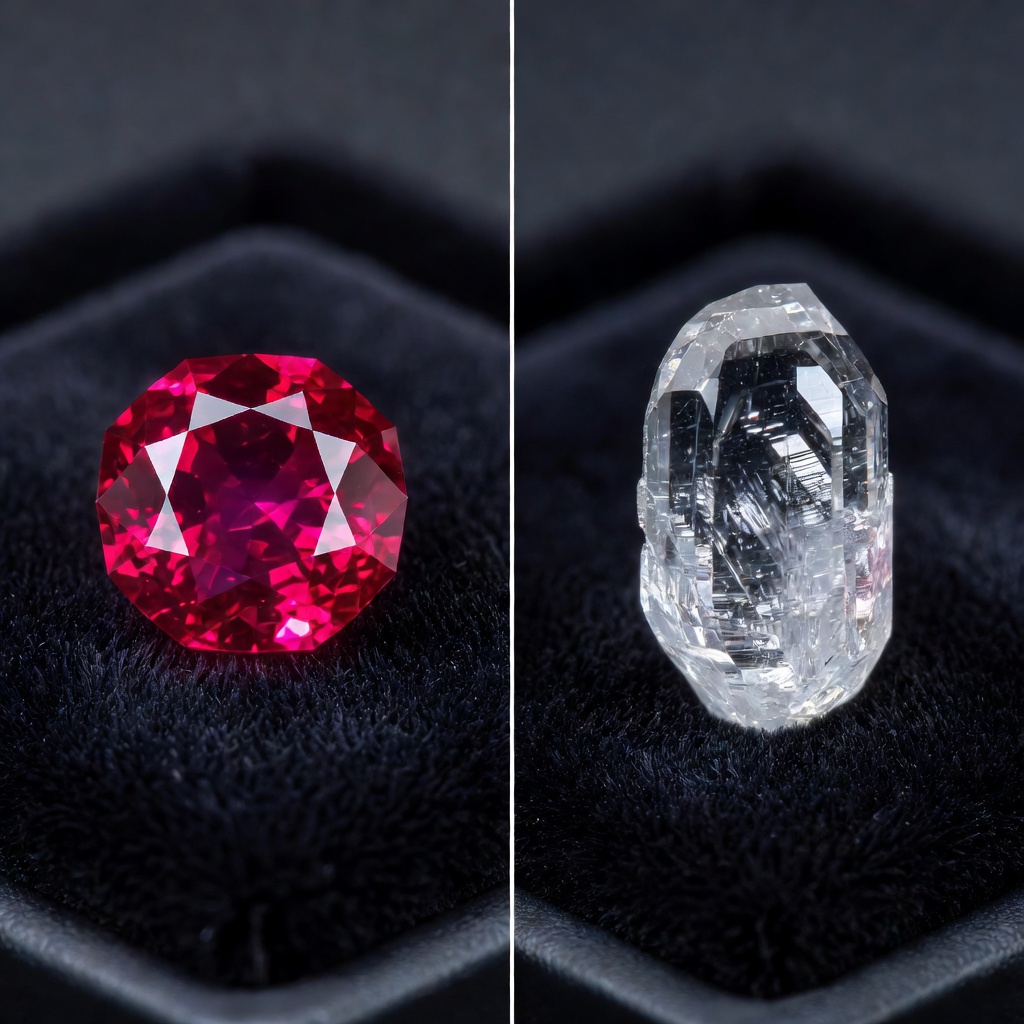
The fundamental differences between these gemstones begin deep within the Earth, where distinct geological processes create their unique chemical signatures. Ruby forms exclusively in high-pressure, high-temperature metamorphic environments where aluminum oxide (Al₂O₃) crystallizes into the trigonal crystal system of corundum, with trace chromium impurities replacing aluminum atoms to produce the characteristic red coloration. This formation process typically occurs in marble host rocks or basaltic environments over millions of years, creating the exceptional hardness and density that distinguish ruby as a premier precious gemstone.
Chrysocolla presents a completely different corundum vs copper silicate formation narrative, developing as a secondary mineral in the oxidation zones of copper ore deposits. This hydrated copper silicate forms through the weathering and oxidation of primary copper minerals, creating botryoidal masses and crusts rather than distinct crystalline structures. The gemstone formation process involves copper-rich solutions percolating through rock fractures, depositing layers of chrysocolla that often intermingle with other copper minerals such as malachite, azurite, and turquoise to create the distinctive matrix patterns collectors prize.
Major mining locations reflect these geological requirements, with premier ruby deposits found in Myanmar's Mogok Valley, Mozambique's Montepuez mines, and Madagascar's mineral-rich regions. Chrysocolla sourcing follows copper deposits globally, with significant production from Arizona's copper belts, Peru's Andean mines, and Chile's Atacama Desert. Each location imparts subtle variations in color saturation and matrix characteristics; for instance, Arizona chrysocolla often displays dramatic black manganese veining, while Peruvian specimens tend toward pure cyan and turquoise hues with minimal matrix interruption.
Physical Properties and Durability Comparison
Hardness and durability represent the most significant practical differences when evaluating these gemstones for jewelry applications. Ruby ranks 9 on the gemstone hardness scale, placing it second only to diamond and moissanite in terms of scratch resistance and daily wear capability. This exceptional chrysocolla hardness differential means that ruby can withstand decades of continuous wear without showing surface abrasion, making it ideal for rings and bracelets that encounter frequent impact. Specific gravity measurements also differ substantially, with ruby averaging 4.0 compared to chrysocolla's lighter 2.0-2.4 range, resulting in noticeable weight differences between similarly sized specimens.
Chrysocolla's hardness ranges between 2 and 4 on the Mohs scale, classifying it as a relatively soft gemstone requiring protective care to prevent surface damage. This softness stems from its microcrystalline to cryptocrystalline structure and water content within its chemical composition, creating a stone that can be scratched by household dust (which contains quartz particles at hardness 7) or common metal objects. Cleavage properties further distinguish these materials; ruby possesses no true cleavage but displays conchoidal to uneven fracture patterns, while chrysocolla's fracture ranges from earthy to conchoidal with perfect cleavage in one direction, making it susceptible to splitting under pressure.
| Property | Ruby (Corundum) | Chrysocolla (Copper Silicate) |
|---|---|---|
| Chemical Composition | Aluminum Oxide (Al₂O₃) with Chromium | Hydrated Copper Silicate (Cu₂₋ₓAlₓ(H₂₋ₓSi₂O₅)(OH)₄·nH₂O) |
| Mohs Hardness | 9 (Excellent) | 2-4 (Poor to Fair) |
| Specific Gravity | 3.97-4.05 | 2.00-2.40 |
| Crystal System | Trigonal (Hexagonal) | Orthorhombic (Microcrystalline) |
| Transparency | Transparent to Translucent | Opaque to Translucent |
| Fracture Type | Conchoidal to Uneven | Earthy to Conchoidal |
| Chemical Sensitivity | Resistant to acids and heat | Vulnerable to acids and prolonged water exposure |
| Typical Price Range | $1,000-$100,000+ per carat | $1-$50 per carat |
Vulnerability to household chemicals presents another critical consideration for collectors. Ruby's corundum structure remains inert to most acids and cleaning solutions, allowing for aggressive cleaning methods when necessary. Conversely, chrysocolla's copper content reacts with acids, ammonia, and even prolonged exposure to water, potentially causing surface pitting or color alteration. A practical case study involving the preservation of vintage jewelry collections (reference collection xkals8) demonstrated that chrysocolla specimens stored in humid environments showed significant surface degradation over five years, while ruby pieces maintained pristine conditions under identical storage parameters.
Visual Characteristics and Color Spectrum
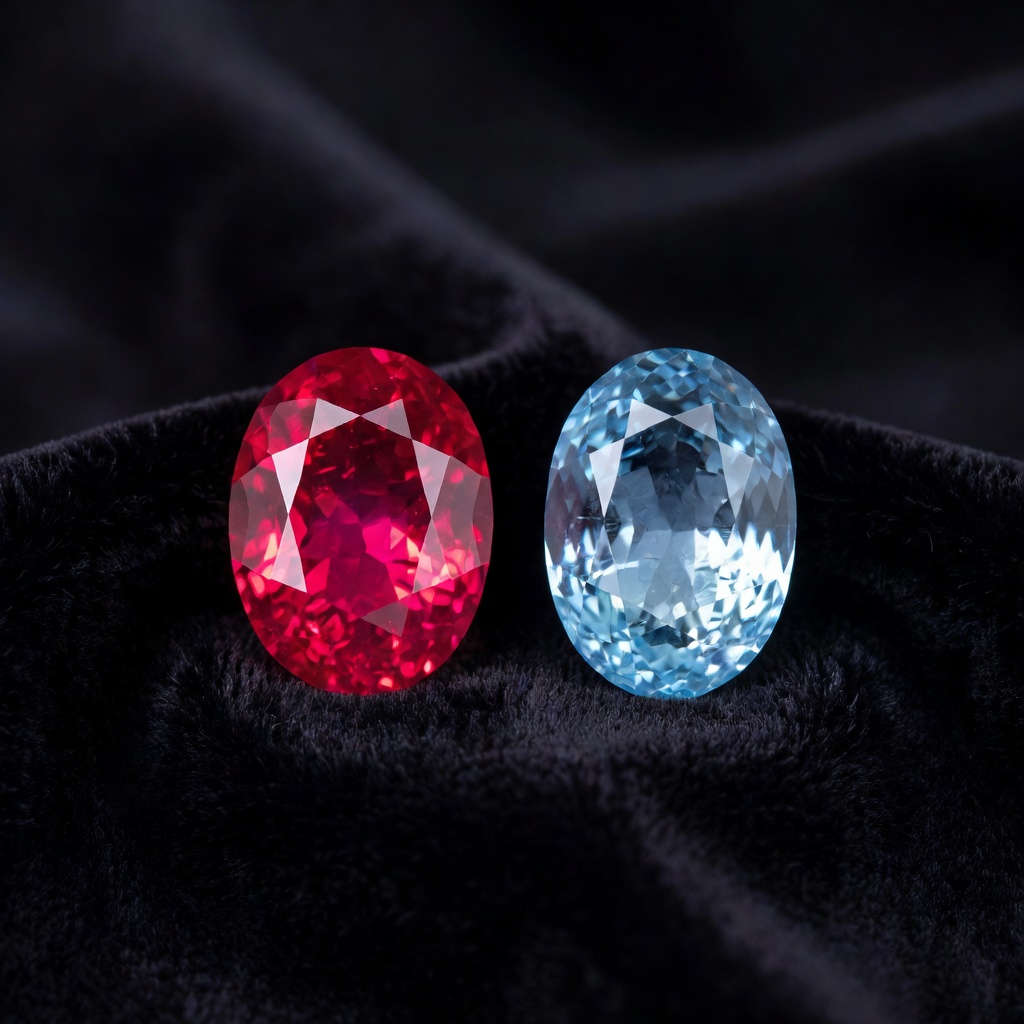
The aesthetic appeal of red vs blue gemstones manifests distinctly in these two materials, offering complementary options for different color preferences and wardrobe palettes. Ruby exhibits a relatively narrow but intense color range dominated by pure red to slightly purplish or orangish red, with the most coveted ruby pigeon blood specimens displaying a vivid, saturated red with a subtle blue undertone that appears to glow from within. This color results from chromium content combined with the absence of iron darkening agents; Burmese rubies typically achieve this ideal saturation, while Thai and Cambodian stones often display darker, garnet-like tones due to higher iron content.
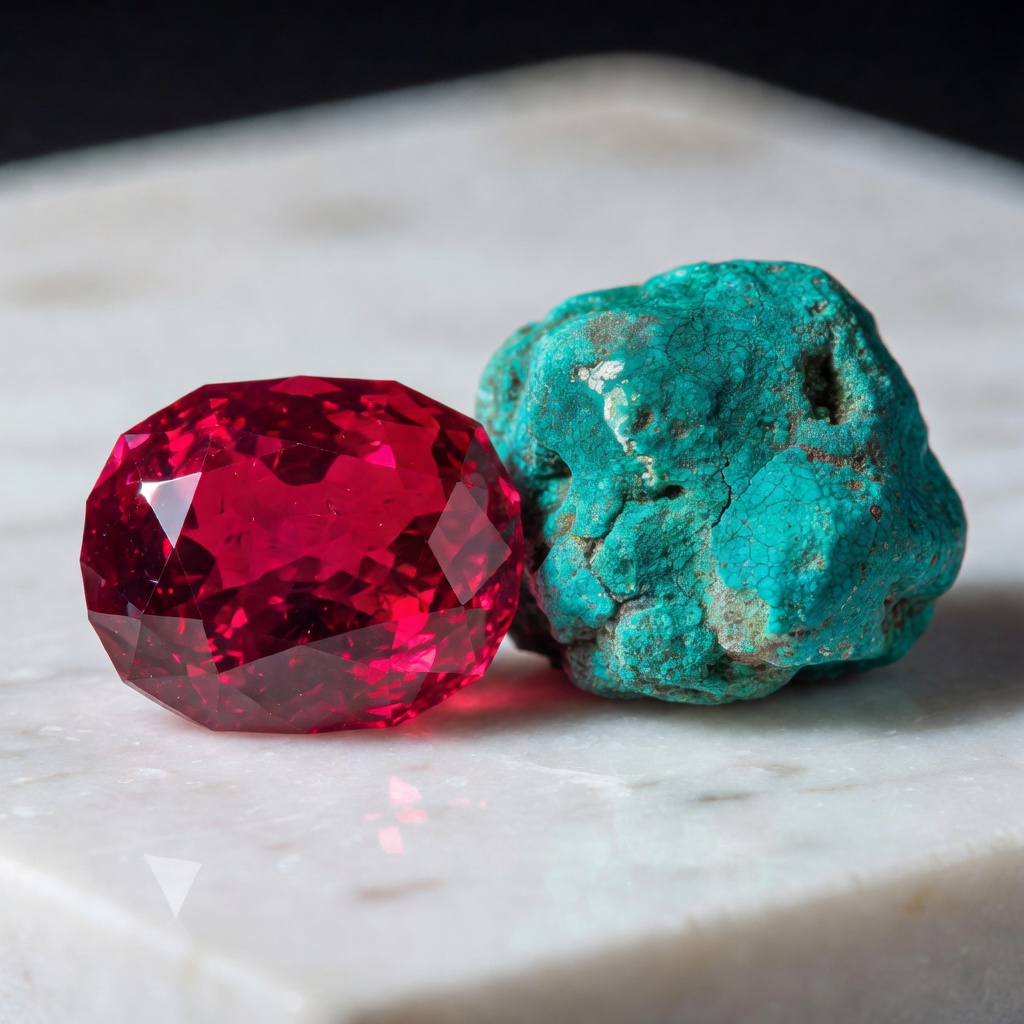
Chrysocolla color variations embrace a broader spectrum within the blue-green family, ranging from pale robin's egg blue through intense turquoise to deep cyan and forest green, often displaying multiple colors within a single specimen. Unlike ruby's relatively uniform coloration within individual stones, chrysocolla characteristically exhibits mottled, banded, or brecciated patterns where the host rock matrix creates dramatic black, brown, or red veining against the vibrant copper silicate background. Transparency differences further distinguish these gems; high-quality rubies achieve transparency allowing light to penetrate and create brilliance through faceting, while chrysocolla remains predominantly opaque, displaying a waxy to vitreous luster that emphasizes surface patterns over internal clarity.
When selecting between these stones for jewelry, consider the visual impact of their optical properties. A well-cut ruby exhibits adamantine to vitreous luster and strong pleochroism, showing different color intensities when viewed from different angles—an effect that skilled gem cutters minimize through careful orientation. Chrysocolla's lower refractive index (1.46-1.57 compared to ruby's 1.76-1.77) results in a softer, more subdued glow that pairs beautifully with antique or bohemian jewelry styles. Practical styling tip: rubies command attention as statement pieces in formal settings, while chrysocolla offers versatile, earthy elegance suitable for casual professional environments.
Market Value and Investment Potential
Understanding ruby gemstone value requires familiarity with the Four Cs grading system adapted from diamond evaluation, where color saturation and origin significantly influence pricing tiers. High-quality rubies from Myanmar command premium prices ranging from $1,000 per carat for commercial-grade stones to over $100,000 per carat for untreated, exceptional pigeon blood specimens over five carats. Heat treatment, a common enhancement process, affects value substantially; unheated Burmese rubies with certification from laboratories like GIA or SSEF represent genuine investment-grade assets that appreciate consistently at auction houses such as Christie's and Sotheby's.
Chrysocolla occupies the affordable gemstones category, typically retailing between $1 and $50 per carat depending on color intensity, matrix pattern attractiveness, and cutting quality. Unlike ruby, chrysocolla valuation prioritizes artistic matrix patterns and color zoning over clarity or transparency, with specimens displaying minimal host rock and vivid turquoise coloring commanding the highest prices within this accessible range. While chrysocolla does not function as a traditional investment vehicle due to its abundance and softness, rare specimens from depleted mines or those featuring exceptional chatoyancy (cat's eye effect) can appreciate modestly within specialized collector markets.
For investors seeking gemstone investment opportunities with tangible asset appreciation, ruby represents the superior choice based on historical performance data. The rare gem market has outperformed traditional equities in certain periods, with fine untreated rubies showing 5-10% annual appreciation over the past two decades. However, chrysocolla serves an important market niche for designers creating accessible fashion jewelry or for collectors building mineral specimen portfolios where geological significance outweighs monetary investment potential. When building a diversified gemstone collection, allocate 80-90% of budget toward durable, precious stones like ruby for value retention, reserving 10-20% for aesthetic variety through pieces like chrysocolla.
Jewelry Applications and Wearability Factors
Ruby engagement rings represent a sophisticated alternative to diamonds, offering the durability necessary for daily wear while expressing individual style through rich color symbolism. The stone's 9/10 hardness rating makes it suitable for all jewelry types including bracelets, which encounter frequent impact against hard surfaces, and rings worn during active lifestyles. When setting rubies, prong settings in platinum or white gold maximize light return and brilliance, though bezel settings provide additional protection for cabochon-cut stones or pieces intended for rigorous wear. For a contemporary twist, consider east-west setting orientations for oval rubies, a trend that has gained traction among modern bridal jewelry designers.
Chrysocolla jewelry requires more strategic design considerations due to the stone's softer nature. Protective bezel settings or halo designs that shield the girdle edges prove essential for longevity, making pendants and earrings ideal applications where impact risk remains minimal. Occasional-wear rings featuring chrysocolla work best in cocktail or statement piece contexts rather than daily-wear bands. Metal pairing recommendations differ significantly between these stones; rubies achieve maximum visual impact against white metals (platinum, white gold, or palladium) that enhance the red color through contrast, while chrysocolla harmonizes beautifully with copper, rose gold, or oxidized sterling silver that complements its earthy, organic aesthetic.
Practical wearability testing conducted by jewelry manufacturers indicates that chrysocolla set in rings shows visible surface scratching within six months of daily wear, whereas ruby maintains polish integrity for decades under identical conditions. For active professionals or those working with their hands, reserve chrysocolla for necklace pendants resting against clothing or earrings protected from impact. When designing custom pieces, consider incorporating chrysocolla as accent stones surrounded by harder protective borders, or select doublet designs that cap the soft stone with clear quartz for enhanced durability without sacrificing color.
Metaphysical Properties and Symbolism
The chrysocolla meaning and chrysocolla healing properties center upon communication, emotional expression, and feminine energy alignment within crystal healing traditions. Often called the "Teaching Stone" or "Goddess Stone," chrysocolla resonates with the throat chakra, facilitating honest dialogue and compassionate listening while dispelling negative energies that block authentic self-expression. Practitioners recommend placing chrysocolla in workspaces where difficult conversations occur or wearing it as a pendant near the throat during public speaking engagements to enhance verbal clarity and reduce anxiety.
Ruby metaphysical associations emphasize vitality, passion, courage, and root chakra activation, stimulating life force energy (prana or chi) while providing psychic protection against energy vampires and negative intentions. Historical texts from Sanskrit traditions describe ruby as ratnaraj, or "king of precious stones," believed to maintain physical health and warn of danger by darkening in color. Modern crystal healers utilize ruby to boost motivation, overcome exhaustion, and reignite romantic passion, recommending placement at the base of the spine during meditation or wearing on the left hand to receive its energizing vibrations.
Zodiac and birthstone connections offer additional guidance for selection. Ruby serves as the July birthstone and resonates particularly with Cancer and Leo sun signs, supporting Leo's natural leadership while providing emotional grounding for sensitive Cancers. Chrysocolla traditionally associates with Gemini and Virgo, helping Geminis focus scattered mental energies and supporting Virgos in expressing emotions rather than suppressing them for perfectionism. When building a crystal healing collection, consider pairing these stones to balance masculine (ruby) and feminine (chrysocolla) polarities, though they should be stored separately to prevent the harder ruby from scratching the softer chrysocolla.
Care, Cleaning, and Maintenance Requirements
Proper maintenance protocols reflect the significant hardness differential between these gemstones. Ruby care tips include the safe use of ultrasonic cleaners and steam cleaning equipment, as the stone's hardness and lack of cleavage planes resist vibration damage and thermal shock. For routine home maintenance, warm soapy water and a soft brush effectively remove oils and debris accumulated during wear. Store ruby jewelry separately from other pieces to prevent scratching softer gemstones, though ruby itself requires minimal protective measures beyond standard jewelry box compartments.
Learning how to clean chrysocolla requires adopting gentler protocols that preserve its hydrated structure and copper content. Never use ultrasonic cleaners, steamers, or chemical jewelry dips containing ammonia or acids, as these can dehydrate the stone or cause chemical reactions that alter color. Instead, clean chrysocolla using only lukewarm water with mild phosphate-free soap, gently patting dry with a soft cotton cloth immediately after washing to prevent water spots. Avoid prolonged soaking, as chrysocolla's porous nature can absorb water, potentially causing internal stress or surface clouding.
Gemstone maintenance storage recommendations emphasize physical separation between these materials. Always store chrysocolla in individual soft cloth pouches or lined jewelry boxes compartments, never allowing it to contact harder stones like ruby, sapphire, or diamond that could scratch its surface. For collectors maintaining mineral specimens rather than jewelry, maintain stable humidity levels (45-55%) to prevent chrysocolla dehydration while avoiding excessively damp environments that promote copper oxidation. Inspect chrysocolla settings biannually for loosening, as the soft material can wear away at prong contact points more quickly than harder gemstones.
Making Your Choice: Which Gemstone Fits Your Lifestyle
When choosing gemstones for your personal collection or specific jewelry pieces, assess your daily activity level and wear patterns honestly. Active lifestyles involving manual labor, sports, or frequent hand washing favor ruby's exceptional durability, ensuring your jewelry remains pristine despite environmental challenges. Collectors who change jewelry daily and can commit to careful handling may appreciate chrysocolla's unique aesthetic for special occasions, whereas those seeking "set it and forget it" heirloom pieces should prioritize ruby for settings intended for continuous wear.
Budget considerations play a crucial role in the ruby vs chrysocolla buying guide decision tree. Allocate funds toward ruby for significant life events—engagements, milestone anniversaries, or legacy pieces intended for generational transfer—where durability and value retention justify premium pricing. Chrysocolla offers excellent value for fashion jewelry, artistic statement pieces, or crystal healing collections where budget flexibility allows for acquiring larger, more visually striking specimens than would be possible with precious gemstones. Consider chrysocolla as an entry point into copper-based mineral appreciation before investing in rarer turquoise or gem silica.
Personal color psychology preferences ultimately guide the final selection between stimulating red tones and calming blue-green energies. Ruby's warm spectrum activates energy, confidence, and visibility—ideal for individuals seeking empowerment or recovering from illness. Chrysocolla's cool palette soothes anxiety, supports meditation practices, and complements spring and summer wardrobes with oceanic freshness. For versatile collectors, owning both stones allows mood-based selection: reach for ruby during high-stakes presentations or challenging negotiations, and select chrysocolla for restorative weekends or creative brainstorming sessions. Reference your lifestyle priorities against the durability, value, and energetic properties outlined in this guide to make an informed selection that serves your needs for decades.
Frequently Asked Questions
Which is more valuable, ruby or chrysocolla?
Ruby is significantly more valuable than chrysocolla. High-quality rubies can command prices of $1,000 to over $100,000 per carat due to their rarity, hardness, and status as precious gemstones. Chrysocolla typically ranges from $1 to $50 per carat, making it an affordable semi-precious option for collectors and jewelry enthusiasts.
Can chrysocolla be worn every day like ruby?
No, chrysocolla is not suitable for daily wear due to its low hardness rating of 2-4 on the Mohs scale. It scratches easily and can be damaged by water and chemicals. Ruby, with a hardness of 9, is excellent for daily wear including rings and bracelets. Chrysocolla is best reserved for pendants, earrings, or occasional-wear pieces in protective settings.
Is chrysocolla considered a real gemstone?
Yes, chrysocolla is a genuine gemstone, though it is classified as a semi-precious stone rather than precious. It is a hydrated copper silicate mineral that has been used in jewelry and ornamental objects for thousands of years. Unlike synthetic imitations, natural chrysocolla features unique color variations and matrix patterns that make each piece distinctive.
What healing properties do ruby and chrysocolla share?
Both stones are associated with emotional healing and protection, though they work differently. Ruby stimulates vitality, courage, and passion while protecting against negative energy. Chrysocolla promotes calm communication, emotional balance, and stress relief. Together, they balance masculine (ruby) and feminine (chrysocolla) energies, though they should be stored separately to prevent scratching.
Can you wear ruby and chrysocolla together in jewelry?
While aesthetically striking, wearing ruby and chrysocolla together requires caution. Ruby's hardness of 9 can easily scratch the softer chrysocolla (hardness 2-4). If combined in one piece, ensure they are set separately without contact, or use them in different jewelry items worn simultaneously. Never store them touching each other.
Why is ruby red while chrysocolla is blue-green?
Ruby's red color comes from chromium impurities within the corundum crystal structure, sometimes with iron contributing to darker tones. Chrysocolla's blue-green color results from its copper content; the hydrated copper silicate composition naturally produces turquoise to cyan hues. These distinct chemical compositions create their characteristic color differences.
Which stone is better for engagement rings?
Ruby is far superior for engagement rings due to its exceptional hardness (9 on Mohs scale), scratch resistance, and durability for daily wear over decades. Chrysocolla is generally unsuitable for engagement rings because its softness (2-4 hardness) makes it vulnerable to scratching, chipping, and damage from daily activities. Choose ruby for heirloom pieces and chrysocolla for anniversary or fashion jewelry.
How can I tell real ruby from real chrysocolla?
Visual inspection reveals obvious differences: rubies are typically transparent to translucent with glassy luster and hexagonal crystal systems, while chrysocolla is opaque with earthy luster and often shows copper matrix patterns. Ruby leaves no streak on unglazed porcelain, while chrysocolla leaves a white to pale blue streak. Professional gemological testing can confirm ruby's corundum structure versus chrysocolla's copper silicate composition.