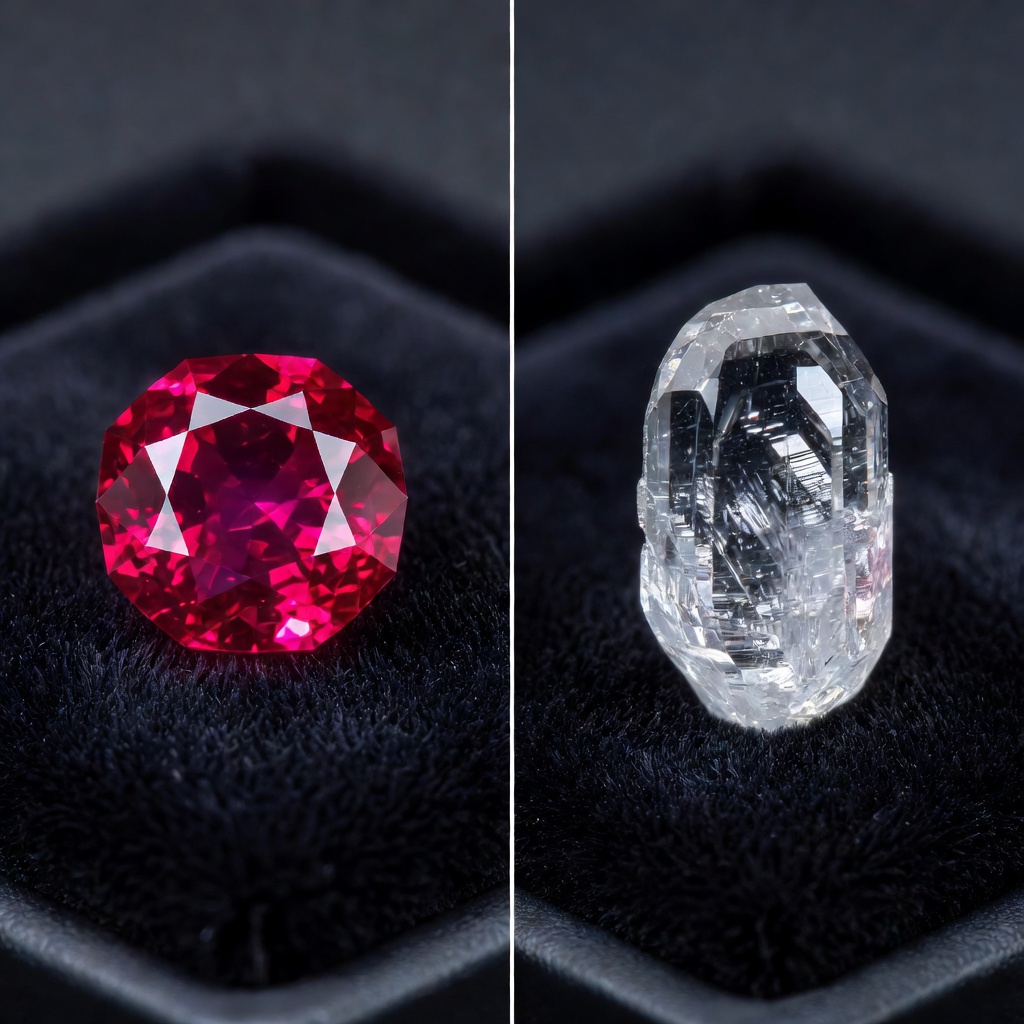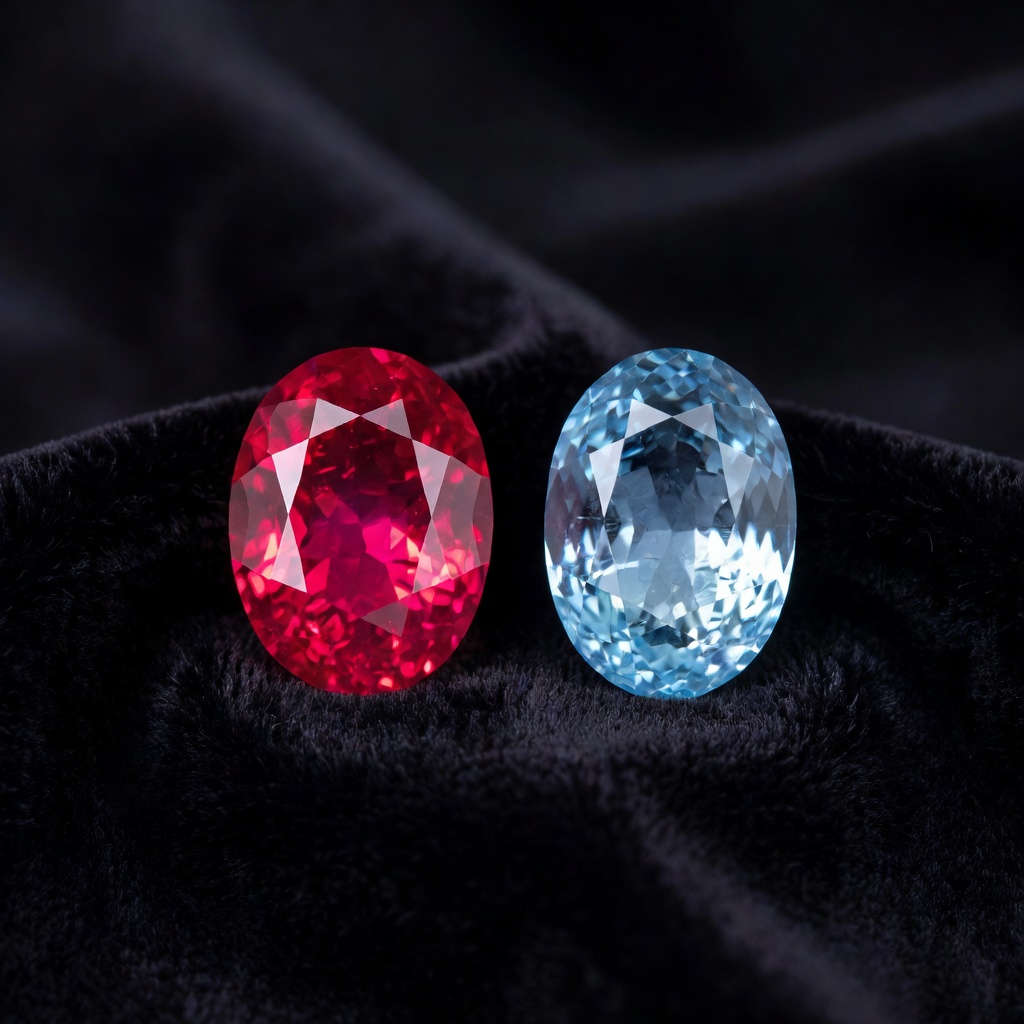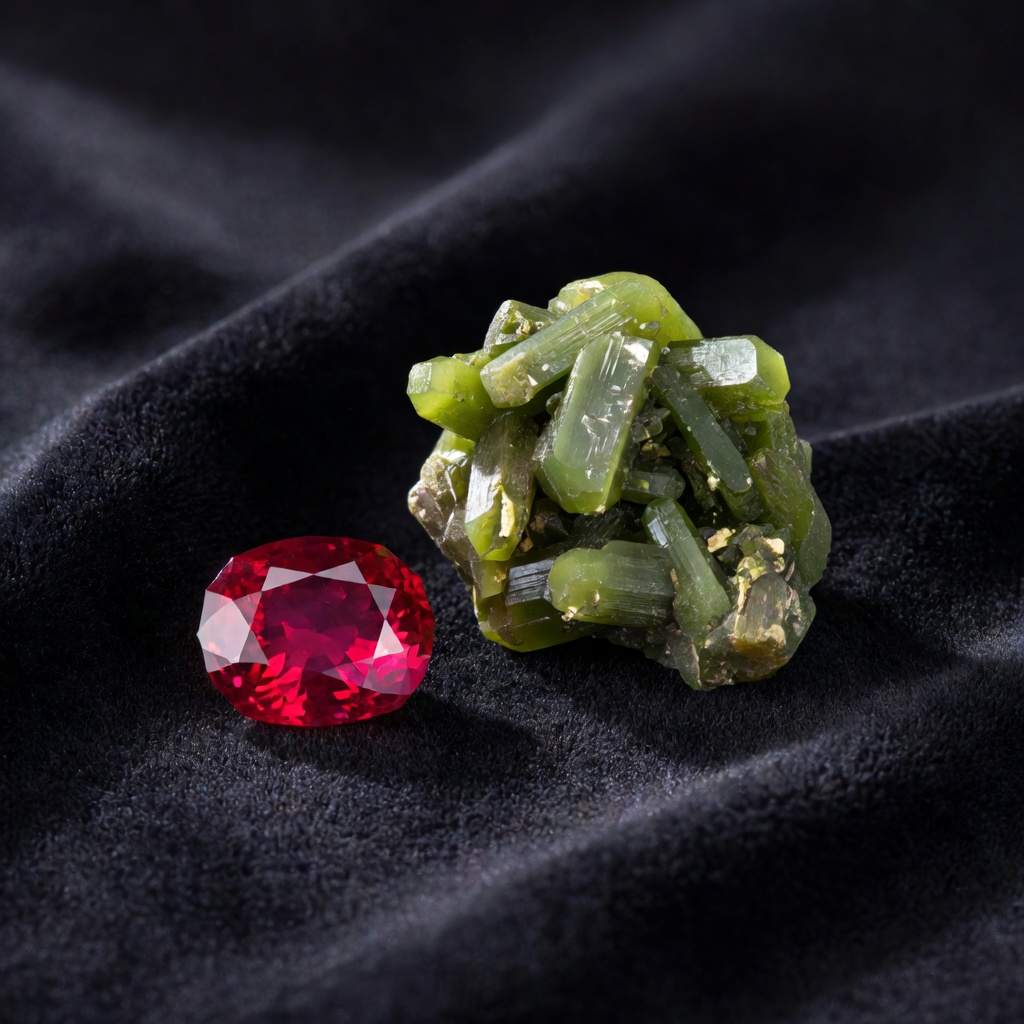
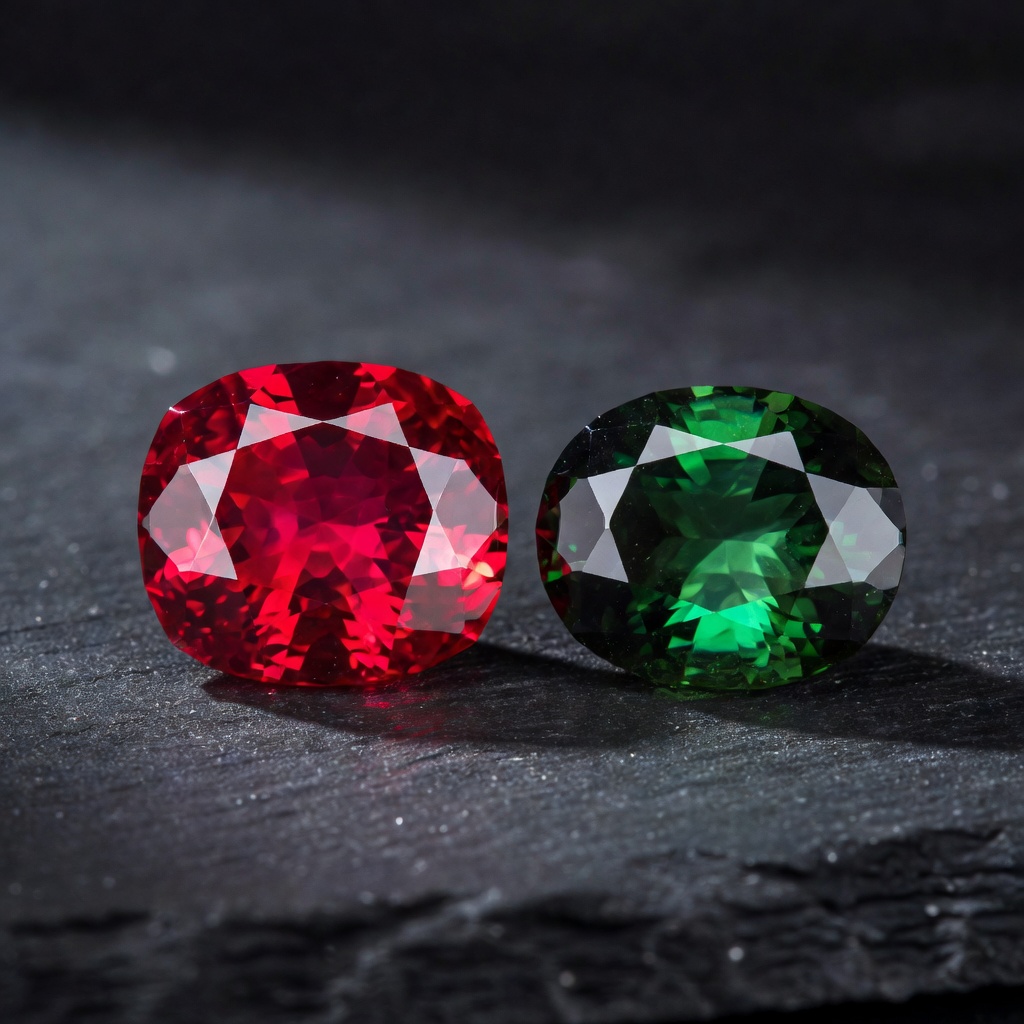
Introduction: Ruby vs Diopside (Chrome) Overview
When exploring the vibrant world of colored gemstones, the comparison between Ruby vs Diopside (Chrome) frequently emerges among collectors and jewelry enthusiasts seeking chromium-rich beauty. Ruby represents the pinnacle of precious gems, a variety of corundum composed of aluminum oxide that has commanded reverence for millennia across civilizations. Chrome diopside, conversely, offers a more accessible entry point into vivid green jewelry, belonging to the pyroxene mineral family as a calcium magnesium silicate colored by the same chromium element that creates ruby's red hue. Understanding the fundamental distinctions between these chemically related yet physically divergent stones empowers consumers to make informed decisions based on durability requirements, budget constraints, and intended wear patterns.
Both gemstones owe their saturated colors to chromium ions within their crystal structures, yet they occupy vastly different positions in the gemological hierarchy and market ecosystem. While ruby ranks among the "Big Three" colored gemstones alongside sapphire and emerald, chrome diopside remains classified as a semi-precious stone despite its remarkable color intensity. This comprehensive analysis examines the critical factors distinguishing these gems, from molecular composition and geological formation to practical wearability and long-term value retention, providing the essential knowledge needed to select the perfect stone for your jewelry collection.
Chemical Composition and Crystal Structure
Ruby crystallizes within the trigonal crystal system, possessing a chemical formula of Al₂O₃ (aluminum oxide) where chromium ions (Cr³⁺) substitute for aluminum atoms in the lattice structure. This substitution typically occurs in metamorphic rock environments under high pressure and temperature conditions, with the chromium concentration directly correlating to color saturation levels. The resulting crystal structure creates exceptional hardness and stability, allowing ruby to form large, transparent crystals suitable for significant faceted gemstones.
Chrome diopside belongs to the monoclinic crystal system with the chemical formula CaMgSi₂O₆, representing a calcium magnesium silicate mineral where chromium replaces magnesium within the crystal lattice to produce its characteristic green coloration. Unlike ruby's metamorphic origins, chrome diopside typically forms in skarn deposits and ultramafic rocks where limestone interacts with silica-rich magmas, creating the specific chemical conditions necessary for chromium incorporation. These distinct formation environments result in dramatically different physical properties and crystal habits, making Green diopside vs red ruby comparisons as much about mineralogical fundamentals as aesthetic preferences.
The trace element chemistry significantly impacts color presentation in both stones, though through different mechanisms. In ruby, chromium creates selective absorption of blue and yellow light while transmitting red, with iron content potentially dulling the fluorescence that creates the coveted "pigeon blood" appearance. Chrome diopside relies entirely on chromium for its color without the fluorescence effects seen in ruby, resulting in a deep forest green that remains consistent under various lighting conditions but darkens significantly as stone size increases due to light absorption through the chromium-rich crystal.
Color Characteristics and Visual Appeal
Ruby displays a magnificent spectrum ranging from delicate pinkish-red to the legendary pigeon blood red, with the most valuable stones exhibiting strong fluorescence under UV light that enhances their internal glow in daylight conditions. Burmese rubies historically set the standard for color, showing pure red with a slight blue undertone that creates a vivid, almost electric appearance, while Thai and Cambodian stones often present darker, more garnet-like tones with brownish secondary hues. The saturation and tone of ruby color significantly impact value, with medium-dark stones commanding premium prices while overly dark or excessively light specimens trade at substantial discounts.
Chrome diopside presents an equally striking but entirely different color palette, showcasing intense forest green to slightly yellowish-green hues with remarkable saturation levels rarely seen in other green gemstones outside of emerald or tsavorite garnet. The color results from chromium content typically ranging between 0.5% and 1.5% of the crystal composition, creating a depth of green that rivals fine emerald at a fraction of the cost. However, unlike ruby, chrome diopside suffers from size limitations that dramatically affect appearance; stones exceeding two carats typically darken excessively due to the high chromium content absorbing too much light, whereas ruby maintains consistent color saturation even in substantial carat weights exceeding ten carats.
Lighting conditions affect these gemstones differently, requiring consideration for intended wearing environments. Ruby's fluorescence causes it to appear more vivid in natural daylight, while incandescent lighting may emphasize pink or purple secondary tones depending on the stone's origin. Chrome diopside shows strong pleochroism, displaying different colors when viewed from different crystallographic directions—typically showing dark green, yellowish-green, or colorless depending on orientation—making cut quality crucial for maximizing face-up color. When examining Ruby color saturation against Chrome diopside green intensity, collectors must consider that while both offer vivid primary colors, ruby generally provides more consistent appearance across various sizes and lighting scenarios.
Hardness, Durability and Wearability
The disparity in hardness between these gems fundamentally determines their practical applications and long-term wearability in jewelry settings. Ruby hardness Mohs scale rating of 9 makes it second only to diamond, providing exceptional resistance to scratching from everyday dust and debris while maintaining polish and facet integrity through decades of daily wear. This superior hardness, combined with excellent toughness and the absence of cleavage planes, allows ruby to withstand substantial impact without fracturing, making it ideal for engagement rings, bracelets, and other jewelry subjected to regular physical contact.
Chrome diopside durability presents significant limitations that restrict its suitable applications, possessing a Mohs rating of 5.5-6 comparable to opal or turquoise, making it vulnerable to scratches from common household dust (which contains quartz particles rated at 7 on the Mohs scale). More critically, diopside possesses perfect cleavage in two directions, creating inherent planes of weakness where the crystal can fracture if struck against hard surfaces or subjected to pressure along specific axes. This combination of moderate hardness and pronounced cleavage makes Chrome diopside durability insufficient for daily wear rings or bracelets, relegating it primarily to protective settings for earrings, pendants, and occasional wear pieces.
Impact resistance and chemical sensitivity further differentiate these stones for jewelry applications. Ruby demonstrates excellent resistance to heat and most household chemicals, tolerating the thermal shock of professional steam cleaning and ultrasonic maintenance without damage. Chrome diopside reacts poorly to sudden temperature changes, which can activate cleavage planes and cause splitting, and shows sensitivity to acids and harsh cleaning agents that might etch the surface or attack inclusions. For active individuals or those seeking heirloom pieces intended for daily wear, ruby provides the necessary resilience, while chrome diopside requires the careful handling and protective settings typically reserved for opals or pearls.
Comparison Table: Ruby vs Chrome Diopside
| Characteristic | Ruby (Corundum) | Chrome Diopside |
|---|---|---|
| Chemical Composition | Aluminum Oxide (Al₂O₃) | Calcium Magnesium Silicate (CaMgSi₂O₆) |
| Crystal System | Trigonal | Monoclinic |
| Mohs Hardness | 9 | 5.5 - 6 |
| Primary Color Range | Pinkish-Red to Pigeon Blood Red | Forest Green to Yellowish-Green |
| Color Cause | Chromium (Cr³⁺) replacing Aluminum | Chromium replacing Magnesium |
| Price per Carat (Fine Quality) | $1,000 - $15,000+ | $20 - $200 |
| Typical Treatments | Heat treatment common | Usually untreated |
| Best Jewelry Applications | Engagement rings, bracelets, daily wear | Earrings, pendants, protected settings |
| Primary Sources | Myanmar, Mozambique, Madagascar | Siberia, Russia (primarily) |
| Size Limitations | Large stones maintain color | Darkens significantly over 2 carats |
| Cleaning Methods | Ultrasonic and steam safe | Warm soapy water only |
Sourcing, Rarity and Ethical Mining
Ruby mining locations span several continents, with Myanmar (historically Burma) maintaining its reputation for producing the finest pigeon blood specimens, though political instability has increased reliance on Mozambique, Madagascar, and Thailand for commercial supply. These operations range from small-scale artisanal mining using primitive methods to large industrial excavations utilizing heavy machinery, often raising significant ethical concerns regarding labor practices, environmental disruption, and the funding of regional conflicts. The ruby trade has historically faced challenges with transparency, though initiatives like the Kimberley Process and various fair-trade certifications now help consumers identify ethically sourced stones.
Chrome diopside sources remain concentrated primarily in Eastern Siberia, Russia, specifically in the region of Yakutia where extreme winter temperatures limit mining operations to brief seasonal windows typically between June and August. This geographic constraint creates natural scarcity despite the mineral's relative geological abundance, as the harsh subarctic conditions prevent year-round extraction and increase operational costs significantly. Compared to ruby mining, chrome diopside extraction generally produces lower environmental impact due to smaller scale operations and less invasive extraction methods, though the remote location necessitates extensive transportation networks that contribute to carbon emissions.
Treatment disclosure represents a critical difference between these gemstones in the marketplace. Heat treatment remains common and accepted in the ruby trade, with approximately 90% of commercial rubies undergoing high-temperature treatment to improve color saturation and dissolve rutile silk inclusions, requiring disclosure but not dramatically affecting value for most specimens. Chrome diopside enters the market almost exclusively untreated; the vibrant green color is entirely natural, resulting from chromium content within the crystal structure, though rare specimens might receive colorless oil or resin treatments to improve clarity visibility. This distinction makes chrome diopside attractive to purists seeking completely natural gemstones, while ruby buyers must navigate the complex landscape of heat treatment, flux healing, and glass filling disclosures.
Price Analysis and Investment Value
The financial investment required for these gemstones differs by orders of magnitude, reflecting their relative rarity, historical prestige, and durability characteristics. Ruby gemstone investment value establishes it among the most valuable colored gems on Earth, with prices ranging from $100 per carat for heavily treated or included commercial quality to $15,000 or more per carat for untreated Burmese pigeon blood specimens over five carats. Fine unheated rubies from legendary mines like Mogok appreciate reliably, often outperforming traditional investments during economic uncertainties, and maintain excellent liquidity among dealers and auction houses worldwide.
Chrome diopside price per carat remains remarkably accessible, typically ranging from $20 to $200 for fine quality stones with vivid color and good clarity, making it an excellent option for collectors seeking intense green color without substantial financial commitment. While large, intensely colored specimens over three carats command premium prices due to their rarity (as most material darkens excessively at larger sizes), even top-quality chrome diopside remains affordable compared to emerald, tsavorite, or peridot alternatives. However, chrome diopside functions primarily as a fashion or collector's item with limited investment potential, as the stone lacks the historical significance and liquidity necessary for serious portfolio diversification.
Value factors affecting both stones include clarity, cut quality, carat weight, and color intensity, though weight affects each differently. Ruby value increases exponentially with size for fine quality, with a ten-carat premium stone potentially worth fifty times more per carat than a one-carat equivalent. Chrome diopside pricing remains relatively linear until stones exceed two carats, at which point value may actually decrease if the color becomes too dark and opaque. When considering Ruby gemstone investment value against Chrome diopside price per carat, buyers must recognize that while diopside offers immediate affordability and visual impact, only ruby provides the combination of durability, prestige, and appreciation potential suitable for generational wealth transfer.
Jewelry Design Applications and Settings
Ruby's exceptional durability enables virtually unlimited jewelry applications, from solitaire engagement rings subjected to daily wear and potential impact to intricate pendants, tennis bracelets, and statement pieces designed to endure generations of continuous use. The stone's hardness allows jewelers to employ delicate prong settings that maximize light exposure and minimize metal visibility, showcasing the gem's color and brilliance without compromising security. High-end jewelry houses frequently feature rubies in elaborate designs incorporating diamonds and other precious gems, creating heirloom pieces that withstand the rigors of red-carpet events, daily office wear, and active lifestyles alike.
Chrome diopside jewelry settings require more strategic consideration and protective engineering due to the stone's physical limitations. The gem performs beautifully in earrings and pendants, where minimal physical contact with hard surfaces reduces the risk of chipping or cleavage fractures, allowing the designer to prioritize aesthetic impact over protective metalwork. When incorporated into rings, diopside demands protective bezel settings, substantial halo designs, or tension settings with substantial metal coverage that shields the girdle and pavilion from direct blows while the wearer performs daily tasks. Cathedral settings, high prongs, or exposed culet designs suitable for ruby would prove disastrous for chrome diopside, likely resulting in stone loss or fracture within months of regular wear.
Metal pairing recommendations differ significantly between these gems based on color complementation and value positioning. Ruby traditionally pairs magnificently with yellow gold, which enhances the warmth of Burmese and Mozambique stones, or with platinum and white gold for contrast that emphasizes the pure red color of pigeon blood specimens. Chrome diopside often shines brightest against white gold, platinum, or sterling silver, as these cool white metals enhance the stone's forest green color without introducing competing warm tones. While ruby frequently appears in 18-karat or platinum settings befitting its luxury status, chrome diopside provides designers opportunities to create stunning silver jewelry at accessible price points, democratizing high-color gemstone fashion for broader markets.
Care, Cleaning and Maintenance Requirements
Proper maintenance protocols reflect the hardness disparity between these stones and ensure longevity regardless of which gem you choose. Ruby cleaning methods generally accommodate ultrasonic cleaners and steam cleaning equipment, provided the stone lacks significant fractures, glass-filled cavities, or untreated inclusions that might expand under thermal stress. Professional jewelers routinely clean ruby jewelry using high-pressure steam to remove accumulated lotions and oils, while home maintenance requires only warm soapy water and a soft brush to maintain brilliance between professional servicing.
Diopside jewelry care tips emphasize gentler approaches that acknowledge the stone's cleavage and moderate hardness, restricting cleaning to warm soapy water with a soft brush while strictly avoiding ultrasonic vibrations, steam heat, and sudden temperature changes that could trigger cleavage fractures. Owners should remove chrome diopside rings before washing hands with harsh antibacterial soaps, swimming in chlorinated pools, or applying cosmetics and perfumes, as chemical exposure can dull the polish or attack surface-reaching inclusions. When storing chrome diopside pieces, never place them loose in jewelry boxes alongside harder gems like ruby, sapphire, or diamond, as contact can scratch the diopside surface; instead, wrap pieces individually in soft cloth or store in separate compartments.
Long-term maintenance strategies should include professional inspections every six to twelve months for ruby jewelry, checking prong integrity and looking for chips that might compromise the stone despite its hardness. Chrome diopside requires more frequent checks of setting security, particularly for bezel-set rings where the metal might wear thin from daily contact, potentially allowing the stone to loosen or fall out. For both gems, avoid exposure to extreme heat sources such as saunas, hot tubs, or direct sunlight in closed cars, though ruby tolerates these conditions far better than diopside, which might experience thermal shock leading to internal cracking or complete breakage.
Making Your Decision: Which Gemstone to Choose
Selecting between Ruby vs Diopside (Chrome) ultimately depends on lifestyle factors, budget parameters, and the intended symbolic meaning of the jewelry piece. Active individuals, healthcare workers, or those seeking heirloom engagement pieces intended for daily wear should prioritize ruby for its unmatched durability, timeless prestige, and ability to withstand decades of continuous use without showing significant wear. The higher initial investment in quality ruby pays dividends through longevity, as the stone requires less protective maintenance and maintains both physical condition and monetary value across generations.
Budget-conscious buyers desiring intense color for occasional wear pieces may find chrome diopside ideal, particularly for earrings, pendants, or cocktail rings worn primarily during evening events where impact risks remain minimal. Consider the symbolic associations carefully; ruby traditionally represents passion, protection, vitality, and romantic love through its red hue, making it appropriate for anniversary gifts, engagement rings, or milestone celebrations. Chrome diopside connects to growth, renewal, nature, and emotional healing through its vivid green coloration, suiting it for graduation gifts, nature-inspired designs, or contemporary fashion jewelry embracing current color trends without centuries-old traditional associations.
Occasion appropriateness should guide final selection, with ruby representing the prudent choice for milestone gifts intended to last centuries and potentially appreciate in value, while chrome diopside excels in contemporary fashion jewelry where current color preferences and budget accessibility take precedence over generational durability. For collectors building comprehensive gemstone wardrobes, both stones deserve inclusion—ruby for significant investment pieces and daily wear jewelry, chrome diopside for expanding color variety in protected settings at accessible price points. By weighing these factors against personal priorities, you can select the chromium-colored gem that best serves your aesthetic desires, practical needs, and financial considerations.
Frequently Asked Questions
Is chrome diopside as valuable as ruby?
No, chrome diopside is significantly more affordable than ruby. While fine chrome diopside ranges from $20-$200 per carat, high-quality rubies can command $1,000 to $15,000+ per carat. Ruby is considered one of the 'Big Three' precious gems, whereas chrome diopside is classified as semi-precious, making it accessible for budget-conscious buyers seeking intense green color.
Which is harder, ruby or chrome diopside?
Ruby is much harder than chrome diopside. Ruby ranks 9 on the Mohs hardness scale, making it second only to diamond and suitable for daily wear. Chrome diopside ranks 5.5-6, making it susceptible to scratches from everyday dust and requiring protective settings. This hardness difference is crucial when choosing between Ruby vs Diopside (Chrome) for engagement rings or bracelets.
Can chrome diopside be worn daily like ruby?
Chrome diopside is not recommended for daily wear in rings or bracelets due to its 5.5-6 hardness rating and perfect cleavage, which makes it prone to chipping and scratching. Ruby, with its 9 hardness and excellent toughness, is ideal for daily wear. Chrome diopside is better suited for earrings, pendants, or occasional wear rings with protective bezel settings.
Do ruby and chrome diopside get their colors from the same element?
Yes, both gemstones owe their vivid colors to chromium. In ruby, chromium replaces aluminum in the corundum structure, creating red hues. In chrome diopside, chromium replaces magnesium in the crystal lattice, producing intense green colors. However, the base mineral composition differs significantly—ruby is aluminum oxide while diopside is calcium magnesium silicate.
Why is chrome diopside so much cheaper than ruby?
Chrome diopside is cheaper due to greater abundance, easier mining conditions, and lower demand compared to ruby's centuries-old prestige. Additionally, chrome diopside is rarely found in large sizes (over 2-3 carats) without darkening, limiting its use in high jewelry. Ruby's extreme rarity in fine quality, historical significance, and superior durability drive its premium pricing.
How can I tell ruby and chrome diopside apart visually?
The most obvious distinction is color—ruby displays red to pinkish-red tones while chrome diopside shows forest green to yellowish-green. Under magnification, ruby often shows silk inclusions or hexagonal growth patterns, whereas chrome diopside may display cleavage planes and strong pleochroism (different colors when viewed from different angles). A simple hardness test or refractive index measurement by a gemologist provides definitive identification.
Is chrome diopside treated or enhanced like many rubies?
Unlike rubies, which are commonly heat-treated to improve color and clarity, chrome diopside is rarely treated. The vibrant green color is entirely natural, resulting from chromium content within the crystal structure. However, some chrome diopside may be coated with colorless oil or resin to improve clarity, though this is less common than the heat treatment routinely applied to rubies.
Which gemstone is better for an engagement ring, ruby or chrome diopside?
Ruby is the superior choice for engagement rings intended for daily wear due to its exceptional hardness (9 Mohs), durability, and resistance to scratching. Chrome diopside is too soft (5.5-6 Mohs) and prone to damage for a ring worn daily. However, if budget constraints are severe and the ring will be worn occasionally, chrome diopside in a protective bezel setting could work as a temporary alternative.