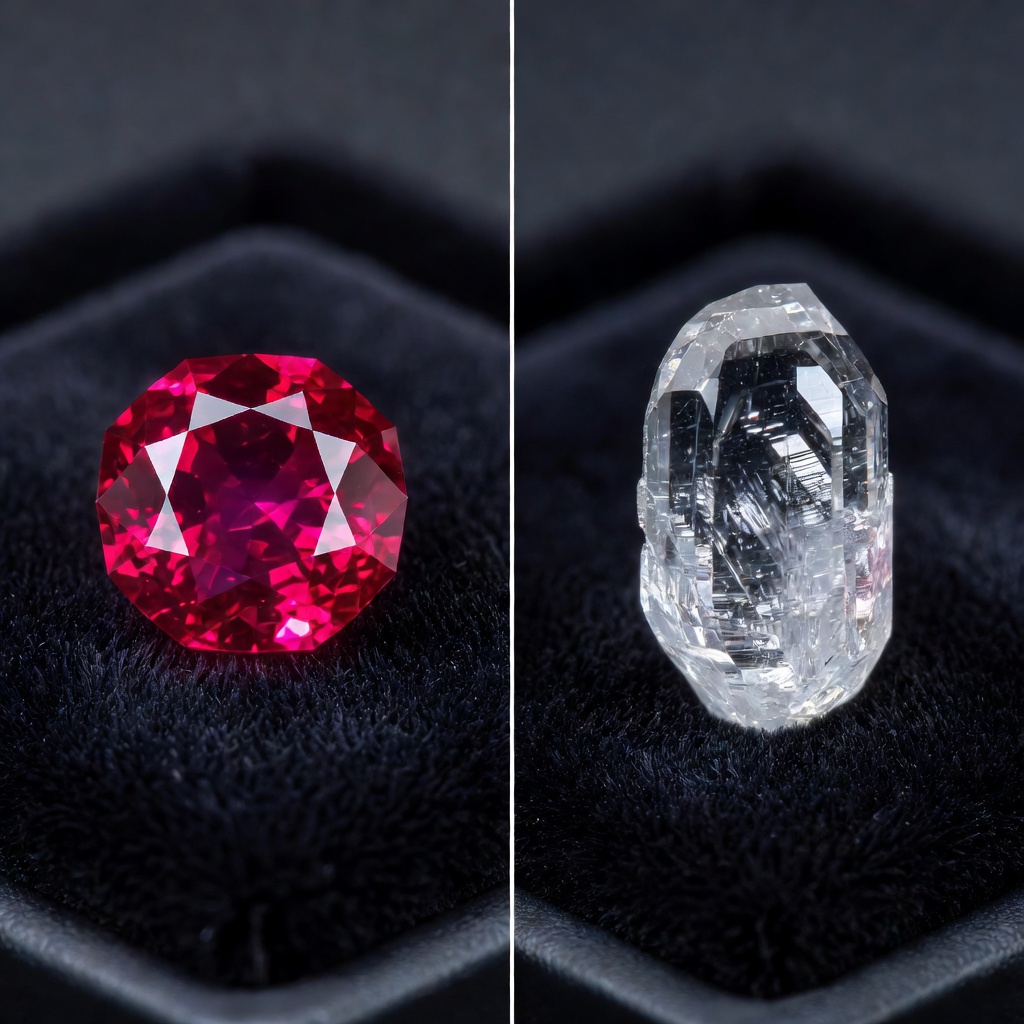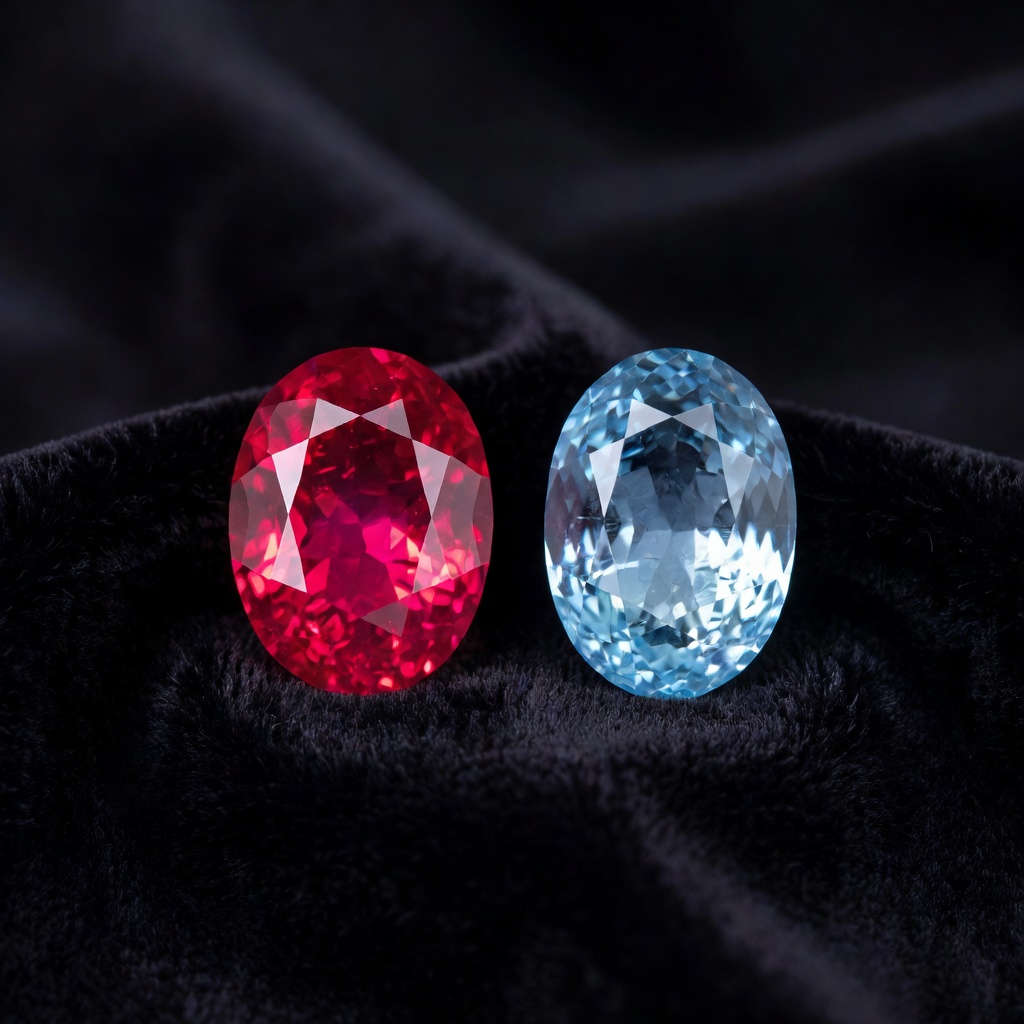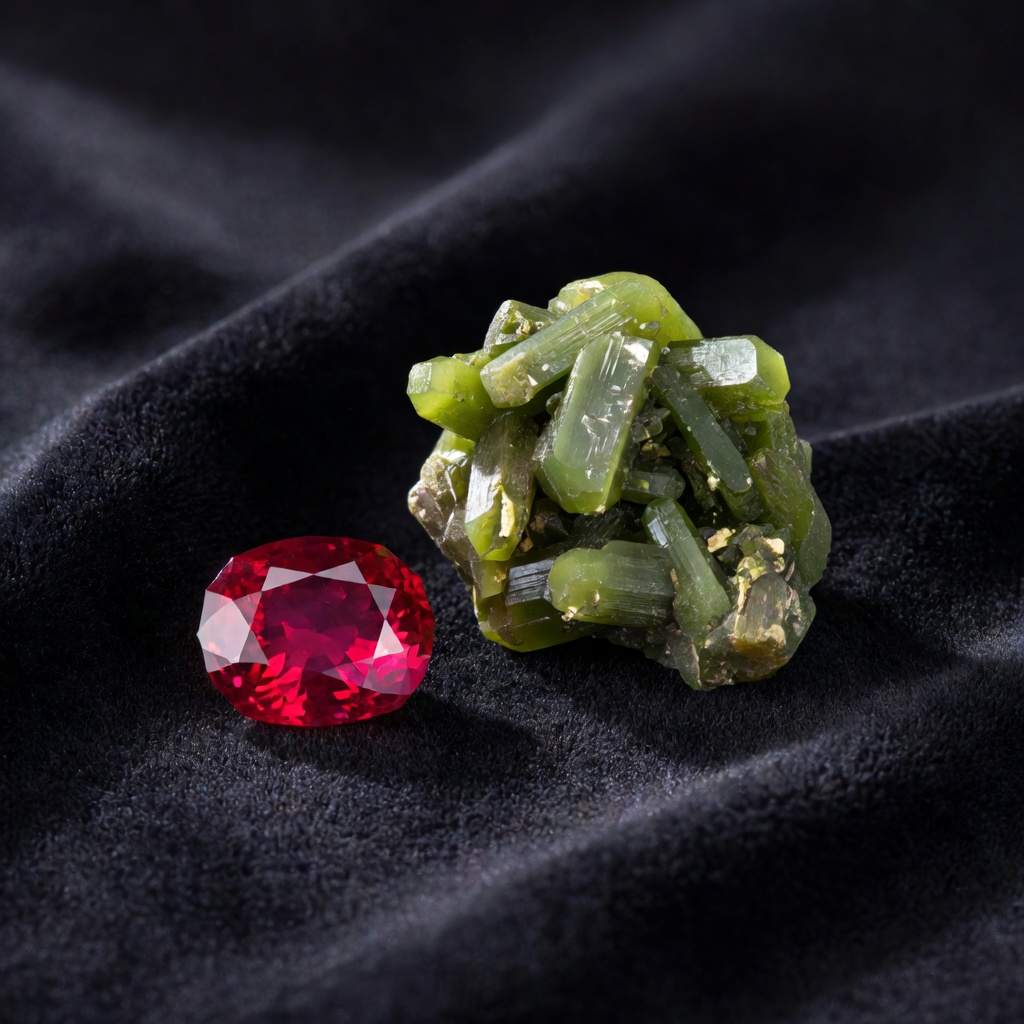
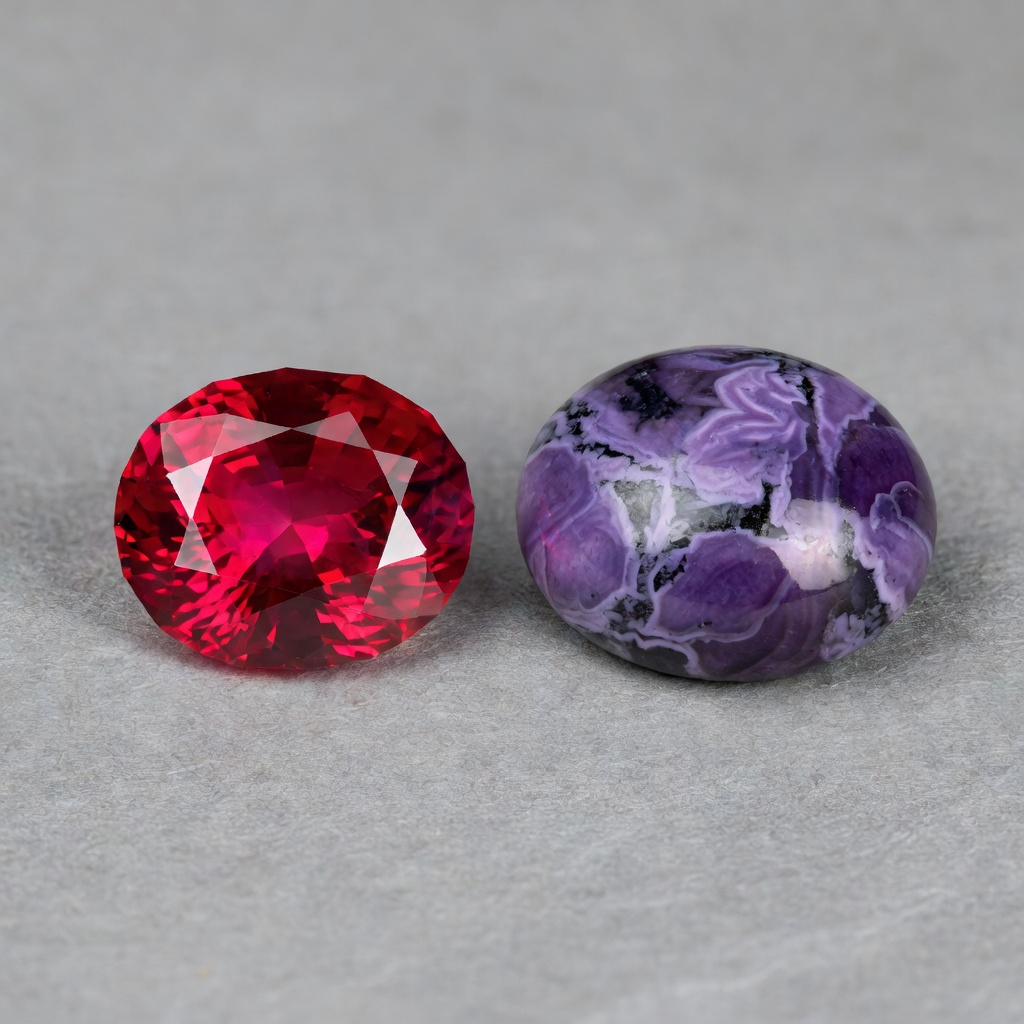
Introduction: The Contrast Between Classic and Contemporary
When exploring the fascinating world of colored gemstones, the comparison of Ruby vs Charoite presents a striking study in contrasts that spans millennia of human history and geological formation. Ruby stands as one of the prestigious "Big Four" precious gemstones, alongside diamond, sapphire, and emerald, with a documented history stretching back to ancient civilizations who treasured its fiery red brilliance. In stark contrast, Charoite remained hidden from the world until 1978, when Russian geologists discovered this mesmerizing purple stone in the remote Murun Massif of Siberia, making it one of the most recent major gemstone discoveries in modern history.
These stones represent fundamentally different categories within the gemological world, yet they attract similar collectors seeking intense color saturation and unique energetic properties. Ruby embodies the essence of passion, vitality, and earthly power through its chromium-rich red hues, while Charoite captures the imagination with its swirling violet patterns that suggest spiritual transformation and higher consciousness. Understanding the distinction between precious vs semi-precious stones becomes particularly relevant here, as Ruby commands traditional luxury status while Charoite offers accessibility and artistic uniqueness despite its extreme geographical rarity.
Color psychology plays a significant role in why collectors often consider both stones, even for entirely different purposes. The deep red of Ruby stimulates the root chakra, associated with survival instincts, physical energy, and grounded passion, making it ideal for those seeking motivation and courage in their daily endeavors. Conversely, Charoite's distinctive purple tones activate the crown and third eye chakras, promoting spiritual awareness, dream work, and adaptation to profound life changes. Whether you are drawn to the timeless elegance of classical gemstone luxury or the contemporary appeal of recently discovered mineral wonders, understanding these two stones' unique characteristics will guide your purchasing decisions and jewelry collections.
Physical Properties: Composition, Structure, and Durability
Understanding the fundamental physical differences between Ruby and Charoite requires examining their distinct chemical compositions and crystalline structures. Ruby belongs to the corundum family, consisting of aluminum oxide (Al₂O₃) with trace chromium elements that create its signature red coloration. This simple yet robust chemical formula contributes to Ruby's exceptional durability, scoring a 9 on the Mohs hardness scale—second only to diamond in the gemstone world. This remarkable hardness makes Ruby an excellent choice for jewelry pieces subject to daily wear and potential impact, as it resists scratching from most common materials and maintains its polish indefinitely with proper care.
Charoite presents a far more complex chemical composition, classified as a potassium, barium, calcium silicate with the formula K(Ca,Na)₂Si₄O₁₀(OH,F)·H₂O. This intricate structure forms through unique geological processes involving the interaction of limestone with alkaline intrusions, resulting in a stone with significantly different physical characteristics. With a Mohs hardness ranging between 5 and 6, Charoite falls into the category of moderately soft gemstones, comparable to opal or turquoise, requiring protective settings and careful handling to prevent surface damage. The gemstone hardness comparison between these two materials is stark: while Ruby can scratch glass and most other gems, Charoite can be scratched by ordinary household dust, which often contains quartz particles ranking at 7 on the hardness scale.
The crystalline systems further differentiate these stones, with Ruby forming in the trigonal hexagonal scalenohedral crystal class, often producing distinct barrel-shaped or pyramidal crystals visible in rough specimens. Charoite crystallizes in the monoclinic system, typically appearing as fibrous aggregates that create its characteristic swirling patterns rather than distinct individual crystals. Specific gravity measurements reveal another significant difference: Ruby density ranges from 3.97 to 4.05, making it feel substantially heavier than Charoite, which exhibits a specific gravity between 2.54 and 2.78. When handling similar-sized specimens, the Ruby will feel noticeably weightier in the hand, a characteristic that gemologists sometimes use for preliminary identification when other testing equipment is unavailable.
Visual Characteristics: Color, Clarity, and Distinctive Patterns
The visual allure of both Ruby and Charoite stems from dramatically different optical properties and color-causing elements that create instantly recognizable appearances. Ruby's most prized color, often described as "pigeon blood" red, results from chromium ions replacing aluminum in the crystal lattice, producing a vivid red fluorescence under daylight that seems to glow from within the stone. High-quality Ruby color grades prioritize pure red hues with subtle blue undertones, avoiding stones with excessive orange or purple modifiers that decrease value. Clarity standards for Rubies allow for certain inclusions, particularly rutile needle inclusions known as "silk," which can actually enhance value when they create the rare star effect called asterism, producing six-rayed stars that float across the stone's surface when cut en cabochon.
Charoite offers an entirely different visual experience characterized by its unmistakable Charoite patterns of swirling violet, lavender, and white fibrous bands that create a almost painterly effect within the stone. The purple coloration derives from manganese and copper content combined with the unique alignment of fibrous crystals that produce chatoyancy—a cat's eye effect that moves across the stone's surface when rotated under light. Unlike Ruby, which gemologists prize for transparency, Charoite is typically translucent to opaque, with the finest specimens displaying intense purple coloration with intricate white streaks and occasional black aegirine or tinaksite inclusions that resemble brushstrokes on canvas. These black inclusions, while considered flaws in most gemstones, actually authenticate natural Charoite and add to its artistic appeal when positioned advantageously by skilled lapidaries.
Phenomena in these stones create additional value tiers for collectors seeking unusual optical effects. Star Rubies, displaying asterism caused by intersecting rutile needle inclusions oriented at 60 and 120 degrees, command premium prices when they exhibit sharp, well-centered stars against translucent red backgrounds. Charoite occasionally exhibits chatoyancy when cut perpendicular to the fibrous structure, creating a silky sheen that enhances its ethereal appearance. When examining either stone for purchase, practical tips include viewing Ruby under different lighting conditions to check for fluorescence and color shift, while Charoite should be examined for pattern consistency—authentic stones show complex, irregular swirling patterns rather than the uniform coloration characteristic of dyed imitations.
Origins and Rarity: Mining Locations and Geological Rarity
The geographical distribution and mining history of Ruby and Charoite reveal fascinating stories of geological chance and human discovery that directly impact their market availability and ethical sourcing considerations. Ruby deposits occur across multiple continents, with historically significant mines in Myanmar (formerly Burma), Thailand, Sri Lanka, Madagascar, Mozambique, and Afghanistan providing the global market with varying qualities and color profiles. Burmese ruby mines in the Mogok Valley have produced the world's finest specimens for over 800 years, yielding stones with the coveted "pigeon blood" color that sets the standard for quality evaluation. These deposits form in metamorphic marble environments where aluminum-rich rocks interact with chromium-bearing fluids under high temperature and pressure conditions, creating the corundum crystals prized by gem collectors.
Siberian charoite origin presents a radically different scenario of extreme geographical limitation, as this unique mineral has been discovered in only one location worldwide: the Murun Massif in Yakutia, Siberia, near the Chara River from which it derives its name. This single-source availability makes Charoite geologically rarer than Ruby despite its lower market price, as the specific combination of limestone, alkaline intrusions, and unique metamorphic conditions required for its formation has not been replicated elsewhere on Earth. Russian authorities strictly control export quantities of high-quality Charoite, limiting international supply and creating periodic shortages in the global market when political tensions or mining difficulties arise in this remote region.
Geological formation processes further distinguish these stones, with Rubies typically forming in contact or regional metamorphism of aluminum-rich rocks, often associated with marble deposits that lack silica—which prevents the formation of other aluminum minerals that would compete with corundum growth. Charoite forms through complex contact metamorphism involving the interaction of limestone with unusual alkaline syenite intrusions rich in potassium and barium, a rare geological occurrence that explains its singular locality. Modern ethical concerns affect both markets, with Burmese Rubies facing trade restrictions due to political sanctions and human rights concerns, while Charoite mining operates under Russian state controls that limit environmental damage but restrict supply accessibility for international cutters and jewelers.
Value and Investment: Market Prices and Collector Appeal
The economic disparity between Ruby and Charoite reflects their traditional classification within the gemstone hierarchy, yet both offer distinct value propositions for different types of collectors and investors. Ruby investment value has remained consistently strong throughout history, with untreated Burmese specimens commanding prices ranging from $1,000 to over $100,000 per carat for exceptional stones over five carats with ideal color and clarity. Heat-treated Rubies from Mozambique or Madagascar offer more accessible entry points at $500 to $5,000 per carat, though investment appreciation potential remains lower than untreated specimens. Factors driving Ruby prices include color saturation, size (with exponential price increases for stones over three carats), clarity, and origin documentation, with Burmese stones consistently achieving 20-30% premiums over African sources of equivalent quality.
Charoite price per carat remains remarkably affordable despite its single-source rarity, typically ranging from $5 to $50 per carat depending on color intensity, pattern complexity, and absence of brownish tones that indicate lower quality. While Charoite does not function as a traditional investment vehicle like Ruby, certain categories appreciate in value, including large cabochons exceeding 50 carats with exceptional chatoyancy and museum-quality specimens displaying complex "landscape" patterns suitable for collector displays. Unlike Ruby, which undergoes common heat treatment to improve color and clarity, Charoite rarely receives enhancement beyond occasional waxing to improve surface luster, meaning collectors generally purchase natural material without treatment disclosure concerns.
| Characteristic | Ruby | Charoite |
|---|---|---|
| Mohs Hardness | 9 (Excellent) | 5-6 (Moderate) |
| Color Origin | Chromium in Corundum | Manganese/Copper in Silicate |
| Primary Sources | Myanmar, Mozambique, Madagascar | Murun Massif, Siberia only |
| Price Range (Per Carat) | $1,000-$100,000+ (untreated) | $5-$50 (natural) |
| Durability for Daily Wear | Excellent - suitable for all jewelry | Poor - best for pendants/earrings |
| Chakra Association | Root (Muladhara) | Crown/Third Eye (Sahasrara/Ajna) |
| Common Treatments | Heat treatment common | Rarely treated (occasional waxing) |
| Optical Phenomena | Asterism (star effect) | Chatoyancy (cat's eye) |
| Best Jewelry Application | Engagement rings, bracelets, daily wear | Pendants, earrings, occasional wear |
| Investment Potential | High - appreciates over decades | Low to moderate - collector interest |
Market demand patterns reveal distinct consumer bases, with Ruby maintaining strong bridal jewelry demand for engagement rings and anniversary gifts, particularly in Asian markets where red symbolizes prosperity and good fortune. Charoite appeals to a niche market of metaphysical collectors and artisan jewelry designers seeking unique purple gemstones that offer spiritual significance without the high cost of amethyst or purple sapphire. For budget allocation strategies, collectors might consider investing in a small, high-quality Ruby of 1-2 carats with excellent color as a long-term store of value, while simultaneously acquiring a large, impressive Charoite specimen of 50+ carats for aesthetic enjoyment and spiritual practice at a fraction of the cost.
Metaphysical Properties: Energy, Chakras, and Symbolism
Beyond their physical beauty, Ruby and Charoite occupy distinct but complementary spaces in metaphysical traditions and crystal healing practices that span centuries of human spiritual exploration. Ruby metaphysical meaning centers on vitality, passion, and protection, with this stone traditionally associated with the Root (Muladhara) chakra at the base of the spine. Medieval European nobility wore Ruby talismans believing the stone conferred invincibility in battle and protection against plague, while Burmese warriors implanted Rubies beneath their skin to render themselves impervious to weapons. Modern crystal practitioners use Ruby to stimulate life force energy, enhance motivation during challenging projects, and rekindle romantic passion in long-term relationships, often recommending placement at the base of the spine during meditation or wearing as a ring on the dominant hand to project confidence.
Charoite meaning and healing properties emerged more recently following its 1978 discovery, though Russian folk healers quickly incorporated it into traditional practices for transmuting negative energy and facilitating adaptation to major life transitions. This stone primarily activates the Crown (Sahasrara) and Third Eye (Ajna) chakras, promoting spiritual insight, dream recall, and the integration of spiritual lessons into physical reality. Practitioners recommend placing Charoite under pillows to enhance lucid dreaming and deep sleep, or wearing it as a pendant near the heart to encourage emotional healing during periods of grief or transformation. Unlike Ruby's stimulating energy, Charoite possesses a soothing, cooling vibration that helps reduce stress and anxiety while opening channels for higher guidance.
Case studies from crystal healing practitioners illustrate practical applications: a corporate executive might carry Ruby in a pocket during important negotiations to maintain energy levels and assertive communication, while wearing Charoite earrings during evening meditation to process the day's stresses and access intuitive insights. Historical talisman uses differ significantly, with Ruby appearing in ancient Hindu texts as the "king of precious stones" capable of warning owners of impending danger by darkening in color, while Charoite served Russian shamans as a stone of "soul transformation" during the political and social upheavals of the late 20th century. Modern applications often combine both stones in spiritual jewelry designed to balance earthly power with spiritual wisdom, creating energetic bridges between the physical and metaphysical realms.
Jewelry Applications: Settings, Styles, and Wearability
Practical jewelry design considerations differ dramatically between Ruby and Charoite due to their hardness disparities and distinct aesthetic qualities, dictating everything from setting styles to metal choices. Ruby engagement rings represent a sophisticated alternative to diamonds, with the stone's hardness of 9 making it suitable for daily wear in prong, bezel, or tension settings that expose the gem to potential impact. High-end jewelry houses frequently feature Rubies in platinum or 18k yellow gold settings that complement the red color—yellow gold enhancing warmth and richness while white metals emphasize the stone's fluorescence and pinkish undertones. Faceted round, oval, and cushion cuts maximize Ruby's brilliance and fire, though cabochon cuts showcase asterism in star varieties, offering versatility for both contemporary and vintage-inspired designs.
Charoite jewelry settings require protective approaches due to the stone's 5-6 hardness and perfect cleavage, making it vulnerable to chipping and abrasion if exposed in prong settings. Jewelry designers typically mount Charoite in bezel settings, halo designs, or protected pendants that shield the stone's edges from impact, reserving rings for occasional wear rather than daily use. Sterling silver remains the most popular metal pairing for Charoite, as the cool white tone enhances the purple coloration without the expense of white gold or platinum, though high-end designers occasionally use 14k white gold for durability. Unlike Ruby, which appears in brilliant cuts, Charoite is almost exclusively cut en cabochon—domed and polished without facets—to display its characteristic chatoyancy and swirling patterns effectively.
Wearability guidelines suggest limiting Charoite to pendants, earrings, brooches, and cocktail rings worn during special occasions, while Ruby thrives in bracelets, everyday rings, and pieces subject to regular handling. Practical examples include a Ruby tennis bracelet that withstands decades of daily wear without significant scratching, compared to a Charoite pendant that requires removal before physical activities, showering, or sleeping to prevent surface damage. Style considerations also differ: Ruby suits classic, formal jewelry designs that emphasize elegance and luxury, while Charoite appeals to bohemian, artisan, and spiritual jewelry aesthetics that highlight natural patterns and organic shapes. When commissioning custom pieces, clients should specify protective settings for Charoite and ensure jewelers understand the stone's limitations to prevent future damage during repairs or resizing.
Care and Maintenance: Cleaning, Storage, and Longevity
Proper maintenance protocols for Ruby and Charoite reflect their hardness differences and chemical sensitivities, with Ruby requiring minimal special care while Charoite demands vigilant protection from environmental hazards. Ruby care is relatively straightforward due to its exceptional hardness and chemical stability; most Rubies tolerate ultrasonic cleaners and steam cleaning, though stones with heavy fractures or glass-filled cavities (a treatment used for low-quality material) should avoid these methods. Warm soapy water with a soft brush effectively cleans Ruby jewelry, removing accumulated oils and lotions without risking damage to the stone or setting. Professional jewelers can repolish Ruby surfaces after years of wear to remove minor scratches, restoring the original luster indefinitely due to the stone's durability.
Gemstone care guide protocols for Charoite are significantly more restrictive, requiring gentle handling to preserve its surface integrity and polish. Owners must avoid ultrasonic cleaners, steam cleaning, and prolonged exposure to water, as Charoite's complex silicate composition can react with acids and household chemicals. Cleaning should involve only a damp soft cloth or brief rinsing under lukewarm water followed by immediate drying with a soft towel. Sudden temperature changes pose particular risks for Charoite, which can fracture due to thermal shock, meaning wearers should remove Charoite jewelry before entering saunas, hot tubs, or extremely cold environments. Occasionally, Charoite benefits from light oiling or waxing to restore surface luster, a practice similar to opal care that fills microscopic surface scratches and enhances chatoyancy.
Storage recommendations emphasize separating these stones from each other and from other jewelry pieces. Ruby should be stored separately from softer gems like pearls, opals, or even Charoite, as its hardness can scratch these materials if they rub together in a jewelry box. Conversely, Charoite requires isolation from harder stones including Quartz (7), Topaz (8), and Sapphire (9) to prevent surface abrasion. Practical storage solutions include individual cloth pouches or compartmentalized jewelry boxes with padded dividers. For heirloom preservation, Ruby jewelry often passes through generations with minimal degradation, while Charoite pieces require periodic professional inspection to check for surface wear, loose settings, and the need for repolishing or rewaxing to maintain their artistic beauty over decades.
Buying Guide: Authentication, Certification, and Quality Assessment
Navigating the purchase of Ruby and Charoite requires understanding distinct authentication challenges and quality markers that protect consumers from misrepresentation and synthetic imitations. Buying rubies guide protocols emphasize the prevalence of synthetic stones created through flame fusion (Verneuil process) or hydrothermal growth, which mimic natural Ruby's chemical composition but lack the value and rarity of earth-mined material. High-value Rubies should always accompany certificates from reputable laboratories such as GIA (Gemological Institute of America), AGL (American Gemological Laboratories), or SSEF (Swiss Gemmological Institute), documenting origin, treatment status (particularly heat treatment), and whether the stone is natural or synthetic. Quality assessment prioritizes color above all factors, with vivid red "pigeon blood" stones commanding premiums, followed by clarity considerations that balance inclusion visibility with the understanding that completely clean Rubies often indicate synthetic origin or glass filling.
Authentic charoite identification focuses on differentiating genuine material from dyed quartz, marble, or howlite imitations that flood the lower-end market. Real Charoite displays complex, irregular swirling patterns of purple, lavender, and white that are impossible to replicate perfectly with dyes, while imitations show uniform color saturation or dye concentrations in cracks and fractures. Gemological testing provides definitive identification, with Charoite exhibiting a refractive index of 1.55-1.56 and specific gravity of 2.54-2.78, distinct from quartz (RI 1.54-1.55, SG 2.65) or marble (RI 1.48-1.66, SG 2.71). Unlike Ruby, Charoite rarely comes with laboratory certificates due to its lower value, requiring buyers to purchase from reputable dealers who guarantee authenticity and provide return policies if laboratory testing reveals treatment or imitation.
Practical purchasing tips include examining Ruby under magnification for natural inclusion patterns (fingerprint inclusions, rutile needles, or mineral crystals) versus the curved growth lines characteristic of flame fusion synthetics. For Charoite, buyers should seek stones with intense purple coloration without brownish tones, complex swirling patterns rather than blotchy color distribution, and the presence of characteristic black aegirine inclusions that confirm natural origin. Price points serve as indicators of authenticity: Rubies priced significantly below market rates often indicate glass-filled material or synthetics, while Charoite priced below $3 per carat may indicate dyed imitations. Working with established gem dealers who provide detailed provenance information and stand behind their merchandise with written guarantees offers the best protection for significant purchases of either stone.
Final Verdict: Choosing Between Ruby and Charoite
The decision between Ruby and Charoite ultimately depends on your lifestyle requirements, aesthetic preferences, budget constraints, and intended use for the gemstone. Choose Ruby if you seek heirloom-quality durability capable of withstanding daily wear for generations, traditional prestige associated with precious gemstones, strong investment potential for wealth preservation, and the passionate, energizing red color that symbolizes love and vitality. Ruby suits individuals with active lifestyles who desire jewelry that requires minimal special care, collectors building investment-grade gemstone portfolios, or those celebrating significant milestones like 40th wedding anniversaries (the Ruby anniversary) with timeless luxury pieces.
Select Charoite if you are drawn to unique artistic patterns that ensure no two stones look identical, affordable spiritual jewelry that facilitates meditation and transformation, distinctive purple aesthetics that stand out from common blue or green gemstones, and metaphysical properties supporting spiritual growth and dream work. Charoite appeals to crystal healers, artists seeking inspiration from natural patterns, and jewelry enthusiasts who appreciate recently discovered gemstones with limited geographical sources. This stone particularly suits those who primarily wear pendants and earrings rather than rings, or who desire large, impressive cabochons that make bold artistic statements without the five or six-figure price tags associated with similarly sized Rubies.
Consider hybrid approaches that incorporate both stones into complementary jewelry collections to balance root and crown chakra energies, creating a complete energetic spectrum from grounded vitality to spiritual transcendence. Some designers create stunning contrast pieces featuring Ruby and Charoite together, though such settings must protect the softer Charoite from contact with the harder Ruby. Budget allocation strategies might include investing in a small, high-quality untreated Ruby of exceptional color as a long-term store of value while simultaneously acquiring a substantial Charoite specimen for immediate aesthetic enjoyment and spiritual practice. Whether you choose the ancient fire of Ruby or the modern mystery of Charoite, both stones offer legitimate pathways to beauty, meaning, and personal expression in the diverse world of colored gemstones.
Frequently Asked Questions
Which is more expensive, Ruby or Charoite?
Ruby is significantly more expensive than Charoite. High-quality untreated Burmese rubies can command $1,000 to $100,000+ per carat, while Charoite typically ranges from $5 to $50 per carat. This price difference reflects Ruby's status as a precious gemstone versus Charoite's classification as a semi-precious ornamental stone.
Can Charoite be worn daily like Ruby?
No, Charoite is not suitable for daily wear like Ruby. With a Mohs hardness of only 5-6 and perfect cleavage, Charoite can scratch easily and may fracture if knocked. Ruby, with a hardness of 9, is one of the most durable gemstones ideal for daily wear in rings and bracelets. Charoite is best reserved for pendants, earrings, or occasional-wear pieces.
What causes the purple color in Charoite versus the red in Ruby?
Ruby's red color comes from chromium ions replacing aluminum in the corundum crystal structure—the same element that gives emeralds their green color, but in different concentrations. Charoite's distinctive purple results from manganese and copper content within its complex silicate composition, combined with its unique fibrous crystal alignment that creates swirling chatoyant patterns.
Is Charoite rarer than Ruby?
Geographically, yes—Charoite is rarer than Ruby. Charoite is found only in one location worldwide: the Murun Massif in Siberia, Russia. Rubies occur in multiple countries including Myanmar, Mozambique, Madagascar, and Thailand. However, high-quality untreated Rubies (especially Burmese pigeon blood) are rarer in the gem market than common Charoite, which contributes to Ruby's higher value despite wider geographic distribution.
Can Ruby and Charoite be worn together in jewelry?
Yes, Ruby and Charoite can be worn together and create striking color contrasts. This combination balances the root chakra (Ruby) with the crown chakra (Charoite), representing the integration of earthly passion and spiritual wisdom. However, in shared pieces, ensure Charoite is protected from abrasion by harder stones, as Ruby's superior hardness could scratch the softer Charoite if they rub together.
How can I tell if my Charoite is real versus dyed?
Authentic Charoite displays characteristic swirling patterns of violet, lavender, and white with possible black aegirine inclusions—patterns that are difficult to replicate perfectly in dyes. Fake Charoite (usually dyed quartz or marble) shows unnaturally uniform color, lacks the fibrous chatoyancy, and may have color concentrated in cracks. Real Charoite has a refractive index of 1.55-1.56 and specific gravity of 2.54-2.78, which gemologists can test.
Which stone is better for an engagement ring?
Ruby is significantly better suited for engagement rings due to its exceptional hardness (9 on Mohs scale), excellent toughness, and ability to withstand daily wear for decades. Charoite's softness (5-6 hardness) and cleavage make it vulnerable to scratching and chipping during everyday activities. While Charoite can be used in engagement jewelry, it requires protective bezel settings and careful wear.
Do Ruby and Charoite have different chakra associations?
Yes, they work with different energy centers. Ruby is primarily associated with the Root (Muladhara) chakra, promoting grounding, vitality, passion, and physical energy. Charoite resonates with the Crown (Sahasrara) and Third Eye (Ajna) chakras, facilitating spiritual transformation, intuition, and connection to higher consciousness. Together, they create a powerful energetic bridge between earthly existence and spiritual awareness.