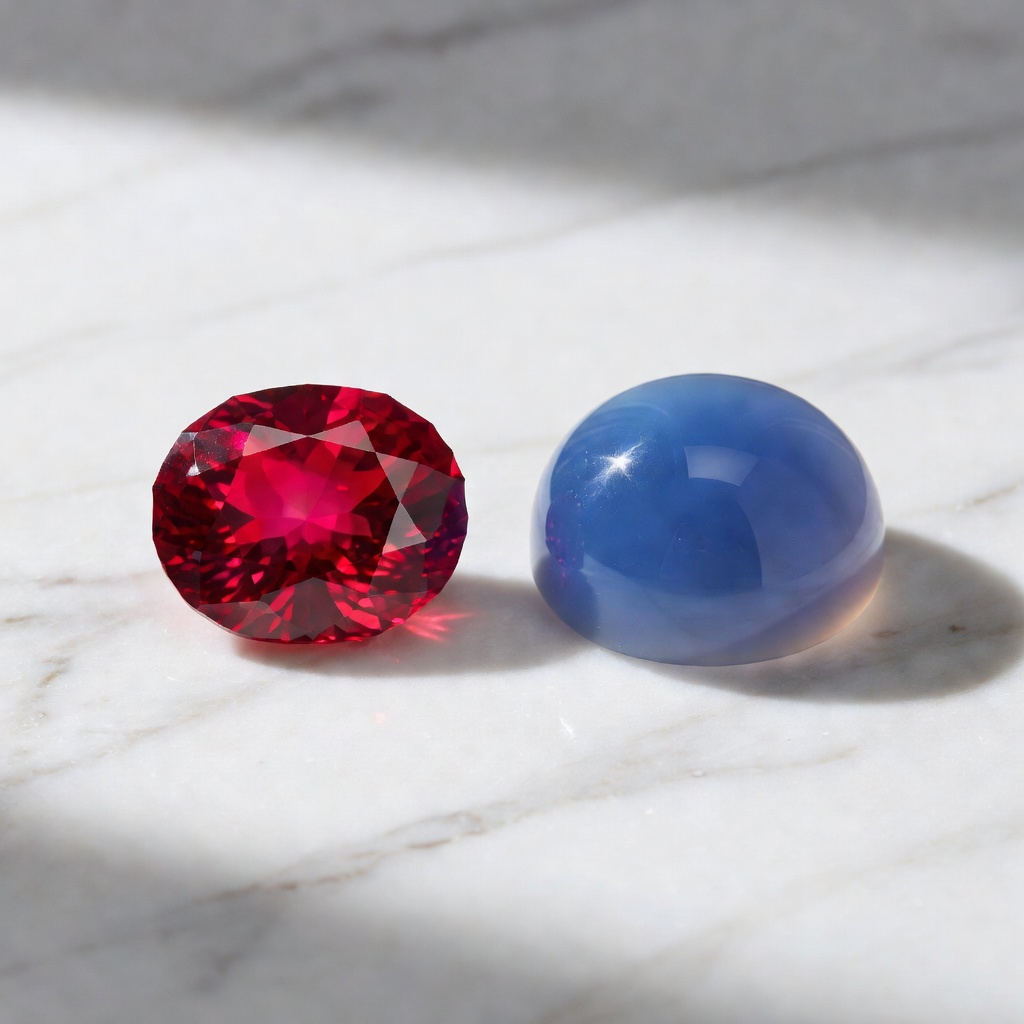
Introduction to Ruby and Chalcedony
Ruby stands as one of the most coveted gemstones in human history, belonging to the corundum mineral family and representing the pinnacle of precious colored stones. This aluminum oxide crystal, valued for its intense red hues derived from chromium trace elements, commands positions in crown jewels and high jewelry collections worldwide. In stark contrast, chalcedony represents a diverse family of cryptocrystalline quartz gemstones that includes varieties like carnelian, chrysoprase, and blue chalcedony, offering accessible beauty without the astronomical price tags associated with precious gems.
When examining Ruby vs Chalcedony, consumers often encounter these stones as red gemstone alternatives, particularly when red chalcedony varieties like carnelian display warm, earthy red tones that superficially resemble ruby's famous crimson. However, these materials occupy fundamentally different positions in the gemstone hierarchy, with ruby classified as precious and chalcedony as semi-precious, creating distinct market positioning despite occasional color overlaps. Understanding these differences helps collectors and jewelry enthusiasts make informed decisions based on durability, investment potential, and aesthetic preferences rather than merely visual similarity.
Chemical Composition and Crystal Structure
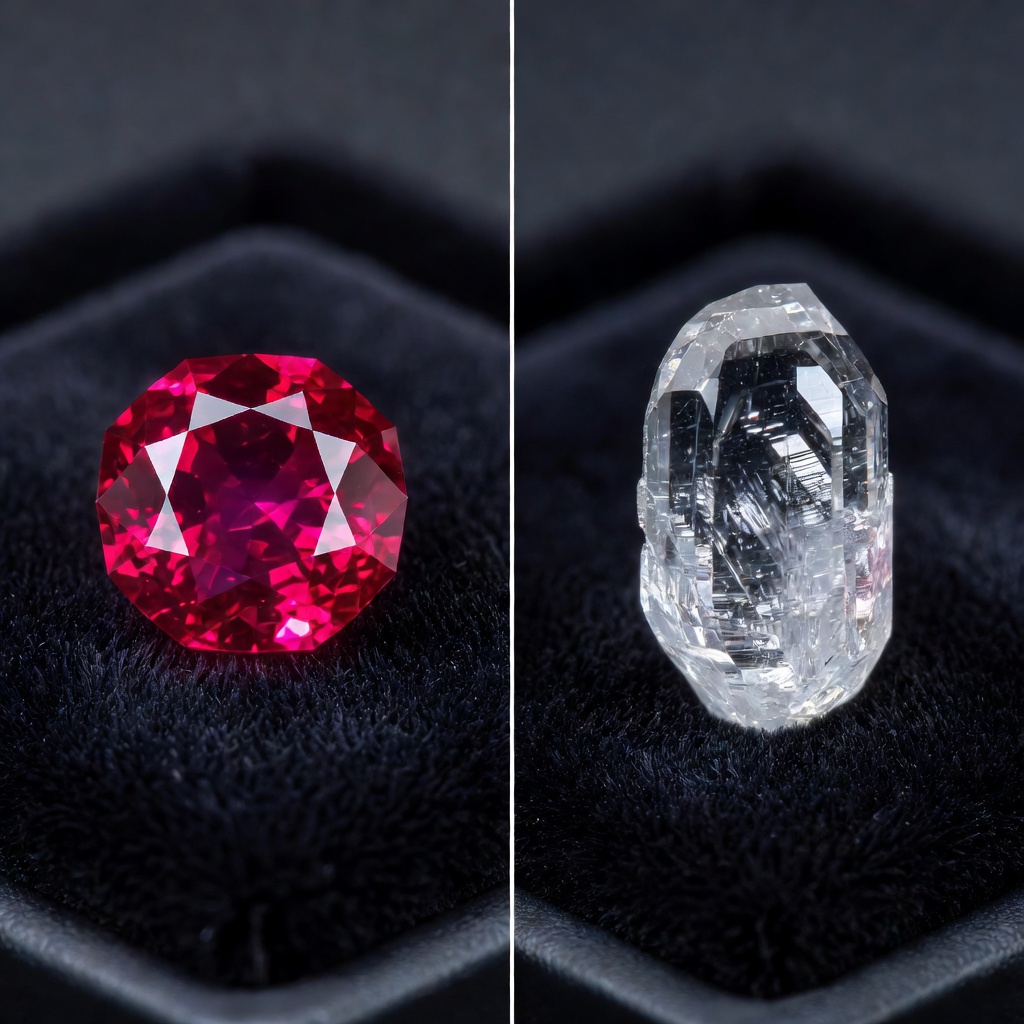
The fundamental distinction between Corundum vs cryptocrystalline quartz begins at the molecular level, where ruby's chemical formula of aluminum oxide (Al₂O₃) incorporates chromium ions that substitute for aluminum to create its signature red color. This trigonal crystal system forms distinct hexagonal prisms and pyramids visible in high-quality rough specimens, with chromium concentrations determining color intensity and fluorescence properties. Ruby typically crystallizes in high-pressure, high-temperature metamorphic environments such as marble belts in Myanmar, Thailand, and Mozambique, where specific geological conditions allow for the slow cooling necessary for large crystal formation.
Chalcedony, conversely, consists of silicon dioxide (SiO₂) arranged in microscopic fibrous crystals that interlock to create a cryptocrystalline structure invisible to the naked eye. Unlike ruby's defined crystalline habit, chalcedony forms in concretionary, nodular, or layered deposits within volcanic rocks and sedimentary formations, often filling cavities and geodes through precipitation from silica-rich waters. This massive, fine-grained structure lacks the visible crystalline faces of corundum, resulting in the smooth, waxy texture characteristic of chalcedony varieties including agate, onyx, and carnelian.
Formation environments dramatically impact the internal structures and potential inclusions found in both stones. Ruby often contains rutile needle inclusions called silk that can enhance value through asterism (star effects) when properly oriented, while chalcedony typically displays banding, moss-like inclusions, or uniform coloration depending on trace minerals present during formation. These structural differences directly influence how lapidaries cut each material, with ruby typically faceted to maximize brilliance and chalcedony often cut en cabochon or carved to showcase color and pattern rather than optical reflection.
Hardness, Durability, and Physical Properties
Gemstone durability comparison reveals dramatic differences between these materials, with Ruby hardness Mohs scale rating of 9 placing it second only to diamond in natural gemstone hardness. This exceptional hardness, combined with excellent toughness due to the absence of cleavage planes, makes ruby an ideal candidate for daily wear jewelry including engagement rings and bracelets that withstand impacts and abrasion. The stone's resistance to scratching ensures that facet edges remain crisp and polished surfaces retain their luster even after decades of continuous wear, explaining ruby's traditional use in heirloom pieces passed through generations.
Chalcedony ranks between 6.5 and 7 on the Mohs hardness scale, providing adequate durability for most jewelry applications but requiring more careful consideration for high-impact pieces. While harder than common household dust (which often contains quartz particles at 7 hardness), chalcedony can still scratch when exposed to harder materials and may show wear patterns on surfaces subjected to constant friction. The material's toughness remains good due to its cryptocrystalline structure, which resists fracturing better than single crystals, though it lacks ruby's ability to maintain pristine surfaces under rough handling conditions.
Practical considerations for daily wear differ significantly between these stones. Ruby's superior hardness allows it to withstand ultrasonic cleaning and steam exposure in professional jewelry settings, while chalcedony requires gentler treatment to prevent surface damage. When designing active lifestyle jewelry, consider that ruby can accompany rock climbers, medical professionals, and mechanics without showing wear, whereas chalcedony suits earrings, pendants, and occasional-wear rings better than daily-wear bands that encounter hard surfaces regularly. Case studies of vintage jewelry demonstrate that 100-year-old ruby rings often show minimal surface wear, while chalcedony pieces from the same era typically display softened edges and surface patina from microscopic scratches accumulated over time.
Color Variations and Visual Characteristics
Ruby's color spectrum ranges from pinkish-red to the coveted pigeon blood red, with the most valuable stones displaying a pure, vivid red with a hint of blue undertone that creates an almost fluorescent appearance under natural daylight. This color results from chromium content combined with the stone's inherent fluorescence, which causes the gem to literally glow from within under certain lighting conditions. Transparency in fine rubies reaches high clarity levels, allowing light to penetrate and reflect off internal facets to create the brilliance that distinguishes precious corundum from lesser red stones.
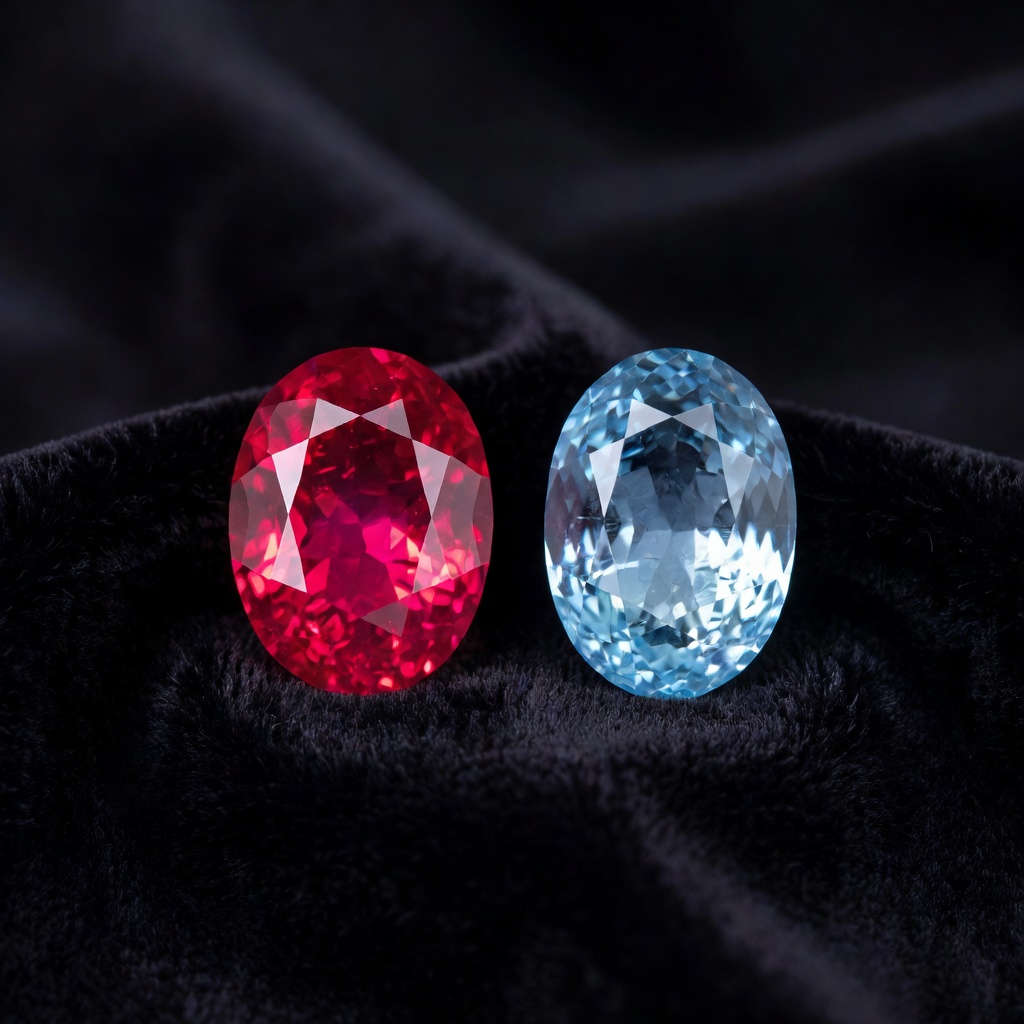
Chalcedony varieties offer a broader color palette than ruby, spanning the entire spectrum from white and blue to green, pink, yellow, and the red tones that create confusion between these materials. Carnelian represents the red chalcedony variety most often compared to ruby, displaying translucent orange-red to brownish-red hues that lack the vivid saturation and transparency of fine corundum. Chrysoprase provides apple-green coloration from nickel content, while blue chalcedony ranges from pale sky blue to deeper tones, and dendritic chalcedony showcases moss-like inclusions that create landscape patterns within the stone.
Visual distinction between ruby and red chalcedony becomes apparent when examining luster and transparency side by side. Ruby exhibits vitreous (glass-like) luster with high refractive index creating bright reflections and potential fire, while chalcedony displays waxy to dull luster with a more subdued, milky appearance due to its microcrystalline structure. When evaluating Red gemstone alternatives, consider that chalcedony typically appears translucent to opaque, often showing cloudy or banded internal features, whereas quality rubies are transparent with potential for eye-clean clarity. Practical identification tips include checking for double refraction (ruby shows this under polariscope testing while chalcedony does not) and observing fluorescence under UV light, where ruby typically glows red while chalcedony remains inert.
Rarity, Value, and Investment Potential
The classification of Precious vs semi-precious gemstones becomes starkly apparent when comparing market values, with ruby maintaining its position as one of the "Big Three" colored stones alongside emerald and sapphire. Fine unheated Burmese rubies over five carats can command prices exceeding $100,000 per carat at auction, while even commercial-quality rubies typically range from $1,000 to $10,000 per carat depending on origin, treatment status, and color intensity. This extreme rarity stems from the specific geological conditions required for chromium-rich corundum formation, with fewer than ten significant mining locations worldwide producing gem-quality material.
Chalcedony remains abundantly available in commercial quantities from diverse global locations including Brazil, Uruguay, India, and the United States, resulting in accessible pricing that rarely exceeds $100 per carat even for fine specimens. While exceptional chalcedony varieties like gem silica (chrysocolla chalcedony) or premium chrysoprase command higher prices reaching $500 per carat, the material generally serves the fashion jewelry and artisan craft markets rather than the investment sector. This abundance makes chalcedony a democratic choice for designers and consumers seeking colorful gemstones without budget constraints, allowing for larger statement pieces and experimental designs that would prove prohibitively expensive with precious stones.
Investment potential diverges sharply between these categories, with untreated, high-color rubies from prestigious mines appreciating consistently over decades as finite supplies dwindle and collector demand increases. Chalcedony, while beautiful and enduring, lacks the scarcity and market infrastructure to function as a store of value or investment vehicle, instead offering immediate aesthetic gratification at accessible price points. When building a jewelry collection, consider allocating significant budget to ruby for pieces intended as legacy assets or inflation hedges, while utilizing chalcedony for trend-forward fashion pieces that may be updated seasonally without financial regret.
Comparative Analysis: Ruby vs Chalcedony Specifications
| Characteristic | Ruby | Chalcedony |
|---|---|---|
| Chemical Composition | Aluminum Oxide (Al₂O₃) with Chromium | Silicon Dioxide (SiO₂) - Cryptocrystalline Quartz |
| Crystal System | Trigonal (Hexagonal) | Trigonal (Cryptocrystalline/Massive) |
| Mohs Hardness | 9 | 6.5 - 7 |
| Specific Gravity | 3.97 - 4.05 | 2.60 - 2.64 |
| Refractive Index | 1.762 - 1.770 | 1.535 - 1.539 |
| Luster | Vitreous to Adamantine | Waxy to Dull |
| Transparency | Transparent to Translucent | Translucent to Opaque |
| Price Range (Per Carat) | $1,000 - $100,000+ | $10 - $100 (up to $500 for rare varieties) |
| Durability for Daily Wear | Excellent - Suitable for Rings | Good - Better for Pendants/Earrings |
| Classification | Precious Gemstone | Semi-Precious Gemstone |
| Common Treatments | Heat Treatment, Fracture Filling | Dyeing, Heating (for carnelian) |
| Primary Sources | Myanmar, Thailand, Mozambique, Sri Lanka | Brazil, Uruguay, India, Madagascar, USA |
Jewelry Applications and Design Versatility
Ruby's exceptional hardness and brilliance make it the premier choice for engagement rings, cocktail rings, and statement pieces designed for daily wear and heirloom transmission. High jewelry houses consistently feature rubies in platinum and 18k gold settings that protect the stone while maximizing light return, often surrounding central rubies with diamond halos to enhance the red color contrast. When designing with ruby, prong settings work effectively due to the material's toughness, though bezel settings provide additional protection for active wearers, and the stone pairs magnificently with white metals for modern aesthetics or yellow gold for vintage-inspired designs.
Chalcedony finds its strongest expression in beads, cabochons, cameos, and carved ornamental pieces that showcase its smooth texture and consistent coloring. The material's affordability allows designers to create bold, oversized statement necklaces and bohemian-style layered bracelets without prohibitive material costs, while its workability makes it ideal for intricate cameo portraits and seal engravings that exploit its layered color banding. Chalcedony varieties like blue chalcedony complement sterling silver and rose gold settings beautifully, creating soft, feminine aesthetics popular in contemporary fashion jewelry and artisan craft markets.
Setting requirements differ significantly based on hardness considerations, with ruby accommodating tension settings, pave work, and intricate prong configurations that would risk chalcedony's softer surfaces. For chalcedony, designers typically employ bezel settings, protective rims, or wire-wrapping techniques that shield edges from direct impact, particularly when creating rings intended for regular wear. Metal pairing recommendations suggest platinum or white gold for ruby to enhance its cool red tones and fiery brilliance, while chalcedony benefits from warmer metals like copper, brass, or rose gold that complement its earthy, subdued color palette and organic aesthetic.
Cultural Significance and Metaphysical Properties
Throughout history, ruby has symbolized passion, power, and protection, with Burmese warriors inserting rubies into their flesh to render themselves invincible in battle, and European royalty adorning crowns with pigeon blood stones to ensure wisdom and prevent misfortune. As the July birthstone, ruby represents the height of summer vitality, love, and courage, traditionally gifted for 15th and 40th wedding anniversaries to celebrate enduring passion. In Vedic astrology, ruby (manikya) associates with the Sun and leadership qualities, believed to enhance vitality, confidence, and the wearer's ability to command respect in professional and personal realms.
Chalcedony carries the historical reputation as the "speaker's stone," with ancient Roman orators wearing carnelian to enhance eloquence and prevent angry or harmful speech, while Native American traditions utilized blue chalcedony for ceremonial speech and spiritual communication. The stone's nurturing energy supposedly absorbs negative vibrations and promotes emotional balance, making it popular among counselors, teachers, and public speakers who require sustained vocal clarity and emotional equilibrium. Unlike ruby's association with the heart and base chakras, chalcedony primarily connects with the throat chakra, facilitating honest expression and compassionate communication.
Modern crystal healing applications distinguish these stones by their energetic intensity, with ruby providing stimulating, activating energy that combats exhaustion and apathy, while chalcedony offers gentler, stabilizing vibrations that soothe anxiety and promote peaceful sleep. Practical applications include placing ruby under the pillow to ward off nightmares and enhance dream recall, or wearing chalcedony during difficult conversations to maintain calm, non-reactive communication. When selecting based on metaphysical properties, choose ruby when seeking motivation, romantic passion, or physical vitality, and select chalcedony for emotional healing, improved communication skills, or stress reduction during transitional life phases.
Care, Cleaning, and Maintenance Requirements
Ruby's position on the Mohs scale allows for relatively aggressive cleaning methods that would damage softer stones, with most high-quality rubies safely tolerating ultrasonic cleaners and steam cleaning systems used by professional jewelers. Home maintenance requires only warm water, mild dish soap, and a soft brush to remove accumulated oils and debris from behind the stone, though owners should avoid harsh chemicals like chlorine bleach or hydrofluoric acid that can damage even this durable gem. When storing ruby jewelry, separate pieces prevent scratching other gemstones, though ruby itself requires minimal protective consideration beyond avoiding sharp impacts that might chip girdle edges or pointed corners.
Chalcedony demands gentler care protocols due to its lower hardness and potential porosity in some varieties, requiring cleaning with soft cloths dampened with mild soapy water rather than ultrasonic vibrations that might cause fracturing in included specimens. The material's sensitivity to heat and chemicals necessitates removal before swimming in chlorinated pools, using household cleaners, or engaging in activities involving rapid temperature changes that could cause thermal shock. Gemstone durability comparison reveals that chalcedony requires more frequent re-polishing to maintain surface luster, as daily wear gradually creates microscopic scratches that dull the waxy shine characteristic of fresh material.
Storage recommendations emphasize strict separation between these stones, as ruby will easily scratch chalcedony if stored together in jewelry boxes, potentially ruining cabochon surfaces or carved details accumulated over years of careful wear. Invest in soft cloth pouches or compartmentalized jewelry boxes with individual slots to prevent contact between different hardness materials, and consider having chalcedony pieces professionally polished every few years to restore their original silky luster. For travelers, pack chalcedony in rigid, padded containers separate from harder jewelry items, while ruby requires only basic protection against sharp impacts that might occur during transit.
Making Your Choice: Which Gemstone Fits Your Needs
Budget considerations often serve as the primary differentiator in the Ruby vs Chalcedony decision matrix, with entry-level ruby jewelry starting where premium chalcedony pieces end in terms of pricing. For consumers with $500 to spend, chalcedony offers the opportunity to acquire substantial, designer-quality statement pieces or custom-carved art objects, while the same budget might only secure a small, commercial-quality ruby suitable for accent stones rather than centerpieces. Evaluate whether you prioritize size and artistic presence (chalcedony) or rarity and investment retention (ruby) when allocating your gemstone budget.
Lifestyle factors should heavily influence material selection, particularly regarding daily wear patterns and occupational hazards. Medical professionals, fitness enthusiasts, and tradespeople who cannot remove jewelry during work benefit from ruby's scratch resistance, while those with office-based, low-impact lifestyles can safely enjoy chalcedony rings without excessive wear concerns. Consider your wardrobe coordination needs as well: ruby's intense red provides dramatic contrast against neutral professional attire and evening wear, while chalcedony's softer palette of blues, greens, and earth tones complements casual bohemian styles and daytime business casual environments more harmoniously.
Personal meaning and symbolism priorities may override practical considerations for many buyers, with those seeking stones representing passionate love, July birth connections, or career advancement potentially gravitating toward ruby despite higher costs. Conversely, individuals prioritizing communication skills, emotional healing, or artistic expression might find chalcedony's metaphysical associations more aligned with their spiritual needs. Case study examples include the executive choosing a ruby signet ring to project authority and success, versus the yoga instructor selecting blue chalcedony mala beads to enhance teaching clarity and student connection, demonstrating how lifestyle and personal mission inform optimal gemstone selection.
Final Verdict on Ruby vs Chalcedony
When evaluating Ruby vs Chalcedony for your collection or next jewelry purchase, the decision ultimately hinges on balancing durability requirements, budget constraints, and aesthetic preferences against long-term value retention goals. Choose ruby when seeking a legacy piece capable of daily wear across generations, appreciating value, and the unmistakable prestige associated with precious gemstones, particularly for significant life events like engagements, anniversaries, or career milestones. Opt for chalcedony when desiring artistic versatility, affordable access to large colorful stones, or metaphysical properties supporting communication and emotional balance, especially for fashion-forward pieces that may evolve with changing style preferences.
First-time gemstone buyers should consider starting with high-quality chalcedony varieties to develop appreciation for gemstone care and jewelry wearing habits before investing in significant rubies, allowing you to learn maintenance routines without risking substantial capital. Future market trends suggest continued appreciation for untreated, ethically sourced rubies from emerging mines in Mozambique and Madagascar, while chalcedony maintains steady popularity in the sustainable jewelry movement due to its abundant supply and minimal environmental impact compared to rare precious stone mining. Regardless of your choice, both stones offer genuine beauty and historical significance, with ruby providing timeless luxury and chalcedony delivering accessible, versatile color for contemporary jewelry enthusiasts.
Frequently Asked Questions
Which is more expensive, ruby or chalcedony?
Ruby is significantly more expensive than chalcedony. High-quality rubies can cost thousands to tens of thousands per carat, while chalcedony typically ranges from $10 to $100 per carat depending on variety and quality.
Is ruby harder than chalcedony?
Yes, ruby is much harder than chalcedony. Ruby ranks 9 on the Mohs hardness scale, while chalcedony ranks 6.5-7. This makes ruby more resistant to scratching and suitable for daily wear rings.
Can chalcedony look like ruby?
Red varieties of chalcedony, specifically carnelian and red jasper, can resemble ruby in color but lack ruby's transparency, fluorescence, and vitreous luster. Chalcedony is typically translucent or opaque, whereas fine rubies are transparent.
What is chalcedony used for in jewelry?
Chalcedony is commonly used for beads, cabochons, cameos, and carved ornamental pieces. It's popular in bohemian and vintage-style jewelry, as well as affordable fashion jewelry due to its versatility and range of colors.
Are both rubies and chalcedony considered birthstones?
Only ruby is an official birthstone (July). While chalcedony is not a traditional birthstone, specific varieties like chrysoprase or carnelian are sometimes used as alternative or secondary birthstones in modern crystal healing practices.
How can I tell ruby and chalcedony apart?
You can distinguish them by hardness (ruby scratches glass easily, chalcedony does not), luster (ruby has glass-like shine, chalcedony has waxy luster), and transparency. Additionally, rubies often show fluorescence under UV light, while chalcedony does not.
Which is better for daily wear rings?
Ruby is superior for daily wear rings due to its 9/10 hardness and excellent toughness. Chalcedony, while suitable for occasional wear, is more prone to scratching and chipping with constant daily use.
Do rubies and chalcedony have different meanings?
Yes, ruby symbolizes passion, vitality, and protection, often associated with love and courage. Chalcedony represents calmness, communication, and emotional balance, known as the 'speaker's stone' for enhancing eloquence and preventing negative speech.