Introduction to Ruby and Cat's Eye Chrysoberyl
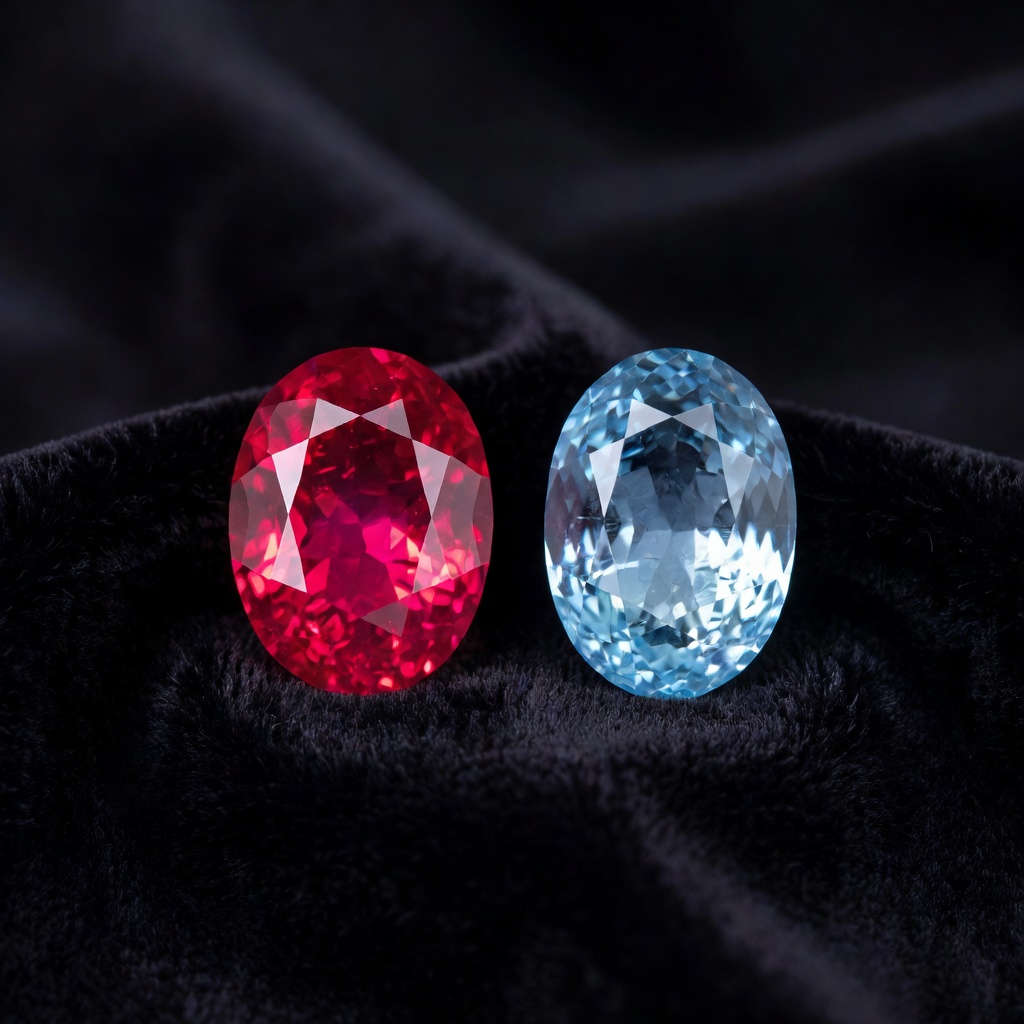
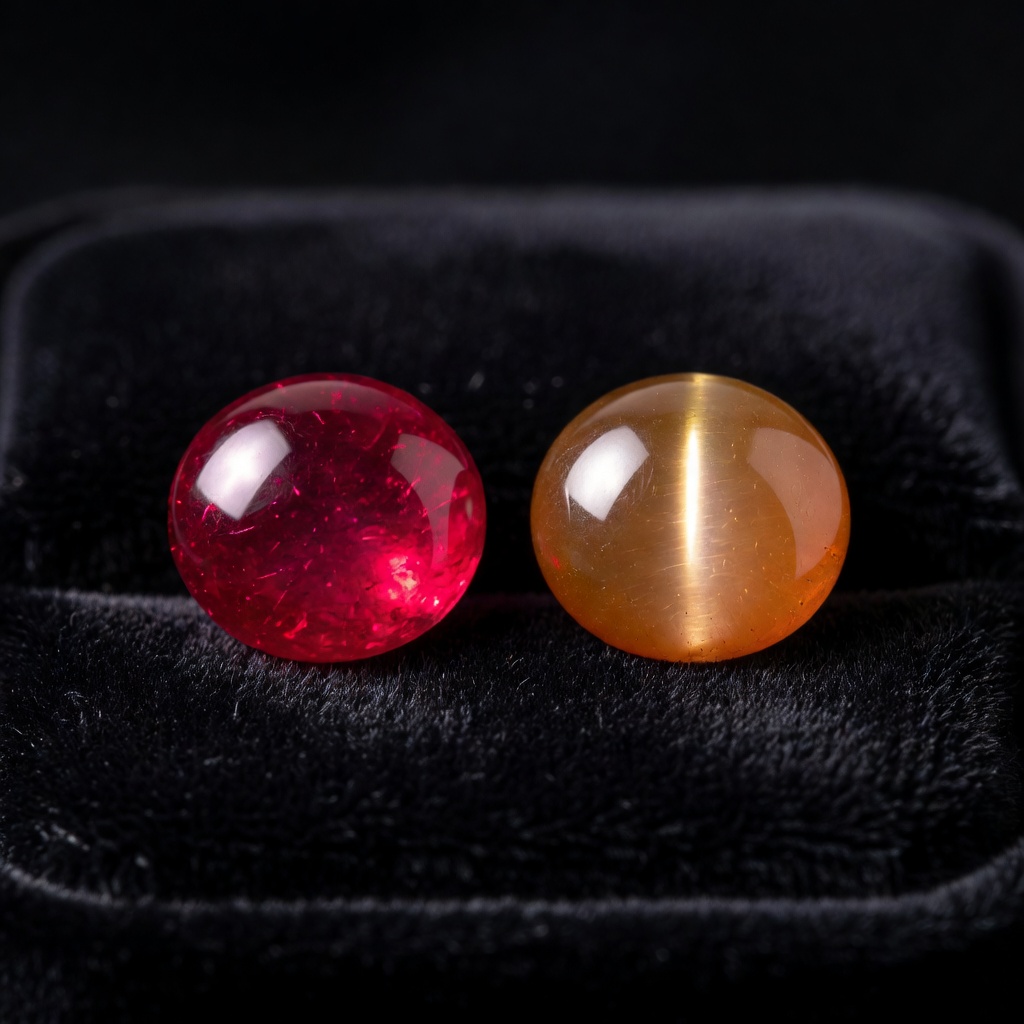
When serious collectors evaluate high-value colored gemstones, the comparison between Ruby vs Cat's Eye Chrysoberyl frequently emerges as a fascinating study in contrasts. Ruby, the legendary red variety of corundum, stands as one of the prestigious "Big Three" colored gemstones alongside sapphire and emerald, commanding attention with its fiery crimson intensity and regal associations. In opposition, Cat's Eye Chrysoberyl—known mineralogically as cymophane—represents the pinnacle of chatoyant gemstones, captivating viewers with a mesmerizing moving line that seems to float across its surface like a beacon in honey-colored depths. Both stones share deep historical connections to royalty and protective talismans, yet they offer distinctly different optical phenomena that appeal to varying aesthetic sensibilities and investment strategies.
Collectors often find themselves weighing these precious gemstones against one another because both occupy the upper echelons of the fine jewelry market, frequently appearing in important estate collections and high-end auction catalogs. While ruby dazzles with saturated body color and fluorescence under daylight, chrysoberyl's value lies in its dramatic light reflection and the rarity of perfect chatoyancy. Understanding the nuanced differences between these two treasures requires examining their geological origins, physical durability, cultural significance, and market positioning to make an informed acquisition decision.
Geological Origins and Formation Differences
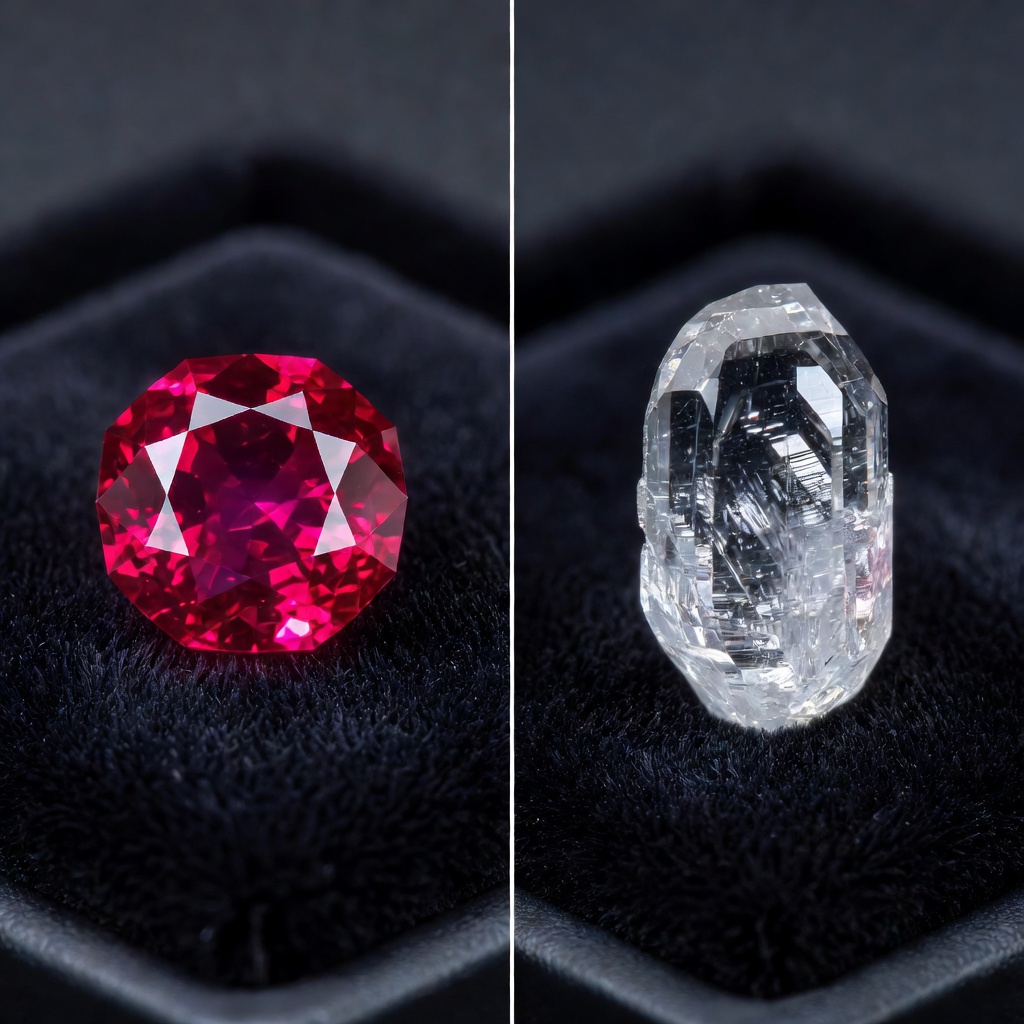
The journey from raw mineral to finished gemstone differs dramatically between these two precious stones, beginning with fundamentally distinct geological environments. Rubies crystallize under intense heat and pressure within high-grade metamorphic rocks, specifically forming in low-silica marble deposits or alkali basalts where aluminum-rich fluids interact with chromium-bearing minerals. Myanmar's legendary Mogok Stone Tract produces the world's most coveted pigeon blood rubies through this marble-hosted formation, creating crystals with exceptional fluorescence and saturation due to low iron content. Conversely, Cat's Eye Chrysoberyl forms in pegmatite veins and alluvial gravels where beryllium-rich fluids permeate aluminum-rich host rocks, resulting in the unique beryllium aluminum oxide composition that defines this species.
Chemically, these gemstones represent entirely different mineral classes despite their similar hardness values. Ruby consists of aluminum oxide (Al₂O₃) with chromium substituting for aluminum to create the red coloration, while chrysoberyl comprises beryllium aluminum oxide (BeAl₂O₄), making it significantly rarer in terms of elemental abundance. Sri Lanka serves as the primary source for premium Cat's Eye Chrysoberyl value, where stream gravels yield water-worn pebbles displaying the sharp, silvery eyes that collectors prize. Both Myanmar and Sri Lanka have supplied these gemstones to royal courts for over two millennia, yet their formation processes ensure that each deposit yields stones with distinctive inclusion patterns and color profiles that experienced gemologists use for origin determination.
Physical Properties and Durability Face-Off
Durability considerations play a crucial role when selecting a gemstone for daily wear, and both stones offer impressive resistance to scratching while presenting different vulnerabilities. Ruby gemstone hardness registers at 9 on the Mohs scale, second only to diamond, making it extraordinarily resistant to surface abrasion and suitable for heirloom-quality rings that withstand decades of continuous wear. However, ruby possesses distinct cleavage planes that can cause the stone to fracture if struck sharply against a hard surface, particularly along the basal pinacoid, requiring protective settings for active lifestyles. Cat's Eye Chrysoberyl measures 8.5 on the Mohs scale, slightly softer than ruby but lacking any cleavage whatsoever, granting it superior toughness and resistance to breakage from impact or pressure.
Specific gravity differences also affect how these stones feel when worn; ruby's density of 3.97-4.05 creates a perceptible heft compared to chrysoberyl's 3.70-3.75 range, making similarly sized rubies feel substantially weightier in jewelry settings. The refractive indices diverge significantly as well, with ruby ranging from 1.76-1.77 and chrysoberyl displaying higher values of 1.74-1.75, though both exhibit excellent brilliance when properly cut. For individuals seeking Chatoyancy effect gemstones for daily wear rings, chrysoberyl often presents the safer choice despite its marginally lower hardness, as its absence of cleavage planes prevents the catastrophic fractures that can ruin faceted rubies during accidental impacts against door frames or countertops.
Visual Characteristics: Pigeon's Blood vs Milk-and-Honey
The aesthetic distinction between Red ruby vs cymophane centers on fundamentally different approaches to beauty, one celebrating saturated body color while the other emphasizes optical phenomena. Fine rubies display a color spectrum ranging from pinkish-red to the legendary "pigeon's blood" red—a vivid, slightly bluish-red hue that appears to glow from within due to chromium-induced fluorescence under daylight. This fluorescence creates an internal fire that seems to ignite the stone, particularly in Burmese specimens, making color the primary value determinant. In contrast, Cat's Eye Chrysoberyl derives its value not from body color alone but from the sharpness, centrality, and mobility of the chatoyant band, with the most valuable specimens displaying the "milk-and-honey" effect where one side appears honey-colored while the other shows a milky, opalescent sheen.
Cutting styles diverge significantly between these gemstones, with rubies typically receiving faceted cuts—round brilliants, ovals, cushions, or emeralds—to maximize light return and color saturation. Cabochon cutting remains mandatory for chrysoberyl to display chatoyancy, requiring the cutter to orient the stone's vertical axis perpendicular to the parallel needle inclusions that create the eye effect. Transparency grading also differs; transparent rubies command premium prices, while translucent chrysoberyls often prove more valuable than transparent specimens because the slight opacity enhances the visibility of the chatoyant line. When evaluating Chatoyancy effect gemstones, collectors should seek stones where the eye remains sharp and centered when viewed from various angles, moving smoothly across the surface as the stone rotates under light sources.
Rarity, Quality Grading, and Market Valuation
Understanding the precious gemstone comparison between ruby and chrysoberyl requires examining their distinct grading systems and scarcity factors within the current market. Unheated Burmese rubies from the Mogok region consistently achieve the highest prices per carat in the colored stone market, with exceptional specimens exceeding $1 million per carat at major auction houses like Christie's and Sotheby's. However, fine "milk and honey" Cat's Eye Chrysoberyl with a sharp, centered eye and high transparency can command $15,000 to $30,000 per carat, making it more expensive than commercial-grade rubies that might sell for $1,000-$5,000 per carat. The rarity of top-quality chrysoberyl often surprises collectors; less than one percent of rough material yields gem-quality cat's eyes with the perfect alignment of inclusions necessary for sharp chatoyancy.
Quality grading for ruby follows the traditional 4Cs—color, clarity, cut, and carat weight—with color saturation and origin documentation carrying disproportionate weight in valuation. Chrysoberyl grading prioritizes the sharpness of the eye line, body color (honey-yellow to greenish-yellow preferred), transparency, and the distinctness of the "opening and closing" effect when the stone rotates. Certification from laboratories such as GIA, GRS, or AGL proves essential for both stones, with ruby reports emphasizing heat treatment status and origin country, while chrysoberyl certificates document the natural versus synthetic origin and the quality of chatoyancy. Investors should note that untreated rubies appreciate more consistently due to established demand, while exceptional chrysoberyls offer higher percentage returns within niche collecting circles but require more specialized knowledge to liquidate profitably.
| Characteristic | Ruby | Cat's Eye Chrysoberyl |
|---|---|---|
| Chemical Composition | Aluminum Oxide (Al₂O₃) with Cr | Beryllium Aluminum Oxide (BeAl₂O₄) |
| Mohs Hardness | 9 | 8.5 |
| Toughness | Good to Excellent (with cleavage planes) | Excellent (no cleavage) |
| Color Range | Pinkish-red to Pigeon's Blood Red | Honey-yellow, Greenish-yellow, Brownish-green |
| Optical Phenomena | Fluorescence (glow under UV/daylight) | Chatoyancy (moving eye line) |
| Cut Styles | Faceted (Round, Oval, Cushion, Emerald) | Cabochon (domed, eye perpendicular to base) |
| Price Range (High Quality) | $10,000 - $1,000,000+ per carat | $3,000 - $30,000+ per carat |
| Astrological Association | Sun (Leadership, Vitality) | Ketu (Spiritual liberation, Protection) |
| Recommended Setting | Prong or Bezel (protects cleavage planes) | Bezel or Flush (protects cabochon dome) |
Cultural Significance and Metaphysical Properties
Throughout history, both gemstones have carried profound symbolic weight, though their metaphysical associations diverge significantly across cultural traditions. Ruby holds the title "King of Gems" in Sanskrit texts, representing the Sun's vital force, passion, courage, and the blood of life itself. In Vedic astrology, ruby (Manikya) strengthens the wearer's connection to solar energy, enhancing leadership capabilities, self-confidence, and physical vitality, making it particularly beneficial for Leo sun signs or those experiencing weak Sun placements in their natal charts. The Cat's eye chrysoberyl meaning derives from its association with Ketu, the shadow planet representing the South Node of the moon, embodying themes of spiritual liberation, psychic protection, and detachment from material desires.
Birthstone connections favor ruby as the official July birthstone, while chrysoberyl serves as an alternative birthstone for June alongside pearl and alexandrite. Chakra healing practitioners assign ruby to the Heart chakra, where its red frequency stimulates love, passion, and emotional courage, whereas Cat's Eye Chrysoberyl resonates with the Third Eye and Solar Plexus chakras, enhancing intuition and personal power while offering protection against negative energies. Case studies from gem therapy practitioners suggest that ruby proves most effective for individuals seeking to overcome lethargy or depression, while chrysoberyl assists those navigating spiritual transitions or seeking protection during travel. When selecting between these stones for metaphysical purposes, practitioners recommend ruby for manifesting worldly success and chrysoberyl for achieving spiritual insight and karmic balance.
Jewelry Design Applications and Setting Considerations
The divergent cutting requirements of these gemstones dictate distinct approaches to jewelry design and metal selection. Rubies excel in versatile settings ranging from classic solitaire engagement rings to elaborate Art Deco tennis bracelets and cascading statement necklaces, where faceted cuts maximize brilliance and color dispersion. Platinum and white gold pair exceptionally well with ruby, enhancing the stone's cool bluish-red tones, though yellow gold remains traditional for Burmese specimens to complement their warmer fluorescence. Cat's Eye Chrysoberyl traditionally appears in masculine jewelry designs, particularly heavy signet rings, cufflinks, and substantial pendants that emphasize the stone's mysterious, understated elegance rather than flashy brilliance.
Setting styles must accommodate each stone's physical vulnerabilities; faceted rubies require prong settings that protect the girdle while allowing maximum light entry, though bezel settings prove safer for daily wear rings to prevent cleavage fractures. Chrysoberyl cabochons demand protective bezel or flush settings that shield the domed surface from scratches, as the curved top proves more susceptible to abrasion than faceted surfaces despite the stone's hardness. Design tip: When creating mixed-gemstone jewelry, avoid storing ruby and chrysoberyl pieces together unprotected, as ruby's superior hardness can scratch chrysoberyl over time. For active professionals, chrysoberyl set in heavy yellow gold bezels offers practical durability, while ruby enthusiasts should consider halo settings that provide both protection and enhanced visual impact through contrasting diamond accents.
Investment Potential and Collector's Market
The investment landscape for these precious gemstones reveals different risk profiles and liquidity patterns that sophisticated collectors must consider. Untreated Mogok rubies have established an unparalleled track record at auction, with the "Sunrise Ruby" selling for over $1 million per carat and consistently appreciating 10-15% annually for museum-quality specimens. This established market provides relatively easy liquidation through major auction houses or high-end dealers, with origin reports from Myanmar significantly enhancing value retention. Conversely, Chrysoberyl cat's eye value has experienced exponential growth in Asian investment markets, particularly among Indian and Chinese collectors who recognize its astrological significance and extreme rarity, though the market remains more specialized and requires expert connections to achieve optimal sale prices.
Documentation requirements differ substantially between these investments; ruby portfolios demand origin reports confirming Burmese or Mozambique sources alongside heat treatment disclosure, while chrysoberyl investments benefit from inclusion photography that verifies the natural origin of the chatoyant inclusions. Liquidity concerns favor ruby for investors seeking quick capital conversion, as the stone enjoys universal recognition among jewelry buyers. However, fine cat's eye chrysoberyl offers scarcity premiums that can exceed ruby percentage gains in specific collector circles, particularly for stones over 10 carats with perfect eyes. Practical advice: Diversify colored stone investments by allocating 70% to established ruby markets and 30% to high-end chrysoberyl, balancing liquidity with scarcity-driven appreciation potential.
Care, Maintenance, and Longevity
Preserving the beauty of these valuable gemstones requires understanding their specific sensitivities to cleaning methods and environmental factors. Untreated rubies tolerate ultrasonic cleaning and steam cleaning well due to their exceptional hardness and lack of filling materials, though heat-treated or flux-healed stones may suffer damage from high-frequency vibrations that expand existing fractures. Ruby gemstone hardness provides excellent scratch resistance, yet owners should avoid exposing ruby jewelry to harsh chemicals like chlorine or hydrofluoric acid, which can etch the surface or dissolve filler materials in treated stones. Professional inspection every 12-18 months remains essential for high-value ruby pieces to check for loose prongs or developing fractures along cleavage planes.
Cat's Eye Chrysoberyl requires gentler care protocols despite its toughness; warm soapy water with a soft brush remains the safest cleaning method to preserve the surface polish of the cabochon cut. Heat sensitivity affects both stones, with prolonged exposure to high temperatures potentially altering color or causing thermal shock fractures, though chrysoberyl demonstrates slightly better heat tolerance than ruby. Storage practices should prevent harder stones like diamond, sapphire, or ruby from contacting chrysoberyl, as these can scratch the slightly softer surface over time. Store each piece separately in soft cloth pouches, and remove rings before engaging in manual labor or sports to prevent impact damage that could shatter ruby or dislodge chrysoberyl from protective bezel settings.
Final Verdict: Choosing Between Ruby and Cat's Eye Chrysoberyl
Ultimately, the decision between Ruby vs Cat's Eye Chrysoberyl depends on aligning gemstone characteristics with personal lifestyle, aesthetic preferences, and spiritual needs. Active individuals or those working with their hands may find chrysoberyl's superior toughness and absence of cleavage more practical for daily wear, despite its slightly lower hardness rating. Aesthetic preference plays a decisive role: those drawn to fiery, saturated color and brilliant sparkle will gravitate toward ruby's incomparable red fluorescence, while connoisseurs of optical phenomena and subtle elegance will prefer chrysoberyl's mesmerizing moving eye and honeyed depths.
Astrological requirements may override purely aesthetic considerations for some buyers; Vedic practitioners strictly prescribe ruby for Sun-related challenges and chrysoberyl for Ketu periods, with specific carat weights and metal recommendations based on individual charts. Budget optimization strategies suggest that maximum beauty in the ruby category requires substantial investment in untreated Burmese material, while exceptional chrysoberyl beauty becomes accessible at lower price points, offering better value for collectors with moderate budgets. Whether choosing the passionate fire of ruby or the mystical protection of chrysoberyl, both gemstones represent timeless treasures that reward informed acquisition with decades of wearing pleasure and potential appreciation.
Frequently Asked Questions
Which is more expensive, ruby or cat's eye chrysoberyl?
Fine untreated Burmese rubies typically command higher prices per carat than cat's eye chrysoberyl, often exceeding $1 million per carat for exceptional specimens. However, high-quality 'milk and honey' cat's eye chrysoberyl with a sharp, centered eye can be more expensive than commercial-grade rubies, sometimes reaching $15,000+ per carat for top-tier stones.
Can cat's eye chrysoberyl display red colors like ruby?
No, cat's eye chrysoberyl cannot display true red colors like ruby. Chrysoberyl occurs in yellowish-green, honey-yellow, brownish-green, and alexandrite varieties (color-change), but never in ruby's characteristic red. The 'milk and honey' effect refers to the contrast between the stone's body color and the milky eye line, not red hues.
Is cat's eye chrysoberyl durable enough for engagement rings?
Yes, with a Mohs hardness of 8.5 and excellent toughness (no cleavage planes), cat's eye chrysoberyl is durable enough for daily wear in engagement rings. However, because it's typically cut as a cabochon rather than faceted, it requires protective bezel settings to prevent scratching the dome surface, unlike faceted rubies which can use prong settings.
How can I tell if a cat's eye chrysoberyl is genuine versus synthetic?
Natural cat's eye chrysoberyl displays a sharp, single moving line that appears to open and close when rotated (the 'opening and closing eye' effect). Synthetics often show poorer chatoyancy or bubble inclusions. Always request certification from reputable labs like GIA or AGL, as natural inclusions (hollow tubes creating the eye) differ from flux-grown synthetic patterns.
What causes the moving line effect in cat's eye chrysoberyl?
The chatoyant 'eye' in chrysoberyl is caused by the reflection of light from parallel hollow tubes or needle-like inclusions of rutile oriented along the crystal's vertical axis. When cut en cabochon perpendicular to these inclusions, light reflects as a single bright band that appears to move across the surface as the stone is rotated, creating the distinctive 'cat's eye' phenomenon.
Can ruby and cat's eye chrysoberyl be worn together?
From a fashion perspective, the fiery red of ruby contrasts beautifully with the honey tones of chrysoberyl. However, in Vedic astrology, Ruby represents the Sun while Cat's Eye represents Ketu (the South Node), which are considered incompatible energies. Astrologers typically advise against wearing them together, though Western gemology places no restrictions on combining these stones.
Which gemstone is better for astrological or healing purposes?
For Vedic astrology, Ruby is recommended for Leo sun signs and those seeking leadership, vitality, and confidence (Sun energy). Cat's Eye Chrysoberyl is prescribed for those experiencing Ketu Mahadasha, offering protection, spiritual growth, and detachment from material desires. The 'better' choice depends entirely on the wearer's astrological chart and intentions.
Why is high-quality cat's eye chrysoberyl considered rare?
Fine cat's eye chrysoberyl is rare because it requires specific geological conditions where parallel needle inclusions align perfectly to create a sharp, single eye line. The stone must also display the prized 'milk and honey' effect (translucent honey body with milky eye) and be cut exactly perpendicular to the inclusions. Less than 1% of chrysoberyl rough produces gem-quality cat's eyes.