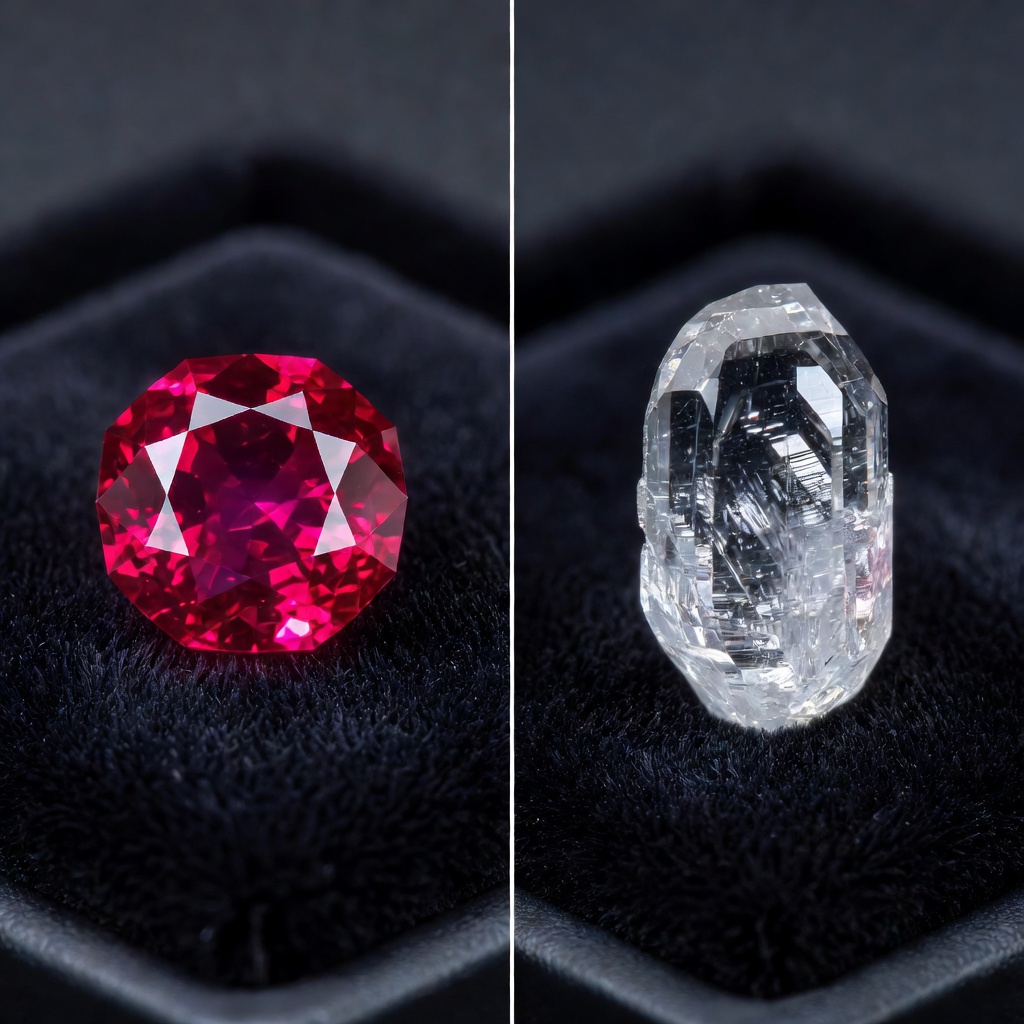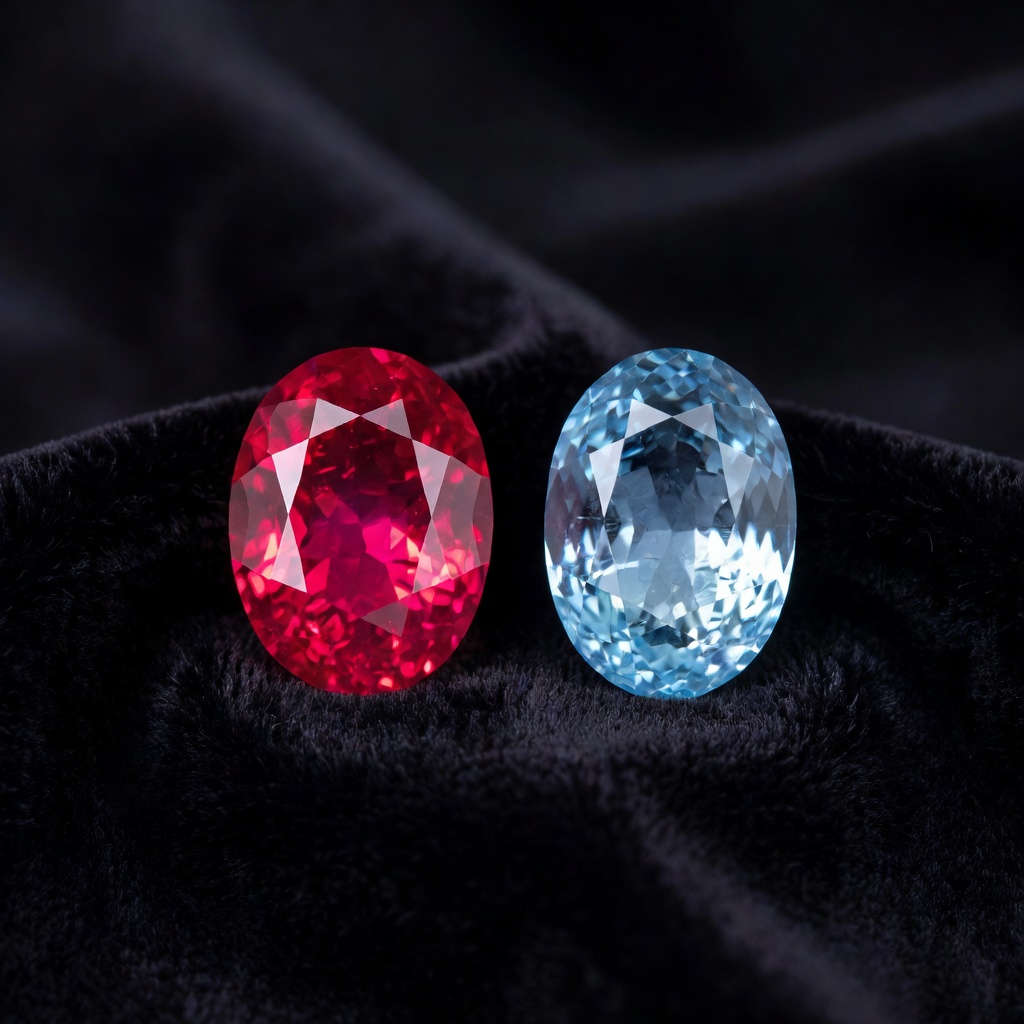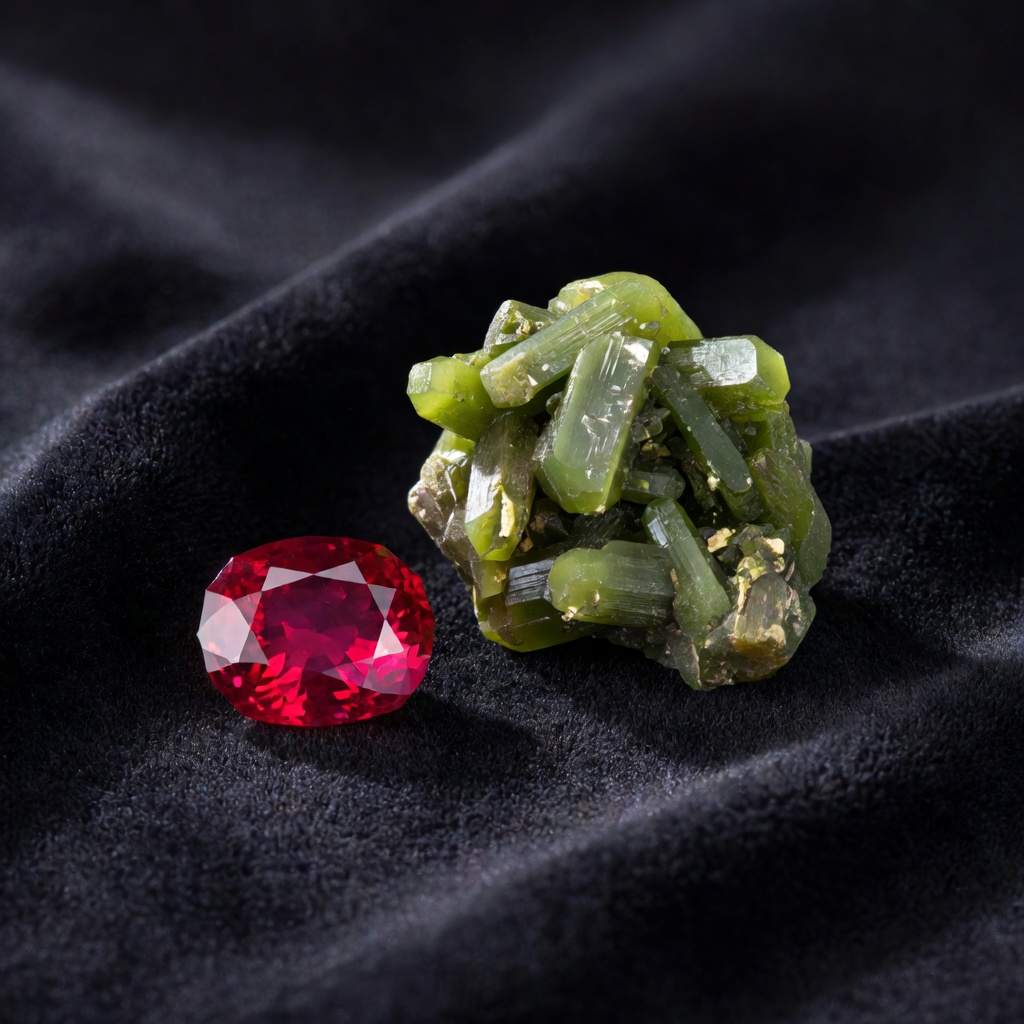
Understanding the Red Gemstone Spectrum: An Introduction to Ruby vs Carnelian
When selecting a red gemstone for fine jewelry or crystal healing practices, collectors and consumers frequently encounter two compelling yet vastly different options: Ruby and Carnelian. While both stones display captivating red hues that have attracted humans for millennia, they occupy distinctly different positions within the gemstone hierarchy. Ruby stands as one of the "Big Four" precious gemstones alongside Diamond, Sapphire, and Emerald, commanding significant investment value and prestige, while Carnelian remains an accessible semi-precious stone beloved for its warm, earthy translucency. Understanding the fundamental differences between these minerals requires examining their chemical compositions, formation processes, and market valuations to make an informed decision that aligns with your aesthetic preferences, budget constraints, and lifestyle requirements.
The red gemstone comparison between these two minerals reveals more than just price disparities; it illuminates the vast spectrum of geological diversity within the color red itself. Rubies derive their intense coloration from chromium inclusions within the corundum family, resulting in the legendary "pigeon blood" red that fluoresces vibrantly under natural light. Conversely, Carnelian obtains its characteristic orange-red to brownish-red tones from iron oxide impurities within the chalcedony quartz family, displaying a waxy luster and translucent quality distinctly different from Ruby's vitreous brilliance. These optical and structural differences make each stone suitable for specific jewelry applications, metaphysical practices, and investment strategies that cater to different consumer needs and expectations.
Physical Properties: Hardness, Durability, and Composition
The most significant technical distinction in the Ruby hardness vs Carnelian debate lies in their positions on the Mohs scale of mineral hardness, which directly impacts their suitability for daily wear and long-term durability. Ruby, belonging to the Corundum family (aluminum oxide), ranks an impressive 9 on the Mohs scale, making it second only to Diamond in hardness and exceptionally resistant to scratching, chipping, and abrasion. This exceptional durability allows Ruby to maintain its polish and structural integrity even after decades of daily wear in engagement rings and bracelets. Carnelian, classified as a variety of Chalcedony (microcrystalline quartz/silicon dioxide), ranks between 6.5 and 7 on the Mohs scale, making it significantly softer and more susceptible to surface scratches from everyday dust particles, which often contain quartz particles of similar hardness.
Beyond hardness, the Corundum vs Chalcedony comparison reveals fundamental differences in crystal structure and optical properties that affect both identification and value assessment. Ruby crystallizes in the trigonal crystal system, forming hexagonal prisms and tabular crystals that can exhibit asterism (the star effect) when cut as cabochons, while Carnelian forms in the hexagonal crystal system as massive, cryptocrystalline aggregates without defined crystal faces. Specific gravity measurements provide another definitive identification method: Ruby possesses a high specific gravity of approximately 4.0, feeling noticeably heavy for its size, whereas Carnelian's specific gravity of 2.6 feels significantly lighter. Refractive index testing further distinguishes these stones, with Ruby measuring 1.76-1.77 (birefringence) compared to Carnelian's lower 1.53-1.54, resulting in Ruby's superior brilliance and "fire" when faceted.
Practical gemological testing provides definitive identification between these stones when visual inspection proves inconclusive. A professional gemologist utilizing a refractometer can immediately distinguish Ruby from Carnelian based on refractive index readings, while specific gravity testing using a hydrostatic balance confirms density differences. For consumers without laboratory equipment, the scratch test offers a crude but effective differentiation method: Ruby will easily scratch glass and steel without damage, while Carnelian may show slight abrasion when dragged across a steel file. However, professional identification through certified gemological laboratories remains essential for high-value purchases, as treatments and synthetics complicate visual identification.
Color Analysis: From Pigeon Blood to Sunset Orange
Red stone identification relies heavily on understanding the subtle yet significant color variations and optical phenomena that distinguish Ruby from Carnelian under various lighting conditions. Ruby displays a spectrum ranging from pinkish-red to the highly coveted "pigeon blood" red—a vivid, saturated pure red with slight blue undertones that command premium prices in the international market. This distinctive color results from chromium content combined with the absence of iron, which would otherwise dull the fluorescence. Under natural daylight, high-quality Rubies exhibit strong red fluorescence that appears to glow from within, creating an eye-catching brilliance that Carnelian cannot replicate due to its different chemical composition and crystal structure.
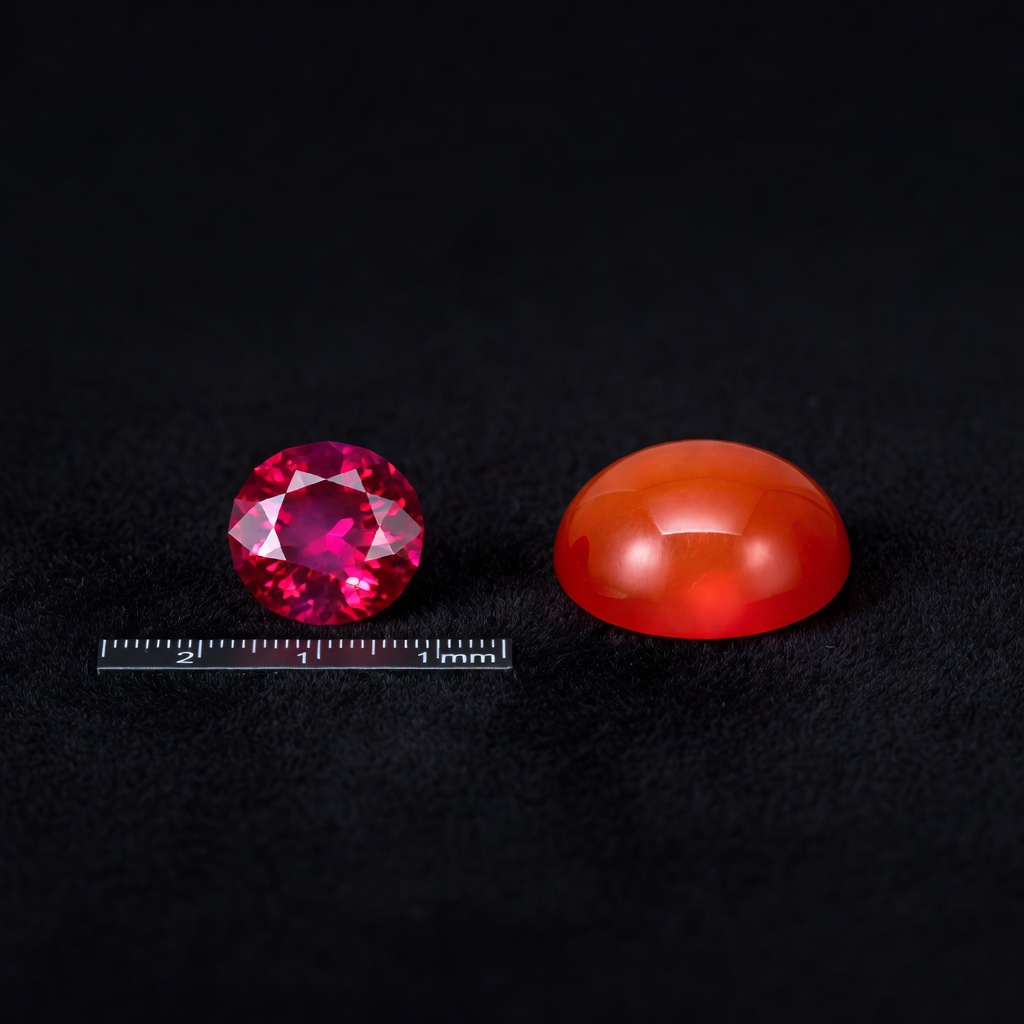
Carnelian presents a distinctly different color palette characterized by translucent orange-red to brownish-red hues that evoke images of autumn sunsets and smoldering embers rather than Ruby's intense fire. Unlike Ruby, Carnelian shows no fluorescence under ultraviolet light, appearing dull or dark when exposed to UV lamps—a quick field test for differentiation. The stone's color derives from iron oxide inclusions that create warm, earthy tones ranging from pale orange to deep reddish-brown, often displaying subtle banding or color zoning when examined closely. While Ruby achieves its best appearance in transparent, faceted cuts that maximize brilliance, Carnelian is traditionally cut as cabochons, beads, or carvings that showcase its translucency and waxy luster rather than reflective sparkle.
Inclusion patterns provide additional diagnostic features for separating these gemstones. Ruby typically contains characteristic inclusions known as "silk"—fine rutile needles that create a soft, velvety appearance in high-quality stones or sharp, reflective particles in lower grades. These inclusions, while potentially reducing clarity grades, often prove the stone's natural origin and untreated status. Carnelian, by contrast, generally appears more uniform and translucent, though it may display concentric banding, moss-like inclusions, or cloudy areas that distinguish it from agate varieties. When examining stones under magnification, look for Ruby's hexagonal growth patterns and potential twinning planes versus Carnelian's cryptocrystalline, fibrous structure that resembles hardened jelly.
Geological Origins and Formation Processes
The divergent gemstone origins of Ruby and Carnelian reflect their distinct mineralogical families and the specific geological environments required for their formation. Rubies form primarily in two distinct geological environments: marble-hosted deposits created through contact metamorphism where limestone interacts with aluminum-rich fluids, and basalt-related deposits formed in alkali basalts under high pressure and temperature conditions. Myanmar's Mogok Valley produces the world's most prized Rubies from marble deposits, characterized by their intense red color and strong fluorescence, while Thailand, Cambodia, and Mozambique yield basalt-related stones often requiring heat treatment to enhance their color. These formation processes require specific combinations of aluminum, oxygen, and chromium while excluding silica and iron, making suitable geological environments relatively rare globally.
Carnelian forms through entirely different geological processes, precipitating from silica-rich solutions in volcanic rocks, geodes, and lava cavities at much lower temperatures than Ruby formation. The stone develops as a variety of Chalcedony when iron-rich groundwater permeates cavities in volcanic rocks, depositing successive layers of microcrystalline quartz colored by iron oxide. Primary sources include India's Deccan Plateau, Brazil's Rio Grande do Sul, Uruguay, and Madagascar, where extensive volcanic activity created ideal conditions for Chalcedony deposition. Unlike Ruby's scarcity, Carnelian occurs abundantly worldwide, often forming nodules weighing several pounds that yield multiple cabochons or beads, explaining its accessibility and affordable pricing compared to the rare Corundum variety.
Trace element analysis reveals the chemical fingerprints that not only create color differences but also indicate geographic origin. Rubies contain chromium as their primary chromophore, with varying amounts of iron, titanium, and vanadium depending on their source—Burmese stones typically show lower iron content and stronger fluorescence, while Thai stones contain higher iron and appear darker with less fluorescence. Carnelian's color depends entirely on iron oxide concentration and oxidation states, with the most valued stones showing uniform, translucent reddish-orange hues without banding or clouding. Advanced spectroscopic analysis can identify these trace elements definitively, though simple observation of fluorescence under UV light provides immediate preliminary identification: Ruby glows vivid red, while Carnelian remains inert.
Value and Investment: Price Points Explained
The economic disparity between these precious vs semi-precious stones becomes immediately apparent when examining gemstone value per carat metrics, with Rubies commanding prices that can exceed those of Diamonds in exceptional cases, while Carnelian remains accessible to virtually any budget. Fine quality Rubies range from $1,000 to $15,000 or more per carat depending on color saturation, clarity, carat weight, and origin, with unheated Burmese stones over 5 carats reaching astronomical prices at international auctions. This pricing reflects extreme rarity: gem-quality Rubies over 3 carats represent less than 1% of total production, and untreated specimens of significant size are geological anomalies. Conversely, Carnelian typically sells for $5 to $50 per carat for high-quality material, with even exceptional specimens rarely exceeding $100 per carat, making it an ideal choice for large statement pieces without financial strain.
Several factors drive Ruby's exponential value beyond simple scarcity. Treatment disclosure requirements significantly impact pricing: untreated, natural Rubies command 300-400% premiums over heat-treated stones, while lead-glass filled Rubies sell for fractions of natural prices. The "Four Cs" of Ruby grading—Color, Clarity, Cut, and Carat—create strict hierarchies where "pigeon blood" color with slight inclusions outperforms cleaner stones with inferior color. Carnelian's valuation follows different parameters, emphasizing uniform color, high translucency, and absence of banding or clouding, with carved antique pieces sometimes commanding premiums beyond raw material value due to artistic merit rather than mineral rarity.
Investment potential differs dramatically between these stones, requiring distinct purchasing strategies. Ruby functions as a legitimate alternative investment vehicle, with documented price appreciation of 5-8% annually for fine specimens, and serves as a portable store of wealth in volatile economic climates. Collectors should seek certified, unheated stones from reputable dealers, storing them as long-term assets rather than wearing them daily. Carnelian offers no significant investment appreciation but provides excellent value for fashion jewelry, allowing consumers to acquire substantial, beautiful pieces for under $500 that would cost tens of thousands in Ruby. For budget-conscious buyers desiring red gemstone jewelry, Carnelian enables acquisition of large cabochon rings or elaborate beaded necklaces impossible to replicate in Ruby without six-figure investments.
Technical Specifications Comparison
| Characteristic | Ruby | Carnelian |
|---|---|---|
| Mineral Family | Corundum (Aluminum Oxide) | Chalcedony (Microcrystalline Quartz) |
| Mohs Hardness | 9 (Excellent for daily wear) | 6.5-7 (Requires protective settings) |
| Specific Gravity | 3.97-4.05 (Feels heavy) | 2.58-2.64 (Lightweight) |
| Refractive Index | 1.76-1.77 (High brilliance) | 1.53-1.54 (Waxy luster) |
| Color Range | Pinkish-red to Pigeon Blood | Orange-red to Brownish-red |
| Fluorescence | Strong red under UV light | None (Inert) |
| Luster | Vitreous (Glass-like) | Waxy to Dull |
| Price Range (Per Carat) | $1,000 - $15,000+ | $5 - $50 |
| Primary Sources | Myanmar, Thailand, Mozambique | India, Brazil, Uruguay |
| Best Jewelry Applications | Engagement rings, Daily wear pieces | Pendants, Earrings, Occasional wear |
| Chakra Association | Root Chakra (Muladhara) | Sacral Chakra (Svadhisthana) |
| Cleaning Methods | Ultrasonic, Steam, Warm soapy water | Lukewarm soapy water only |
Metaphysical Properties and Cultural Symbolism
Exploring Carnelian meaning and properties alongside ruby symbolism reveals two distinct energetic signatures that have served humanity's spiritual needs across diverse cultures and millennia. Ruby resonates powerfully with the Root Chakra (Muladhara), stimulating life force energy, physical vitality, and grounded passion while offering protective qualities against psychic attack and misfortune. Ancient Hindu texts referred to Ruby as "Ratnaraj" or "King of Precious Stones," associating it with the Sun and the power of leadership, while Burmese warriors implanted Rubies beneath their skin to render them invincible in battle. Modern crystal practitioners use Ruby to enhance motivation, overcome exhaustion, and stimulate the heart and circulatory system, though its intensity requires careful handling as it can overstimulate sensitive individuals or exacerbate aggressive tendencies.
Carnelian operates on a gentler frequency, primarily activating the Sacral Chakra (Svadhisthana) to enhance creativity, sexual energy, and emotional warmth without the aggressive intensity of Ruby. Known as the "Singer's Stone" in antiquity, Carnelian was believed to clarify the voice and was worn by orators and poets throughout ancient Rome and Greece to ensure eloquence and confidence. Egyptian architects and builders wore Carnelian to ensure protection during construction projects, while Islamic traditions consider it a sacred stone mentioned in the Quran. Metaphysically, Carnelian supports courage in public speaking, motivation for new ventures, and emotional healing from abuse or trauma, making it particularly suitable for artists, writers, and those undergoing major life transitions who require sustained energy rather than the intense bursts associated with Ruby.
Historical significance further differentiates these stones' cultural applications and perceived powers. Ruby features prominently in crown jewels across Europe and Asia, including the Black Prince's Ruby in the British Imperial State Crown (actually a spinel, but historically confused with Ruby) and the 167-carat Edwards Ruby, symbolizing royal authority and divine right. Carnelian dominated ancient Egyptian jewelry, with extensive use in amulets, scarabs, and cylinder seals throughout the Predynastic and Pharaonic periods, often carved with protective symbols and placed in tombs to ensure safe passage to the afterlife. Victorian-era jewelry frequently combined both stones, utilizing Ruby for formal evening pieces and Carnelian for daytime cameos and intaglios, suggesting these stones function as complementary rather than competitive energies in sophisticated gem collections.
Jewelry Applications: Settings and Wearability
Selecting appropriate ruby jewelry settings requires understanding the stone's exceptional hardness and brilliance to maximize both security and optical performance. Prong settings in platinum or white gold remain the traditional choice for faceted Ruby engagement rings, allowing maximum light entry while protecting the girdle from chipping during daily activities. Bezel settings offer superior protection for cabochon Rubies or stones with fragile inclusions, particularly suitable for men's rings or active lifestyle jewelry. The stone's high refractive index and strong fluorescence make it spectacular in halo designs surrounded by Diamonds, creating a "fiery" appearance that commands attention in formal settings. For daily wear pieces, ensure settings include sufficient metal backing to prevent loss, as high-value Rubies warrant insurance appraisals and secure mounting systems.
Carnelian jewelry care considerations dictate different setting strategies due to the stone's softer nature and distinct optical properties. Carnelian excels in protected bezel settings, deep channel settings, or as centerpieces in pendants and earrings where impact risks remain minimal. The stone's translucency and waxy luster make it particularly striking in vintage-inspired designs featuring intricate metalwork in yellow or rose gold, which complement its warm orange-red tones. Unlike Ruby, Carnelian should not be used in rings intended for daily wear or manual labor, as the 6.5-7 hardness makes it susceptible to scratches from door handles, desk surfaces, and common dust particles. Instead, reserve Carnelian for cocktail rings, brooches, statement necklaces, and drop earrings where the stones receive protection from the body's movement and environmental hazards.
Metal pairing preferences reflect each stone's color temperature and market positioning. Ruby achieves maximum visual impact when set in white metals (platinum, white gold, palladium) that enhance its cool, blue-red fluorescence and create contemporary elegance, though yellow gold settings evoke classic Victorian or Art Deco aesthetics. Carnelian demands warm metal companions—yellow gold, rose gold, or antique brass—to amplify its sunset hues and earthy energy, with silver or white gold creating discordant color clashes that diminish the stone's natural warmth. When designing multi-gemstone pieces, consider combining Ruby with Diamonds, Sapphires, or Tsavorite Garnets for high-end creations, while Carnelian pairs beautifully with Amber, Tiger's Eye, Onyx, or Smoky Quartz for bohemian or ethnic-inspired designs.
Care and Maintenance Protocols
Proper ruby maintenance takes advantage of the stone's exceptional durability while respecting its specific vulnerabilities to heat and chemicals. Ruby tolerates ultrasonic cleaning and steam cleaning methods safely, making professional jewelry maintenance straightforward and effective for removing accumulated lotions and oils. Home care requires only warm water with mild dish soap and a soft toothbrush to clean behind settings where dirt accumulates, followed by thorough rinsing and drying with a lint-free cloth. Despite its hardness, Ruby can fracture along twinning planes or cleavage directions if struck sharply, so remove rings before rock climbing, weightlifting, or home improvement projects. Store Ruby pieces separately from other gemstones to prevent scratching softer stones, though Diamonds and Moissanite can damage Ruby if stored in direct contact.
Carnelian jewelry care demands significantly gentler handling due to the stone's lower hardness and heat sensitivity. Never subject Carnelian to ultrasonic cleaners or steam systems, as the heat and vibration can cause fractures or color fading in treated stones. Clean Carnelian using only lukewarm water with mild soap and a soft cloth or very soft brush, avoiding temperature shocks that could crack the stone. Chemical exposure poses particular risks: remove Carnelian jewelry before swimming in chlorinated pools, cleaning with bleach, or applying hairspray and perfume, as these substances can etch the surface or alter color over time. Store Carnelian in individual soft cloth bags or padded compartments separate from harder gemstones, and never toss it loosely into a jewelry box where Ruby, Sapphire, or Diamond pieces could scratch its surface during drawer movement.
Long-term preservation strategies differ markedly between these stones. Ruby essentially requires no special environmental controls beyond standard jewelry care, maintaining its color and clarity indefinitely even with decades of wear. Carnelian, however, may experience color fading when exposed to prolonged direct sunlight or excessive heat, so store pieces in dark jewelry boxes and avoid wearing them to beach outings or saunas. For collectors maintaining vintage pieces, inspect Carnelian settings annually for loose prongs or bezel wear, as the softer stone gradually wears down the metal holding it, whereas Ruby settings typically remain secure for generations. When traveling, carry Carnelian in carry-on luggage rather than checked baggage to avoid temperature extremes in cargo holds that could damage the stone.
Making Your Decision: Which Stone Suits Your Lifestyle
Navigating the Ruby vs Carnelian decision requires honest assessment of your budget parameters, lifestyle demands, and aesthetic preferences to ensure long-term satisfaction with your purchase. Budget considerations immediately separate these markets: if you seek an investment-grade gemstone or heirloom piece to pass through generations, Ruby represents the only viable option despite requiring significant capital outlay. However, if you desire beautiful red jewelry for fashion expression without financial strain, Carnelian offers remarkable value, allowing acquisition of substantial 20-carat cabochons for the price of a small 0.5-carat commercial-grade Ruby. Consider also the replacement cost: losing a Carnelian ring causes disappointment but not financial devastation, whereas losing a high-value Ruby requires insurance claims and significant emotional distress.
Lifestyle factors should heavily influence your selection based on intended wear patterns and daily activities. Active individuals who never remove their jewelry—athletes, medical professionals, mechanics, or parents of young children—should exclusively choose Ruby for rings and bracelets, as its Mohs 9 hardness withstands the abrasion of daily life. Conversely, those seeking "special occasion" jewelry for dinner parties, theater outings, or spiritual ceremonies may find Carnelian perfectly adequate, particularly for earrings and pendants that avoid impact. Consider your climate as well: humid environments accelerate tarnishing in the silver settings often paired with Carnelian, while Ruby's typical platinum or gold settings resist corrosion better.
Color preference ultimately determines which stone resonates with your personal energy and wardrobe. Ruby appeals to those drawn to intense, saturated primary red—the color of passion, power, and drama—that demands attention and signifies luxury. This stone suits individuals with cool skin undertones who wear jewel tones, blacks, and crisp whites. Carnelian attracts those preferring warm, earthy orange-reds reminiscent of autumn leaves and desert sunsets, complementing earth tones, camel, olive, and mustard yellows in clothing. Visit a jeweler to view both stones under natural daylight and incandescent lighting before purchasing, as Ruby's fluorescence and Carnelian's translucency create vastly different visual experiences that photographs cannot accurately capture.
Final Verdict: Complementary Rather Than Competitive
The Ruby vs Carnelian comparison ultimately reveals that these magnificent red stones occupy complementary niches within a well-rounded jewelry collection rather than competing directly for the same applications. Ruby delivers exceptional hardness, investment value, and intense chromatic saturation suitable for lifetime commitment pieces and status symbols, while Carnelian offers accessible beauty, creative energy, and artistic versatility for fashion-forward expression. Neither stone supersedes the other; instead, they serve different moments in life—Ruby for milestones and legacy, Carnelian for daily inspiration and accessible elegance. The sophisticated collector often owns both: a Ruby engagement ring or tennis bracelet for formal occasions, and Carnelian beads or cabochon pendants for casual creativity.
When making your final selection, prioritize intended use above all other factors. Choose Ruby when purchasing bridal jewelry, graduation gifts marking major achievements, or investment assets requiring portable wealth storage. Select Carnelian when building a versatile costume jewelry collection, seeking metaphysical support for creative endeavors, or gifting younger individuals who may not yet appreciate the responsibility of high-value gemstones. Both stones carry millennia of human history, cultural significance, and natural beauty; your decision depends entirely on which narrative you wish to wear and share. Whether you invest in the royal fire of Ruby or the earthy warmth of Carnelian, you acquire a piece of geological history that connects you to ancient traditions while expressing your unique contemporary style.
Frequently Asked Questions
Can Carnelian pass as a Ruby to the untrained eye?
While both gemstones display attractive red hues that have captivated humans throughout history, Carnelian cannot convincingly pass as Ruby upon close inspection due to significant differences in brilliance, hardness, and color depth that become apparent under even casual observation. Ruby exhibits vivid fluorescence under natural daylight and possesses a vitreous, glass-like luster with potential asterism (star effect) in cabochon cuts, while Carnelian shows a distinctive waxy luster and orange undertones that lack the internal fire characteristic of Corundum. Professional gemological testing immediately reveals the difference through refractive index measurements (Ruby at 1.76-1.77 versus Carnelian at 1.53-1.54) and specific gravity testing, though even laypersons can distinguish them by observing that Ruby feels noticeably heavier for its size and glows red under UV light whereas Carnelian remains inert.
Which is better for daily wear jewelry, Ruby or Carnelian?
Ruby is significantly better suited for daily wear jewelry due to its exceptional 9/10 Mohs hardness rating, making it extraordinarily resistant to scratching from everyday dust particles, accidental impacts against hard surfaces, and the general abrasion that occurs during normal activities like typing, cooking, or driving. Carnelian, ranking 6.5-7 on the Mohs scale, is considerably more susceptible to surface scratches from common environmental quartz dust and chipping from minor impacts, which means it will show wear marks and lose its polish relatively quickly if worn daily on the hands. Reserve Carnelian for earrings, pendants, brooches, or occasional wear rings that do not encounter hard surfaces, while Ruby excels in engagement rings, wedding bands, tennis bracelets, and any jewelry intended for continuous wear over decades.
How can I visually distinguish between Ruby and Carnelian?
Several key visual identifiers allow immediate differentiation between these red gemstones without requiring specialized equipment or laboratory testing. Ruby displays vitreous (glass-like) luster with high brilliance and often shows characteristic silk inclusions (fine rutile needles) or color zoning under magnification, while Carnelian shows waxy to dull luster with uniform translucency and a more "earthy" appearance reminiscent of hardened jelly or wax. Under natural light, Ruby appears more intensely red due to chromium fluorescence that makes the stone seem to glow from within, whereas Carnelian shows distinct orange-red to brownish tones without internal fire. Additionally, Ruby feels substantially heavier when held in the hand due to its higher specific gravity of 4.0 compared to Carnelian's 2.6, and Ruby will scratch glass easily while Carnelian struggles to do so consistently.
Is Carnelian considered a type of Ruby or Red Agate?
No, Carnelian is definitely not a type of Ruby, as they belong to completely different mineral families with distinct chemical compositions and crystal structures: Ruby is Corundum (aluminum oxide, Al₂O₃), while Carnelian is a variety of Chalcedony (microcrystalline silicon dioxide, SiO₂). Carnelian is technically a translucent red variety of Chalcedony, which places it within the broader Quartz family, distinguishing it from banded Red Agate despite both being quartz varieties—whereas Agate displays characteristic banded patterns, Carnelian shows uniform color and translucency. The confusion sometimes arises because both stones can appear red and are used in jewelry, but they share no mineralogical relationship, formation processes, or geological occurrences, making them as distinct from each other as Diamond is from Graphite.
Why is Ruby exponentially more expensive than Carnelian?
Ruby commands exponentially higher prices than Carnelian primarily due to extreme geological rarity: fine quality Rubies exceeding 3 carats represent less than one percent of total global production, whereas Carnelian occurs abundantly in large nodules weighing several pounds that yield multiple gemstones. Additionally, Ruby's status as one of the "Big Four" precious gemstones (alongside Diamond, Sapphire, and Emerald) drives intense collector demand and investment interest, particularly for unheated Burmese specimens with "pigeon blood" coloration. The specific chemical requirements for Ruby formation—aluminum and oxygen combined with chromium but without iron or silica—create restrictive geological conditions rarely found in nature, whereas Carnelian forms readily in volcanic environments worldwide. Furthermore, the difficulty of finding untreated, inclusion-free Ruby specimens suitable for faceting restricts supply compared to readily available Carnelian that requires minimal processing.
Can Ruby and Carnelian be worn together in the same jewelry piece?
Yes, Ruby and Carnelian can be combined aesthetically in multi-gemstone jewelry designs, but they require protective settings and thoughtful arrangement due to the significant hardness difference that makes Carnelian vulnerable to damage from its harder companion. Ruby (9 Mohs) will inevitably scratch Carnelian (6.5-7 Mohs) if the stones contact each other through movement or pressure, so designers must separate them with metal barriers, use raised settings for Ruby while recessing Carnelian, or position Carnelian in protected areas such as pendant drops while Ruby takes prominent placement in ring heads. The warm orange-red translucency of Carnelian complements the deep, saturated red of Ruby beautifully in Art Nouveau or Victorian-inspired designs, creating gradient color effects that single-stone pieces cannot achieve. When commissioning such pieces, ensure your jeweler understands the hardness disparity and constructs bezels or prongs that prevent stone-to-stone contact during wear.
Do Rubies and Carnelian have different metaphysical energies?
Yes, these stones serve distinct energetic purposes and resonate with different chakra systems, making them suitable for different spiritual practices and healing intentions. Ruby activates the Root Chakra (Muladhara), stimulating life force energy, physical vitality, passionate love, and protection while offering grounding and leadership qualities associated with royal authority and personal power; it provides intense, fiery energy that can overstimulate sensitive individuals but proves invaluable for overcoming exhaustion or lethargy. Carnelian resonates with the Sacral Chakra (Svadhisthana), enhancing creativity, sexual energy, motivation for new projects, and courage in public speaking without the aggressive, intense energy of Ruby; it is considered gentler for emotional healing, particularly for trauma recovery and artistic blocks, while Ruby provides powerful manifestation energy for material success and physical achievements. Many practitioners use Ruby for morning meditation to energize the day, and Carnelian for afternoon creative work to maintain sustainable motivation.
Which stone requires more maintenance and special care?
Carnelian requires more careful handling and specific maintenance protocols despite being easier to clean at home, primarily due to its heat sensitivity and lower hardness that make it vulnerable to environmental factors that Ruby easily withstands. You must avoid ultrasonic cleaners and steam systems for Carnelian, as heat can cause color fading in treated stones and sudden temperature changes may fracture the material, whereas Ruby tolerates these professional cleaning methods without damage. Both stones should avoid harsh chemicals like bleach, chlorine, and ammonia, and both benefit from removal before applying lotions or perfumes, but Carnelian additionally requires protection from prolonged sunlight exposure that can fade its color over time. For storage, Carnelian demands separate soft cloth compartments to prevent scratching from harder gemstones including Ruby, Diamond, or Sapphire, while Ruby can be stored more casually though it should still be kept away from Diamonds that could scratch it. Regular inspection of Carnelian settings proves more critical, as the softer stone gradually wears down prongs and bezels faster than Ruby wears its mountings.