The Contrast of Fire and Earth: A Comprehensive Precious Gemstone Comparison
When collectors and jewelry enthusiasts seek distinctive centerpieces for their collections, the debate often narrows to Ruby vs Boulder Opal, two extraordinary gems that represent opposite ends of the geological spectrum. Ruby, long revered as the "King of Gems," belongs to the corundum family and dazzles with its internal fire and crystalline perfection, while Australian Boulder Opal emerges from the rugged ironstone boulders of Queensland, carrying the raw energy of the earth within its matrix. These stones appeal to fundamentally different sensibilities: the classic elegance seeker gravitates toward Ruby's timeless red brilliance, whereas the artistic soul finds inspiration in Boulder Opal's unpredictable play-of-color and organic forms. This precious gemstone comparison examines the critical factors that distinguish these treasures, including durability metrics, visual phenomena, market valuations, and the practical care requirements that will determine which stone best suits your lifestyle and aesthetic preferences.
Geological Origins and Formation
The journey from raw mineral to coveted gemstone follows vastly different paths for these two treasures, with each formation process imparting unique characteristics that influence their ultimate appearance and stability. Understanding these geological distinctions provides essential context for appreciating why Rubies exhibit diamond-like durability while Boulder Opals require more thoughtful handling.
The Crystalline Birth of Ruby
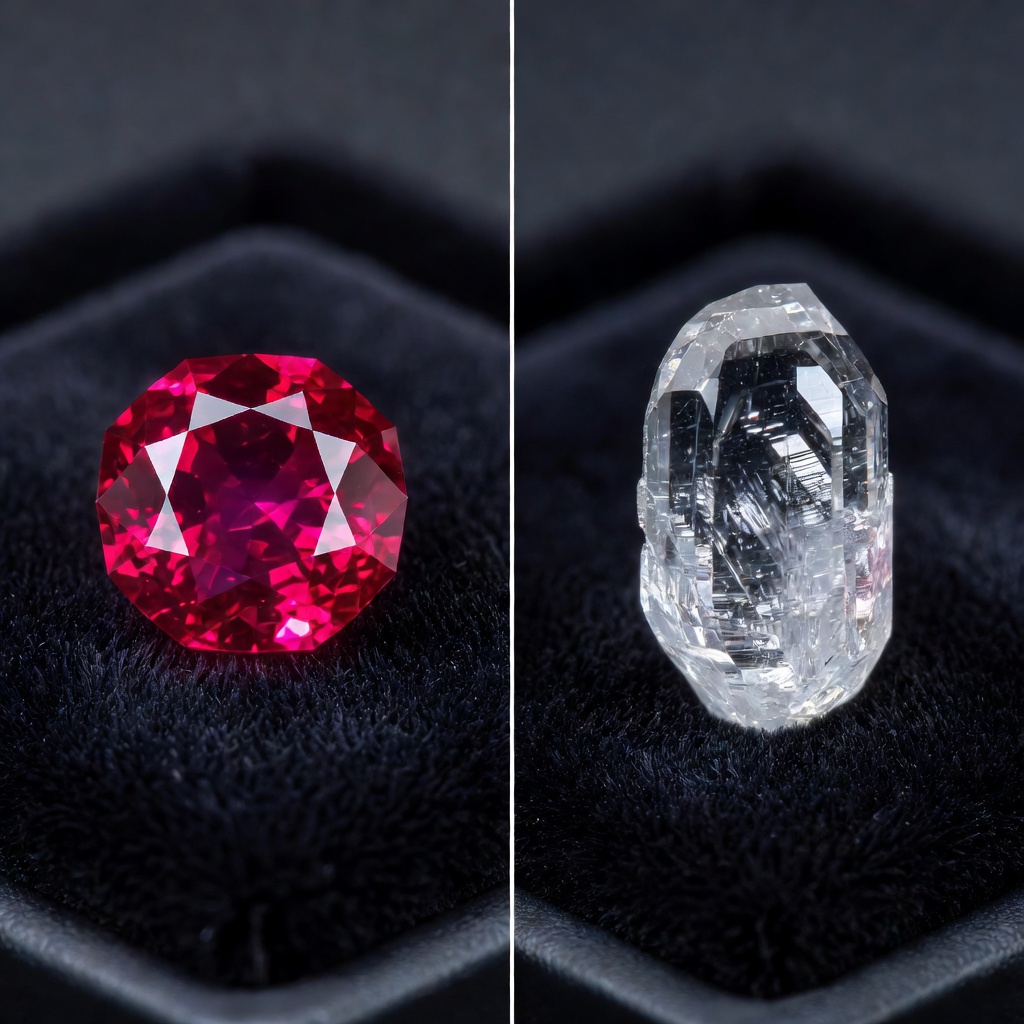
Rubies form deep within the earth's crust under extreme metamorphic conditions, where aluminum oxide molecules crystallize into the corundum structure under intense heat and pressure exceeding 800°C. These formation environments typically occur in marble or basalt deposits, where trace amounts of chromium replace aluminum in the crystal lattice, creating the signature red coloration that ranges from pinkish-red to the coveted pigeon blood red. Major deposits in Myanmar's Mogok Valley, Mozambique's Montepuez region, and Thailand's Chanthaburi province yield stones with distinct characteristics based on their specific host rock chemistry and formation timeline.
The Sedimentary Secrets of Australian Boulder Opal
In stark contrast to Ruby's igneous origins, Australian Boulder Opal forms through sedimentary processes in the Cretaceous-age ironstone boulders scattered across Queensland's arid interior. Approximately 100 million years ago, silica-rich water percolated through cracks and cavities in ironstone concretions, depositing microscopic silica spheres that eventually created the precious opal layer. Unlike other opal varieties that form in seams or nodules, Boulder Opal remains intimately attached to its ironstone host rock, which provides both structural support and the dark background that enhances the stone's brilliant color play. Primary sources include the renowned fields around Winton, Quilpie, and Yowah, where miners split ironstone boulders to reveal the hidden gem-quality opal within.
Structural Implications of Formation Differences
These divergent geological histories result in fundamentally different internal architectures that directly impact gemstone performance. Ruby's solid crystalline structure creates a homogeneous material capable of withstanding significant mechanical stress, while Boulder Opal's composition includes 3-20% water content trapped within its amorphous silica structure, making it sensitive to dehydration and thermal shock. The ironstone backing that defines Boulder Opal provides crucial stability absent in other opal types, yet creates natural undulating surfaces that preclude traditional faceting, fundamentally limiting cutting options compared to Ruby's versatile geometry.
Physical Properties and Durability Comparison
Selecting between these gemstones requires honest assessment of how you intend to wear your jewelry, as the physical disparities between corundum and opal dictate dramatically different usage scenarios. While both stones qualify as precious materials, their performance characteristics under daily wear conditions vary significantly, making gemstone durability daily wear considerations paramount in your decision-making process.
Corundum Hardness Mohs Scale Dominance
Ruby ranks 9 on the Mohs hardness scale, second only to diamond, granting it exceptional resistance to scratching and surface abrasion that suits even the most demanding jewelry applications. This corundum hardness Mohs scale superiority means Ruby maintains its polish and facet edges indefinitely, even when worn daily in rings or bracelets that encounter incidental contact with household surfaces, metal objects, or environmental debris. Conversely, Boulder Opal registers between 5.5 and 6.5 on the same scale, comparable to glass or steel, meaning it can scratch relatively easily and requires protective settings to preserve its surface integrity over time.
Toughness and Environmental Sensitivity
Beyond hardness, toughness—the resistance to breaking, chipping, or cracking—presents another critical differentiator. Ruby possesses excellent toughness due to its crystalline structure lacking cleavage planes, allowing it to withstand impacts that would shatter more brittle gems. Boulder Opal, despite the stabilizing ironstone backing, remains vulnerable to sudden temperature changes that can cause the hydrated silica to contract or expand at different rates than the host rock, potentially leading to crazing or cracking. Additionally, opals can suffer from dehydration in extremely dry climates or when exposed to heat sources, whereas Ruby's solid structure remains impervious to humidity fluctuations.
Comparative Analysis Table
| Characteristic | Ruby (Corundum) | Boulder Opal |
|---|---|---|
| Mohs Hardness | 9 (Excellent) | 5.5-6.5 (Moderate) |
| Toughness | Very Good to Excellent | Fair to Good (with ironstone backing) |
| Water Content | 0% (Anhydrous) | 3-20% (Hydrous silica) |
| Temperature Sensitivity | Highly Resistant | Sensitive to thermal shock |
| Impact Resistance | Excellent for daily wear | Requires protective settings |
| Long-term Stability | Permanent with basic care | Requires humidity awareness |
Visual Characteristics: Color, Clarity, and Phenomena
The aesthetic appeal of these gemstones diverges dramatically, offering collectors a choice between the intense monochromatic saturation of Ruby and the chromatic fireworks of Boulder Opal. Each stone presents unique visual phenomena that have captivated humanity for millennia, though their beauty manifests through entirely different optical mechanisms.
The Regal Spectrum of Ruby
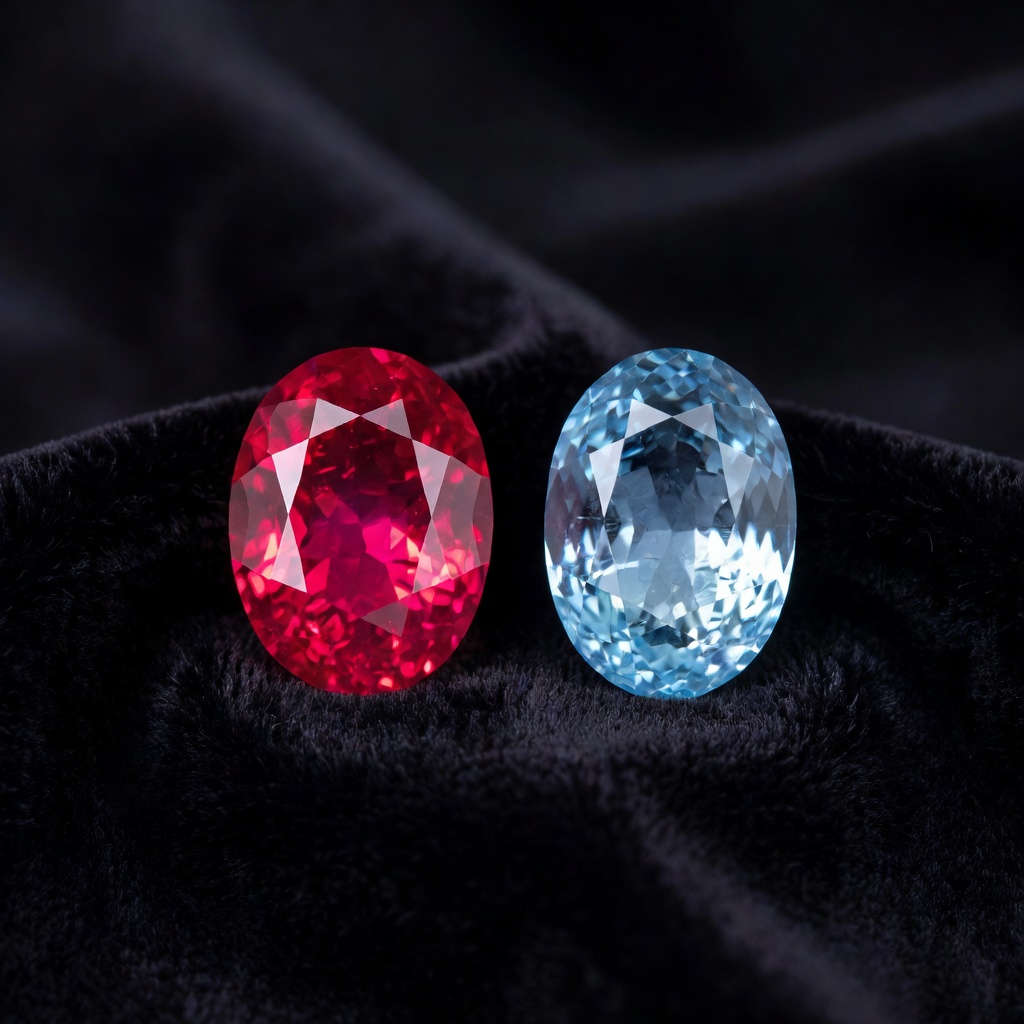
The ideal precious red gemstone exhibits a pure, vibrant red to slightly purplish-red hue, with the most coveted "pigeon blood" specimens originating from Myanmar displaying a fluorescent, almost glowing quality due to high chromium content and low iron. Rubies frequently contain rutile needle inclusions known as "silk," which, when sufficiently dense and evenly distributed, can create the rare star effect (asterism) or simply soften the stone's transparency to produce a velvety appearance highly prized in Asian markets. Under ultraviolet light, natural Rubies typically fluoresce red, a diagnostic feature that helps gemologists distinguish them from red spinels or garnets, while heat-treated stones may show chalky blue fluorescence in certain zones.
The Earth-Bound Rainbow of Boulder Opal
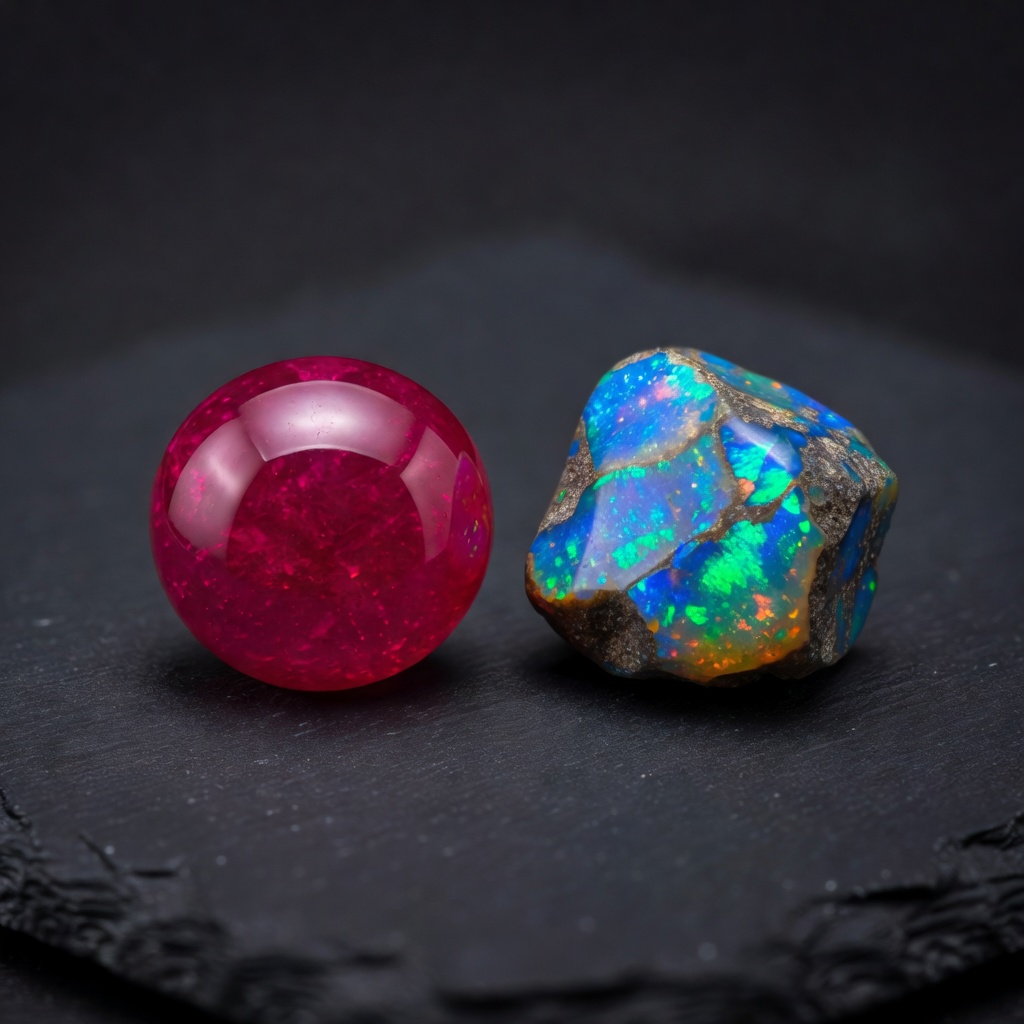
Boulder Opal offers a completely different visual experience, displaying opal color play against a dark ironstone matrix that creates striking contrast and depth. Unlike black opal, which presents color against dark precious opal, Boulder Opal's color bar sits atop natural ironstone, creating undulating surfaces where the opal layer follows the contours of the host rock. This results in free-form, organic shapes that showcase patterns ranging from broad flashes and rolling clouds to the rare and valuable Harlequin (mosaic) and Chinese Writing patterns. The ironstone backing, while limiting the stone's transparency, enhances the vibrancy of the diffracted colors, making even smaller color bars appear intensely vivid against the chocolate-brown host rock.
Cutting Styles and Presentation
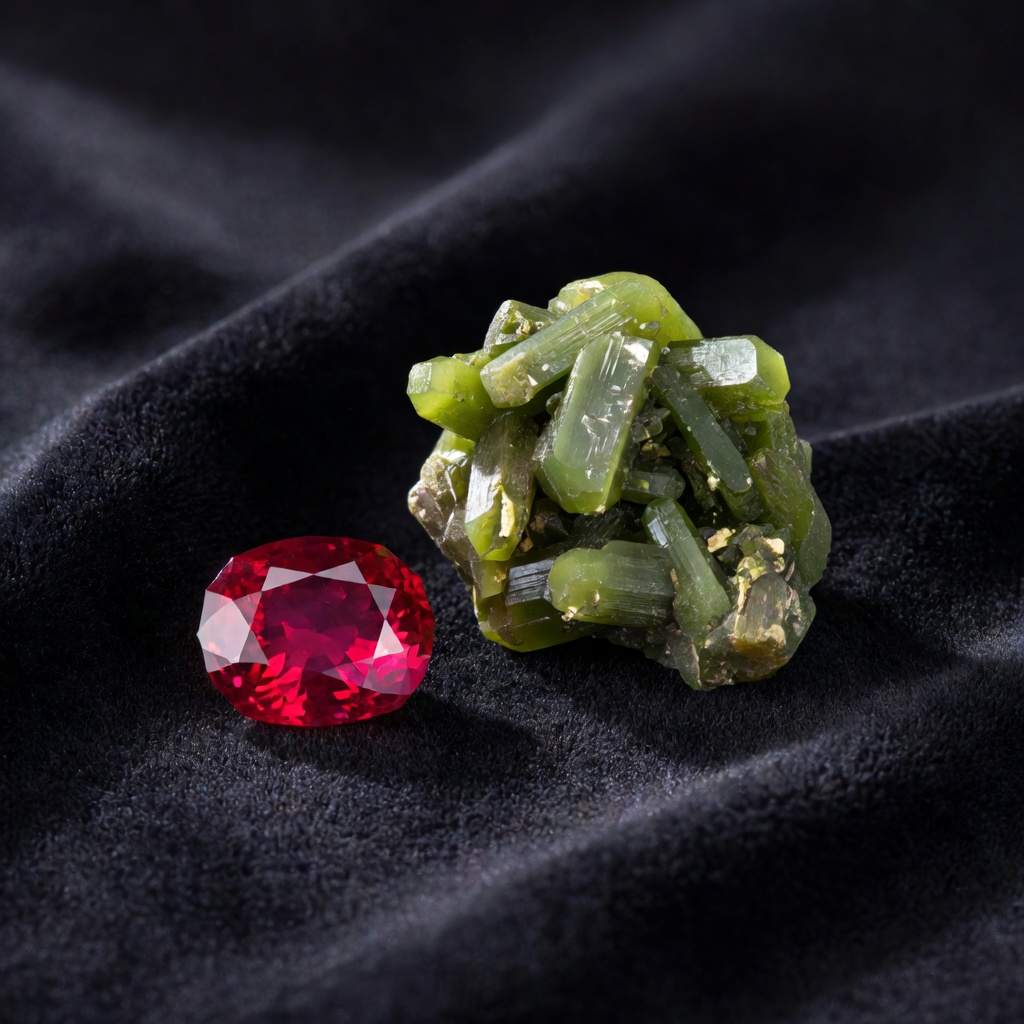
These optical differences dictate distinct cutting approaches that further differentiate the gems' appearances. Rubies are typically fashioned into precise faceted cuts—round brilliants, cushions, ovals, and emeralds—designed to maximize light return and color saturation through careful angle placement and symmetry. Master cutters must balance weight retention against the optimal color display, often accepting some windowing to preserve carat weight in expensive rough. Boulder Opals, conversely, are almost exclusively cut as cabochons, following the natural contours of the opal layer to maximize color bar exposure while maintaining the protective ironstone backing. This organic cutting style produces one-of-a-kind pieces that resist mass production, appealing to collectors who value uniqueness over geometric perfection.
Rarity, Value, and Investment Potential
The financial considerations surrounding these gemstones reflect their geological scarcity, market demand, and treatability, with significant implications for collectors viewing their purchases as alternative investments. Understanding red ruby value per carat versus Boulder Opal pricing requires examination of quality hierarchies and market dynamics specific to each material.
Premium Pricing and Market Tiers
Fine untreated Rubies command the highest prices per carat of any colored gemstone, with exceptional Burmese specimens exceeding $100,000 per carat for stones over five carats with ideal color and clarity. Commercial-quality Rubies might range from $1,000 to $10,000 per carat depending on treatment status and origin, with heat-treated Thai or African stones offering accessible entry points for enthusiasts. Australian boulder opal occupies a different market segment, with premium specimens featuring thick color bars and rare patterns typically ranging from $200 to $5,000 per carat, though exceptional large stones with Harlequin patterns can command $10,000+ per carat, occasionally surpassing commercial-grade Rubies.
Valuation Criteria and Quality Indicators
Ruby valuation prioritizes color saturation and origin above all factors, with Burmese stones commanding premiums of 50-100% over comparable Mozambique or Thai material. Treatment status significantly impacts value, with untreated stones potentially worth 300% more than heat-treated equivalents, necessitating laboratory certification from GIA, Gübelin, or SSEF for high-value purchases. Boulder Opal valuation focuses on color bar thickness (indicating stability and longevity), pattern rarity (Harlequin and broad flash commanding premiums over pinfire), color range (red and orange being rarest), and the ironstone ratio—ideally showing maximum opal exposure with sufficient backing for durability. Unlike Rubies, Boulder Opals are rarely treated, though buyers must distinguish between solid stones and opal doublet vs solid stone composites.
Investment Liquidity and Appreciation
From an investment perspective, untreated Burmese Rubies historically demonstrate the strongest appreciation and resale liquidity, functioning as crisis-resistant stores of wealth similar to fine art or rare wines. The market for high-quality Boulder Opals has appreciated significantly over the past decade due to mine depletion and increased international recognition, though the specialized nature of opal collecting creates a narrower resale market compared to the universal recognition of Ruby. For budget optimization, collectors might consider exceptional Boulder Opals over commercial-grade treated Rubies, as the former offer unique aesthetic distinction while the latter may depreciate due to market saturation.
Symbolism, History, and Cultural Significance
Beyond their physical properties, these gemstones carry profound cultural weight that influences their desirability for commemorative jewelry and personal talismans. Their historical trajectories reflect human civilization's evolving relationship with the natural world, from ancient royal courts to contemporary Indigenous art traditions.
Ruby: The Stone of Kings and Warriors
Throughout history, Ruby has symbolized passion, protection, and prosperity, with Sanskrit texts referring to it as "ratnaraj" or the king of precious stones. Ancient Burmese warriors believed inserting Rubies into their flesh made them invincible in battle, while Hindu tradition associated the gem with the sun and the power of life. As the July birthstone, Ruby represents vitality, courage, and emotional intensity, making it a popular choice for 15th and 40th wedding anniversaries. Metaphysical practitioners attribute to Ruby the ability to amplify energy, stimulate the heart chakra, and promote leadership qualities, though these claims remain outside scientific validation.
Boulder Opal: Voices of the Australian Landscape
Boulder Opal carries deep significance within Indigenous Australian cultures, particularly among the Kuku Yalanji and other Queensland Aboriginal peoples, who associate these stones with Dreamtime creation stories and the rainbow serpent. Unlike Ruby's association with power and warfare, Boulder Opal traditionally symbolizes creativity, emotional expression, and connection to the earth, reflecting its formation within the living rock. While technically the modern October birthstone alongside tourmaline, Boulder Opal appeals to those born in any month who seek jewelry that reflects individuality and natural artistry. Crystal healing traditions suggest Boulder Opal enhances communication, aids in accessing one's true self, and promotes spontaneity—qualities that align with its unpredictable, free-form appearance.
Cultural Context in Contemporary Jewelry
These symbolic associations influence modern jewelry design trends, with Ruby remaining the conservative choice for formal occasions, bridal jewelry, and executive accessories that project confidence and tradition. Boulder Opal has gained traction among artists, designers, and free spirits who value the stone's connection to the Australian outback and its refusal to conform to standardized cutting patterns. When selecting between them, consider whether you wish to project established authority (Ruby) or creative independence (Boulder Opal), as these cultural connotations persist even in secular contexts.
Jewelry Applications and Design Considerations
Practical jewelry design must accommodate the distinct physical requirements of these gemstones while maximizing their aesthetic potential. The choice between them often depends on the intended jewelry type and the wearer's daily activities, with specific setting strategies ensuring longevity for each material.
Setting Requirements and Protective Strategies
Ruby's durability allows for versatile setting options, from delicate prong settings that maximize light exposure to bezel settings that provide additional protection for active wearers. Four- or six-prong settings remain popular for engagement rings, allowing the pavilion to breathe while securing the stone against loss. Boulder Opal demands more protective approaches; while the ironstone backing provides structural support, the relatively soft opal layer requires bezel settings that wrap completely around the stone's edge to prevent impact damage. Partial bezels or tension settings are inappropriate for Boulder Opal rings, though they may work for pendants or earrings that experience less mechanical stress.
Metal Pairing and Design Aesthetics
Metal selection significantly impacts the final appearance of both stones. White gold or platinum creates a striking contrast with Ruby's warmth, making the red appear more vivid through complementary color theory, while yellow gold enhances the stone's traditional, royal associations. For Boulder Opal, yellow or rose gold often harmonizes with the ironstone matrix, creating a cohesive earth-tone palette, though white metals can provide dramatic contrast against the dark backing. Design flexibility favors Ruby for intricate, delicate filigree work and micro-pavé accents, while Boulder Opal excels in bold, sculptural statement pieces that emphasize the stone's organic shape. Consider asymmetrical designs that follow the opal's natural contours rather than forcing geometric regularity.
Wearability by Jewelry Type
For daily wear gemstones in rings, Ruby remains the superior choice due to its resistance to both scratching and impact, making it ideal for engagement rings, wedding bands, and signet rings worn continuously. Boulder Opal performs beautifully in pendants, brooches, and earrings, where they receive less incidental contact and can be protected from harsh chemicals and temperature fluctuations encountered during hand washing or cooking. If selecting Boulder Opal for a ring, reserve it for occasional wear or cocktail rings rather than everyday pieces, and always remove the jewelry before physical activities, cooking, or cleaning.
Care, Maintenance, and Longevity
Proper maintenance protocols differ substantially between these gemstones, with Ruby requiring minimal intervention while Boulder Opal demands specific environmental awareness. Understanding these requirements ensures your investment maintains its beauty across generations.
Cleaning Protocols and Chemical Sensitivities
Untreated Rubies tolerate ultrasonic cleaning and steam cleaning, making professional maintenance straightforward, though filled or heavily included stones should avoid these methods to prevent damage to treatment substances. Warm soapy water and a soft brush safely clean most Ruby jewelry at home. Boulder Opal requires gentler handling; ultrasonic vibrations can cause micro-fractures in the opal layer, while steam heat risks dehydration damage. Clean Boulder Opal using only a damp soft cloth or very brief exposure to lukewarm water without detergents, followed by immediate drying with a soft towel. Both stones should avoid contact with harsh chemicals, chlorine, and perfumes, though Ruby tolerates brief exposure better than the porous opal structure.
Storage and Environmental Controls
Store Ruby jewelry separately from other pieces to prevent scratching softer gemstones, though it can safely contact diamonds and sapphires. Boulder Opal storage requires humidity awareness; while Australian stones are stable enough for normal household environments, avoid storing them in safe deposit boxes or airtight containers for extended periods without humidity control packets. Some collectors store valuable opals with small amounts of moist cotton in sealed containers, though this is unnecessary for Boulder Opal compared to hydrophane Ethiopian opals. Never store Boulder Opal near heat sources, including direct sunlight through windows or radiator heat, which can cause crazing over time.
Long-term Preservation and Insurance
Should Ruby surfaces scratch after decades of wear, professional re-polishing restores their original luster without significant weight loss. Boulder Opal, however, cannot be re-polished if the opal layer becomes scratched or crazed, as the thin color bar offers limited material for restoration. Both gemstones require updated appraisals every 2-3 years for insurance purposes, with particular attention to treatment documentation for Rubies and solid-stone verification for Boulder Opals. Consider specialized jewelry insurance that covers accidental damage for Boulder Opal pieces, given their relative fragility compared to the robust Ruby.
Buyer's Guide: Making the Right Choice
Navigating the purchase of either gemstone requires alignment between the stone's characteristics and your personal circumstances, ensuring satisfaction with your investment for decades to come. This gemstone buying guide provides actionable frameworks for decision-making.
Lifestyle Assessment and Practical Selection
Honestly evaluate your daily activities before selecting between these stones. If you work with your hands, engage in sports, or prefer low-maintenance jewelry, Ruby's durability makes it the pragmatic choice for rings and bracelets. Choose Boulder Opal if you work in artistic or creative fields, attend frequent social events where statement jewelry is appropriate, and are willing to remove jewelry before physical tasks. For those seeking one versatile piece, Ruby offers greater flexibility, while Boulder Opal suits those building a diverse jewelry wardrobe with specific occasion pieces.
Budget Optimization Strategies
Maximize visual impact within budget constraints by prioritizing different quality factors for each stone. With Ruby, consider slightly included stones with excellent color over flawless but pale specimens, as color saturation determines visual impact more than clarity in red gems. Heat-treated Rubies from Mozambique offer exceptional value for those prioritizing size over investment potential. For Boulder Opal, focus on color bar thickness and pattern intensity rather than overall stone size, as a smaller stone with brilliant Harlequin patterning outperforms a larger stone with dull pinfire. Consider unset stones and custom design to allocate maximum budget toward the gem itself rather than brand premiums.
Verification and Documentation Essentials
Regardless of budget, insist on laboratory certification for Ruby purchases over $1,000, ensuring disclosure of heat treatment, glass filling, or fracture filling that dramatically affects value. Reputable labs include GIA, AGL, Gübelin, and SSEF. For Boulder Opal, verification focuses on confirming solid natural stone versus opal doublet vs solid stone status; examine the stone's side profile for natural undulations where opal meets ironstone, versus the straight, glue-line junction of a doublet. Purchase from dealers who specialize in Australian opals and can provide provenance information regarding the specific field (Winton, Quilpie, etc.), as this affects value and character.
Personal Style Alignment
Ultimately, the choice between Ruby and Boulder Opal reflects personal aesthetic philosophy. Select Ruby if you appreciate classic elegance, geometric precision, and jewelry that references historical luxury and royal traditions. Choose Boulder Opal if you value uniqueness, natural artistry, and pieces that spark conversation about their geological origins. Many collectors eventually acquire both, allocating Ruby to daily wear pieces and Boulder Opal to special occasion statement jewelry, thus enjoying the full spectrum of what these remarkable gems offer.
Frequently Asked Questions
Which is more valuable, Ruby or Boulder Opal?
Fine-quality Rubies typically command higher prices per carat than Boulder Opals, with premium Burmese rubies reaching $100,000+ per carat. However, exceptional Boulder Opals with rare Harlequin patterns can exceed $10,000 per carat, making them more valuable than commercial-grade rubies.
Can Boulder Opal be worn every day like Ruby?
Boulder Opal is not recommended for daily wear in rings due to its 5.5-6.5 Mohs hardness and sensitivity to impacts and temperature changes. Ruby, with a hardness of 9 and excellent toughness, is ideal for daily wear including engagement rings and heavily used jewelry pieces.
What makes Boulder Opal different from other types of opal?
Boulder Opal forms naturally within ironstone host rock, leaving the dark brown backing attached to the precious opal layer. This differs from black opal (solid precious opal), white opal, and doublets/triplets, giving Boulder Opal unique durability advantages over other opal types while maintaining brilliant color play.
Is Ruby or Boulder Opal better for an engagement ring?
Ruby is generally superior for engagement rings due to its exceptional hardness (9 Mohs), resistance to scratching, and ability to withstand daily wear. Boulder Opal works beautifully for engagement rings only if set in protective bezel settings and worn with care, making it better suited for pendants or earrings.
How can I tell if a Boulder Opal is real versus a doublet?
Authentic solid Boulder Opal shows natural ironstone backing with irregular, undulating surfaces where the opal layer meets the host rock. Doublets feature a thin opal layer glued to a black backing with a perfectly flat, straight junction line. Boulder Opals also feel cooler and heavier than plastic imitations.
Do Boulder Opals need to be kept in water to prevent cracking?
Unlike Ethiopian hydrophane opals, Australian Boulder Opals are stable and do not require water storage. However, they should avoid prolonged exposure to direct heat, harsh chemicals, and sudden temperature changes. Normal humidity levels are sufficient for their preservation.
Which gemstone holds its value better over time?
Untreated, high-quality Rubies from Myanmar or Mozambique historically appreciate steadily and maintain strong resale markets. Boulder Opals have seen significant value increases over the past decade due to mine depletion, but the market is more specialized. Both can be sound investments when purchasing top-quality specimens with proper documentation.
Can Boulder Opal and Ruby be worn together in the same jewelry piece?
While visually striking, wearing Ruby and Boulder Opal together requires careful design consideration. The significant hardness difference (9 vs 5.5-6.5) means the Ruby could scratch the Opal if they touch. Designers typically separate them with metal barriers or use them in multi-stone pieces where they don't make contact.