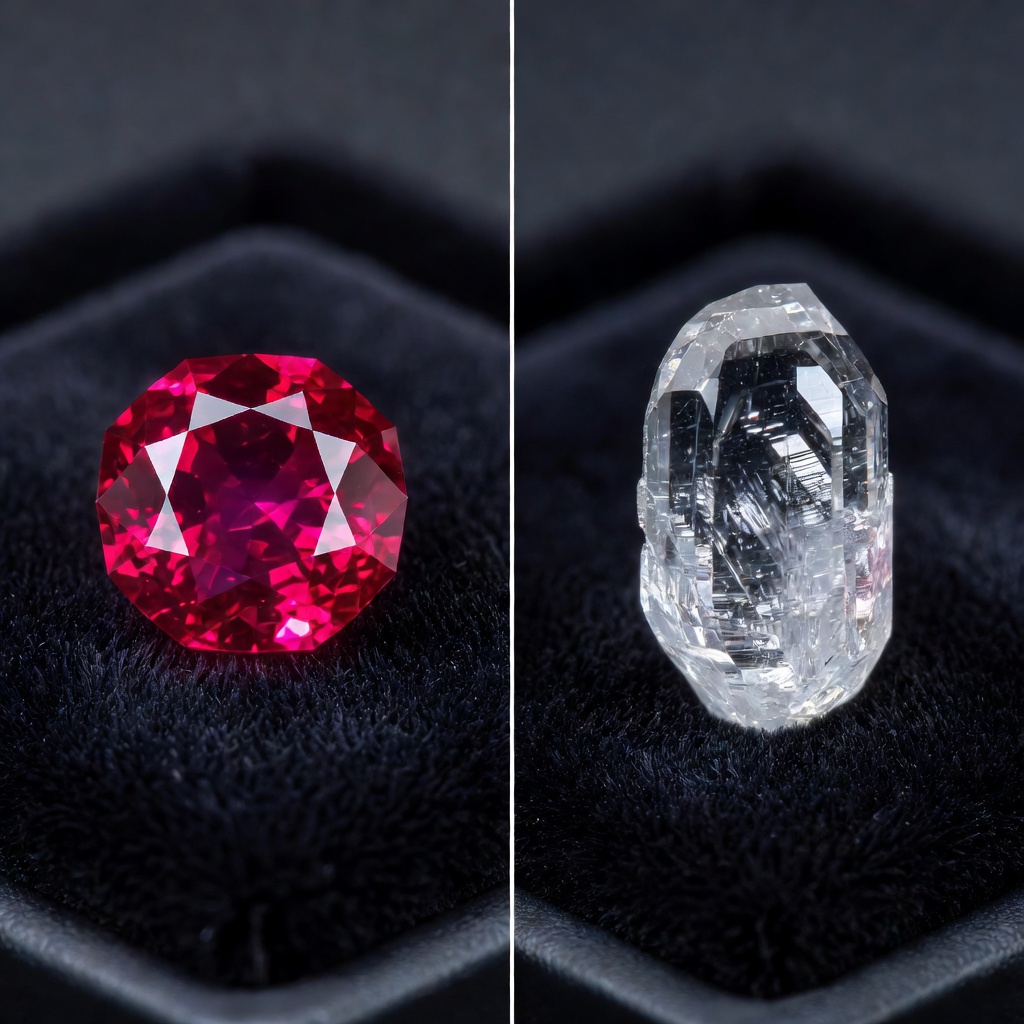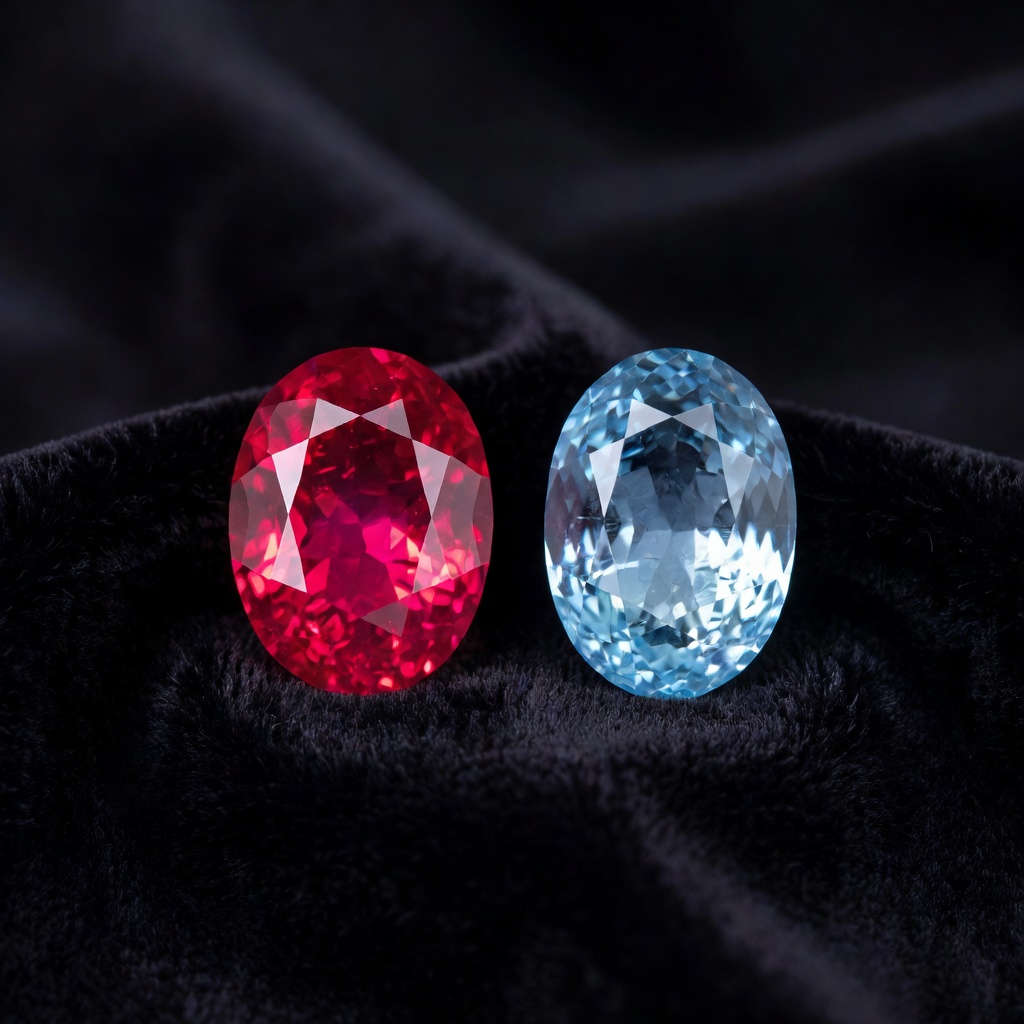
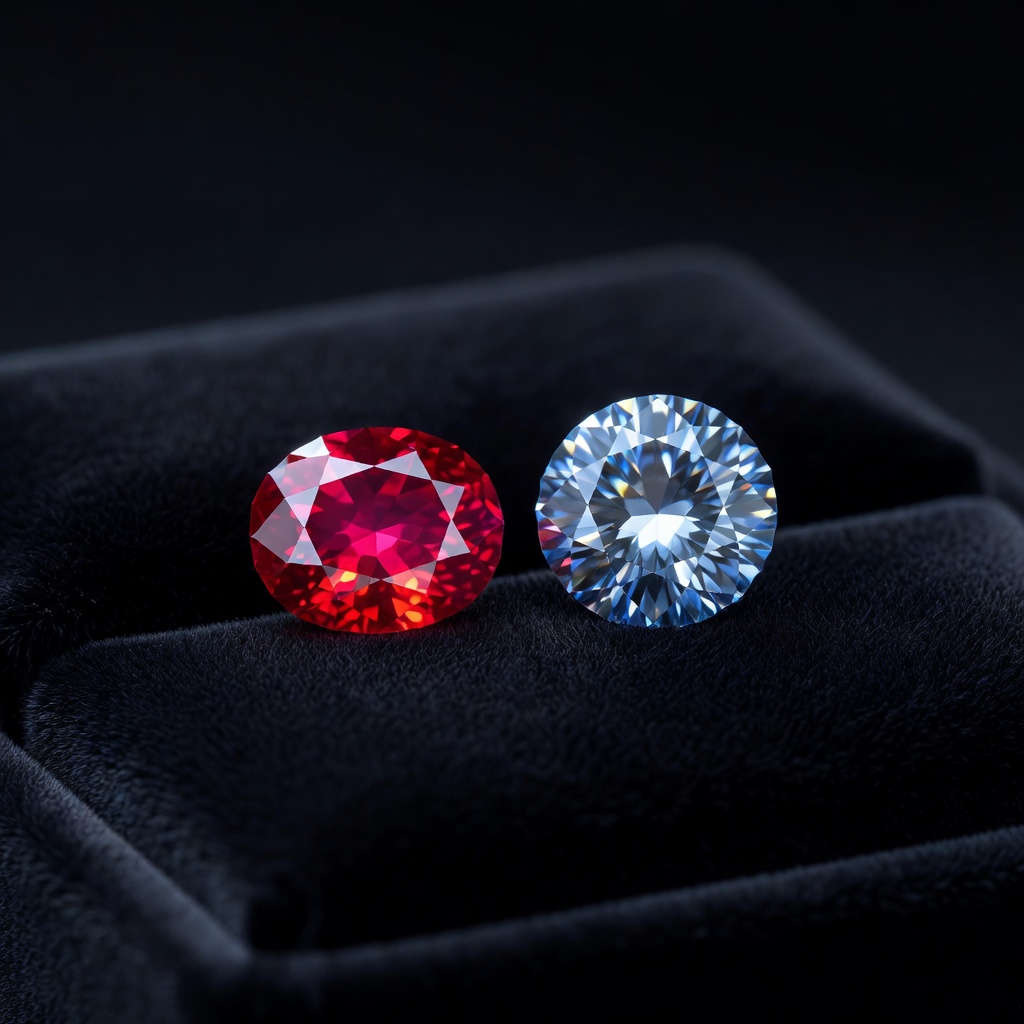
Understanding the Ruby vs Blue Diamond Debate
When discerning collectors and investors venture into the upper echelons of the gemstone market, they frequently encounter a compelling luxury gemstone comparison that pits two of nature's most extraordinary creations against each other. The ruby vs blue diamond debate represents far more than a simple preference between red and blue hues; it encapsulates a complex evaluation of geological rarity, optical performance, and long-term asset appreciation. Both gemstones command positions at the pinnacle of the colored stone hierarchy, yet they offer distinctly different value propositions for those seeking to acquire investment grade gemstones that transcend mere ornamental appeal.
Several critical factors drive collectors to narrow their choices to these specific gems rather than considering emeralds, sapphires, or other precious stones. Rarity metrics favor both categories, with natural blue diamonds representing statistical anomalies in the diamond world, while fine untreated rubies from historic mines face depletion levels that threaten future availability. Durability considerations also play a crucial role, as both stones offer exceptional hardness suitable for daily wear, though their structural properties differ significantly. Aesthetic appeal remains subjective yet deeply rooted in cultural symbolism, with each stone carrying millennia of historical significance that enhances their desirability among connoisseurs seeking pieces with both visual impact and narrative depth.
Geological Origins: Corundum vs Carbon Formation
The fundamental distinction between these precious stones begins deep within the Earth, where vastly different geological processes create the corundum vs diamond dichotomy that defines their physical and chemical properties. Rubies form as varieties of corundum, composed primarily of aluminum oxide (Al₂O₃) that crystallizes under intense heat and pressure within metamorphic marble deposits. These formations typically occur in areas where limestone has undergone contact metamorphism, allowing chromium impurities to replace aluminum atoms in the crystal lattice—a substitution that ultimately produces the stone's coveted red coloration. The most prized specimens originate from the Mogok Stone Tract in Myanmar, where specific geological conditions have produced rubies with exceptional fluorescence and saturation for over 800 years, though significant deposits also exist in Mozambique, Thailand, and Madagascar.
Conversely, blue diamonds represent one of nature's most fascinating chemical anomalies, forming from carbon atoms arranged in an isometric crystal structure approximately 140 to 190 kilometers deep within the Earth's mantle. The presence of trace boron elements—estimated at just one boron atom per million carbon atoms—creates the semiconducting properties and blue coloration that distinguish these rare Type IIb diamonds from their colorless counterparts. Unlike rubies, which form in the Earth's crust, diamonds require volcanic eruptions through kimberlite pipes to reach the surface, with primary mining operations concentrated in South Africa's Cullinan mine, Australia's Argyle mine (now depleted), and the Golconda region of India. This fundamental difference in gemstone formation not only affects their chemical composition but also influences their availability, with blue diamond deposits being exponentially rarer than ruby-bearing marble formations.
Color Grading Standards and Visual Characteristics
Distinguishing between mediocre and museum-quality specimens requires understanding the nuanced color grading systems that govern each stone category, particularly when evaluating a pigeon blood ruby against a fancy blue diamond. For rubies, the pinnacle of desirability is occupied by stones displaying "pigeon blood" red—a term originating from the Burmese description of the first two drops of blood from a freshly killed pigeon, representing a vivid red with slight purple undertones and exceptional saturation. The Gemological Institute of America (GIA) and Swiss laboratories like SSEF evaluate rubies based on hue, tone, and saturation, with the finest specimens exhibiting strong fluorescence under ultraviolet light due to high chromium content and low iron levels. This fluorescence creates an internal glow that makes the stone appear illuminated from within, a characteristic particularly associated with historic Burmese mines and increasingly rare in modern production.
Blue diamonds follow a distinctly different grading scale that emphasizes intensity modifiers rather than hue variations, ranging from Fancy Light Blue through Fancy Intense to Fancy Vivid Blue, with the latter commanding the highest premiums. Unlike rubies, where inclusions such as "silk" (rutile needle inclusions) can actually enhance value by indicating untreated status and creating star effects in cabochon cuts, blue diamonds face stricter clarity expectations. The presence of gray or green secondary hues significantly diminishes value, with the most coveted stones displaying pure blue coloration without modifier tones. When examining investment-grade specimens, collectors should request spectroscopic analysis to verify natural origin, as the absorption patterns created by boron in natural stones differ markedly from those in irradiated or laboratory-grown alternatives that attempt to mimic these rare geological creations.
Durability Analysis: Mohs Hardness and Wearability
Practical considerations regarding daily wear and long-term preservation necessitate a thorough gemstone hardness comparison that examines both quantitative ratings and qualitative toughness factors. On the Mohs scale ratings, blue diamonds occupy the apex position at 10, representing the hardest known natural substance and providing unmatched resistance to scratching from everyday contact with dust particles, which typically contain quartz (hardness 7). Rubies, scoring 9 on the Mohs scale, offer exceptional durability that surpasses virtually all other colored gemstones except diamonds, making them suitable for rings and bracelets that endure regular impact. However, this one-point difference belies significant structural distinctions that affect real-world performance and setting requirements for high-value jewelry pieces.
While diamonds resist scratching better than any material, they possess perfect cleavage in four directions, meaning a sharp blow at the correct angle can cause them to split—a vulnerability that requires protective settings for stones with thin girdles or pointed corners. Rubies, being corundum, lack cleavage planes and instead display conchoidal fracture patterns, making them more resistant to chipping from accidental impacts despite their marginally lower hardness. For consumers evaluating options for engagement rings or daily-wear jewelry, blue diamonds offer superior scratch resistance but require protection against sharp blows, while rubies provide better overall toughness but may develop surface abrasions over decades of continuous wear. Professional jewelers often recommend bezel settings or protective prongs for both stones, though the specific setting style should account for the diamond's cleavage vulnerability versus the ruby's potential for surface wear along facet junctions.
Rarity Factors and Market Availability
Understanding the scarcity dynamics of natural vs lab grown gems requires examining production statistics and mining depletion trends that fundamentally affect availability and investment potential. Natural blue diamonds constitute less than 0.1% of all diamonds mined globally, with Type IIb stones (those containing boron) representing the rarest category within the already exclusive blue diamond classification. The closure of Australia's Argyle mine in 2020, which produced the majority of the world's pink and blue diamonds, has further constrained supply, with new discoveries requiring extraction depths exceeding 1,000 meters in South African operations where yields remain minimal. This extreme scarcity means that most collectors will never encounter a natural fancy vivid blue diamond larger than one carat in their lifetime, creating an exclusivity factor that drives auction prices into the millions.
Fine untreated rubies, particularly those from Myanmar's Mogok region, face parallel extinction-level scarcity due to political instability, environmental regulations, and depletion of primary deposits, though they remain more numerous than blue diamonds in absolute terms. The market currently faces a bifurcation between heat-treated rubies, which comprise approximately 95% of commercial availability, and untreated specimens that command 300-500% price premiums. Unlike blue diamonds, where irradiation treatments are detectable and significantly devalue stones, heat treatment of rubies is widely accepted when disclosed, though it still impacts investment-grade status. For collectors seeking natural vs lab grown gems with documented provenance, untreated Burmese rubies over five carats arguably rival blue diamonds in terms of absolute rarity, particularly as modern mining in Mozambique and Madagascar produces stones with different chemical signatures and typically lower fluorescence than historic Burmese material.
Price Comparison: Investment Value and ROI
Financial analysis of these colored stones reveals distinct market behaviors that prospective investors must understand before allocating significant capital to either category. Current market data indicates that fancy vivid blue diamonds command prices ranging from $200,000 to over $1 million per carat for exceptional stones exceeding two carats, with the famous Blue Moon Diamond (12.03 carats) having sold for $48.4 million in 2015, representing approximately $4 million per carat. Fine pigeon blood rubies from Burma typically trade between $10,000 and $100,000 per carat depending on size and treatment status, with the record-holding Sunrise Ruby (25.59 carats) achieving $30.3 million in 2015 at approximately $1.18 million per carat—demonstrating that while individual ruby records exist, blue diamonds generally maintain higher per-carat averages across all size categories.
Liquidity factors differ substantially between the two markets, with blue diamonds offering more standardized resale channels through major auction houses like Sotheby's and Christie's, where transparent pricing mechanisms facilitate quicker sales for stones with GIA certification. The ruby market, while robust, requires more specialized knowledge to navigate, with liquidity concentrated among Asian collectors and institutions specifically seeking Burmese origin stones. For portfolio diversification, investment advisors typically suggest blue diamonds for investors seeking stable appreciation and immediate liquidity, while untreated Burmese rubies appeal to those willing to hold assets for 10-15 years to capitalize on mining depletion premiums.
| Characteristic | Pigeon Blood Ruby | Fancy Blue Diamond |
|---|---|---|
| Mohs Hardness | 9 | 10 |
| Color Cause | Chromium impurities in corundum | Boron traces in carbon lattice |
| Rarity Level | Rare (fine untreated specimens) | Extremely Rare (<0.1% of diamonds) |
| Average Price per Carat | $10,000 - $100,000+ | $50,000 - $500,000+ |
| Primary Origins | Myanmar, Mozambique, Thailand | South Africa, India, Australia |
| Optimal Metal Setting | Yellow Gold or Rose Gold | Platinum or White Gold |
| Common Treatments | Heat treatment (95% of market) | Irradiation (less common, detectable) |
| Investment Liquidity | Moderate (specialized collectors) | High (auction house standard) |
| UV Fluorescence | Strong red fluorescence | Typically inert or weak |
Symbolism, History, and Cultural Significance
Beyond their physical properties and monetary value, both stones carry profound cultural weight that enhances their desirability among collectors seeking objects with historical resonance. Rubies have served as talismans of power and protection across numerous civilizations, with ancient Burmese warriors embedding the stones into their flesh before battle, believing the gems would render them invincible. In Indian culture, the Sanskrit word for ruby, "ratnaraj," translates to "king of precious stones," with Hindu tradition associating the gem with the Sun and the life force it represents. The British Crown Jewels feature the Black Prince's Ruby (actually a spinel) in the Imperial State Crown, illustrating the Western association of red stones with royal authority and military prowess that dates to the medieval period.
Blue diamonds carry an equally compelling but distinctly different mythology centered on wealth, eternity, and the mysterious depths of the ocean and sky. The Hope Diamond, perhaps the world's most famous gemstone, exemplifies the curse legends that have surrounded exceptional blue diamonds since the 17th century, while simultaneously representing the ultimate expression of luxury and status. Modern celebrity culture has reinforced these associations, with collectors like Laurence Graff and celebrities such as Cate Blanchett (who wore the 31-carat Blue Diamond to the 2014 Oscars) showcasing these stones as the ultimate red-carpet statement. For collectors, choosing between a pigeon blood ruby and a fancy blue diamond often involves aligning with these symbolic narratives—selecting between the passionate, protective warmth of the ruby and the cool, eternal sophistication of the blue diamond.
Jewelry Design: Settings, Metals, and Styling
Maximizing the visual impact of these exceptional stones requires careful consideration of metal pairings, setting architectures, and design contexts that complement their unique optical properties. Warm-toned metals including 18-karat yellow gold and rose gold enhance the appearance of rubies by creating complementary color contrast that makes the red appear more vivid, while cooler white metals or platinum tend to mute the warmth of fine Burmese stones. Conversely, fancy blue diamonds achieve maximum impact when set in platinum or white gold, which amplifies the cool tones and creates a seamless color field that makes the stone appear to float. When designing pieces that incorporate both stones, skilled jewelers often use neutral diamonds as transitional elements or employ protective bezels to prevent the harder diamond from abrading the ruby surface.
Setting security considerations vary significantly between these stones due to their structural differences and value levels. For blue diamonds, V-prong settings protect the points of princess or marquise cuts where cleavage risks concentrate, while halo designs can enhance the apparent size of exceptionally rare stones without compromising security. Rubies tolerate prong settings well but benefit from gallery rails that protect the pavilion from impact, particularly for stones over three carats where replacement costs become prohibitive. Occasion-appropriate design also influences selection, with blue diamonds excelling in formal evening wear and bridal contexts where their association with eternity resonates, while rubies offer versatility across both day and evening wear, particularly in vintage-inspired designs that reference Art Deco or Victorian aesthetics where colored center stones were traditionally favored.
Certification and Authentication Requirements
Acquiring investment grade gemstones without proper documentation exposes collectors to significant financial risks, making certification selection as crucial as the stone selection itself. For blue diamonds, the Gemological Institute of America (GIA) provides the industry-standard grading reports that document color grade (from Fancy Light to Fancy Vivid), clarity, carat weight, and cut quality, alongside critical origin of color determination that distinguishes natural boron-containing stones from irradiated or laboratory-grown alternatives. The GIA's strict grading protocols for colored diamonds include controlled lighting environments and comparison to master stone sets, ensuring that a Fancy Vivid Blue designation represents consistent quality across international markets.
Ruby certification requires different expertise, with Swiss laboratories SSEF (Swiss Gemmological Institute) and Gübelin holding preeminent status for high-end specimens, particularly regarding origin determination and treatment detection. These institutions utilize advanced spectroscopy and microscopic analysis to identify heat treatment signatures, distinguish between Burmese and African origins based on inclusion patterns and chemical traces, and detect glass filling or flux healing in lower-quality stones. For both categories, origin documentation significantly affects value, with Burmese rubies commanding 50-100% premiums over African stones of comparable quality, and Golconda blue diamonds (from the historic Indian mines) achieving legendary status that transcends standard grading metrics. When purchasing natural vs lab grown gems, insist on reports that specifically address treatment status, as undisclosed enhancements can reduce resale values by 70% or more.
Final Verdict: How to Choose Your Perfect Gemstone
Navigating the ruby vs blue diamond decision ultimately requires aligning geological reality with personal circumstances, aesthetic preferences, and investment timelines. For collectors with unlimited budgets seeking immediate liquidity and maximum durability, fancy vivid blue diamonds represent the pinnacle of colored stone acquisition, offering unmatched hardness and standardized resale markets. However, those drawn to warmer color palettes, historical significance, and potentially higher percentage returns over extended holding periods may find that fine untreated pigeon blood rubies offer more compelling value propositions, particularly as Burmese mines approach exhaustion.
Practical decision-making should incorporate lifestyle factors alongside financial considerations. Active individuals or those seeking daily-wear engagement pieces may prioritize the diamond's superior scratch resistance, while those valuing uniqueness and cultural narrative might gravitate toward rubies with documented provenance from historic mines. Long-term care requirements also differ, with blue diamonds requiring less maintenance but professional insurance appraisals, while rubies need periodic repolishing to address surface wear over decades. Ultimately, both stones represent legitimate stores of value and objects of extraordinary beauty—the choice depends on whether you seek the cool, eternal mystery of the deep earth embodied in blue carbon, or the passionate, protective fire of aluminum oxide touched by chromium's red embrace.
Frequently Asked Questions
Which is more expensive, a ruby or blue diamond?
Blue diamonds typically command higher prices per carat than rubies. While fine pigeon blood rubies can reach $100,000+ per carat, fancy vivid blue diamonds often start at $200,000 per carat and can exceed millions for exceptional stones. The price gap widens significantly for stones over 3 carats, with blue diamonds becoming exponentially rarer.
Is ruby or blue diamond better for an engagement ring?
Blue diamonds offer superior hardness (10 vs 9 on Mohs scale) making them ideal for daily wear, while rubies require slightly more care to prevent scratching. However, rubies offer warmer symbolism representing passion and love, whereas blue diamonds symbolize eternity and fidelity. Both are excellent choices, but blue diamonds provide better long-term durability for active lifestyles.
Can you tell the difference between natural and lab-grown blue diamonds or rubies?
Distinguishing natural from lab-grown stones requires professional gemological equipment. Natural blue diamonds contain specific boron arrangements and growth patterns visible under spectroscopy, while lab-grown versions may show metallic flux inclusions. For rubies, natural silk inclusions differ from the curved growth lines seen in synthetic corundum. Always request certification from GIA or SSEF for verification.
What causes the blue color in blue diamonds compared to ruby's red color?
Blue diamonds derive their color from trace amounts of boron trapped in the carbon crystal structure during formation deep in Earth's mantle, which absorbs red light and reflects blue. Rubies get their red color from chromium impurities replacing aluminum in the corundum crystal lattice, which also causes fluorescence under UV light—a characteristic blue diamonds lack.
Are rubies rarer than blue diamonds?
High-quality natural rubies from historic mines like Mogok are extremely rare, but blue diamonds are statistically rarer overall, representing less than 0.1% of all diamonds mined. However, fine untreated pigeon blood rubies over 5 carats are arguably as rare as fancy vivid blue diamonds. The perception of rarity also depends on specific quality grades and origin.
Which gemstone holds its value better as an investment?
Both gemstones have strong investment potential but behave differently. Blue diamonds typically show steady appreciation with high liquidity at auction houses, particularly those with famous provenance. Untreated Burmese rubies have seen dramatic price increases due to mining depletion but have a more specialized collector market. Generally, blue diamonds offer more stable liquidity, while top-tier rubies can yield higher percentage gains.
How should I clean and care for ruby versus blue diamond jewelry?
Blue diamonds can withstand ultrasonic cleaners and steam cleaning due to their superior hardness. Rubies, while durable, may contain fractures or be heat-treated, making warm soapy water and soft brushes the safest cleaning method. Both should avoid harsh chemicals and extreme temperature changes, though blue diamonds are more resistant to thermal shock than rubies.
Can rubies and blue diamonds be worn together in the same jewelry piece?
Yes, combining rubies and blue diamonds creates striking complementary color contrast (red vs blue) popular in high jewelry designs. However, ensure the setting protects the ruby, as the harder diamond could scratch it if they rub together. Use protective bezels or ensure adequate spacing between stones, and consider pairing with neutral diamonds to bridge the color gap.