Introduction: Understanding Ruby vs Black Tourmaline
When exploring the fascinating world of gemstones, the comparison between Ruby vs Black Tourmaline presents a compelling study in contrasts that attracts both collectors and spiritual practitioners alike. Ruby stands as one of the most revered precious gemstones, belonging to the corundum family and commanding prices that reflect its status alongside diamond, emerald, and sapphire. In stark contrast, Black Tourmaline—specifically the schorl variety—functions primarily as a protective black crystal favored for its grounding properties rather than its ornamental value alone.
Consumers frequently find themselves weighing these stones against one another despite their categorization in different market tiers, primarily because both offer profound energetic benefits and striking visual presence in jewelry designs. While Ruby represents the pinnacle of precious vs semi-precious gemstones hierarchy with its association with luxury and romance, Black Tourmaline serves practical function as an energetic shield accessible to virtually every budget. Historically, Ruby has earned the moniker "King of Gems" among ancient Sanskrit texts and royal courts, symbolizing power, passion, and protection through wealth, whereas Black Tourmaline has served indigenous cultures for millennia as the "Protection Stone," used by shamans and healers to create barriers against negative forces and environmental pollutants.
Chemical Composition and Geological Formation
The fundamental differences between corundum vs schorl begin at the molecular level, explaining why these stones exhibit vastly different physical and metaphysical properties. Ruby consists of aluminum oxide (Al₂O₃) in a trigonal crystal system, with its iconic red coloration resulting from chromium traces replacing aluminum atoms within the lattice structure. This specific chemical arrangement requires precise geological conditions where aluminum-rich rocks undergo metamorphism under intense heat and pressure, typically forming in marble or basalt environments across Myanmar, Thailand, and Mozambique.
Black Tourmaline presents a far more complex chemical formula as a borosilicate mineral containing iron, magnesium, sodium, lithium, and aluminum arranged in a hexagonal crystal system. Unlike Ruby's relatively straightforward composition, Tourmaline's chemical variability creates a group of minerals rather than a single species, with schorl specifically characterized by high iron content that produces its deep black coloration. These crystals form in igneous and metamorphic environments through hydrothermal activity, often growing in the pegmatite veins of Brazil, Africa, and Afghanistan where mineral-rich solutions crystallize under lower pressure conditions than those required for corundum formation.
Visual Characteristics and Aesthetic Appeal
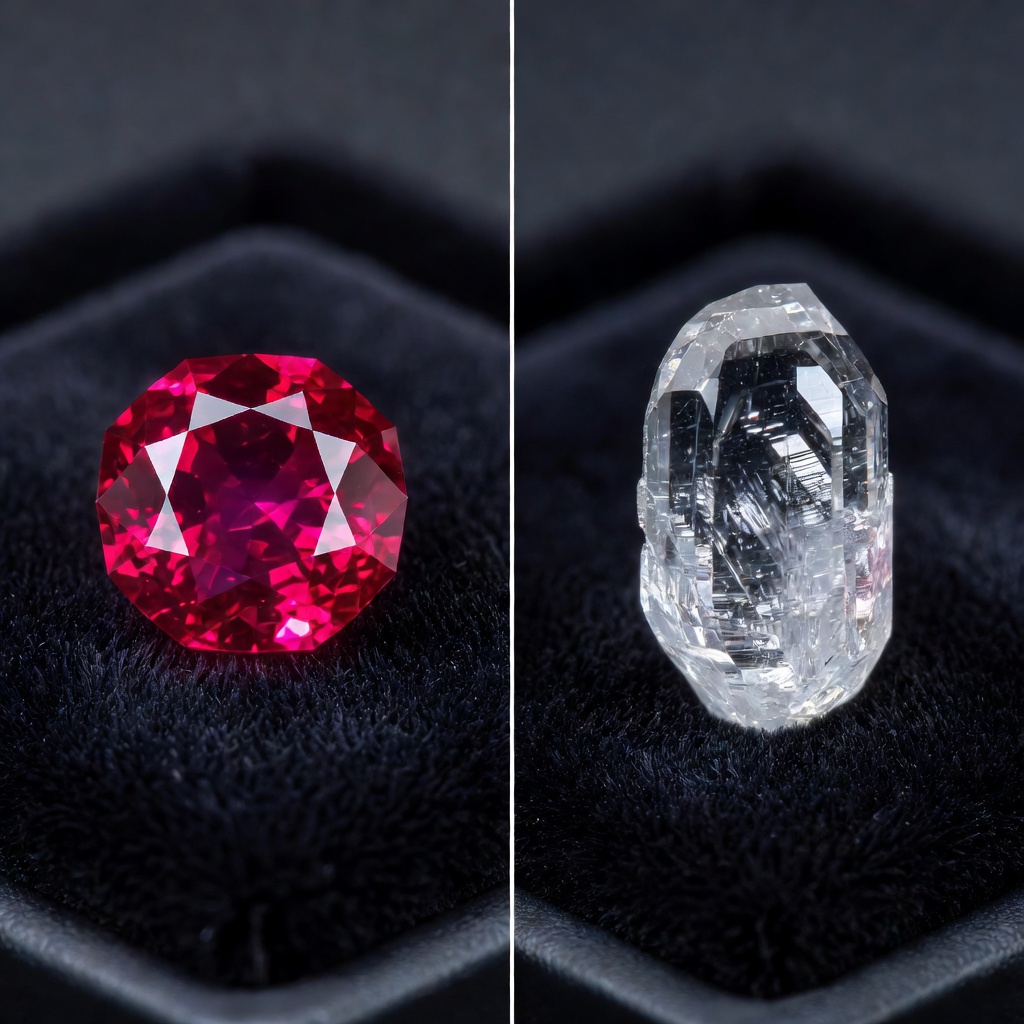
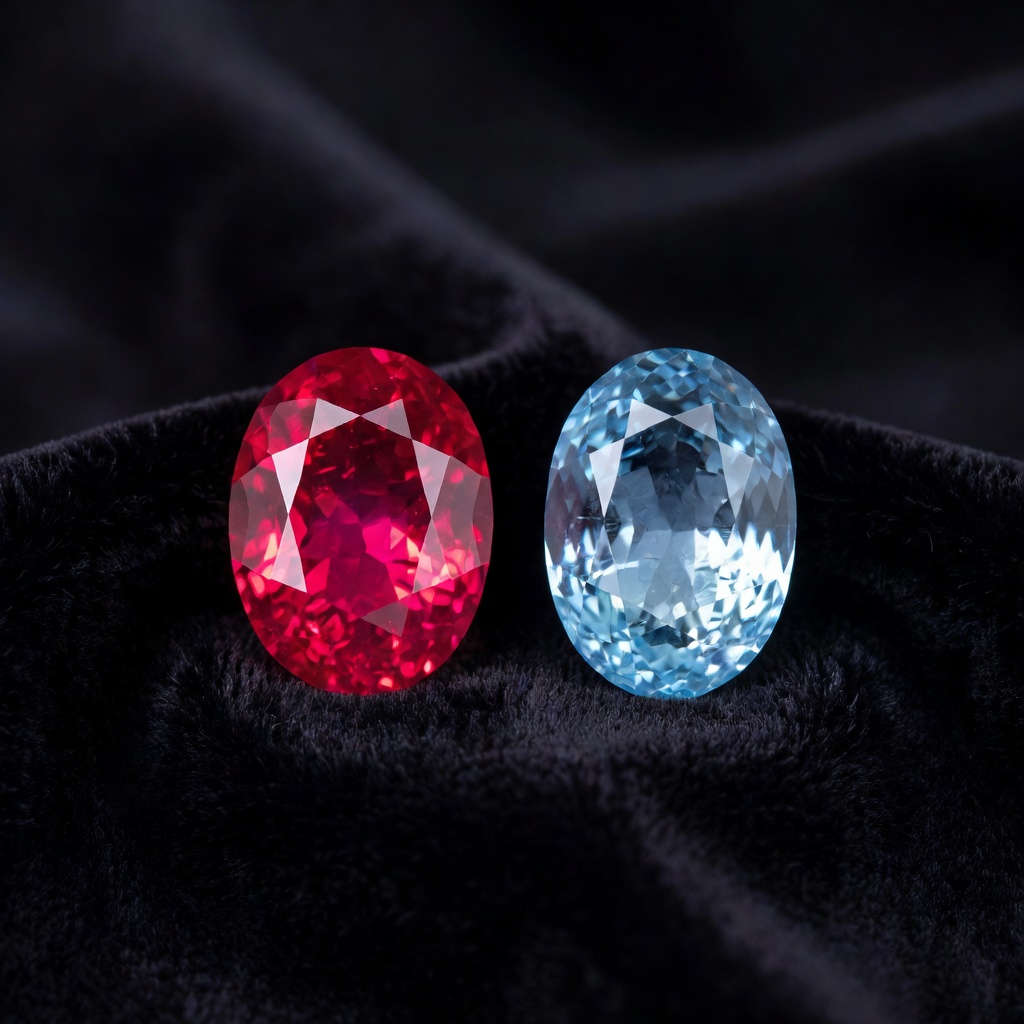
Discerning the red gemstone properties of Ruby reveals why this stone has captivated humanity for thousands of years, particularly when compared to the subdued elegance of Black Tourmaline. Fine Rubies display a pigeon blood red—a pure, vivid red with subtle blue undertones that seems to glow from within due to chromium's fluorescence under natural light. This transparency allows master cutters to maximize brilliance through precise faceting, creating gems that exhibit vitreous to adamantine luster reminiscent of diamond fire, though with a warmth unique to this precious stone.
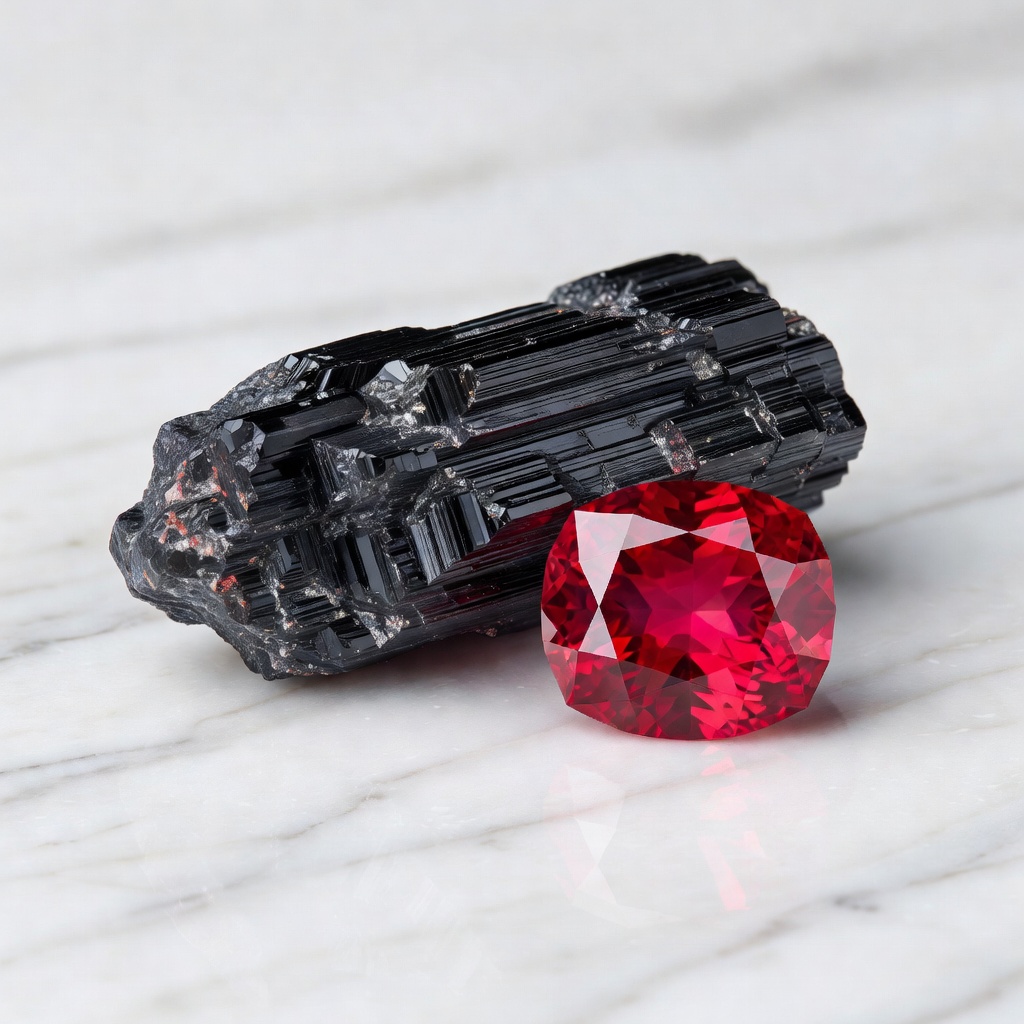
Black Tourmaline offers a completely different aesthetic language, presenting opaque to semi-opaque deep black crystals that may reveal subtle blue, brown, or grey undertones when examined under bright lighting. Unlike Ruby's pursuit of clarity, Tourmaline commonly displays natural longitudinal striations running parallel to the crystal's length, along with internal inclusions that crystal healers often view as "record keepers" of the stone's geological history. The luster ranges from vitreous to slightly resinous, giving polished specimens a sophisticated, understated gleam rather than brilliant sparkle, making it particularly appealing for modern minimalist jewelry designs and masculine accessories.
Durability and Hardness: Mohs Scale Analysis
Understanding gemstone hardness comparison proves essential when selecting jewelry intended for daily wear or specific lifestyle applications. Ruby ranks 9 on the Mohs hardness scale, making it second only to diamond in terms of scratch resistance and suitable for heirloom pieces meant to last generations. This exceptional hardness combined with excellent toughness—resistance to breaking or chipping—allows Ruby to withstand the rigors of daily wear in engagement rings and bracelets, though cutters must still account for potential brittleness along certain crystallographic directions when setting the stone.
Black Tourmaline measures 7 to 7.5 on the Mohs scale, placing it in the same range as quartz and making it sufficiently hard for most jewelry applications, though notably softer than Ruby. However, hardness alone does not determine durability; Tourmaline possesses distinct cleavage planes that create natural lines of weakness within the crystal structure. This characteristic means that while the stone resists scratching reasonably well, it can fracture or split if struck sharply against hard surfaces or subjected to extreme pressure changes. For this reason, protective settings such as bezels are recommended for Black Tourmaline rings, while pendants and earrings present safer options for showcasing this protective black crystal without risking damage during physical activities.
Metaphysical Properties and Healing Energies
The energetic profiles of these stones illustrate complementary rather than competing vibrations, with Ruby functioning as an amplifier of personal power while Black Tourmaline operates as an energetic filtration system. Ruby stimulates the heart chakra, enhancing passion, courage, and vital life force energy (prana or chi) throughout the physical and subtle bodies. Crystal practitioners often recommend Ruby for individuals seeking to overcome lethargy, depression, or creative blocks, as its frequency resonates with the bloodstream and adrenal glands, literally warming the body and increasing metabolic fire. Case studies in crystal healing literature document athletes using Ruby to enhance stamina and executives employing the stone to maintain confidence during high-stakes negotiations.
Black Tourmaline serves a distinctly different yet equally vital function as one of the most effective protective black crystals available to modern metaphysical practitioners. This stone creates electromagnetic field shielding capable of blocking environmental pollutants, radiation from electronic devices, and psychic debris from negative thought forms. Unlike Ruby's projecting energy, Tourmaline operates through absorption and transmutation, pulling dense energies into its structure and converting them into neutral or positive vibrations. Empaths and highly sensitive individuals frequently carry raw Black Tourmaline in their pockets or place specimens near computers to mitigate the draining effects of crowded environments and digital technology, reporting significant reductions in anxiety and energetic overwhelm.
Chakra Associations and Spiritual Applications
The distinction between heart chakra vs root chakra stones becomes particularly relevant when comparing these gemstones for meditation and energy work practices. Ruby primarily resonates with the Heart Chakra (Anahata), opening the center of love, compassion, and emotional healing while simultaneously activating the Base Chakra to stimulate kundalini energy rising through the spine. Advanced practitioners often place Ruby directly over the heart during meditation to release stored grief or resentment, visualizing the stone's red light dissolving energetic blockages and restoring the heart's natural capacity for joy and connection. This dual action—opening the heart while grounding through the base—creates a powerful combination for those working through relationship trauma or seeking to attract soulmate connections.
Black Tourmaline aligns predominantly with the Root Chakra (Muladhara), establishing profound grounding and connection to Earth energy that proves essential for spiritual protection work. When working with Tourmaline, practitioners typically hold the stone in their receptive hand while visualizing roots extending from their feet deep into the earth, creating an impenetrable shield of black light surrounding the auric field. This stone excels in creating sacred protected spaces; placing four Black Tourmaline crystals at the corners of a room establishes energetic boundaries that prevent intrusion while maintaining a grounded atmosphere conducive to deep meditation or therapeutic sessions. For those exploring the contrast between heart chakra vs root chakra stones, combining both stones in practice creates a powerful circuit between earthly stability and heart-centered consciousness.
Market Value, Rarity and Investment Potential
The economic realities of precious vs semi-precious gemstones become immediately apparent when examining current market valuations for these two crystals. High-quality Rubies command prices ranging from $1,000 to $15,000 or more per carat, with exceptional untreated Burmese specimens occasionally exceeding $100,000 per carat at auction. This pricing reflects not only the stone's beauty but also its extreme rarity; deposits of fine Ruby are depleting rapidly, and untreated stones over five carats represent genuine geological miracles. Investors seeking portable wealth preservation often favor certified natural Rubies over diamonds, as historical data shows consistent value retention and appreciation for top-tier specimens during economic fluctuations.
Black Tourmaline remains remarkably accessible, with prices typically ranging from $10 to $100 per carat depending on size, cut quality, and whether the specimen displays unusual crystal formations or exceptional luster. Unlike Ruby, Tourmaline deposits remain abundant in Brazil, Africa, and California, ensuring steady supply for collectors and jewelry designers. While investment potential remains limited compared to precious gemstones, rare Tourmaline varieties such as indicolite or rubellite command higher prices, though standard schorl serves its purpose as an affordable entry point for crystal collectors. The value proposition differs fundamentally: Ruby purchases represent luxury acquisitions or investment vehicles, while Black Tourmaline acquisitions prioritize functional metaphysical utility over financial appreciation.
| Characteristic | Ruby | Black Tourmaline |
|---|---|---|
| Chemical Family | Corundum (Aluminum Oxide) | Schorl Tourmaline (Borosilicate) |
| Mohs Hardness | 9 | 7-7.5 |
| Primary Chakra | Heart Chakra (Anahata) | Root Chakra (Muladhara) |
| Price Range (per carat) | $1,000 - $15,000+ | $10 - $100 |
| Optical Property | Transparent to Translucent | Opaque |
| Luster | Vitreous to Adamantine | Vitreous to Resinous |
| Formation Environment | High-pressure Metamorphic | Hydrothermal Igneous |
| Metaphysical Function | Passion, Vitality, Love Attraction | Protection, Grounding, EMF Shielding |
| Best Jewelry Use | Engagement Rings, Heirloom Pieces | Pendants, Beaded Bracelets, Men's Jewelry |
Jewelry Design Applications and Styling
Ruby's role in fine jewelry design leverages its status as a precious gemstone capable of anchoring significant pieces such as engagement rings, cocktail statement jewelry, and multigenerational heirlooms. When designing with Ruby, jewelers must consider secure setting options; prong settings maximize light return for brilliant cuts, while bezel settings provide superior protection for cabochons or stones with visible inclusions. The stone pairs magnificently with yellow gold, which complements its warm red tones and references historical pieces from the Victorian and Art Deco eras, though platinum and white gold settings create striking modern contrasts that emphasize the gem's vivid color saturation. Practical styling tips include wearing Ruby pieces against black or white clothing to maximize color impact, and reserving large statement pieces for evening events where lighting can activate the stone's fluorescence.
Black Tourmaline offers extraordinary versatility in contemporary jewelry design, particularly excelling in bohemian, minimalist, and masculine aesthetics that prioritize texture and spiritual significance over ostentatious display. Raw crystal pendants preserve the natural striations and terminations that many believe enhance the stone's protective capabilities, while polished beads create powerful malas and wrist malas for meditation practitioners. Unlike Ruby, which demands precious metal settings, Tourmaline pairs beautifully with silver, gunmetal, blackened steel, leather cords, and macramé techniques, making it ideal for unisex designs and men's jewelry collections. Fashion-forward individuals often layer Black Tourmaline necklaces with other black stones like onyx or obsidian for monochromatic impact, or contrast the deep black against bright silver chains to create visual interest without competing with the stone's earthy energy.
Care, Cleaning and Maintenance Requirements
Maintaining Ruby's brilliance requires understanding its specific vulnerabilities despite its impressive durability. Untreated Rubies generally tolerate ultrasonic cleaning devices and steam cleaners, though stones that have undergone fracture filling, dyeing, or heat treatment require gentler approaches using warm soapy water and soft brushes. Owners should avoid exposing Rubies to extreme temperature changes that could cause thermal shock, and store pieces separately from softer gems to prevent Ruby from scratching other jewelry. Professional inspections every twelve months ensure that prongs remain tight and the stone hasn't developed chips along girdle edges; for daily wear rings, biannual checks are recommended given the investment value at stake.
Black Tourmaline demands more nuanced care due to its porous nature and structural cleavage. Water soaking can penetrate surface fissures and cause internal damage or discoloration over time, making dry cleaning methods preferable. Crystal caretakers often use dry salt cleansing by burying Tourmaline in sea salt for twenty-four hours to absorb accumulated negative energies, or employ smudging with sage or palo santo to refresh the stone's vibrational field without liquid exposure. Physical protection proves equally important; store Tourmaline pieces in padded compartments away from harder stones like Ruby, and remove rings before engaging in manual labor or exercise. For energetic maintenance, placing Black Tourmaline on a selenite charging plate overnight restores its protective capabilities while avoiding the water damage risks associated with moonlight cleansing during humid conditions.
Final Verdict: Choosing Between Ruby and Black Tourmaline
Navigating the Ruby vs Black Tourmaline decision ultimately requires honest assessment of budget constraints, intended usage, and personal energetic needs rather than simply following traditional gemstone hierarchies. If seeking an investment-grade precious gemstone for significant life events such as engagements, anniversaries, or legacy heirlooms, Ruby provides unmatched hardness, historical prestige, and potential appreciation while serving heart-centered metaphysical goals. Conversely, if prioritizing daily energetic protection, anxiety management, or entry-level crystal collection, Black Tourmaline delivers exceptional value and functionality at accessible price points, though requiring more careful handling than its precious counterpart.
Consider the powerful potential of wearing both stones together to create balanced heart protection; Ruby opens the heart to love, abundance, and passion while Black Tourmaline establishes boundaries against energy vampires and environmental stressors. This combination proves particularly effective for healers, therapists, and empathetic individuals who must remain emotionally open professionally while maintaining personal energetic hygiene. Astrological considerations may also guide selection; traditional associations link Ruby with Cancer and Leo, enhancing these signs' natural warmth and leadership qualities, while Black Tourmaline supports Capricorn and Libra by providing grounding for the former and protective boundaries for the latter. Whether choosing the royal fire of Ruby or the shielding darkness of Tourmaline, both stones offer profound gifts that transcend their market classifications, serving as tools for transformation, protection, and personal power in distinct yet complementary ways.
Frequently Asked Questions
Which is more expensive, Ruby or Black Tourmaline?
Ruby is significantly more expensive, with high-quality specimens costing $1,000 to $15,000+ per carat, while Black Tourmaline typically ranges from $10 to $100 per carat depending on size and quality. This price difference reflects Ruby's status as one of the 'Big Three' precious gemstones versus Tourmaline's classification as a semi-precious stone.
Can you wear Ruby and Black Tourmaline together?
Yes, wearing Ruby and Black Tourmaline together creates a powerful synergistic combination. Ruby stimulates the heart chakra, promoting love and passion, while Black Tourmaline provides grounding and protection. This pairing helps you remain open-hearted while maintaining healthy energetic boundaries.
Is Black Tourmaline durable enough for daily wear like Ruby?
While Black Tourmaline (7-7.5 Mohs) is durable enough for regular jewelry, it requires more care than Ruby (9 Mohs). Tourmaline has distinct cleavage planes making it prone to breaking if struck sharply, whereas Ruby's exceptional hardness and toughness make it ideal for daily wear rings and bracelets.
Which stone offers better protection against negative energy?
Black Tourmaline is widely considered the superior choice for protection against negative energy and electromagnetic frequencies. It acts as an energetic vacuum cleaner, absorbing and transmuting dense energies. Ruby offers protection through strengthening your aura and life force, but lacks the specific shielding properties of Tourmaline.
How can I tell the difference between Ruby and red Tourmaline?
Key differences include hardness (Ruby scratches glass easily, Tourmaline may not), inclusions (Rubies often show rutile needles or silk, Tourmaline shows longitudinal striations), and dichroism (Ruby shows stronger pleochroism). Additionally, Rubies exhibit a characteristic red fluorescence under UV light that Tourmaline lacks.
Which gemstone is better for an engagement ring?
Ruby is the traditional choice for engagement rings due to its exceptional hardness (9 Mohs), brilliance, and symbolism of eternal love. Black Tourmaline, while meaningful for protection, is softer and more prone to damage, making it better suited for pendants, earrings, or occasional wear rings rather than daily-wear engagement jewelry.
Do Ruby and Black Tourmaline have different chakra associations?
Yes, they align with different energy centers. Ruby primarily resonates with the Heart Chakra (Anahata), promoting love, compassion, and vitality. Black Tourmaline strongly connects to the Root Chakra (Muladhara), providing grounding, security, and physical energy alignment. Together they create a bridge between earthly stability and heart-centered consciousness.
Are both stones suitable for men and women?
Absolutely. While Ruby is traditionally marketed toward women in Western cultures, it's increasingly popular in men's signet rings and cufflinks. Black Tourmaline has universal appeal and is particularly favored in men's jewelry due to its masculine black color and protective reputation, though it's equally popular among women for spiritual practices.