Ruby vs Black Spinel: Understanding the Differences
When selecting a gemstone for fine jewelry, the comparison between ruby vs black spinel presents a fascinating study in contrasts, geological distinctions, and aesthetic philosophies. Ruby, a variety of corundum composed primarily of aluminum oxide with chromium impurities, stands as one of the most coveted precious gemstones in human history. In contrast, black spinel, formed from magnesium aluminum oxide, offers a sophisticated alternative that has gained significant traction among contemporary jewelry designers seeking dramatic, monochromatic elegance. Despite superficial similarities in crystal structure and historical confusion regarding red spinels being misidentified as rubies, these gemstones occupy distinctly different positions in the market, requiring careful consideration by discerning buyers, collectors, and gem enthusiasts.
The marketplace frequently generates misconceptions regarding black spinel vs ruby relationships, with some retailers inaccurately marketing black spinel as a "black ruby" or synthetic alternative to more expensive stones. This misrepresentation undermines the legitimate value and natural authenticity of black spinel, which is neither a ruby variant nor a laboratory-created substitute. Rather than competing directly, these gemstones complement different aesthetic visions and practical applications within jewelry design. Understanding their fundamental compositional differences—ruby's trigonal crystal system versus spinel's cubic structure—provides essential context for appreciating their unique optical properties, durability characteristics, and investment potentials.
Geological Origins: Corundum vs Spinel Formation
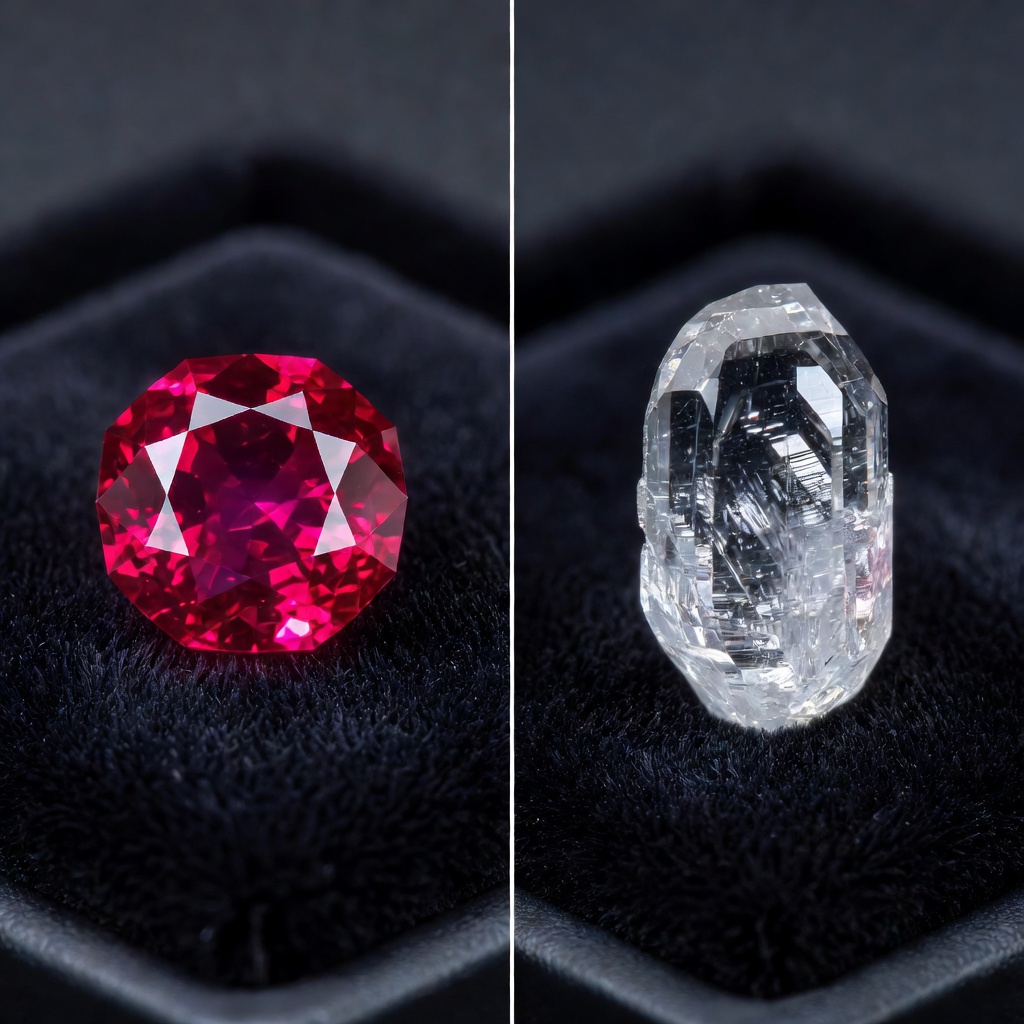
The geological journeys that create these magnificent gemstones reveal nature's complex alchemy under extreme pressure and temperature conditions deep within the Earth's crust. Ruby formation occurs primarily within marble and basalt deposits, where aluminum oxide-rich environments encounter chromium elements that infuse the crystal lattice with its signature red hue. The most prized specimens emerge from Mogok, Myanmar (Burma), where specific metamorphic conditions produce the legendary "pigeon blood" red coloration through the precise alignment of chromium atoms within the corundum structure. These formation environments require specific tectonic activities that concentrate aluminum while excluding silica, which would otherwise form different mineral species during crystallization.
Black spinel crystallizes through distinctly different geological processes, typically forming within metamorphic limestones and contact metamorphism zones where magnesium-rich fluids interact with aluminum-bearing host rocks. Unlike ruby's dependence on chromium for color, black spinel achieves its intense jet-black appearance through iron inclusions and specific structural arrangements that absorb nearly all visible light wavelengths. The historical "Balas Ruby" confusion—where red spinels from the Badakhshan region were erroneously classified as rubies for centuries—highlights the close mineralogical relationship between these species while underscoring the importance of modern gemological testing. Famous historical gemstones, including the Black Prince's Ruby in the British Imperial State Crown, were eventually identified as spinels rather than rubies, demonstrating how advanced identification techniques have clarified these distinctions for collectors and historians.
Durability Comparison: Mohs Hardness and Toughness
Evaluating ruby vs black spinel durability requires understanding both quantitative hardness measurements and qualitative toughness characteristics that determine real-world wear resistance. Ruby ranks 9 on the Mohs hardness scale, placing it second only to diamond among natural gemstones and making it exceptionally resistant to scratching from everyday environmental hazards. This superior hardness derives from corundum's tightly packed atomic structure, where strong oxygen-aluminum bonds create a dense, resistant crystal lattice. For active individuals seeking daily-wear jewelry, ruby's hardness ensures that rings, bracelets, and earrings maintain their polish and surface integrity even after decades of continuous wear.
Black spinel registers 8 on the Mohs scale, indicating excellent scratch resistance though slightly more susceptible to abrasion than ruby. However, the critical distinction lies in toughness—the resistance to breakage and chipping—where ruby demonstrates superior performance due to its lack of cleavage planes. Black spinel possesses octahedral cleavage, meaning it can split along specific crystallographic planes when struck with sufficient force or subjected to pressure during setting procedures. Practical implications for jewelry selection suggest that while both stones suit most applications, ruby offers enhanced security for high-impact settings such as solitaire engagement rings or tennis bracelets worn during physical activities. Black spinel requires protective bezel settings or occasional wear protocols for rings, though it performs admirably in earrings and pendants where impact risks remain minimal.
Visual Appeal: Color, Luster, and Optical Properties
The aesthetic divergence between black spinel vs ruby appearance creates distinct emotional responses and styling opportunities within jewelry collections. Ruby presents the ultimate expression of red in gemology, ranging from pinkish-red to the coveted deep "pigeon blood" hues characterized by strong fluorescence under ultraviolet light. This fluorescence, caused by chromium content, gives fine rubies an internal glow or "reddest red" phenomenon that appears to illuminate the stone from within. Additionally, ruby exhibits dichroism (pleochroism), displaying different color intensities when viewed from various crystallographic angles—typically orange-red and purplish-red—which skilled cutters navigate to maximize face-up color saturation.
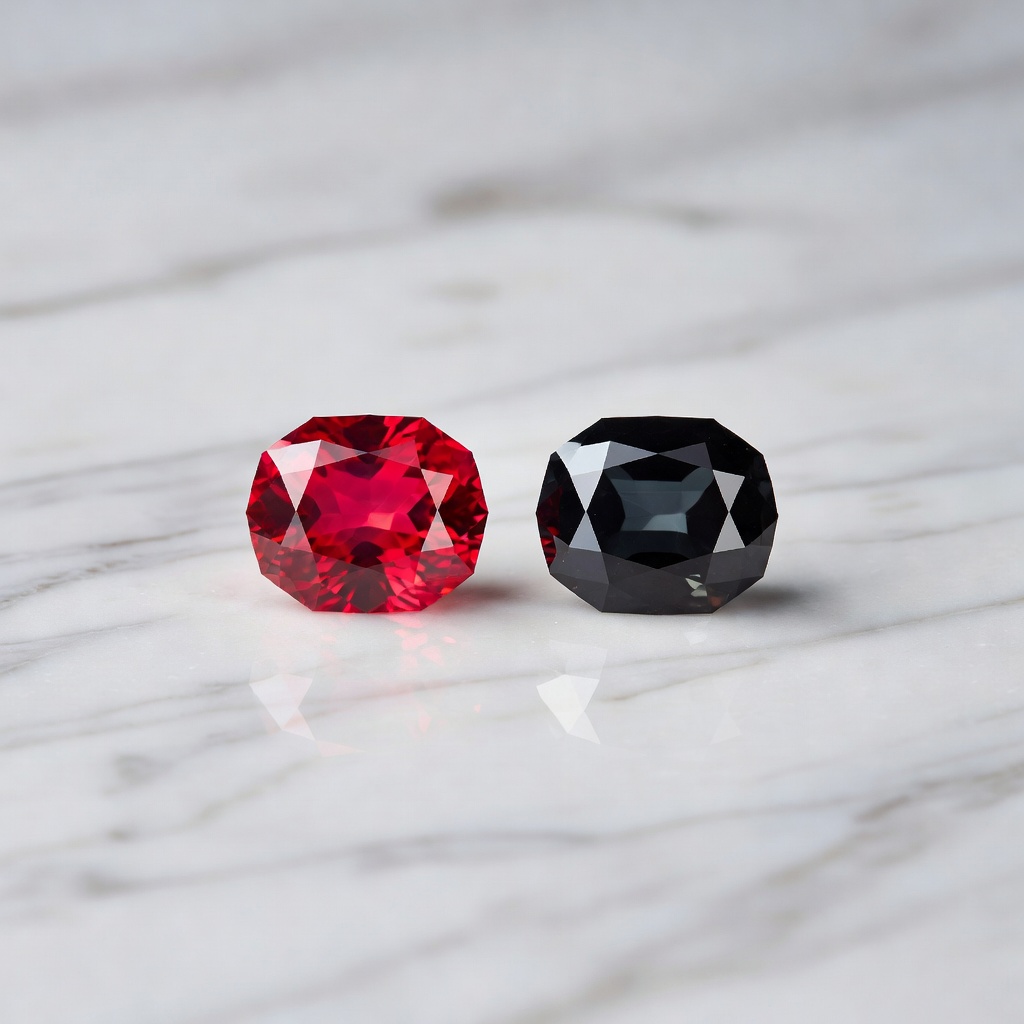
Black spinel offers a completely different visual language through its jet-black coloration, refractive index of 1.718, and distinctive adamantine to metallic luster that creates diamond-like brilliance without the associated cost. Unlike opaque black gemstones such as onyx or black tourmaline, high-quality black spinel maintains transparency or translucency that allows light performance and scintillation. Identification techniques for distinguishing these stones include observing pleochroism under dichroscopes—ruby shows two distinct colors while black spinel remains singly refractive due to its cubic crystal system. Under magnification, ruby typically reveals needle-like rutile inclusions (silk) that can create asterism in star rubies, whereas black spinel may contain octahedral crystal inclusions or iron-related features that confirm its natural origin without requiring enhancement treatments.
Price Analysis and Investment Value
The economic comparison between ruby vs black spinel value reveals dramatic disparities reflecting rarity, market demand, and historical prestige within the colored gemstone hierarchy. Ruby maintains its position among the "Big Three" colored gemstones alongside sapphire and emerald, commanding premium prices that escalate exponentially with quality parameters. Unheated Burmese rubies exceeding five carats with pigeon blood coloration can achieve prices exceeding $100,000 per carat at auction, while commercial-quality heated rubies typically range from $1,000 to $15,000 per carat depending on size, clarity, and origin documentation. This investment-grade status has made fine rubies reliable stores of value, with documented price appreciation exceeding many traditional investment vehicles over multi-decade holding periods.
Black spinel offers an entirely different value proposition centered on accessibility and natural authenticity rather than scarcity-driven investment potential. Despite being 100% natural and rarely subjected to enhancement treatments, black spinel typically commands prices between $20 and $200 per carat, making it attainable for bold statement pieces without requiring substantial capital outlay. This affordability factor enables jewelry enthusiasts to acquire larger carat weights and custom cutting styles that would be prohibitively expensive in ruby or black diamond equivalents. While black spinel does not currently function as a speculative investment vehicle like fine ruby, its increasing popularity in high-fashion jewelry suggests steady demand and value retention for well-crafted pieces, particularly those featuring precision cutting that maximizes the material's inherent brilliance.
Historical Significance and Metaphysical Properties
Cultural narratives surrounding ruby gemstone meaning span millennia and civilizations, consistently associating this red corundum with passion, vitality, protection, and sovereign authority. Ancient Sanskrit texts referred to ruby as "ratnaraj" or "king of precious stones," while Burmese warriors believed inserting rubies into their flesh rendered them invulnerable in battle. Medieval European royalty utilized rubies to signify power and divine favor, with the stone's red color symbolizing the blood of Christ and the vitality of the human heart. These associations persist in contemporary metaphysical practices, where practitioners utilize ruby to stimulate the root chakra, enhance life force energy, and promote courage during challenging transitions.
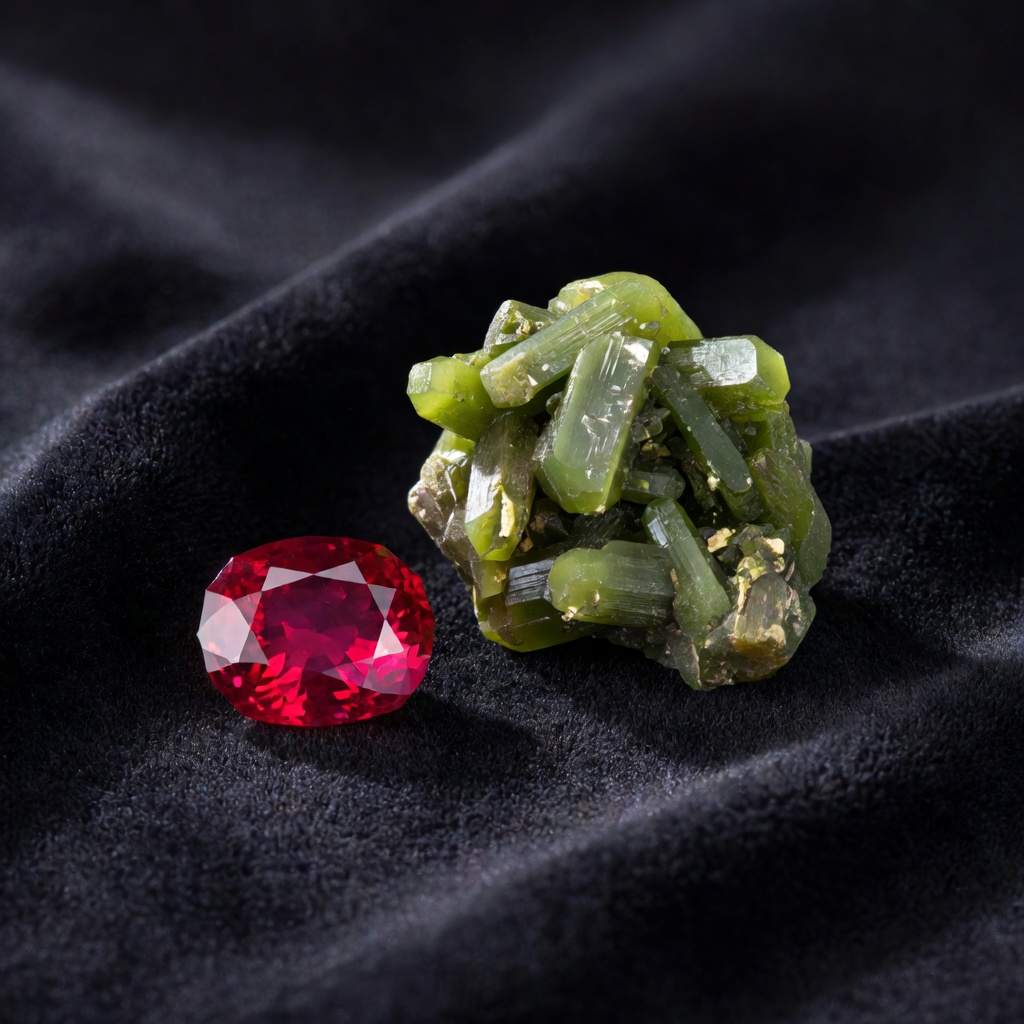
Black spinel metaphysical properties center on themes of renewal, grounding, and energetic protection against negative influences. Historically overlooked in favor of its red counterpart, black spinel has emerged in modern crystal healing as a stone of rejuvenation that assists in releasing past traumas and clearing energetic blockages. Its deep black coloration associates it with the root chakra and earth element, providing stabilizing energy for those experiencing anxiety or disconnection from physical reality. Birthstone connections further differentiate these gems: ruby serves as the July birthstone and traditional 15th and 40th anniversary gift, while spinel (including black varieties) was added as an August birthstone in 2016, sharing the month with peridot and sardonyx. This recent official recognition has elevated black spinel's status among collectors born in late summer months seeking alternative birthstone options.
Best Uses in Fine Jewelry Design
Ruby jewelry traditions emphasize timeless elegance and romantic symbolism, making this gemstone the quintessential choice for heirloom-quality engagement rings, cocktail jewelry, and commemorative pieces marking significant milestones. The stone's exceptional durability supports intricate setting styles including delicate pave work, channel settings in eternity bands, and prominent solitaire presentations that showcase the gem's color saturation. High jewelry houses such as Cartier and Van Cleef & Arpels have established enduring design vocabularies around Burmese rubies, frequently pairing them with diamonds in white gold or platinum settings that emphasize the red color through complementary contrast. For contemporary collectors, ruby works magnificently in Art Deco revival pieces featuring geometric patterns that highlight the stone's crystalline structure and optical properties.
Black spinel ring designs and jewelry applications have expanded dramatically as modern aesthetics embrace gothic, minimalist, and industrial design movements that favor monochromatic color schemes and strong geometric forms. Unlike ruby's warm color temperature, black spinel provides neutral versatility that complements both warm and cool metal tones, though platinum and white gold settings particularly enhance its metallic luster and diamond-like brilliance. Fashion-forward designers utilize black spinel in stackable ring collections, architectural cuff bracelets, and avant-garde ear climbers where the stone's high refractive index creates dramatic light play against the skin. For practical styling, black spinel serves as an excellent accent stone alongside rubies in two-tone designs, or as the primary feature in men's jewelry where its sober elegance avoids the femininity sometimes associated with brightly colored gemstones.
Treatments and Enhancement Disclosure
Transparency regarding gemstone treatments proves essential when comparing treated ruby versus natural black spinel, as enhancement practices significantly impact value, care requirements, and disclosure obligations. Heat treatment represents the most common enhancement for rubies, with approximately 95% of commercial rubies undergoing controlled heating to improve color saturation, reduce purple overtones, and dissolve rutile silk inclusions that might otherwise cloud transparency. While accepted within the trade, heat treatment status dramatically affects pricing, with unheated Burmese rubies commanding 300-500% premiums over heated equivalents of similar appearance. More controversial treatments include glass filling (fracture filling) and lead glass composites that improve apparent clarity in low-quality material but compromise durability and require special care protocols.
Natural black spinel maintains a significant advantage in the treatments discourse, as the material rarely requires enhancement to achieve its desirable color or clarity characteristics. Unlike black diamonds—which frequently undergo irradiation or high-pressure high-temperature (HPHT) treatments to achieve uniform coloration—or synthetic alternatives such as cubic zirconia, black spinel emerges from the earth with its dramatic coloration intact. This untreated status appeals to purists seeking "earth-mined" authenticity without artificial modification. Laboratory certification from respected institutions including GIA (Gemological Institute of America), GRS (GemResearch Swisslab), and AGL (American Gemological Laboratories) provides essential documentation regarding treatment status, origin determination, and authenticity verification for both gemstones, with such documentation being mandatory for investment-grade ruby purchases and recommended for high-quality black spinel acquisitions.
Maintenance Guide for Longevity
Proper gemstone care protocols differ significantly between these materials, necessitating tailored approaches to cleaning, storage, and professional maintenance. Ruby maintenance tips generally accommodate aggressive cleaning methods due to the stone's exceptional toughness and lack of cleavage. Ultrasonic cleaners and steam cleaning equipment—standard tools in jewelry workshops—safely remove accumulated residues from ruby surfaces without risking structural damage, though stones with significant fractures or glass-filled cavities require gentler treatment. For home care, warm water with mild detergent and a soft brush effectively restore ruby's luster, while avoiding exposure to harsh chemicals such as chlorine bleach or hydrofluoric acid prevents potential surface etching of the stone or its setting.
Black spinel demands more cautious handling despite its respectable hardness rating, primarily due to potential cleavage planes and internal inclusions that might respond poorly to ultrasonic vibrations. Cleaning should be limited to warm soapy water and soft brushing, with immediate drying using lint-free cloths to prevent water spots on the stone's surface. Storage techniques require strategic consideration of hardness differentials—ruby jewelry should never contact black spinel pieces in storage drawers, as the hardness difference could result in scratched spinel surfaces. Professional inspection intervals of every six to twelve months ensure that prongs securing either gemstone remain tight and secure, particularly for ruby engagement rings subjected to daily wear or black spinel pieces in exposed settings vulnerable to impact damage. Jewelers should check specifically for loose stones, worn prongs, and accumulated debris beneath settings that might compromise the structural integrity of the mounting.
Making Your Final Decision
Selecting between ruby and black spinel ultimately depends on aligning gemstone characteristics with personal lifestyle, aesthetic preferences, and budgetary parameters. For individuals leading active lifestyles involving manual labor, sports participation, or frequent travel, ruby's superior hardness and toughness provide peace of mind regarding long-term durability and resistance to accidental damage. Conversely, fashion-forward collectors seeking versatile pieces that transition seamlessly from daytime professional environments to evening formal occasions may find black spinel's neutral sophistication and contemporary appeal more aligned with modern wardrobe requirements. Budget optimization strategies suggest allocating resources toward ruby for significant symbolic pieces such as engagement rings or milestone anniversary gifts, while incorporating black spinel for fashion jewelry, stackable bands, and trend-responsive designs that may evolve with changing style preferences.
| Characteristic | Ruby | Black Spinel |
|---|---|---|
| Chemical Composition | Aluminum Oxide (Al₂O₃) with Chromium | Magnesium Aluminum Oxide (MgAl₂O₄) |
| Mohs Hardness | 9 | 8 |
| Toughness | Excellent (no cleavage) | Good (octahedral cleavage present) |
| Color Range | Red to pinkish-red | Jet black |
| Refractive Index | 1.762-1.770 | 1.718 |
| Price per Carat | $1,000-$15,000+ (high quality) | $20-$200 |
| Treatment Status | Often heat-treated (95% of market) | Typically untreated/natural |
| Symbolism | Passion, vitality, royalty | Protection, grounding, renewal |
| Birthstone Month | July | August |
| Best Setting Styles | Solitaire, halo, three-stone | Bezel, channel, art deco |
| Cleaning Method | Ultrasonic and steam safe | Warm soapy water only |
Frequently Asked Questions
Which is harder, ruby or black spinel?
Ruby is harder than black spinel. Ruby ranks 9 on the Mohs hardness scale, while black spinel ranks 8. This makes ruby more resistant to scratching and better suited for daily wear in rings and bracelets, though both are durable enough for most jewelry applications.
Is black spinel significantly cheaper than ruby?
Yes, black spinel is considerably more affordable than ruby. While high-quality rubies can cost $1,000 to $15,000+ per carat depending on origin and treatment, natural black spinel typically ranges from $20 to $200 per carat, making it an accessible alternative for bold, dramatic jewelry.
Can black spinel be used as a ruby alternative?
Black spinel cannot substitute for ruby's red color, but it serves as an excellent alternative to black diamonds or as a contrasting accent stone alongside rubies. For those seeking a black gemstone with high brilliance and durability, black spinel offers superior value to black diamonds while maintaining a luxurious appearance.
How can I tell ruby and black spinel apart?
The easiest distinction is color—ruby is red while black spinel is jet black. Under magnification, ruby typically shows needle-like rutile inclusions and displays pleochroism (two colors when viewed from different angles). Black spinel shows a single refractive index, metallic luster, and often appears more brilliant due to higher dispersion.
Which is better for an engagement ring, ruby or black spinel?
Ruby is traditionally preferred for engagement rings due to its superior hardness (9 vs 8) and symbolism of eternal love and passion. However, black spinel works beautifully in engagement settings for those wanting unique, modern aesthetics, provided the setting protects the stone from hard impacts due to its cleavage potential.
Do ruby and black spinel require different cleaning methods?
Yes. Ruby can typically withstand ultrasonic cleaners and steam cleaning due to its toughness and lack of cleavage. Black spinel should be cleaned with warm soapy water and a soft brush only, as ultrasonic vibrations may exploit internal fractures or cleavage planes present in the stone.
Is black spinel a natural gemstone or synthetic?
Black spinel is a 100% natural gemstone composed of magnesium aluminate. Unlike many black diamonds which are irradiated or heat-treated, and unlike cubic zirconia or moissanite which are lab-created, black spinel occurs naturally in the earth and is rarely subjected to enhancement treatments.
Why might someone choose black spinel over ruby?
Buyers choose black spinel over ruby for its dramatic modern aesthetic, affordability, versatility with various metal colors, and the fact that it requires no treatments to achieve its color. It's ideal for statement pieces, stackable rings, and fashion jewelry where a bold black presence is desired without the premium cost of black diamonds.