Understanding the Ruby vs Black Opal Debate
When collectors and jewelry enthusiasts seek extraordinary precious stones, the comparison between Ruby vs Black Opal frequently emerges as one of the most compelling discussions in the luxury gem market. Both gemstones represent the pinnacle of natural beauty and rarity, yet they offer distinctly different aesthetic experiences and practical considerations for owners. While rubies have captivated royalty for millennia with their intense red saturation, black opals mesmerize viewers with an otherworldly display of spectral colors dancing across dark backgrounds. Understanding the fundamental differences between these two exceptional gems—from their chemical composition of Corundum vs hydrated silica to their wearability characteristics—empowers buyers to make informed decisions aligned with their lifestyle, aesthetic preferences, and investment goals.
The debate between these stones often centers on the tension between traditional prestige and unique visual phenomena. Rubies command respect through their historical significance and exceptional durability, making them staples in high jewelry and engagement pieces. Conversely, black opals attract connoisseurs seeking one-of-a-kind specimens where no two stones display identical optical characteristics. Whether you prioritize the steadfast brilliance of a Burmese pigeon blood ruby or the chameleon-like color shifts of a Lightning Ridge black opal, both choices represent significant acquisitions in the world of Investment grade gemstones.
Geological Origins and Formation Processes
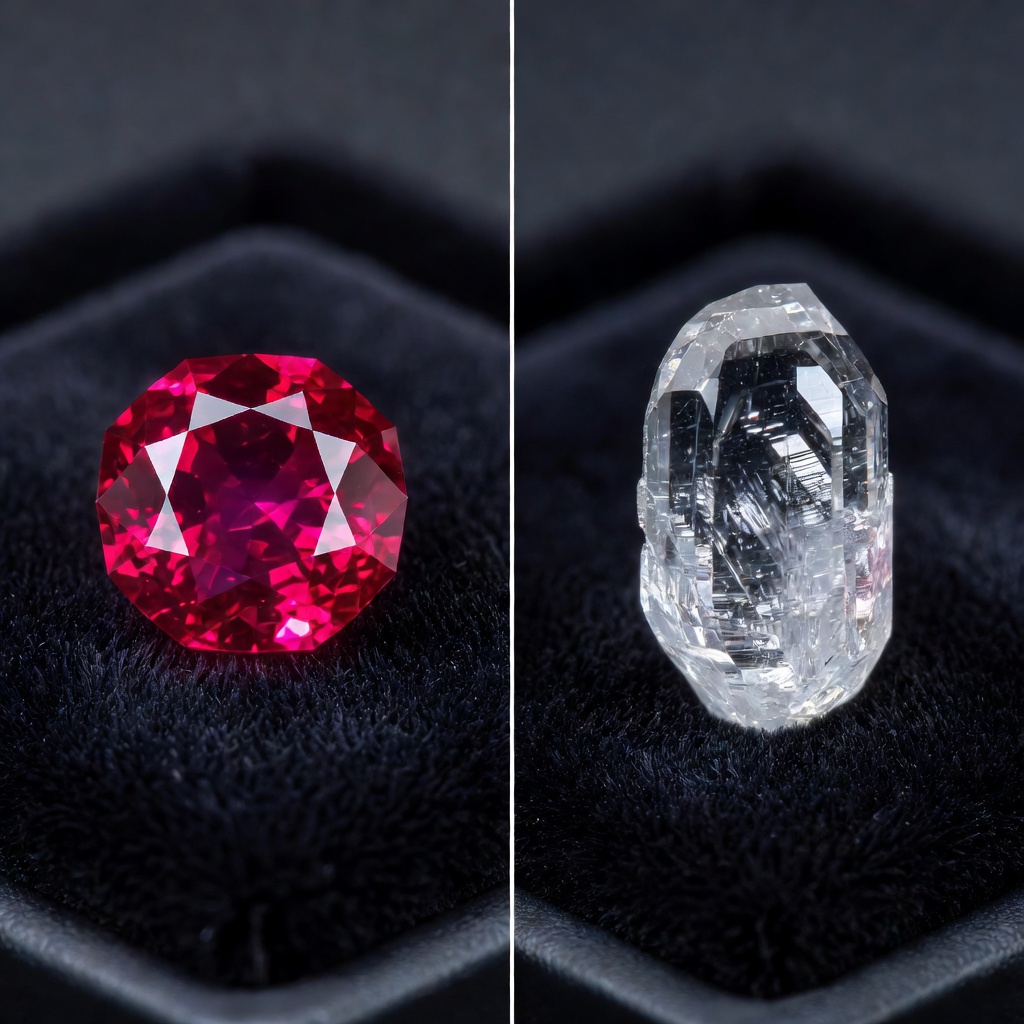
The journey from raw earth material to finished gemstone reveals stark differences between Burmese ruby vs Australian black opal, beginning with their fundamentally distinct formation environments. Rubies crystallize deep within the earth's crust under intense heat and pressure, typically forming in metamorphic marble deposits or alkali basalts. The legendary Mogok Stone Tract in Myanmar (formerly Burma) produces the world's most coveted rubies, where marble hosts create the low-iron environment necessary for the purest red hues. Other significant deposits in Thailand, Madagascar, and Mozambique yield stones with varying trace element compositions that influence their final color presentation and fluorescence characteristics.
Black opals, conversely, form through a remarkably different sedimentary process occurring primarily in the ancient inland seas of Australia. Approximately 140 million years ago, silica-rich water percolated through sandstone and deposited microscopic spheres in horizontal layers within sedimentary rock formations. Lightning Ridge in New South Wales remains the premier source for these precious stones, though quality specimens also emerge from Mintabie and Coober Pedy. The chemical composition difference proves substantial: while rubies consist of aluminum oxide (corundum) with chromium impurities creating red coloration, black opals comprise hydrated silica containing 6-10% water trapped within their amorphous structure.
Formation Timeline and Environmental Factors
Ruby formation requires specific geochemical conditions where aluminum-rich rocks interact with chromium-bearing fluids at temperatures between 800-1200 degrees Celsius, a process taking millions of years. The Mogok deposits represent approximately 600 million years of geological activity, creating the marble-hosted environment that shields rubies from iron contamination. Australian black opals formed during the Cretaceous period when dinosaurs roamed the continent, as seasonal rains dissolved silica from sandstone and deposited it into cavities and fissures over tens of thousands of years. This slower, cooler formation process explains the water content and internal structure unique to opals, fundamentally distinguishing them from crystalline gemstones like rubies.
Physical Properties and Durability Comparison
Evaluating Ruby hardness vs opal hardness reveals one of the most significant practical differences between these precious stones, directly impacting their suitability for various jewelry applications. Rubies rank 9 on the Mohs hardness scale, making them second only to diamonds in resistance to scratching and ideal for daily wear in engagement rings, bracelets, and other high-impact jewelry pieces. This exceptional hardness stems from the strong atomic bonds within the corundum crystal structure, allowing rubies to maintain their polish and resist surface damage through decades of regular use. Gemologists note that while rubies possess excellent toughness (resistance to breaking), they can exhibit cleavage in certain directions, requiring skilled cutting to maximize durability.
Black opals present more delicate physical characteristics, ranking between 5.5 and 6.5 on the Mohs hardness scale, comparable to glass or moonstone. This relative softness means that black opals require protective settings and mindful wearing habits to prevent surface scratching and chipping. The stone's toughness varies depending on its water content and internal structure; while generally resistant to cleavage, opals can fracture if subjected to sharp impacts or extreme temperature changes. For active individuals or those seeking everyday wear jewelry, rubies offer significantly greater security, whereas black opals function better as occasional wear pieces or in protected settings like pendants and earrings where they face minimal mechanical stress.
Wearability Scenarios and Risk Assessment
Consider the case of a corporate professional seeking a signature ring for daily office wear: a Burmese ruby set in platinum withstands the occasional bump against desk edges, hand washing, and the general abrasion of daily life without requiring special attention. Conversely, a black opal ring demands bezel settings that wrap protective metal around the stone's girdle, and the wearer must remove the piece before gym sessions, gardening, or household cleaning. Professional gemsetters often recommend reserving black opal rings for special occasions, whereas ruby jewelry transitions seamlessly from boardrooms to hiking trails. This durability differential significantly influences insurance considerations, with opals typically requiring higher premiums and specific care riders in jewelry policies.
Color Characteristics and Visual Phenomena
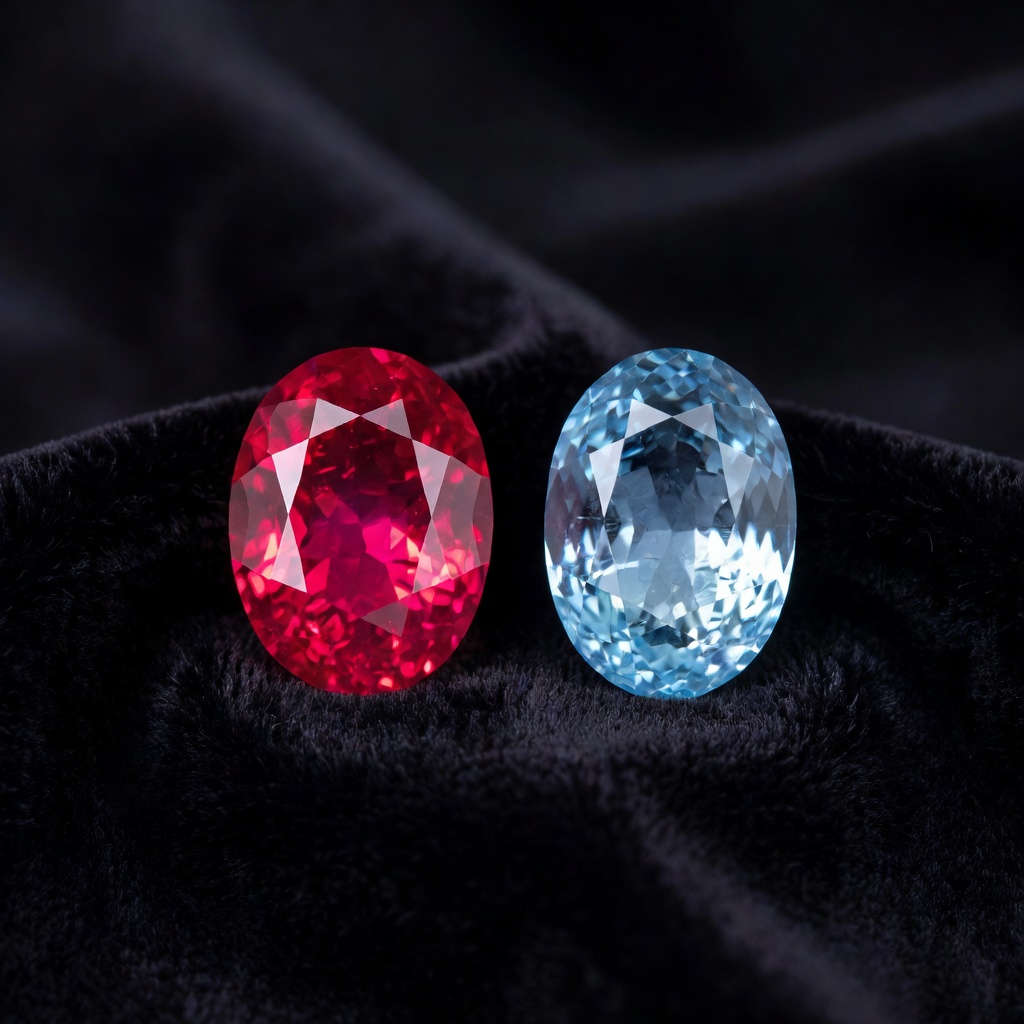
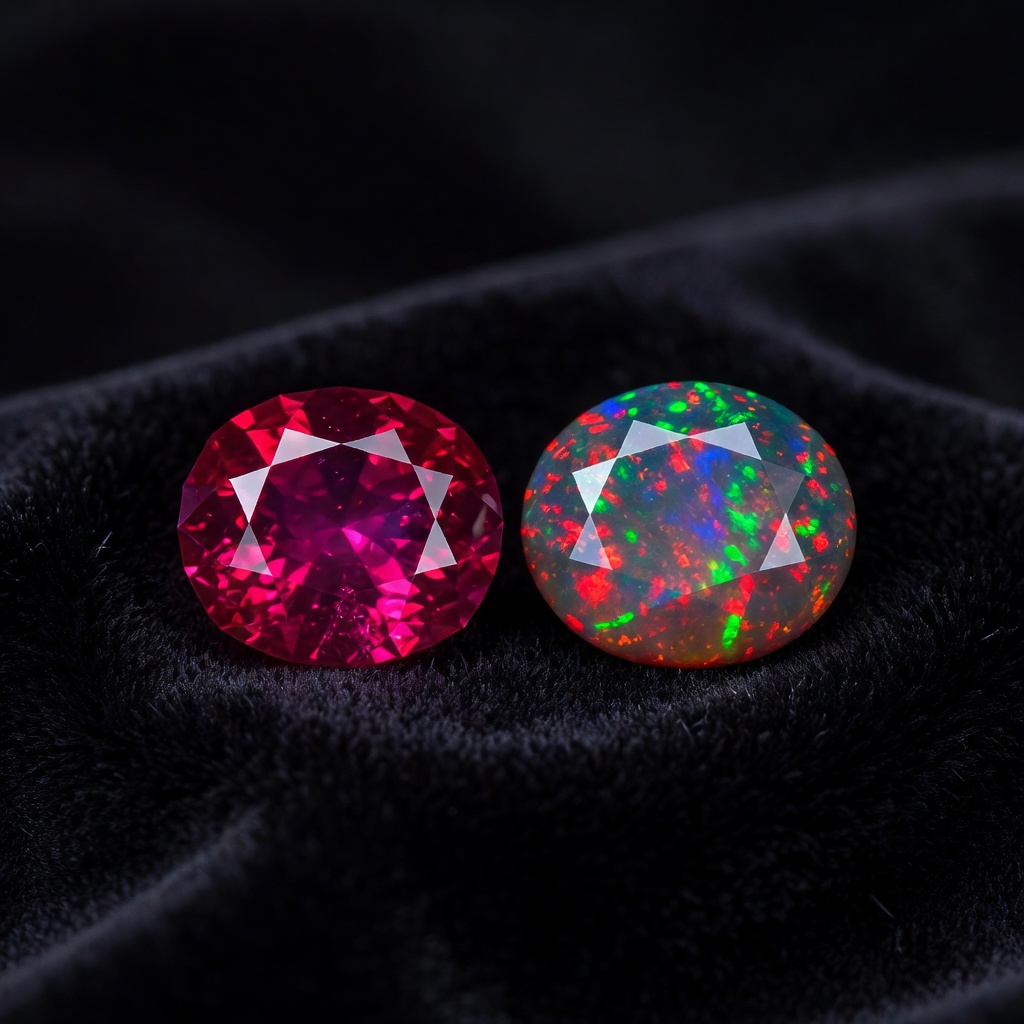
The visual distinction between Red gemstone vs opal play of color represents perhaps the most dramatic difference in how these gems interact with light and captivate observers. Rubies derive their coveted red hues from chromium ions replacing aluminum atoms in the crystal lattice, with the finest specimens displaying "pigeon blood" red—a pure, saturated red with subtle blue undertones that fluoresce intensely under daylight. The color remains consistent regardless of viewing angle, offering a steady, intense presence that symbolizes passion and power. Variations include pinkish-red stones from Sri Lanka and deeper, darker reds from Thai deposits, each commanding different market preferences but sharing that fundamental chromatic stability.
Black opals produce an entirely different optical experience through the phenomenon of play-of-color, created when microscopic silica spheres diffract white light into spectral colors. Unlike the body color of rubies, which remains static, black opals display shifting patterns of electric blue, fiery red, emerald green, and golden yellow that change as the stone moves. The dark body tone, graded from N1 (jet black) to N4 (dark grey), acts as a canvas that enhances the vividness of these color flashes. High-quality black opals exhibit patterns such as Harlequin (large, distinct color patches), Chinese Writing (linear formations), or Ribbon (rolling bands), each pattern commanding different values and aesthetic appeals. This dynamic interaction with light means that black opals appear dramatically different under various lighting conditions—brilliant in sunlight, subdued in fluorescent office lighting, and mysterious in candlelight.
Lighting Considerations and Display Techniques
Jewelry designers must consider how lighting affects each stone's presentation when creating pieces for specific contexts. Rubies perform consistently across lighting environments, though incandescent lighting tends to emphasize their red warmth while daylight reveals any blue undertones or fluorescence. Retailers often showcase rubies under mixed lighting to demonstrate their versatility. Black opals require more strategic lighting to reveal their full beauty; direct light sources create the strongest play-of-color, while diffused lighting may make the stone appear simply black. Collectors often display black opal jewelry in cases with adjustable LED spotlights that demonstrate the stone's color range, whereas ruby displays rely on consistent, high-CRI lighting to show saturation accurately. When purchasing either stone, always examine it under multiple light sources to understand its full visual potential.
Rarity, Pricing and Investment Potential
The Investment grade gemstones market treats both Burmese rubies and Lightning Ridge black opals as blue-chip assets, though their value propositions differ significantly in terms of liquidity, price stability, and appreciation trajectories. Fine unheated Burmese rubies exceeding five carats with pigeon blood coloration command prices exceeding $100,000 per carat at auction, with record-breaking stones like the Sunrise Ruby reaching over $1 million per carat. These prices reflect extreme scarcity: the Mogok mines produce limited quantities of gem-quality material, and political instability in Myanmar further restricts supply. Rubies enjoy established auction house recognition, standardized grading criteria, and strong liquidity among high-net-worth collectors, making them relatively stable stores of value.
Premium black opals from Lightning Ridge with N1 body tone, red dominant fire, and rare patterns like Harlequin or Flagstone typically range from $10,000 to $30,000 per carat, though exceptional museum-quality specimens can exceed these figures. While black opals generally command lower per-carat prices than top-tier rubies, specific patterns and color combinations can prove equally rare and valuable. The investment landscape for black opals remains more specialized, with value heavily dependent on subjective beauty factors and pattern uniqueness rather than standardized color grades. Market stability differs as well: ruby prices correlate with broader colored gemstone indices and Asian luxury markets, while black opal values track more closely with Australian mining yields and collector-specific demand.
| Characteristic | Ruby (Corundum) | Black Opal (Hydrated Silica) |
|---|---|---|
| Primary Origin | Myanmar (Burmese), Thailand, Madagascar | Lightning Ridge, Australia |
| Mohs Hardness | 9 (Excellent for daily wear) | 5.5-6.5 (Requires protective care) |
| Color Source | Chromium ions in crystal structure | Diffraction through silica spheres |
| Price Range (Fine Quality) | $15,000 - $100,000+ per carat | $5,000 - $30,000+ per carat |
| Recommended Setting | Prong, bezel, or tension settings | Bezel or halo settings only |
| Maintenance Level | Low (ultrasonic safe) | High (humidity control required) |
| Birthstone Month | July | October |
| Investment Liquidity | High (established auction markets) | Moderate (specialized collector market) |
Factors Determining Investment Grade Status
For rubies, investment grade status requires unheated or traditionally heated treatment, Burmese or high-quality Mozambique origin, color saturation matching pigeon blood standards, and clarity allowing transparency without visible inclusions to the naked eye. Certification from laboratories like SSEF, Gubelin, or GIA providing origin reports significantly enhances investment security. Black opals achieve investment status through N1 to N2 body tone (the darkest classifications), red or multicolor play-of-color dominance, distinct pattern recognition (Harlequin being most valuable), and minimal potch (common opal backing) visible from the face. Both categories demand stones above two carats for serious investment consideration, though exceptional smaller specimens with unique characteristics can appreciate substantially. Diversified collectors often acquire both stones, using rubies as portfolio anchors due to market stability while appreciating black opals for their aesthetic uniqueness and potential for significant value jumps when rare patterns emerge.
Cultural Significance and Birthstone Connections
The cultural narratives surrounding July birthstone vs October birthstone reveal fascinating contrasts in how civilizations have attributed meaning and power to these gems. Rubies have held dominion over human imagination for millennia, earning titles such as the "Stone of Kings" and "Ratnaraj" (King of Precious Stones) in Sanskrit texts. Ancient Hindus believed that offering rubies to the god Krishna ensured rebirth as an emperor, while Burmese warriors implanted rubies into their flesh to render them invincible in battle. Medieval Europeans associated rubies with prophecy, passion, and protection from plague and misfortune. This accumulation of mythological significance established rubies as symbols of power, wealth, and undying love—associations that persist in modern engagement ring traditions and coronation regalia.
Black opals carry equally rich but distinctly different cultural associations, particularly within Australian Aboriginal traditions where they feature in Dreamtime stories of creation and the rainbow serpent. European markets historically viewed opals with superstition, a reputation largely manufactured by 19th-century novelists and diamond industry marketing campaigns seeking to discredit competing gems. However, ancient Romans considered opals the most precious of all stones, believing they possessed the virtues of every colored gem due to their spectral displays. Modern metaphysical practitioners associate black opals with transformation, creativity, emotional healing, and the dispelling of negative energy. As birthstones, rubies serve July-born individuals seeking vitality and passion, while black opals (along with white opals and tourmaline) represent October, appealing to those drawn to artistic expression and change.
Gifting Traditions and Symbolic Gestures
When selecting these stones as gifts, cultural context plays a significant role in the message conveyed. Presenting a ruby traditionally signifies profound romantic commitment, protection, and respect—making it appropriate for 40th wedding anniversaries (the ruby anniversary) or milestone birthdays. A Burmese ruby engagement ring communicates permanence and traditional values, appealing to partners who appreciate classical luxury. Black opal gifts suit artistic personalities, those undergoing life transitions, or October-born recipients who resonate with the stone's creative associations. Australian black opals specifically make meaningful gifts commemorating trips to Australia or connections to the continent. Unlike the overt passion symbolism of rubies, black opals suggest mystery, individuality, and the multifaceted nature of the recipient's personality—ideal for celebrating unique achievements or creative milestones.
Jewelry Design Applications and Setting Requirements
The Precious gemstone comparison extends into practical jewelry design constraints, where the physical differences between rubies and black opals dictate distinct setting philosophies and metal pairings. Rubies accommodate virtually any setting style, from delicate prong-set solitaires that maximize light return to elaborate pavé halo designs and sleek bezel settings. Their hardness allows for sharp facet edges and high polish levels that maintain brilliance indefinitely. Designers frequently pair rubies with yellow gold to enhance their warmth and complement the red spectrum, though white metals like platinum and white gold create striking contrast that emphasizes the stone's color purity. The versatility of rubies supports both vintage-inspired pieces featuring milgrain details and contemporary minimalist designs.
Black opals demand more protective setting strategies due to their relative softness and sensitivity to dehydration. Bezel settings that wrap metal around the stone's circumference provide optimal protection against impact and help maintain humidity around the gem. Halo settings offer additional protection while framing the opal's play-of-color with diamonds or colored gems. Metal choice significantly affects the opal's appearance: white metals including platinum, white gold, and palladium create dramatic contrast that makes the opal's fire appear to float against the metal, while yellow or rose gold can warm the stone's body tone but may distract from cooler color flashes like blue and green. Occasion-appropriate design differs markedly: ruby pieces transition from everyday wear to formal events seamlessly, whereas black opal jewelry often functions as statement pieces reserved for special occasions where they receive appropriate attention and care.
Design Case Studies and Practical Applications
Consider a practical example of a client commissioning an anniversary ring: a three-carat Burmese ruby might be set in a classic platinum mounting with tapered baguette diamond shoulders, designed for daily wear during business meetings and social events without concern for damage. The same client choosing a black opal might opt for a pendant design featuring a five-carat Lightning Ridge stone in a substantial 18k white gold bezel with diamond accent frames, intended for evening wear and stored carefully when not in use. Earrings present another comparison point: ruby studs withstand the occasional bump during hair styling or hugging, while black opal earrings require secure la pousette backs and should be the last item put on when dressing to avoid cosmetic or perfume exposure. Bracelets highlight durability differences most starkly—ruby tennis bracelets endure regular wrist movement and contact, whereas black opal bracelets risk constant impact against hard surfaces and generally suit cuff designs with protective surrounds rather than link bracelets.
Care, Maintenance and Longevity Considerations
Proper gemstone care and maintenance protocols differ dramatically between these two gems, reflecting their distinct chemical compositions and physical vulnerabilities. Rubies generally tolerate standard jewelry cleaning methods, including ultrasonic cleaners and steam cleaning, provided they have not been fracture-filled (a treatment that should always be disclosed by reputable sellers). Warm soapy water with a soft brush effectively removes accumulated oils and debris without risking damage. Storage requires minimal special consideration beyond keeping rubies separate from softer gems to prevent scratching other jewelry, and storing them away from direct sunlight to preserve any fluorescence characteristics. Professional inspection every six to twelve months ensures prongs remain secure and the stone shows no signs of loosening.
Black opals require meticulous care routines that account for their water content and sensitivity to environmental changes. Never subject black opals to ultrasonic cleaners, steam cleaning, or harsh chemicals including ammonia, bleach, or abrasive compounds—gentle wiping with a slightly damp soft cloth suffices for cleaning. Temperature extremes pose particular risks; moving quickly from heated indoor environments to freezing outdoor air can cause thermal shock and cracking (crazing). Storage demands include maintaining humidity levels to prevent dehydration; storing opals with damp cotton wool in sealed plastic bags or specialized opal wallets prevents the loss of water content that leads to crazing and color deterioration. Unlike rubies, which improve in stability over time, opals require ongoing environmental management to maintain their appearance across generations.
Warning Signs and Professional Intervention
Ruby owners should watch for chips along facet junctions, cloudiness indicating potential heat damage, or loose settings that allow the stone to move. Professional repolishing can restore luster to scratched rubies, though this reduces carat weight slightly. For black opals, early warning signs of trouble include whitening or clouding of the surface indicating dehydration, visible cracks emerging from the surface (crazing), or color patches becoming dull. If an opal becomes crazed, immediate placement in distilled water for several weeks may help stabilize the stone, though professional opal restoration services offer more reliable outcomes. Both stones benefit from annual professional cleaning and inspection, but opal owners should establish relationships with jewelers specifically experienced in opal care rather than generalists who might inadvertently damage the stone with inappropriate cleaning methods.
How to Choose Between Ruby and Black Opal
Choosing between ruby and opal requires honest assessment of lifestyle factors, aesthetic preferences, and long-term ownership intentions. Active individuals with hands-on careers or hobbies involving physical contact should gravitate toward rubies for rings and bracelets, reserving black opals for earrings or pendants where protection from impact is inherent. Those with sedentary professional environments and careful wearing habits can successfully enjoy black opal rings with appropriate settings and mindfulness. Color preference evaluation proves equally important: buyers drawn to consistent, saturated color that makes a bold, unchanging statement favor rubies, while those captivated by dynamic optical effects and stones that reveal new visual elements with every movement prefer black opals.
Budget optimization strategies vary between the two categories. Entry-level investment rubies (heated, one to two carats, good color) offer more predictable value retention than commercial-grade black opals, which may lack the pattern intensity necessary for appreciation. However, mid-tier black opals often provide more visual impact per dollar than mid-tier rubies, as the opal's beauty depends on pattern and color play rather than pure size. Heirloom planning considerations should account for generational transfer: rubies withstand the test of time with minimal maintenance knowledge required by inheritors, while black opals necessitate educating future generations about proper care to prevent degradation. Some families solve this dilemma by acquiring both—establishing ruby pieces as legacy heirlooms for daily wear while designating black opals as special occasion treasures for milestone celebrations.
Decision Framework and Consultation Tips
When visiting jewelers, request to view stones under various lighting conditions and ask specific questions about treatment history (heat treatment is standard and acceptable for rubies; oiling or fracture filling should be disclosed). For black opals, inquire about the stone's body tone classification and whether the seller provides care instructions or storage containers. Consider commissioning custom designs that address the specific vulnerabilities of your chosen stone—protective bezels for opals, low-profile settings for active ruby wearers. Document your decision-making criteria, including whether you prioritize durability (ruby), uniqueness (black opal), investment liquidity (ruby), or conversation-starting visual impact (black opal). Remember that neither choice represents a compromise in quality when selected properly; both stones rank among nature's most remarkable creations, differing only in the type of beauty they offer and the care they require.
Final Verdict: Making Your Precious Stone Decision
The Ruby vs Black Opal decision ultimately hinges on balancing durability against visual uniqueness, and tradition against rarity. Rubies offer unmatched practicality for daily wear, established investment markets, and the timeless appeal of saturated red coloration that has symbolized power and passion across civilizations. They suit individuals seeking legacy pieces that require minimal maintenance while retaining liquid value. Black opals provide irreplaceable aesthetic experiences where no two stones share identical optical fingerprints, appealing to collectors who value individuality and dynamic beauty over consistency. These gems demand respect for their fragility but reward careful owners with mesmerizing displays impossible to replicate in any other material.
For specific use cases, select rubies for engagement rings, daily wear anniversary bands, and investment portfolios prioritizing stability. Choose black opals for statement pendants, artistic cocktail rings, and collectors seeking unique specimens with potential for significant appreciation based on pattern rarity. Both gemstones represent exceptional value when acquired with proper knowledge, certification, and realistic expectations regarding their care requirements. Whether you ultimately select the crystalline fire of a Burmese ruby or the spectral dance of a Lightning Ridge black opal, you acquire not merely a mineral specimen but a piece of geological history that connects you to millions of years of natural artistry.
Frequently Asked Questions
Which is more expensive, ruby or black opal?
Both can command extraordinary prices, but record-breaking Burmese pigeon blood rubies typically reach higher per-carat prices ($100,000+) than even the finest Lightning Ridge black opals. However, top-tier black opals ($10,000-$30,000 per carat) often exceed commercial-grade rubies in value. Price depends heavily on origin, color intensity, clarity, and size for both gemstones.
Can black opal be worn daily like ruby?
Unlike rubies (Mohs 9), black opals (Mohs 5.5-6.5) require protective settings and mindful wear. While rubies withstand daily activities, black opals are better suited for occasional wear or protected settings like pendants and earrings. If worn in rings, opals need bezel settings and removal during physical activities, whereas rubies endure regular wear with minimal precautions.
What causes ruby's red color versus black opal's color play?
Rubies derive their red color from chromium ions replacing aluminum in the corundum crystal structure, absorbing blue and yellow light while reflecting red. Black opals display play-of-color through diffraction: microscopic silica spheres arranged in grid-like patterns split white light into spectral colors, with the dark body tone (n8-n1) enhancing the vividness of these color flashes.
Is it true that black opals bring bad luck?
This is a myth originating from 19th-century literature and diamond industry marketing, not geological fact. Historically, Romans considered opals the most precious and powerful gemstones combining all colored stones' virtues. Australian Aboriginal culture views black opals as sacred stones of creation. Today, black opals symbolize creativity, transformation, and emotional healing in modern crystal lore.
Which gemstone is better for an engagement ring?
Rubies are generally superior for engagement rings due to their exceptional hardness (9 on Mohs scale) and resistance to scratching and chipping. While black opals offer unique beauty, their relative softness requires protective bezel settings and careful wear. For active lifestyles, choose ruby; for those committed to gentle wear and seeking uniqueness, black opal can work with proper setting design and care education.
How do I identify natural ruby versus natural black opal?
Natural rubies typically contain needle-like rutile inclusions (silk), color zoning, or mineral crystals visible under magnification, while synthetic rubies show curved growth lines or gas bubbles. Natural black opals display irregular color patches, natural inclusions like sand or potch lines, and three-dimensional color depth. Always request certification from reputable labs (GIA, SSEF, Gubelin) for either gemstone to confirm natural origin and treatments.
Do rubies or black opals require special care?
Rubies require minimal care—warm soapy water and ultrasonic cleaning are generally safe (unless fractured filled). Black opals need specific care: avoid ultrasonic cleaners, extreme temperature changes, and dry storage environments. Opals contain 6-10% water and may crack (crazy) if dehydrated; store them with damp cotton in sealed bags. Both should avoid harsh chemicals, but opals are significantly more sensitive to environmental conditions.
Which is rarer, high-quality ruby or black opal?
Both are exceptionally rare, but in different contexts. Fine pigeon blood Burmese rubies over 5 carats are extraordinarily rare, with Mogok mines producing limited quantities. Premium black opals with N1 body tone, red dominant fire, and pattern (Harlequin or Chinese Writing) from Lightning Ridge represent less than 0.1% of opal production. Generally, investment-grade Burmese rubies are rarer globally, but specific black opal patterns can be equally scarce and irreplaceable.