Understanding Precious Gemstones: Ruby vs Aquamarine
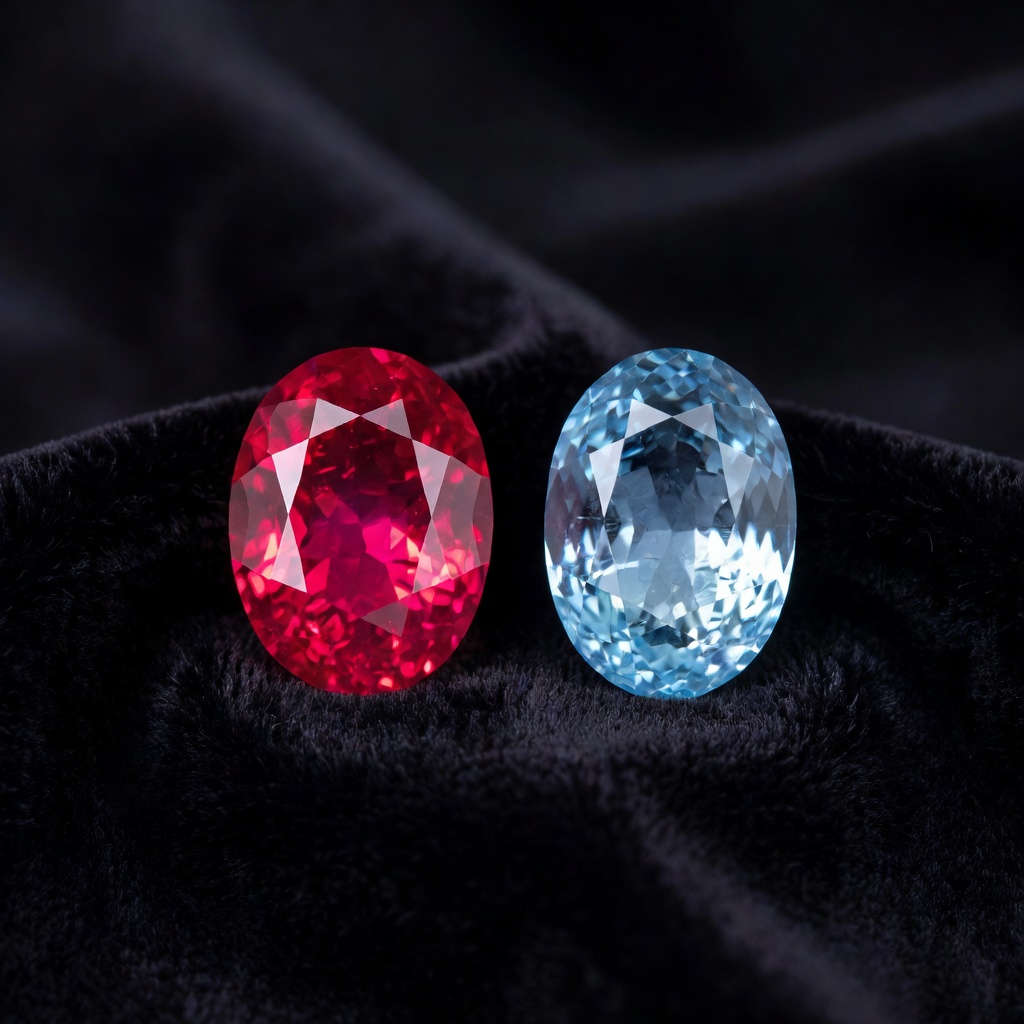
When selecting a precious gemstone that captures both beauty and meaning, collectors and jewelry enthusiasts often find themselves weighing the merits of two spectacular options. Revered as the "King of Gems," the ruby commands attention with its fiery red intensity and regal history, while the aquamarine, known as the "Gem of the Sea," offers tranquil blue hues reminiscent of ocean depths. The ruby vs aquamarine comparison represents more than a simple choice between red and blue; it involves understanding distinct mineral families, durability requirements, and investment potentials that can significantly impact your jewelry collection. Whether you are selecting a July birthstone vs March birthstone gift, building a gemstone investment portfolio, or choosing a centerpiece for daily wear, understanding the fundamental differences between these corundum vs beryl gemstones ensures you make an informed decision that aligns with your lifestyle and aesthetic preferences.
Geological Origins: Corundum vs Beryl Composition
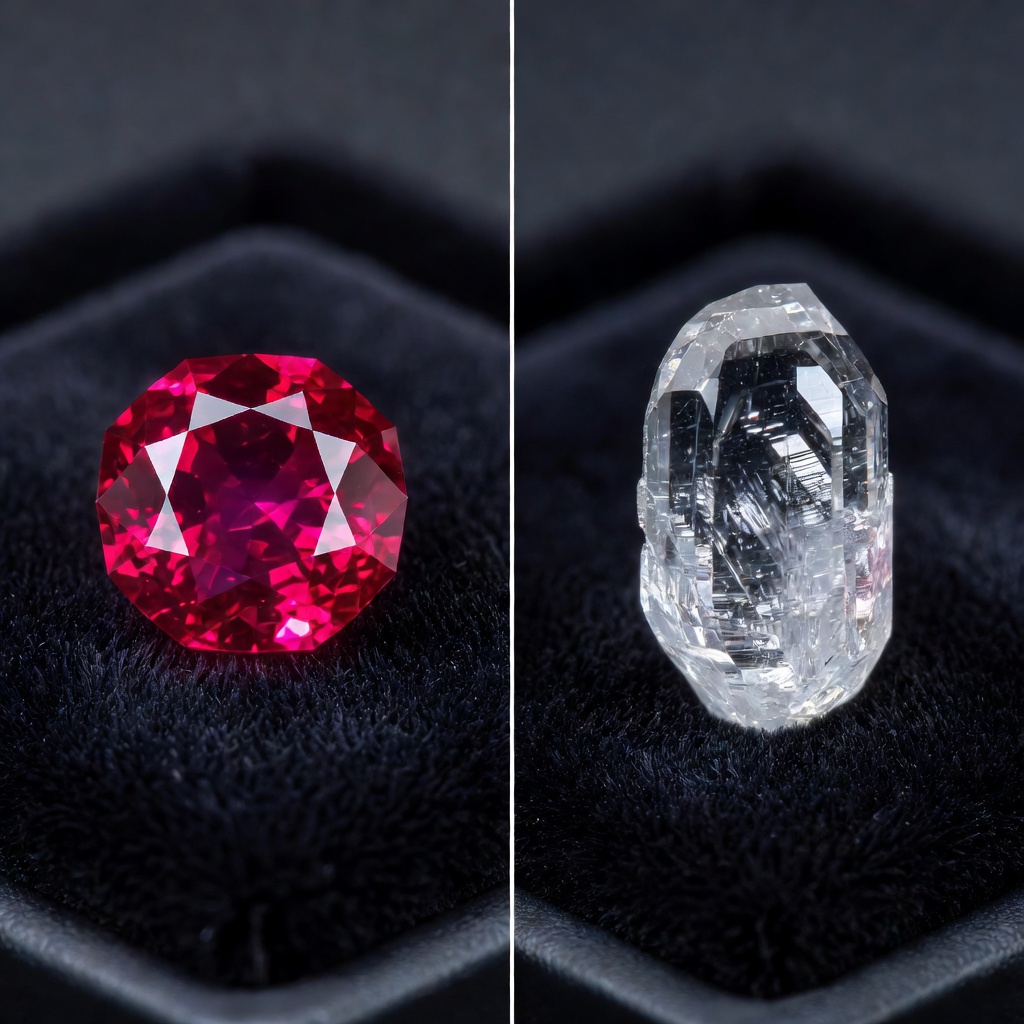
The geological journey of these precious stones begins deep within the Earth's crust under vastly different formation conditions that directly influence their physical characteristics. Ruby crystallizes as a variety of corundum, composed primarily of aluminum oxide (Al₂O₃), forming under extreme heat and pressure within metamorphic rocks such as marble or basaltic magmatic environments. These formation conditions typically occur at depths where tectonic activity creates the perfect crucible for chromium-rich corundum crystals to develop their characteristic red coloration. Myanmar's Mogok Valley, often called the "Valley of Rubies," represents the most legendary source, while Thailand, Mozambique, and Madagascar also produce significant quantities of these precious gems.
In contrast, aquamarine belongs to the beryl family (beryllium aluminum silicate), sharing its mineral classification with emerald and morganite but distinguished by its iron content that produces blue to blue-green hues. These crystals form within pegmatite deposits, coarse-grained igneous rocks that allow beryl crystals to grow to enormous sizes, sometimes weighing hundreds of pounds. Primary mining locations for fine aquamarines include Brazil's Minas Gerais region, Nigeria's Jos Plateau, and Madagascar's mineral-rich deposits. The pegmatite formation environment means aquamarine crystals often grow with greater clarity and fewer inclusions than their corundum counterparts, though they develop distinct cleavage planes that affect their durability differently than ruby's structure.
Physical Properties and Mohs Hardness Comparison
Understanding the Mohs hardness scale comparison between these gemstones proves essential when considering long-term wearability and setting requirements. Ruby ranks 9 on the Mohs scale of mineral hardness, making it second only to diamond and moissanite in terms of scratch resistance, which explains its popularity for engagement rings and daily-wear jewelry. This exceptional hardness, combined with ruby's lack of cleavage planes, creates a gemstone with remarkable toughness capable of withstanding decades of wear without showing surface damage. Jewelers often recommend rubies for active individuals who require precious stone durability without constant worry about accidental impacts or abrasion.
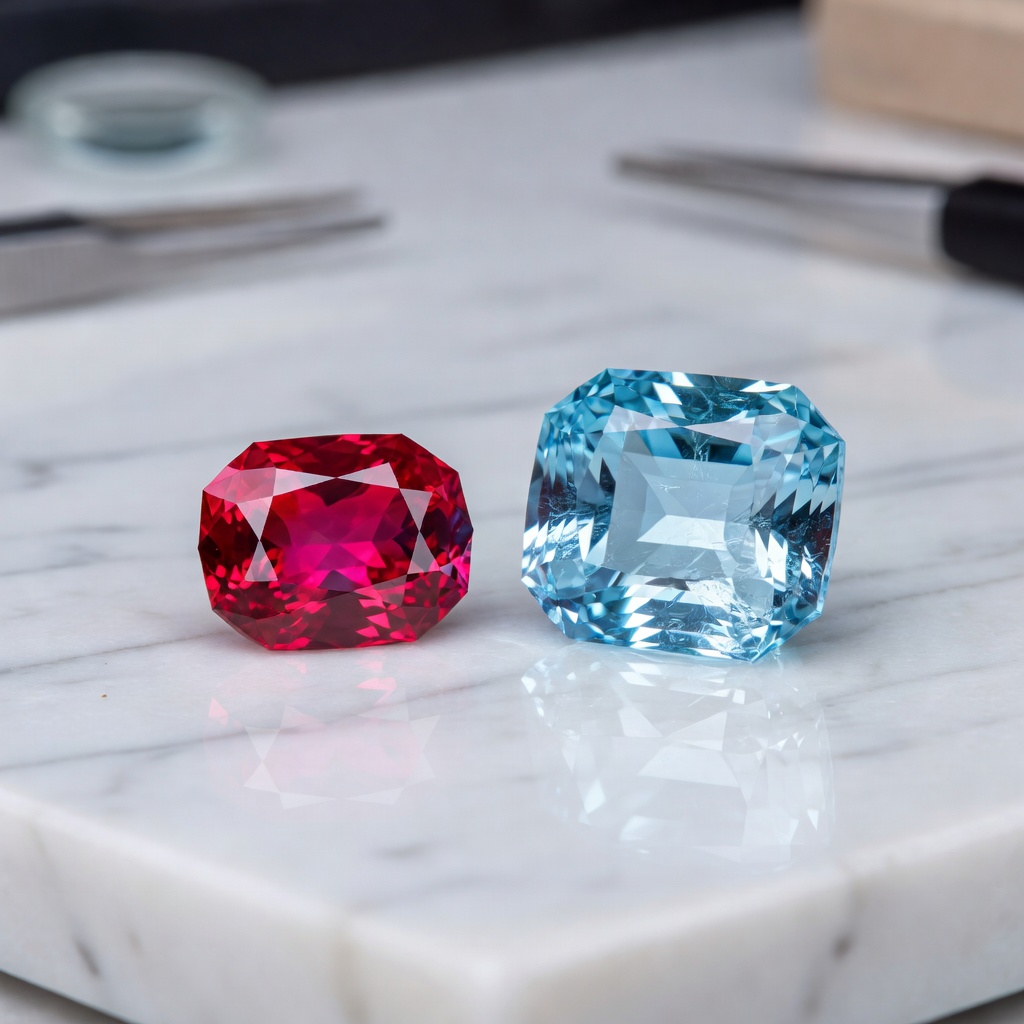
Aquamarine, while still relatively hard at 7.5 to 8 on the Mohs scale, requires more careful handling due to its distinct cleavage in one direction, meaning the stone can fracture if struck with sufficient force along specific planes. This difference in toughness significantly impacts jewelry design choices; aquamarines suit protective settings such as bezels or halos when used in rings, whereas rubies can tolerate more exposed prong settings. When storing these gemstones together, always separate them in individual soft pouches, as the harder ruby can easily scratch an aquamarine if they contact each other in a jewelry box.
Comparative Analysis Table
| Characteristic | Ruby (Corundum) | Aquamarine (Beryl) |
|---|---|---|
| Mineral Family | Corundum | Beryl |
| Chemical Composition | Aluminum Oxide (Al₂O₃) | Beryllium Aluminum Silicate (Be₃Al₂Si₆O₁₈) |
| Mohs Hardness | 9 | 7.5 - 8 |
| Toughness | Excellent (no cleavage) | Good to Poor (distinct cleavage) |
| Specific Gravity | 3.97 - 4.05 | 2.68 - 2.74 |
| Refractive Index | 1.762 - 1.770 | 1.567 - 1.590 |
| Typical Clarity | Included (silk common) | Eye-clean to slightly included |
| Price Range (Fine Quality) | $1,000 - $100,000+ per carat | $500 - $2,000 per carat |
Color Spectrum: Pigeon Blood Red vs Sea Blue Hues
The color grading standards for rubies center on achieving the coveted "pigeon blood" designation, a term originating in Burma describing the most vivid, saturated red hues with a slight blue undertone that makes the color appear to glow from within. Gemological laboratories like GIA and SSEF evaluate rubies based on hue, tone, and saturation, with the finest stones displaying medium-dark tone and vivid saturation without brownish or orangey overtones that diminish value. Practical tip for collectors: the presence of fine silk inclusions, rutile needles visible under magnification, often indicates an unheated ruby and can actually enhance the gem's appearance by diffusing light, creating a desirable "velvety" effect seen in the finest Burmese specimens.
Aquamarine color grades range from pale, almost colorless blue to deep ocean blue, with the most valuable stones displaying intense saturation without greenish secondary hues. Unlike rubies where inclusions can signal authenticity, aquamarine collectors prize eye-clean clarity, with the finest specimens resembling the color of the Caribbean Sea on a clear day. The blue coloration results from ferrous iron (Fe²⁺) within the crystal structure, and most commercial aquamarines undergo gentle heat treatment to reduce greenish tones and enhance their blue appearance. When selecting between pigeon blood ruby vs aquamarine color palettes, consider that rubies offer warmth and intensity while aquamarines provide cool serenity, with the latter generally offering larger clean stones at more accessible price points.
Birthstone Significance and Symbolism
The July birthstone vs March birthstone distinction carries rich historical and metaphysical associations that influence gift-giving traditions and personal jewelry choices. Ruby, assigned to July, has symbolized passion, protection, and vitality across cultures for millennia; ancient Burmese warriors embedded rubies into their flesh before battle believing the stones made them invulnerable, while Hindu texts describe ruby as the "king of precious stones" capable of bestowing health, wisdom, and success in love. In contemporary crystal healing practices, rubies activate the root chakra, promoting energy, confidence, and courageous leadership qualities that align with summer's vibrant energy.
Aquamarine serves as the traditional March birthstone, embodying the courage, communication, and tranquility associated with water signs and the transition from winter to spring. Sailors historically carried aquamarine talismans to ensure safe passage across stormy seas and prevent seasickness, while Roman physicians prescribed the gem for digestive and respiratory ailments. Metaphysically, aquamarine connects to the throat chakra, believed to enhance clear communication and soothe emotional turbulence, making it an excellent choice for professionals in public speaking or therapy fields. Royal associations abound for both gems; Princess Diana famously wore an aquamarine ring, while Queen Elizabeth II possessed a magnificent Burmese ruby tiara, demonstrating how both stones suit regal settings despite their different symbolic energies.
Market Value and Gemstone Investment Value
When evaluating gemstone investment value, rubies consistently command premium prices that far exceed those of aquamarines, particularly for untreated specimens from legendary sources. Fine-quality Burmese rubies exhibiting the pigeon blood color can achieve prices exceeding $100,000 per carat at auction, with the record-breaking "Sunrise Ruby" selling for over $30 million in 2015, demonstrating the extraordinary liquidity of top-tier colored gems. Investment-grade rubies require documentation of Burmese origin, absence of heat treatment, and exceptional color saturation, with sizes over five carats representing extreme rarity in the natural gemstone market. Collectors should budget at minimum $5,000 to $10,000 per carat for investment-quality rubies with proper certification.
Aquamarines, while beautiful and desirable, occupy a different market segment with generally lower entry points and more stable, modest appreciation curves. Fine Santa Maria aquamarines from Brazil, named after the mine producing the deepest blue hues, might command $1,000 to $2,000 per carat for exceptional specimens, but the market offers abundant clean material in the $100 to $500 per carat range for jewelry-quality stones. The investment case for aquamarine focuses on size and color intensity rather than rarity, as large crystals exist in nature, making these gems more accessible for statement jewelry pieces. For portfolio diversification, rubies offer higher potential returns but require significantly greater capital outlay, while aquamarines provide affordable luxury with consistent, if modest, value retention.
Jewelry Applications and Setting Recommendations
The precious stone durability differences between these gems directly influence optimal jewelry settings and metal pairings that maximize both beauty and longevity. Rubies pair magnificently with yellow gold, which enhances their warm red undertones and creates a classic, regal aesthetic reminiscent of Mughal jewelry or Art Deco designs; however, contemporary settings often utilize platinum or white gold to create striking contrast that emphasizes the gem's vivid color. For daily wear rings, rubies tolerate four-prong or six-prong settings that expose maximum surface area to light, though bezel settings offer additional protection for stones with surface-reaching inclusions. Popular cuts include oval and cushion shapes that optimize color display while minimizing weight loss during cutting, with cabochon cuts occasionally used for star rubies exhibiting asterism.
Aquamarine jewelry demands more protective considerations due to the gem's cleavage vulnerability, making bezel settings, halo designs, or protective V-prongs ideal choices for rings intended for regular wear. White metals such as platinum, white gold, or silver best complement aquamarine's cool blue tones, creating a cohesive oceanic aesthetic that enhances the stone's watery appearance. Emerald cuts and step cuts remain popular for aquamarines as they emphasize the gem's clarity and create elegant, architectural lines, while pear and oval shapes maximize carat weight retention from the original crystal. For active individuals considering an aquamarine engagement ring, opt for a pendant or earring setting instead, or select a low-profile ring design that minimizes exposure to hard knocks against countertops or door frames.
Treatments, Certification, and Authentication
Understanding treatment histories proves crucial when comparing ruby vs aquamarine, as enhancement methods significantly impact value and care requirements. Heat treatment represents the standard enhancement for rubies, with over 95% of market specimens undergoing controlled heating to improve color saturation and clarity by dissolving rutile silk inclusions; while accepted in the trade, heated rubies command 30% to 50% less than untreated equivalents. More concerning are glass-filled or fracture-filled rubies, where lead glass is injected into surface-reaching fissures to improve transparency—these treated gemstones require special care as the filler can be damaged by heat, ultrasonic cleaning, or even household chemicals, and they hold minimal resale value. Always demand GIA (Gemological Institute of America) or AGS (American Gem Society) certification that specifically notes "no indications of heating" for investment-grade purchases.
Aquamarines typically undergo gentler heat treatment (400-500°C) to remove greenish tones and enhance blue coloration, a permanent and stable enhancement widely accepted in the market without significant price penalty. Some specimens receive irradiation to intensify color, though this treatment requires disclosure under FTC guidelines. Synthetic alternatives exist for both gems: flux-grown and hydrothermal synthetic rubies mimic natural inclusions convincingly, while synthetic aquamarines remain less common but require vigilance nonetheless. When authentication shopping, examine the gemstone under magnification for natural inclusion patterns, request spectroscopic analysis for ruby to detect chromium absorption lines, and verify that any certification comes from independent laboratories rather than seller-provided documents that may contain bias.
Care and Maintenance Requirements
Proper gemstone care guide protocols differ significantly between these two precious stones due to their hardness and structural variations. Ruby jewelry generally withstands ultrasonic cleaning and steam cleaning methods, making maintenance straightforward for owners; however, exceptions exist for fracture-filled stones or heavily included specimens where vibrations might worsen existing fissures. For routine cleaning, warm soapy water with a soft brush effectively removes accumulated oils and debris from ruby settings, though owners should avoid exposing the gems to harsh chemicals like chlorine or hydrofluoric acid that can attack the metal settings or any fillers present.
Aquamarine requires gentler precious stone maintenance approaches due to its cleavage vulnerability and relative softness compared to corundum. Never subject aquamarine to ultrasonic cleaners or steam, as the vibrations and thermal shock can potentially exploit cleavage planes and cause fracturing. Instead, clean aquamarine jewelry using lukewarm water with mild dish soap and a soft microfiber cloth or baby toothbrush, taking care to reach behind the stone where dirt accumulates. Store aquamarine pieces separately in soft cloth pouches away from harder gemstones like diamonds, sapphires, or rubies that could scratch their surfaces during storage. Professional jewelers recommend annual inspections for both gem types to check prong tightness, especially for rings worn daily, as loose settings present the primary risk of stone loss regardless of the gem's inherent durability.
Final Decision: Which Gemstone Suits You Best?
Selecting between these magnificent gems ultimately requires honest assessment of your lifestyle, color preferences, and budget parameters. Active individuals or those seeking daily-wear engagement jewelry should prioritize ruby's superior Mohs hardness scale rating and toughness, accepting the higher price point as insurance against damage during physical activities. Those drawn to cooling, tranquil aesthetics who can commit to gentler wear patterns may find aquamarine's oceanic hues perfectly suited for statement pendants, earrings, or occasional wear rings that showcase the gem's exceptional clarity and size availability.
Budget optimization strategies vary by stone: for rubies, prioritize intense color over size, as a smaller pigeon blood specimen outperforms a larger pinkish-red stone in both beauty and investment potential. For aquamarines, maximize carat weight and cut quality since larger clean stones remain relatively affordable, allowing for dramatic cocktail rings or pendant designs that would be prohibitively expensive with ruby. Consider the psychological impact of color as well—rubies energize and command attention, suiting confident personalities and warm skin tones, while aquamarines soothe and complement cool complexions and professional environments. Whether you choose the fiery passion of July's birthstone or the serene clarity of March's gem, both stones offer timeless beauty when selected with knowledge and maintained with care.
Frequently Asked Questions
Is ruby more expensive than aquamarine?
Generally yes, high-quality rubies, especially untreated Burmese stones with 'pigeon blood' color, command significantly higher prices per carat than aquamarines. While fine aquamarines can be valuable, rubies are considered one of the 'Big Three' colored gemstones alongside sapphire and emerald, typically making them a more expensive investment.
Can you wear ruby and aquamarine together in the same jewelry piece?
Yes, ruby and aquamarine create a striking complementary color combination. However, due to ruby's superior hardness (9 vs 7.5-8), settings should prevent the harder ruby from scratching the aquamarine. Consider designs where stones don't touch directly, or use protective bezels for the aquamarine.
Which gemstone is better for an engagement ring?
Ruby is typically better suited for daily-wear engagement rings due to its exceptional hardness (9 on Mohs scale) and durability. Aquamarine, while beautiful, is softer (7.5-8) and more prone to chipping or scratching during everyday activities. However, aquamarine works well for occasional wear rings or pendants.
How do I clean ruby jewelry versus aquamarine jewelry?
Rubies can typically withstand ultrasonic cleaners and steam cleaning (unless fracture-filled), while aquamarines require gentler care using warm soapy water and a soft brush. Avoid harsh chemicals, sudden temperature changes, and ultrasonic cleaning for aquamarines due to their cleavage planes.
What are the birthstone months for ruby and aquamarine?
Ruby is the birthstone for July, symbolizing passion, love, and energy. Aquamarine is the birthstone for March, representing calm, clarity, and courage. Both make meaningful gifts for individuals born in these respective months.
Are treated rubies or aquamarines worth buying?
Heat-treated rubies are industry standard and acceptable for purchase, though they command lower prices than untreated stones. Similarly, most aquamarines undergo gentle heating to enhance their blue color. Disclosure of treatments is essential, but these enhanced stones offer affordable access to beautiful gems. Avoid glass-filled rubies for investment purposes.
Which gem is rarer in nature, ruby or aquamarine?
Fine-quality rubies are significantly rarer than aquamarines. Gem-quality rubies over 5 carats are exceptionally scarce, while aquamarine crystals can grow quite large and are more readily available in the market. This rarity contributes to ruby's higher valuation and investment potential.
Can aquamarine scratch ruby or vice versa?
Ruby can scratch aquamarine since it ranks higher on the Mohs hardness scale (9 vs 7.5-8), but aquamarine cannot scratch ruby. When storing these gemstones together, always keep them in separate compartments or soft pouches to prevent the ruby from damaging the aquamarine's surface.