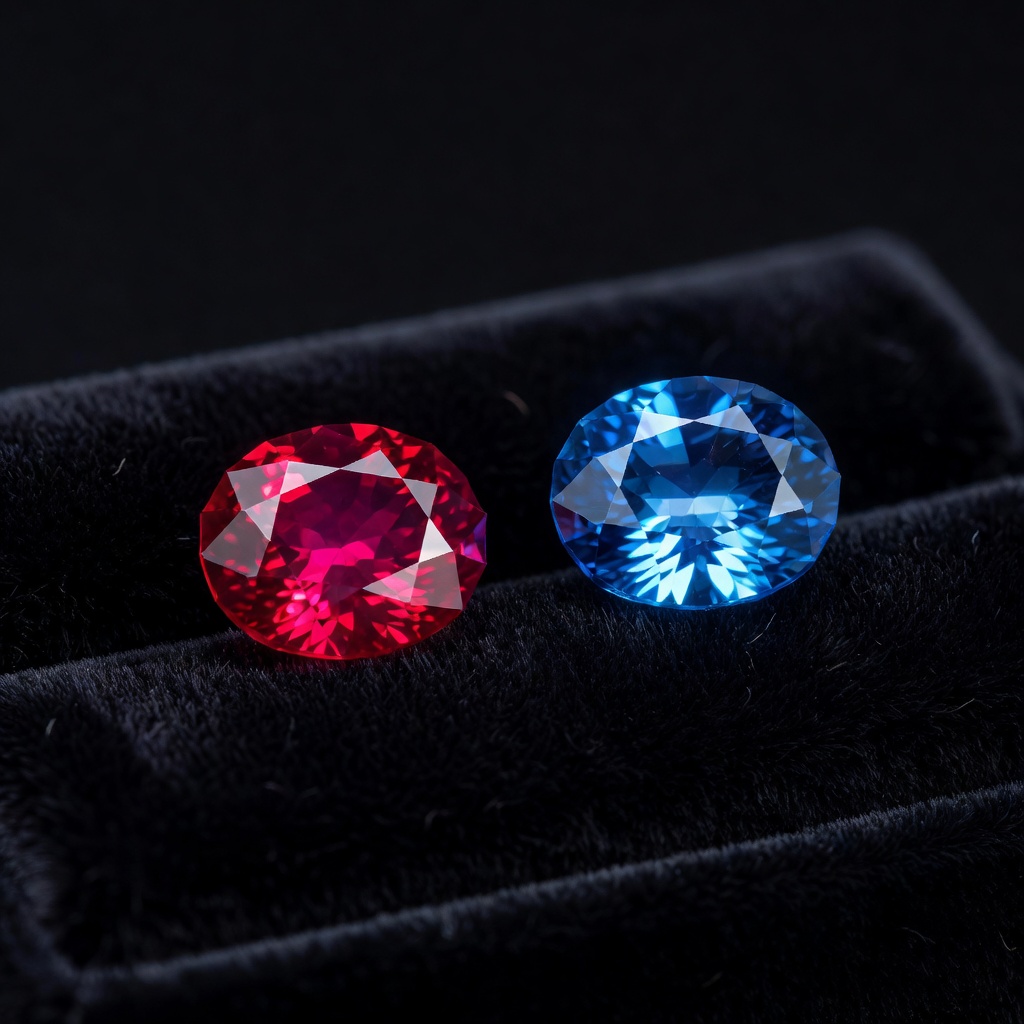
Understanding Ruby and Apatite: A Comprehensive Gemstone Comparison
When exploring the fascinating world of colored gemstones, the comparison between ruby and apatite presents a striking study in contrasts that every jewelry enthusiast should understand. Ruby stands as one of the prestigious "Big Four" precious gemstones alongside diamond, sapphire, and emerald, commanding respect for millennia as a symbol of wealth and power in cultures ranging from ancient India to European royalty. In contrast, apatite has emerged as a beloved collector's stone and semi-precious gem, prized for its electric blue-green hues that rival the finest Paraiba tourmalines at a fraction of the cost. This ruby vs apatite introduction reveals why these chemically distinct minerals deserve consideration for different jewelry applications, despite their vastly different durability profiles and market values.
Modern gemology enthusiasts increasingly encounter both stones when searching for vibrant color options, whether seeking the passionate reds of July birthstone alternatives or the oceanic blues that dominate contemporary fashion trends. While ruby represents the pinnacle of hardness and investment-grade rarity in the gemstone hierarchy, apatite offers accessibility and unique visual characteristics that make it ideal for specific jewelry styles. Understanding the fundamental differences between these minerals helps collectors make informed decisions about wearability, maintenance requirements, and long-term value preservation when building their jewelry wardrobes.
Chemical Composition: Corundum vs Calcium Phosphate
The fundamental distinction between these gemstones begins at the molecular level, where ruby belongs to the corundum family while apatite represents a phosphate mineral group, creating vastly different physical properties. Ruby consists primarily of aluminum oxide (Al₂O₃) crystallizing in the trigonal crystal system, forming the same mineral species as sapphire but distinguished by its chromium-derived red coloration. This corundum vs phosphate mineral comparison reveals why ruby exhibits exceptional hardness and thermal stability, as the strong aluminum-oxygen bonds create an incredibly dense and durable crystal lattice resistant to environmental degradation.
Apatite, chemically classified as calcium phosphate Ca₅(PO₄)₃(F,Cl,OH), crystallizes in the hexagonal system and encompasses a diverse group of minerals including fluorapatite, chlorapatite, and hydroxylapatite. The coloration mechanisms differ significantly between these stones: chromium ions substitute for aluminum in ruby's structure to absorb green and blue light while transmitting red wavelengths, creating that coveted pigeon blood hue. Conversely, apatite derives its famous neon blue-green colors from manganese substitutions or rare earth element variations, with the Madagascar material particularly prized for its intense saturation that gemologists sometimes describe as "neon" or "electric" in appearance.
Trace Elements and Color Development
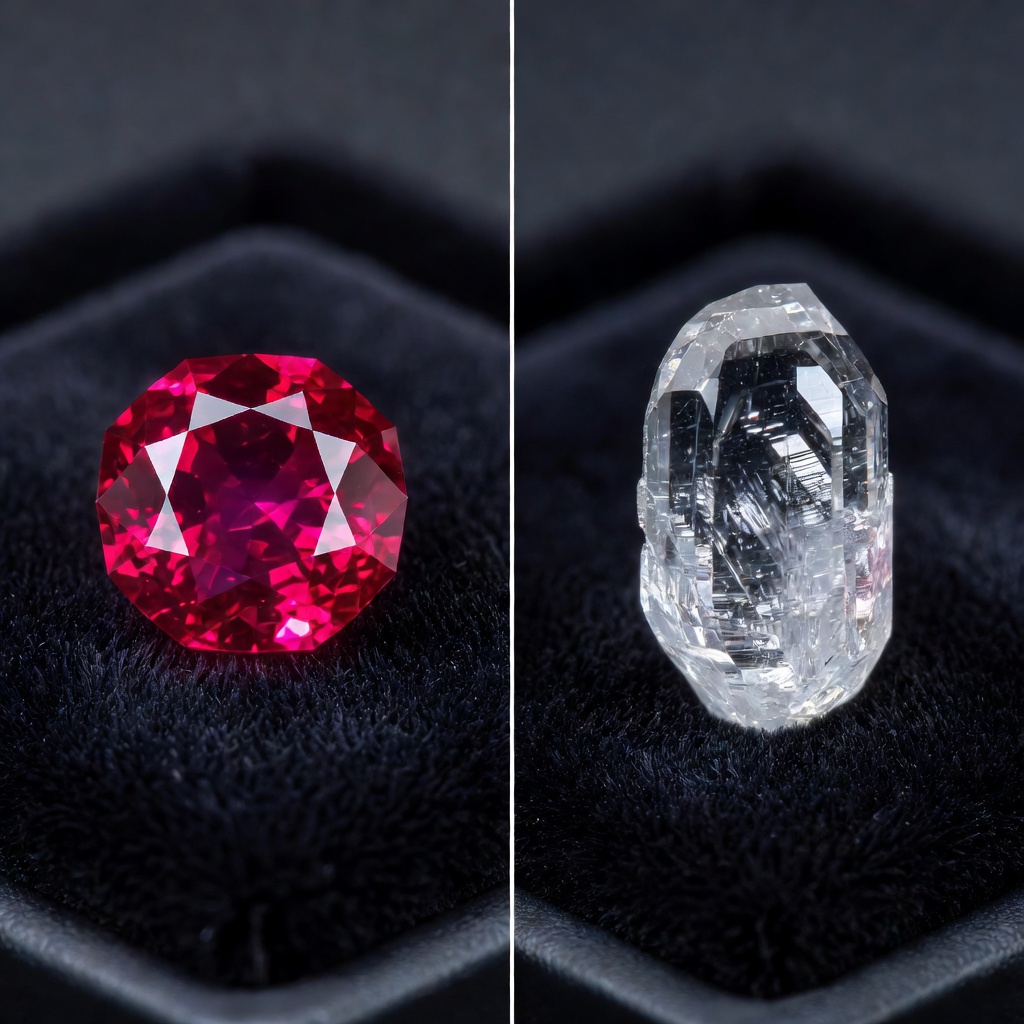
Practical gem identification often relies on understanding these chemical differences, as chromium content in high-quality Burmese rubies typically ranges between 0.1% to 0.5%, creating not only the red color but also characteristic fluorescence under ultraviolet light. Apatite's color palette expands beyond the famous blues to include yellows (from rare earth elements), greens (from chromium or vanadium), and violets (from manganese), offering designers a broader spectrum than ruby's exclusively red variations. When examining rough specimens, apatite frequently displays hexagonal prismatic crystals with distinct basal cleavage, whereas corundum forms barrel-shaped hexagonal pyramids that lack cleavage planes entirely.
Durability and Hardness: Mohs Scale Reality Check
Gemstone durability represents perhaps the most critical factor differentiating ruby from apatite, with implications that extend far beyond aesthetic considerations into practical wearability and longevity. Ruby gemstone hardness measures 9 on the Mohs scale, placing it second only to diamond and making it suitable for daily wear in engagement rings, bracelets, and other high-impact jewelry pieces that withstand decades of use. This exceptional hardness stems from corundum's dense atomic packing, which resists scratching from everyday materials including household dust (quartz, Mohs 7), steel files (Mohs 6.5), and virtually any other substance encountered in normal activities.
Apatite ranks merely 5 on the Mohs hardness scale, sharing this position with materials like obsidian, glass, and tooth enamel, creating significant vulnerabilities for jewelry applications. This gemstone durability comparison becomes immediately apparent when considering that apatite can be scratched by a pocket knife (Mohs 5.5), steel wool (Mohs 5.5-6.5), or even prolonged exposure to household dust containing quartz particles. Furthermore, apatite exhibits distinct cleavage in one direction and irregular fracture, meaning it can chip or split along specific crystal planes when struck, whereas ruby's lack of cleavage and high toughness make it resistant to breaking despite its hardness.
Practical Wear Implications
For active professionals or individuals working with their hands, choosing ruby over apatite prevents the disappointment of discovering surface scratches after mere weeks of wear. Consider the case of a healthcare worker who purchased an apatite cocktail ring for its beautiful color, only to find the table facet covered in scratches within three months from frequent hand washing and incidental contact with hospital equipment. Conversely, antique ruby jewelry from the Victorian era frequently survives in pristine condition despite 150 years of continuous wear, demonstrating the stone's suitability for heirloom pieces intended for generational transmission.
Color Variations and Visual Characteristics
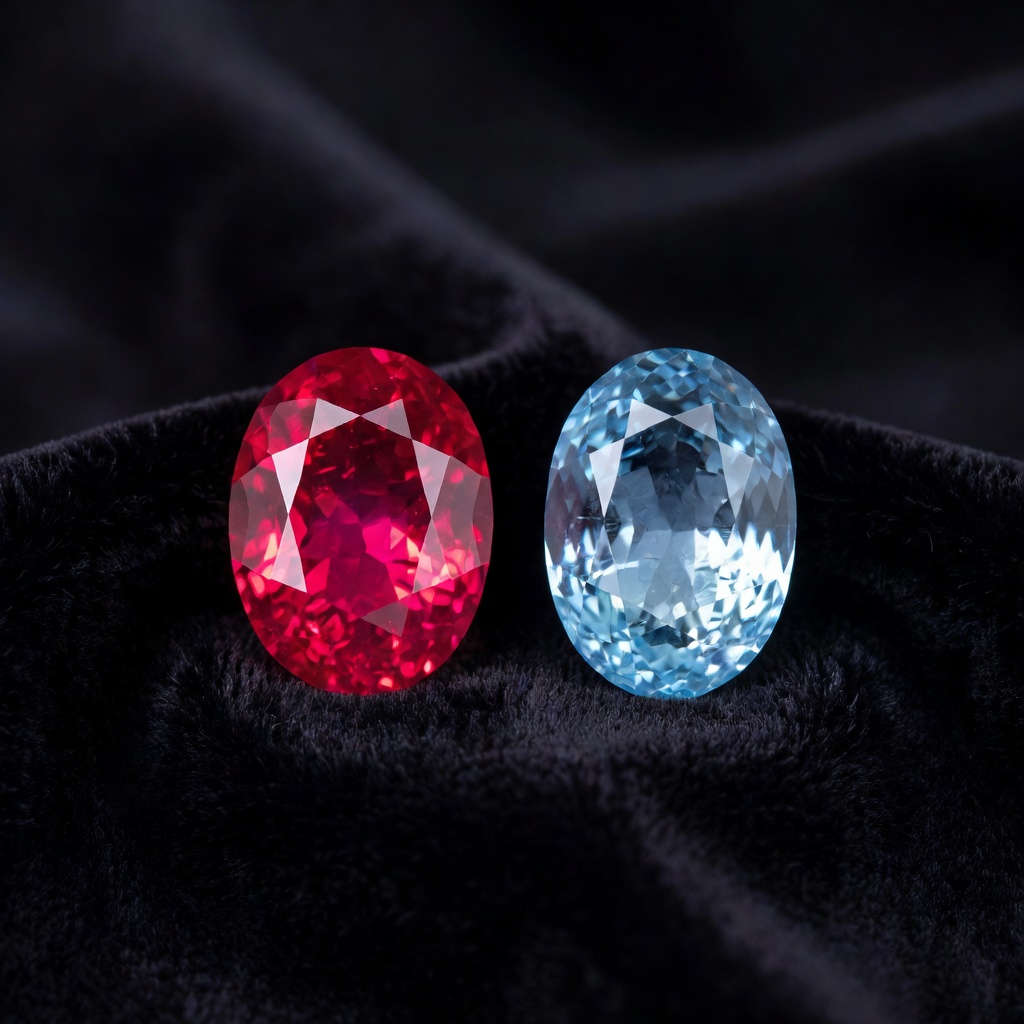
The visual distinction between ruby red vs apatite blue color palettes offers jewelry designers and collectors distinctly different aesthetic options, though both stones can display exceptional saturation and clarity. Fine rubies exhibit a pure, vivid red to slightly purplish-red hue often described as "pigeon blood" in the trade, characterized by strong fluorescence under daylight or UV light that creates an internal glow effect. This fluorescence results from chromium content interacting with UV wavelengths, causing high-quality Burmese rubies to appear almost internally illuminated, while Thai rubies typically show darker, more garnet-like tones due to iron content suppressing fluorescence.
Apatite's most celebrated variety displays an intense neon blue-green to greenish-blue color reminiscent of tropical waters, with Madagascar producing the most saturated material that commands premium prices within the apatite category. Unlike ruby, which remains strictly red (with pink corundum classified as pink sapphire), apatite occurs in yellowish greens, violets, colorless varieties, and cat's eye specimens, offering collectors diverse options for jewelry coordination. Pleochroism presents another distinguishing feature, as apatite frequently shows different colors when viewed from different angles (typically blue and yellow or green and yellow), requiring careful orientation during cutting to maximize face-up color, whereas ruby typically shows weak to moderate pleochroism in orange-red and purplish-red tones.
Brilliance and Optical Properties
When examining brilliance and light return, ruby's higher refractive index (1.76-1.77) and specific gravity (4.0) create more "life" and sparkle compared to apatite's refractive index of 1.63-1.64 and lighter specific gravity of 3.16-3.22. Gem cutters working with apatite must pay particular attention to the stone's softness, often employing polished rather than bruted girdles to prevent chipping during setting, while ruby's toughness allows for more aggressive cutting styles and sharper facet junctions. Additionally, apatite's relative abundance of inclusions compared to fine ruby means that eye-clean specimens command significant premiums within their category, though even included apatite remains affordable compared to equivalent ruby clarity grades.
Origins and Geographic Mining Sources
The geographic provenance of these gemstones significantly influences their market value, ethical considerations, and physical characteristics, with certain localities commanding premium recognition among collectors. Premium ruby and apatite origins historically overlap in Myanmar (formerly Burma), though the Mogok Stone Tract produces the world's most valuable rubies characterized by fine silk inclusions and exceptional fluorescence, while Myanmar's apatite deposits yield yellow and green specimens rather than the famous blue varieties. Mozambique has emerged as the dominant source for commercial-grade rubies since the 2009 Montepuez discoveries, offering fine red material that challenges Burmese dominance at more accessible price points, while Thailand and Cambodia provide darker, "Siamese" rubies frequently treated with heat to improve color.
High-quality blue apatite primarily originates from Madagascar, specifically the deposits near Antsirabe that produce the neon blue-green material highly sought after for designer jewelry. Brazil yields significant quantities of green and blue apatite from Minas Gerais, while Mexico's Durango region produces the golden yellow apatite popular in Native American jewelry traditions. Unlike ruby mining, which frequently involves artisanal and small-scale mining operations with documented ethical challenges in Myanmar and Madagascar, apatite mining generally occurs in larger-scale operations with fewer conflict concerns, though environmental impact remains a consideration for both industries.
Traceability and Ethical Sourcing
Responsible consumers seeking rubies should request documentation regarding treatment status and origin, as untreated Burmese rubies command the highest premiums but face trade restrictions in certain jurisdictions due to political considerations. The Responsible Jewellery Council and similar organizations now offer chain-of-custody certification for rubies, while apatite buyers can generally source ethically with less complexity due to the stone's abundance and primary extraction from stable democratic nations like Brazil and Madagascar. When building a collection, consider requesting laboratory reports from respected institutions like GIA or AGL for significant ruby purchases, whereas apatite typically requires only basic seller disclosure unless the specimen exceeds ten carats or exhibits unusual optical phenomena.
Price and Investment Value Analysis
The economic disparity between these gemstones reflects their relative rarity, durability, and cultural significance, with ruby vs apatite price comparisons revealing a market spread that can exceed 1,000-fold for fine specimens. Exceptional untreated Burmese rubies command $10,000 to $100,000+ per carat at auction, with the record-breaking "Sunrise Ruby" fetching over $1 million per carat, while fine Mozambique rubies typically range $5,000-$25,000 per carat depending on size and quality. Heat-treated commercial rubies offer entry points around $1,000-$3,000 per carat, making ruby accessible to mid-range collectors despite its precious status, though treated stones generally lack investment appreciation potential.
Apatite remains remarkably affordable despite its beauty, with fine neon blue Madagascar material ranging $50-$200 per carat for exceptional specimens, while commercial-grade blue or green apatite typically sells for $20-$50 per carat. This price differential stems from apatite's relative abundance in nature and its unsuitability for daily wear jewelry, which limits demand compared to durable precious gems. Investment-minded collectors should note that while high-quality rubies have historically appreciated 5-10% annually, apatite functions primarily as a fashion or collector's stone without significant secondary market liquidity or appreciation potential.
Value Factors and Treatment Disclosure
When evaluating ruby purchases, insist on disclosure regarding heat treatment, as 95% of commercial rubies undergo thermal enhancement to dissolve rutile silk and improve color saturation; untreated specimens command 40-60% premiums. Glass filling represents another treatment concern, with fracture-filled rubies selling for 80-90% less than unenhanced material and requiring special care to prevent damage from heat or ultrasonic cleaning. Apatite value correlates primarily with color intensity and clarity, with the neon blue varieties commanding triple the price of green or yellow specimens, though even the finest apatite rarely exceeds $300 per carat unless displaying exceptional size (over 20 carats) with perfect clarity.
Jewelry Applications: Settings and Wearability
Practical jewelry design considerations heavily favor ruby for pieces requiring longevity, while apatite jewelry care requirements restrict its use to protected settings and occasional wear scenarios. Ruby excels in engagement rings, tennis bracelets, and cuff bracelets that withstand daily impact, with its Mohs 9 hardness allowing contact with door frames, desk surfaces, and household items without damage. Prong settings, tension settings, and channel settings all work effectively for ruby, giving designers creative flexibility while maintaining security for the stone.
Apatite demands protective bezel settings or halo designs that shield the girdle and crown from direct impact, making it best suited for earrings, pendants, and brooches that receive minimal mechanical stress. A practical example involves the brooch design: a large apatite cabochon set in a gold bezel with protective rim makes a stunning statement piece for evening wear, whereas the same stone in an exposed prong ring setting would likely chip within months of daily wear. Ruby vs apatite jewelry settings must account for apatite's perfect cleavage direction, meaning that sharp blows from any angle can potentially split the stone, whereas ruby's isometric toughness distribution provides uniform resistance to impact.
Design Recommendations by Lifestyle
For wedding jewelry intended for daily wear over decades, ruby represents the only viable choice between these two gems, as even careful wearers inevitably subject rings to impacts that would damage apatite. Fashion-forward designers increasingly use apatite in "day-to-night" convertible pieces where the stone mounts in protective pendant settings for office wear, then transfers to decorative brooch or hair ornament settings for evening events without risk of damage. When designing with apatite, consider pairing it with protective surrounding materials—such as seed pearls or small sapphire halos—that absorb impact before it reaches the softer central stone.
Metaphysical Properties and Symbolic Meaning
Beyond physical characteristics, ruby vs apatite meaning distinctions attract collectors interested in crystal healing and energetic properties, with each stone offering distinct vibrational associations. Ruby has served as the July birthstone since the modern list's establishment in 1912, associated with passion, vitality, courage, and protection against misfortune in medieval European and Hindu traditions. Metaphysical practitioners associate ruby with the Root Chakra (Muladhara) for grounding and survival instincts, and the Heart Chakra (Anahata) for stimulating love and emotional warmth, believing the stone amplifies life force energy and combats exhaustion.
Apatite carries distinct energetic associations linked to intellectual and creative pursuits rather than physical vitality, with crystal healers attributing motivation, personal growth, and appetite suppression properties to the stone. Unlike ruby's fiery elemental association, apatite connects to the Throat Chakra (Vishuddha) for enhanced communication and the Third Eye Chakra (Ajna) for intuition and mental clarity, making it popular among writers, teachers, and students seeking cognitive enhancement. While ruby energizes and stimulates physical action, apatite is believed to suppress hunger and promote metabolic balance, creating complementary rather than overlapping metaphysical applications.
Chakra Alignment and Meditation Practices
Meditation practitioners often employ ruby for "fire" element visualizations and Kundalini activation exercises, holding the stone at the base of the spine or over the heart to stimulate circulation and passionate energy. Apatite finds use in throat chakra layouts and lucid dreaming practices, with blue varieties placed under pillows or on the third eye during meditation to enhance psychic development and dream recall. For those seeking July birthstone alternatives that differ energetically from ruby's intensity, apatite offers a cooling, clarifying counterbalance suitable for summer months when fiery energies might overwhelm sensitive individuals.
Buying Guide: How to Choose Between Ruby and Apatite
Choosing ruby or apatite requires honest assessment of lifestyle factors, budget constraints, and aesthetic preferences, as these stones serve fundamentally different purposes in a well-rounded jewelry collection. Active individuals who work with their hands, engage in sports, or prefer low-maintenance jewelry should invariably select ruby, accepting the higher price point as payment for decades of worry-free wear. Conversely, collectors seeking statement pieces for special occasions, or those drawn specifically to the neon blue colors unavailable in durable precious gems, will find apatite offers unique visual impact at accessible prices.
Budget considerations extend beyond initial purchase price to include long-term maintenance and replacement costs; while a $5,000 ruby ring might last generations with minimal care, a $500 apatite ring might require repolishing or replacement within five years of regular wear. Color preference plays a crucial role: those drawn to warm, passionate reds and pinks will naturally gravitate toward ruby's saturated palette, while individuals preferring cool, aquatic blues and greens will appreciate apatite's oceanic hues unavailable in natural rubies. Consider also the investment angle—significant ruby purchases typically retain or appreciate in value, whereas apatite should be viewed as a consumable fashion purchase rather than a store of wealth.
Lifestyle Assessment Checklist
Before purchasing, evaluate your daily activities: do you type extensively, work in healthcare, or engage in manual labor? If yes, ruby provides the only practical option for rings or bracelets. Do you seek a "wow factor" pendant for monthly dinner parties or gallery openings, with storage in a soft pouch between events? Apatite offers stunning color at one-tenth the price of equivalent-sized aquamarine or tourmaline. For collectors building comprehensive gemstone wardrobes, acquiring both stones serves different functions—ruby for daily wear staples and apatite for occasional dramatic pieces—provided one understands and accepts the care requirements for the softer stone.
Care and Maintenance Requirements
Proper caring for ruby and apatite demands distinctly different approaches due to their hardness differential, with incorrect cleaning methods potentially destroying apatite while leaving ruby unaffected. Ruby's exceptional hardness allows for ultrasonic cleaning and steam cleaning in most cases, provided the stone lacks significant fractures or glass fillings (which require gentle treatment regardless of base hardness). Warm soapy water with a soft brush remains the safest universal method for ruby maintenance, effectively removing body oils and lotions without risking damage to the setting or stone.
Apatite jewelry care requires extreme gentleness: lukewarm water with mild detergent and a soft cloth only, avoiding all ultrasonic cleaners, steamers, and chemical jewelry dips that can etch the stone's surface or cause thermal shock. Store apatite pieces separately in soft cloth pouches away from harder gemstones like ruby, diamond, or sapphire, as contact between jewelry items can scratch apatite even during storage. Never expose apatite to household cleaners, hairspray, or perfume, as the phosphoric acid content in some beauty products can slowly dissolve the calcium phosphate structure over time.
Professional Maintenance Schedules
Schedule annual inspections for ruby jewelry to check prong security, though the stone itself typically requires no special maintenance beyond cleaning. For apatite, inspect settings quarterly for loose stones, as the softness allows metal to wear away from the girdle more quickly than with harder gems. If apatite develops surface scratches, a professional lapidary can often repolish the stone, though this removes material and should be limited to once or twice in the gem's lifetime. When traveling, always pack apatite in rigid boxes rather than soft jewelry rolls to prevent crushing or scratching by harder travel companions.
Ruby vs Apatite: Detailed Comparison
| Characteristic | Ruby | Apatite |
|---|---|---|
| Chemical Composition | Aluminum Oxide (Corundum) | Calcium Phosphate |
| Crystal System | Trigonal | Hexagonal |
| Mohs Hardness | 9 (Excellent) | 5 (Poor) |
| Toughness | Excellent (no cleavage) | Fair to Poor (brittle with cleavage) |
| Color Range | Red to Pinkish-Red only | Blue, Green, Yellow, Violet, Colorless |
| Refractive Index | 1.76 - 1.77 (High brilliance) | 1.63 - 1.64 (Moderate brilliance) |
| Price per Carat | $1,000 - $100,000+ | $20 - $200 |
| Best Jewelry Use | Rings, Bracelets, Daily Wear | Earrings, Pendants, Occasional Wear |
| Cleaning Method | Ultrasonic, Steam, or Soap Safe | Lukewarm Soapy Water Only |
| Investment Value | High appreciation potential | Minimal resale value |
| Birthstone Status | July Birthstone | No traditional birthstone association |
| Primary Sources | Myanmar, Mozambique, Thailand | Madagascar, Brazil, Mexico |
Frequently Asked Questions
Is apatite as valuable as ruby?
No, apatite is significantly less valuable than ruby. While high-quality apatite can cost $100-200 per carat, fine untreated rubies from Myanmar can command $10,000 to $100,000+ per carat. Ruby is one of the most precious gemstones, whereas apatite is considered a collector's or semi-precious stone.
Which is harder, ruby or apatite?
Ruby is much harder than apatite. Ruby ranks 9 on the Mohs hardness scale (second only to diamond), while apatite ranks only 5. This means ruby is highly resistant to scratching and suitable for daily wear, whereas apatite can be scratched by everyday materials like household dust and requires careful handling.
Can apatite be used in engagement rings like ruby?
Apatite is generally not recommended for engagement rings due to its softness (Mohs 5) and poor toughness. It scratches easily and can chip or break with impact. Ruby, with its Mohs 9 hardness and excellent toughness, is one of the best gemstones for engagement rings that withstand daily wear for decades.
Why is ruby red while apatite is usually blue?
Ruby appears red due to chromium impurities in the corundum crystal structure, which absorb specific light wavelengths and reflect red. Apatite's blue color comes from manganese ions or rare earth element substitutions in the calcium phosphate structure. However, apatite also occurs in green, yellow, and violet, while ruby is exclusively red (corundum of other colors are sapphires).
How can I tell the difference between ruby and red apatite?
Key differences include hardness (ruby scratches glass easily, apatite does not), specific gravity (ruby feels heavier), and fluorescence (ruby often glows red under UV light). Ruby typically shows higher brilliance and fire, while red apatite is softer-looking with different refractive properties. A gemologist can confirm using refractive index testing.
Can you wear apatite every day?
Daily wear of apatite is not recommended due to its relative softness (Mohs 5). It is best reserved for occasional wear, earrings, or pendants that don't receive impact. If worn daily, apatite will likely show scratches and surface wear within months. Ruby is the superior choice for everyday jewelry durability.
Which stone is better for investment purposes?
Ruby is the superior investment gemstone. High-quality untreated Burmese rubies appreciate significantly over time and hold value due to rarity and demand. Apatite, while beautiful, is more abundant and does not typically appreciate in value, making it suitable for fashion jewelry rather than investment portfolios.
Do ruby and apatite have similar healing properties?
While both stones are associated with energy and vitality, they differ metaphysically. Ruby focuses on passion, courage, life force, and heart-centered energy. Apatite emphasizes mental clarity, communication, creativity, and manifestation. Ruby is grounding and stimulating, while apatite is more associated with spiritual attunement and intellectual pursuits.