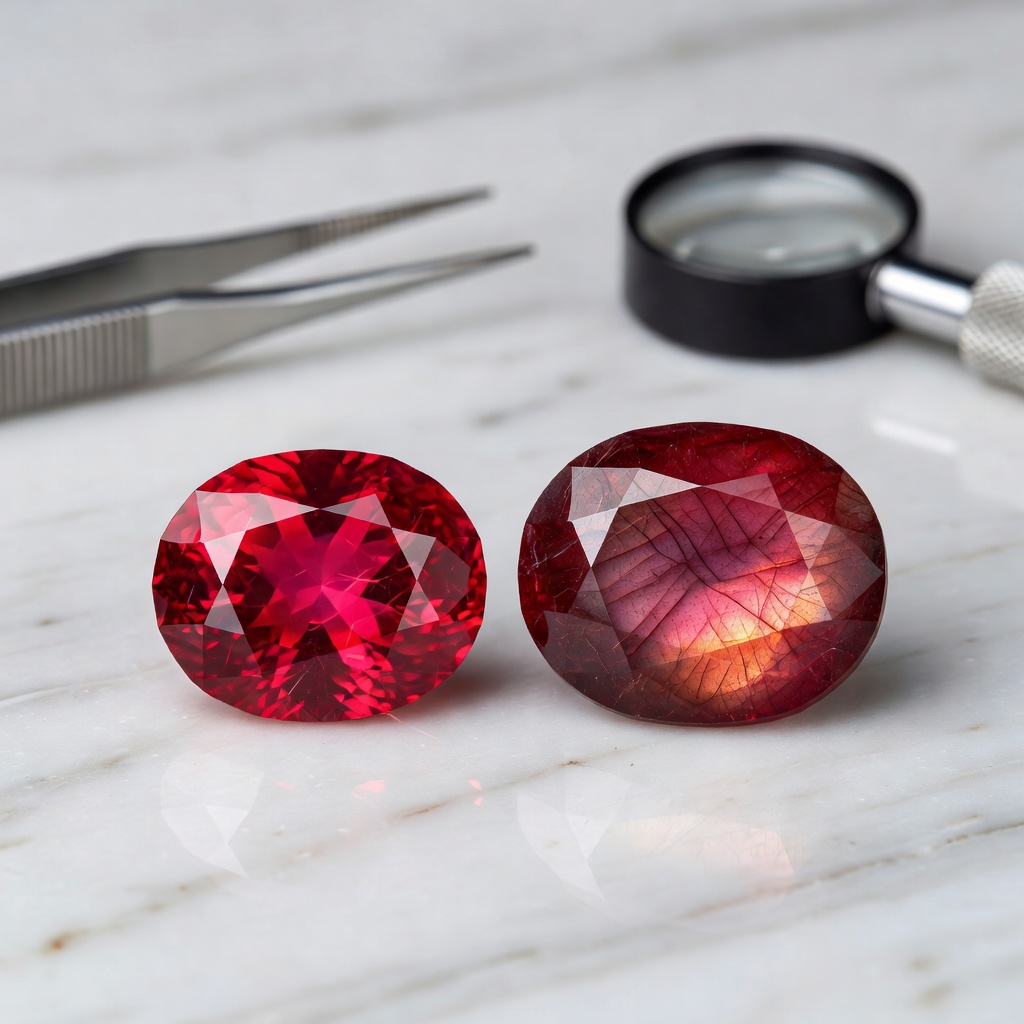
Understanding the Ruby vs Andesine Debate
The jewelry market has witnessed growing confusion between these two red gemstones, with many consumers unable to distinguish between a precious ruby and its feldspar counterpart. This misunderstanding stems primarily from the introduction of red andesine into the gem trade during the early 2000s, when material marketed as "natural red andesine" flooded markets at prices that seemed too good to be true for rubies of similar color. For collectors and investors, proper identification remains crucial not only for insurance valuation but also for understanding long-term value retention, as these stones occupy vastly different positions in the gemstone hierarchy. While both gems can display attractive red hues ranging from orange-red to deep crimson, the similarities end there, with differences in durability, rarity, and market perception creating distinct categories for these seemingly similar stones.
Chemical Composition and Geological Origins
The Fundamental Difference Between Corundum and Feldspar
Ruby belongs to the corundum family, consisting of aluminum oxide (Al₂O₃) that crystallizes in the trigonal system, creating an extremely dense and durable mineral structure prized for millennia. In contrast, andesine is a plagioclase feldspar with a complex chemical composition of sodium-calcium aluminum silicate, crystallizing in the triclinic system with a significantly less compact molecular arrangement. This fundamental distinction between corundum vs feldspar explains why rubies withstand centuries of wear while andesine requires more careful handling, as the atomic bonding in corundum creates superior resistance to scratching and breaking. Understanding these compositional differences helps gemologists immediately categorize unknown red stones and predict their performance in jewelry applications.
Formation Environments and Geographic Sources
Natural rubies form under intense heat and pressure within metamorphic environments, typically originating from marble or basalt deposits where chromium replaces aluminum atoms to create the characteristic red color. Myanmar (Burma) and Mozambique currently dominate the fine ruby market, with Burmese Mogok rubies commanding premium prices for their "pigeon blood" coloration, while Mozambique deposits provide excellent clarity and larger crystal sizes. Andesine crystallizes from cooling magma in igneous environments, with significant deposits found in the Democratic Republic of Congo and Tibet, though much of the material entering Western markets originated from treated rough sourced throughout Asia. The geological diversity means that while ruby miners search specific metamorphic belts, andesine occurs more broadly in volcanic regions, contributing to its greater abundance and lower market value.
Visual Characteristics: Color, Clarity, and Phenomena
Distinguishing Red Hues and Fluorescence Patterns
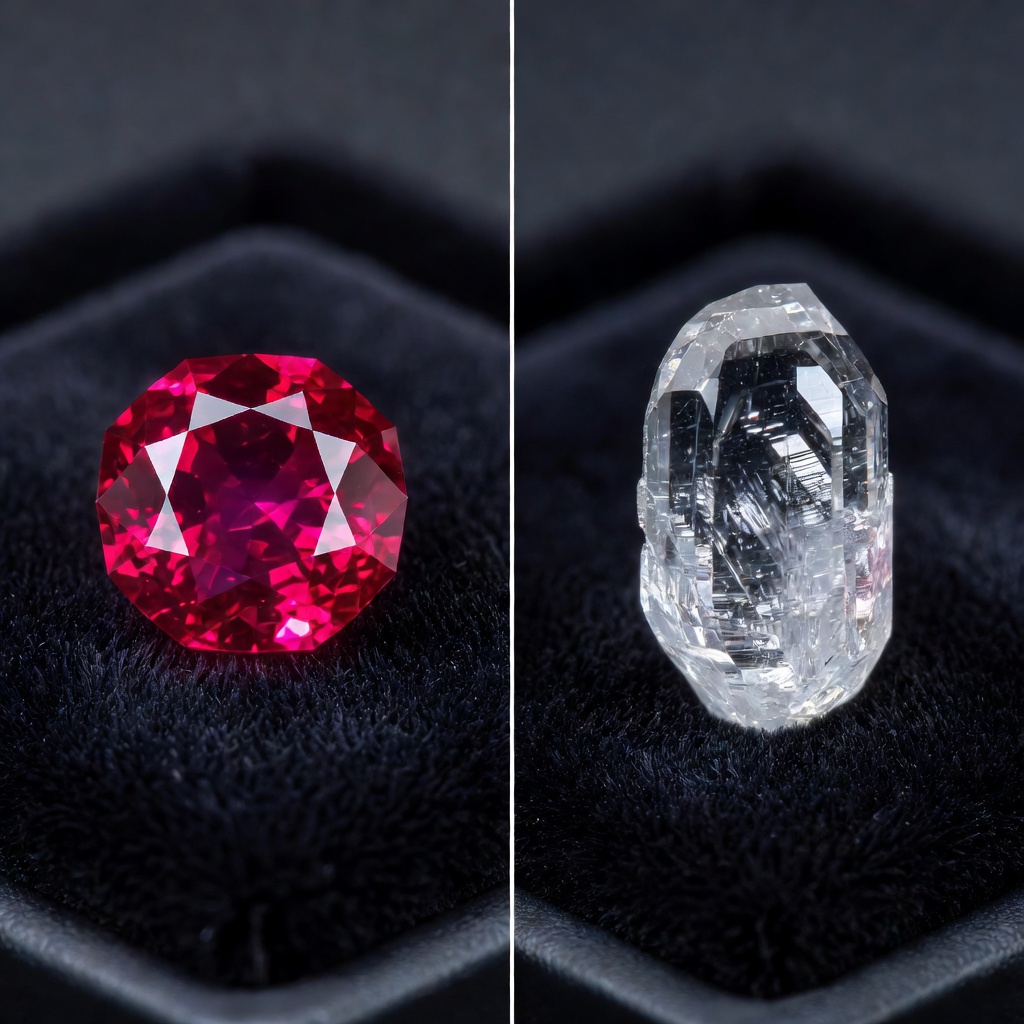
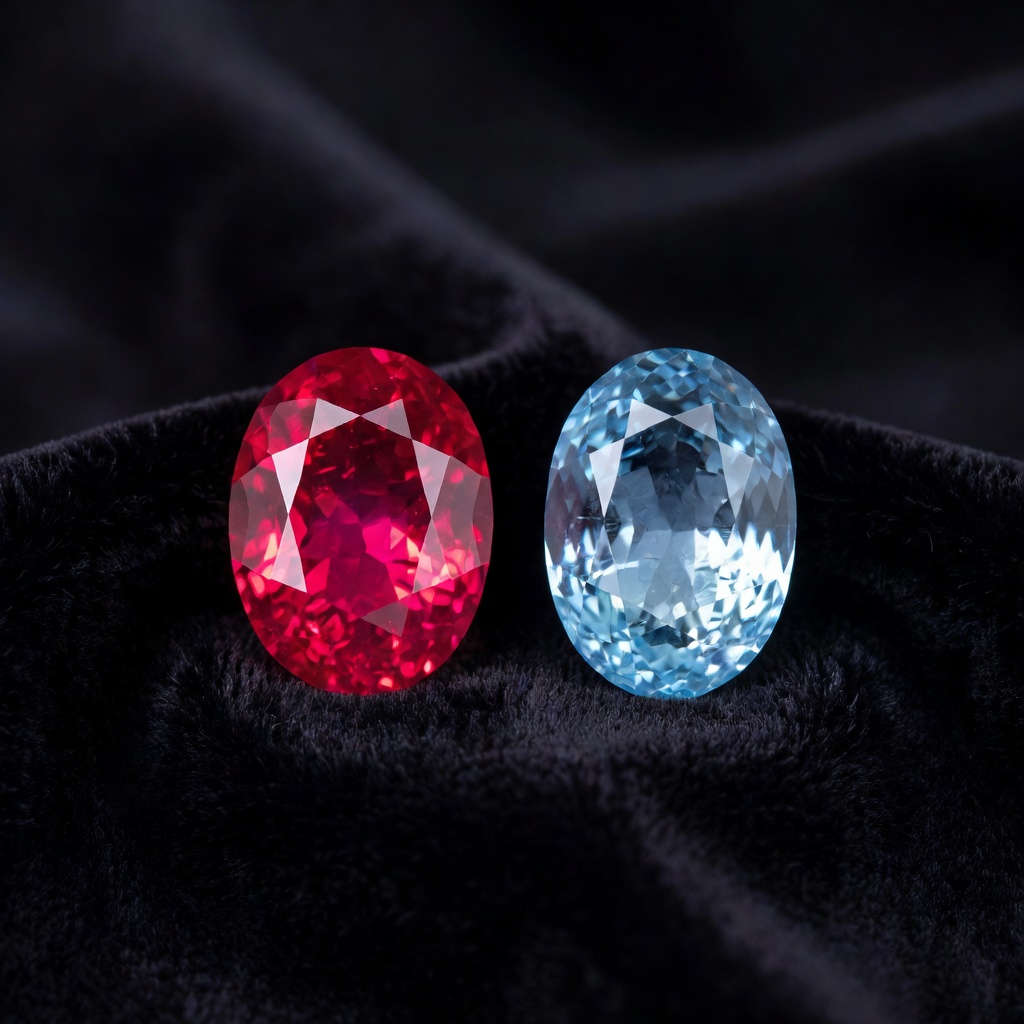
Pigeon blood ruby exhibits a unique fluorescence under daylight or UV light, creating an internal glow caused by chromium content that appears to illuminate the stone from within, a phenomenon rarely matched by other red gems. Red andesine typically displays a more subdued, copper-based red color that lacks the fluorescent "life" of fine ruby, often appearing slightly brownish or orange-red under incandescent lighting compared to ruby's pure red vibrancy. When examining red andesine vs ruby side by side under natural daylight, the ruby typically appears more vivid and saturated, while andesine may show a more metallic or glassy appearance without the depth of color saturation found in high-quality corundum. Practical tip: Place both stones under UV light—rubies will glow bright red due to chromium fluorescence, while andesine remains relatively inert or shows weak reaction.
Inclusion Patterns and Optical Phenomena
Ruby inclusions often include rutile needles (silk), mineral crystals, and fingerprint patterns that, while potentially reducing clarity, can actually confirm natural origin and enhance value in untreated specimens. Andesine frequently contains distinctive copper platelets or copper-colored inclusions that create a schiller effect or metallic flash when tilted, a definitive characteristic not found in natural rubies. Pleochroism presents differently in each stone, with ruby showing strong dichroism (red to orange-red or purplish-red) when viewed from different angles, while andesine displays weak pleochroism that is often barely noticeable to the untrained eye. Experienced buyers should examine stones using a dichroscope, where ruby will show two distinct colors compared to andesine's nearly uniform appearance.
Luster and Surface Reflection
Ruby possesses a vitreous to adamantine luster that creates bright, sharp reflections and a diamond-like brilliance when properly cut, contributing to its perception as a precious gemstone. Andesine exhibits a purely vitreous luster similar to glass, which, while attractive, lacks the exceptional brilliance and "fire" that distinguishes fine ruby from its less expensive counterparts. When set in jewelry, this difference becomes particularly noticeable under direct lighting, where ruby's superior refractive index creates more sparkle and scintillation compared to andesine's more subdued glow.
Durability Analysis: Hardness, Toughness, and Daily Wear
Mohs Hardness and Scratch Resistance
Ruby gemstone hardness ranks 9 on the Mohs scale, making it second only to diamond in resistance to scratching and suitable for daily wear in engagement rings and bracelets that encounter frequent contact with hard surfaces. Andesine measures only 6 to 6.5 on the Mohs scale, comparable to ordinary glass or steel, meaning it can scratch easily from everyday activities like reaching into a pocket or bumping against countertops. This significant hardness differential means that a ruby ring worn daily for decades might show minimal surface wear, while an andesine ring could develop scratched facets and dulled surfaces within months of regular wear. For active individuals or those working with their hands, ruby's superior hardness provides peace of mind that the stone will maintain its polish and clarity over generations.
Cleavage, Fracture, and Structural Integrity
Andesine possesses two directions of perfect cleavage, creating planes of weakness where the stone can split cleanly if struck at the correct angle, making it vulnerable to damage from sharp impacts or extreme temperature changes. Ruby lacks cleavage planes altogether, instead exhibiting a conchoidal or splintery fracture pattern that makes it more resistant to breaking from accidental knocks or pressure applied during setting. This structural difference significantly impacts jewelry design decisions, as andesine requires protective settings that shield the girdle and corners from direct impact, whereas ruby can safely be set in exposed prong settings without the same risk of cleavage failure. Jewelers often recommend bezel settings or halo designs for andesine to provide physical protection against the chips and cracks that commonly afflict feldspar gemstones.
Care Requirements and Maintenance Protocols
Ruby jewelry typically requires only standard cleaning with warm soapy water and a soft brush, with ultrasonic and steam cleaning generally safe for untreated stones, though care should be taken with fracture-filled or glass-filled specimens. Andesine demands gentler treatment, requiring avoidance of ultrasonic cleaners, steam, and harsh chemicals that might penetrate fractures or cause thermal shock due to its sensitivity to sudden temperature changes. When storing jewelry, andesine pieces should be kept separate from harder gems to prevent scratching, ideally in individual cloth pouches, while rubies can be stored more casually alongside other hardstones without significant risk of damage. Professional jewelers recommend removing andesine rings before activities involving impact, chemicals, or temperature extremes, whereas ruby offers more forgiving wear characteristics for everyday lifestyle demands.
Market Value and Investment Potential
Price Analysis and Market Positioning
Fine untreated rubies command prices ranging from $1,000 to over $15,000 per carat for exceptional Burmese pigeon blood specimens, with record-breaking auction sales exceeding $1 million per carat for large, flawless stones with documented provenance. Andesine labradorite value typically ranges from $10 to $500 per carat, with natural untreated red specimens commanding the higher end of this spectrum while copper-diffused material often sells for $10 to $50 per carat in retail settings. This dramatic price disparity reflects not only rarity but also historical prestige, as rubies have adorned crown jewels and royal collections for millennia while andesine remains a relative newcomer to the gem market with limited collector following. When budgeting for significant jewelry purchases, consumers should expect to pay approximately 50 to 100 times more for a fine ruby than for a visually similar-sized andesine of comparable color intensity.
Rarity Factors and Long-Term Appreciation
Investment-grade rubies, particularly those over five carats with untreated Burmese origin and pigeon blood color, demonstrate consistent appreciation at auction, with prices increasing steadily as mines deplete and political instability affects Myanmar supply chains. Natural red andesine without copper diffusion treatment represents a small fraction of the market, and while these specimens may appeal to mineral collectors, they lack the established auction infrastructure and collector demand necessary for reliable investment growth. The ruby investment market benefits from standardized grading systems, established certification protocols, and international recognition, whereas andesine suffers from market confusion regarding treatments and origins that discourage serious collectors. Financial advisors specializing in tangible assets typically recommend allocating portfolio resources toward certified, untreated rubies rather than andesine, which currently functions primarily as a fashion or costume jewelry component rather than a wealth preservation vehicle.
Market Volatility and Risk Assessment
The ruby market experienced significant disruption following the 2008 "Congo ruby" scandal, where red andesine was fraudulently sold as ruby, temporarily damaging consumer confidence until gemological laboratories developed definitive testing protocols. Current market risks for andesine include oversupply of treated material flooding the market at unsustainable prices, potentially devaluing existing collections and making natural specimens difficult to authenticate without expensive laboratory testing. Ruby markets face their own challenges, including treatment disclosure issues regarding heat and flux-enhanced stones, though established laboratories like GIA and SSEF provide reliable certification that maintains market integrity. Prospective buyers should purchase only stones accompanied by reports from reputable laboratories, ensuring that ruby heat treatment is disclosed and that andesine copper diffusion status is clearly stated to avoid future valuation disputes.
Treatments, Enhancements, and Ethical Considerations
Traditional Heat Treatment vs Copper Diffusion
Ruby heat treatment represents an accepted industry practice spanning centuries, where controlled heating improves color saturation and clarity by dissolving rutile inclusions and enhancing chromium distribution without adding foreign elements. In contrast, copper diffusion andesine involves a more controversial process where colorless or pale feldspar is heated with copper compounds, causing the metal to diffuse into the crystal structure and create red, green, or bicolor appearances that rarely occur naturally. While heat-treated rubies remain genuine corundum with stable, permanent color, copper-diffused andesine raises ethical concerns because the treatment is often difficult to detect without advanced spectroscopic equipment and is rarely disclosed in the marketplace. The gemological community generally accepts ruby heat treatment as a permanent enhancement that does not require special care, whereas copper-diffused andesine may show color instability near jewelers' torches or during repairs.
Disclosure Standards and Certification Requirements
Reputable laboratories including GIA, AGL, and SSEF clearly disclose ruby heat treatment on their certificates, allowing consumers to make informed decisions about value and rarity, with untreated stones commanding significant premiums. For andesine, disclosure of natural vs treated andesine remains inconsistent, with some sellers marketing copper-diffused material as "natural red andesine" technically true regarding the base material but misleading regarding the color origin. The Federal Trade Commission requires disclosure of treatments that affect durability or require special care, which technically applies to copper-diffused andesine due to potential color instability, though enforcement remains challenging in international markets. Consumers should insist on certificates from laboratories equipped to detect copper diffusion, such as GIA or AGL, and be wary of vague descriptions like "red feldspar" or "andesine labradorite" without specific treatment disclosure.
The Congo Ruby Controversy and Industry Impact
During the mid-2000s, gem dealers marketed large quantities of red copper-diffused feldspar as "Congo ruby" or "red labradorite," creating one of the most significant gemstone controversies in recent history and causing millions in losses for unsuspecting buyers. This scandal highlighted the need for advanced spectroscopic testing in gemstone identification, leading laboratories to develop specific protocols for detecting copper diffusion in plagioclase feldspar that remain industry standards today. The fallout from this controversy continues to affect andesine's reputation, with many jewelers refusing to stock the material despite its attractive appearance, while ruby markets implemented stricter provenance documentation to prevent similar substitution fraud. Modern buyers should research dealer reputations carefully, particularly when encountering unusually inexpensive "rubies" or red stones from unknown sources, as the temptation to pass off treated andesine as ruby persists in unregulated markets.
Authentication Methods and Laboratory Testing
Spectroscopic Analysis and Chemical Signatures
Advanced spectroscopes reveal distinct absorption patterns that definitively separate these stones, with ruby showing characteristic chromium absorption lines at 694nm (the "ruby line") and distinctive bands in the blue and yellow regions of the spectrum. Copper diffusion andesine displays copper-related absorption features between 500-600nm, creating a distinctive pattern that gemologists recognize immediately when using a spectroscope or advanced spectrometer equipment. Gemstone authentication methods have evolved to include laser ablation inductively coupled plasma mass spectrometry (LA-ICP-MS), which can detect copper concentrations in andesine that exceed natural levels, confirming artificial diffusion treatment. Practical tip: While handheld spectroscopes cost several hundred dollars, even basic models allow knowledgeable users to distinguish ruby's chromium spectrum from andesine's copper-related absorption, making this an invaluable tool for serious collectors.
Refractive Index and Specific Gravity Testing
Refractive index testing provides immediate differentiation, with ruby measuring 1.76-1.77 (uniaxial negative) compared to andesine's 1.55-1.56 (biaxial), a difference easily detected with a standard refractometer and polarizing filter. Specific gravity testing offers another definitive distinction, as ruby sinks in liquids with specific gravity below 4.0 (typically 3.97-4.05), while andesine floats in the same medium with a specific gravity of only 2.66-2.68, similar to quartz. These physical constants remain reliable regardless of treatments applied, meaning even copper-diffused andesine can be distinguished from ruby using basic gemological equipment available at most jewelry stores or appraisal offices. When purchasing uncertified stones, buyers can request these simple tests from independent appraisers, with results available in minutes and costing significantly less than full laboratory reports.
The Importance of Professional Certification
Given the sophisticated nature of modern treatments and the potential for significant financial loss, purchasing certified stones from laboratories such as GIA, AGL, GRS, or SSEF remains essential for both ruby and andesine acquisitions, particularly for investment-grade purchases. These laboratories employ advanced techniques including energy-dispersive X-ray fluorescence (EDXRF) to detect copper in andesine, and sophisticated microscopy to identify heat treatment residues in ruby, providing documentation that protects buyers and facilitates future resale. For andesine specifically, certification should explicitly state "Natural Color" or "No Indications of Copper Diffusion" to command premium prices, while ruby certificates should specify "No Heat" or "Heated" along with origin determination when possible. The cost of certification (typically $100-$300) represents a small insurance premium compared to the value differential between treated and untreated stones, making it non-negotiable for serious collectors or investors.
Jewelry Design Applications and Setting Recommendations
Protective Settings for Andesine Jewelry
Andesine jewelry settings require thoughtful engineering to protect the stone's vulnerable girdle and cleavage planes, with bezel settings providing the most security by surrounding the entire perimeter with metal to prevent impact damage. V-prongs or double-prong designs offer alternative protection for andesine while maximizing light exposure, though jewelers must exercise extreme care during the setting process to avoid applying pressure along cleavage directions that could split the stone. Halo settings surrounding andesine with small diamonds or hardstones create a buffer zone that absorbs impact before reaching the softer center stone, making this design both beautiful and practical for occasional wear pieces. For daily wear rings, consider recessed settings where the andesine sits slightly below the metal surface, protected from direct contact with hard surfaces during everyday activities.
Metal Pairing and Color Enhancement
White gold and platinum settings enhance the fluorescence and "cold" red tones of fine Burmese rubies, creating a modern aesthetic that emphasizes the stone's vivid color against the bright white metal background. Yellow gold and rose gold settings complement andesine's typically warmer, orange-red or coppery hues, creating vintage-inspired designs that harmonize with the feldspar's subdued luster and earthy coloration. When designing mixed-metal pieces featuring both stones, consider separating them with diamond accents or metal partitions to prevent the harder ruby from scratching the softer andesine during wear or storage. Design case study: A recent high-end collection featured andesine in protective yellow gold bezel pendants paired with ruby accent stones, successfully marketing the feldspar as an "accessible alternative" while clearly differentiating it from the precious corundum.
Appropriate Jewelry Types for Each Gemstone
Ruby's exceptional durability makes it suitable for all jewelry applications, including high-impact items like engagement rings, tennis bracelets, and cufflinks that withstand daily abuse without showing wear. Andesine performs best in earrings, pendants, and brooches that receive minimal physical contact, or in cocktail rings designed for occasional evening wear rather than daily activities. When incorporating both stones into a single piece, position ruby in high-wear areas (center stones, exposed surfaces) and andesine in protected positions (side stones, recessed areas) to maximize longevity while creating interesting color contrasts. Fashion-forward designers have successfully utilized andesine in statement necklaces where the stones remain stationary against clothing, eliminating the abrasion risks associated with rings and bracelets.
Buyer Decision Framework: Which Gemstone Is Right for You?
Choosing between ruby and andesine requires honest assessment of your budget, lifestyle, and intentions for the piece, as these factors determine whether you prioritize durability and investment potential or accessibility and fashion flexibility. The following comprehensive comparison table summarizes the key differences to guide your decision-making process when evaluating these red gemstones for your collection.
| Characteristic | Ruby (Corundum) | Andesine (Feldspar) |
|---|---|---|
| Chemical Composition | Aluminum Oxide (Al₂O₃) | Sodium-Calcium Aluminum Silicate |
| Mohs Hardness | 9 | 6 - 6.5 |
| Crystal System | Trigonal | Triclinic |
| Primary Sources | Myanmar, Mozambique, Thailand | Congo, Tibet, China |
| Typical Inclusions | Rutile needles (silk), crystals | Copper platelets, schiller effect |
| Luster | Vitreous to Adamantine | Vitreous |
| Refractive Index | 1.76 - 1.77 | 1.55 - 1.56 |
| Specific Gravity | 3.97 - 4.05 | 2.66 - 2.68 |
| Common Treatments | Heat treatment (accepted) | Copper diffusion (controversial) |
| Price Range (Per Carat) | $1,000 - $15,000+ | $10 - $500 |
| Investment Potential | High (historical appreciation) | Low (fashion market) |
| Best Jewelry Applications | All types including daily wear rings | Earrings, pendants, occasional wear |
Budget Considerations and Value Perception
For fashion-conscious consumers seeking the red gemstone aesthetic without the substantial investment, andesine offers an attractive entry point at $50-$200 per carat for jewelry-quality stones, allowing for larger carat weights and bold designs impossible with equivalent ruby budgets. However, buyers should recognize that andesine functions as costume or semi-precious jewelry, with minimal resale value and limited heirloom potential compared to ruby's status as a generational investment. When choosing between ruby and andesine for significant milestones like anniversaries or achievements, consider whether the piece represents a temporary fashion statement or a permanent family legacy, as this distinction determines whether the higher ruby cost represents justified value or unnecessary expense. Practical budgeting tip: If desiring a ruby but facing financial constraints, consider smaller accent rubies paired with andesine centers, or prioritize ruby for the engagement ring while selecting andesine for less critical anniversary bands.
Lifestyle Compatibility and Wear Patterns
Active individuals, healthcare workers, or those with hands-on careers should prioritize ruby's superior durability, as its resistance to scratching and chipping ensures the piece remains pristine despite frequent contact with hard surfaces, medical equipment, or athletic gear. Andesine suits collectors with extensive jewelry wardrobes who rotate pieces frequently, allowing each item to rest between wears and minimizing cumulative damage that occurs with daily continuous use. If considering andesine for an engagement ring or wedding band, honestly assess your lifestyle: those who remove jewelry for gym sessions, cleaning, and sleeping may successfully maintain andesine rings, while those who never remove their rings should invest in ruby's durability. Case study: A client working in construction successfully wore a bezel-set ruby daily for five years without damage, while a similar andesine ring showed significant scratching within three months of office work wear.
Collector Priorities and Investment Horizons
Serious gem collectors and investors should focus exclusively on untreated, certificated rubies from prestigious origins like Myanmar or Mozambique, documenting provenance and maintaining certificates to ensure optimal liquidity and appreciation over decades. Natural red andesine without copper diffusion represents a niche collecting category appealing to mineral enthusiasts and feldspar specialists, though these specimens should be purchased for aesthetic enjoyment rather than financial return given the stone's uncertain market future. When building a diversified gem portfolio, allocate 90% or more of red gemstone investments toward ruby, reserving andesine purchases for personal enjoyment or educational collection purposes rather than wealth preservation. The key distinction lies in market depth: ruby enjoys global auction house support and dealer networks worldwide, while andesine liquidation typically requires specialized forums or mineral shows with limited buyer pools.
Symbolic Significance and Cultural Associations
Ruby carries millennia of cultural weight as the "King of Gems," symbolizing passion, protection, and prosperity in Burmese, Indian, and European traditions, making it the definitive choice for expressing deep romantic commitment or celebrating July birthdays. Andesine lacks this historical pedigree but offers contemporary associations with emotional healing and stress reduction in modern crystal healing practices, appealing to those who prioritize metaphysical properties over traditional gemological prestige. When gifting these stones, consider the recipient's values: traditionalists typically appreciate ruby's status and historical significance, while bohemian or spiritually-inclined recipients might value andesine's claimed energetic properties and unique geological story. Both stones share the red color association with love and vitality, allowing either to serve as a meaningful gift when accompanied by honest disclosure of the material's nature and limitations.
Frequently Asked Questions About Ruby vs Andesine
Is red andesine a real ruby substitute or just an imitation?
Red andesine is a genuine gemstone, not a synthetic imitation, but it serves as an affordable alternative rather than an equal substitute. While both are natural stones, ruby's superior hardness, rarity, and value place it in a different category. Andesine offers a similar red color at a fraction of the cost but lacks ruby's durability and investment potential.
How can I tell ruby vs andesine apart without gemological equipment?
Without equipment, observe the luster and weight—rubies have a brighter, more adamantine sparkle and feel heavier for their size due to higher specific gravity. Rubies often show stronger fluorescence under UV light (glowing red), while andesine remains inert or shows weak fluorescence. Additionally, rubies typically appear cleaner internally, whereas andesine often shows distinctive copper platelets or schiller effects.
Why is andesine so much cheaper than ruby despite similar colors?
The price difference stems from rarity, hardness, and market demand. Rubies are significantly rarer in fine qualities, rank 9 on the Mohs scale (vs andesine's 6-6.5), and have thousands of years of historical prestige. Additionally, much andesine on the market has been treated through copper diffusion, which reduces value, whereas high-quality untreated rubies command premium prices due to their scarcity.
Can andesine be used in engagement rings like ruby?
While possible, andesine requires protective settings like bezels or halos for daily wear due to its moderate hardness (6-6.5) and perfect cleavage, making it susceptible to chipping and scratching. Ruby, with its exceptional hardness of 9, withstands daily abuse much better. If choosing andesine for an engagement ring, reserve it for occasional wear or select protective pendant/earring settings instead.
Is treated andesine worthless, or does it still have value?
Treated andesine isn't worthless, but its value is significantly lower than natural specimens. Copper-diffused andesine, which creates the red color, is widely available and affordable ($10-$50 per carat), making it accessible for fashion jewelry. However, naturally red andesine (rare and unenhanced) commands higher prices ($100-$500 per carat) among collectors. Always demand disclosure of treatments and purchase certified stones.
Which has better investment potential: ruby or andesine?
Ruby offers vastly superior investment potential, particularly untreated Burmese or Mozambique stones over 5 carats with pigeon blood color, which appreciate consistently at auction. Andesine currently lacks investment-grade status due to market saturation from treated material and ongoing controversies about its natural origin claims. Collectors should focus on ruby for long-term value retention.
Do rubies and andesines have different metaphysical or healing properties?
Yes, they possess distinct metaphysical associations in crystal healing traditions. Ruby is associated with passion, vitality, courage, and heart chakra activation, often called the 'stone of nobility.' Andesine is linked to sensitivity, insight, and emotional healing, believed to enhance spiritual discipline and reduce stress. While both resonate with red energy, ruby emphasizes physical vitality while andesine focuses on emotional balance.
Can andesine change color like alexandrite or show different colors from different angles?
Unlike alexandrite's dramatic color change, andesine does not typically shift between distinct colors (red to green). However, some specimens may show pleochroism—subtle color variations from different viewing angles, typically ranging from pale red to yellowish or colorless. This is much weaker than alexandrite's effect and should not be marketed as 'color-change andesine,' which is a deceptive practice in some markets.