Understanding Ruby vs Andalusite: A Comprehensive Guide to Red Gemstones
Ruby has reigned supreme as the "king of gemstones" for over two thousand years, captivating royalty and collectors with its intense pigeon blood red hue and exceptional durability. Historical records document rubies adorning the crowns of monarchs from ancient Burma to modern European dynasties, cementing their status as symbols of power, passion, and protection. In contrast, andalusite emerges as the "watching stone" or "poor man's alexandrite," prized by connoisseurs for its remarkable pleochroic properties that display olive green, reddish-brown, and honey-yellow colors simultaneously depending on the viewing angle.
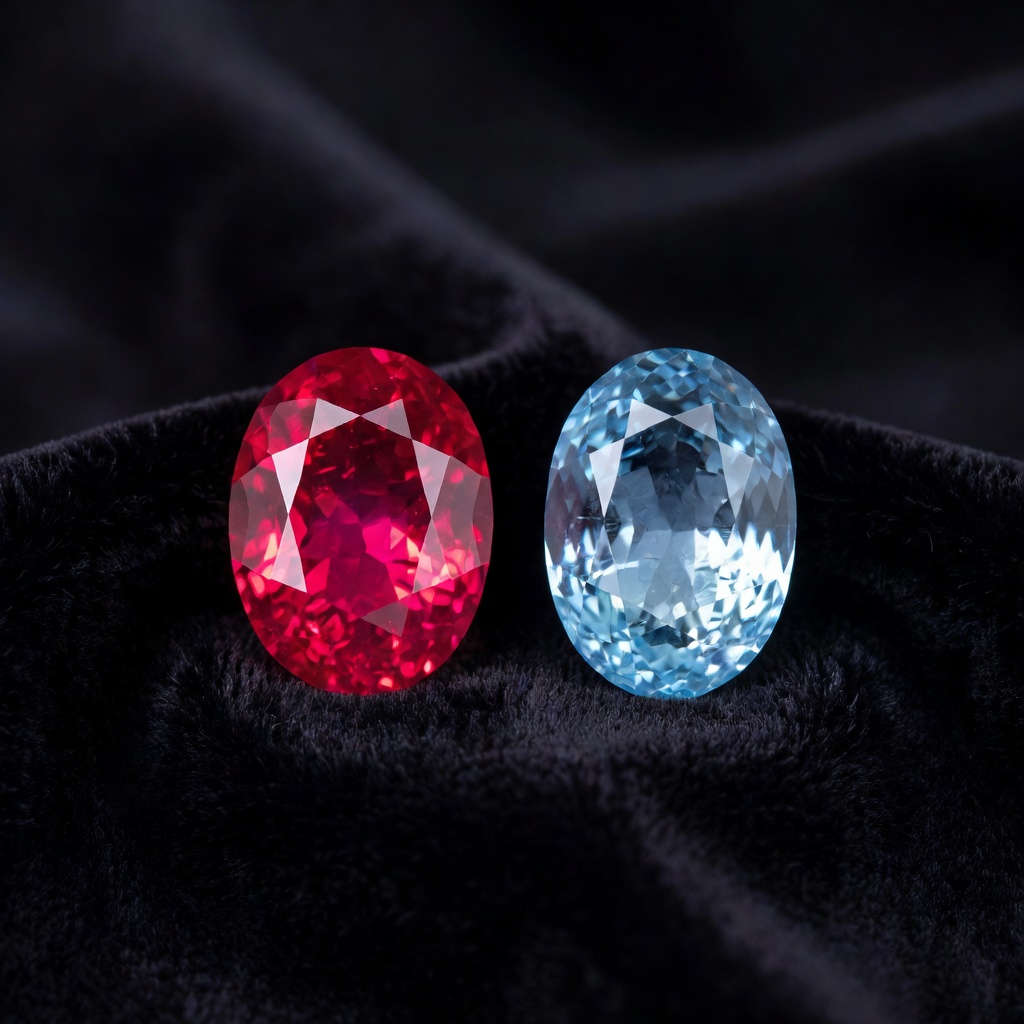
When shoppers encounter red andalusite vs ruby options in jewelry cases, the visual similarity under certain lighting conditions often sparks confusion and comparison. Both gemstones can exhibit warm reddish tones that catch the eye, yet they occupy vastly different positions in the gemological hierarchy regarding hardness, value, and optical behavior. Understanding the fundamental distinctions between these aluminum-based minerals helps consumers make informed decisions aligned with their lifestyle needs, budget constraints, and aesthetic preferences.
This comprehensive analysis examines the critical differentiators separating ruby from andalusite, including their crystallographic structures, durability profiles, market valuations, and optimal jewelry applications. Whether you seek an heirloom-quality investment piece or a unique fashion statement showcasing color-changing magic, understanding these distinctions ensures your gemstone selection delivers lasting satisfaction.
Chemical Composition and Crystal Structure: Corundum vs Orthorhombic Crystals
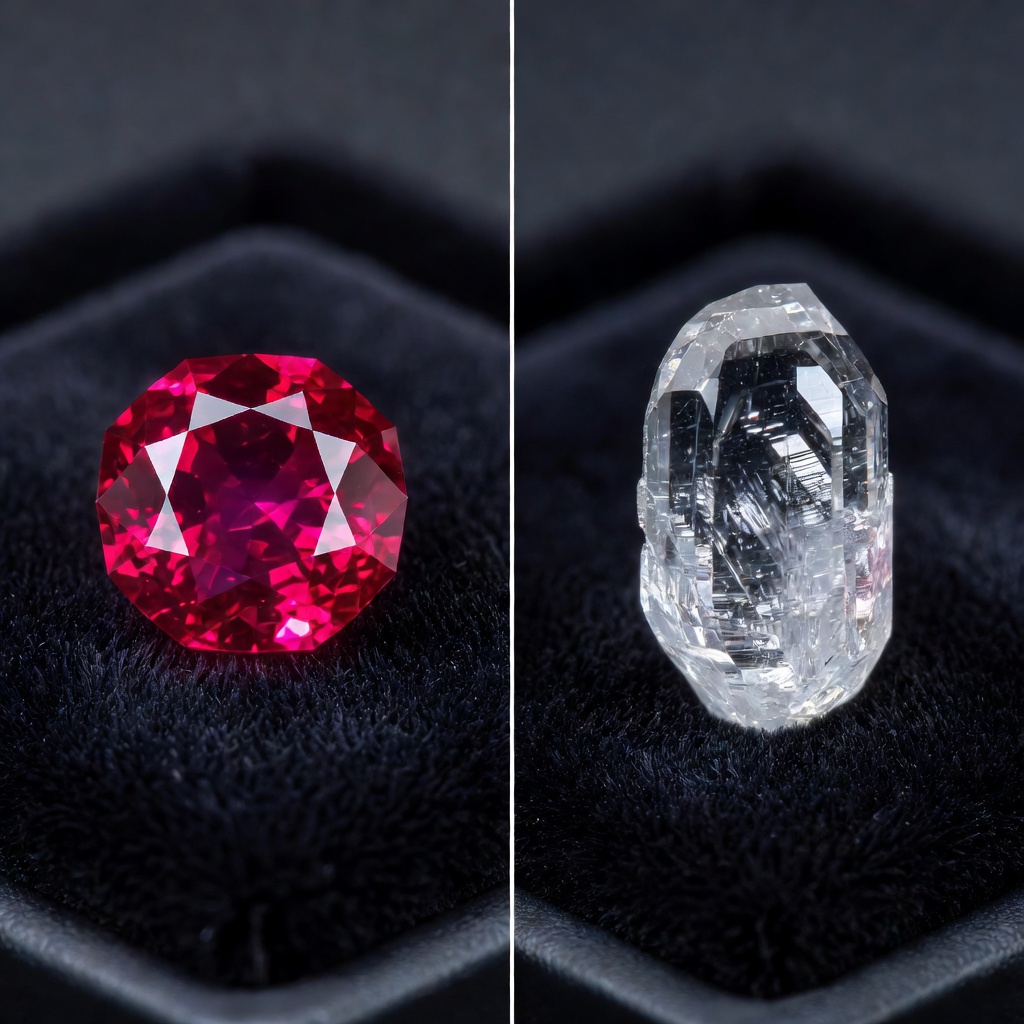
Ruby constitutes the red variety of corundum, composed chemically of aluminum oxide (Al₂O₃) crystallizing in the hexagonal crystal system. This trigonal structure forms barrel-shaped or pyramidal crystals with perfect basal cleavage, accommodating chromium impurities that substitute for aluminum atoms to create the signature red coloration. The specific gravity of ruby ranges between 3.97 and 4.05, while its refractive index of 1.76 to 1.77 contributes to the stone's exceptional brilliance and luster.
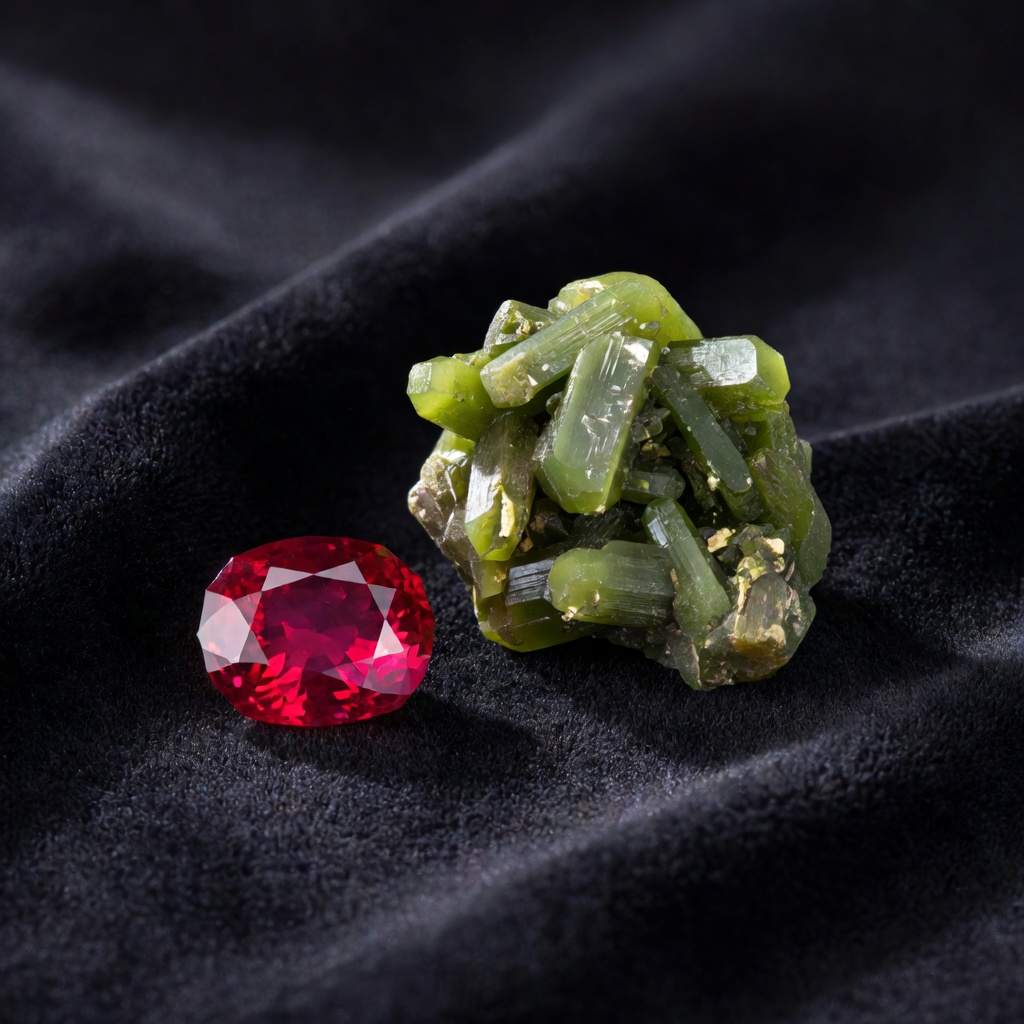
Andalusite presents a distinct chemical identity as aluminum silicate (Al₂SiO₅), making it a polymorph that shares its chemical formula with kyanite and sillimanite while differing dramatically in crystal structure. Unlike ruby's hexagonal formation, andalusite crystallizes in the orthorhombic system, typically forming elongated prismatic crystals with nearly square cross-sections and distinctive chiastolite cross patterns in certain varieties. This structural distinction places andalusite in the nesosilicate subclass, with a lower specific gravity of 3.1 to 3.2 and a refractive index between 1.63 and 1.65.
The contrast between corundum vs orthorhombic crystals directly influences how each gemstone interacts with light and withstands physical stress. Ruby's tightly packed oxygen and aluminum atoms create an extremely dense, hard structure resistant to scratching, while andalusite's silicate composition produces a more open crystal lattice vulnerable to cleavage along specific planes. Gemologists utilize these crystallographic differences when identifying unknown specimens, as the optical properties and density variations provide definitive diagnostic clues.
Color Characteristics: Pure Red vs Pleochroic Magic
Ruby's color spectrum ranges from pinkish-red to the coveted pigeon blood red, a term specifically describing stones from Myanmar exhibiting a pure, vivid red with a hint of blue fluorescence. This coloration originates exclusively from chromium ions (Cr³⁺) replacing aluminum in the crystal lattice, with iron content typically minimized to prevent brownish or purplish overtones. Under ultraviolet light, natural rubies often display strong red fluorescence, particularly Burmese specimens, which enhances their apparent color saturation in daylight.
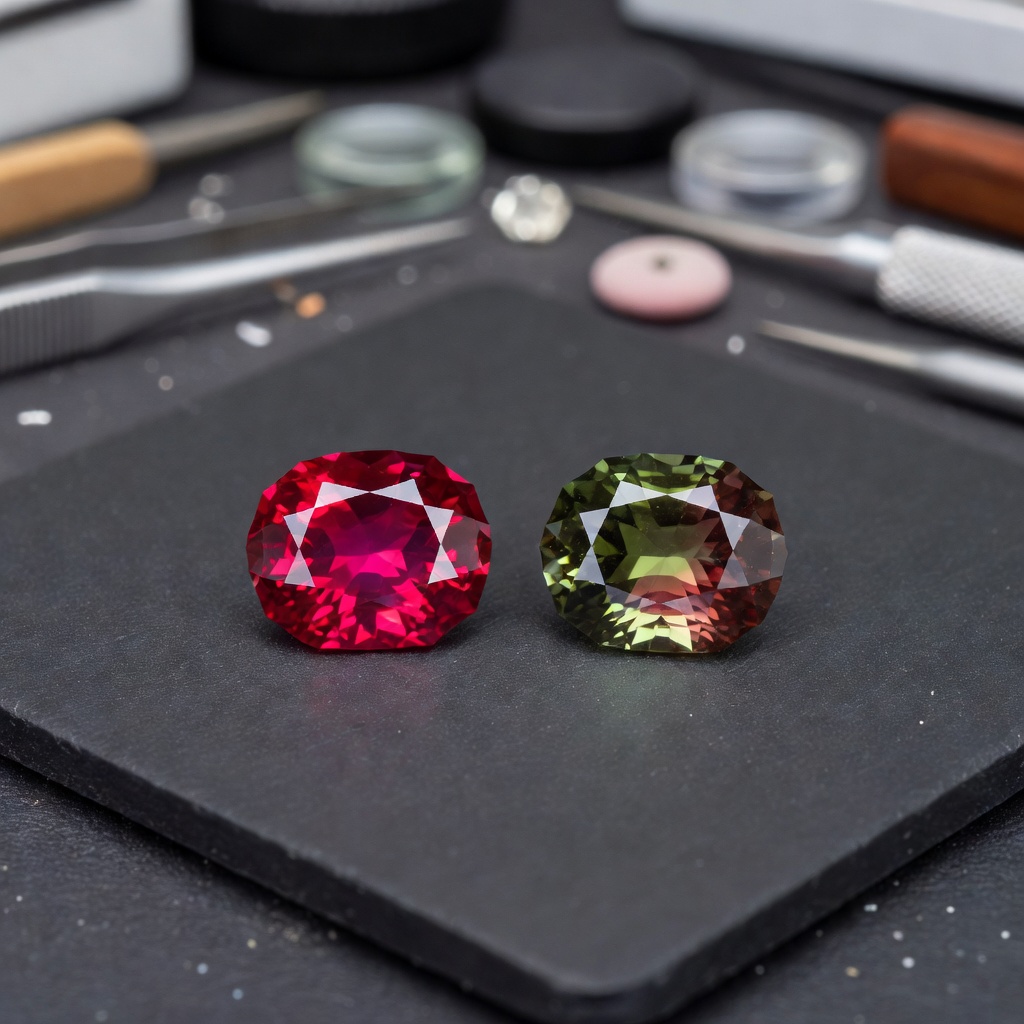
Andalusite pleochroism represents one of gemology's most dramatic optical phenomena, displaying strong trichroism where three distinct colors appear simultaneously depending on crystal orientation. When viewed along different crystallographic axes, andalusite reveals olive green, reddish-brown, and yellow-orange or gold hues, creating a unique "color-shifting" effect without changing the light source. This pleochroism results from differential absorption of light polarized in different directions within the orthorhombic crystal structure, influenced primarily by iron and manganese content rather than chromium.
The lighting environment significantly affects how consumers perceive red andalusite vs ruby, with incandescent bulbs emphasizing andalusite's warm reddish-brown tones while fluorescent lighting highlights its greenish-yellow components. Ruby maintains relatively consistent color appearance across different light sources, though incandescent light may enhance its red warmth. When selecting between these gemstones, consider that ruby offers singular color intensity and uniformity, while andalusite provides complex, multi-dimensional color play that rewards close observation and movement.
Durability and Mohs Hardness Comparison
Ruby hardness durability factors make it one of the most practical choices for daily wear jewelry, registering 9 on the Mohs hardness scale second only to diamond. This exceptional hardness allows ruby to resist scratching from household dust, metal jewelry components, and accidental impacts that would mar softer gemstones. However, despite this hardness, ruby exhibits distinct parting along twin planes and may fracture under sharp blows or extreme temperature changes, requiring protection from thermal shock during jewelry repair procedures.
Andalusite measures 7.5 on the Mohs scale, positioning it between quartz and topaz in terms of scratch resistance, which seems adequate until considering its perfect cleavage in one direction and brittle tenacity. While andalusite can withstand occasional wear in protected settings, it lacks the resilience necessary for rings subjected to daily knocks against hard surfaces or exposure to ultrasonic cleaning vibrations. Professional gemologists note that andalusite's brittle nature makes it susceptible to chipping along facet edges, particularly in emerald cuts or other styles with exposed corners.
Case Study: A Chicago-based jewelry repair specialist documented that over 60% of andalusite ring repairs involved edge chipping or girdle fractures, compared to less than 5% for ruby rings of similar age. For active lifestyles or hands-on professions, ruby engagement rings and bracelets prove significantly more practical, while andalusite jewelry settings work optimally in pendants, earrings, and occasional-wear brooches where physical protection remains assured. When setting andalusite in rings, jewelers must employ protective bezel settings or substantial prongs that shield the girdle and facet junctions from direct impact.
Origins, Mining, and Geographic Sources
Premium ruby origin locations center on Myanmar's Mogok Valley, where alluvial deposits have yielded the world's finest pigeon blood specimens for centuries, though political instability and trade restrictions have complicated ethical sourcing. Mozambique has emerged as a dominant modern source, producing rubies with fine color and clarity from the Montepuez region, while Madagascar, Sri Lanka, and Thailand contribute significant quantities to the global market. The extreme rarity of untreated, high-quality Burmese rubies continues driving premium prices, with mining depths reaching hundreds of meters below surface level in increasingly dangerous conditions.
Primary andalusite sources span Brazil's Minas Gerais region, which produces the finest gem-quality material with strong pleochroic contrast, alongside significant deposits in Spain's Andalusia region (the stone's namesake), Sri Lanka, Australia, and the United States. Unlike ruby mining, which often involves artisanal and small-scale operations with documented human rights concerns, andalusite extraction typically occurs through larger-scale industrial operations with more transparent supply chains. The gemological variety from Brazil generally commands the highest prices due to superior transparency and color intensity compared to material from other localities.
Sustainability considerations weigh heavily in the ruby vs andalusite debate, as Burmese ruby mining has faced international sanctions and ethical scrutiny regarding military junta involvement and labor practices. Consumers seeking conflict-free options increasingly favor Mozambican rubies with blockchain traceability or certified Fairmined sources, while andalusite presents fewer ethical sourcing challenges due to its primary extraction in politically stable regions with established environmental regulations. The declining availability of investment-grade untreated Burmese rubies contrasts with andalusite's relatively stable supply, though fine Brazilian material with strong pleochroism remains limited.
Market Value and Investment Potential
Ruby investment grade specimens continue breaking auction records, with untreated Burmese stones over five carats commanding prices exceeding $100,000 per carat at Sotheby's and Christie's auctions. The rarity factor intensifies dramatically for unheated stones over ten carats with pigeon blood color, creating a seller's market where liquidity remains high among ultra-high-net-worth collectors. Heat-treated rubies from Mozambique offer more accessible entry points at $500 to $5,000 per carat depending on quality, though they lack the appreciation potential of their untreated Burmese counterparts.
Andalusite gemstone value remains firmly in the affordable luxury category, with fine specimens ranging from $50 to $500 per carat depending on color intensity, clarity, and strength of pleochroism. Unlike ruby, which sees exponential price increases with carat weight, andalusite prices remain relatively linear because large clean crystals occur more frequently and lack the investment demand driving ruby premiums. Treatment status significantly affects ruby valuation—untreated stones command 300-400% premiums over heated material—while andalusite rarely receives treatment, with most specimens sold in their natural state.
| Property | Ruby | Andalusite |
|---|---|---|
| Chemical Formula | Aluminum Oxide (Al₂O₃) | Aluminum Silicate (Al₂SiO₅) |
| Crystal System | Hexagonal (Trigonal) | Orthorhombic |
| Mohs Hardness | 9 | 7.5 |
| Specific Gravity | 3.97 - 4.05 | 3.1 - 3.2 |
| Refractive Index | 1.76 - 1.77 | 1.63 - 1.65 |
| Color Cause | Chromium (Cr³⁺) | Iron and Manganese |
| Pleochroism | Weak dichroism (red/purplish-red) | Strong trichroism (green/red-brown/yellow) |
| Price Range (per carat) | $500 - $100,000+ | $50 - $500 |
| Best Jewelry Applications | Daily wear rings, bracelets, heirlooms | Pendants, earrings, protected rings |
| Common Treatments | Heat treatment (common), glass-filling | None (rarely oiling) |
| Investment Potential | High (untreated Burmese) | Low to Moderate |
Long-term value retention favors ruby significantly, with historical data showing 5-10% annual appreciation for fine untreated specimens over decades, while andalusite prices remain stable without substantial secondary market demand. Liquidity represents another crucial difference: high-quality rubies can be sold through auction houses or specialist dealers within weeks, whereas andalusite may require months to find appropriate buyers despite its aesthetic merits. For portfolio diversification, ruby serves as a tangible hard asset comparable to fine art or rare coins, while andalusite functions primarily as a consumable luxury item.
Jewelry Design Applications and Settings
Ruby engagement rings dominate the colored stone bridal market due to the gem's exceptional durability and romantic associations with passion and commitment. The stone's hardness of 9 allows jewelers to use delicate prong settings, tension mounts, and pavé accents without compromising structural integrity, enabling designs ranging from classic solitaires to elaborate Art Deco reproductions. Practical design tip: Oval and cushion cuts maximize ruby's color saturation while minimizing the "window" effect seen in poorly cut stones, and these shapes distribute stress evenly across the crystal structure.
Andalusite jewelry settings require more protective strategies due to the stone's moderate hardness and perfect cleavage. Bezel settings offer optimal protection for andalusite rings, surrounding the girdle with a metal rim that prevents direct impact while securing the stone against loss. When designing with andalusite, consider cuts that minimize exposed points—emerald cuts showcase pleochroism beautifully but require substantial corner protection, while cabochon cuts eliminate cleavage risks though they sacrifice some brilliance.
Metal selection enhances each gemstone's unique optical properties: yellow gold and rose gold settings amplify ruby's warmth and complement the chromium-based red fluorescence, creating a cohesive warm color palette. For andalusite, white metals including platinum and white gold provide neutral backgrounds that highlight the stone's color-shifting properties without adding competing warm tones. Case Study: A custom jewelry designer in San Francisco reported that clients choosing andalusite for statement pendants often requested platinum chains specifically to emphasize the gem's olive green components, while ruby clients preferred 18K yellow gold to enhance the stone's classic imperial appearance.
Professional Identification and Authentication
Gemological laboratories distinguish ruby vs andalusite through precise refractive index measurements, with ruby registering 1.76 to 1.77 and andalusite showing lower values of 1.63 to 1.65. Specific gravity testing provides additional confirmation, as ruby feels noticeably heavier than andalusite of equivalent size due to its density of 4.0 compared to andalusite's 3.1. Under magnification, ruby typically reveals fine rutile needle inclusions (silk), mineral crystals, or color zoning, while andalusite displays characteristic cross-shaped graphite inclusions in chiastolite varieties or clean transparency in gem-quality Brazilian material.
The dichroscope serves as the most reliable field tool for separating these stones, revealing andalusite's strong trichroism (displaying three distinct colors: green, reddish-brown, and yellow-orange) versus ruby's weak dichroism showing only two similar red hues. Advanced spectroscopic analysis shows ruby's distinctive chromium absorption spectrum with double lines at 694.2 and 692.8 nanometers, completely absent in andalusite which shows iron-related absorption bands instead. Chelsea color filters fluoresce red for ruby due to chromium content but remain green when viewing andalusite.
Treatment disclosure critically affects ruby valuation, with heat treatment being so common that untreated stones require specific documentation from laboratories like GIA, AGL, or SSEF to command premium prices. Glass-filled rubies (fracture-filled) present durability concerns and require special care, whereas andalusite rarely undergoes treatment beyond occasional oiling of surface-reaching fractures. When purchasing either gemstone, insist on reports from reputable laboratories that specify origin determination for ruby (particularly distinguishing Burmese from Mozambican material) and confirm natural, untreated status for investment-grade purchases.
Making Your Decision: Lifestyle and Budget Considerations
Choose ruby when seeking heirloom-quality pieces intended for daily wear, significant investment appreciation, or traditional bridal jewelry that withstands generational transfer. Active professionals, medical workers, or individuals with hands-on hobbies benefit from ruby's scratch resistance and toughness, ensuring the piece maintains its beauty through decades of continuous wear. The July birthstone also appeals to those seeking metaphysical associations with vitality, courage, and passion, as ruby has historically been prescribed for warriors and leaders needing energetic protection.
Select andalusite for artistic statement pieces, budget-conscious alternatives to alexandrite, or jewelry collections emphasizing unique optical phenomena over traditional precious gem status. Individuals who appreciate changing aesthetics throughout the day find andalusite's pleochroism fascinating, as the stone literally transforms appearance with movement and lighting shifts. For occasional wearers who remove jewelry during physical activities, andalusite offers distinctive beauty without the security concerns or insurance costs associated with high-value rubies.
Practical lifestyle assessment should include evaluating your daily activities, storage habits, and insurance considerations. If you frequently garden, work with machinery, or engage in contact sports, ruby's durability justifies its higher cost through longevity, whereas andalusite suits office professionals or those who change jewelry frequently. Birthstone considerations may influence gift purchases, with ruby serving July birthdays while andalusite holds no official birthstone status but associates metaphysically with self-discovery and memory enhancement, appealing to scholars and creative professionals.
Care, Maintenance, and Long-term Preservation
Ruby care protocols vary significantly based on treatment history, as untreated stones withstand ultrasonic and steam cleaning methods effectively, while heat-treated or fracture-filled specimens require gentler approaches. Clean untreated rubies using warm water with mild soap and a soft brush, or utilize professional ultrasonic cleaners to remove accumulated oils and debris from setting crevices. Treated rubies demand avoidance of harsh chemicals, sudden temperature changes, and ultrasonic vibrations that might compromise glass fillings or alter heat-induced color enhancements.
Andalusite maintenance requires consistently gentle handling due to the stone's brittle nature and sensitivity to thermal shock. Never subject andalusite to ultrasonic cleaners or steamers, as internal inclusions may expand and cause fracturing; instead, use only lukewarm water, mild detergent, and the softest available brush for cleaning. Store andalusite pieces separately from harder gemstones like diamond, sapphire, or ruby to prevent surface scratching, and avoid exposing the stone to household chemicals including bleach, ammonia, or chlorine that might attack the crystal structure.
Professional inspection schedules should occur every six months for ruby rings subjected to daily wear, checking for loose prongs, girdle damage, or worn mountings that might risk stone loss. Andalusite pieces require less frequent inspection unless worn regularly, though settings should be checked annually for prong integrity. Long-term preservation for both gemstones involves storing jewelry in individual soft pouches within compartmentalized boxes, keeping pieces away from direct sunlight for extended periods (which can fade some treated rubies), and removing jewelry before swimming, cleaning, or applying cosmetics and perfumes.
Frequently Asked Questions About Ruby vs Andalusite
Is andalusite as valuable as ruby?
No, andalusite is significantly more affordable than ruby. While high-quality rubies can command thousands to millions of dollars per carat, fine andalusite typically ranges from $50 to $500 per carat. Ruby's rarity, historical prestige, and superior hardness contribute to its premium pricing, whereas andalusite offers excellent value for collectors seeking unique pleochroic properties without the investment cost.
Can andalusite be used in engagement rings like ruby?
Andalusite can be used in engagement rings but requires protective settings due to its 7.5 Mohs hardness. Unlike ruby (hardness 9), which withstands daily wear excellently, andalusite is better suited for occasional wear rings or protected bezel settings. For active lifestyles, ruby remains the superior choice for engagement jewelry, while andalusite works beautifully in pendant or earring designs.
What causes the color difference between ruby and andalusite?
Ruby's pure red color comes from chromium impurities within its corundum structure, creating the classic red hue with potential fluorescence. Andalusite displays pleochroism—showing olive green, reddish-brown, and yellow-orange simultaneously—due to its orthorhombic crystal structure and iron/manganese content. This allows andalusite to appear different colors from different angles, while ruby maintains consistent color regardless of viewing angle.
How can I tell ruby and andalusite apart without laboratory equipment?
Use a dichroscope or simple polarization test: andalusite shows strong trichroism (three distinct colors) while ruby shows weak dichroism (two similar red shades). Andalusite also appears more vitreous to sub-adamantine with visible color zoning, whereas ruby has a more intense, saturated red with higher brilliance. Additionally, ruby feels colder and heavier due to higher specific gravity (4.0 vs 3.1-3.2).
Which gemstone is more durable for daily wear?
Ruby is significantly more durable for daily wear with a Mohs hardness of 9 compared to andalusite's 7.5. Ruby resists scratching and chipping better, making it ideal for rings and bracelets. Andalusite, while reasonably hard, has perfect cleavage and brittleness that makes it susceptible to damage from impacts, chemicals, and temperature changes, requiring more careful handling.
Is andalusite a good alternative to ruby?
Andalusite serves as an excellent alternative for those seeking unique red-hued gemstones on a budget or wanting pleochroic visual effects. However, it does not replicate ruby's intense pure red color or investment value. Choose andalusite for fashion jewelry and artistic pieces where color-play matters; choose ruby for traditional red gemstone appeal, durability, and heirloom quality.
Do rubies and andalusite have different metaphysical properties?
Yes, they possess distinct metaphysical associations. Ruby is associated with passion, vitality, courage, and the root chakra, often called the 'stone of nobility.' Andalusite is linked to self-discovery, memory recall, and seeing different perspectives (reflecting its pleochroism), associated with the solar plexus and heart chakras. Ruby energizes while andalusite is considered more grounding and analytical.
Where should I buy high-quality ruby and andalusite gemstones?
Purchase rubies from reputable dealers offering GIA, AGL, or SSEF certification, especially for investment-grade stones from Myanmar or Mozambique. For andalusite, seek specialized colored gemstone dealers who can demonstrate pleochroism and verify natural origin. Avoid untreated ruby claims without documentation, and ensure andalusite purchases disclose any oiling or fracture-filling treatments. Both gems are available at specialized gem shows, high-end jewelers, and established online colored stone retailers.