Introduction: Understanding Ruby vs Ammolite
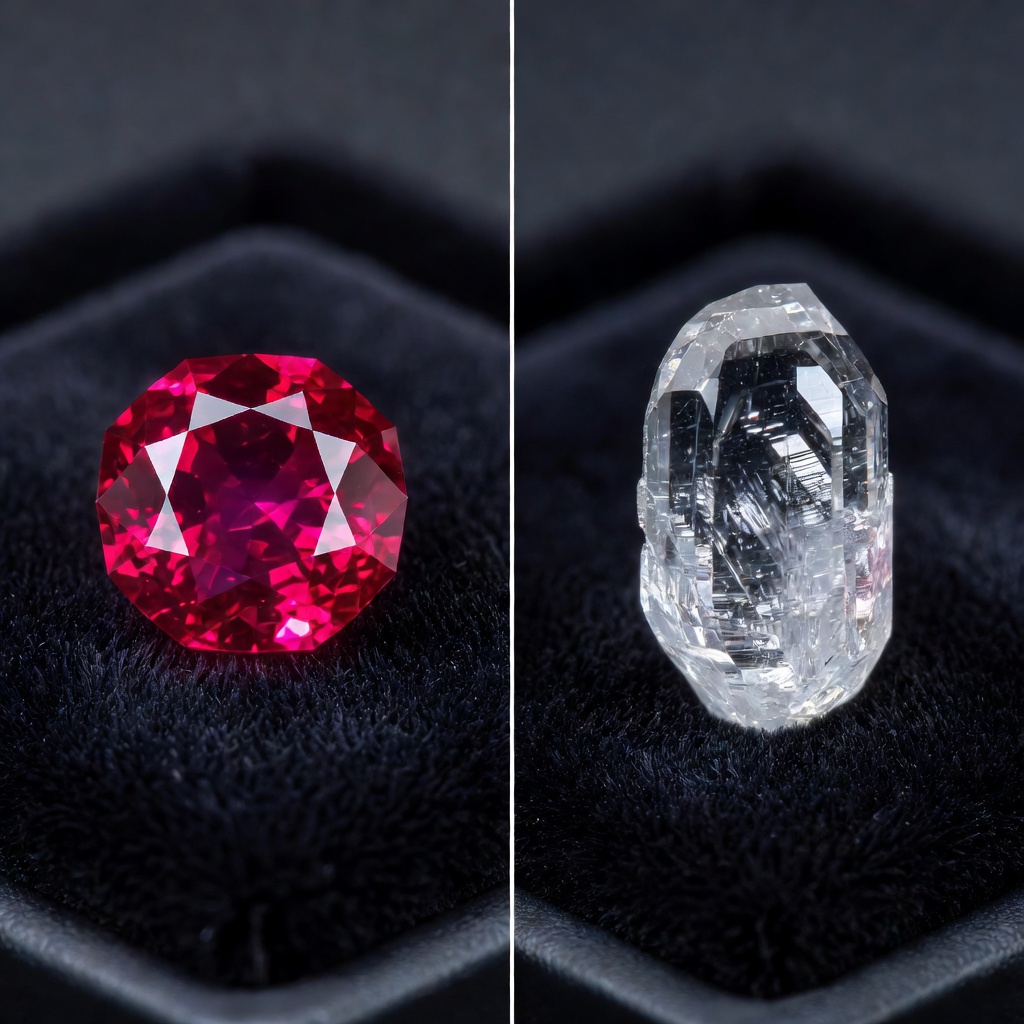
The world of precious gemstones offers countless treasures, yet few comparisons captivate collectors and jewelry enthusiasts quite like the debate between ruby and ammolite. Ruby has reigned supreme for millennia as the "King of Gemstones," commanding respect in royal collections and modern luxury markets alike with its deep crimson allure and exceptional durability. In stark contrast, ammolite represents one of the newest additions to the official gemstone roster, a mesmerizing organic gem derived from 71-million-year-old fossilized ammonite shells that display otherworldly iridescence unlike any mineral counterpart. These two stones frequently draw comparison from serious collectors and jewelry buyers despite their vastly different compositions, creating a fascinating study in how mineral and organic gemstones can both achieve precious status while serving distinctly different purposes in fine jewelry.
Understanding the fundamental distinction between these gemstones requires recognizing their divergent classifications within gemology. Ruby belongs to the mineral category as a variety of corundum, specifically crystalline aluminum oxide colored by chromium, making it one of the hardest and most durable substances on Earth. Ammolite, conversely, represents a biogenic organic gemstone formed through the fossilization process of ancient marine mollusks, placing it in the same family as pearls and amber rather than traditional crystalline minerals. This core difference in genesis creates significant implications for durability, care requirements, and appropriate jewelry applications that every prospective buyer must consider when navigating the ruby vs ammolite decision.
Geological Origins and Formation
The journey of a ruby begins deep within Earth's crust under extreme pressure and temperature conditions that transform aluminum oxide into crystalline corundum deposits. These formations typically occur within metamorphic rocks such as marble or basalt, as well as magmatic rocks like syenite, where the presence of chromium creates the signature red coloration ranging from pinkish hues to the coveted "pigeon blood" red. Major mining operations currently extract these precious stones from the Mogok region of Myanmar, the Montepuez mines of Mozambique, and various deposits across Madagascar, with each location imparting subtle variations in color saturation and fluorescence that seasoned gemologists can identify.
Ammolite tells an entirely different geological story, one that begins in the ancient Bearpaw Formation of southern Alberta, Canada, approximately 71 million years ago during the Late Cretaceous period. When ammonites—extinct marine mollusks similar to modern nautilus—died and settled onto the seabed, their shells underwent a unique fossilization process where aragonite, the mineral composing their nacreous layers, transformed into gem-grade material through pressure and mineralization over millions of years. Unlike rubies which form through igneous and metamorphic processes, ammolite represents the rare intersection of biological origin and geological preservation, requiring specific environmental conditions including the right sedimentary layers and absence of tectonic disturbance that could crush these delicate fossil structures.
The extraction methods for these gemstones further highlight their geological differences, with ruby mining involving hard rock excavation and alluvial deposits in Myanmar's jungle highlands or Mozambique's open pits. Ammolite mining presents unique challenges as operators must carefully remove thin layers of shale and bentonite clay from the Bearpaw Formation without fracturing the delicate fossilized shells, often using hand tools rather than heavy machinery to preserve the iridescent surfaces. This single-source limitation makes Alberta the sole provider of gem-quality ammolite worldwide, whereas ruby deposits span multiple continents, though fine untreated stones remain exceptionally rare regardless of origin.
Physical Properties and Durability Comparison
When evaluating gemstones for jewelry applications, hardness and durability often determine practical wearability more than beauty alone, creating the most significant divergence between these two precious materials. Ruby ranks 9 on the Mohs hardness scale, making it second only to diamond in natural gemstone durability, with a crystalline structure that resists scratching, chipping, and abrasion even under demanding daily wear conditions. This exceptional hardness stems from the strong chemical bonds within corundum's hexagonal crystal system, allowing ruby jewelry to maintain its polish and structural integrity for generations without showing significant wear patterns.
Ammolite presents a dramatically different physical profile, ranking only 3.5 to 4 on the Mohs hardness scale, comparable to materials like fluorite or copper pennies, making it one of the softer gemstones used in fine jewelry. The material consists of thin, iridescent aragonite layers derived from the original ammonite shell structure, creating a delicate, plate-like composition that can fracture, scratch, or delaminate under moderate impact or pressure. While ruby possesses excellent toughness—the ability to resist breaking and chipping—ammolite's toughness remains relatively low, requiring significant protective measures to prevent damage from accidental bumps or drops during normal activities.
| Characteristic | Ruby (Corundum) | Ammolite (Fossilized Aragonite) |
|---|---|---|
| Mohs Hardness | 9 (Excellent) | 3.5-4 (Poor) |
| Chemical Composition | Aluminum Oxide (Al₂O₃) | Calcium Carbonate (CaCO₃) Aragonite |
| Crystal Structure | Hexagonal | Orthorhombic (Layered) |
| Toughness | Excellent (No Cleavage) | Fair to Poor (Brittle Layers) |
| Best Jewelry Applications | Rings, Bracelets, Earrings, Pendants (All Types) | Pendants, Earrings, Brooches, Protected Rings |
| Scratch Resistance | Resistant to household dust and wear | Scratches easily; requires protective settings |
| Typical Treatment | Heat Treatment (Common) | Epoxy Stabilization + Triplet Assembly (Standard) |
The structural composition differences create practical implications for jewelry designers and wearers beyond simple hardness metrics. Ruby's uniform crystalline structure distributes force evenly, preventing the propagation of cracks that might destroy other gemstones, while ammolite's laminated organic structure contains microscopic boundaries between aragonite layers that can separate under stress or chemical exposure. For collectors considering ammolite jewelry, understanding that even fingernails or household dust (which contains silica at 7 on the Mohs scale) can scratch the surface becomes crucial for preserving the stone's iridescent beauty over time.
Color Spectrum and Visual Characteristics
Ruby's color palette, while seemingly focused on red variations, actually encompasses a surprising range from delicate pinkish-red tones to the legendary deep "pigeon blood" red that commands premium prices in international markets. The most valuable specimens display a pure, vibrant red to slightly purplish-red hue with medium to medium-dark tone and strong saturation, avoiding the orangey or brownish secondary tones that diminish value in red gemstone comparison evaluations. Master gemologists assess ruby color using standardized lighting conditions, as these stones possess strong fluorescence under ultraviolet light that can make them appear more vivid in natural daylight compared to incandescent lighting, a phenomenon known as the "alexandrite effect" though distinct from true color-change gemstones.
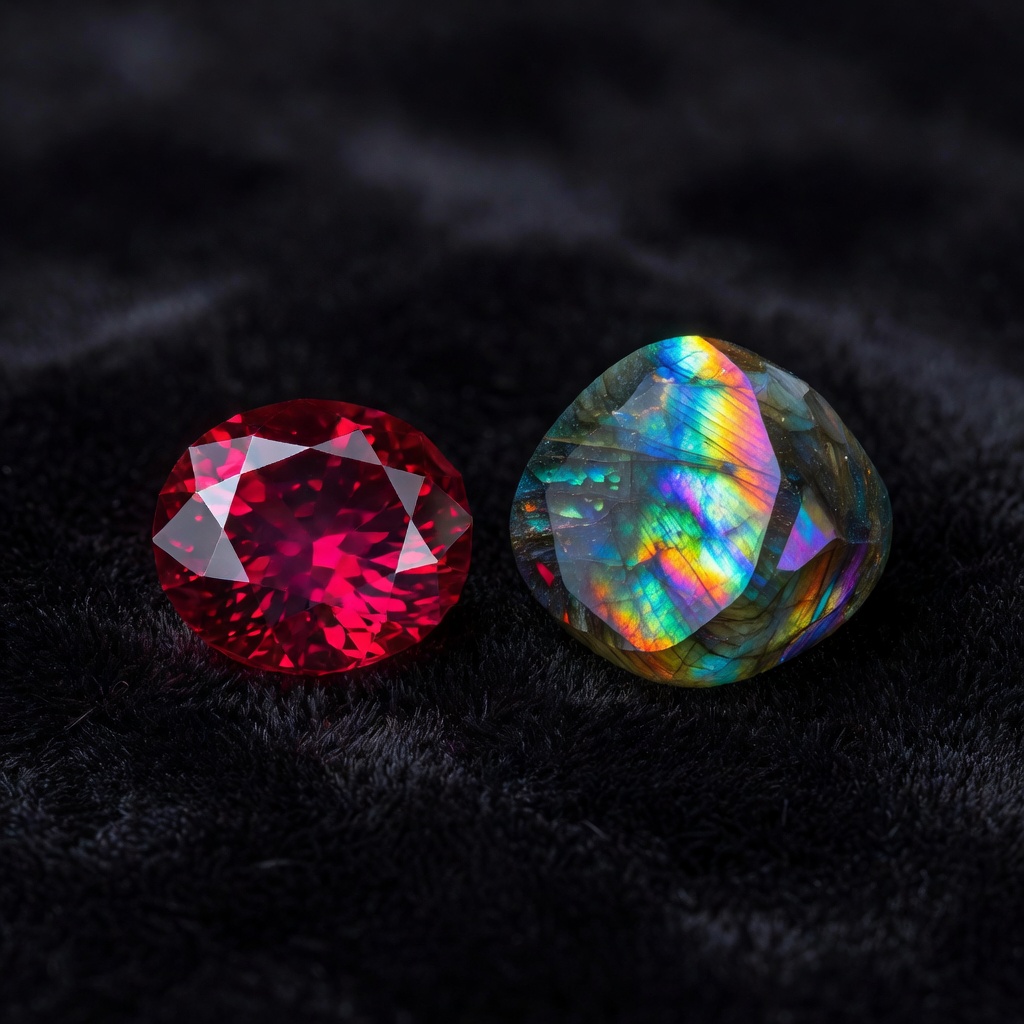
Ammolite offers a completely different visual experience, displaying a phenomenon called iridescence that creates a three-dimensional color play shifting through the entire visible spectrum depending on viewing angle and light source. Unlike ruby's static color, high-grade ammolite simultaneously exhibits red, green, blue, violet, and gold hues that appear to move across the stone's surface as the wearer moves, created by the interference of light within the microscopic layers of aragonite. This iridescent gemstone quality makes each ammolite unique, with grading systems prioritizing the breadth of color display—specifically the presence of red and violet, which are rarer in natural specimens—and the intensity of the spectral shift observed when tilting the stone.
Optical phenomena further distinguish these gemstones, with fine rubies occasionally displaying asterism—a six-rayed star pattern created by needle-like rutile inclusions that reflect light in a specific arrangement. This star effect, highly prized in cabochon-cut rubies, contrasts with ammolite's chromatic shift properties, where the angle of observation changes the dominant color displayed due to thin-film interference physics. Lighting conditions dramatically affect each stone differently; while rubies may appear darker and less vivid under artificial lighting if poorly colored, ammolite actually requires strategic lighting to maximize its iridescence, often appearing dull and dark until positioned to catch light at the optimal angle to reveal its full spectral glory.
Rarity, Grading, and Market Value Analysis
The valuation of rubies follows established gemological protocols centered on the "Four Cs"—color, clarity, cut, and carat weight—with additional premium placed on geographic origin and treatment status. Unheated, untreated rubies from Myanmar's Mogok mines represent the pinnacle of rarity, often commanding prices exceeding $100,000 per carat for exceptional specimens over five carats, while heat-treated stones from Mozambique or Madagascar offer more accessible entry points ranging from $1,000 to $15,000 per carat depending on quality. The distinction between untreated and heated rubies significantly impacts ruby value and investment potential, with disclosure requirements mandating that sellers identify any enhancement treatments that improve color or clarity.
Ammolite rarity stems from entirely different constraints, specifically the finite nature of the Bearpaw Formation deposits and the fact that only a small percentage of excavated ammonite shells contain sufficient gem-quality iridescent layers suitable for jewelry. Unlike rubies which can be mined from multiple global sources, gem-grade ammolite occurs exclusively in southern Alberta, with estimates suggesting that less than 5% of the recovered material achieves jewelry quality without extensive stabilization treatments. The Korite International grading system evaluates ammolite based on color (with red and violet commanding premiums), brightness (the intensity of iridescence), and directional quality (whether colors display from multiple angles), with AA-grade stones showing three or more colors from all directions fetching prices comparable to mid-tier rubies despite their organic origin.
Market dynamics reveal that while high-quality rubies maintain established liquidity in auction houses like Christie's and Sotheby's, where record-breaking sales regularly make headlines, ammolite rarity creates a niche but growing collector market with less price volatility but also reduced resale infrastructure. Commercial-quality ammolite jewelry typically ranges from $200 to $2,000 depending on size and setting, while museum-grade specimens with full spectral displays can exceed $10,000 per carat, actually surpassing the value of commercial-grade rubies despite the overall market perception. This pricing paradox highlights how precious stone investment requires understanding that rarity does not always immediately translate to market value, as ruby's historical prestige and cultural significance continue to command premium pricing over this fossilized Canadian gemstone.
Jewelry Applications and Design Versatility
Ruby's exceptional ruby hardness durability makes it one of the most versatile gemstones for jewelry design, suitable for every conceivable application from daily-wear engagement rings to tennis bracelets that withstand decades of constant use without showing significant wear. High-end jewelry houses like Cartier and Van Cleef & Arpels regularly feature rubies in elaborate statement pieces, Art Deco reproductions, and contemporary minimalist designs alike, setting them in prongs, bezels, or tension settings with equal confidence due to the stone's resistance to both impact and thermal shock during the manufacturing process. For consumers seeking July birthstone alternatives or classic elegance, ruby offers the flexibility to choose any metal pairing, though white gold and platinum settings remain particularly popular for enhancing the red color contrast, while yellow gold settings evoke vintage romance.
Ammolite requires significantly more thoughtful consideration in jewelry design due to its delicate nature, with industry best practices limiting its use to protective settings that shield the stone from direct impact and environmental exposure. Experienced jewelers typically recommend ammolite for pendants and earrings, where the stones remain relatively protected from physical contact, rather than rings or bracelets that endure constant impact against hard surfaces during daily activities. When ammolite rings are created, they necessitate specific protective measures including bezel settings that surround the stone's edges, triplet construction layering the ammolite between clear quartz or spinel caps and a durable backing, or placement in designs where the stone sits flush with the metal surface rather than protruding.
Metal selection plays a crucial role in maximizing each stone's visual impact, with rubies generally appearing most vibrant when set against the cool contrast of white metals or the warm harmony of rose gold, depending on the specific undertones of the individual stone. Ammolite, conversely, often achieves maximum brilliance when set in yellow gold, which complements the warm spectral colors (red, orange, gold) and enhances the overall brightness of the iridescent display, though contemporary designers increasingly use blackened silver or titanium settings to create dramatic contrast against the rainbow colors. Design limitations for ammolite extend beyond setting styles to include size constraints, as larger ammolite specimens become increasingly fragile, whereas ruby allows for substantial center stones in cocktail rings and statement necklaces without compromising structural integrity.
Symbolism, History, and Metaphysical Properties
Throughout human history, ruby has maintained a position of extraordinary cultural significance, revered in ancient Sanskrit texts as "ratnaraj" or the king of precious stones, and mentioned multiple times in the Bible as symbols of beauty and wisdom. As the traditional birthstone for July, ruby carries associations with passion, protection, and prosperity, with medieval Europeans believing that the stone could warn its wearer of impending danger by darkening in color, while Burmese warriors implanted rubies into their skin to render them invincible in battle. This rich historical tapestry continues to influence modern perceptions, with ruby meaning encompassing deep romantic love, courage, and energy, making it a popular choice for anniversary gifts and commitment jewelry that conveys intensity and permanence.
Ammolite represents a much newer addition to metaphysical practices, having gained official gemstone recognition only in 1981 by the World Jewellery Confederation (CIBJO) and named the official gemstone of Alberta, Canada, in 2022. Despite its recent introduction to formal gemology, ammolite healing properties have quickly gained recognition in Feng Shui practices, where practitioners consider it a powerful prosperity stone that converts negative energy into positive vibrations while attracting wealth and business success. The spiral shape of the original ammonite shell, visible in doublet or triplet constructions, symbolizes continuous evolution and cosmic energy, with many believers carrying ammolite as a talisman for personal growth, childbirth, and creative endeavors due to its organic origin and ancient energy.
Metaphysical healers attribute distinct energetic properties to each stone, with ruby associated with the root chakra, believed to stimulate life force, improve circulation, and enhance motivation and leadership qualities in those who wear it regularly. Ammolite connects more closely with the third eye and crown chakras, with practitioners using it for meditation to access past life memories and ancestral wisdom stored within its 71-million-year history. While fossilized gemstones like ammolite offer a more subtle, grounding energy compared to ruby's fiery intensity, both stones share reputations for bringing good fortune to their owners, though ruby's protective legends emphasize physical safety while ammolite's spiritual associations focus on emotional balance and financial abundance.
Investment Potential and Collectibility
Serious gemstone investors have long regarded untreated Burmese rubies as blue-chip assets comparable to fine diamonds and Colombian emeralds, with exceptional stones regularly achieving six to seven figures at auction and maintaining strong liquidity in private sales and estate markets. The precious stone investment appeal of ruby lies in its established global recognition, standardized grading systems, and historical price appreciation that has consistently outpaced inflation over decades, with fine specimens from Mogok mines appreciating 10-15% annually even during economic downturns. Collectors seeking stability typically focus on unheated stones over five carats with "pigeon blood" color certification from laboratories like Gübelin or SSEF, as these represent the most portable and universally recognized stores of wealth in the colored gemstone market.
Ammolite presents a more speculative but potentially lucrative investment opportunity for collectors willing to bet on finite supply and increasing scarcity as the Bearpaw Formation deposits gradually deplete. Unlike ruby, which benefits from multiple active mining operations across Africa and Asia, ammolite's single-source origin creates a supply ceiling that inevitably drives long-term appreciation, particularly for high-grade specimens displaying full spectral colors and significant size. Market liquidity remains the primary challenge for ammolite investors, as the resale market lacks the auction house infrastructure and global dealer networks that support ruby transactions, requiring patience and specialized knowledge to realize returns over 10-20 year holding periods rather than the immediate liquidity available to ruby owners.
Future value appreciation factors differ significantly between these gemstones, with ruby values influenced by political stability in Myanmar, treatment disclosure standards, and the diminishing availability of fine untreated material from historical mines. Ammolite's trajectory depends largely on marketing efforts to increase mainstream recognition, potential restrictions on mining permits in Alberta, and the finite nature of the geological deposit, which some geologists estimate may be exhausted of commercial-grade material within 50 years. Diversified collectors often allocate the majority of their "passion investment" portfolio to established stones like ruby while dedicating a smaller percentage to emerging collectibles like ammolite, balancing the security of blue-chip assets against the high-risk, high-reward potential of rare organic gemstones.
Care, Maintenance, and Longevity
Maintaining ruby jewelry requires remarkably little effort compared to most gemstones, as the stone's ruby hardness allows for ultrasonic cleaning, steam cleaning, and standard jewelry cleaning solutions without risk of damage to the crystal structure. Owners can wear ruby rings daily without removing them for household chores, though avoiding exposure to harsh chemicals like chlorine bleach remains advisable to protect the metal setting rather than the stone itself. Professional jewelers recommend annual inspections of prongs and settings to ensure security, but the ruby itself essentially requires no special maintenance beyond occasional cleaning to remove accumulated oils and lotions that might temporarily dull its brilliance.
Ammolite demands significantly more meticulous ammolite maintenance protocols due to its organic composition and layered structure, beginning with the absolute prohibition of ultrasonic cleaners, steam, or prolonged water exposure that could delaminate the aragonite layers or compromise epoxy stabilizers. Owners should remove ammolite jewelry before washing hands, showering, swimming, or applying cosmetics, as chemicals in perfumes, hairsprays, and cleaning products can permanently damage the iridescent surface or cause the stone to become cloudy over time. Cleaning requires only a soft, dry microfiber cloth or slightly dampened cotton swab gently wiped across the surface, followed by immediate drying, with storage in soft fabric pouches separate from harder gemstones that might scratch the delicate surface.
Storage recommendations emphasize keeping ammolite pieces away from extreme temperature fluctuations, as rapid heating or cooling can cause the organic material to crack due to thermal expansion differentials between the aragonite layers and any protective backing materials. Ruby, conversely, withstands temperature extremes well and can be stored in standard jewelry boxes alongside other pieces, though storing it separately from diamonds prevents accidental scratching of softer gemstones in the collection. For both stones, professional cleaning and setting checks every six to twelve months ensure longevity, though ruby owners enjoy the luxury of daily wear without constant vigilance, while ammolite serves best as "occasion jewelry" reserved for special events where its spectacular beauty can be showcased without risking damage from routine activities.
Final Verdict: Choosing Your Perfect Stone
When deciding between ruby vs ammolite, lifestyle considerations should dominate the decision-making process, particularly regarding how frequently you intend to wear the piece and under what conditions. Active individuals who rarely remove their jewelry, those working with their hands, or anyone seeking an engagement ring or daily-wear piece should exclusively consider ruby, as its unparalleled durability ensures decades of beauty without constant worry about damage or special handling requirements. Conversely, collectors who appreciate unique organic materials, enjoy rotating jewelry collections for different occasions, and can commit to proper care protocols will find ammolite offers an incomparable conversation piece that rivals opal and pearl in rarity while displaying colors that no other gemstone can replicate.
Budget analysis reveals that entry-level ammolite jewelry typically costs less than equivalent-sized ruby pieces, making it accessible for collectors seeking rare fossilized gemstones without the five-figure investment required for fine untreated rubies. However, prospective buyers should calculate the total cost of ownership, including potential repairs, protective settings, and the limited wearability of ammolite against the "set it and forget it" convenience of ruby jewelry that requires no special accommodations. Those seeking July birthstone alternatives or meaningful gifts might choose ruby for its historical significance and durability, while individuals born under other months might select ammolite specifically for its unique Canadian heritage and Feng Shui prosperity associations.
Personal style alignment ultimately determines the perfect choice between these distinct beauties, with ruby appealing to those who favor classic elegance, royal associations, and the timeless sophistication of deep red gemstones that complement both business attire and evening wear. Ammolite attracts artistic souls, nature enthusiasts, and those who appreciate biogenic jewelry that tells a prehistoric story while displaying rainbow iridescence that shifts with every movement. Whether you choose the crystalline permanence of ruby or the organic splendor of ammolite, both stones represent legitimate precious materials worthy of inclusion in fine jewelry collections, provided you match the gemstone's properties to your lifestyle, care capabilities, and aesthetic preferences.
Frequently Asked Questions
Is ammolite more valuable than ruby?
Generally, high-quality rubies command significantly higher prices per carat than ammolite, with fine Burmese rubies reaching tens of thousands per carat. However, rare high-grade ammolite with full spectral colors can be more valuable than commercial-quality rubies. Ruby maintains stronger investment liquidity, while premium ammolite offers better rarity potential due to single-source limitations.
Can ammolite be worn in rings like ruby?
Unlike ruby (hardness 9), ammolite (hardness 3.5-4) is too soft and fragile for daily ring wear without protective settings. Ruby rings are ideal for everyday use, while ammolite is best suited for pendants, earrings, or occasional-wear rings with bezel protection and triplet construction to prevent scratching and chemical damage.
Which is better for daily wear, ruby or ammolite?
Ruby is significantly better for daily wear due to its exceptional hardness (9 on Mohs scale) and toughness. It resists scratching and withstands impacts well. Ammolite requires careful handling, should avoid contact with water, cosmetics, and household chemicals, and is best reserved for occasional wear or protected jewelry designs.
Is ammolite a real gemstone like ruby?
Yes, ammolite is a legitimate organic gemstone recognized by the World Jewellery Confederation (CIBJO) since 1981 and the official gemstone of Alberta, Canada. While ruby is a mineral gemstone (corundum), ammolite is a biogenic gemstone formed from fossilized ammonite shells, similar to how pearls and amber are classified.
Why is ammolite cheaper than ruby despite being rare?
Ammolite costs less primarily due to lower market demand, limited mainstream recognition, and challenges in jewelry manufacturing due to its softness. Ruby benefits from thousands of years of cultural prestige, historical significance, and established luxury market demand. However, untreated high-grade ammolite is actually rarer than most rubies available on the market.
Can you wear ruby and ammolite together in the same jewelry piece?
Yes, ruby and ammolite can be combined in jewelry designs, creating striking contrast between ruby's deep red and ammolite's rainbow iridescence. However, the ammolite must be set in protective bezels to prevent damage from the harder ruby. This combination works beautifully in pendants and brooches where the stones don't rub against each other.
Which stone has better long-term investment potential?
Ruby traditionally offers better short-term liquidity and established value retention, particularly untreated Burmese stones. Ammolite presents higher risk but potentially greater appreciation due to finite Canadian deposits and increasing scarcity. Serious investors typically choose ruby for stability, while collectors might choose premium ammolite for speculative growth over decades.
Do rubies and ammolite receive similar treatments?
No, their treatments differ significantly. Most rubies undergo heat treatment to improve color and clarity, with some receiving glass filling or diffusion treatment. Ammolite is typically stabilized through epoxy impregnation and often assembled into triplets (with quartz or spinel caps) for protection. Untreated natural rubies command premiums, while treated ammolite triplets are standard industry practice.