Ruby vs Amber: A Comprehensive Guide to Precious Corundum and Fossilized Resin
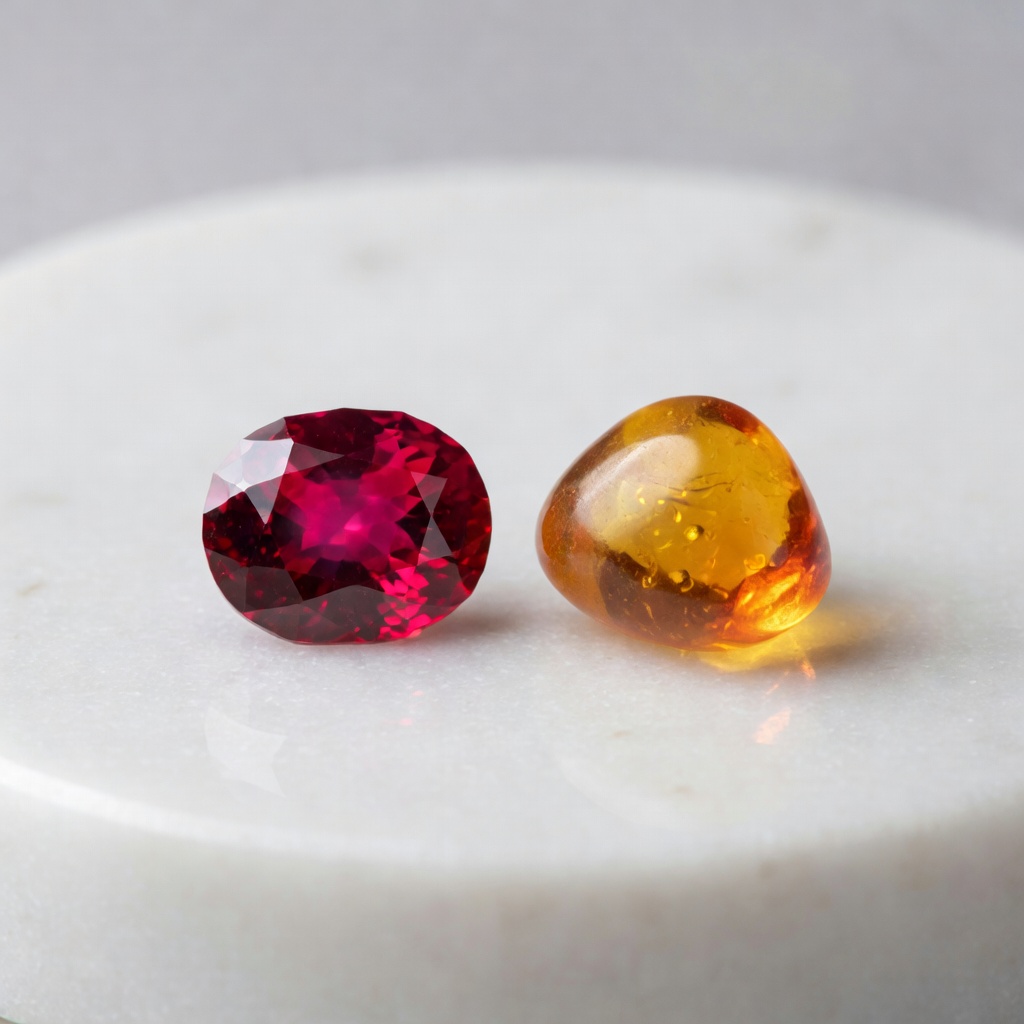
When selecting the perfect gemstone for jewelry or investment, the comparison between ruby vs amber presents one of the most fascinating dichotomies in the gemological world. Ruby stands as the king of precious stones, a crystalline corundum variety that serves as the coveted July birthstone, while amber represents nature's organic time capsule, fossilized tree resin that captures prehistoric moments in warm, golden hues. These two materials represent opposite ends of the gemstone spectrum—one formed from mineral fire deep within the earth's crust, the other born from ancient forests and preserved through millions of years of geological transformation. Understanding the fundamental differences between these precious vs organic gemstones helps collectors and jewelry enthusiasts make informed decisions based on durability, value, aesthetic preferences, and lifestyle requirements.
Origins and Geological Composition
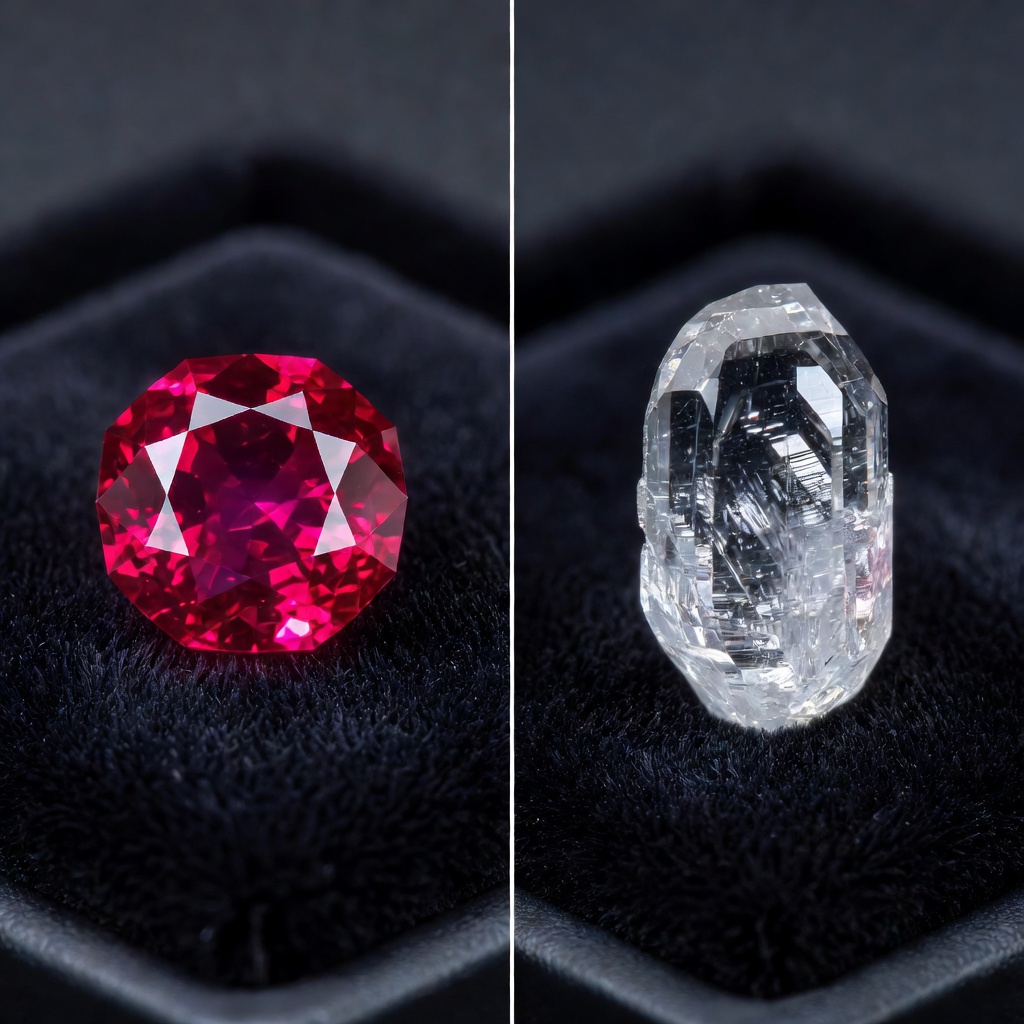
The geological origins of corundum vs fossilized resin reveal dramatically different formation processes that fundamentally determine their physical characteristics and long-term stability. Rubies form from aluminum oxide (Al₂O₃) crystals that develop under extreme heat and pressure conditions within metamorphic rocks, typically requiring temperatures between 800-1200°C and significant tectonic activity to create the chromium-rich environment necessary for their signature red coloration. The most prized specimens originate from Myanmar's Mogok mines, where marble-hosted deposits have yielded the legendary "pigeon blood" rubies for over 800 years, while newer discoveries in Mozambique and Thailand's Bo Rai district continue supplying the global market with exceptional material.
Conversely, amber begins as sticky resin exuded from ancient coniferous forests approximately 30 to 90 million years ago, primarily during the Eocene epoch when vast forests covered much of the Northern Hemisphere. Through a complex process called polymerization, where volatile oils evaporate and the remaining hydrocarbons cross-link under pressure and time, soft tree sap transforms into the hardened gemstone we recognize today. The Baltic region, particularly Kaliningrad Oblast and surrounding Polish deposits, produces approximately 90% of the world's supply, while the Dominican Republic yields rare blue amber varieties that fluoresce with distinctive Caribbean hues under ultraviolet light.
Practical gemological testing distinguishes these materials immediately: ruby exhibits double refraction and specific gravity of 3.97-4.05, while amber floats in saturated salt water (specific gravity 1.05-1.10) and generates static electricity when rubbed, attracting small paper particles—a characteristic shared with no other gemstone.
Physical Properties and Durability
Understanding the gemstone hardness scale proves essential when comparing these materials, as the disparity between ruby and amber directly impacts their suitability for daily wear and long-term jewelry applications. Ruby ranks 9 on the Mohs hardness scale, making it second only to diamond in scratch resistance, while amber measures merely 2-2.5, rendering it softer than common household dust particles (quartz registers 7) and easily scratched by fingernails (2.5). This profound difference stems from their crystalline structures: ruby possesses a rigid hexagonal crystal lattice with strong covalent bonds, whereas amber remains an amorphous solid with weak molecular cohesion.
Ruby durability extends beyond mere hardness to include exceptional toughness—the stone's resistance to breaking and chipping. Despite ranking high on the hardness scale, some brittle gems like diamond can cleave under impact, but ruby's atomic structure and lack of cleavage planes make it remarkably robust for everyday jewelry, including engagement rings subjected to kitchen activities and workplace environments. Amber, conversely, exhibits poor toughness and brittleness; it fractures conchoidally like glass and can crack from temperature fluctuations, direct sunlight exposure, or accidental drops onto hard surfaces.
Comparative Analysis Table
| Property | Ruby (Corundum) | Amber (Fossilized Resin) |
|---|---|---|
| Mohs Hardness | 9 | 2-2.5 |
| Specific Gravity | 3.97-4.05 | 1.05-1.10 |
| Crystal Structure | Hexagonal | Amorphous |
| Heat Resistance | Excellent (up to 1,800°C) | Poor (softens at 150-300°C) |
| Chemical Sensitivity | Resistant to acids | Damaged by alcohol, acetone, perfumes |
| Toughness | Excellent (no cleavage) | Poor (brittle, fractures easily) |
| Primary Sources | Myanmar, Mozambique, Thailand | Baltic Sea, Dominican Republic |
Heat sensitivity presents another critical consideration for jewelry applications. While ruby withstands soldering temperatures and steam cleaning without damage, amber deteriorates when exposed to heat exceeding 150°C, developing internal stress fractures and surface crazing that permanently diminish clarity and value. Chemical resistance further differentiates these stones; rubies tolerate ultrasonic cleaning solutions and mild acids, whereas amber reacts violently with alcohol-based perfumes, hair sprays, and household cleaners, causing surface etching and irreversible clouding.
Color Variations and Visual Characteristics
The visual spectrum of July birthstone properties centers on chromium-induced red fluorescence, with the finest Burmese specimens displaying "pigeon blood" color—a pure, vivid red with medium dark tone and high saturation that appears to glow from within due to the stone's ability to fluoresce under daylight's ultraviolet components. Secondary hues ranging from pinkish-red to purplish-red affect value significantly, with orange undertones (typical of Thai rubies) commanding lower prices than pure red stones. Diagnostic inclusions known as "silk"—rutile needle networks—identify natural origin and often create star effects (asterism) in cabochon-cut stones, though excessive silk reduces transparency and brilliance.
Baltic amber value derives from its diverse color palette and unique inclusions, ranging from translucent lemon yellow and cognac brown to rare cherry red and the extraordinarily valuable blue amber found only in the Dominican Republic and Indonesia. Unlike ruby's mineral purity, amber's organic nature allows for the preservation of prehistoric life forms; specimens containing complete insects, arachnids, or botanical matter command premium prices, particularly when the inclusions represent extinct species or dramatic predatory scenes frozen in time. For example, a Baltic amber piece containing a rare dragonfly inclusion might retail for $1,000-$5,000, while amber with common ant inclusions typically sells for $50-$200 depending on size and clarity.
Optical phenomena distinguish these materials under examination. Ruby exhibits strong pleochroism, showing different red shades when viewed from different angles, and often displays hexagonal growth zoning visible under magnification. Amber shows no pleochroism but may exhibit "sun spangles"—stress fractures that create rainbow-like reflective disks within the material—or flow structures indicating the resin's original viscous movement before solidification.
Value, Pricing and Investment Potential
The precious vs organic gemstones distinction becomes starkly apparent when analyzing market values, with natural rubies commanding prices that rival or exceed high-quality diamonds, while amber remains accessible to collectors across broader economic spectrums. Exceptional unheated Burmese rubies exceeding five carats can achieve auction prices of $100,000-$1,000,000 per carat, as evidenced by the record-breaking 25.59-carat Sunrise Ruby that sold for $30.3 million in 2015. Even commercial-quality heated rubies from Mozambique typically range $1,000-$10,000 per carat depending on color saturation and clarity, establishing ruby as a legitimate investment vehicle comparable to fine art or rare coins.
Amber pricing operates on an entirely different economic model, with raw Baltic material selling for $20-$50 per gram for standard honey-colored pieces, while rare specimens with museum-quality inclusions or exceptional blue fluorescence might reach $1,000-$10,000 for complete cabochons. Factors affecting amber valuation include authentication of natural versus pressed (reconstituted) material, presence of rare botanical or faunal inclusions, degree of transparency, and age verification distinguishing true fossilized resin from younger copal (sub-fossil resin less than one million years old).
Investment strategies differ significantly between these materials. Ruby represents a concentrated store of wealth requiring secure storage and insurance but offering liquidity through established auction houses and dealer networks. Amber appeals to niche collectors specializing in paleontology or organic gem materials, with value appreciation tied to scientific significance rather than purely gemological characteristics. Practical tip: When purchasing ruby for investment, insist on unheated, Burmese-origin stones accompanied by GIA or SSEF certificates, as treated stones or African origins typically appreciate more slowly despite initial lower acquisition costs.
Treatments, Enhancements and Authentication
The treated gemstones market requires vigilant authentication practices, as both ruby and amber undergo various enhancement procedures that significantly impact value and durability. Approximately 95% of rubies on the market receive heat treatment to improve color and clarity—a permanent, stable enhancement accepted within the trade but requiring disclosure. More concerning treatments include fracture filling with lead glass or oil, which masks surface-reaching cracks but creates stones vulnerable to damage from ultrasonic cleaning or jewelry repair heat. Diffusion treatment, which introduces surface-level color through beryllium heating, produces artificial coloration that may wear away during repolishing.
Amber authentication presents unique challenges due to abundant simulants and treatments. Pressed amber, created by heating small amber fragments under pressure to form larger blocks, constitutes genuine amber but commands lower prices than natural, single-piece material. Copal, sub-fossil resin from Colombia or Madagascar, mimics amber's appearance but remains geologically younger and less stable, developing sticky surfaces and fine cracking as it continues aging. Plastic imitations require careful testing; while amber floats in salt water and emits a pine-like odor when heated (hot needle test), plastics sink and smell acutely chemical.
Professional gemological certification from laboratories such as GIA (Gemological Institute of America), IGI (International Gemological Institute), or GÜBELIN provides essential protection for high-value purchases. These reports specify origin determination, treatment disclosure, and for amber, verification of natural fossilized status versus copal or synthetic resin. Case study: A collector purchasing a "rare blue amber" ring discovered through GIA testing that the material was actually heat-treated Dominican amber (natural) rather than the more valuable untreated variety, resulting in a $3,000 price adjustment and informed consent regarding the enhancement.
Jewelry Applications and Wearability
Ruby durability makes it ideal for high-impact jewelry settings including engagement rings, tennis bracelets, and daily wear earrings that withstand knocks against countertops, door frames, and office equipment. Prong settings in platinum or 18k yellow gold secure these hard stones effectively, though protective bezel settings work well for particularly valuable cabochons or star rubies. The stone's compatibility with ultrasonic and steam cleaning simplifies maintenance for pieces worn daily, though professional inspection every six months ensures prongs remain tight and the stone secure.
Amber jewelry requires protective strategies acknowledging its softness and chemical sensitivity. Designers typically employ bezel settings with high walls that protect the gem's edges, or wrap amber in decorative metal frames that absorb impact. Rings pose particular risks for amber; while cocktail rings make dramatic statements, daily wear quickly scratches and abrades the surface, diminishing polish and clarity. Pendants and earrings better suit amber's properties, positioning the stone away from hand contact and chemical exposure while showcasing its warm glow against skin.
Metal selection enhances each stone's aesthetic qualities. Yellow gold complements ruby's red tones, echoing historical royal associations and creating warm, flattering color combinations against various skin tones. White metals like platinum or white gold provide contemporary contrast that makes the red appear more vivid through complementary color theory. Amber pairs beautifully with silver, which enhances its honey tones, and rose gold, which harmonizes with its organic warmth. Practical design tip: When creating multi-gemstone pieces, never set ruby and amber adjacent to each other; the hardness disparity guarantees the amber will scratch and degrade through contact with the corundum, necessitating complete separation by metal elements or alternative gem buffers.
Cultural Significance and Metaphysical Properties
July birthstone properties associate ruby with vitality, passion, and protection, beliefs rooted in ancient civilizations that valued the stone above all others except diamond. Burmese warriors inserted rubies into their skin before battle, believing the stones granted invincibility, while Hindu texts described ruby as the "king of precious stones" (ratnaraj), offering its owner safety, peace, and preserved physical health. Medieval European royalty wore rubies to ward off evil and predict danger, noting that the stones reportedly darkened when peril approached—a phenomenon likely caused by lighting changes affecting the chromium fluorescence.
Amber healing properties stem from its organic origins and connection to solar energy. Ancient Greek physicians prescribed amber for throat ailments and mental disturbance, while traditional Chinese medicine utilized amber powder for calming the spirit and detoxifying the blood. The stone's electrostatic properties led to its Greek name "elektron" and associations with attracting positive energy while repelling negativity. Modern crystal healing practitioners recommend amber for pain relief, particularly teething discomfort in infants (using safely designed necklaces), and for cleansing the solar plexus chakra to boost confidence and manifestation abilities.
Historical trade routes highlight both stones' cultural importance. The Silk Road transported rubies from Mogok to the courts of Rome, Constantinople, and Beijing, creating economic networks that spanned continents. Amber followed the "Amber Road" from Baltic shores to Mediterranean civilizations, with Roman Emperor Nero reportedly spending the equivalent of modern millions on amber artifacts. Both stones appeared in funerary contexts—rubies in Mughal emperor tombs and amber in European noble burials—reflecting beliefs in their protective powers for the afterlife journey.
Care, Maintenance and Cleaning Protocols
Proper gemstone care guide protocols ensure these valuable materials maintain their beauty across generations, though maintenance approaches differ radically between mineral and organic gems. Ruby maintenance remains straightforward due to the stone's chemical inertness and hardness. Owners may safely use commercial ultrasonic cleaners or steam equipment for heavily soiled pieces, though steam should avoid fracture-filled stones that might experience thermal shock. Warm water with mild dish soap and a soft brush effectively removes accumulated lotions and oils from ring settings, while annual professional polishing restores surface luster to scratched gold settings without damaging the gem.
Amber care requires meticulous attention to environmental factors. Owners must strictly avoid chemical exposure including perfumes, hairsprays, cosmetics, and household cleaners, applying these products before donning amber jewelry and allowing complete drying time. Cleaning requires only a soft, damp cloth with lukewarm water—never submerging amber for extended periods or using ultrasonic cleaners, as the vibrations can exacerbate internal fractures. Storage presents particular importance; amber should occupy separate soft pouches or lined compartments, isolated from harder gemstones that would scratch its surface. Temperature control matters significantly; avoid leaving amber in vehicles, windowsills, or near heating vents where thermal expansion could cause cracking.
Case study: A collector stored an amber pendant in a jewelry box alongside a diamond necklace. Over six months, casual contact between the pieces resulted in visible scratching across the amber's surface, requiring professional repolishing that removed 0.5mm of material and altered the cabochon's original profile. Conversely, a ruby ring worn daily for twenty years showed minimal wear except for prong tightening, demonstrating the practical longevity differences between these materials.
Final Verdict: Choosing Between Ruby and Amber
Determining how to choose gemstones between ruby and amber requires honest assessment of lifestyle factors, budget parameters, and aesthetic preferences. Active individuals with hands-on careers or hobbies involving physical contact should select ruby for daily wear pieces, as its hardness and toughness withstand the rigors of modern life without constant vigilance. Those seeking engagement rings or heirloom jewelry intended for daily wear across decades find ruby the only viable option between these two materials, as amber's fragility makes it unsuitable for such demanding applications despite its beauty.
Budget considerations favor amber for entry-level collectors or those seeking large, impressive stones without substantial investment. A $500 budget might acquire a modest ruby under one carat or a substantial amber pendant with interesting inclusions exceeding 20 carats. However, long-term value retention strongly favors high-quality untreated rubies, which historically appreciate 5-10% annually, while amber values remain more stable with appreciation tied to scientific rarity rather than market speculation.
Personal aesthetic alignment ultimately guides the decision. Ruby appeals to those drawn to classic elegance, royal associations, and the permanence of mineral crystals—representing eternal passion and unyielding strength. Amber attracts individuals favoring bohemian organic beauty, natural history, and the warmth of sunlight captured in ancient forests—symbolizing adaptability, healing, and connection to Earth's living history. For versatile jewelry wardrobes, consider acquiring both: ruby for daily wear rings and formal occasions requiring durability, and amber for occasional wear pendants and earrings where its unique character can be showcased without risking damage from active lifestyles.
Frequently Asked Questions
Is ruby more expensive than amber?
Generally yes. Natural rubies, especially Burmese pigeon blood specimens, command significantly higher prices ($1,000-$100,000+ per carat) compared to amber, which typically ranges from $20-$1,000+ per carat depending on rarity of inclusions and color. The price disparity reflects ruby's status as a precious gemstone with limited high-quality deposits, while amber remains more abundant despite its organic origins. However, exceptional amber specimens containing rare extinct species or exhibiting blue fluorescence can exceed the prices of commercial-grade rubies, creating overlap in the mid-market segment.
Can I wear amber jewelry every day like ruby?
No, amber is not suitable for daily wear. With a Mohs hardness of only 2-2.5, amber scratches easily and is sensitive to chemicals, heat, and sunlight. Ruby, ranking 9 on the Mohs scale, is excellent for daily wear including engagement rings. Daily activities such as typing, cooking, cleaning, and accidental bumps against hard surfaces quickly degrade amber's polish and can cause fractures, while ruby withstands these challenges for decades without visible wear. Reserve amber for special occasions and protective settings like pendants and earrings rather than rings or bracelets subjected to frequent impact.
Which stone is harder, ruby or amber?
Ruby is significantly harder. Ruby measures 9 on the Mohs hardness scale (second only to diamond), while amber measures only 2-2.5, making it softer than many household dust particles and easily scratched. This hardness difference of approximately 6.5 points on the scale represents an exponential increase in scratch resistance, meaning ruby is thousands of times harder than amber. In practical terms, ruby can scratch glass and steel without damage, while amber can be scratched by fingernails, copper coins, and even prolonged exposure to dust containing quartz particles.
Is amber considered a precious stone like ruby?
Technically, ruby is classified as a precious stone (along with diamond, emerald, and sapphire), while amber is considered a semi-precious organic gemstone. However, rare amber with exceptional inclusions can be highly valuable to collectors. The traditional "precious" designation historically referred to diamond, ruby, sapphire, and emerald based on rarity, hardness, and cultural significance, whereas amber falls into the broader category of organic gems alongside pearl, coral, and jet. Despite this classification, museum-quality amber specimens containing vertebrate inclusions or exhibiting rare optical phenomena can command prices comparable to fine precious gemstones.
Can ruby and amber be worn together in the same jewelry piece?
While possible in multi-gemstone designs, it's not recommended due to the extreme hardness difference. The ruby will eventually scratch and damage the softer amber. If combined, protective settings should separate the stones completely. Designers should incorporate metal barriers or spacing elements that prevent physical contact between the stones, as even minimal rubbing during wear will gradually abrade the amber surface. Additionally, cleaning protocols become complicated when mixing these materials, as ruby tolerates ultrasonic and steam cleaning that would destroy amber, necessitating careful hand-cleaning with mild soap only.
How do I clean ruby vs amber jewelry?
Rubies can be cleaned with ultrasonic cleaners, steam, or warm soapy water. Amber requires only a soft damp cloth with lukewarm water—never use chemicals, ultrasonic cleaners, or heat on amber as it can crack or become cloudy. For ruby pieces with significant dirt accumulation, soak the item in warm water with mild dish soap for 20 minutes, then gently brush with a soft toothbrush to remove debris from settings. Amber cleaning should involve wiping with a barely damp microfiber cloth followed by immediate drying with a soft towel; avoid soaking or submerging amber as prolonged water exposure can penetrate surface fractures and cause internal clouding.
What is the main difference between corundum and resin gemstones?
Ruby is corundum (aluminum oxide), a crystalline mineral formed deep in the earth. Amber is fossilized tree resin, an organic material formed from ancient plant sap. This fundamental difference affects their hardness, care requirements, and formation processes. Corundum crystallizes from molten rock or hydrothermal solutions over millions of years, creating an ordered atomic structure that yields exceptional hardness and chemical stability. Resin gemstones undergo polymerization—a chemical hardening process where organic compounds cross-link under pressure and time—resulting in an amorphous structure without crystalline organization, leading to softness and sensitivity to solvents and heat.
Which stone is better for an engagement ring?
Ruby is the superior choice for engagement rings due to its exceptional hardness (9 Mohs), durability, and resistance to scratching and chipping. Amber is too soft and fragile for daily wear in rings, making it better suited for occasional-wear pendants or earrings. Engagement rings face daily exposure to impacts, chemicals from hand soaps and sanitizers, and temperature variations that would quickly degrade amber. Ruby's toughness also prevents chipping during accidental knocks against hard surfaces, ensuring the ring maintains its beauty through decades of marriage. For couples seeking red gemstones, ruby offers the only practical long-term solution, while amber serves beautifully as accent pieces in wedding jewelry worn only during the ceremony or special occasions.