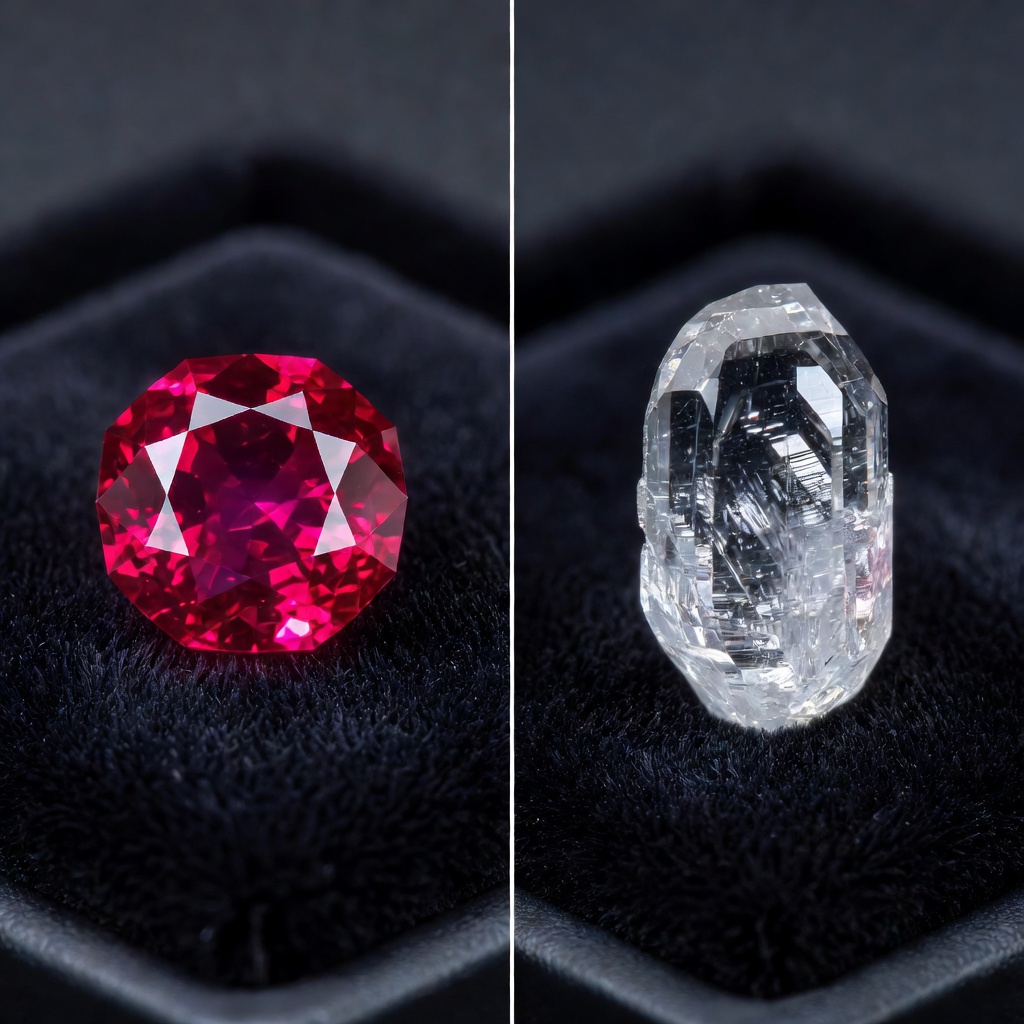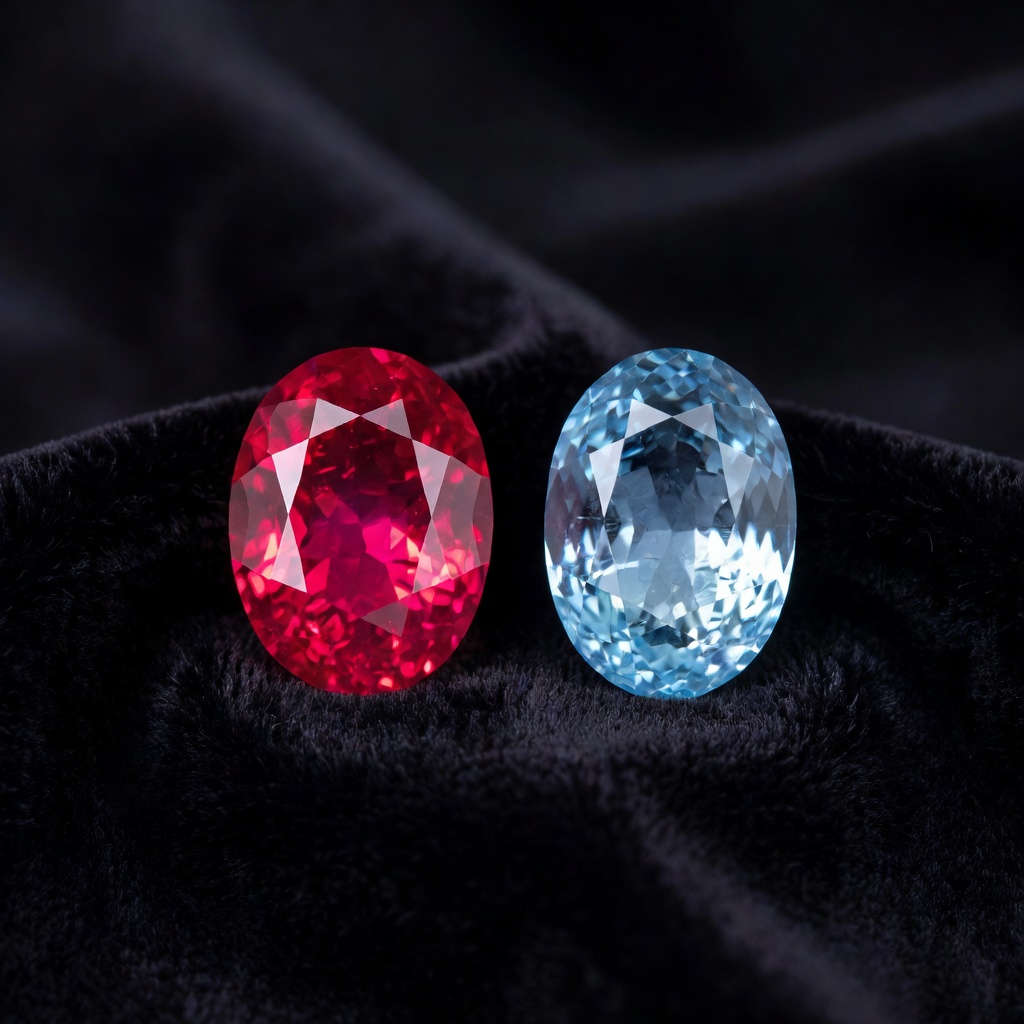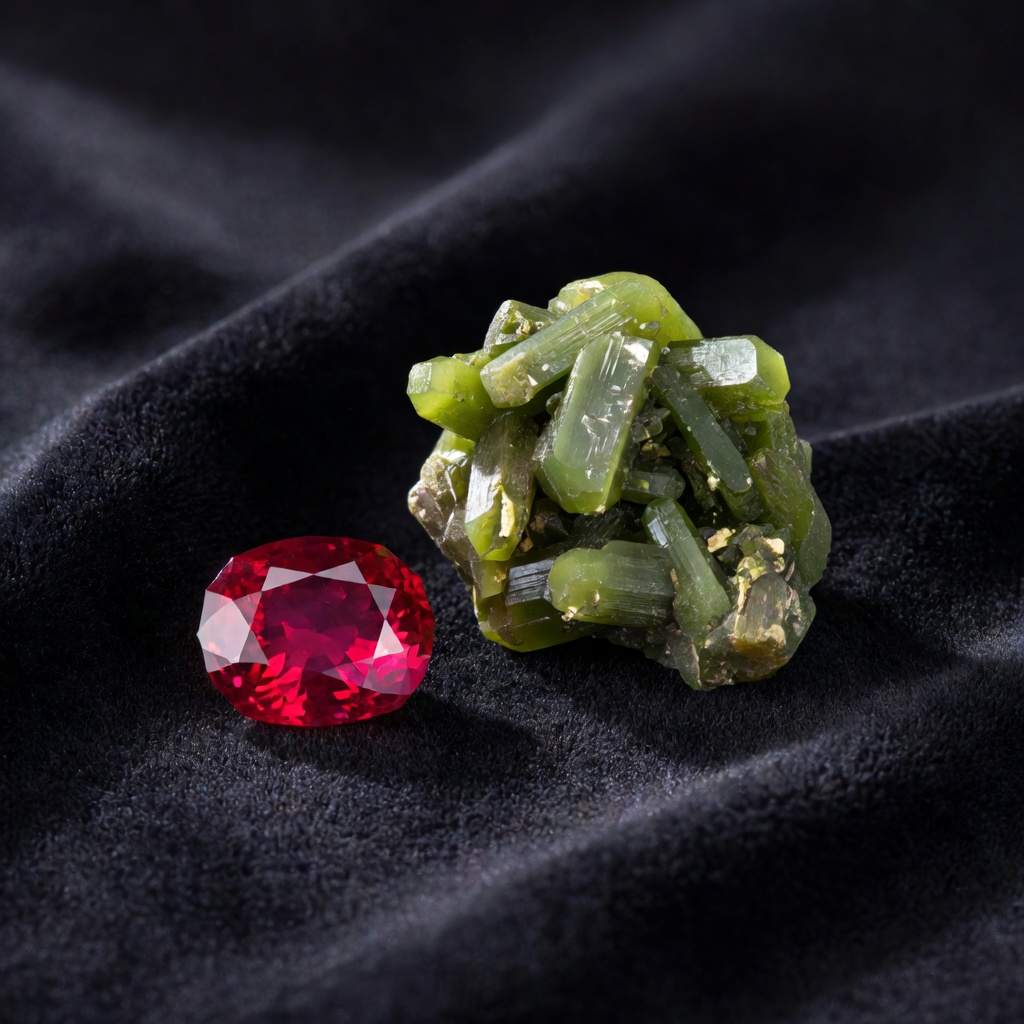
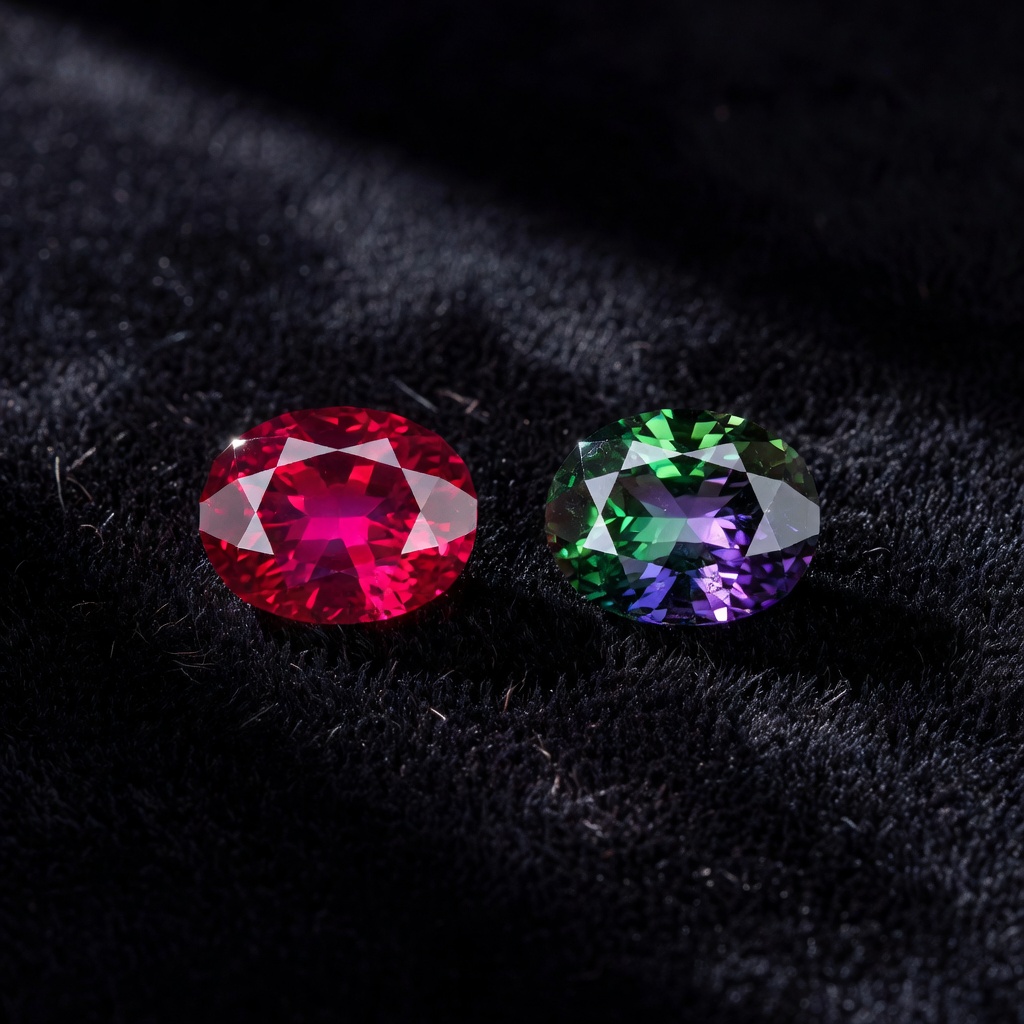
The Battle of Precious Gems: Understanding Ruby vs Alexandrite
When collectors and jewelry enthusiasts face the ultimate choice between two of nature's most captivating chromium-based treasures, the debate between Ruby vs Alexandrite often takes center stage. Revered as the "King of Gems," ruby has dominated crown jewels and romance narratives for millennia with its intense red saturation, while alexandrite captivates with its mystical reputation as the "Emerald by day, Ruby by night." Both stones derive their spectacular coloration from chromium impurities within their crystal structures, yet they offer distinctly different aesthetic experiences and practical considerations for owners. This comprehensive comparison examines the critical factors of durability, rarity, optical properties, and investment potential to help discerning buyers make an informed decision between these legendary gemstones.
Origins and Geological Formation: Chrysoberyl vs Corundum
Understanding the fundamental geological differences between these gems begins with their distinct mineralogical classifications. Ruby belongs to the corundum family, crystallizing from aluminum oxide in high-pressure, high-temperature environments typically found in metamorphic marble and basalt deposits. These formation conditions require specific hexavalent chromium substitution within the corundum lattice to produce the characteristic red coloration, with the most prized specimens emerging from the Mogok Stone Tract in Myanmar, the Montepuez region of Mozambique, and select alluvial deposits in Sri Lanka. The marble-hosted rubies from Burma typically form in pure white calcite matrices that minimize iron content, resulting in the coveted fluorescent red glow absent in darker, iron-rich basalt-derived stones from Thailand or Cambodia.
Alexandrite, conversely, represents the rare chromium-bearing variety of chrysoberyl, forming in pegmatites and mica schists through pneumatolytic processes where beryllium-rich fluids interact with aluminum-rich country rock. This distinction of Chrysoberyl vs corundum fundamentally affects both chemical composition and optical behavior, as chrysoberyl's orthorhombic crystal system allows for pleochroism and color-change phenomena impossible in corundum's trigonal structure. Historically, the Ural Mountains of Russia produced the most spectacular alexandrites from 1830s discoveries near Tokovaya, though modern commercial quantities now primarily originate from Brazil's Hematita mine, Tanzania's Lake Manyara region, and limited Sri Lankan alluvial deposits. Each geographical source imparts subtle differences in color-change intensity, with Russian material historically displaying the most dramatic daylight green to incandescent red transitions.
Case Study: The Geological Rarity Factor
Consider the experience of mineralogist Dr. Elena Volkov during her 2019 expedition to Tanzania's Tunduru district, where she documented the extreme scarcity of simultaneous chromium and beryllium concentrations necessary for alexandrite formation. While her team recovered over 200 kilograms of ruby-bearing corundum from nearby alluvial deposits, they found only three crystals exhibiting partial color-change characteristics suitable for faceting. This field reality illustrates why alexandrite commands premium prices despite ruby's general association with luxury—the specific geochemical conditions required for alexandrite creation occur perhaps one one-thousandth as frequently as those producing gem-quality corundum.
The Color Factor: Color Change Alexandrite vs Consistent Crimson
The optical properties of these gemstones present the most immediate visual distinction for potential buyers. Ruby exhibits a consistent body color ranging from pinkish-red to the highly prized "pigeon blood" red, a term specifically denoting stones with medium-dark tone, vivid saturation, and slight blue undertones that fluoresce intensely under ultraviolet light. The finest Burma rubies display this color across all lighting conditions, maintaining their saturated appearance in daylight, incandescent, and LED environments without shifting hue dramatically. This stability makes ruby particularly desirable for jewelry intended for varied social settings where lighting conditions fluctuate unpredictably.
Color change alexandrite offers an entirely different aesthetic proposition through its rare alexandrite effect, technically described as the distinct modification of body color between daylight (appearing green, blue-green, or yellow-green) and incandescent light (displaying red, purple-red, or raspberry tones). This phenomenon results from chromium ions within the chrysoberyl lattice absorbing specific wavelengths differently across the visible spectrum; daylight's rich blue-green content emphasizes absorption in the red region, while incandescent light's red-rich output emphasizes transmission in that same region. True Russian alexandrites from the classic Ural localities historically demonstrated approximately 70-80% green in daylight shifting to 70-80% red under candlelight, though modern African material often shows less dramatic shifts with brownish or grayish secondary hues.
Practical Lighting Assessment Tips
When evaluating these stones in person, bring both a daylight-equivalent LED source (5500-6500K) and a warm incandescent or candle source (2700-3000K) to observe color behavior. A fine alexandrite should show distinctly different colors between these sources without appearing muddy or brown in either, while a premium ruby should maintain consistent vivid red saturation across all lighting conditions. Be wary of alexandrites that appear too brown or gray in daylight, as these indicate lower chromium content and diminished color-change intensity that significantly impacts resale value.
Durability and Hardness Comparison on the Mohs Hardness Scale
Long-term wearability represents a crucial practical consideration when choosing between these gemstones for frequently worn jewelry pieces. Ruby ranks 9 on the Mohs hardness scale, making it second only to diamond in resistance to scratching and abrasion among natural gemstones. This exceptional hardness stems from the strong aluminum-oxygen bonds within the corundum crystal structure, combined with ruby's lack of distinct cleavage planes that plague softer gems like emerald or topaz. Consequently, ruby withstands decades of daily wear in rings and bracelets with minimal facet junction wear, maintaining brilliance even when subjected to occasional impacts against hard surfaces like countertops or door frames.
Alexandrite measures 8.5 on the Mohs scale, providing excellent scratch resistance that exceeds most jewelry materials except sapphire, ruby, moissanite, and diamond. However, alexandrite exhibits slight brittleness compared to ruby due to its perfect basal cleavage in one direction, meaning that sharp impacts perpendicular to the crystal's length can potentially cause fractures or chipping along the girdle edges. While this characteristic rarely affects pendant or earring designs, it necessitates protective mounting styles for rings intended for daily wear, particularly for individuals with active lifestyles involving manual labor or sports participation.
Maintenance Protocols for Longevity
For ruby jewelry, ultrasonic cleaning and steam cleaning remain generally safe options given the stone's toughness and lack of cleavage, though heat-treated stones should be inspected for potential fracture filling before such procedures. Alexandrite requires more conservative care: avoid ultrasonic cleaners entirely due to potential liquid inclusions that might expand and cause internal fracturing, and limit steam cleaning to brief exposures. Instead, clean alexandrite jewelry using warm soapy water and soft brushes, storing pieces separately to prevent contact with harder materials like diamonds or sapphires that could scratch the surface despite alexandrite's relatively high hardness rating.
Rarity and Sourcing Challenges: The Burma Ruby Premium
The scarcity of untreated, gem-quality specimens drives significant price differentials in both categories, though specific parameters affect each stone differently. Natural Burma rubies exceeding five carats with "pigeon blood" coloration and no heat treatment represent perhaps the rarest commercially available gemstone category, with fewer than fifty significant specimens appearing at major auction houses annually worldwide. The political instability in Myanmar (formerly Burma), combined with depletion of the legendary Mogok mines' shallow alluvial deposits, has created a supply constraint where high-quality material appreciates 15-20% annually regardless of broader economic conditions.
Alexandrite faces different scarcity dynamics based on the color-change phenomenon itself rather than pure size constraints. While crystals over ten carats exist, approximately 90% of mined alexandrite shows weak or marginal color change that gemologists classify merely as "alexandrite chrysoberyl" rather than true alexandrite. The original Russian Ural sources, which produced the standard-setting material with dramatic color shifts, were essentially depleted by the late 1980s, making vintage Russian alexandrites with documented provenance command premiums of 300-400% over comparable-quality Brazilian material. Modern Tanzanian deposits yield occasional fine specimens, but the consistency and saturation rarely match the historic Russian output, creating a bifurcated market where origin certification significantly impacts valuation.
Market Availability Realities
Contemporary jewelry designers like James de Givenchy of Taffin have noted that sourcing five matching alexandrites for a bracelet or necklace suite requires 18-24 months of diligent searching through multiple dealers, whereas comparable ruby suites can be assembled in 3-6 months given Mozambique's current production levels. This sourcing difficulty means that custom alexandrite jewelry often commands design premiums beyond the material costs, while ruby projects benefit from more predictable procurement timelines and broader availability of calibrated sizes for matching sets.
Investment Value and Market Pricing: Precious Corundum Performance
Financial analysis reveals complex pricing structures where fine alexandrite often exceeds ruby on a per-carat basis in smaller sizes, while large untreated rubies dominate the ultra-high-end auction market. Current wholesale data indicates that top-quality alexandrites under three carats range from $15,000 to $25,000 per carat, whereas comparable quality rubies in the same size bracket typically trade between $10,000 and $20,000 per carat depending on origin documentation. However, this relationship inverts dramatically above five carats, where untreated precious corundum from Burma regularly achieves $100,000 to $200,000 per carat at Christie's and Sotheby's auctions, while alexandrite rarely exceeds $40,000 per carat even for exceptional Russian material.
Notable auction records underscore these valuations: the "Hope Ruby," a 32.08-carat Burma ruby, sold for $6.74 million in 2012 (approximately $210,000 per carat), while the finest known Russian alexandrite, a 21.41-carat stone from a private collection, achieved $1.2 million (approximately $56,000 per carat) in a 2014 Geneva auction. Investment advisors specializing in tangible assets generally recommend untreated Burma rubies over five carats for portfolio diversification due to their liquidity and consistent appreciation, while suggesting alexandrite for collectors prioritizing rarity over resale velocity. Treatment disclosure critically affects both categories, with heat-treated rubies trading at 30-50% discounts to untreated material, and diffusion-treated or flux-healed stones essentially excluded from investment-grade consideration.
Certification Requirements for Investors
Accompanying documentation from laboratories such as Gübelin, SSEF, or AGL should specify origin determination (Burma, Mozambique, Ceylon for rubies; Russia, Brazil, Tanzania for alexandrite) and treatment status (unheated/untreated preferred). For alexandrite specifically, request a color-change percentage estimation, as stones exhibiting less than 60% hue shift under standardized lighting conditions significantly underperform the rare specimens showing 80-90% change. Maintain these certificates separately from the jewelry in secure storage, as they represent essential provenance documentation for future resale or estate valuation.
Birthstone Significance and Symbolism: A Birthstone Comparison
Cultural and metaphysical associations provide another dimension for buyers choosing between these stones. This birthstone comparison reveals that ruby serves as the July birthstone, associated with the zodiac sign Cancer and historically believed to protect warriors in battle and ensure passion in romance. Traditional anniversary gifting recognizes ruby for the 15th and 40th milestones, symbolizing enduring flame and renewed commitment. Metaphysical practitioners attribute ruby with stimulating the heart chakra, enhancing life force energy, and promoting courage and self-confidence, making it popular among entrepreneurs and public speakers seeking personal empowerment.
Alexandrite holds the distinction of being one of June's three birthstones (alongside pearl and moonstone), offering modern alternatives to the traditional organic June options. Anniversary traditions designate alexandrite for the 55th wedding anniversary, representing adaptability and the capacity to thrive through changing circumstances—an apt metaphor given the stone's chameleon-like optical properties. Crystal healing practitioners associate alexandrite with balance and intuition, believing it helps integrate rational and emotional responses while enhancing the ability to perceive alternate perspectives. This makes alexandrite particularly popular among counselors, mediators, and individuals undergoing significant life transitions who appreciate its symbolism of transformation and resilience.
Gifting Strategy Considerations
For milestone birthday gifts, consider the recipient's lifestyle and aesthetic preferences alongside birthstone traditions. A July-born individual with an active outdoor lifestyle might appreciate a ruby pendant that withstands exposure better than alexandrite, while a June-born office professional might treasure an alexandrite ring that provides visual interest through its color-changing properties during transitions between natural daylight and indoor evening events. When marking anniversaries, pair the 40th ruby gift with renewal vows emphasizing enduring passion, while 55th alexandrite presentations can highlight the couple's ability to adapt and grow together through decades of changing circumstances.
Jewelry Design and Wearability Factors
Optimal jewelry settings differ significantly between these gemstones based on their hardness characteristics and optical behaviors. Ruby's superior hardness allows for high-impact designs featuring exposed prongs, cathedral settings, and prominent table-up orientations that maximize light return through the stone's pavilion facets. High jewelry houses like Cartier and Van Cleef & Arpels frequently feature Burma rubies in elaborate cocktail rings with minimal metal interference, allowing the red saturation to dominate the design aesthetic. Metal pairing preferences traditionally favor yellow gold or rose gold for rubies, as the warm metal tones complement the red body color and enhance the perception of richness, though platinum settings provide contemporary contrast for stones with strong fluorescence.
Alexandrite demands more protective mounting strategies due to its slight brittleness, with bezel settings or half-bezel designs offering superior protection for the girdle edges compared to exposed prong settings. Designers often utilize alexandrite in pendant and earring designs where impact risk remains minimal, though ring designs succeed when featuring protective halo surrounds or substantial basket mountings. Metal selection significantly affects alexandrite's perceived color: platinum and white gold emphasize the cool green daylight appearance, while yellow gold settings can make the incandescent red phase appear more orange or brownish, potentially diminishing the desired color contrast. For maximum versatility, consider two-tone mountings that allow the stone to harmonize with both color phases.
Styling for Different Occasions
Ruby excels in statement pieces intended for evening wear or formal occasions where dramatic color makes a singular impact, such as solitaire rings, tennis bracelets, or pendant centerpieces. Conversely, alexandrite offers conversation-starting versatility suitable for daytime professional environments transitioning to evening social events, where the color change becomes a fascinating interactive element. When building a jewelry wardrobe, acquire ruby for timeless elegance and alexandrite for distinctive personality expression, ensuring that alexandrite pieces receive designated storage in individual soft pouches to prevent contact with harder gemstones in collective jewelry boxes.
Authentication, Treatments, and Synthetics
Distinguishing natural specimens from treated or laboratory-created alternatives requires sophisticated gemological understanding and professional certification. Heat treatment represents standard practice for approximately 95% of commercial rubies, improving clarity by melting silk inclusions and enhancing color saturation through chromium oxidation. While accepted in the trade, heated rubies command significantly lower prices than untreated specimens, necessitating disclosure and certification from reputable laboratories like GIA, AGL, or Gübelin. More concerning, lead-glass filling and diffusion treatment create stones that appear attractive initially but prove unstable and valueless for investment purposes, requiring careful microscopic examination to detect filled fractures or surface-concentrated color layers.
Alexandrite treatments remain relatively rare due to the stone's inherent rarity and the difficulty of enhancing color change through artificial means, making untreated alexandrite more common than untreated ruby in the marketplace. However, synthetic alexandrite proliferates through the "pulled" or flux-growth methods, creating crystals that mimic natural inclusions and color change. These synthetics typically show overly perfect clarity and slightly exaggerated color change compared to natural material, often appearing "too good to be true" to experienced observers. Flux-grown synthetic rubies similarly challenge identification, requiring advanced spectroscopic analysis to distinguish from natural stones based on growth patterns and trace element chemistry rather than visual inspection alone.
Verification Best Practices
Always request origin and treatment reports from independent laboratories rather than relying on dealer representations. For significant purchases exceeding $10,000, obtain duplicate opinions from separate labs to confirm consistency in origin determination. Learn to use a Chelsea filter as a preliminary screening tool: natural Burmese rubies typically fluoresce distinctly red under this filter, while many synthetics show different reactions, though this test alone cannot confirm natural origin. For alexandrite, examine the stone under polarized light to check for twinning patterns characteristic of natural chrysoberyl growth, as synthetic material often lacks these structural complexities.
Comprehensive Comparison: Ruby vs Alexandrite
| Characteristic | Ruby (Precious Corundum) | Alexandrite (Chrysoberyl Variety) |
|---|---|---|
| Mohs Hardness | 9.0 (Excellent scratch resistance) | 8.5 (Very good, slight brittleness) |
| Primary Color | Red to pinkish-red (consistent across lighting) | Green in daylight, red in incandescent light |
| Crystal System | Trigonal (corundum structure) | Orthorhombic (chrysoberyl structure) |
| Primary Sources | Myanmar (Burma), Mozambique, Sri Lanka | Historical Russia, Brazil, Tanzania, Sri Lanka |
| Rarity Factor | Extremely rare untreated over 5 carats | Rare color-change phenomenon in any size |
| Price Range (Fine Quality) | $10,000-$200,000+ per carat depending on size | $15,000-$40,000 per carat (Russian premium) |
| Common Treatments | Heat treatment (90%+ of market) | Generally untreated (treatments uncommon) |
| Best Jewelry Application | Daily wear rings, statement pieces | Occasional wear rings, pendants, earrings |
| Birthstone Association | July (15th & 40th anniversaries) | June (55th anniversary) |
| Investment Liquidity | High (strong auction market) | Moderate (niche collector market) |
| Metaphysical Properties | Passion, energy, protection | Balance, intuition, transformation |
Final Decision Guide: Which Gem Suits You?
Selecting between these extraordinary gemstones ultimately depends on aligning stone characteristics with personal lifestyle, aesthetic preferences, and financial objectives. Active individuals or those seeking daily-wear engagement rings should prioritize ruby's superior hardness and toughness, which withstand the mechanical stresses of manual labor, gym equipment contact, and accidental impacts without requiring constant vigilance. Consider the "lifestyle audit" method: if you regularly type at keyboards, handle children, participate in sports, or perform household maintenance without removing jewelry, ruby offers significantly better longevity and lower maintenance anxiety than alexandrite.
Budget optimization strategies differ markedly between these stones. Buyers maximizing visual impact per dollar should consider heat-treated rubies from Mozambique or Madagascar, which offer saturated red coloration at $500-$2,000 per carat rather than the $20,000+ required for untreated Burma material. For alexandrite, prioritize color-change intensity over carat weight, as a one-carat stone showing dramatic 80% hue shift provides more satisfaction and better value retention than a three-carat stone with muddy, brownish transitions. Collector priorities should focus on untreated Burma rubies over five carats for stable long-term appreciation, while those chasing extreme rarity might target documented Russian Ural alexandrites under two carats with perfect color change, recognizing these as finite historical artifacts from depleted mines.
Decision Matrix for Specific Scenarios
For engagement rings intended for daily wear, ruby emerges as the clear winner unless the recipient specifically values June birthstone connections or the unique color-change phenomenon enough to accept protective setting constraints and gentler wear habits. For investment portfolios focused on auction liquidity, untreated Burma rubies provide more standardized grading and broader buyer pools than alexandrite's more subjective color-change evaluation. However, for the collector seeking the ultimate conversation piece or the individual who delights in optical phenomena, alexandrite offers an irreplaceable magical quality that static ruby coloration cannot replicate, justifying its position as one of the world's most coveted gemological curiosities.
Frequently Asked Questions
Which is more expensive, ruby or alexandrite?
Fine quality alexandrite often commands higher prices per carat than rubies under 3 carats due to extreme rarity of the color-change phenomenon. However, untreated Burma rubies over 5 carats typically exceed alexandrite prices, regularly fetching over $100,000 per carat at auction compared to $15,000-$20,000 for top alexandrite.
Can alexandrite look exactly like a ruby?
Under incandescent lighting, high-quality alexandrite displays a purplish-red or raspberry color that can resemble ruby, but it lacks the pure 'pigeon blood' red saturation. In daylight, alexandrite appears distinctly green or bluish-green, making it immediately distinguishable from ruby's consistent red appearance across all lighting conditions.
Is alexandrite harder than ruby?
No, ruby is harder than alexandrite. Ruby ranks 9 on the Mohs hardness scale, while alexandrite ranks 8.5. This difference means ruby resists scratching better and is more suitable for daily wear in engagement rings, whereas alexandrite requires slightly more protective settings to prevent facet junction wear over decades.
Which gemstone is better for an engagement ring?
Ruby is generally preferred for engagement rings due to its superior hardness (9 vs 8.5) and classic romantic symbolism. However, alexandrite offers unique personalization for June births or those wanting a color-changing 'two-stone' effect. Both require protective settings, but ruby better withstands daily impact and chemical exposure.
Why does alexandrite change color while ruby doesn't?
Alexandrite changes color due to the presence of chromium ions in a chrysoberyl crystal structure that absorbs specific light wavelengths differently under incandescent versus daylight. Ruby contains chromium in a corundum structure that absorbs light consistently across sources, resulting in stable red coloration regardless of lighting environment.
Are natural rubies rarer than alexandrites?
High-quality natural rubies from Burma are generally rarer than alexandrites in larger sizes, but fine color-change alexandrite is arguably rarer per carat overall. Approximately 90% of alexandrite shows weak color change, making truly fine specimens extremely scarce, while commercial-quality rubies are more abundant in the market than gem-quality alexandrite.
Can you wear alexandrite every day?
Yes, alexandrite can be worn daily with proper care. With a hardness of 8.5, it resists scratching well, though it requires protection from hard blows due to slight brittleness. Avoid ultrasonic cleaners and extreme temperature changes. For active lifestyles, ruby remains the safer daily-wear choice due to its superior toughness.
Which stone holds its value better as an investment?
Untreated Burma rubies historically show stronger investment appreciation and liquidity in the auction market. However, fine Russian alexandrite has shown explosive value growth due to mine depletion. For investment purposes, prioritize untreated stones over 3 carats with premium color for either gem, ensuring proper gemological certification accompanies the purchase.