Understanding Moissanite and Spinel: A Comprehensive Gemstone Comparison
When searching for the best diamond alternatives, modern consumers increasingly find themselves weighing the unique attributes of moissanite vs spinel for their fine jewelry investments. Moissanite, scientifically known as silicon carbide (SiC), represents the pinnacle of laboratory-created gemstones, engineered specifically to maximize optical performance while maintaining ethical production standards. In contrast, spinel, composed of magnesium aluminate (MgAl₂O₄), stands as a testament to nature's artistry, formed deep within the earth over millions of years and historically mistaken for precious rubies and sapphires in crown jewels across Europe and Asia. While these gemstones originate from vastly different sources—one from high-tech laboratories and the other from metamorphic rock formations—both have emerged as compelling center stone options for engagement rings, fashion jewelry, and heirloom pieces, each offering distinct visual characteristics that appeal to different aesthetic preferences and lifestyle requirements.
The comparison between moissanite vs spinel becomes particularly relevant for buyers seeking alternatives to traditional diamonds, as both stones provide exceptional beauty at more accessible price points while delivering unique optical properties impossible to replicate with other materials. Moissanite captivates with its intense brilliance and fire, creating a disco-ball effect that rivals or exceeds diamond sparkle, making it ideal for those who prioritize maximum light return and durability. Conversely, spinel attracts collectors and color enthusiasts with its pure, saturated hues ranging from vivid cobalt blue to rich ruby-red, offering a subtle glow that emphasizes depth of color over dramatic light dispersion. Understanding these fundamental differences helps prospective buyers navigate their choice between brilliant sparkle and rich chromatic expression, ensuring their final selection aligns perfectly with their personal style, daily activities, and long-term jewelry goals.
Origins and Composition: Lab-Created vs Natural Formation
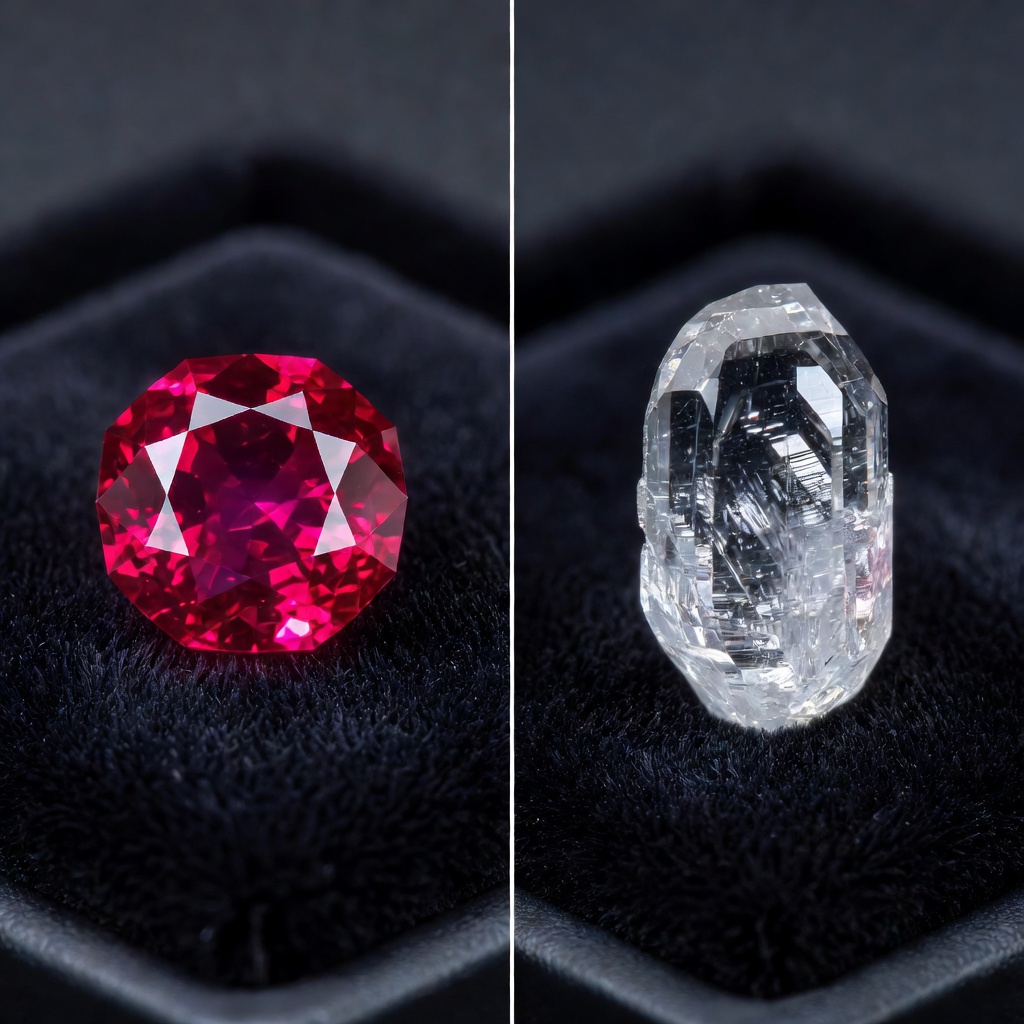
The fundamental distinction between natural spinel vs lab created moissanite begins with their vastly different genesis stories and crystal structures, factors that significantly influence their availability, pricing, and environmental impact. Moissanite's journey began in 1893 when Nobel Prize-winning chemist Henri Moissan discovered microscopic crystals of silicon carbide in a meteor crater in Arizona, initially believing he had found diamonds; however, natural moissanite remains so exceedingly rare that all jewelry-grade moissanite sold today is exclusively laboratory-grown using advanced thermal growing processes that create large, flawless crystals within controlled environments. This technological origin ensures consistent quality and unlimited supply, allowing jewelers to offer moissanite in precise cuts and sizes without the geological constraints that limit natural gemstones.
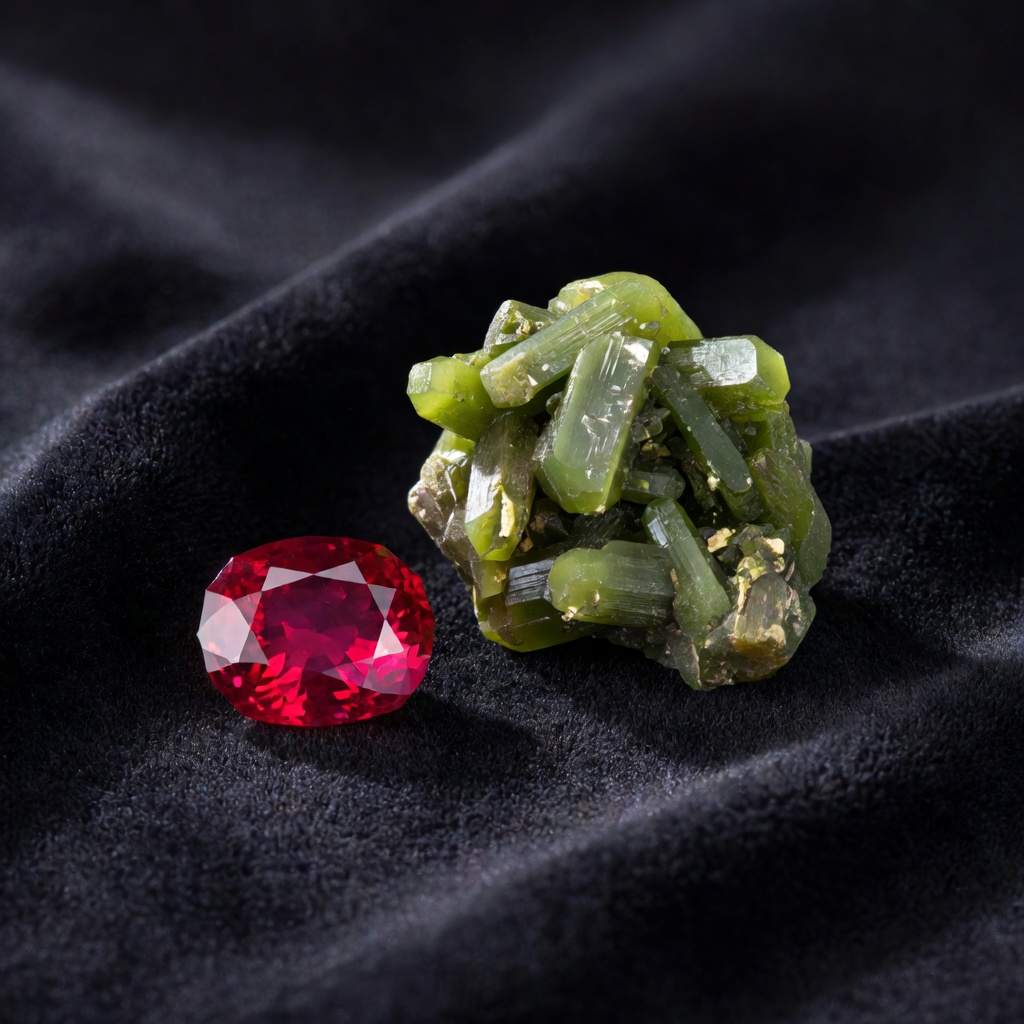
Spinel, conversely, forms through natural geological processes occurring in metamorphic rocks and marble deposits, with the most prized specimens emerging from specific locales including Myanmar's Mogok Stone Tract, Sri Lanka's gem gravels, and Tanzania's Mahenge region, where unique combinations of heat, pressure, and mineral availability create these magnesium aluminum oxides over millions of years. The crystal structure differences prove equally significant: moissanite crystallizes in a hexagonal system that contributes to its double refraction properties, while spinel forms in an isometric cubic system that results in single refraction and exceptional clarity. These geological realities create stark availability contrasts, with moissanite production limited only by manufacturing capacity, ensuring consistent supply chains, whereas high-quality natural spinel deposits remain finite and increasingly scarce, particularly for specimens exceeding five carats or displaying the coveted cobalt-blue or vivid-red colorations that command premium prices in international markets.
Practical Example: Sourcing Decisions
Consider the case of a couple planning a custom engagement ring with a specific budget of $3,000 for the center stone. Choosing a 2-carat lab-created moissanite would allow them to select any cut or clarity grade without supply concerns, knowing the stone could be replicated precisely if damaged or lost. However, if they desired a 2-carat natural Burmese red spinel of similar visual impact, they might wait six months to locate a suitable stone, face significant price volatility depending on current mining yields, and potentially need to compromise on clarity or cut to stay within budget, illustrating how origin fundamentally affects the purchasing experience and long-term ownership practicalities.
Visual Characteristics: Brilliance, Fire, and Optical Performance
The optical behavior of these gemstones creates the most immediate visual distinction for observers, with moissanite vs spinel brilliance representing fundamentally different approaches to light interaction and aesthetic appeal. Moissanite possesses an exceptionally high refractive index ranging from 2.65 to 2.69, significantly higher than diamond (2.42), combined with a dispersion rating of 0.104 that creates intense rainbow fire—colorful light flashes that separate white light into spectral components. This double refraction means that when viewing moissanite, you may observe a slight doubling of facet lines, creating that characteristic "disco ball" effect that some find mesmerizingly brilliant while others consider excessive or artificial-looking compared to diamond.
Spinel offers a distinctly different visual experience through its single refraction and lower refractive index of 1.71-1.73, resulting in pure, rich color presentation without the doubling of facets or extreme fire that characterizes moissanite. Instead of splitting light into rainbow colors, spinel focuses on depth and saturation, displaying what gemologists describe as a "sleepy" or "velvet" luster that emphasizes the stone's inherent color quality over reflective brilliance. Under natural daylight, moissanite performs spectacularly, throwing flashes of colored light across a room, while spinel appears more subtle, revealing its true character under diffuse lighting where its color purity becomes apparent without competing reflections. Under artificial jewelry store lighting, moissanite often appears overwhelmingly brilliant, potentially masking subtle cut quality issues, whereas spinel requires careful lighting setup to reveal its full color potential, making in-person examination crucial when evaluating these stones side by side.
Case Study: Lighting Impact Assessment
A jewelry retailer in New York conducted an informal study with 50 customers, showing them identical ring settings set with either colorless moissanite or blue spinel under different lighting conditions. Under LED spotlights, 78% of participants preferred the moissanite for its "eye-catching sparkle," while under natural window light, 65% favored the spinel for its "sophisticated depth of color." This demonstrates how moissanite dominates in artificial lighting environments common in offices and evening venues, while spinel excels in natural daylight settings and outdoor occasions, helping buyers choose based on their typical wearing environments.
Durability and Hardness: Daily Wear Considerations
When evaluating spinel vs moissanite hardness for jewelry applications, particularly engagement rings subjected to daily wear, the numerical differences on the Mohs scale translate to significant practical implications for long-term maintenance and setting security. Moissanite ranks 9.25 on the Mohs hardness scale, placing it directly between diamond (10) and corundum (ruby and sapphire at 9), providing exceptional resistance to scratching from everyday encounters with household dust (which contains silica at 7 hardness), metal surfaces, and accidental impacts against hard objects. This superior hardness allows moissanite to maintain its polish and facet edges indefinitely, even after decades of daily wear, making it virtually maintenance-free regarding surface integrity and ensuring the stone appears as brilliant on its 25th anniversary as on its first day.
Spinel, while still considered a durable gemstone at 8.0 on the Mohs scale, occupies a more vulnerable position where everyday dust particles can theoretically cause microscopic surface scratches over extended periods, though this typically requires years of constant wear to become visible. More critically, spinel possesses distinct cleavage planes—directional weaknesses in its crystal structure where the stone may split if struck with sufficient force at specific angles—unlike moissanite's more uniform toughness throughout its crystal structure. For engagement rings worn during gardening, sports, or manual labor, moissanite offers peace of mind regarding chipping resistance, while spinel requires more protective settings such as bezels or halo designs that shield the girdle and corners from direct impact, particularly important for step-cut spinels like emeralds or baguettes that feature sharp edges more susceptible to damage.
Durability Comparison Table
| Characteristic | Moissanite | Spinel |
|---|---|---|
| Mohs Hardness | 9.25 | 8.0 |
| Toughness | Excellent (resistant to chipping) | Good (cleavage planes present) |
| Scratch Resistance | Excellent (survives household dust) | Good (susceptible to long-term abrasion) |
| Best Setting Style | Prong (maximizes light return) | Bezel or Halo (protective) |
| Daily Wear Suitability | Ideal for active lifestyles | Better for occasional/special occasion wear |
| Long-term Maintenance | Minimal polishing needed | May require repolishing after years |
Color Varieties and Options Beyond Colorless
The moissanite and spinel color comparison reveals perhaps the most dramatic divergence between these two gemstones, with spinel offering nature's full spectrum while moissanite remains primarily focused on diamond simulation with limited chromatic variety. Moissanite production concentrates on colorless to near-colorless grades, designated as DEF (colorless) or GHI (near-colorless), engineered to mimic the most desirable diamond color ranges while minimizing the yellow or green undertones that occasionally appear in lower-quality crystals. While fancy colored moissanite exists in laboratory settings, including rare green, blue, and gray varieties created through high-pressure high-temperature (HPHT) treatments, these remain uncommon in consumer markets, often displaying less saturation than their natural counterparts and commanding prices that approach or exceed those of treated natural gemstones.
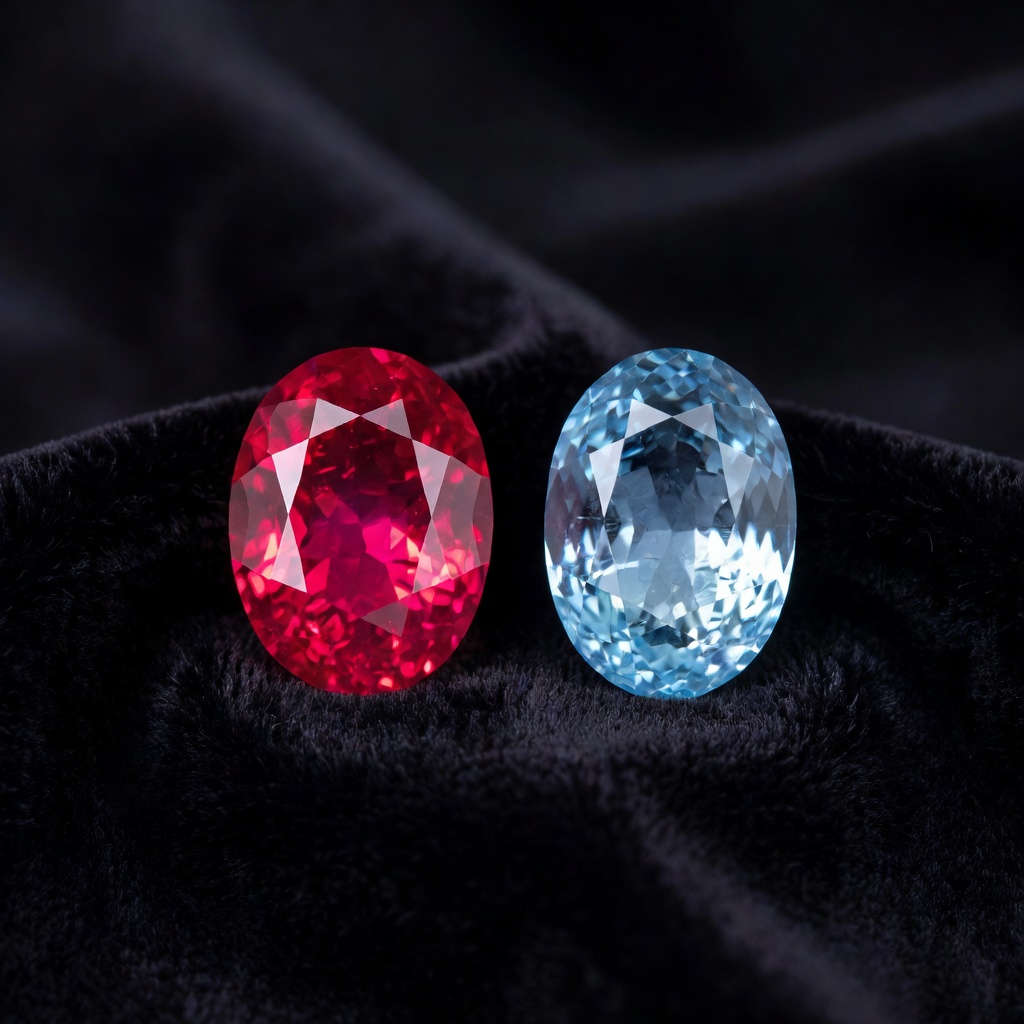
Spinel, conversely, occurs naturally in virtually every color of the rainbow, with certain hues achieving legendary status among collectors and connoisseurs. Cobalt-blue spinels from Vietnam and Sri Lanka rival fine sapphire in saturation without the dark tones that often plague blue corundum, while "Jedi" red spinels from Myanmar display a vivid, almost neon red fluorescence under daylight that exceeds the visual impact of most rubies. Additional varieties include hot pink Mahenge spinels from Tanzania, lavender and purple stones from Tajikistan, orange-red "flame" spinels, and increasingly popular black spinels used as dramatic alternatives to black diamonds. Price variations within the spinel family prove substantial, with top-quality red and cobalt blue specimens commanding $2,000 to $5,000 per carat or more, while more common pink, purple, or gray spinels might range from $200 to $800 per carat, allowing collectors at various price points to access this gemstone family while treatment processes like heating are commonly accepted and disclosed within the trade.
Practical Tip: Color Selection Strategy
For buyers prioritizing uniqueness, consider selecting a spinel in the "Mahenge pink" or "cobalt blue" varieties for cocktail rings where the color becomes a conversation starter, while choosing colorless moissanite for classic solitaire engagement rings where the goal is diamond-like appearance without the ethical or financial concerns. If considering fancy colored moissanite, request to view the stone under various lighting conditions before purchase, as some green or blue treated moissanites can appear muddy or artificial compared to the vivid natural colors available in spinel, ensuring your investment delivers the visual impact you desire.
Price Analysis and Value Retention
Understanding moissanite vs spinel price dynamics requires recognizing the fundamental economic differences between manufactured consistency and natural rarity, factors that influence both initial acquisition costs and long-term value trajectories. Moissanite maintains remarkably consistent pricing across the market, typically ranging from $400 to $600 per carat regardless of size, with minimal variation between colorless and near-colorless grades, allowing buyers to budget precisely without the sticker shock of exponential price increases for larger stones. This pricing stability stems from controlled laboratory production costs and abundant supply, making moissanite an accessible option for budget-conscious consumers seeking substantial center stones without compromising on clarity or cut quality, with a 3-carat moissanite costing roughly the same per-carat as a 1-carat specimen.
Spinel pricing operates within a vast spectrum from $200 to $5,000+ per carat, determined by color intensity, clarity, cut precision, and geographic origin, with untreated specimens from historically significant mines commanding premium valuations. While moissanite offers stable but static resale values—typically retaining 30-50% of retail price in secondary markets due to abundant new supply—fine natural spinel, particularly in rare colors or large sizes, demonstrates potential for appreciation similar to fine sapphire or ruby, with prices for top-tier red spinels increasing 200-300% over the past decade as Myanmar supply constraints tighten. Budget considerations should also account for setting costs; moissanite's durability allows for delicate, minimal settings that reduce overall ring costs, while spinel often requires more metal and protective design elements that increase the total investment, though the natural stone may hold or increase value over decades while serving as a tangible store of wealth.
Investment Perspective Example
A buyer in 2015 purchased a 2-carat colorless moissanite solitaire for $1,000 and a 1.5-carat Burmese red spinel for $3,000. By 2024, the moissanite ring could be resold for approximately $300-400, reflecting the depreciation typical of manufactured goods, while the spinel, if unheated and well-documented, might command $6,000-8,000 at auction due to increasing scarcity of Burmese material and rising collector interest, illustrating how different value retention profiles suit different buyer intentions—immediate gratification and utility versus long-term collectible appreciation.
Best Applications in Jewelry Design
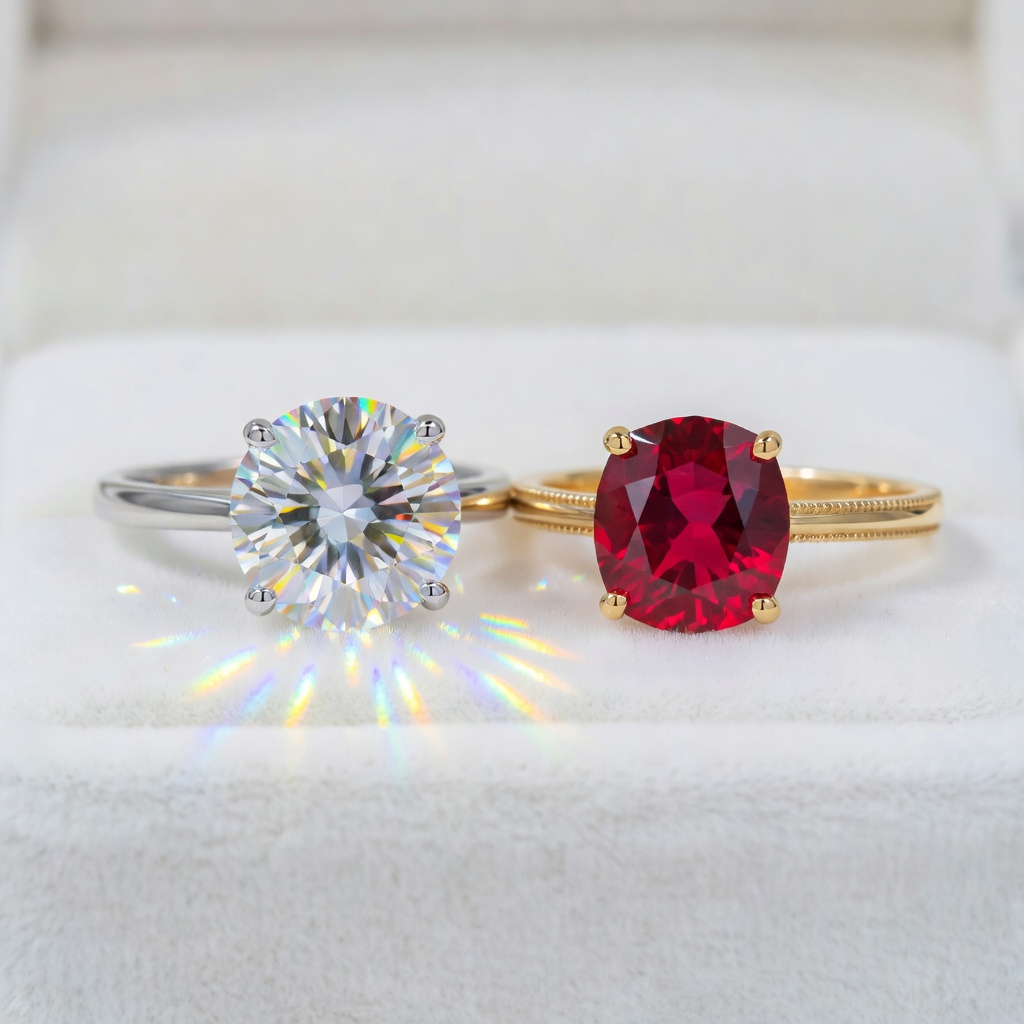
Determining optimal settings for moissanite vs spinel engagement rings and fashion jewelry requires matching each stone's physical properties and visual characteristics to specific design aesthetics and wearing occasions. Moissanite excels in high-wear applications requiring maximum durability and light performance, making it ideal for classic solitaire engagement rings worn daily, stud earrings that withstand sleeping and showering without removal, and tennis bracelets subjected to frequent wrist contact with hard surfaces. The stone's exceptional brilliance allows it to perform magnificently in minimal prong settings that expose maximum surface area to light, with four or six prong configurations in white gold or platinum enhancing the stone's diamond-like appearance while allowing the rainbow fire to display fully from all angles.
Spinel finds its perfect expression in jewelry designs that prioritize color impact and artistic settings over brute durability, flourishing in cocktail rings meant for evening wear, vintage-inspired halo designs that protect the girdle with surrounding diamonds or smaller spinels, and pendant necklaces that receive less physical impact than rings. The gemstone's rich color palette pairs magnificently with warm metal tones, with yellow gold enhancing red and orange spinels while rose gold complements pink and lavender varieties, contrasting with moissanite's traditional pairing with white metals to simulate diamond. Setting recommendations for spinel emphasize protection through bezel settings, partial bezels, or substantial prongs that guard the stone's edges, particularly important for step cuts or marquise shapes with vulnerable points, while moissanite can safely utilize delicate wire prongs or tension settings that would prove too risky for softer gemstones, allowing for more contemporary and minimalist design expressions.
Design Case Study: The Dual-Stone Approach
Consider the " Aurora" ring design commissioned by a client seeking both durability and color: a 1.5-carat colorless moissanite center stone in a delicate platinum six-prong setting provides the primary sparkle and daily-wear resilience, flanked by two trilliant-cut cobalt blue spinels in protective bezel settings that add unique color accents without exposure to the same wear patterns as the center stone. This combination allows the wearer to enjoy moissanite's practicality while incorporating spinel's rare beauty in a protected capacity, demonstrating how both stones can coexist in a complementary jewelry collection rather than forcing an either/or decision.
Maintenance, Care, and Cleaning Requirements
The care routines for these gemstones reflect their hardness differences and structural characteristics, with moissanite offering nearly maintenance-free ownership while spinel requires more attentive handling to preserve its beauty over generations. Moissanite's chemical inertness and heat resistance make it compatible with ultrasonic cleaners, steam cleaning, and standard jewelry cleaning solutions without risk of damage, allowing owners to maintain brilliance through simple at-home cleaning or professional jeweler services using aggressive methods that would destroy softer stones. The material's resistance to scratching means that polishing and repolishing are rarely necessary, and the stone maintains its optical properties indefinitely without special storage requirements beyond standard protection from other diamonds that might scratch it.
Spinel demands more nuanced care protocols due to its 8.0 hardness and potential inclusions that might react poorly to ultrasonic vibrations or thermal shock, necessitating gentle cleaning with warm soapy water and soft brushes only, avoiding steam or ultrasonic machines that could exacerbate existing fractures or loosen settings. Storage recommendations emphasize separate compartments or individual soft pouches, particularly when storing spinel alongside moissanite or diamond jewelry that could scratch its surface over time, with annual professional inspections recommended for moissanite settings to check prong security, while spinel settings benefit from bi-annual inspections to monitor for wear on protective bezels or potential chipping at the girdle. For travel, moissanite can be worn without concern through airport security or beach vacations, while spinel rings should be removed during activities involving hard impacts, chemical exposure (including chlorine and household cleaners), or extreme temperature changes that might stress internal inclusions.
Maintenance Schedule Template
Create a jewelry care calendar: For moissanite pieces, schedule professional cleaning and prong inspection annually, with weekly at-home cleaning using mild dish soap and a soft toothbrush to remove skin oils that temporarily reduce brilliance. For spinel jewelry, establish bi-annual professional checks focusing on setting integrity and surface condition, with immediate removal during gym workouts, gardening, or kitchen work, storing in a dedicated compartment of your jewelry box lined with anti-tarnish fabric to prevent accidental contact with harder gemstones.
Ethical Considerations and Sustainability
Evaluating ethical gemstones requires examining the supply chain origins and environmental footprints of both moissanite and spinel, with each presenting distinct advantages and challenges for the conscientious consumer. Moissanite carries one of the most environmentally friendly profiles in the fine jewelry industry, requiring zero mining activity, minimal water usage, and generating negligible carbon emissions compared to extracted gemstones, with leading manufacturers utilizing renewable energy sources and closed-loop production systems that minimize waste. The lab-created nature eliminates concerns regarding conflict financing, child labor, or dangerous mining conditions, providing complete transparency from raw materials to finished gemstone, though buyers should verify that their specific retailer sources from reputable labs with fair labor practices rather than cut-rate overseas facilities with questionable worker protections.
Natural spinel sourcing demands careful due diligence regarding mining ethics, as significant deposits occur in Myanmar (formerly Burma), where military-controlled mining operations raise concerns about human rights violations and conflict financing, contrasting with more ethically sourced material from Vietnam, Tanzania, or Sri Lanka where artisanal mining cooperatives often operate with greater transparency. Certification differences prove crucial for verification: moissanite certificates typically emphasize cut quality, color grade, and dimensions rather than origin, while spinel documentation should include country of origin, treatment disclosure (particularly heating), and ideally, chain-of-custody documentation for high-value specimens. Consumer transparency requirements mandate that sellers clearly disclose moissanite's lab-grown status to prevent diamond misrepresentation, while spinel should be accurately represented as natural rather than synthetic, with both gemstones benefiting from third-party grading reports from respected laboratories such as GIA (Gemological Institute of America) or IGI (International Gemological Institute) to verify claims and ensure fair pricing.
Ethical Shopping Checklist
When purchasing either gemstone, request documentation regarding carbon footprint for moissanite (some labs provide environmental impact statements) and origin certificates for spinel avoiding Myanmar sources if human rights concerns are paramount. For moissanite, verify the seller provides explicit written confirmation that the stone is laboratory-created silicon carbide rather than diamond simulant or cubic zirconia, ensuring you receive the durability and optical properties you paid for. For spinel purchases over $1,000, insist on a GIA report or equivalent verifying natural origin and any treatments, protecting your investment while supporting transparent supply chains.
Final Verdict: Choosing Your Perfect Stone
The decision between moissanite vs spinel ultimately hinges on personal priorities regarding durability, color preference, budget allocation, and wearing lifestyle, with each stone serving distinct niches within the fine jewelry spectrum. Choose moissanite if you prioritize maximum sparkle that withstands daily abuse, seek budget predictability with consistent pricing regardless of market fluctuations, require a stone that tolerates ultrasonic cleaning and rough handling, or desire a diamond-like appearance without ethical mining concerns; this gemstone serves active professionals, athletes, and practical romantics who view jewelry as adornment meant for constant enjoyment rather than careful preservation. Conversely, select spinel if you value unique color expression impossible to replicate synthetically, appreciate natural rarity with potential investment upside, prefer vintage aesthetics and historical significance, or seek a conversation piece that distinguishes itself from the increasingly common moissanite engagement rings populating social media feeds.
Lifestyle considerations should heavily influence this decision: individuals working in healthcare, construction, or active parenting roles benefit from moissanite's resilience, while those in artistic, academic, or ceremonial professions might find spinel's sophisticated color more aligned with their personal brand and wearing patterns. Rather than viewing this as an exclusive choice, sophisticated collectors increasingly incorporate both stones into complementary jewelry wardrobes—moissanite for everyday studs and wedding sets that endure constant wear, supplemented by spinel cocktail rings and pendants reserved for special occasions where their color and rarity receive the admiration they deserve. This dual approach maximizes the practical benefits of modern laboratory creation while preserving appreciation for geological wonders, ensuring your jewelry collection serves every aspect of your life from morning workouts to gala evenings.
Frequently Asked Questions
Which is better for an engagement ring, moissanite or spinel?
Moissanite is generally superior for engagement rings due to its 9.25 Mohs hardness rating, exceptional durability, and brilliant sparkle that withstands daily wear. Spinel, while beautiful, ranks 8.0 on the Mohs scale and is better suited for occasional wear or protective settings rather than daily-wear engagement rings.
Can the average person tell the difference between moissanite and spinel?
Yes, most people can distinguish between them with observation. Moissanite displays intense rainbow fire (double refraction) and extreme brilliance similar to a diamond, while spinel shows single refraction with pure, saturated color and a more subtle glow. Spinel lacks the disco-ball effect characteristic of moissanite.
Is natural spinel more valuable than lab-created moissanite?
High-quality natural spinel, particularly red or cobalt blue varieties, often commands higher prices per carat than moissanite and can appreciate in value. However, moissanite offers consistent, affordable pricing ($400-$600/carat) and better durability, making it more practical for everyday jewelry despite lower rarity.
Does moissanite sparkle more than spinel?
Yes, moissanite has a higher refractive index (2.65-2.69) compared to spinel (1.71-1.73), resulting in significantly more brilliance and fire. Moissanite's double refraction creates a distinctive rainbow sparkle, while spinel offers a more subdued, elegant luster focused on depth of color rather than light dispersion.
Are both moissanite and spinel available in lab-created versions?
While moissanite is exclusively lab-created for jewelry (natural moissanite is extremely rare), spinel is available in both natural and synthetic forms. Lab-created spinel exists but is less common in fine jewelry than natural spinel, whereas moissanite jewelry relies entirely on laboratory production.
Which gemstone offers better color options?
Spinel offers vastly superior color variety, occurring naturally in virtually every hue including vivid red, cobalt blue, hot pink, purple, orange, and black. Moissanite is primarily available in colorless to near-colorless shades, with limited fancy color options (green, blue, gray) that are less common and often less vivid than spinel's natural palette.
Is spinel a good alternative to moissanite if I want something unique?
Absolutely. If you prioritize individuality and color over brilliance, spinel provides rare, natural beauty with each stone being unique. Unlike the standardized appearance of moissanite, spinel offers distinctive inclusions and color variations that appeal to collectors and those seeking one-of-a-kind jewelry pieces with historical significance.
Which stone requires more maintenance over time?
Spinel requires more careful maintenance due to its softer nature (8.0 Mohs) and potential for scratching. It should avoid ultrasonic cleaning and harsh chemicals. Moissanite is nearly maintenance-free, resisting scratching, heat, and chemicals, making it ideal for those who prefer low-maintenance fine jewelry.