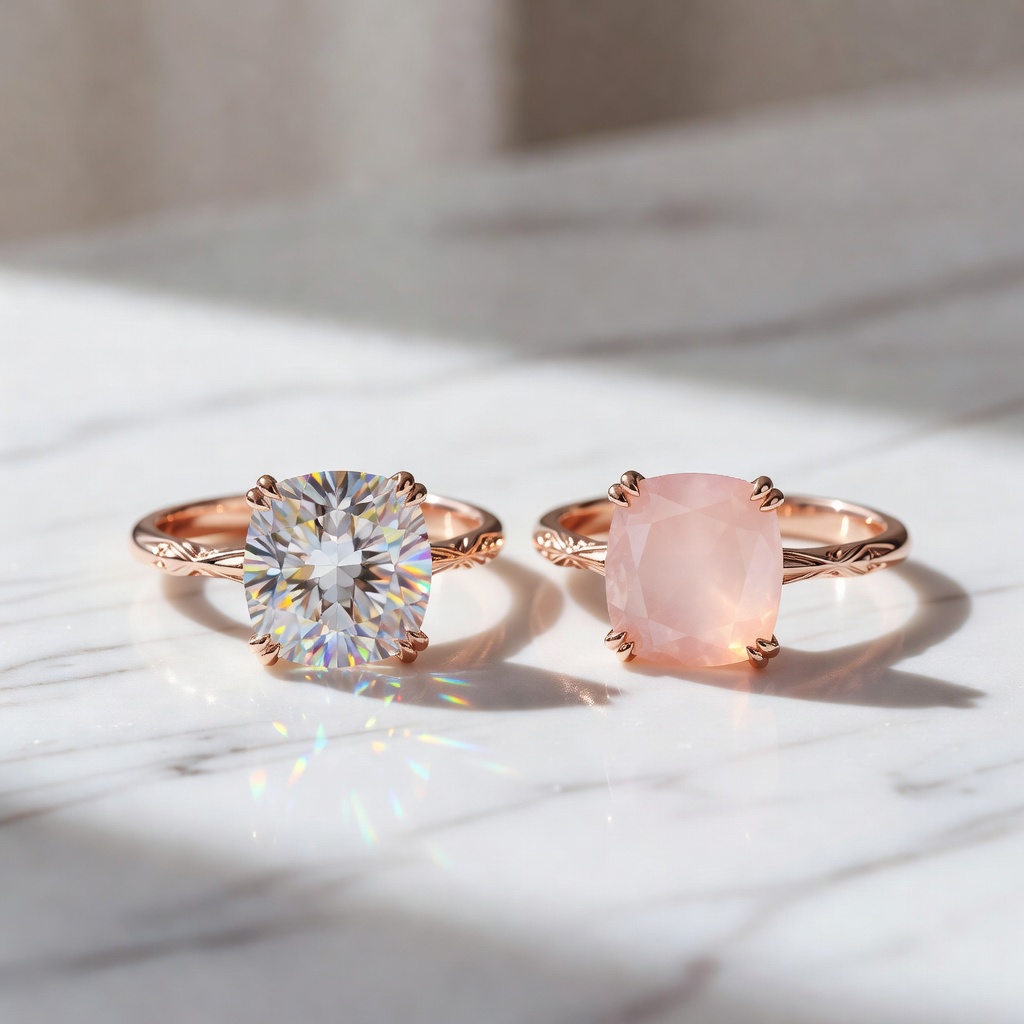
Understanding Moissanite vs Morganite: Origins and Composition
When exploring the world of affordable engagement ring stones, understanding the fundamental differences between moissanite and morganite begins with their fascinating origins and chemical compositions. Moissanite is a lab-created silicon carbide gemstone that was originally discovered in microscopic quantities within a meteorite crater by Nobel Prize-winning chemist Henri Moissan in 1893, giving this stone its literally cosmic origins. Unlike natural gemstones formed over millions of years beneath the earth's crust, modern moissanite is synthesized in controlled laboratory environments using advanced technology that replicates the intense heat and pressure necessary to create this diamond-like material. This scientific approach ensures consistent quality and ethical sourcing, making moissanite a diamond alternative that appeals to environmentally conscious consumers seeking guaranteed conflict-free origins.
Morganite, conversely, belongs to the prestigious beryl family, sharing its lineage with emeralds and aquamarines as a natural variety formed deep within pegmatite deposits. This delicate pink to peach gemstone derives its romantic coloration from manganese content present during its crystallization process, with deposits primarily found in Brazil, Madagascar, and Afghanistan. Unlike its lab-created counterpart, morganite is mined from the earth, making it an attractive option for those who value natural origin and the unique characteristics that millions of years of geological formation impart. The growing popularity of both stones reflects a significant shift in consumer preferences toward ethical and affordable alternatives to traditional diamonds, though they serve distinctly different aesthetic and practical purposes in fine jewelry.
Visual Appearance: Color, Clarity, and Size Considerations
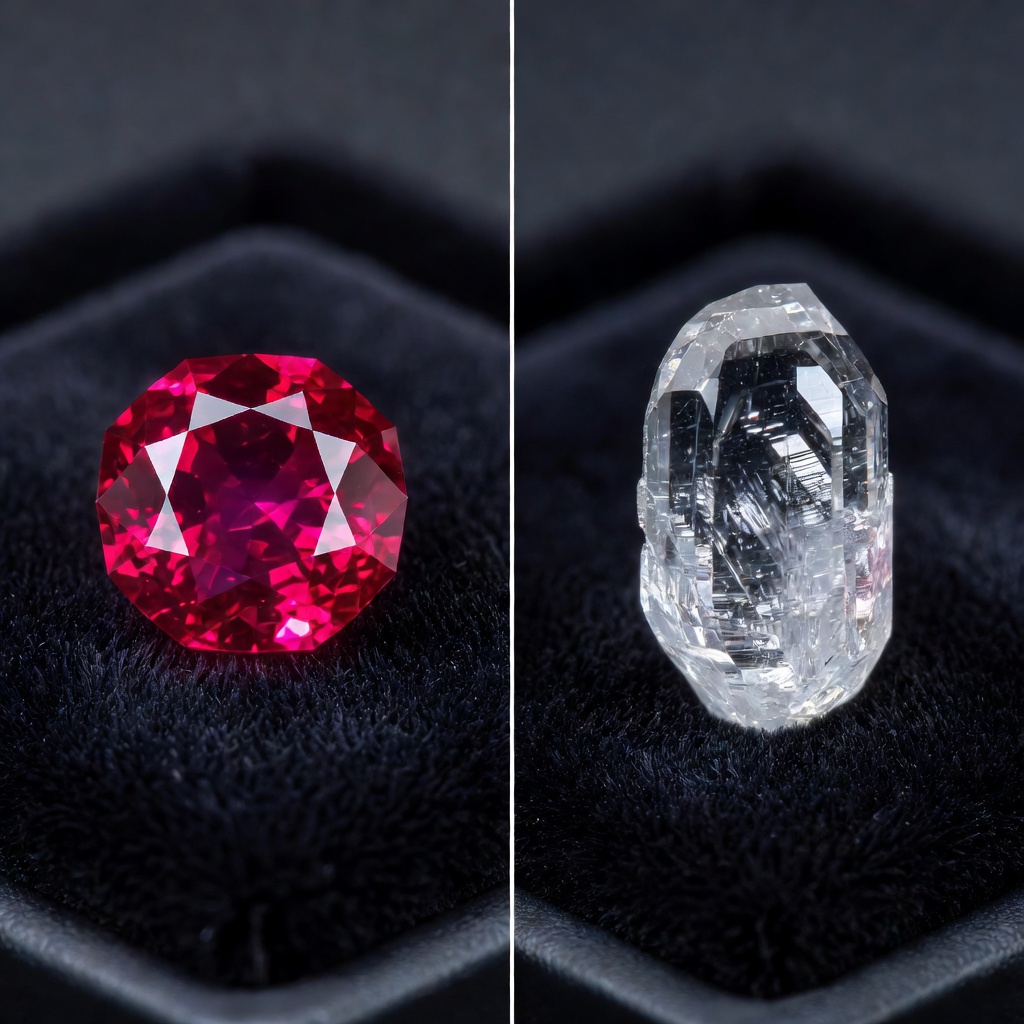
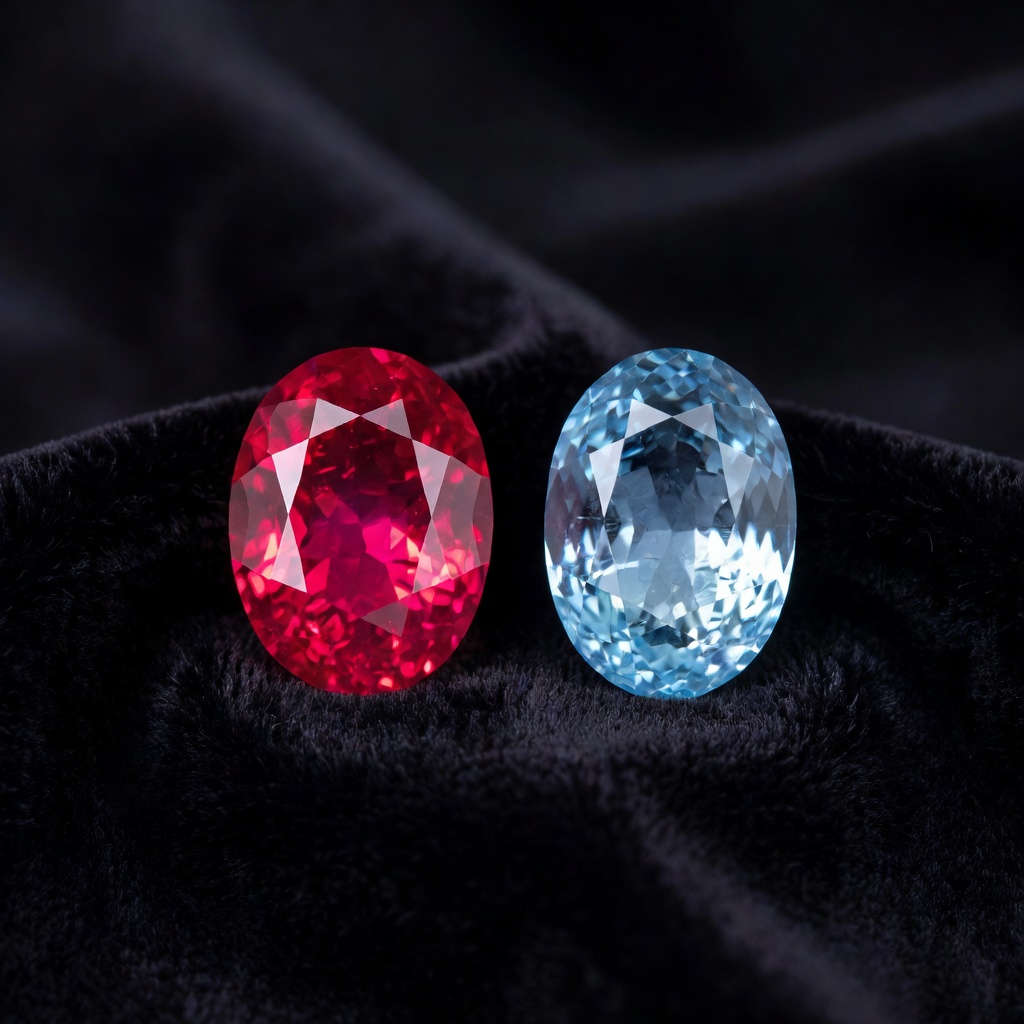
The visual distinction between these gemstones represents one of the most significant factors in the moissanite vs morganite decision-making process, particularly for engagement ring shoppers seeking specific aesthetic outcomes. Morganite displays a distinctive romantic palette ranging from soft pastel pink to vivid peach and salmon hues, with the most prized specimens exhibiting a saturated pink color caused by higher manganese concentrations. These warm tones make pink morganite engagement rings particularly popular among those desiring feminine, vintage-inspired jewelry that stands apart from traditional colorless stones. The color intensity significantly affects value, with deeper pink specimens commanding premium prices compared to lighter, more peach-toned varieties.
Moissanite presents a dramatically different visual profile, primarily offering colorless to near-colorless appearance that falls within the D-F color range on the diamond grading scale, though fancy colored varieties including yellow, green, and gray are increasingly available. This colorless characteristic positions moissanite as a moissanite diamond alternative that closely mimics the traditional bridal aesthetic while offering superior fire and brilliance. When examining clarity, moissanite is typically manufactured to be eye-clean with minimal inclusions visible even under magnification, whereas morganite often contains natural inclusions, feathers, or liquid-filled cavities that are characteristic of its natural formation process. Additionally, carat weight creates different visual impacts between these stones due to density variations; moissanite has a higher specific gravity than morganite, meaning a one-carat moissanite will appear slightly smaller than a one-carat morganite stone, an important consideration when selecting your ideal center stone size.
Durability and Hardness: Daily Wear Practicality
Gemstone durability comparison represents a critical evaluation point for engagement rings intended to withstand decades of daily wear and potential impacts. On the Mohs hardness scale, which measures a mineral's resistance to scratching, moissanite scores an impressive 9.25, making it the second-hardest gemstone used in jewelry and exceptionally suitable for active lifestyles. This remarkable hardness means moissanite resists scratches from household dust, accidental bumps against countertops, and the general abrasions that occur during everyday activities, maintaining its polish and surface integrity indefinitely. For professionals working with their hands, athletes, or individuals with active hobbies, moissanite offers peace of mind that the stone will endure without showing signs of wear.
Morganite ranks between 7.5 and 8 on the Mohs scale, which while suitable for jewelry, places it in a category requiring more mindful handling and protective considerations. More concerning than the hardness rating alone is morganite's perfect cleavage in one direction, a structural characteristic that makes the stone susceptible to chipping or splitting if struck with sufficient force at the correct angle. Daily wear over years or decades may result in surface abrasions, facet junction rounding, and microscopic chips along the girdle edge, particularly in prong-set solitaire designs that leave the stone vulnerable. While morganite can certainly last generations with proper care, owners should anticipate potential re-polishing every few years to restore the stone's original luster, whereas moissanite essentially maintains its appearance forever with basic cleaning.
Moissanite vs Morganite: Comprehensive Comparison
| Characteristic | Moissanite | Morganite |
|---|---|---|
| Mohs Hardness | 9.25 (Exceptional) | 7.5-8 (Moderate) |
| Refractive Index | 2.65-2.69 (Higher than diamond) | 1.57-1.58 (Vitreous luster) |
| Color Range | Colorless (D-F) to fancy colors | Pink, peach, salmon, coral |
| Dispersion/Fire | 0.104 (Intense rainbow fire) | Low (Soft, subtle glow) |
| Origin | Lab-created (Silicon Carbide) | Natural (Beryl variety) |
| Price per Carat | $400 - $1,200 | $100 - $500 |
| Clarity | Typically eye-clean, manufactured | Often contains natural inclusions |
| Best Settings | Any prong style, versatile | Bezel or halo for protection |
| Daily Wear Suitability | Excellent for active lifestyles | Requires careful handling |
| Maintenance | Minimal, soap and water cleaning | Regular professional polishing recommended |
Brilliance, Fire, and Light Performance Analysis
The optical properties of these gemstones create distinctly different visual experiences that significantly influence their appeal in various lighting environments and settings. Moissanite possesses a refractive index of 2.65-2.69, which actually exceeds that of diamond (2.42), resulting in exceptional brilliance and light return that creates intense scintillation. This high refractive index combined with a dispersion rating of 0.104—more than double that of diamond—produces the characteristic moissanite fire and brilliance featuring vivid rainbow-colored flashes that dance across the stone's surface. Under close inspection, moissanite exhibits double refraction, meaning light splits into two rays as it passes through the crystal structure, creating a facet-doubling effect visible under magnification that distinguishes it from singly refractive diamonds.
Morganite offers a fundamentally different light performance characterized by a soft, warm glow rather than brilliant sparkle, with a refractive index of 1.57-1.58 that creates a gentle vitreous luster similar to other beryl varieties. Rather than dispersing light into spectral colors, morganite transmits light with a subtle, romantic illumination that complements vintage and antique-inspired jewelry designs. This subdued optical performance means morganite color vs moissanite clarity presents a choice between warm, glowing color and dazzling brilliance. For evening events or candlelit dinners, morganite's gentle shimmer creates an intimate, feminine aesthetic, while moissanite delivers maximum impact under bright lighting conditions where its fire and brilliance reach full potential. Case studies from jewelry designers indicate that clients seeking "quiet luxury" often gravitate toward morganite's understated elegance, while those wanting maximum visual impact prefer moissanite's spectacular light show.
Price Comparison and Value Proposition
Both gemstones offer significant advantages as affordable engagement ring stones, though their pricing structures reflect different market dynamics and production methods. Moissanite typically ranges from $400 to $1,200 per carat depending on color grade, cut quality, and whether the stone is premium colorless or near-colorless, representing a fraction of diamond pricing while maintaining similar visual characteristics. This price point allows couples to select larger center stones—often two to three carats equivalent—while remaining within modest budgets that might only afford half-carat diamonds. The value proposition extends beyond initial purchase price, as moissanite's durability eliminates future costs associated with repairs, re-polishing, or potential replacement due to damage.
Morganite presents an even more accessible entry point, with high-quality stones typically ranging from $100 to $500 per carat, though exceptional specimens with vivid pink saturation may command higher prices. The affordability of larger morganite stones enables dramatic cocktail ring styles or substantial engagement ring center stones without the exponential price increases seen in diamonds or even moissanite. However, potential buyers should factor in long-term maintenance costs; while morganite costs less initially, periodic professional re-polishing to address surface wear may accumulate costs over decades of ownership. Value retention differs significantly between the two: moissanite maintains relatively stable pricing due to controlled laboratory production, while morganite values fluctuate based on mining yields, color trends, and the availability of fine-quality rough material from specific geographic regions.
Optimal Settings and Metal Pairings
Selecting appropriate settings and metals can enhance each gemstone's natural beauty while addressing their specific durability requirements and color characteristics. Pink morganite engagement rings achieve their maximum aesthetic impact when paired with rose gold, as the warm pink tones of the metal harmonize with and intensify the stone's natural peachy-pink coloration, creating a cohesive, romantic appearance that has dominated bridal trends for the past decade. Yellow gold settings also complement morganite's warmth, while white metals may create a slight contrast that some find jarring against the stone's warm undertones. Practical considerations necessitate protective settings for morganite; bezel settings that encircle the stone's perimeter or halo designs that provide a buffer against impacts are strongly recommended to prevent chipping, particularly for stones over two carats where the risk increases due to size.
Moissanite offers exceptional versatility across all metal types, appearing equally stunning in cool white gold or platinum settings that enhance its diamond-like colorless appearance, or in yellow and rose gold where it provides a brilliant neutral contrast. Unlike morganite, moissanite does not require protective settings for durability reasons, allowing for delicate prong settings, tension settings, or modern minimalist designs that maximize light exposure. When selecting accent stones, diamond side stones create a seamless sparkle continuum with moissanite center stones, while morganite pairs beautifully with complementary colored gemstones such as peach sapphires, pink tourmaline, or champagne diamonds that create a harmonious color story. Jewelry professionals often recommend six-prong settings for larger moissanite stones to ensure security given the investment value, while four-prong settings remain popular for morganite to maximize light exposure while maintaining reasonable protection.
Maintenance Requirements and Long-term Care
Understanding the distinct care requirements for each stone ensures your engagement ring maintains its beauty through decades of marriage and daily activities. Moissanite requires remarkably minimal maintenance due to its hardness and resistance to oil and dirt adhesion; simple cleaning with mild soap, warm water, and a soft toothbrush effectively removes buildup and restores maximum brilliance. Unlike softer stones, moissanite can withstand ultrasonic cleaning devices and steam cleaners used by professional jewelers without risk of damage, making professional maintenance quick and inexpensive. The stone's chemical stability means it resists clouding, etching, or discoloration from exposure to household chemicals, cosmetics, or environmental factors, essentially maintaining its original appearance with only basic hygiene practices.
Morganite demands more attentive care to preserve its surface quality and prevent the accumulation of scratches that can dull its luster over time. Owners should clean morganite using only lukewarm water with mild dish soap and a very soft brush, avoiding harsh scrubbing that could exacerbate existing surface wear or cause microscopic scratches. Ultrasonic cleaners and steam cleaning are generally not recommended for morganite due to the risk of exacerbating internal inclusions or causing thermal shock to the stone's cleavage planes. Professional re-polishing every three to five years removes surface abrasions and restores the stone's original vitreous luster, a service that typically costs between $50 and $150 depending on the stone's size and the complexity of the setting. Storage requires separate compartments or soft pouches to prevent contact with harder stones like diamonds, sapphires, or even moissanite that could scratch morganite's surface, whereas moissanite can be stored safely alongside other jewelry without risk of damage.
Lifestyle Matching: Which Stone Fits Your Needs?
Selecting between these gemstones requires honest assessment of your daily activities, professional environment, and personal style preferences to ensure long-term satisfaction with your choice. For individuals with active lifestyles—including medical professionals who wash hands frequently, construction workers, fitness enthusiasts, or parents of young children—moissanite presents the clear advantage due to its scratch resistance and immunity to the bumps and impacts that occur during physical activity. Case studies from jewelry insurance companies indicate that moissanite claims for damage are exceedingly rare compared to softer gemstones, offering peace of mind for those who cannot constantly monitor their jewelry's safety.
Fashion-forward individuals drawn to unique, romantic aesthetics often find morganite perfectly aligns with their personal style, particularly those who favor vintage-inspired clothing, soft color palettes, and feminine design elements. The distinctive pink color makes a bold statement in conservative professional environments where traditional clear stones dominate, allowing the wearer to express individuality while maintaining sophistication. Sentimental considerations also influence this decision; those who value the romance of natural earth-mined stones and the geological history embedded within their jewelry often prefer morganite, while tech-forward consumers, engineers, and those prioritizing environmental sustainability frequently gravitate toward the scientific achievement and guaranteed ethical sourcing of laboratory-created moissanite. Couples should also consider their future lifestyle changes—while morganite suits current low-impact activities, major life changes such as starting a family or changing careers to more hands-on work might make moissanite the more practical long-term choice.
Final Verdict: Making Your Decision
When weighing moissanite vs morganite for your engagement ring or fine jewelry purchase, the decision ultimately hinges on prioritizing durability and brilliance versus unique color and natural origin. Choose moissanite if you require maximum durability for daily wear, desire diamond-like sparkle with intense fire, prefer colorless stones that match any wardrobe or metal color, and seek minimal maintenance requirements throughout your lifetime. This stone represents the practical choice for busy professionals, active individuals, and those who want traditional bridal aesthetics without diamond pricing.
Select morganite if you are drawn to distinctive pink or peach coloration, value natural earth-mined gemstones with geological history, prefer romantic and vintage-inspired aesthetics, and are willing to provide gentle care and accept potential surface wear over time. Morganite suits fashion-conscious individuals seeking statement pieces and those with less physically demanding lifestyles who can accommodate regular maintenance. Some couples opt for a hybrid approach, selecting moissanite for the primary engagement ring to ensure longevity while incorporating morganite into wedding bands, anniversary gifts, or fashion jewelry pieces worn on special occasions. Regardless of your choice, invest in comprehensive jewelry insurance that covers both accidental damage and loss, and select settings appropriate to your stone's durability needs to ensure your symbol of love endures for generations.
Frequently Asked Questions
Which is better for daily wear, moissanite or morganite?
Moissanite is significantly better for daily wear due to its 9.25 rating on the Mohs hardness scale, making it highly resistant to scratches and chips. Morganite, at 7.5-8 hardness, is softer and more prone to surface damage, requiring gentler handling and protective settings for everyday use.
Can you tell the difference between moissanite and morganite?
Yes, the differences are immediately obvious. Moissanite appears colorless or near-colorless with intense rainbow fire and brilliant sparkle. Morganite displays a distinct pink, peach, or salmon color with a softer, more subtle glow. Under magnification, moissanite shows double refraction (facet doubling) while morganite appears singly refractive.
Is morganite more expensive than moissanite?
Generally, no. Morganite typically costs $100-$500 per carat depending on color intensity, while moissanite ranges $400-$1,200 per carat. However, very large, high-quality morganite with vivid pink color can sometimes approach moissanite prices, though moissanite usually remains the more expensive option per carat.
Does morganite fade or change color over time?
Natural morganite is color-stable and will not fade with normal wear or light exposure. However, some treated morganite (heat-treated or irradiated) may show slight color changes over decades. Moissanite is completely color-stable and will never change hue regardless of environmental exposure.
Which looks more like a diamond, moissanite or morganite?
Moissanite looks much more like a diamond than morganite does. Moissanite shares diamond's colorless appearance, high brilliance, and fire (though moissanite's fire is more rainbow-colored). Morganite's distinct pink color immediately distinguishes it from diamonds, making it a unique choice rather than a diamond simulant.
Can morganite be worn in the shower?
While occasional showering won't immediately damage morganite, it's not recommended for daily exposure. Soap scum can build up in settings, reducing brilliance, and hard water deposits may affect the stone's surface over time. Additionally, sudden temperature changes in showers can stress the stone due to morganite's cleavage properties.
Is moissanite considered a precious gemstone?
Moissanite is classified as a semi-precious or fine gemstone rather than a precious gemstone (which traditionally includes diamond, ruby, sapphire, and emerald). However, it commands higher prices than many semi-precious stones due to its durability, optical properties, and the complexity of its laboratory creation process.
Which stone is better for an engagement ring?
Moissanite is generally better for engagement rings intended for daily, lifelong wear due to superior durability and scratch resistance. However, morganite is an excellent choice for those seeking a unique, romantic pink stone who are willing to provide gentle care and accept potential surface wear over time. The choice depends on lifestyle, aesthetic preferences, and maintenance willingness.