Introduction: Two Distinct Paths in Gemstone Jewelry
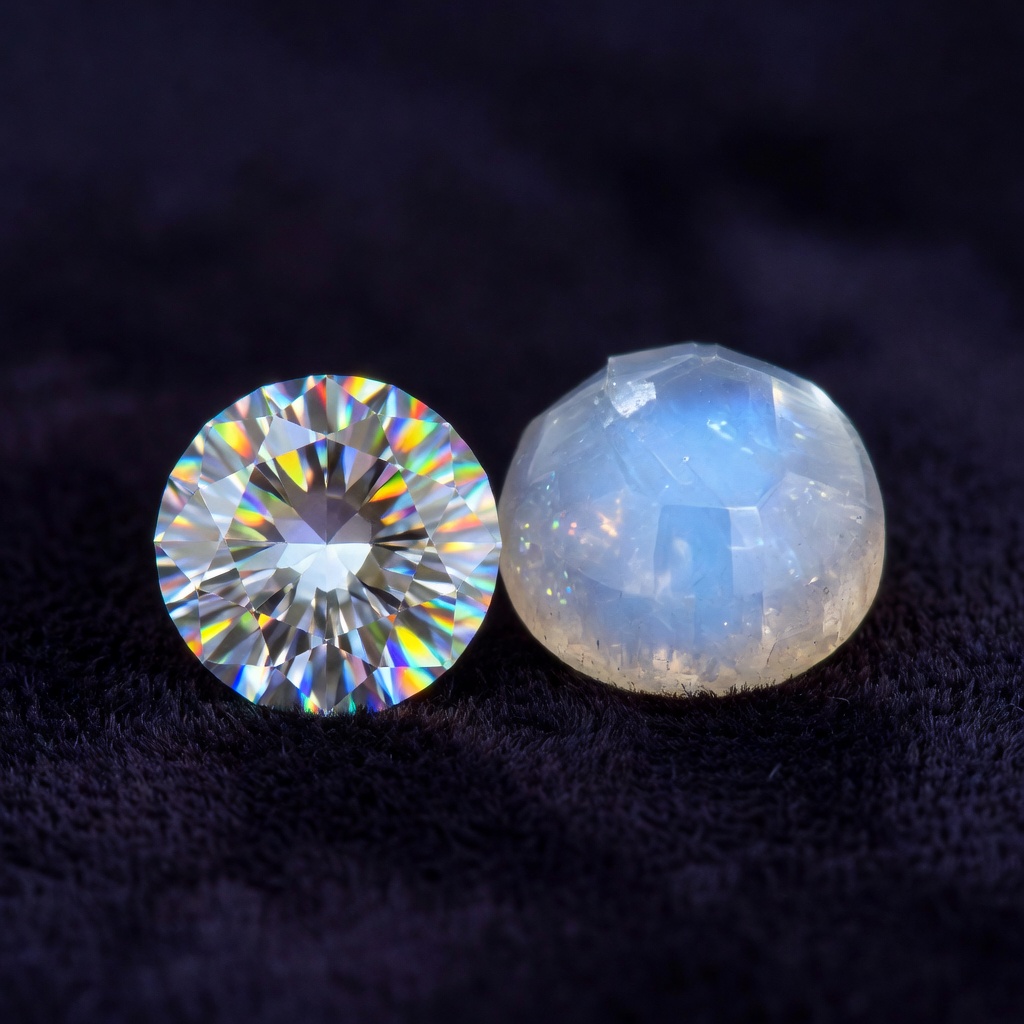
When searching for the perfect gemstone to symbolize commitment or elevate personal style, the Moissanite vs Moonstone comparison presents two fascinating yet fundamentally different paths. Moissanite has emerged as a premier diamond alternative known for exceptional brilliance and durability, capturing the hearts of couples seeking sustainable luxury without compromise. In contrast, moonstone enchants with its mystical feldspar composition and ethereal optical phenomena, appealing to free spirits and romantics who value uniqueness over traditional sparkle. Understanding the fundamental differences between these alternative engagement ring stones becomes essential before making a significant purchasing decision, as each gem serves distinctly different lifestyle needs and aesthetic preferences. This comprehensive guide examines critical comparison criteria including hardness ratings, visual characteristics, maintenance requirements, and ideal applications to help you determine which gemstone aligns perfectly with your personal narrative and daily routine.
Origins, Composition, and Ethical Sourcing
The geological and synthetic origins of these gemstones reveal fascinating stories that influence modern purchasing decisions. Natural moissanite was first discovered in 1893 by French scientist Henri Moissan within the remnants of a meteor crater in Arizona, leading many to nickname it "space diamond" or "stardust gem." However, because naturally occurring moissanite remains exceedingly rare and microscopic in size, virtually all moissanite engagement rings feature lab created moissanite synthesized from silicon carbide in controlled laboratory environments. This modern production method ensures consistent quality while eliminating environmental disruption associated with traditional mining operations.
Moonstone, conversely, forms through slow geological processes as orthoclase feldspar with intricate layered albite structures that create its signature optical effects. Major deposits occur in Sri Lanka, India, Madagascar, and the United States, with miners extracting rough material through traditional pit mining or alluvial deposits. While moonstone mining generally creates less environmental impact than diamond excavation, it still involves land disturbance and potential labor concerns in certain regions. When evaluating Lab created moissanite against mined moonstone, environmentally conscious consumers often appreciate that moissanite production requires no habitat destruction or community displacement, offering complete sourcing transparency that appeals to ethically minded buyers.
Visual Characteristics and Optical Phenomena
The visual distinction between these gemstones represents perhaps their most striking difference, with each displaying unique optical signatures that appeal to different aesthetic sensibilities. Moissanite exhibits double refraction, meaning light entering the stone splits into two distinct rays, creating a fiery display with intense rainbow dispersion that often exceeds even diamond brilliance. This characteristic Moissanite brilliance manifests as sharp, colorful flashes of light that dance across faceted surfaces, particularly noticeable under direct lighting conditions or sunlight. Gem cutters optimize this effect through brilliant faceting patterns featuring 57 or 58 precisely angled facets that maximize light return and scintillation.
Moonstone captivates through an entirely different optical phenomenon known as Moonstone adularescence, a billowy, floating light effect that appears to move across the stone's surface as you tilt it. This ethereal glow results from light scattering between microscopic layers of orthoclase and albite feldspar, creating a soft, milky sheen traditionally described as resembling moonlight floating on water. Unlike moissanite's sharp sparkle, moonstone displays a gentle, diffuse glow that appears three-dimensional and organic. While moissanite performs best in faceted brilliant cuts that enhance its fire, moonstone traditionally receives cabochon cuts—smooth, domed, and polished without facets—to best display adularescence. Color ranges further differentiate these gems: moissanite spans colorless (D-E-F range) through fancy yellows, greens, and blues, while moonstone varieties include classic white, premium blue, rare rainbow specimens displaying multiple colors, and warm peach or pink tones.
Practical Viewing Tips
When examining moissanite, request viewing under various lighting conditions including natural daylight, LED spotlights, and candlelight to appreciate its full dispersion capabilities. For moonstone evaluation, hold the gem at arm's length under a single diffused light source, then slowly tilt it to observe how the adularescent sheen moves across the dome; high-quality specimens will display a concentrated blue or white "eye" that remains distinct and mobile across the surface.
Durability, Hardness, and Daily Wearability
Gemstone hardness significantly impacts longevity and practicality, making this Gemstone hardness comparison crucial for prospective buyers intending daily wear. Moissanite ranks 9.25 on the Mohs hardness scale, positioning it just below diamond (10) and alongside corundum varieties like ruby and sapphire. This exceptional hardness renders moissanite highly resistant to scratching, abrasion, and surface damage encountered during everyday activities such as typing, cooking, or gardening. The stone's toughness—resistance to chipping and breaking—also proves superior due to its uniform crystalline structure without cleavage planes.
Moonstone presents a more delicate profile, ranking 6-6.5 on the Mohs scale with perfect cleavage in two directions, meaning it possesses internal planes where the crystal structure separates cleanly under stress. This characteristic makes moonstone vulnerable to chipping, cracking, or splitting if struck against hard surfaces or subjected to pressure. For active individuals or those seeking durable gemstones for daily wear in engagement rings, moissanite offers worry-free longevity, while moonstone requires protective settings and mindful wear. Consider the case of a yoga instructor who wears her ring during classes: moissanite withstands accidental impacts against metal equipment, whereas moonstone risks damage from similar incidents. Those choosing moonstone should reserve it for pendants, earrings, or occasional-wear rings, while moissanite accommodates twenty-four-hour wear including gym sessions, rock climbing, and manual labor.
Damage Prevention Strategies
If selecting moonstone despite durability concerns, insist on bezel settings that wrap the gem's perimeter with protective metal rims, avoid wearing the piece during housework or exercise, and remove the jewelry before sleeping to prevent accidental impacts against nightstands or headboards. Moissanite wearers enjoy greater flexibility, though removing any fine jewelry before extreme sports or heavy manual labor remains prudent practice.
Clarity Standards and Quality Grading
Clarity expectations differ substantially between these gemstones due to their distinct formation processes and industry standards. Colorless moissanite typically achieves clarity grades ranging from VS (Very Slightly Included) to FL (Flawless), with modern laboratory production techniques ensuring consistent eye-clean appearance free from visible inclusions. Manufacturers can control the growth environment to minimize internal characteristics, resulting in gems that appear pristine to the naked eye without magnification. This consistency allows buyers to focus primarily on cut quality and color grade when selecting moissanite.
High quality moonstone follows different grading paradigms where inclusions prove not only common but sometimes desirable. Because moonstone forms through complex geological layering, internal characteristics including tiny tension cracks, known as "centipedes," and microscopic crystal inclusions frequently appear. However, excessive inclusions or opaque areas can diminish adularescence by blocking light transmission through the stone. Premium moonstone specimens exhibit high transparency with minimal visible inclusions that do not interfere with the floating light effect. When evaluating moonstone, position the cabochon against dark fabric and rotate it slowly; the adularescence should appear as a distinct, mobile glow rather than being diffused or obscured by cloudiness. Certification differs between the stones: moissanite often includes certificates of authenticity and quality from manufacturers like Charles & Colvard or Forever One, while moonstone typically relies on gemological reports verifying natural origin and treatment status rather than standardized clarity grades.
Price Analysis and Value Retention
Understanding Moissanite price vs moonstone dynamics helps budget-conscious buyers maximize their investment while achieving desired aesthetic outcomes. Moissanite typically costs approximately $400-$600 per carat for premium colorless grades, offering remarkable affordability compared to diamonds while maintaining consistent pricing structures regardless of specific retailer. This price stability stems from controlled laboratory production and standardized grading systems that eliminate the premium fluctuations associated with rare natural specimens.
Moonstone pricing varies considerably based on adularescence quality, body color, transparency, and origin, ranging from $10 per carat for commercial white material to over $1,000 per carat for premium blue moonstone with strong, centered adularescence from Sri Lanka or Myanmar. Rainbow moonstone and peach varieties occupy middle price tiers depending on color intensity and optical effect strength. Regarding value retention, neither gemstone functions as a traditional investment vehicle like rare diamonds or colored stones; however, moissanite's durability ensures the piece remains physically pristine for generations, while moonstone's softer nature may necessitate replacement or re-polishing over decades of wear. For budget optimization, consider allocating moissanite funds toward engagement rings and wedding bands where longevity proves paramount, while moonstone offers affordable luxury for fashion jewelry, anniversary gifts, or birthstone pieces where replacement costs remain minimal.
Case Study: Budget Allocation
A couple with a $2,000 jewelry budget might allocate $1,200 toward a one-carat moissanite solitaire engagement ring set in platinum, ensuring heirloom-quality durability, then purchase a $400 moonstone pendant and $400 moonstone stud earrings for versatile fashion options, effectively maximizing both durability and variety within their financial constraints.
Ideal Jewelry Applications and Design Styles
Matching gemstone characteristics to appropriate jewelry applications ensures both beauty and longevity. Moissanite engagement rings represent the stone's most popular application, with the gem's durability supporting daily wear through decades of marriage while its brilliance rivals traditional diamond solitaires. Beyond engagement rings, moissanite excels in wedding bands, tennis bracelets, and statement earrings where sparkle and permanence take priority. The stone's versatility accommodates various cutting styles from classic rounds to fancy shapes like cushions, ovals, and radiant cuts, all optimized for maximum light performance.
Moonstone jewelry designs flourish in applications where protection from impact reduces damage risk. Pendants position the gem against the chest away from hand-based impacts, while earrings eliminate contact with hard surfaces entirely, making these ideal moonstone venues. Cocktail rings featuring moonstone create dramatic evening wear statements, though they require removal before physical activities. Metal pairings enhance each stone's unique properties: white gold or platinum complements moissanite's colorless brilliance and modern aesthetic, while yellow or rose gold warms moonstone's ethereal glow, enhancing its organic, bohemian appeal. Setting requirements differ significantly: moissanite tolerates delicate prong settings that maximize light entry, while moonstone demands protective bezels, substantial baskets, or halo designs that buffer the edges from accidental strikes.
Design Recommendations
For moissanite, consider six-prong solitaire settings that securely hold the gem while allowing maximum light return, or vintage-inspired halo designs that amplify the stone's already impressive presence. For moonstone, explore bezel-set pendants on long chains for layering, or stud earrings in martini settings that sit flush against the earlobe, protecting the gem's girdle from snagging and impact.
Maintenance Requirements and Care Instructions
Proper Gemstone care guide protocols extend the lifespan and beauty of both stones, though their maintenance needs diverge significantly due to hardness differences. Moissanite tolerates aggressive cleaning methods including ultrasonic cleaners and steam cleaning systems used by professional jewelers, as its hardness prevents cavitation damage and thermal shock. Home maintenance requires only mild dish soap, warm water, and a soft toothbrush to remove lotion buildup and skin oils that temporarily dull brilliance. The stone resists etching from household chemicals, chlorine exposure, and sunscreen contact, though occasional professional inspections ensure prong security.
Moonstone jewelry care demands gentler approaches due to its softer composition and cleavage vulnerabilities. Owners must strictly avoid ultrasonic cleaners, steam, and harsh chemical dips that can penetrate surface-reaching fractures or cause thermal shock. Clean moonstone using only lukewarm water with mild, phosphate-free soap and a soft cotton cloth, gently patting dry rather than rubbing. Store moonstone pieces separately in padded compartments or soft cloth pouches to prevent scratching from harder gems like diamonds, sapphires, or even moissanite. Professional maintenance should occur biannually with gentle polishing and setting inspection, while moissanite pieces tolerate annual comprehensive cleanings. Avoid exposing moonstone to prolonged direct sunlight, which may fade certain treated colors, and remove the gem before applying perfumes, hairsprays, or cosmetics that could accumulate in surface pits.
Symbolic Meanings and Lifestyle Considerations
Beyond physical properties, Gemstone symbolism influences emotional connections and personal significance attached to jewelry choices. Moissanite represents eternal love, innovation, and sustainable modern romance, appealing to couples who value scientific achievement and environmental responsibility alongside traditional commitment symbols. Its cosmic origin story—descending from stars through meteorites—adds romantic mythology about love written in the heavens, while its laboratory creation speaks to forward-thinking values and technological optimism.
Moonstone carries deep metaphysical associations with intuition, new beginnings, and feminine energy, revered by various cultures as a sacred stone connected to lunar deities and cyclical renewal. Ancient Romans believed moonstone formed from solidified moonbeams, while Hindu tradition considers it embedded with tangible moonlight. These associations make moonstone particularly meaningful for individuals embarking on new life chapters, seeking enhanced creativity, or honoring June birthdays as an alternative birthstone to pearl. Choosing the right gemstone involves honest lifestyle assessment: active outdoor enthusiasts, healthcare workers, and athletes align better with moissanite's indestructible nature, while spiritual practitioners, artists, and those with sedentary or office-based routines may comfortably accommodate moonstone's delicate beauty. Consider personality alignment as well—moissanite suits individuals who appreciate precision, consistency, and modern aesthetics, while moonstone resonates with those drawn to organic irregularity, mystical experiences, and vintage bohemian styles.
Final Verdict: Making Your Decision
The Moissanite vs Moonstone decision ultimately hinges on intended use, lifestyle compatibility, and aesthetic priorities rather than inherent superiority of either gem. For engagement ring shoppers seeking durability and sparkle comparable to diamonds at accessible price points, moissanite delivers unmatched performance with ethical production credentials. Fashion-forward buyers seeking unique optical effects and ethereal beauty for occasional wear or protected settings will find moonstone's adularescence irreplaceable and deeply evocative.
Consider building complementary jewelry collections that leverage both stones' strengths: moissanite for daily-wear foundational pieces like engagement rings and wedding bands, supplemented by moonstone fashion jewelry for spiritual significance and textural variety. This approach provides practical durability where needed while accommodating aesthetic diversity and symbolic richness.
Moissanite vs Moonstone Comparison Table
| Characteristic | Moissanite | Moonstone |
|---|---|---|
| Mohs Hardness | 9.25 (Excellent for daily wear) | 6-6.5 (Requires protection) |
| Optical Phenomenon | Double refraction with rainbow fire and brilliance | Adularescence with billowy, floating glow |
| Origin | Lab-created silicon carbide (rare natural form from meteorites) | Natural orthoclase feldspar (mined globally) |
| Typical Cut | Faceted brilliant cuts (round, cushion, oval) | Cabochon (domed, unfaceted) to display adularescence |
| Price Range (Per Carat) | $400-$600 (consistent pricing) | $10-$1,000+ (variable based on quality and adularescence) |
| Best Applications | Engagement rings, wedding bands, daily wear jewelry | Pendants, earrings, cocktail rings, occasional wear |
| Cleaning Method | Ultrasonic, steam, soap and water safe | Mild soap and water only; avoid ultrasonic/steam |
| Setting Requirements | Prong settings, delicate designs acceptable | Bezel or protective settings essential |
| Symbolism | Eternal love, innovation, cosmic connection | Intuition, new beginnings, feminine energy |
| Color Range | Colorless to fancy colors (yellow, green, blue) | White, blue, rainbow, peach, pink, gray |
Frequently Asked Questions
Which is more durable for daily wear, moissanite or moonstone?
Moissanite is significantly more durable with a Mohs hardness of 9.25, making it suitable for daily wear in engagement rings. Moonstone ranks 6-6.5 on the Mohs scale and has perfect cleavage, making it prone to scratching and chipping if worn daily, especially in rings.
Can moonstone be used for an engagement ring like moissanite?
While moonstone can be used for engagement rings, it requires protective settings like bezels and should be reserved for occasional wear or very careful owners. Moissanite is the superior choice for engagement rings intended for daily wear due to its diamond-like durability and resistance to damage.
Why does moissanite sparkle more than moonstone?
Moissanite has a higher refractive index (2.65-2.69) and exhibits double refraction, creating intense fire and brilliance with rainbow flashes. Moonstone displays adularescence—a soft, billowy glow caused by light scattering between feldspar layers—rather than the sharp sparkle of faceted brilliant cuts.
Is moissanite always lab-created while moonstone is natural?
Yes, virtually all moissanite jewelry on the market is lab-created because natural moissanite is exceedingly rare, found only in meteorites. Moonstone is primarily mined naturally, though synthetic versions exist. Natural moonstone remains the industry standard for this gem variety.
Which stone offers better value for money?
Moissanite generally offers better long-term value for engagement jewelry due to its durability and consistent pricing. Moonstone varies widely in price based on adularescence quality, with premium blue moonstones commanding high prices, though typically both are more affordable than diamonds.
How can I tell the difference between moissanite and moonstone with the naked eye?
Moissanite appears as a faceted, brilliant stone with rainbow fire and high clarity. Moonstone is typically cabochon-cut (domed and polished, not faceted) with a milky or translucent body and a floating blue or white sheen (adularescence) that moves across the surface when rotated.
Does moonstone require different care than moissanite?
Absolutely. Moonstone requires gentle cleaning with mild soap and water, avoiding ultrasonic cleaners and harsh chemicals due to its softness and cleavage. Moissanite can withstand ultrasonic cleaning, steam cleaning, and daily exposure to soaps and lotions without damage.
Which gemstone is better for someone with an active lifestyle?
Moissanite is the clear choice for active lifestyles, gym enthusiasts, or outdoor adventurers due to its exceptional hardness and toughness. Moonstone is better suited for earrings, pendants, or occasional wear rings for individuals with sedentary or office-based routines.