Introduction to Moissanite and Aquamarine
When selecting the perfect gemstone for an engagement ring or fine jewelry piece, modern consumers increasingly find themselves weighing the distinctive qualities of moissanite versus aquamarine. Moissanite represents a marvel of modern gemological engineering, composed of silicon carbide crystals that deliver diamond-like durability and extraordinary optical performance at a fraction of the cost of traditional precious stones. This laboratory-created gemstone has revolutionized the jewelry industry by offering an ethical, sustainable alternative that doesn't compromise on brilliance or longevity. Aquamarine, conversely, stands as a testament to nature's artistic capabilities, belonging to the prestigious beryl family alongside emeralds and morganites, with its ethereal blue hues capturing the essence of ocean waters and clear skies.
The growing popularity of both stones in contemporary jewelry design stems from their unique ability to offer distinctive aesthetic appeal while accommodating diverse budgetary requirements. Jewelry designers frequently recommend moissanite for clients seeking maximum sparkle and everyday durability, particularly for engagement rings that must withstand decades of continuous wear. Alternatively, aquamarine attracts those drawn to natural gemstones with organic color variations and historical significance, particularly individuals born in March who embrace this birthstone's calming energies. Understanding the fundamental differences between these two gemstones empowers consumers to make informed decisions aligned with their lifestyle needs, aesthetic preferences, and long-term ownership expectations.
Origins and Composition: Natural vs Lab-Created
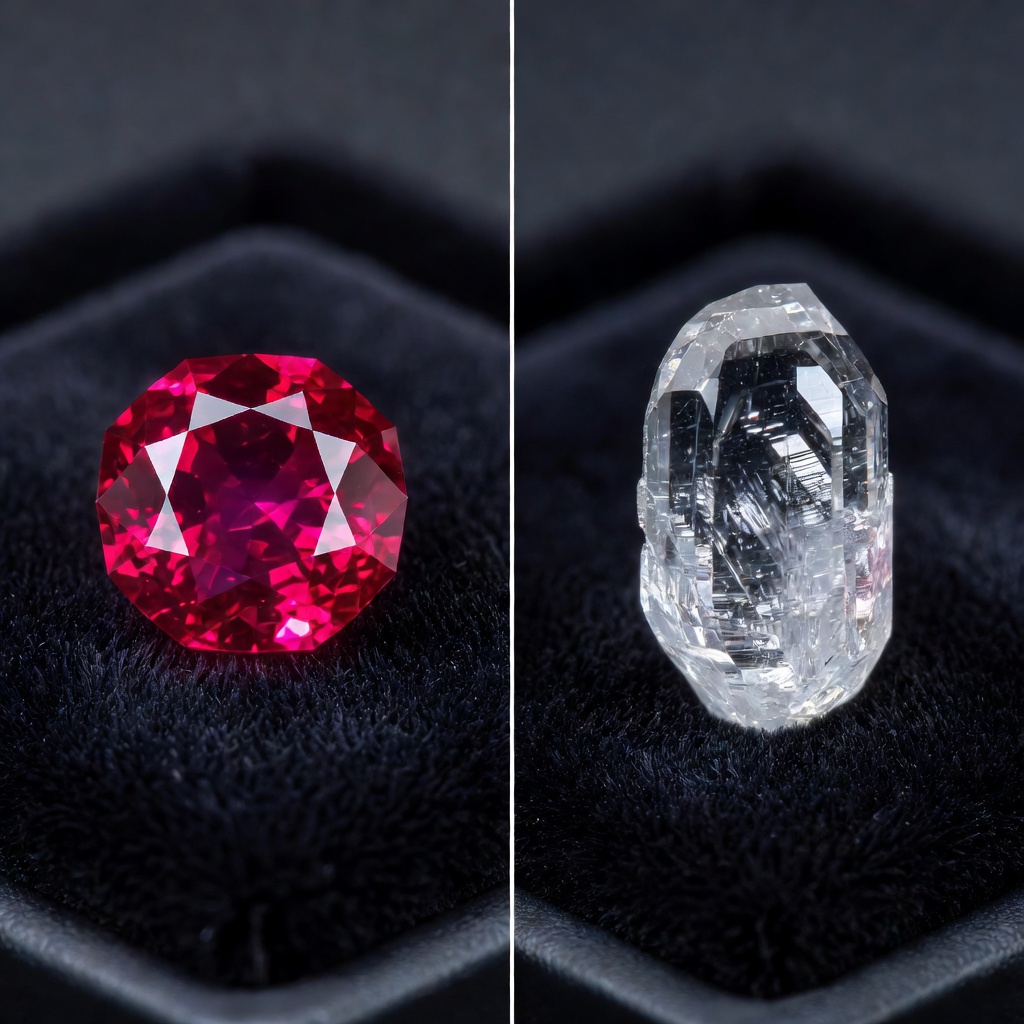
The geological journeys of moissanite and aquamarine couldn't differ more dramatically, offering fascinating insights into how these beautiful stones come to adorn our jewelry. Natural moissanite originated from the stars themselves, first discovered in 1893 by Nobel Prize-winning chemist Henri Moissan within a meteor crater in Canyon Diablo, Arizona, where silicon carbide crystals formed under intense heat and pressure extraterrestrial conditions. However, natural moissanite remains extraordinarily rare, with crystals too small and scarce for jewelry use, prompting scientists to develop sophisticated laboratory processes that replicate these cosmic conditions. Modern moissanite production utilizes advanced thermal growing processes in controlled environments, creating gem-quality crystals that are chemically, physically, and optically identical to their celestial counterparts while ensuring consistent quality and availability.
Aquamarine forms through entirely terrestrial processes deep within Earth's crust, crystallizing in pegmatite rocks over millions of years as beryl minerals interact with iron impurities that create its characteristic blue coloration. Primary mining operations extract these gemstones from deposits in Brazil's Minas Gerais region, Madagascar's highlands, and increasingly from Nigeria and Mozambique, where miners carefully remove crystals from host rocks to preserve clarity and size. The distinction between lab created vs natural gemstones carries significant implications for environmentally conscious consumers, as moissanite production eliminates the ecological disruption associated with mining operations, while aquamarine extraction, though less destructive than diamond mining, still requires land disturbance and energy-intensive processing. Ethical sourcing considerations also favor moissanite for buyers prioritizing conflict-free guarantees, though responsibly sourced aquamarine from certified fair-trade mines offers a sustainable natural alternative for those committed to organic gemstones.
Color Variations and Visual Characteristics
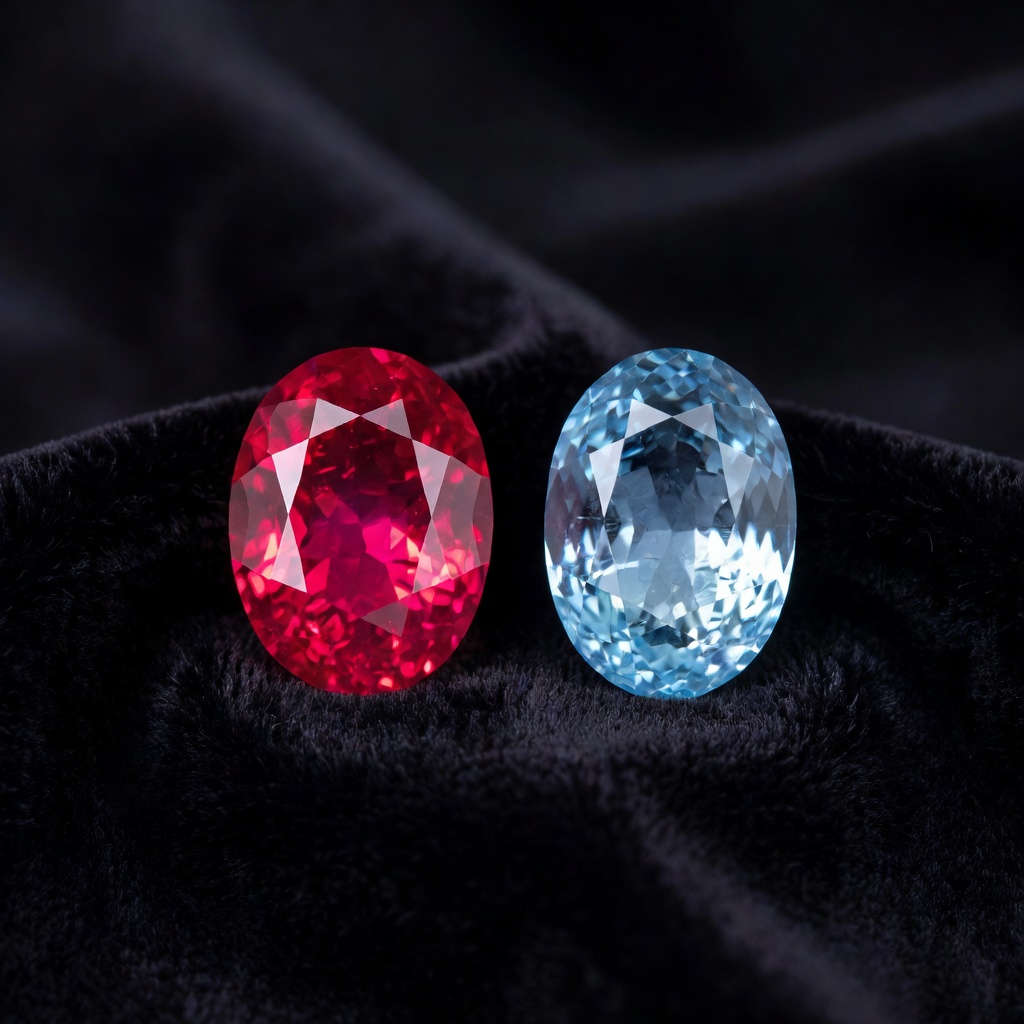
Visual distinction between these gemstones becomes immediately apparent upon examination, with each offering unique chromatic properties that appeal to different aesthetic sensibilities. Aquamarine color ranges from the palest sky blue to deep teal-blue shades, with the most valuable specimens displaying intense, saturated blue tones without greenish or grayish secondary hues. This gemstone exhibits pleochroism, meaning it displays different colors when viewed from various angles—typically showing blue from one direction and nearly colorless or slightly greenish from another—which master cutters must navigate carefully to orient the stone for maximum blue face-up appearance. High-quality aquamarines achieve exceptional clarity with few inclusions, often appearing eye-clean even in substantial carat weights, though internal characteristics like liquid inclusions or "rain" patterns can sometimes enhance the stone's natural beauty and authenticity.
Moissanite appearance traditionally emphasizes colorlessness, though the gemstone naturally occurs with subtle undertones that skilled gemologists can detect. Early moissanite production sometimes resulted in stones with slight yellow, green, or gray tints, particularly in larger carat sizes, though modern manufacturing has largely eliminated these warmer tones, producing near-colorless to completely colorless grades comparable to D-E-F diamond color ratings. Some manufacturers now offer enhanced or treated blue moissanite specifically designed to compete with aquamarine's oceanic hues, though these display distinctly different optical properties than natural aquamarine. Under various lighting conditions, moissanite maintains remarkable consistency in appearance, while aquamarine's color intensity may vary significantly depending on light source, appearing more vibrant in natural daylight and potentially washing out under fluorescent or LED lighting, a factor photographers and retailers must consider when displaying these gems.
Durability and Hardness on the Mohs Scale
Gemstone hardness comparison represents a critical factor for jewelry intended for daily wear, particularly engagement rings that must withstand incidental bumps, scrapes, and exposure to various environmental conditions. Moissanite boasts an impressive 9.25 rating on the Mohs hardness scale, placing it directly between diamond (10) and corundum varieties like ruby and sapphire (9), making it extraordinarily resistant to scratching and surface abrasion. This exceptional hardness ensures that moissanite maintains its polish and facet edges indefinitely, even when worn continuously during activities like typing, gardening, or exercise. For active individuals or those working in hands-on professions, moissanite engagement rings offer peace of mind that the center stone will remain pristine without requiring constant removal or protective measures.
Aquamarine ranks between 7.5 and 8 on the Mohs scale, positioning it as moderately hard but significantly softer than moissanite and more susceptible to surface damage during everyday activities. While suitable for jewelry, aquamarine requires protective settings—such as bezels or halos that shield the girdle and crown from direct impact—and prudent removal during activities involving potential hard knocks against countertops, door frames, or exercise equipment. Beyond simple hardness, gemstone durability encompasses toughness (resistance to breaking and chipping) and stability (resistance to chemicals and temperature changes), where aquamarine presents additional concerns due to its distinct cleavage planes. These natural planes within the crystal structure create potential weak points where the stone might split if struck with sufficient force, whereas moissanite's isometric crystal structure lacks cleavage, making it more resistant to chipping despite its slightly lower toughness rating compared to diamond.
Brilliance, Fire, and Optical Performance
The optical dance of light within these gemstones creates distinctly different visual experiences that significantly influence buyer preferences and setting choices. Moissanite brilliance results from a remarkably high refractive index ranging from 2.65 to 2.69, substantially higher than diamond (2.42) and nearly double that of aquamarine, creating intense white light return that produces a dazzling, disco-ball effect in sunlight or spotlighting. Additionally, moissanite exhibits strong dispersion (fire) with a rating of 0.104 compared to diamond's 0.044, meaning it splits white light into rainbow spectral colors with greater intensity, sometimes creating a "rainbow effect" that vintage jewelry enthusiasts adore but some traditionalists find too flashy compared to diamond's subtler sparkle.
Aquamarine clarity and luster present a more refined, sophisticated optical performance characterized by a vitreous (glass-like) luster and moderate brilliance resulting from its lower refractive indices of 1.57-1.58. Rather than competing with moissanite's fiery display, aquamarine offers a calming, serene glow that emphasizes its color over sparkling light performance, appealing to those who prefer understated elegance over dramatic brilliance. Cut quality affects these gemstones differently: moissanite requires precision cutting to minimize the "disco ball" effect in larger stones while maximizing light return, often utilizing modified brilliant cuts specifically designed for silicon carbide's optical properties. Aquamarine cutting focuses instead on color optimization, with emerald cuts and step cuts popular choices that emphasize the stone's clarity and color while accepting reduced brilliance compared to brilliant cuts, creating a hall-of-mirrors effect that showcases the gem's interior rather than surface reflections.
Price Comparison and Value Retention
Budget considerations play a decisive role for many jewelry buyers, and the aquamarine vs moissanite price differential reflects their distinct origins, availability, and market positioning. Moissanite typically costs between $400 and $600 per carat for high-quality stones, offering exceptional value for those seeking substantial carat weights without the five-figure price tags associated with large diamonds or premium colored gemstones. This affordability allows couples to prioritize size and setting intricacy within modest budgets, selecting elaborate halo designs or pavé bands that might prove prohibitively expensive with diamond center stones. Furthermore, moissanite's laboratory creation ensures consistent pricing without the volatility associated with natural gemstone markets, though this stability comes with the understanding that resale values remain minimal due to continuous production improvements and decreasing manufacturing costs.
Natural aquamarine pricing varies dramatically based on color intensity, clarity, and carat weight, with commercial-quality light blue stones ranging from $100 to $400 per carat, while exceptional deep blue Santa Maria aquamarines from specific Brazilian mines can command $1,000 to $2,000 per carat or higher. Unlike moissanite, aquamarine may retain or appreciate in value over time, particularly for untreated stones with documented provenance from depleted mines, though the gemstone market generally lacks the liquidity of precious metals or diamonds. When calculating long-term ownership costs, buyers should consider that aquamarine's softer nature may necessitate professional repolishing every decade to remove accumulated surface scratches, adding maintenance expenses that moissanite's superior hardness eliminates. For investment-minded collectors, high-quality aquamarine with certification from recognized laboratories like GIA or AGL offers better potential for value retention than moissanite, though neither gemstone should be purchased primarily as a financial investment rather than a wearable adornment.
Best Jewelry Applications and Setting Recommendations
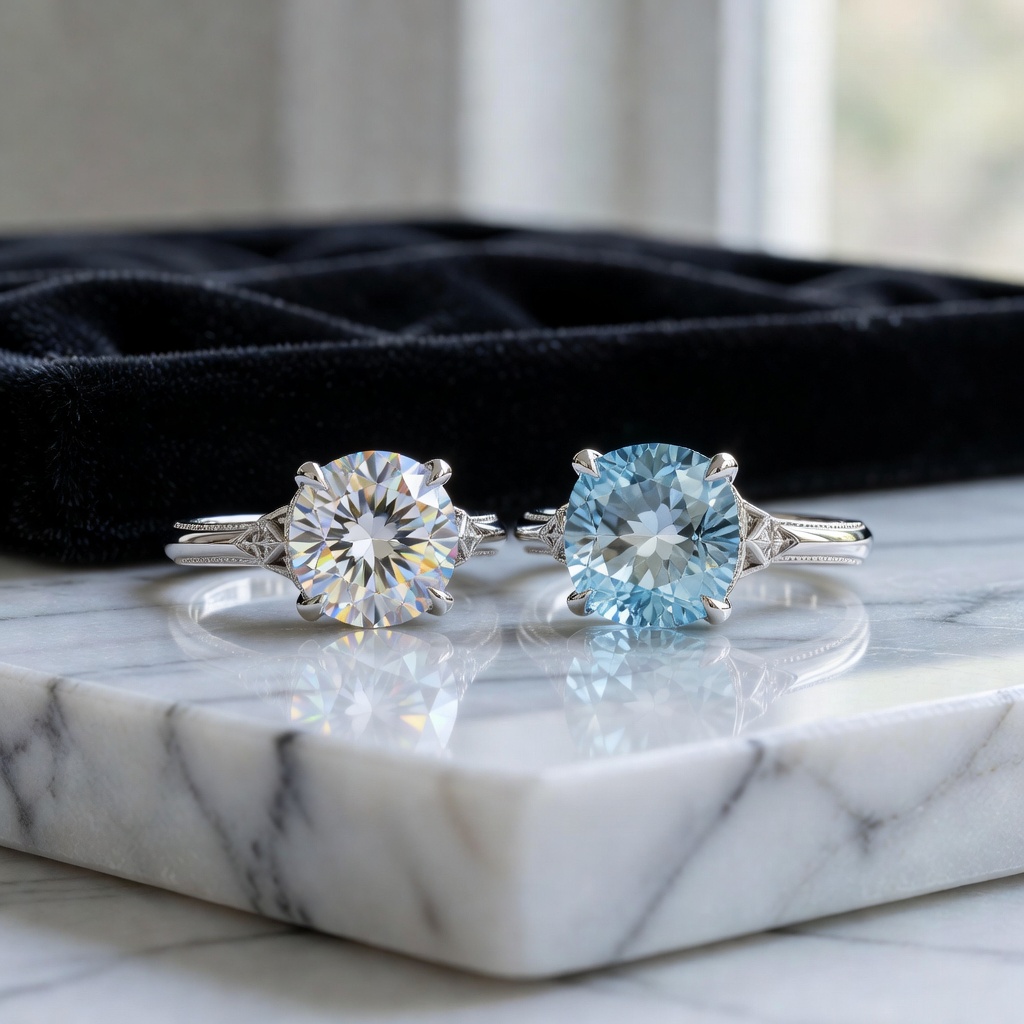
Selecting appropriate settings and jewelry styles maximizes each gemstone's strengths while mitigating potential vulnerabilities. Moissanite engagement rings thrive in virtually any setting style, from delicate four-prong solitaires that maximize light exposure to vintage-inspired bezel settings that protect the girdle, thanks to the stone's exceptional durability and resistance to damage. Jewelers often recommend platinum or white gold settings for colorless moissanite to enhance its icy brilliance, though rose gold and yellow gold mountings create warm, romantic contrasts that some modern brides prefer. The stone's durability also makes it suitable for wedding bands, eternity rings, and right-hand rings that receive daily wear without special precautions.
Aquamarine jewelry care considerations necessitate more strategic setting choices that balance beauty with protection. Bezel settings, halo designs with diamond accents, or V-prong configurations provide superior protection for aquamarine's vulnerable edges and corners compared to exposed prong settings that leave the girdle susceptible to chipping. For earrings and pendants, aquamarine performs excellently since these pieces experience less impact than rings, allowing for more delicate settings that showcase the stone's color and clarity. Metal pairings significantly affect aquamarine's perceived color: white metals like platinum and white gold emphasize the stone's cool blue tones, creating an icy, sophisticated appearance, while yellow or rose gold settings introduce warmth that can make lighter aquamarines appear slightly greener or more pastel. For three-stone rings or anniversary bands, pairing aquamarine with diamond or moissanite side stones creates stunning contrast while the harder flank stones provide some protection to the softer center gem.
Maintenance, Care, and Cleaning Requirements
Proper maintenance protocols ensure these gemstones retain their beauty throughout decades of ownership, though their care requirements differ significantly due to hardness disparities. Both gemstones respond well to routine cleaning using mild dish soap, warm water, and soft-bristled brushes to remove accumulated lotions, soaps, and environmental grime that dull surface luster. For moissanite, ultrasonic cleaners and steam cleaning pose no threats due to the stone's stability and lack of cleavage, making professional jewelry store cleanings convenient and safe whenever the piece requires deep cleaning. However, aquamarine jewelry care requires avoiding ultrasonic cleaners and steam, as the vibrations and thermal shock can potentially exploit cleavage planes or existing fractures within the stone, causing damage that requires costly repairs or replacement.
Storage practices particularly impact aquamarine longevity, as this gemstone can be scratched by harder materials including diamonds, sapphires, and even household dust containing silica particles. Store aquamarine pieces separately in soft cloth pouches or dedicated jewelry box compartments, never allowing them to contact other jewelry during storage or travel. For active individuals, removing aquamarine rings before swimming in chlorinated pools or hot tubs prevents potential chemical damage and thermal shock, while moissanite's chemical inertness allows worry-free wear during most activities except exposure to harsh acids or abrasive compounds. Professional inspection every six to twelve months ensures that prongs remain tight and settings secure, particularly important for aquamarine since losing a stone represents a significant financial and sentimental loss that simple maintenance can prevent.
Pros and Cons Summary
Evaluating moissanite vs aquamarine benefits requires honest assessment of lifestyle factors, aesthetic preferences, and practical constraints that influence long-term satisfaction. Moissanite advantages include unparalleled durability suitable for heirloom-quality engagement rings, extraordinary brilliance that outshines most gemstones including diamond, ethical production eliminating mining concerns, and affordability that allows for larger carat weights and elaborate designs within standard budgets. However, moissanite's rainbow fire sometimes appears artificial to traditionalists, and its laboratory origin, while environmentally positive, lacks the romantic natural history and uniqueness that collectors value in earth-mined gems. Some wearers also report that moissanite's intense brilliance can appear "too perfect" or theatrical compared to the subtler elegance of natural gemstones.
Aquamarine benefits encompass its status as a natural gemstone with unique crystalline formations and color variations ensuring no two stones are identical, the soothing psychological associations of its ocean-blue color, its designation as March's birthstone carrying personal significance for spring babies, and its ability to pair beautifully with both vintage and contemporary jewelry designs. The stone's moderate hardness, while requiring careful handling, allows skilled cutters to create unique fantasy cuts and artistic carvings impossible with harder materials. Drawbacks include vulnerability to scratching and chipping that necessitates protective settings and removal during physical activities, potential color fading if exposed to prolonged sunlight or heat (rare but documented in treated stones), and higher costs for premium color grades that might limit carat size options for budget-conscious buyers. Lifestyle considerations should heavily influence selection: medical professionals, athletes, or mechanics should strongly favor moissanite, while art collectors, nature enthusiasts, or those seeking subtle sophistication might find aquamarine's organic beauty irresistible despite its maintenance requirements.
| Characteristic | Moissanite | Aquamarine |
|---|---|---|
| Mohs Hardness | 9.25 (Excellent for daily wear) | 7.5-8 (Requires protection) |
| Refractive Index | 2.65-2.69 (Exceptional brilliance) | 1.57-1.58 (Subtle luster) |
| Color Range | Colorless to near-colorless; treated blues available | Pale blue to deep blue-green; natural pleochroism |
| Origin | Laboratory-created (silicon carbide) | Natural (beryl mineral family) |
| Price per Carat | $400-$600 (Consistent pricing) | $100-$2,000+ (Varies by color intensity) |
| Best Application | Daily-wear engagement rings, active lifestyles | Occasional wear, protected settings, earrings/pendants |
| Dispersion/Fire | High (0.104), rainbow effect | Low (0.014), subtle glow |
| Cleaning Safety | Ultrasonic and steam safe | Avoid ultrasonic; use mild soap only |
| Value Retention | Minimal resale value | Moderate to good for premium grades |
| Environmental Impact | Low (lab-grown, sustainable) | Moderate (mining required) |
Final Verdict: Making Your Choice
Choosing between moissanite and aquamarine ultimately depends on establishing clear priorities regarding durability, aesthetics, origin preferences, and intended usage patterns. For engagement rings destined for continuous daily wear across decades, particularly for individuals with active lifestyles or professions involving manual labor, moissanite emerges as the pragmatic superior choice, offering diamond-like durability without diamond prices while maintaining extraordinary beauty that draws compliments and admiration. The decision matrix should heavily weight longevity and maintenance requirements: if you cannot commit to removing your ring for gym sessions, cleaning chores, or outdoor activities, moissanite's resilience provides worry-free ownership that aquamarine cannot match.
Conversely, aquamarine suits those prioritizing natural origin stories and unique color expression over maximum durability, particularly for right-hand rings, anniversary gifts, or special occasion jewelry that won't face daily rigors. Style considerations also play crucial roles: maximalists drawn to intense sparkle and fire will find moissanite's optical performance irresistible, while minimalists and those favoring "quiet luxury" aesthetics will appreciate aquamarine's sophisticated, subdued elegance and distinctive blue personality. Long-term ownership expectations should include realistic assessments of heirlooms—moissanite will physically survive generations looking identical to its first day, while aquamarine may accumulate character marks (surface scratches and minor chips) that tell stories of a life well-lived, much like antique furniture or vintage leather. Neither choice represents compromise when selected intentionally; both gemstones offer legitimate pathways to owning beautiful, meaningful jewelry that reflects personal values and aesthetic sensibilities while accommodating diverse budgetary realities.
Frequently Asked Questions
Which is more durable for daily wear, moissanite or aquamarine?
Moissanite is significantly more durable with a Mohs hardness of 9.25 compared to aquamarine's 7.5-8, making moissanite better suited for daily wear in engagement rings and active lifestyles.
Can aquamarine look as brilliant as moissanite?
No, aquamarine cannot match moissanite's brilliance due to lower refractive indices. Moissanite exhibits more fire and sparkle, while aquamarine offers a subtler, more sophisticated luster with its signature blue color.
Is moissanite or aquamarine more expensive?
High-quality aquamarine with deep blue color typically costs more per carat than moissanite. While both offer affordable alternatives to diamonds, moissanite generally provides better value for larger carat sizes.
Which gemstone is better for an engagement ring?
Moissanite is better for engagement rings intended for daily wear due to superior hardness and durability. Aquamarine works best for occasional wear or protected settings due to its moderate hardness and cleavage properties.
Do moissanite and aquamarine require different cleaning methods?
Both can be cleaned with warm soapy water and soft brushes, but aquamarine requires gentler handling and protection from ultrasonic cleaners and sudden temperature changes that could cause damage.
Can you get blue moissanite to match aquamarine?
Yes, blue-tinted moissanite is available through treatments and coatings, though it differs from aquamarine's natural blue color. Treated blue moissanite offers sparkle with color but lacks aquamarine's organic color depth.
Which stone holds its value better over time?
Neither gemstone is considered a strong investment vehicle, but high-quality natural aquamarine with exceptional color may retain value better than lab-created moissanite, which continues to decrease in production costs.
Are both moissanite and aquamarine suitable for sensitive skin?
Yes, both gemstones are hypoallergenic and safe for sensitive skin. However, ensure the metal setting (typically gold or platinum) is also hypoallergenic, as metal allergies are more common than gemstone reactions.