Introduction to Moissanite vs Alexandrite
When Henri Moissan discovered microscopic silicon carbide crystals in an Arizona meteorite crater during 1893, he could never have imagined that this mineral would one day challenge diamonds in the bridal jewelry market. Meanwhile, alexandrite's origin story began in Russia's Ural Mountains during the 1830s, when miners unearthed a mysterious green gem that transformed into raspberry red under candlelight. Today, both stones represent the cutting edge of gemstone engagement rings, offering distinct alternatives to traditional diamond center stones for modern couples seeking individuality.
The growing popularity of these gemstones reflects broader shifts in consumer preferences toward ethical sourcing and personalized aesthetics. While moissanite captivates with its space-age origins and diamond-like performance, alexandrite enchants collectors with its chameleon-like color shifting abilities. Understanding the fundamental differences between these stones—ranging from their atomic structures to their performance under different lighting conditions—empowers buyers to make informed decisions that align with their lifestyle needs and aesthetic desires.
This comprehensive Moissanite vs Alexandrite comparison examines everything from geological origins to practical wearability. Whether you prioritize the technological marvel of lab-grown brilliance or the romantic rarity of color-changing phenomena, understanding these gemstones' unique properties ensures your investment brings decades of satisfaction.
Chemical Composition and Physical Properties
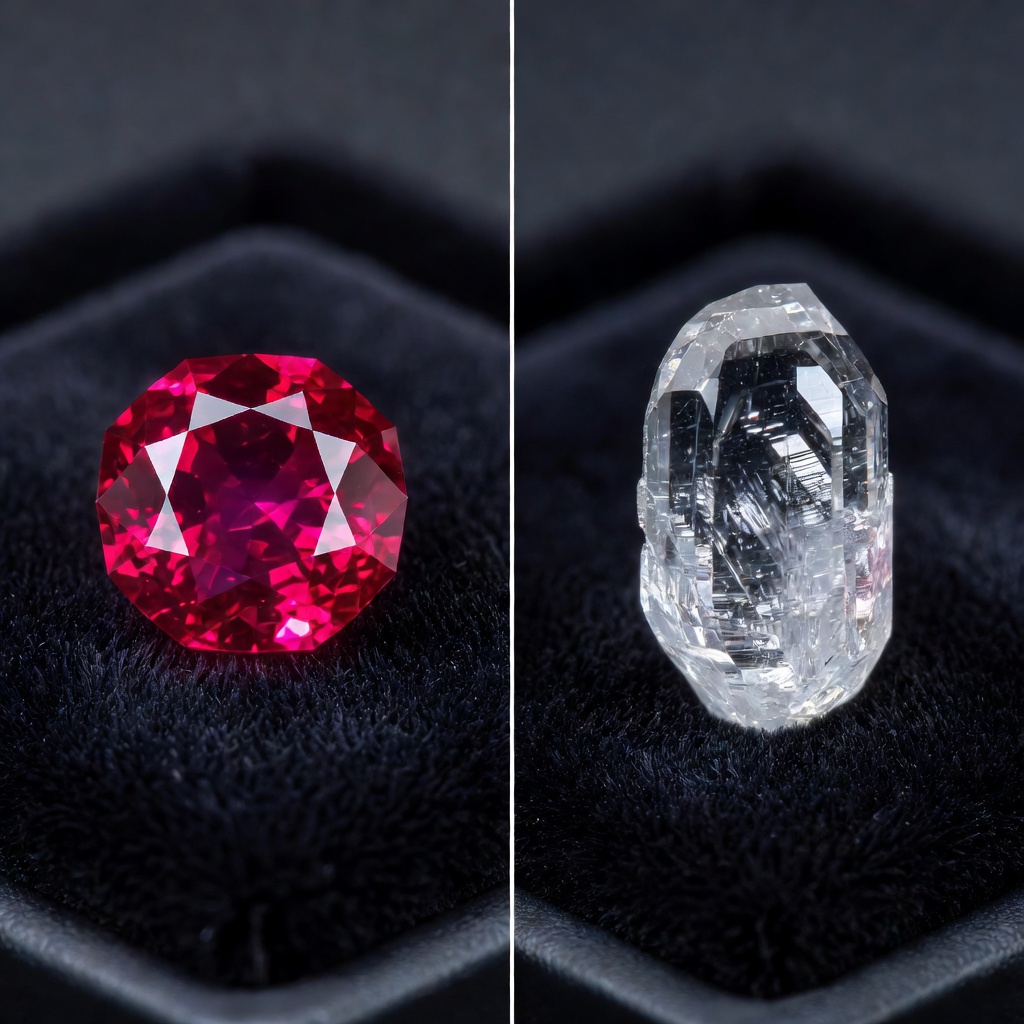
At the molecular level, these gemstones represent entirely different families of minerals with distinct crystalline architectures. Moissanite consists of silicon carbide (SiC), a compound formed when silicon and carbon atoms bond in a hexagonal crystal structure. This composition, originally forged in the intense heat of ancient stars and meteors, is now replicated in controlled laboratory environments using advanced thermal growing processes. The resulting crystals display exceptional thermal conductivity and stability, making them remarkably consistent in quality compared to mined gemstones.
Alexandrite belongs to the chrysoberyl family, chemically represented as BeAl₂O₄ (beryllium aluminum oxide). Unlike moissanite's uniform structure, alexandrite incorporates trace amounts of chromium that replace aluminum in the crystal lattice. This chromium substitution creates the stone's signature color-changing properties through a phenomenon called pleochroism, where the crystal absorbs different wavelengths of light depending on the viewing angle and light source. Natural alexandrite forms in pegmatite deposits and metamorphic rocks under specific geological conditions that rarely occur in nature.
Density differences significantly impact how these stones appear when set in jewelry. Alexandrite possesses a specific gravity of approximately 3.73 g/cm³, making it notably denser than moissanite's 3.21 g/cm³. This means that a one-carat alexandrite will appear physically smaller than a one-carat moissanite of the same cut. For engagement ring shoppers comparing sizes, this density variation affects the visual impact of the center stone, with moissanite providing slightly more surface area per carat weight.
Durability: Mohs Hardness and Toughness
When evaluating gemstones for daily wear, the Mohs hardness scale provides crucial insights into scratch resistance and longevity. Moissanite ranks impressively at 9.25, positioning it between sapphire (9) and diamond (10) in hardness. This exceptional rating means that only diamond or other moissanite can scratch its surface, making it virtually impervious to the abrasions encountered during everyday activities like typing, cooking, or gardening. For active individuals or those working with their hands, this hardness translates to decades of pristine sparkle without surface degradation.
Alexandrite measures 8.5 on the Mohs scale, indicating excellent hardness suitable for jewelry, though slightly more vulnerable than moissanite. While this rating resists scratching from most common materials, sharp impacts or contact with harder gemstones (including moissanite itself) can potentially mark the surface. More critically, alexandrite possesses distinct cleavage planes—directions within the crystal where the structure separates cleanly under stress. This characteristic requires careful setting orientation to avoid placing pressure along these natural fracture lines.
Toughness, distinct from hardness, refers to a gemstone's resistance to breaking or chipping. Moissanite demonstrates superior toughness due to its uniform crystalline structure, lacking the cleavage planes that make other stones vulnerable to splitting. Alexandrite, while reasonably tough, demands protective settings when used in rings subjected to potential impacts. Bezels or halo settings that shield the girdle and corners prove optimal for alexandrite, whereas moissanite accommodates delicate prong settings or tension mounts with equal confidence.
Visual Appeal: Brilliance vs Color Change
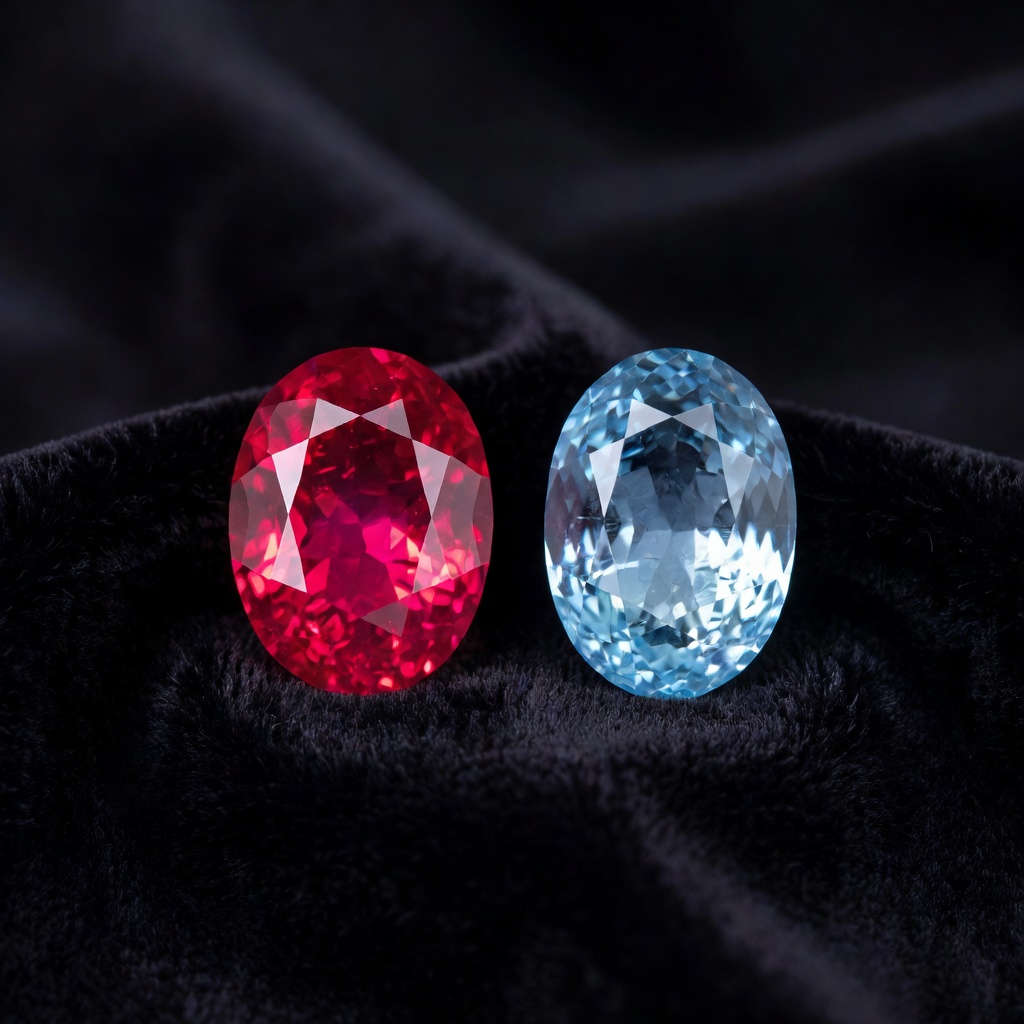
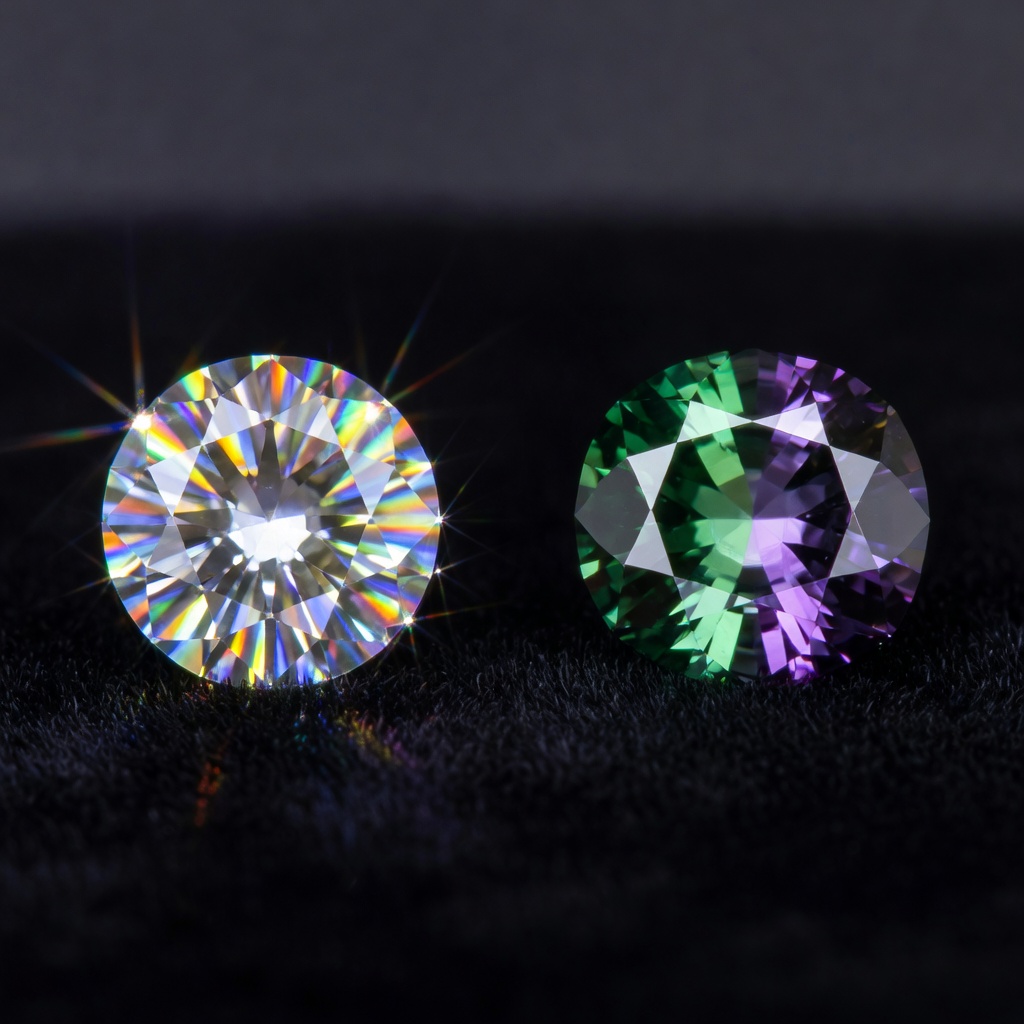
The optical performance of these gemstones diverges dramatically, offering buyers a choice between consistent brilliance and dramatic metamorphosis. Moissanite brilliance stems from its high refractive index of 2.65-2.69, exceeding that of diamond (2.42). This measurement determines how much light bends entering the stone, creating intense sparkle. Combined with a dispersion rate of 0.104—more than double diamond's 0.044—moissanite produces vivid rainbow flashes known as "fire" that captivate observers under direct lighting conditions.
Alexandrite commands attention through an entirely different optical phenomenon: the Alexandrite color change effect. Under natural daylight or fluorescent lighting, the stone appears blue-green to emerald green. Under incandescent light or candlelight, it transforms to raspberry red, purplish-red, or violet. This dramatic shift occurs because chromium ions within the crystal absorb specific light wavelengths differently depending on the light source's spectral output. High-quality specimens display a vivid, saturated color change that collectors term "emerald by day, ruby by night."
Light performance analysis reveals complementary rather than competing aesthetics. Moissanite performs consistently across all lighting environments, maintaining its brilliance whether viewed in direct sunlight, office fluorescence, or romantic candlelight. Its light return creates a disco-ball effect of white sparkle and rainbow refractions. Alexandrite requires specific lighting conditions to display its full magic, appearing relatively subdued in uniform lighting but creating memorable moments when moving between environments. For evening events where incandescent lighting dominates, alexandrite provides a conversation-starting transformation that moissanite cannot replicate.
Origins, Rarity, and Ethical Sourcing
The journey from raw material to finished gemstone reveals stark contrasts in availability and environmental impact. Natural moissanite exists in such minute quantities—primarily in meteorites and rare upper mantle xenoliths—that it has never formed a viable commercial mining industry. All jewelry-grade moissanite derives from lab grown gemstones created through the Lely process or chemical vapor deposition. These laboratories produce flawless crystals without the ecological disruption of mining, eliminating concerns about conflict minerals or hazardous working conditions associated with extraction industries.
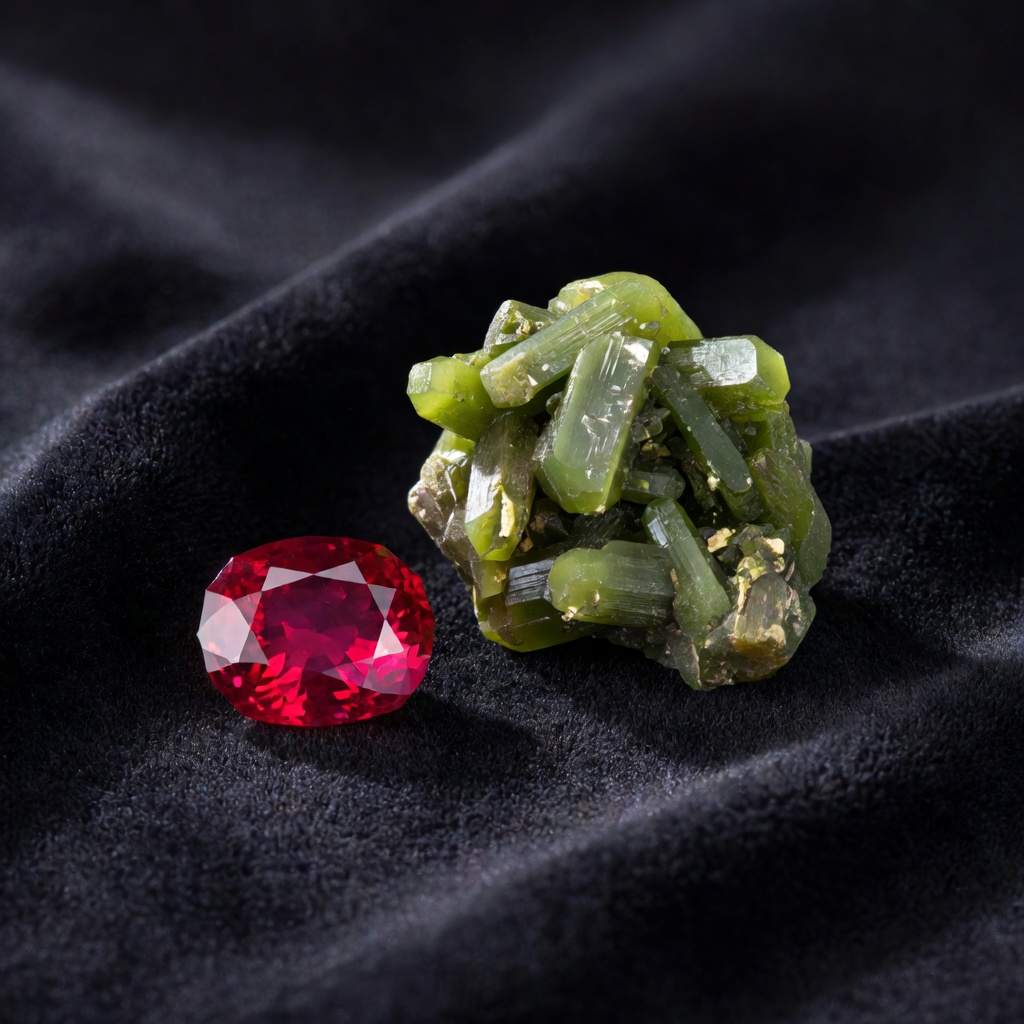
Alexandrite presents a more complex provenance narrative. Genuine natural alexandrite originates from increasingly depleted sources, primarily Russia's Ural Mountains (where deposits are nearly exhausted), Brazil's Minas Gerais region, and more recent discoveries in Tanzania, Madagascar, and Sri Lanka. These natural crystals form under specific geological conditions requiring beryllium-rich pegmatites intruding into chromium-bearing rocks—a coincidence so rare that fine natural specimens command prices rivaling fine rubies or sapphires. The scarcity has driven the development of laboratory alexandrite using flux-growth or pulled-crystal methods that replicate the chemical composition and color change of natural stones.
Environmental considerations favor both stones over traditionally mined diamonds, though through different mechanisms. Moissanite production requires significant energy for thermal growth processes but generates minimal waste and requires no land disruption. Lab-created alexandrite similarly reduces mining impact while making the color-change phenomenon accessible to buyers who cannot afford rare natural specimens. However, consumers seeking the investment prestige of natural rarity must verify origin documentation carefully, as unscrupulous sellers occasionally misrepresent synthetic stones as natural Russian alexandrite.
Price Comparison and Value Retention
Understanding the financial implications of selecting either gemstone requires distinguishing between natural and laboratory-created varieties. Natural alexandrite represents the pinnacle of rarity, with fine specimens exceeding $10,000 to $50,000 per carat for stones displaying strong color change, clarity, and size above one carat. Investment-grade natural alexandrite from historic Russian mines can command even higher premiums at auction, appreciating steadily as deposits deplete. This price bracket positions natural alexandrite firmly in the luxury collector market rather than mainstream bridal jewelry.
Moissanite and lab-created alexandrite occupy significantly more accessible price points. High-quality moissanite typically ranges from $300 to $600 per carat depending on color grade (colorless vs. near-colorless) and cut precision. Laboratory alexandrite generally falls between $200 and $800 per carat, varying based on the intensity of color change and clarity. This pricing makes both stones attractive for budget-conscious engagement ring shoppers, though moissanite generally offers slightly better value per carat while lab alexandrite provides the unique color phenomenon at a fraction of natural stone costs.
Value retention trajectories differ substantially between these options. Natural alexandrite behaves like fine art or rare collectibles, potentially appreciating over decades as supply diminishes and demand among connoisseurs increases. Conversely, moissanite and lab alexandrite follow technological commodity curves—improving manufacturing efficiency gradually reduces production costs, meaning these stones rarely appreciate in value. However, for engagement ring purposes, where emotional significance outweighs investment potential, both offer exceptional aesthetic value compared to their cost, allowing couples to allocate budget toward intricate settings or larger carat weights rather than geological rarity.
Best Applications in Jewelry Design
Maximizing each gemstone's potential requires understanding how setting styles and metal choices enhance their distinct characteristics. For gemstone engagement rings featuring alexandrite, protective settings prove essential given the stone's cleavage properties. Bezel settings that wrap the girdle in metal provide optimal security while framing the color change effect beautifully. Halo designs incorporating diamonds or white sapphires create contrast that accentuates alexandrite's green daylight appearance, while vintage-inspired milgrain settings complement the stone's romantic, old-world rarity.
Moissanite's durability liberates designers to explore delicate prong settings, tension mounts, and cathedral styles that expose maximum surface area to light. Round brilliant cuts maximize moissanite's fire and brilliance, though cushion and oval cuts have gained popularity for their ability to minimize the "splintery" appearance that some observers notice in certain lighting. Unlike alexandrite, which performs best in substantial carat weights to display color change vividly, moissanite maintains impressive optical performance even in smaller accent stones, making it suitable for pavé bands and three-stone arrangements.
Metal selection significantly impacts the visual presentation of both stones. Alexandrite creates stunning contrast when paired with yellow or rose gold, which emphasizes its green daylight appearance while harmonizing with its red incandescent tones. White metals—platinum or white gold—provide neutral backgrounds that allow the color change to dominate without temperature interference. Moissanite demonstrates remarkable versatility across all metal colors, though colorless grades (DEF) appear most diamond-like in white metals, while near-colorless grades (GHI) can complement warmer gold tones without appearing too yellow.
Maintenance and Care Requirements
Preserving the beauty of these gemstones demands tailored gemstone care guide protocols reflecting their distinct physical properties. Moissanite's thermal stability and hardness make it remarkably low-maintenance. Owners can safely use ultrasonic cleaners and steam cleaning equipment to remove buildup from lotions, soaps, and environmental pollutants. The stone's resistance to heat and chemicals means that routine jewelry maintenance at professional salons poses no risk, and even aggressive cleaning methods won't damage the surface or optical properties.
Alexandrite requires more delicate handling due to its internal structure and potential inclusions. While the stone withstands normal wear, ultrasonic cleaning poses risks if the specimen contains liquid inclusions or internal fractures common in natural specimens. Warm water with mild dish soap and a soft brush represents the safest cleaning method. Steam cleaning should be avoided, particularly with fracture-filled or treated stones. Storage considerations also differ—alexandrite should be stored separately from harder gemstones like moissanite, sapphires, or diamonds to prevent surface scratching.
Professional inspection intervals remain crucial for both stones, though for different reasons. Moissanite settings should be checked annually to ensure prongs remain tight, as the stone's hardness can wear down metal settings over time. Alexandrite requires inspection for chips or abrasions along facet junctions, particularly for rings worn daily. Jewelers should verify that protective bezels or prongs haven't shifted to expose vulnerable corners. With proper care, moissanite maintains its original brilliance indefinitely without requiring repolishing, while alexandrite may occasionally need professional repolishing after decades of wear to restore luster to abraded facet edges.
How to Choose Your Perfect Stone
Selecting between these remarkable gemstones requires honest assessment of lifestyle factors, aesthetic preferences, and long-term expectations. Begin by evaluating your daily activities—do you work with your hands, engage in sports, or lead an active outdoor lifestyle? If durability ranks as your highest priority, moissanite's superior hardness and toughness provide peace of mind for worry-free daily wear. Alternatively, if you primarily wear jewelry for special occasions and value uniqueness over ruggedness, alexandrite's color-changing magic offers an enchanting conversation piece that reflects your individual style.
Consider your aesthetic philosophy when choosing between moissanite and alexandrite. Moissanite appeals to those who love classic brilliance and diamond-like performance without the ethical or financial burden of mined stones. It suits traditional engagement ring designs and satisfies the desire for impressive sparkle that captures attention across crowded rooms. Alexandrite attracts collectors and romantics who appreciate geological rarities and enjoy explaining their stone's unique properties to admirers. It particularly suits those born in June seeking June birthstone alternatives to traditional pearls, or individuals celebrating 55th wedding anniversaries for which alexandrite serves as the commemorative stone.
Budget allocation strategies differ significantly between these options. Moissanite allows couples to invest in elaborate custom settings, accent stones, or larger center carat weights while maintaining reasonable overall costs. Its affordability frees budget for intricate hand-engraving, side stones, or premium platinum settings. Alexandrite, particularly natural specimens, demands allocation toward the center stone itself, potentially requiring simpler settings to accommodate the gem's cost. Lab-created alexandrite offers a middle ground, providing the color phenomenon while leaving room for setting investment. Ultimately, the decision hinges on whether you prioritize the stone's performance characteristics or its storytelling potential.
Final Verdict: Making the Right Decision
The Moissanite vs Alexandrite debate ultimately resolves not to a universal winner, but to the perfect match for individual priorities and values. Moissanite excels as a practical, modern choice delivering maximum brilliance, durability, and value. Its space-age origins and laboratory precision appeal to technologically minded buyers seeking ethical luxury without compromise. For engagement rings intended for daily wear across decades, moissanite's 9.25 Mohs hardness and exceptional toughness provide unmatched security alongside its diamond-surpassing fire.
Alexandrite claims its place as the choice for connoisseurs and collectors who view jewelry as art and investment. The stone's dramatic color change creates magical moments that moissanite cannot replicate, while natural specimens offer the prestige of geological rarity. For those seeking a unique signature piece rather than a diamond alternative, alexandrite delivers exclusivity and romance, particularly when selected as a June birthstone alternative or anniversary gift.
| Characteristic | Moissanite | Alexandrite |
|---|---|---|
| Chemical Composition | Silicon Carbide (SiC) | Chrysoberyl (BeAl₂O₄) with chromium |
| Mohs Hardness | 9.25 | 8.5 |
| Refractive Index | 2.65-2.69 | 1.746-1.755 |
| Dispersion (Fire) | 0.104 (High) | 0.015 (Low) |
| Primary Visual Feature | Exceptional brilliance and rainbow fire | Color change (green to red) |
| Origin | Lab-grown (meteoritic origins) | Natural (rare) or Lab-grown |
| Price per Carat | $300-$600 | Natural: $10,000+; Lab: $200-$800 |
| Durability for Daily Wear | Excellent | Good (requires protective settings) |
| Best Application | Engagement rings, everyday jewelry | Statement pieces, special occasion jewelry |
| Maintenance | Ultrasonic safe, low maintenance | Gentle cleaning, avoid ultrasonic |
Your decision matrix should weigh brilliance against rarity, durability against uniqueness, and budget against investment potential. If you seek a lifetime engagement ring for active living, moissanite provides the practical superiority. If you desire a collector's piece that tells a story of geological wonder and displays nature's optical magic, alexandrite offers irreplaceable charm. Both represent ethical, beautiful choices that honor contemporary values while delivering distinct aesthetic experiences.
Frequently Asked Questions
Which is more expensive, moissanite or alexandrite?
Natural alexandrite is significantly more expensive, often costing thousands per carat due to extreme rarity, while lab-created alexandrite and moissanite are both affordable alternatives. Moissanite typically costs less than lab alexandrite, making it the budget-friendly choice for engagement rings.
Can you tell the difference between moissanite and alexandrite?
Yes, they are visually distinct. Alexandrite displays a dramatic color change from green in daylight to red or purple under incandescent light, while moissanite exhibits exceptional brilliance with rainbow fire (dispersion) and remains colorless or near-colorless regardless of lighting.
Is moissanite harder than alexandrite?
Yes, moissanite ranks 9.25 on the Mohs hardness scale compared to alexandrite's 8.5. This makes moissanite more resistant to scratching and better suited for daily wear, while alexandrite requires slightly more careful handling to avoid surface damage.
Which is better for an engagement ring, moissanite or alexandrite?
Moissanite is generally better for engagement rings due to superior durability (9.25 Mohs), exceptional brilliance, and lower cost. Alexandrite suits those seeking unique color-changing beauty and don't mind gentler care requirements or higher investment for natural stones.
Does alexandrite sparkle like moissanite?
No, alexandrite does not sparkle like moissanite. While alexandrite has good brilliance, moissanite has a higher refractive index (2.65-2.69) and dispersion rate, creating more intense rainbow flashes and diamond-like sparkle that exceeds alexandrite's light performance.
Is all moissanite lab-created while alexandrite occurs naturally?
Almost all moissanite is lab-created because natural moissanite is extremely rare (originally discovered in meteorites). Alexandrite occurs both naturally (very rare and expensive) and as lab-created versions that mimic the color change at affordable prices.
Which gemstone is more durable for daily wear?
Moissanite is more durable for daily wear with its 9.25 Mohs hardness and excellent toughness. Alexandrite at 8.5 Mohs is suitable for jewelry but has distinct cleavage, making it more prone to chipping if struck, requiring protective settings for rings.
Can alexandrite be used as a diamond alternative like moissanite?
While both can serve as diamond alternatives, moissanite mimics diamond's brilliance and colorlessness more closely. Alexandrite serves a different aesthetic purpose with its color-changing phenomenon, appealing to those seeking uniqueness rather than diamond similarity.