Two Distinct Gemstone Worlds: Understanding Emerald vs Topaz
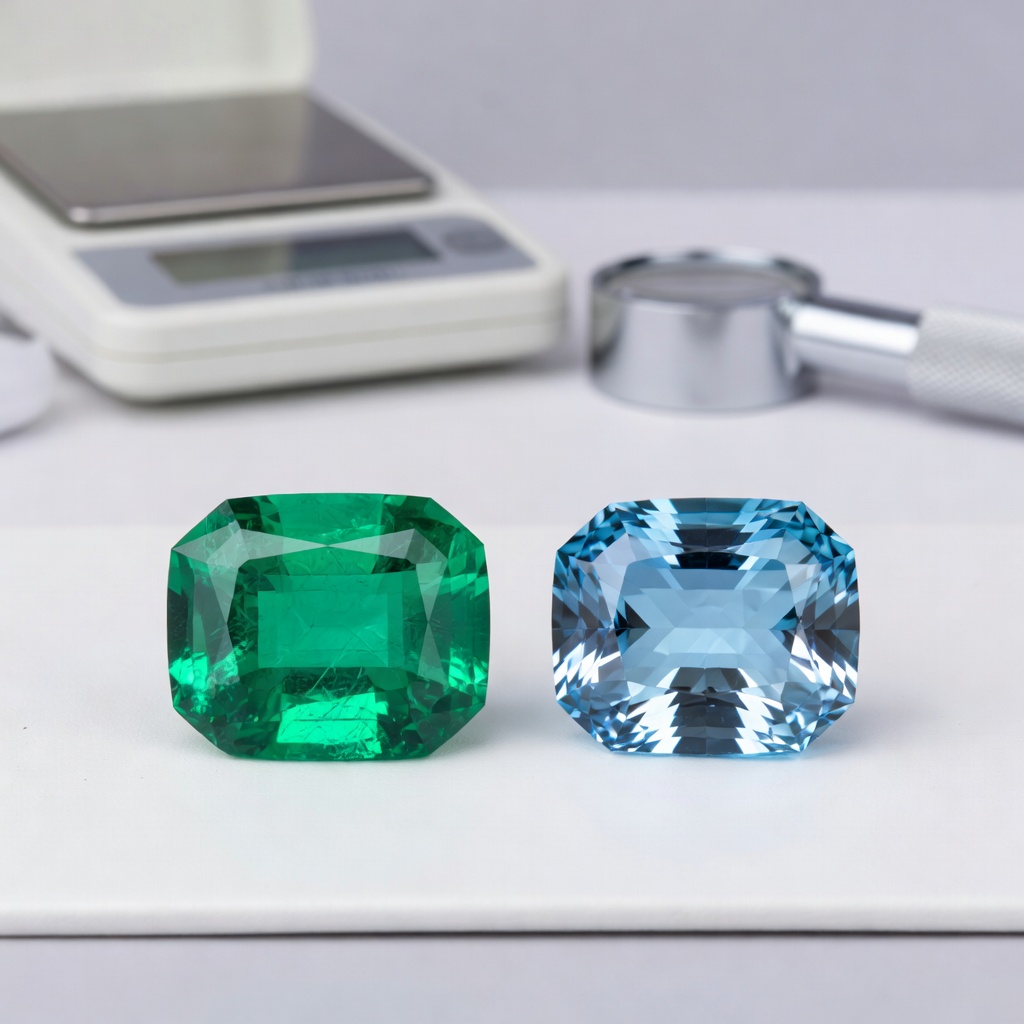
The comparison between emerald and topaz represents one of the most striking examples of the precious vs semi-precious stones divide in the gemological world. While both minerals captivate jewelry enthusiasts with their vibrant hues and crystalline structures, they occupy vastly different positions in the hierarchy of gemstone value and prestige. Buyers frequently encounter these stones when seeking green or blue jewelry options, yet the decision between them involves weighing factors that extend far beyond mere color preference.
Understanding the fundamental emerald and topaz differences requires examining their geological origins, market positioning, and practical wearability characteristics. Emeralds belong to the precious gemstone category alongside diamonds, rubies, and sapphires, commanding premium prices due to rarity and cultural significance. Topaz, while occasionally reaching high values in rare color variations, generally functions as an accessible semi-precious alternative that offers impressive size and clarity at modest price points. When selecting between these gemstones, collectors must evaluate their budget constraints, intended wear frequency, symbolic meaning, and personal aesthetic preferences to make an informed investment.
Chemical Composition and Geological Formation
The Beryl Foundation of Emeralds
Emeralds crystallize from the beryl mineral family, bearing the chemical formula Be₃Al₂Si₆O₁₈, where trace amounts of chromium and vanadium replace aluminum in the crystal lattice to produce the distinctive green coloration. This substitution process requires specific geological conditions rarely found in nature, contributing to emerald's status as one of the rarest precious gemstones. The presence of chromium creates the pure green hue most prized in Colombian specimens, while vanadium-dominated stones from Zambia often display slightly bluish-green tones that appeal to modern collectors seeking alternative origins.
Topaz's Silicate Structure and Color Chemistry
Topaz possesses an orthorhombic crystal structure represented by the formula Al₂SiO₄(F,OH)₂, belonging to the nesosilicate mineral class that forms under high-temperature, late-stage magmatic conditions. Unlike emeralds, which derive their color from chromophore substitutions, topaz typically forms as colorless crystals that acquire hue through trace defects, impurities, or artificial treatments. Natural coloration in topaz results from chromium impurities creating pink or red shades, while color center formation produces the rare imperial topaz's salmon-pink to orange tones that command premium prices in the topaz vs emerald price spectrum.
Formation Environments and Geographic Origins
The emerald gemstone properties develop within hydrothermal veins and pegmatite formations where beryllium-rich fluids interact with chromium-bearing host rocks under specific temperature and pressure conditions. Colombia's Muzo and Chivor mines produce the most historically significant emeralds through unique sedimentary black shale host rocks, while Zambia's Kafubu belt offers iron-rich emeralds with exceptional clarity. Topaz crystallizes primarily in pegmatite dykes and pneumatolytic cavities of granitic rocks, with Brazil's Minas Gerais region, particularly Ouro Preto, serving as the primary source for imperial topaz, while Nigeria and Russia's Ural Mountains provide significant commercial quantities of blue and colorless varieties.
Hardness, Durability, and Wearability Factors
Mohs Scale Ratings and Cleavage Challenges
While emerald registers 7.5 to 8 on the Mohs hardness scale and topaz achieves a solid 8, these numbers reveal only part of the durability story crucial for jewelry selection. Topaz gemstone durability issues stem primarily from its perfect basal cleavage parallel to the {001} plane, meaning the stone can split cleanly with a single sharp blow despite resisting surface scratching. Emeralds exhibit imperfect cleavage but suffer from extreme brittleness caused by internal stress and inclusion patterns, making them susceptible to chipping along facet edges and girdles during daily wear or accidental impacts.
Practical Toughness in Jewelry Settings
Jewelry manufacturers face distinct challenges when setting these gemstones, requiring specialized techniques to prevent damage during the mounting process. Emeralds frequently fracture during prong setting due to internal tension and the presence of liquid-filled inclusions, necessitating pre-drilling and gentle pressure application by master craftsmen. Topaz presents setting difficulties related to its cleavage direction, as improper alignment during mounting can create stress concentrations that lead to catastrophic failure if the stone receives lateral impact, particularly in ring designs subject to daily knocks against hard surfaces.
Daily Wear Recommendations and Protective Strategies
For engagement rings or daily-wear jewelry, both stones require protective design elements, though emerald demands more comprehensive safeguards due to its brittle nature. Emeralds perform best in bezel settings or halo designs that protect the girdle and corners from direct impact, while pendant and earring applications minimize exposure to mechanical shock. Topaz suits ring wear better than emerald in terms of scratch resistance, but owners must avoid wearing topaz jewelry during activities involving sharp blows or temperature extremes that could activate cleavage planes, particularly with large carat weights where structural integrity decreases proportionally.
Color Varieties and Quality Grading Standards
Emerald's Rigid Green Criteria and Grading Systems
Gemological laboratories evaluate emeralds using strict parameters that tolerate little deviation from pure green hues, with the Gemological Institute of America (GIA) recognizing only medium to dark tones with strong saturation as true emeralds rather than green beryl. The most valuable specimens display "vivid green" coloration with medium tone values between 60-75% and strong to vivid saturation levels, typically associated with Colombian origins. Unlike other gemstones where slight color variations create distinct market categories, emeralds face immediate devaluation if they display excessive yellow or blue modifiers, though Zambian stones with slight bluish undertones have gained acceptance among contemporary designers.
Topaz's Expansive Color Spectrum and Value Tiers
Topaz offers consumers a diverse palette ranging from colorless "silver topaz" through sky blue, Swiss blue, London blue, to the coveted imperial and rare natural pink varieties, each occupying different price brackets within the gemstone market. Imperial topaz, displaying salmon-pink to orange hues with red flashes, represents the pinnacle of natural topaz coloration and can approach lower-tier emerald prices in fine qualities exceeding five carats. Treated blue topaz dominates commercial markets, created through irradiation of colorless material followed by heat treatment, while "mystic topaz" undergoes thin-film deposition to create rainbow effects that, while visually striking, carry significantly lower intrinsic value and require careful handling to prevent coating damage.
Clarity Expectations and Inclusion Characteristics
The clarity grading standards for these gemstones diverge dramatically, reflecting their differing formation processes and market expectations. Emeralds almost universally contain inclusions known as "jardin" (French for garden), consisting of liquid, gas, and crystal inclusions that gemologists accept as characteristic features rather than flaws, though eye-clean specimens command extraordinary premiums. Topaz typically forms with exceptional clarity, and consumers expect eye-clean or loupe-clean appearance even in larger carat weights, with inclusions significantly degrading value unless they create rare phenomena like cat's eye effects in specific cutting orientations.
Market Value and Price Per Carat Analysis
The Stark Price Divide Between Precious and Semi-Precious
The topaz vs emerald price differential represents one of the most dramatic value gaps in colored gemstone markets, with fine Colombian emeralds commanding $5,000 to $50,000 or more per carat for exceptional qualities over three carats. Commercial-grade emeralds with moderate inclusions and standard oiling treatments still range from $500 to $3,000 per carat, placing them firmly in luxury purchase territory. By contrast, standard blue topaz typically sells for $20 to $50 per carat, with even high-quality imperial topaz rarely exceeding $200 to $500 per carat except in rare large specimens with exceptional color saturation.
Value Drivers for Premium Emerald Investments
Several specific characteristics exponentially increase emerald values beyond basic carat weight considerations, creating a complex pricing matrix that rewards educated buyers. Colombian origin carries a 20-40% premium over Zambian stones of comparable quality due to historical preference and the unique "old mine" green color associated with Muzo deposits. Treatment levels significantly impact pricing, with "none to minor" oiling status per AGL (American Gemological Laboratories) or GIA reports commanding substantial premiums over "moderate" to "significant" oiling or resin filling. Size dramatically affects price per carat in emeralds, with stones exceeding two carats showing exponential price increases due to the rarity of large clean crystals, whereas topaz pricing remains relatively linear regarding carat weight.
When Topaz Commands Premium Prices
While most topaz varieties function as affordable fashion accessories, specific categories challenge the typical semi-precious pricing structure and deserve consideration from serious collectors. Natural imperial topaz from Brazil's Ouro Preto mines, particularly specimens exceeding ten carats with unheated pinkish-orange to reddish-orange coloration, can achieve $1,000 to $3,000 per carat at specialty auctions. Rare natural pink topaz from Pakistan's Katlang region, displaying chromium-based coloration without heat treatment, occasionally appears at high-end gem shows with pricing structures approaching lower-quality emeralds, though these specimens remain exceptionally scarce compared to the abundant treated blue varieties dominating retail markets.
Emerald vs Topaz: Comprehensive Comparison
| Characteristic | Emerald | Topaz |
|---|---|---|
| Mineral Family | Beryl | Nesosilicate |
| Chemical Formula | Be₃Al₂Si₆O₁₈ (with Cr/V) | Al₂SiO₄(F,OH)₂ |
| Mohs Hardness | 7.5 - 8 | 8 |
| Cleavage Quality | Imperfect (brittle) | Perfect basal (001) |
| Typical Clarity | Heavily included (Jardin) | Eye-clean to loupe-clean |
| Primary Color Range | Green (bluish-green to yellowish-green) | Colorless, blue, orange-pink, pink, yellow |
| Price Range (per carat) | $500 - $50,000+ | $20 - $3,000 (imperial rare) |
| Common Treatments | Oiling (cedar oil/resin) | Irradiation, heat, coating |
| Primary Sources | Colombia, Zambia, Brazil | Brazil, Nigeria, Russia, Pakistan |
| Birthstone Month | May | November |
| Best Jewelry Application | Earrings, pendants, protected rings | Rings, large statement pieces |
Symbolism, History, and Cultural Significance
Emerald's Royal Pedigree and Historical Treasures
The distinction between precious vs semi-precious stones becomes evident when examining emerald's unparalleled historical significance among royalty and religious institutions across civilizations. Cleopatra VII famously claimed ownership of emerald mines near the Red Sea (Mons Smaragdus) around 1500 BCE, using the gemstones to cement political alliances and demonstrate Egypt's wealth through elaborate royal adornments. The Spanish conquest of South America revealed the Inca Empire's vast emerald treasures, including the legendary 11,000-carat "Patricia" emerald, while the British Crown Jewels house the Cambridge Emerald collection, featuring stones once belonging to Princess Augusta and later Queen Mary, demonstrating the gem's continuous association with sovereign power.
Topaz in Ancient Lore and Medieval Traditions
Topaz carries its own rich mythological heritage, particularly associated with solar deities and healing practices in ancient Egyptian and Greek cultures, where golden imperial topaz represented Ra's life-giving powers. Medieval European physicians prescribed powdered topaz mixed with wine to prevent asthma and insomnia, while Roman citizens believed the stone could improve eyesight when held against the eyelids during meditation. Unlike emerald's consistent association with elite status, topaz historically served broader populations as a protective talisman against enchantments and sudden death, reflecting its greater availability and accessibility to merchant classes throughout history.
Modern Birthstone Designations and Anniversary Traditions
Contemporary jewelry marketing solidifies the emerald and topaz differences through distinct birthstone assignments and anniversary gemstone protocols recognized by major jewelry associations. Emerald serves as the official birthstone for May, symbolizing rebirth, love, and wisdom, while also representing 20th, 35th, and 55th wedding anniversaries with increasingly elaborate gift expectations. Topaz claims November as its birth month (sharing with citrine), representing friendship and fidelity, with blue topaz specifically designated for 4th anniversaries and imperial topaz reserved for 23rd anniversary celebrations, creating distinct market cycles and gift-giving traditions for each gemstone.
Industry Treatments and Enhancement Disclosures
Emerald Enhancement Traditions and Modern Practices
Understanding treatments proves essential for any emerald buying guide, as approximately 99% of emeralds undergo clarity enhancement to improve the appearance of surface-reaching inclusions and fractures. Traditional cedar oiling, using colorless natural oils with refractive indices close to emerald, represents an accepted industry practice dating back centuries, with "minor" oiling status barely affecting market value. However, modern techniques involving permanent polymers, resins, or hardened oils require careful disclosure, as these treatments affect durability and may require different care protocols; laboratories like AGL and SSEF now grade treatment levels from "none" to "significant," with untreated emeralds commanding 50-100% premiums over oiled equivalents.
Topaz Transformation Techniques and Color Creation
Nearly all blue topaz available in jewelry markets results from artificial treatment processes, as natural blue crystals occur too rarely to supply commercial demand. Colorless topaz undergoes irradiation in nuclear reactors or accelerators to create color centers, followed by heat treatment to stabilize the blue hue, with "London Blue" receiving longer irradiation than "Sky Blue" varieties to achieve darker saturation. Mystic topaz receives thin-film deposition coatings to create rainbow effects, while heat treatment alone enhances the pink-to-orange colors in imperial topaz, making disclosure of these treatments mandatory for ethical sales and affecting long-term care requirements.
The Critical Role of Laboratory Certification
Reputable gemological laboratories provide essential documentation distinguishing natural characteristics from treatments, protecting consumers from misrepresented or undisclosed enhancements. For emeralds, AGL reports specifically detail the degree of clarity enhancement and filler type (oil vs resin), while GIA certificates note the presence of "traditional" versus "modern" treatments. Topaz certifications typically confirm whether blue coloration results from natural causes or irradiation, with coated varieties requiring specific care warnings; buyers should insist on certificates from recognized laboratories (GIA, AGL, SSEF, Gübelin) rather than generic "appraisals" when investing significant sums in either gemstone category.
Jewelry Applications and Design Versatility
Emerald's Luxury Market Position and Protective Design
High jewelry houses like Cartier, Van Cleef & Arpels, and Bulgari consistently feature emeralds in their most exclusive collections, often incorporating custom-cut Colombian stones into Art Deco reproductions or contemporary abstract designs that emphasize the gem's regal associations. Designers frequently pair emeralds with yellow gold to enhance the warmth of the green hue, utilizing bezel settings or protective halo designs that shield vulnerable girdle edges from impact while maximizing light return through open pavilion designs. Vintage reproduction pieces often feature emerald center stones surrounded by diamond millegrain work, reflecting Edwardian and Victorian aesthetics where emeralds symbolized eternal hope and marital fidelity.
Topaz's Fashion-Forward Flexibility and Affordable Luxury
Topaz enables designers to create dramatic, large-scale statement pieces that would prove prohibitively expensive with precious gemstones, with 10-carat blue topaz center stones commonly appearing in cocktail rings and pendant designs for under $500 retail. The gem's availability in large clean crystals allows for experimental cuts including fantasy shapes, concave faceting, and Portuguese cuts that maximize brilliance and fire without the clarity concerns associated with emerald cutting. Contemporary designers frequently pair white topaz with sterling silver for accessible bridal alternatives, while imperial topaz appears in sophisticated rose gold settings that complement its warm orange-pink tones.
Metal Pairing Strategies and Color Enhancement
The precious vs semi-precious stones distinction influences metal selection strategies, with emeralds traditionally mounted in high-karat yellow gold (18K or 22K) that harmonizes with the stone's warm green undertones and reflects historical mounting practices. White metals like platinum or white gold create striking contrast with emeralds but require careful setting design to prevent the "blackout" effect where dark settings absorb light transmitted through the gem. Topaz offers greater metal flexibility, with blue varieties complementing white gold and silver for cool, contemporary aesthetics, while imperial topaz pairs exceptionally with rose gold to enhance its salmon-pink saturation, allowing for diverse design expressions across price points.
Care, Cleaning, and Maintenance Requirements
Emerald's Delicate Maintenance Protocol
Topaz jewelry care and emerald maintenance differ significantly, with emeralds requiring the most conservative cleaning approaches among major precious gemstones due to their filled fractures and brittle nature. Owners should clean emerald jewelry using only warm soapy water (mild dish detergent) and a soft brush, gently removing debris from behind the stone where dirt accumulates and dulls brilliance, followed by immediate drying with a soft lint-free cloth. Never expose emeralds to ultrasonic cleaners, steam cleaning, or chemical solvents including alcohol and acetone, as these can remove or degrade oiling treatments and potentially cause thermal shock fractures in heavily included stones.
Topaz Cleaning Guidelines and Treatment Considerations
Untreated imperial or colorless topaz tolerates ultrasonic cleaning reasonably well, though steam cleaning risks thermal shock and should be avoided, particularly for stones with liquid inclusions. However, coated mystic topaz requires extreme delicacy, as the thin metallic film responsible for rainbow effects scratches easily and cannot be restored once damaged; clean these varieties using only damp cloths without rubbing motions. Blue topaz, while durable, may fade with prolonged exposure to sunlight or heat sources, necessitating storage away from windows and radiator heat, whereas emeralds remain color-stable but risk dehydration of oil fillers in dry climates or excessive heat.
Professional Maintenance and Storage Solutions
Emerald jewelry requires annual professional inspection and potential re-oiling by qualified jewelers who can assess whether filler materials have dried out or leaked from fractures, restoring the stone's original clarity appearance. Store emeralds separately in soft pouches or lined jewelry boxes to prevent scratching by harder diamonds or sapphires, and remove emerald rings before applying lotions, perfumes, or hair products that can clog the stone's surface and require professional cleaning. For topaz, store pieces individually to prevent the Mohs 8 hardness from scratching softer gemstones like opal or pearl, and avoid storing topaz in direct sunlight to prevent color fading in treated blue varieties.
Investment Potential and Resale Market Dynamics
Emeralds as Portable Assets and Auction Performance
Fine, untreated emeralds from renowned Colombian mines function as legitimate alternative investments, regularly achieving strong results at Christie's and Sotheby's auctions where exceptional specimens exceed $100,000 per carat. The "Elizabeth Taylor Emerald" (a 23.46-carat Bulgari brooch) sold for $6.5 million in 2011, demonstrating the liquidity available for documented, high-quality stones with celebrity provenance or exceptional characteristics. Investors should prioritize stones accompanied by certificates from prestigious laboratories (SSEF, Gübelin, AGL) confirming Colombian or Zambian origin with "none to minor" treatment levels, as these parameters create the strongest secondary market demand among collectors and dealers.
Topaz's Market Limitations and Rare Exceptions
While topaz gemstone durability and beauty make it suitable for jewelry, the stone generally fails to qualify as a serious investment vehicle due to abundant commercial supply and mass-market treatment processes that standardize pricing. The exception lies in untreated, large-carat imperial topaz from historic Brazilian mines, particularly specimens exceeding 20 carats with natural pink or reddish-orange coloration unenhanced by heat treatment. These rare stones occasionally appear at specialized colored gemstone auctions or through high-end dealers like Pala International, but they represent a minuscule fraction of the topaz market and lack the established resale infrastructure supporting emerald trading.
Liquidity Considerations and Resale Channels
Emerald owners benefit from established networks of colored gemstone dealers, auction houses, and estate jewelry specialists who actively seek fine specimens for inventory, creating relatively liquid markets for certified, high-quality stones. The emerald buying guide for investors emphasizes purchasing from dealers who offer buy-back policies or trade-up options, ensuring exit strategies if personal circumstances change. Topaz, conversely, largely lacks secondary markets beyond retail consignment or pawn transactions, with resale values typically representing 10-30% of original purchase prices except for rare imperial specimens, making it a consumption purchase rather than a wealth preservation vehicle.
Frequently Asked Questions About Emerald vs Topaz
Which is more valuable, emerald or topaz?
Emeralds are significantly more valuable, with fine specimens costing $5,000-$50,000+ per carat, while most topaz varieties range from $20-$200 per carat. Only rare imperial topaz approaches emerald pricing, typically reaching $1,000-$3,000 per carat for exceptional natural color specimens over ten carats.
Can I wear an emerald ring every day like a topaz ring?
Emeralds require more careful wear due to their brittleness and prominent cleavage. Protective settings like bezels are recommended. Topaz is harder (Mohs 8) but has perfect cleavage, making both less ideal for daily wear than sapphire or diamond.
Do topaz and emerald ever look similar in color?
Green topaz exists but rarely matches emerald's rich, saturated green. Most green topaz is pale or treated, while emerald's chromium/vanadium green is unique and highly prized.
Which gemstone is better for a May birthstone gift?
Emerald is the traditional May birthstone with deep historical significance. Topaz is November's birthstone. For May, emerald's symbolism of rebirth and love makes it the authentic choice despite its higher cost.
How can I tell if an emerald has been treated with oil?
Look for surface-reaching fissures under magnification—oiled emeralds show flash effects and surface residues. Reputable sellers provide GIA or AGL certificates detailing treatment levels from 'minor' to 'significant' oiling.
Is blue topaz naturally occurring or is it always treated?
Natural blue topaz is extremely rare. Virtually all commercial blue topaz starts as colorless material that's irradiated and heated to create the blue color, making it affordable but requiring disclosure.
Which stone holds its value better over time?
Fine, untreated emeralds with certificates from Colombia or Zambia typically appreciate in value. Topaz generally doesn't hold value due to abundant supply, though rare imperial topaz can maintain moderate resale value.
What should I prioritize when buying an emerald on a budget versus a topaz?
For budget emeralds, prioritize smaller stones with 'minor' oiling and good color over large, heavily included pieces. With topaz, invest in imperial or natural pink varieties rather than mass-market blue if seeking value.