Emerald vs Swiss Blue Topaz: Two Blue-Green Beauties
Emerald represents the pinnacle of the beryl family, distinguished by its hexagonal crystal structure and specific gravity ranging from 2.67 to 2.90, while Swiss blue topaz emerges from the orthorhombic crystal system as an aluminum fluorosilicate mineral that undergoes significant enhancement to achieve its striking appearance. The fundamental distinction between these gemstones lies in their geological rarity and market positioning, with natural emeralds commanding premium prices due to their scarcity in high-quality specimens, whereas Swiss blue topaz offers an accessible entry point into colored gemstone ownership through human-assisted color enhancement of abundant colorless rough material. When evaluating Emerald vs Swiss Blue Topaz side by side, prospective buyers must weigh four critical factors: financial investment parameters, physical durability requirements for intended wear, specific color palette preferences ranging from verdant greens to electric blues, and the intangible symbolic value associated with each gem's historical and cultural legacy.
The classification of precious vs semi-precious stones traditionally places emerald alongside diamond, ruby, and sapphire due to its historical rarity and desirability, while blue topaz falls into the semi-precious category despite its beauty and hardness. This distinction affects not only pricing structures but also consumer expectations regarding treatment disclosures, investment potential, and insurance valuations. Understanding these categorical differences helps buyers establish realistic expectations before entering the marketplace, ensuring that selections align with both aesthetic desires and practical lifestyle requirements.
Color Characteristics: Natural vs Enhanced Hues
The Verdant World of Emeralds
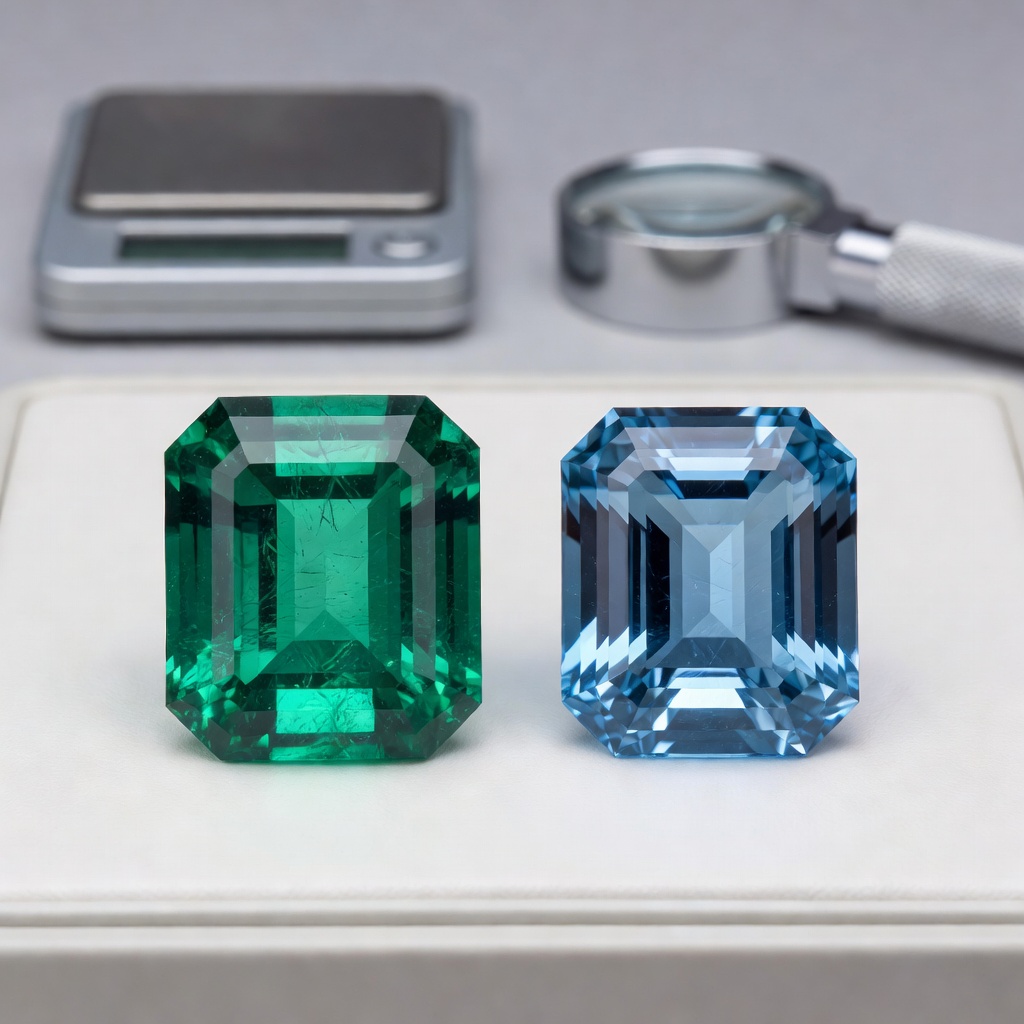
Emeralds derive their coveted bluish-green to pure green coloration from trace amounts of chromium and vanadium substituting for aluminum in the beryl crystal lattice, with Colombian emeralds typically exhibiting a warmer, more intense pure green with slight blue undertones, while Zambian specimens often present a cooler, deeper green with higher clarity. These trace elements create the distinct color signature that defines emerald gemstone characteristics, making each origin source immediately recognizable to experienced gemologists. The depth of color varies significantly based on concentration levels of these chromophores, with the most valuable stones displaying a saturated green that remains vivid under various lighting conditions without appearing too dark or yellowish.
The Vibrant Blue of Swiss Blue Topaz
In contrast, Swiss blue topaz begins as colorless or pale blue natural topaz that undergoes controlled irradiation followed by heat treatment to produce its characteristic vivid, medium-toned blue reminiscent of a bright aquamarine or tropical ocean waters, a process that ensures uniform color saturation throughout the entire stone. This treatment permanently alters the crystal's color centers, creating stable Swiss blue topaz properties that resist fading under normal wear conditions and light exposure. The resulting hue offers a cheerful, electric blue that appeals to modern aesthetics while remaining distinct from the deeper London blue or paler sky blue topaz varieties.
Consistency and Variation
Natural emeralds frequently display color zoning and growth patterns visible under magnification, creating a unique fingerprint that varies from stone to stone, whereas Swiss blue topaz offers remarkable consistency in hue, allowing jewelers to match multiple stones precisely for elaborate jewelry designs. This uniformity makes Swiss blue topaz particularly suitable for multi-stone arrangements such as tennis bracelets or elaborate necklaces where color matching proves essential. Emerald's natural variations, however, appeal to collectors who value individual character and the telltale signs of geological formation that make each stone truly one-of-a-kind.
Optical Properties and Lighting Effects
Both gemstones exhibit pleochroism, though emerald typically shows green and bluish-green variations while Swiss blue topaz may display different intensities of blue depending on the crystal orientation, requiring careful cutting to maximize face-up color display in various lighting conditions. Incandescent lighting tends to bring out the warm tones in Colombian emeralds while emphasizing the depth in Zambian stones, whereas Swiss blue topaz maintains relatively consistent appearance across fluorescent, natural, and LED lighting environments. When selecting either stone, examine it under multiple light sources to ensure the color pleases your eye in the environments where you typically wear jewelry.
Hardness and Durability for Daily Wear
Mohs Scale Comparisons
On the Mohs hardness scale, emerald ranks between 7.5 and 8, while Swiss blue topaz registers a solid 8, numbers that suggest excellent scratch resistance but do not tell the complete story regarding these stones' suitability for daily wear. This gemstone durability comparison reveals that while both stones resist scratching from dust and everyday contact, their internal structures create different vulnerabilities that affect long-term wearability. Hardness measures only scratch resistance, not toughness or resistance to breaking, which explains why these similar numbers belie significantly different durability profiles.
The Brittleness Factor in Emeralds
Emerald possesses a distinct brittleness due to its natural inclusion patterns known as jardin, French for garden, which create internal stress points that can propagate fractures under impact or pressure, making it less tough than its hardness number suggests despite being suitable for protected jewelry settings. These internal features, while beautiful and diagnostic of natural origin, act as weak planes within the crystal structure that can fail when the stone receives sharp blows or extreme pressure. Owners should remove emerald rings before engaging in physical activities, gardening, or household chores that might subject the stone to twisting forces or direct impacts.
Cleavage Concerns in Swiss Blue Topaz
Swiss blue topaz, despite its superior hardness, exhibits perfect basal cleavage in one direction, meaning that a sharp blow at the correct angle can split the stone cleanly, a vulnerability that requires awareness during wear and setting processes. Unlike emerald's distributed inclusions, this cleavage plane represents a specific directional weakness that jewelers must consider when cutting and setting the stone to minimize exposure to shear forces. The combination of good hardness with perfect cleavage creates a stone that resists surface wear beautifully but demands respect regarding impact protection.
Practical Wearability Ratings
For practical jewelry applications, Swiss blue topaz performs admirably in rings, bracelets, and daily wear pieces where impact resistance matters, while emerald demands protective settings such as bezels or halos when used in rings and performs better in earrings and pendants where physical stress remains minimal. Tennis bracelets featuring Swiss blue topaz withstand regular wear with minimal risk, whereas emerald bracelets require extremely protective mountings and frequent inspection to ensure stones remain secure. When planning an active lifestyle piece, Swiss blue topaz offers peace of mind that emerald simply cannot match without significant compromise in setting design.
Clarity and Inclusions: What to Expect
Understanding the Jardin Effect
Natural emeralds almost invariably contain three-phase inclusions consisting of solid crystals, liquid droplets, and gas bubbles trapped within the gemstone during formation, creating the mossy, garden-like internal landscape that gemologists use to confirm natural origin and distinguish genuine stones from synthetics. These emerald gemstone characteristics represent acceptable and even desirable features that prove the stone formed naturally within the earth rather than in a laboratory environment. Rather than viewing these inclusions as flaws, connoisseurs appreciate them as evidence of the stone's unique geological history and natural provenance.
Clarity Standards in Swiss Blue Topaz
Swiss blue topaz typically presents eye-clean clarity with few visible inclusions because the treatment process applies to high-clarity rough material, and any inclusions present rarely affect the final appearance significantly, unlike emeralds where clarity dramatically influences value. The gemstone treatments used to create the blue color work best on inclusion-free material, meaning that treated topaz usually starts with better clarity than most emeralds ever achieve naturally. This inherent clarity makes Swiss blue topaz an excellent choice for those who prefer the look of clean, transparent gemstones without visible internal characteristics.
Pricing Impact of Imperfections
In the emerald market, stones with minimal visible inclusions command exponentially higher prices, with investment-grade specimens exhibiting rare transparency fetching tens of thousands per carat, while emerald value and price remains relatively accessible for included stones that still display good color. Conversely, Swiss blue topaz pricing remains relatively stable regardless of minor clarity variations, focusing instead on color intensity and cut quality, making clarity less of a concern for budget-conscious buyers. This difference means that emerald shoppers must balance color desires against clarity budgets carefully, while Swiss blue topaz buyers can prioritize size and cut without significant clarity premiums.
Authentication and Identification
When examining emeralds for purchase, buyers should look for natural crystalline inclusions rather than filled fractures, which appear as flash-effect features under magnification, whereas Swiss blue topaz requires less scrutiny regarding natural inclusions but should be examined for any chips or cleavage cracks that might compromise structural integrity. Fracture-filled emeralds show oily or reflective flash effects when tilted under light, distinguishing them from untreated stones, though both types of treatments require disclosure. For Swiss blue topaz, the primary concern involves checking for surface-reaching cleavages that could propagate into breaks during setting or wear.
Price and Value: Budget Reality Check
Per Carat Pricing Realities
Fine quality emeralds typically range from $1,000 to over $10,000 per carat depending on color saturation, clarity, and origin, with exceptional Colombian specimens potentially commanding significantly higher premiums, while Swiss blue topaz remains remarkably affordable at $20 to $100 per carat even for large, well-cut stones. A two-carat emerald of fine quality might cost between $5,000 and $20,000, whereas a comparable-sized Swiss blue topaz would rarely exceed $200, illustrating the vast precious vs semi-precious stones pricing divide. This price differential allows jewelry enthusiasts to own substantial, beautiful blue gemstones without the investment required for premium emeralds.
Value Determinants
Emerald valuation heavily weights color origin and clarity, with Colombian and Zambian stones receiving distinct market premiums, whereas Swiss blue topaz pricing emphasizes size and cutting precision since the treatment process standardizes color across most specimens. The cut quality affects both stones significantly, with emeralds traditionally receiving step cuts that showcase color while minimizing clarity impact, and Swiss blue topaz often receiving brilliant cuts that maximize light return and sparkle. Origin documentation for emeralds, particularly from famous mines like Muzo or Chivor, adds provenance value that does not apply to treated topaz.
Investment Potential
From an investment perspective, untreated or minimally treated high-quality emeralds appreciate over time due to increasing scarcity and ongoing demand from collectors and connoisseurs, while Swiss blue topaz functions primarily as a fashion or sentimental purchase with limited resale appreciation due to abundant supply and treatment disclosure requirements. Fine emeralds with documented provenance and minimal enhancement serve as portable stores of wealth and historical artifacts, whereas Swiss blue topaz offers immediate aesthetic gratification without long-term appreciation expectations. Buyers seeking heirloom pieces or alternative investments should focus on certified, high-quality emeralds, while those prioritizing current enjoyment and wearability find excellent value in Swiss blue topaz.
Market Dynamics
Market stability favors emeralds as long-term stores of value despite price volatility based on mining yields, whereas Swiss blue topaz prices remain consistently affordable due to the vast availability of treatable rough material and established irradiation processes that ensure steady supply chains. The emerald market fluctuates based on political stability in producing regions like Colombia and Zambia, creating occasional supply shortages that drive prices higher, while Swiss blue topaz enjoys stable pricing due to abundant raw material sources and reproducible treatment methods. This predictability makes Swiss blue topaz budgeting straightforward, while emerald purchases require timing considerations and market awareness.
| Characteristic | Emerald | Swiss Blue Topaz |
|---|---|---|
| Mohs Hardness | 7.5 - 8 | 8 |
| Color Origin | Natural (Chromium/Vanadium) | Treated (Irradiation/Heat) |
| Typical Clarity | Included (Jardin) | Eye Clean |
| Price Range (per carat) | $1,000 - $10,000+ | $20 - $100 |
| Durability for Daily Wear | Poor to Moderate | Good |
| Treatment Status | Often Oiled/Resin-filled | Standard Irradiation |
| Birthstone Month | May | December |
Treatments and Enhancements Disclosure
Traditional Emerald Enhancement
The emerald industry traditionally accepts cedar oil or synthetic resin treatments that fill surface-reaching fractures to improve apparent clarity, a practice dating back centuries that requires disclosure but does not significantly detract from value unless excessive amounts of foreign material are present. These gemstone treatments penetrate surface-reaching fractures to reduce their visibility, enhancing the stone's transparency without altering its fundamental color or structure. Minor to moderate oil treatment represents standard industry practice, while significant resin filling or colored oil treatments require specific disclosure and affect valuation more substantially.
The Irradiation Process for Topaz
Swiss blue topaz undergoes standard irradiation treatment followed by heating to stabilize the color, a safe and permanent process that transforms colorless or pale material into the desired vivid blue, with all reputable dealers required to disclose this enhancement as it fundamentally alters the stone's appearance from its natural state. The irradiation process involves exposing colorless topaz to radiation sources that alter the crystal structure at the atomic level, creating color centers that absorb light to produce the characteristic blue hue. Subsequent heating stabilizes these changes, ensuring the color remains permanent and safe for wear without residual radioactivity concerns when properly processed.
Implications for Care and Value
Treatment differences affect care requirements significantly, as emeralds may require periodic re-oiling if cleaned in ultrasonic solutions or exposed to heat, while Swiss blue topaz maintains stable coloration but requires protection from hard impacts that could exploit cleavage planes. Ultrasonic cleaners and steam cleaning can remove oil fillings from emeralds, temporarily reducing their apparent clarity until professional re-treatment occurs, whereas Swiss blue topaz tolerates standard jewelry cleaning methods without color loss. These care distinctions influence long-term maintenance costs and convenience for owners.
Certification Requirements
Insurance and resale considerations vary between the stones, with certified, minimally treated emeralds retaining better long-term value documentation through GIA reports, while Swiss blue topaz typically requires less formal grading but benefits from treatment disclosure certificates for consumer transparency. Laboratory reports for emeralds specify the degree of clarity enhancement, ranging from none to minor, moderate, or significant, information crucial for accurate valuation and insurance purposes. Swiss blue topaz certificates generally confirm the irradiation treatment and color stability, providing buyers with assurance regarding the stone's permanent coloration and safety.
Birthstone and Symbolic Significance
May Birthstone Emerald and Venus Connections
As the designated May birthstone emerald, this green gem carries profound associations with Venus, the goddess of love and beauty, symbolizing rebirth, wisdom, and patience, making it particularly meaningful for individuals born in late spring or those seeking gemstones representing growth and renewal. Ancient civilizations believed emeralds could reveal truth and protect against evil spells, while medieval texts suggested the stone could cure ailments and improve eloquence. The verdant color connects symbolically to spring vegetation and eternal youth, making emerald jewelry particularly appropriate for milestone celebrations and new beginnings.
December Birthstone Topaz Meanings
Swiss blue topaz serves as one of the December birthstone topaz options alongside turquoise and tanzanite, representing clarity of thought, effective communication, and calm serenity, attributes that appeal to winter-born individuals or those drawn to cooling, peaceful energy. The blue variety specifically associates with the throat chakra in metaphysical traditions, believed to enhance verbal expression and artistic creativity. Gifting Swiss blue topaz to December-born individuals or those celebrating fourth wedding anniversaries (traditional topaz anniversary) provides meaningful symbolism without the premium cost associated with other blue gemstones.
Historical Royal Connections
Historically, emerald adorned the crowns and jewelry collections of Cleopatra, the Mughal emperors, and European royalty, establishing its status as a gem of imperial power and luxury, while topaz has appeared in ancient Egyptian and Roman jewelry as a protective stone with solar connections. The Crown of the Andes, featuring the legendary Atahualpa emerald, exemplifies the stone's regal associations, while topaz appeared in medieval ecclesiastical rings and royal signets across Europe. These historical precedents inform contemporary preferences, with emerald maintaining associations with aristocratic elegance and Swiss blue topaz representing democratic accessibility to beauty.
Personal Symbolism
When selecting between these stones for symbolic jewelry, consider whether you prefer emerald's rich tradition of eternal love and aristocratic heritage or Swiss blue topaz's contemporary associations with mental clarity and accessible beauty. Anniversary gifts often favor emeralds for significant milestones like twentieth or thirty-fifth anniversaries, while Swiss blue topaz suits modern celebrations emphasizing personal expression over traditional constraints. The emotional resonance of each stone depends largely on the wearer's connection to color psychology, with green representing growth and healing, and blue symbolizing tranquility and trust.
Jewelry Applications and Design Compatibility
Protective Settings for Emerald
Emeralds require protective mounting strategies, particularly in rings where bezel settings, halo designs, or substantial prongs shield the girdle and corners from direct impact, while earrings and pendants allow safer showcase of the stone's beauty with less risk of damage during daily activities. V-prong settings protect the vulnerable corners of emerald cuts, while full bezel mountings provide maximum security for cabochon or faceted emeralds in active wear situations. When designing emerald engagement rings, jewelers often recommend lower profile settings that keep the stone close to the finger, reducing the likelihood of impact against door frames or countertops.
Versatile Applications for Swiss Blue Topaz
Swiss blue topaz offers remarkable versatility, accommodating tension settings, delicate prongs, and substantial statement pieces alike, performing well in bracelets and rings subjected to regular wear without the same brittleness concerns that plague emeralds. Its excellent clarity allows for stunning execution in floating designs and modern minimalist settings where light transmission proves essential to the aesthetic. Large cocktail rings featuring Swiss blue topaz remain practical for social events and daily wear, whereas similarly sized emerald rings would require constant vigilance and restricted activities.
Metal Selection Strategies
Yellow gold enhances the warm, verdant tones of Colombian emeralds, complementing the chromium-rich green with a classic, regal appearance, while white metals such as platinum and white gold accentuate the cool, electric blue of Swiss blue topaz, creating modern, crisp aesthetics. Rose gold creates an interesting contrast with both stones, softening the appearance of emeralds and adding warmth to Swiss blue topaz, though traditionalists typically prefer yellow gold for emerald heirloom pieces. The metal choice affects the perceived color of both stones, with white metals emphasizing the blue tones in emeralds and enhancing the purity of Swiss blue topaz coloration.
Size and Scale Considerations
Size considerations often influence the decision, as budget constraints might limit emerald purchases to smaller accent stones under one carat for quality specimens, whereas Swiss blue topaz allows for dramatic, large center stones of five caras or more without prohibitive cost increases. Statement necklaces featuring graduated Swiss blue topaz create bold visual impact at accessible price points, while emerald necklaces of similar scale would represent significant investments requiring specialized insurance. For those desiring substantial presence without substantial debt, Swiss blue topaz provides impressive carat weight options that emerald cannot match within moderate budgets.
Care, Cleaning, and Maintenance Requirements
Gentle Handling for Emeralds
Emerald maintenance demands gentle care, avoiding ultrasonic cleaners, steam cleaning, and exposure to harsh chemicals or extreme temperature changes that can dry out fracture fillings or cause thermal shock to the included crystal structure, requiring instead lukewarm soapy water and soft brush cleaning. This gemstone durability comparison highlights emerald's sensitivity despite its respectable hardness number, necessitating removal before swimming in chlorinated pools or using household cleaning products. Annual professional inspection ensures that prongs remain tight and fillings remain intact, with re-oiling services available through qualified jewelers when clarity enhancement diminishes over years of wear.
Stable but Vulnerable Topaz
Swiss blue topaz allows more robust cleaning methods due to stable color treatment, though owners must still avoid hard knocks against solid surfaces that might activate cleavage planes, and should protect the stone from abrasive materials that could scratch the surface despite its hardness. The stable irradiation treatment means that standard jewelry cleaning solutions, ultrasonic baths, and steam cleaners generally present no risk to the stone's color, simplifying maintenance compared to oiled emeralds. However, the perfect cleavage requires awareness during cleaning to prevent accidental drops onto hard surfaces that might split the stone.
Storage Solutions
Storage solutions should include separate compartments or individual soft pouches for each gemstone, particularly keeping emeralds isolated from harder stones like diamonds or sapphires that could scratch their surfaces, while Swiss blue topaz should be stored to prevent contact with other gems that might chip its edges. Jewelry boxes with fabric-lined dividers prevent stones from rubbing against each other during storage, preserving polish and preventing mechanical damage. Travel cases with individual padded slots provide additional protection for both stone types, ensuring that vacation activities do not result in damaged jewelry.
Professional Maintenance Schedules
Professional maintenance schedules recommend annual inspections for emerald jewelry to check for loose stones, worn prongs, or drying treatments, whereas Swiss blue topaz requires only as-needed professional attention unless subjected to significant impact. Jewelers examine emerald settings under magnification to ensure that fracture fillings remain intact and that wear patterns do not threaten stone security, often performing preventive maintenance before failures occur. Swiss blue topaz inspections focus primarily on checking for chips, ensuring prong integrity, and verifying that the setting adequately protects the girdle edges from direct blows.
Final Verdict: How to Choose Your Perfect Gem
Budget-Based Decision Matrix
Budget parameters provide the initial decision framework, with allocations under $500 strongly favoring Swiss blue topaz for substantial, beautiful stones, while investments exceeding $1,500 open the door to entry-level quality emeralds suitable for special occasion pieces. When evaluating Emerald vs Swiss Blue Topaz for significant purchases, consider that the same budget allowing a modest emerald might purchase an impressive, high-quality Swiss blue topaz with funds remaining for elaborate custom settings. Financial planning should account for emerald's higher insurance costs and potential maintenance expenses compared to the more affordable upkeep of Swiss blue topaz.
Lifestyle Compatibility Assessment
Lifestyle assessment proves crucial, as active individuals or those working with their hands should gravitate toward Swiss blue topaz for daily wear rings and bracelets, while emerald suits those seeking special occasion jewelry or pieces worn primarily in protected environments like dinners and social events. Nurses, teachers, mechanics, and athletes find Swiss blue topaz more compatible with their daily routines, while executives, artists, and those in less physically demanding professions might comfortably incorporate emeralds into their regular rotation. Consider your willingness to remove jewelry during activities; if frequent removal seems inconvenient, Swiss blue topaz offers better practicality.
Aesthetic Preferences
Color preference ultimately guides many decisions, with emerald offering unique, natural green variations that change subtly under different lighting, while Swiss blue topaz provides consistent, vivid blue saturation that maintains its appearance reliably across various environments and lighting conditions. Those drawn to the romance of natural imperfections and the individuality of included stones will appreciate emerald's character, while enthusiasts of clean, modern aesthetics and reliable color matching will prefer Swiss blue topaz. The choice between warm, organic green and cool, electric blue often reflects broader wardrobe and color palette preferences in the wearer's personal style.
Ethical Considerations
Ethical considerations include researching mining practices for emeralds, particularly from Colombian and Zambian sources, and ensuring full disclosure of irradiation treatments for Swiss blue topaz, allowing consumers to make informed choices aligned with their values regarding environmental impact and treatment transparency. Precious vs semi-precious stones distinctions sometimes correlate with mining scale and environmental impact, though both industries continue developing more sustainable practices. Requesting documentation of origin and treatment allows buyers to support mines and treatment facilities adhering to responsible labor and environmental standards, regardless of which stone they ultimately select.
Frequently Asked Questions
Which is more expensive: emerald or Swiss blue topaz?
Emerald is significantly more expensive, with fine quality stones ranging from $1,000 to over $10,000 per carat, while Swiss blue topaz typically costs $20-$100 per carat. A 2-carat emerald can cost $5,000-$20,000+, whereas a comparable-sized Swiss blue topaz would be under $200.
Can I wear emerald or Swiss blue topaz everyday?
Swiss blue topaz is better suited for everyday wear due to its hardness (8 Mohs) and better toughness. Emerald (7.5-8 Mohs) is more brittle due to natural inclusions and requires protective settings; it's best reserved for occasional wear or jewelry like pendants and earrings that face less impact.
Are these gemstones treated or natural?
Both are typically treated. Most emeralds undergo oil or resin filling to improve clarity, which is traditional and accepted. Swiss blue topaz starts as colorless topaz that's irradiated and heated to achieve its blue color—a stable, permanent, and safe treatment that's standard in the industry.
Which gemstone is better for an engagement ring?
Swiss blue topaz is more practical for engagement rings due to its durability and affordability. However, if you prefer emerald, choose a protective bezel or halo setting, plan for gentle wear, and budget for potential future repairs. Consider emerald for vintage-style designs and Swiss blue topaz for modern, everyday settings.
What is the main difference in color between emerald and Swiss blue topaz?
Emerald displays a rich, velvety bluish-green to pure green caused by chromium/vanadium with natural color zoning. Swiss blue topaz showcases a vivid, medium-toned, slightly greenish-blue that's consistently saturated throughout the stone due to its treatment process.
Which gemstone is rarer?
Natural, high-quality emeralds are far rarer than Swiss blue topaz. Fine emeralds without significant treatments are exceptionally rare and command premium prices. Swiss blue topaz is made from abundant colorless topaz through treatment, making it readily available in large sizes and consistent quality.
Do emerald and Swiss blue topaz have the same birthstone status?
No. Emerald is the traditional birthstone for May and is associated with Taurus and Gemini zodiac signs. Swiss blue topaz is recognized as a December birthstone, though blue topaz in general shares this designation with turquoise and tanzanite.
How can I tell if my emerald or Swiss blue topaz is real?
For emerald, look for natural three-phase inclusions (jardin) under magnification and get a GIA certification. For Swiss blue topaz, check for exceptional clarity and consistent color; purchase from reputable dealers who disclose treatments. Professional gemological testing is the only definitive method for both stones.