Understanding the Emerald vs Lab-Created Moissanite Comparison
When selecting the perfect center stone for fine jewelry, many discerning buyers find themselves weighing the merits of Emerald vs Lab-Created Moissanite, two gemstones that occupy vastly different positions in the jewelry market yet sometimes compete for the same setting. While natural emeralds represent the pinnacle of colored gemstone prestige with their captivating verdant hues, lab-created moissanite offers a modern, durable alternative that challenges traditional notions of luxury and value. This comprehensive gemstone comparison guide examines why consumers increasingly pit these distinct stones against one another despite their different chemical compositions, optical properties, and price points. Whether you prioritize the timeless allure of natural beryl or the practical brilliance of silicon carbide, understanding the fundamental differences in color preference, durability needs, budget constraints, and ethical considerations will empower you to make an informed decision that aligns with your lifestyle and values.
Origins and Chemical Composition: From Earth and Laboratory
Natural emeralds belong to the beryl mineral family, forming deep within the Earth's crust through hydrothermal processes that introduce chromium and vanadium trace elements to create their signature green coloration. These precious stones typically develop in Colombia's Muzo mines, Zambia's Kafubu area, or Brazil's Belmont mine over millions of years under specific geological conditions involving heat, pressure, and mineral-rich fluids. Conversely, lab-created moissanite consists of silicon carbide, a compound originally discovered in minute quantities within meteorite craters by Nobel Prize-winning chemist Henri Moissan in 1893, though today's gem-quality stones are exclusively manufactured in controlled laboratory environments using advanced thermal growing processes.
The distinction between natural emerald gemstone formation and synthetic production creates significant implications for availability and consistency. While natural emeralds remain genuinely rare geological formations with unpredictable quality distributions, lab-created moissanite origins ensure reproducible clarity and colorless or near-colorless appearance in every batch. This reproducible nature of lab moissanite eliminates the rarity premiums associated with fine emeralds, where exceptional specimens command extraordinary prices due to their scarcity and the dangerous, labor-intensive mining required to extract them from host rock.
Case Study: The Rarity Factor
Consider the journey of a five-carat Colombian emerald versus a comparable moissanite creation. The emerald likely required removing tons of black shale and calcite matrix material, with skilled miners working in narrow tunnels to locate a single pocket of crystals, whereas the moissanite was cultivated in a high-tech facility over several months with predictable silicon carbide vs beryl chemistry ensuring consistent results. This fundamental difference in procurement directly impacts pricing, availability, and the environmental footprint associated with each stone's journey to market.
Visual Characteristics: Color, Clarity, and Light Performance
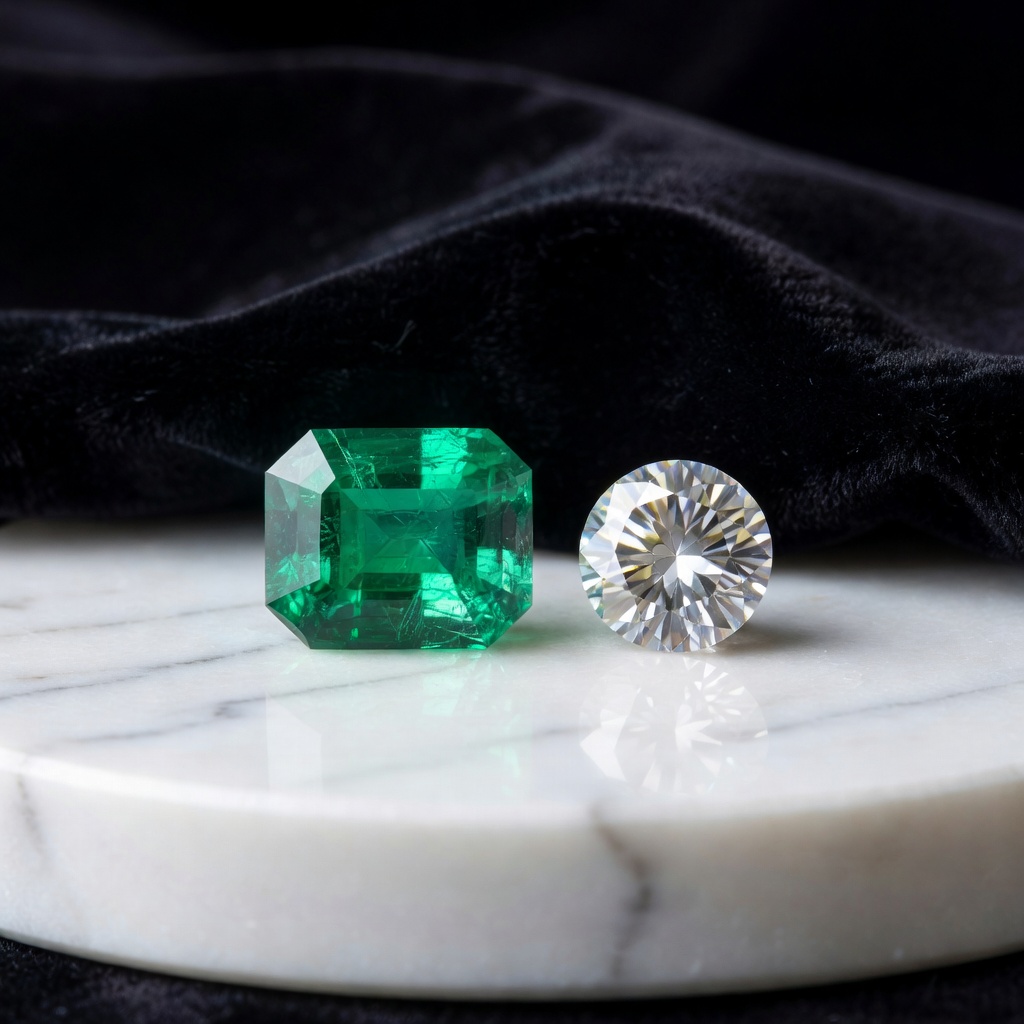
The visual distinction between green moissanite vs emerald represents one of the most significant differentiators for potential buyers, as emeralds possess an unmatched depth of color ranging from bluish-green to slightly yellowish-green that derives from their unique crystalline structure. High-quality natural emeralds display a saturated verdant tone often described as "emerald green" that appears distinctly different from the minty or yellowish-green tints achievable through treated moissanite, which lacks the chromium-based color centers that give natural beryl its characteristic glow. When examining clarity, emeralds typically exhibit Type III inclusions known as "jardin" (French for garden), which are accepted as natural birthmarks and actually help gemologists identify genuine stones, while moissanite's laboratory creation process yields eye-clean appearance with minimal internal characteristics.
Light performance reveals dramatic differences between these gemstones, with moissanite fire and brilliance exceeding that of emeralds due to its higher refractive index of 2.65-2.69 compared to emerald's 1.57-1.58. This optical property means moissanite displays more rainbow flashes and scintillation, particularly under direct lighting, while emeralds offer a more subdued, velvety glow that emphasizes color over brilliance. For buyers seeking the classic emerald inclusions jardin aesthetic, only genuine beryl provides that organic, mossy internal texture that collectors and connoisseurs specifically prize, whereas those prioritizing maximum sparkle will find moissanite's superior light return more appealing.
Practical Tip: Lighting Considerations
When evaluating these stones side by side, examine them under various lighting conditions. Emeralds typically appear more vivid under natural daylight or incandescent lighting that enhances their green depth, while moissanite demonstrates its characteristic fire most prominently under direct LED or spotlight illumination. This difference affects how each stone will perform in everyday environments, from office fluorescent lighting to romantic candlelit dinners.
Durability and Hardness for Daily Wear
Understanding Mohs hardness emerald moissanite comparisons proves essential for anyone considering these stones for rings or bracelets subjected to daily impact and abrasion. Lab-created moissanite ranks 9.25 on the Mohs scale, making it the second-hardest gemstone used in jewelry after diamond (10), and significantly harder than emerald's 7.5-8 rating. This substantial difference in moissanite hardness means it resists scratching from everyday encounters with household dust (which contains silica at 7 hardness), metal objects, and other environmental hazards that could mar an emerald's surface over time.
However, hardness represents only one aspect of durability, as toughness—the resistance to chipping and breaking—also determines a gemstone's suitability for active lifestyles. Emeralds durability issues stem primarily from their jardin inclusions and natural cleavage planes, which create internal stress points where impacts can cause fractures or chips, particularly at the girdle or sharp corners. In contrast, moissanite's superior toughness derives from its silicon carbide crystal structure, which lacks the brittle fracture planes common in beryl, making it exceptionally resistant to chipping even when subjected to accidental knocks against doorframes or countertops.
Engagement Ring Suitability Analysis
For moissanite vs emerald engagement rings, the durability metrics heavily favor moissanite for daily wear scenarios. While emeralds can certainly function as center stones, they require protective settings such as bezels or halos that shield the girdle and corners from direct impact, whereas moissanite tolerates exposed prong settings that maximize light exposure without compromising structural integrity. Couples with active lifestyles, manual occupations, or concerns about long-term wear patterns should seriously consider these durability differences when selecting a lifetime piece.
Price Analysis and Value Retention
The financial comparison between moissanite vs emerald price reveals dramatic disparities that influence purchasing decisions across different budget tiers. High-quality natural emeralds command prices ranging from $1,000 per carat for commercial-grade stones to $10,000 or more per carat for exceptional Colombian material with vivid color and minimal inclusions, with untreated specimens fetching premium multiples above treated equivalents. Conversely, lab-created moissanite cost typically falls between $300 and $600 per carat equivalent, regardless of size, with price variations depending primarily on cut quality and brand reputation rather than rarity factors.
Value retention trajectories differ significantly between these options, as emeralds function as potential investment vehicles when purchased as untreated, well-documented stones from prestigious origins, often appreciating over decades as mining yields decrease and collector demand increases. Lab-created moissanite, however, possesses limited resale market value due to its reproducible nature and continuous improvements in laboratory growing technology that make older stones less desirable than newer creations. When calculating total cost of ownership, factor in the long-term costs associated with emeralds, including specialized insurance riders, periodic professional re-oiling treatments, and potential repairs for chips or lost stones, versus moissanite's minimal maintenance expenses.
Budget Planning Scenario
A couple with a $5,000 jewelry budget faces distinctly different options: they could acquire a modest 0.75-carat natural emerald with visible inclusions requiring protective settings and ongoing maintenance, or alternatively purchase a stunning 2-carat equivalent moissanite with superior clarity and durability, leaving substantial funds for elaborate platinum settings or additional accent stones. This economic reality drives many modern buyers toward moissanite for primary jewelry pieces while reserving emerald purchases for special occasion items or collector investments.
Treatment Requirements and Maintenance Protocols
Natural emerald gemstone care demands significantly more attention than moissanite maintenance due to the ubiquitous practice of fracture-filling and oiling treatments used to enhance clarity and stability. Approximately 90% of natural emeralds undergo cedar oil or modern resin treatments that fill surface-reaching fissures, improving transparency but requiring periodic reapplication as these substances dry out or deteriorate over years of wear and cleaning. This emerald oil treatment care necessitates avoidance of ultrasonic cleaners, steam cleaning, and exposure to heat or harsh chemicals that could remove filling materials and reveal the stone's original inclusions.
Moissanite maintenance requires only basic cleaning with mild soap and warm water using a soft brush to remove accumulated oils and lotions, with no professional treatments or special precautions necessary beyond standard jewelry care. The gemstone cleaning guide for moissanite owners can safely include ultrasonic and steam cleaning methods that would damage treated emeralds, representing significant convenience for busy individuals who prefer low-maintenance luxury. Over decades of ownership, emeralds typically require professional re-oiling every few years at costs ranging from $50 to $200 depending on stone size and setting complexity, while moissanite maintains its appearance indefinitely without intervention.
Professional Maintenance Schedule
Emerald owners should establish relationships with jewelers experienced in colored gemstone care, scheduling annual inspections to check for loose prongs and evaluate whether re-oiling treatments have degraded. Store emerald pieces separately from other jewelry to prevent scratching from harder stones like diamonds or sapphires, and remove emerald rings before applying hand lotions, gardening, or performing household chores. Moissanite owners enjoy greater freedom, though periodic professional cleaning helps maintain optimal brilliance by removing buildup from the stone's facet junctions.
Ethical Sourcing and Environmental Impact
The ethical gemstones conversation increasingly influences modern purchasing decisions, with natural emerald mining presenting complex challenges related to labor practices, environmental disruption, and traceability. Major emerald deposits in Colombia, Zambia, and Brazil often operate in remote regions with limited regulatory oversight, where artisanal mining may involve hazardous working conditions, child labor concerns, and ecosystem damage from tunneling and waste disposal. While certified ethical mining initiatives exist, establishing complete supply chain transparency from mine to market remains difficult for natural emeralds, particularly stones passing through multiple international cutting centers before reaching consumers.
Lab-created moissanite eco-friendly advantages include zero-mining footprints, reduced carbon emissions compared to extraction operations, and guaranteed conflict-free provenance since production occurs in controlled facilities with regulated labor standards. The sustainable jewelry choices represented by moissanite appeal to environmentally conscious buyers seeking to minimize their ecological impact without sacrificing beauty or durability. Additionally, synthetic gemstone comparison studies consistently show that laboratory production consumes less water and generates less waste per carat than traditional mining operations, though energy consumption for crystal growth remains a consideration depending on the manufacturer's power sources.
Traceability Verification
Consumers prioritizing ethical sourcing should request documentation for natural emeralds through systems like the Gemological Institute of America's Origin Report or independent ethical mining certifications, while moissanite buyers can verify manufacturer credentials through companies that publish sustainability reports and utilize renewable energy in their growing facilities. This transparency difference often tips the scales for buyers who value knowing exactly where and how their gemstones originated.
Best Jewelry Applications: Strategic Stone Selection
Moissanite engagement rings represent the optimal application for this durable stone, providing brilliant, durable center stones that withstand daily wear, hand washing, and active lifestyles without requiring special precautions or protective settings. For wedding bands, anniversary rings, and bracelets subjected to frequent impact, moissanite's hardness and toughness ensure longevity that rivals diamond while offering distinctive optical properties. The versatility of moissanite extends to earrings and pendants where its light performance maximizes visibility and sparkle across various lighting environments.
Emerald statement jewelry suits special occasion pieces, cocktail rings, and pendants worn occasionally rather than daily, where their rich color can take center stage without risking damage from routine activities. When setting emeralds, gemstone setting recommendations emphasize protective bezels, partial bezels, or halo designs that shield the girdle and vulnerable corners from direct impact, whereas moissanite tolerates delicate prong settings and tension mounts that expose maximum surface area to light. Vintage-inspired designs often pair emeralds with diamond halos that provide both protection and complementary brilliance, while contemporary solitaire settings showcase moissanite's modern aesthetic and superior durability.
Wardrobe Integration Strategies
Consider your existing jewelry collection when selecting between these stones. Emeralds pair beautifully with yellow gold settings that enhance their warm green tones and suit formal evening wear, while moissanite offers neutral versatility that complements white gold, platinum, and rose gold equally well for everyday coordination. Business professionals who type extensively or use their hands actively should gravitate toward moissanite for primary rings, reserving emerald pieces for weekend wear or special events where they receive appropriate admiration without functional risk.
Comprehensive Comparison: Emerald vs Lab-Created Moissanite
| Characteristic | Natural Emerald | Lab-Created Moissanite |
|---|---|---|
| Chemical Composition | Beryllium aluminum silicate (Be₃Al₂Si₆O₁₈) with Cr/V trace elements | Silicon carbide (SiC) |
| Mohs Hardness | 7.5 - 8 | 9.25 |
| Refractive Index | 1.577 - 1.583 (low brilliance) | 2.65 - 2.69 (high brilliance) |
| Typical Color Range | Deep bluish-green to yellowish-green, highly saturated | Colorless to near-colorless; green-tinted versions available but rare |
| Clarity Characteristics | Type III inclusions (jardin) typically visible to naked eye | Eye-clean with minimal to no visible inclusions |
| Price Range (Per Carat) | $1,000 - $10,000+ depending on origin and quality | $300 - $600 regardless of size |
| Treatment Requirements | Regular oiling or resin filling; re-treatment needed every 2-5 years | No treatments required; maintenance-free |
| Durability for Daily Wear | Moderate; prone to chipping and scratching; requires protective settings | Excellent; highly resistant to chipping, breaking, and scratching |
| Cleaning Protocol | Soap and water only; avoid ultrasonic and steam cleaners | Safe for ultrasonic, steam, and standard jewelry cleaners |
| Ethical Sourcing | Mining-dependent; traceability challenges; environmental impact from extraction | Laboratory-grown; conflict-free; minimal environmental footprint |
| Value Retention | High for untreated, documented specimens; potential appreciation | Minimal resale value; functions as consumable luxury good |
| Best Applications | Statement pieces, cocktail rings, special occasion jewelry | Engagement rings, wedding bands, daily wear jewelry |
Final Verdict: Making Your Informed Decision
Choosing between Emerald vs Lab-Created Moissanite ultimately requires balancing timeless prestige against practical modern performance, with neither choice representing a universal "best" option for all buyers. If your priorities center on owning a piece of geological history with unmatched color depth and potential investment value, and you accept the responsibility of careful wear and regular maintenance, natural emeralds offer irreplaceable beauty that has captivated royalty and collectors for millennia. Conversely, if you seek maximum durability, minimal maintenance, ethical sourcing guarantees, and brilliant performance for daily wear without budget strain, lab-created moissanite delivers exceptional value that often exceeds diamond alternatives in fire and sparkle while preserving funds for other life priorities.
When navigating this synthetic gemstone comparison, consider creating a personal decision matrix that weights factors according to your specific lifestyle: active individuals and those seeking engagement rings should heavily favor moissanite's durability metrics, while collectors and those prioritizing color above all else may find emerald's verdant allure worth the additional care requirements. For certification, natural emeralds warrant reports from respected laboratories like GIA or AGL documenting origin, treatment status, and quality factors, while moissanite buyers should seek stones graded by recognized entities for cut, color, and clarity to ensure optimal optical performance. Ultimately, both stones can provide decades of enjoyment when selected with realistic expectations about their distinct characteristics and care requirements.
Frequently Asked Questions
Is lab-created moissanite more durable than natural emerald?
Yes, lab-created moissanite ranks 9.25 on the Mohs hardness scale compared to emerald's 7.5-8. Moissanite also offers superior toughness, making it highly resistant to chipping and breaking, whereas emeralds contain natural inclusions that make them more fragile for daily wear.
Can moissanite be green like an emerald?
While standard moissanite is colorless, manufacturers can create green-tinted moissanite through treatments. However, it rarely matches the deep, rich verdant green of a high-quality natural emerald. Green moissanite typically appears more yellowish or minty rather than displaying emerald's distinctive bluish-green hue.
Why is moissanite so much cheaper than emerald?
Moissanite is created in controlled laboratory environments with predictable yields, eliminating mining costs and rarity premiums. Natural emeralds are rare geological formations found in limited locations, with high mining costs and significant waste (tons of rock per carat of gem material), driving prices substantially higher.
Which gemstone is better for an engagement ring?
Lab-created moissanite is generally superior for engagement rings due to its exceptional hardness (9.25 Mohs), resistance to scratching, and minimal maintenance requirements. Emeralds require protective settings, regular oiling treatments, and careful wear to prevent damage during daily activities.
Do emeralds require more maintenance than moissanite?
Absolutely. Most emeralds undergo fracture-filling or oiling treatments that require periodic reapplication and special cleaning (no ultrasonic or steam cleaners). Moissanite requires only basic cleaning with soap and water to maintain its brilliance, with no professional treatments needed.
Can you tell the difference between emerald and moissanite with the naked eye?
Yes, these gemstones are visually distinct. Emeralds display a characteristic rich green color with visible inclusions (jardin) and moderate brilliance. Moissanite exhibits higher fire (rainbow flashes), greater brilliance, and is typically colorless or near-colorless unless specifically treated to appear green.
Which has better investment value: emerald or lab-created moissanite?
Natural emeralds, particularly untreated or minimally treated stones from prestigious origins like Colombia, retain and potentially appreciate in value over time. Lab-created moissanite has minimal resale value as it is mass-produced in laboratories, functioning primarily as a consumable luxury good rather than an investment asset.
Is lab-created moissanite considered a simulated emerald?
No, moissanite is not an emerald simulant; it is a distinct gemstone with its own chemical composition (silicon carbide). While green moissanite can serve as an emerald alternative for budget-conscious buyers, it does not replicate emerald's specific crystalline structure, color depth, or inclusion patterns.