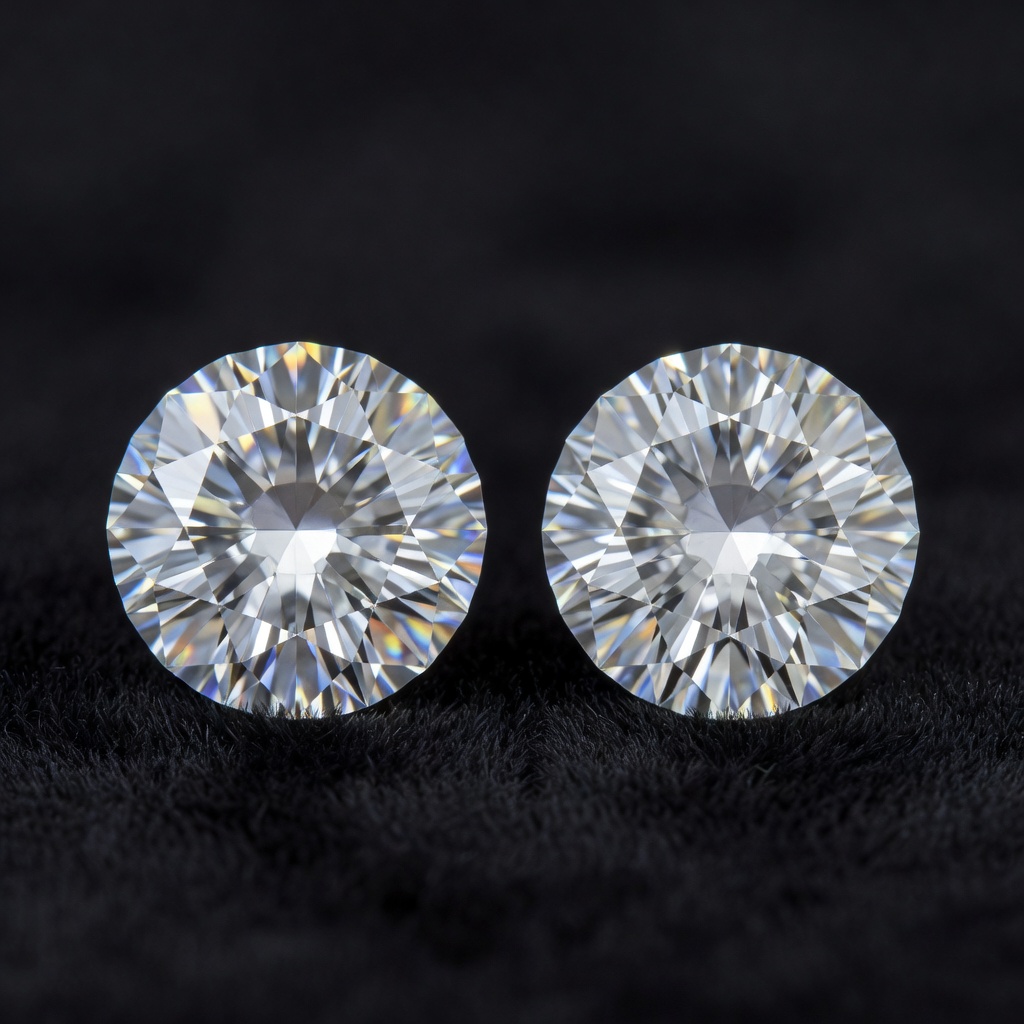
Understanding Diamond vs Zircon: A Comprehensive Gemstone Comparison
When exploring gemstone options for fine jewelry, many consumers encounter confusion regarding the Diamond vs Zircon debate, particularly misunderstanding the critical distinction between natural zircon and synthetic cubic zirconia. Unlike cubic zirconia, which is a laboratory-created diamond simulant, natural zircon is a genuine mineral species (zirconium silicate) that has formed in the earth's crust for billions of years, making it one of the oldest substances on our planet. Both stones serve as popular diamond alternatives affordable enough for fashion jewelry, yet they occupy vastly different positions in the gemological hierarchy regarding durability, value, and investment potential. This comprehensive guide examines the visual characteristics, physical properties, and practical considerations that distinguish these gemstones, helping you make an informed decision whether you're selecting an engagement ring, anniversary gift, or collectible specimen.
Chemical Composition and Geological Formation
Diamond represents pure carbon crystallized under extreme pressure and temperature conditions approximately 100 miles beneath the earth's surface, ranking as the hardest known natural material with a perfect score of 10 on the Mohs hardness scale. These gemstones crystallize in the isometric (cubic) crystal system, forming octahedral shapes that gem cutters transform into brilliant rounds, princess cuts, and fancy shapes. Most gem-quality diamonds formed between 1 billion to 3.3 billion years ago in mantle rock formations, later transported to the surface by volcanic kimberlite pipes, with major deposits located in Africa, Australia, Russia, and Canada.
Natural zircon, scientifically known as zirconium silicate (ZrSiO4), crystallizes in the tetragonal crystal system and forms primarily in igneous rocks such as granites and pegmatites, as well as in metamorphic environments. What makes natural zircon gemstone properties truly remarkable is their extraordinary age—zircon crystals from Western Australia have been dated to 4.4 billion years old, making them the oldest minerals ever discovered on Earth and providing crucial evidence about our planet's early crust formation. Significant zircon deposits occur in Cambodia, Sri Lanka, Myanmar, Thailand, and Australia, with each location producing distinctive color varieties based on local trace elements and radiation exposure over geological time.
The formation environments create fundamentally different material structures: diamonds possess strong covalent bonding between carbon atoms creating unmatched hardness, while zircon's silicate structure incorporates uranium and thorium trace elements that cause natural radiation damage over millions of years, potentially affecting their crystalline integrity. This radiation damage creates unique "metamict" zones in some zircons that alter their physical properties, requiring heat treatment to restore optical clarity—a process never needed for diamonds.
Visual Characteristics and Optical Properties
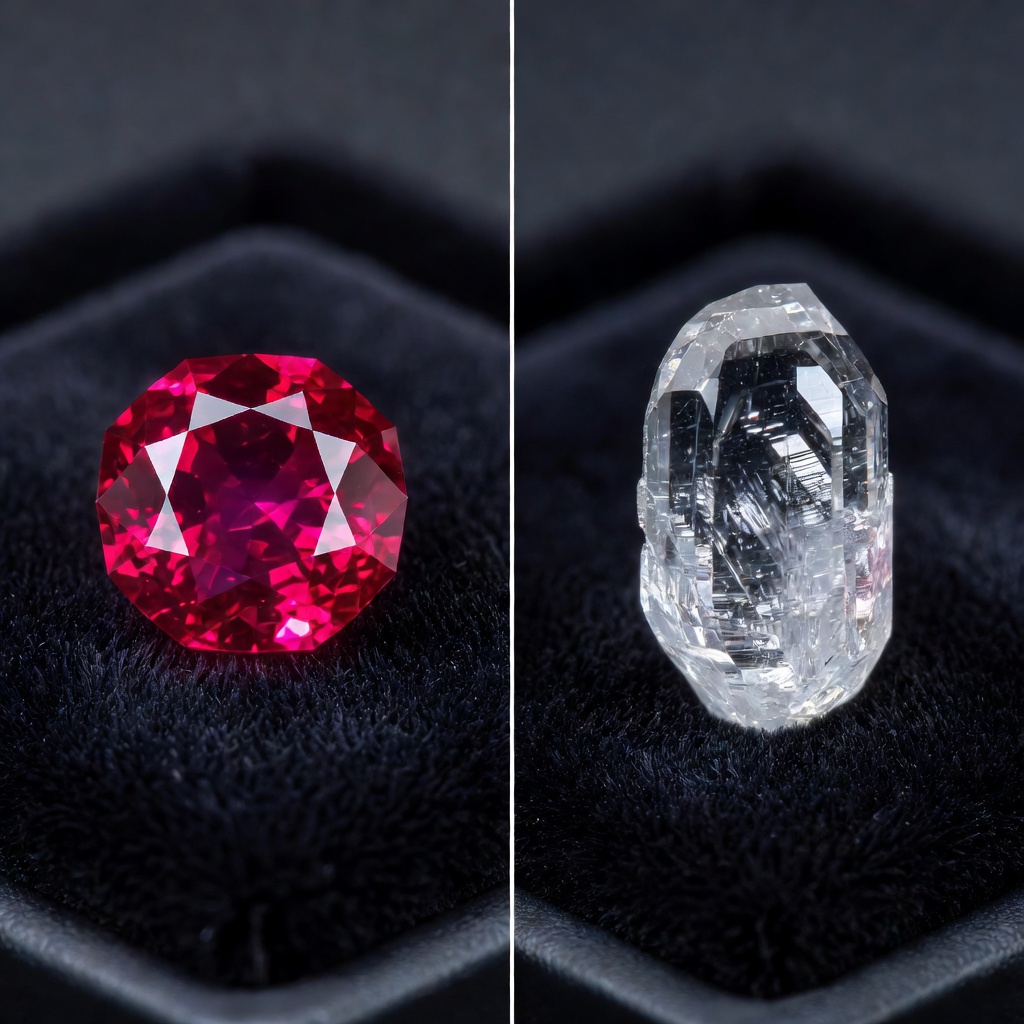
Both diamonds and zircons exhibit exceptional brilliance, but subtle optical differences distinguish them upon close inspection. Diamond possesses a refractive index of 2.42, creating intense brilliance through total internal reflection, while zircon ranges between 1.93-2.01 depending on crystal orientation, producing slightly less intense but still impressive sparkle. When comparing white zircon vs diamond side by side, diamonds typically display sharper, more defined flashes of light, whereas zircon's brilliance appears somewhat "softer" or more dispersed to trained observers.
The most definitive visual differentiator involves zircon double refraction, an optical phenomenon where light splits into two separate rays as it passes through the crystal structure. When viewing a zircon through its table (top facet) using a 10x jeweler's loupe, you will observe distinct doubling of the pavilion facets and culet (bottom point), making them appear blurred or duplicated. Diamonds exhibit single refraction, showing crisp, singular facet junctions without any doubling effect, resulting in cleaner visual appearance under magnification.
Dispersion, or "fire," refers to a gemstone's ability to separate white light into spectral colors. Diamond displays a dispersion rating of 0.044, creating those desirable rainbow flashes, while zircon measures 0.039—slightly lower but often appearing more pronounced due to the double refraction effect. Luster differences also aid identification: diamonds display "adamantine" luster (extremely shiny, like a mirror), while zircons range from adamantine to vitreous (glass-like), sometimes appearing slightly "sleepy" or oily compared to diamond's crisp reflectivity.
Comparative Analysis Table
| Characteristic | Diamond | Natural Zircon |
|---|---|---|
| Chemical Composition | Carbon (C) | Zirconium Silicate (ZrSiO4) |
| Crystal System | Cubic (Isometric) | Tetragonal |
| Mohs Hardness | 10 (Hardest) | 6-7.5 (Relatively Soft) |
| Refractive Index | 2.42 | 1.93-2.01 |
| Specific Gravity | 3.52 | 4.6-4.8 (Heavier) |
| Optical Property | Single Refraction | Double Refraction |
| Dispersion (Fire) | 0.044 | 0.039 |
| Toughness | Good to Excellent | Poor (Brittle) |
| Price per Carat | $3,000-$30,000+ | $50-$400 |
| Daily Wear Suitability | Excellent | Poor to Fair |
| Heat Sensitivity | Resistant | Sensitive (avoid ultrasonic) |
| Best Setting Types | Prong, Bezel, Tension | Bezel, Halo, V-Prong |
Durability, Hardness, and Wearability Concerns
The gemstone hardness comparison between diamond and zircon reveals the most practical difference for jewelry wearers. Diamond's perfect 10 on the Mohs scale means it can scratch any other material and resists abrasion from daily activities like bumping against countertops, door handles, or other jewelry. Conversely, zircon's 6-7.5 rating places it similar to quartz and significantly softer than sapphire (9) or topaz (8), making it vulnerable to scratching from household dust (which contains microscopic quartz particles) and contact with harder gemstones.
Beyond hardness, toughness presents another critical concern. Zircon exhibits brittle tenacity with a conchoidal fracture pattern, meaning it chips and cleaves relatively easily upon impact, particularly along edges and points. This brittleness stems from internal radiation damage accumulated over millions of years, creating microscopic fractures that weaken the crystal structure. Case studies from jewelry repair shops consistently show zircon rings requiring repolishing or recutting after six months to one year of daily wear, whereas diamond jewelry maintains its polish for decades.
Diamond possesses perfect cleavage in four directions (octahedral planes), meaning it can split cleanly if struck precisely, though this rarely occurs during normal wear. Zircon has indistinct cleavage but greater susceptibility to abrading—facet edges round off quickly when worn against clothing fibers or during household cleaning. For practical jewelry selection, reserve zircon pieces for occasional wear such as evening events, or select protective settings that shield the girdle and corners from impact. Active professionals, healthcare workers, or individuals with hands-on hobbies should avoid zircon for daily-wear rings, opting instead for zircon pendants or earrings where impact risk remains minimal.
Color Varieties and Enhancement Treatments
Diamonds occur in a spectrum ranging from colorless (graded D-F) through near-colorless (G-J) to faint yellow or brown (K-Z), with "fancy colors" including blue, pink, yellow, green, and rare red commanding premium prices. The Gemological Institute of America (GIA) grades diamond color under controlled lighting, with truly colorless stones remaining the most valued for white jewelry. Treatment methods for diamonds include High Pressure High Temperature (HPHT) processing to improve color grades and irradiation to create fancy colors, with ethical dealers always disclosing such enhancements.
Zircon naturally occurs in diverse hues including golden yellow, reddish-brown, green, and the highly prized blue varieties. However, gem enthusiasts should understand that most blue zircons on the market undergo heat treatment, where brown or reddish rough material undergoes heating to 800-1000°C in a reducing environment to achieve the characteristic electric blue or pastel blue colors. This treatment is permanent and stable, though heat-treated blue zircons may fade if exposed to prolonged direct sunlight over several years—a consideration for storage and wearing habits.
Colorless or "white" zircon represents the variety most commonly compared to diamonds, offering brilliance at a fraction of the cost but requiring protective care. Green and red zircons occur naturally but remain rare collector's items, while untreated golden or honey-colored zircons from Cambodia represent excellent value for those seeking warm-toned gemstones. When purchasing treated gemstones, always request disclosure documentation from reputable dealers, as untreated natural blue zircon commands significantly higher prices than heat-treated material due to its extreme rarity.
Price, Value, and Investment Potential
The financial distinction between these gemstones proves substantial, with zircon price per carat ranging from $50 to $400 for fine specimens, while quality diamonds command $3,000 to $30,000+ per carat depending on cut, color, clarity, and carat weight. Even the rarest blue zircons top out around $1,000 per carat for exceptional stones, making them accessible to collectors and fashion jewelry enthusiasts. This price differential reflects not only rarity but also durability—diamonds maintain their beauty indefinitely while zircons gradually degrade with wear.
Investment perspectives diverge significantly between these materials. Diamonds, particularly those exceeding one carat with high color and clarity grades, historically retain value and serve as portable wealth stores, though retail markup often exceeds resale value by 100-200%. Zircons function primarily as consumable jewelry stones or collector's items rather than investments, with resale markets limited to specialized gem dealers and auction houses focusing on rare colors or large, untreated specimens. Market perception reinforces this divide: diamonds symbolize luxury, permanence, and status, while zircons represent accessible beauty and geological history without the financial barrier.
For budget-conscious consumers seeking diamond alternatives affordable enough for large statement pieces, zircon offers compelling value. A three-carat white zircon might cost $300-600, while a comparable diamond could exceed $30,000. However, consider the total cost of ownership: zircon jewelry may require professional repolishing every few years ($50-150 per service), eventually approaching the cost of a durable synthetic diamond or moissanite alternative. When purchasing zircon, prioritize smaller stones (under two carats) where chipping risk decreases, and allocate savings toward protective platinum or heavy gold settings that extend the stone's wearable lifespan.
Identification Techniques and Authentication
Distinguishing between diamond, zircon, and cubic zirconia requires understanding the cubic zirconia vs zircon difference alongside diamond comparisons. Professional gemologists utilize refractometers to measure refractive indices—diamond's 2.42 exceeds the refractometer's typical range (causing a "blink" reading), while zircon's birefringence produces two distinct readings. Specific gravity testing offers another definitive method: zircon sinks quickly in heavy liquids (specific gravity 4.6-4.8) while diamond floats or sinks slowly (3.52), and cubic zirconia measures approximately 5.6-6.0, heavier than both.
For home identification without specialized equipment, examine the stone through its table using a 10x loupe. Look for the characteristic doubling of facet edges indicating zircon double refraction, or check for rounded facet edges and gas bubbles (indicative of glass or CZ). The thermal conductivity test provides another clue: diamonds disperse heat rapidly, feeling immediately cool to the touch, while zircon warms more quickly against skin. However, cubic zirconia also conducts heat differently than diamond, requiring careful interpretation.
Certification remains crucial when purchasing either gemstone. GIA (Gemological Institute of America) or AGS (American Gem Society) reports provide definitive diamond grading, while zircon purchases should include documentation from established dealers regarding treatment status (particularly for blue varieties) and origin. Be wary of unscrupulous sellers offering "zircon" that is actually cubic zirconia—the former is a natural, collectible mineral worth hundreds per carat, while the latter costs pennies to manufacture. When in doubt, consult an independent appraiser who can distinguish between natural zircon, synthetic CZ, and diamond using polariscopes, spectroscopes, and magnification.
Jewelry Setting Recommendations and Care
Given zircon durability limitations, selecting appropriate zircon jewelry settings becomes essential for longevity. Protective settings such as bezels (metal rims encircling the stone) or halo designs (small diamonds surrounding the center stone) shield zircon's vulnerable edges and points from impact. V-prongs work well for marquise or pear-shaped zircons, while channel settings suit square or baguette cuts where sides remain protected. Avoid high, exposed peg heads or delicate wire settings that leave the girdle vulnerable to chips from everyday bumps against desks or car doors.
Diamond settings offer virtually unlimited versatility due to the stone's hardness and toughness. Classic six-prong Tiffany settings, tension mounts, and pave bands all perform excellently for diamonds, allowing maximum light exposure without durability concerns. For active wearers, platinum prongs provide superior strength compared to gold, though both metals protect diamond edges effectively.
Cleaning protocols differ significantly between these gems. Diamonds tolerate ultrasonic cleaners, steam cleaning, and boiling in acid solutions (though not recommended for home use). Zircon jewelry settings require gentler care: warm water with mild dish soap and a soft brush remove buildup safely, while ultrasonic vibrations can shatter zircons due to internal fractures and inclusions. Always rinse zircon jewelry over a bowl rather than an open drain, as loose stones fall easily from worn prongs. Store zircon pieces separately in soft cloth pouches, isolated from harder gems like sapphires, rubies, or other diamonds that could scratch their surfaces during storage.
Ethical Sourcing and Environmental Impact
Diamond mining historically raises significant ethical and environmental concerns, prompting the establishment of the Kimberley Process Certification Scheme in 2003 to prevent conflict diamonds from entering legitimate markets. However, critics note loopholes in the Kimberley Process regarding labor practices and environmental degradation. Large-scale open-pit diamond mining disturbs vast land areas, consumes enormous water resources, and creates significant carbon emissions through extraction and processing. Consumers seeking ethical alternatives increasingly choose lab-grown diamonds, which offer identical physical properties to mined stones with reduced environmental impact, though energy consumption for creation remains a consideration.
Zircon mining generally occurs on a smaller scale than diamond operations, often as a byproduct of titanium and rare earth element extraction, resulting in comparatively lower environmental disruption per carat. Artisanal miners in Cambodia and Sri Lanka frequently recover zircons using traditional methods with minimal mechanized equipment, supporting local economies without the massive infrastructure associated with diamond megamines. However, lack of standardized certification for zircon means traceability remains challenging compared to the Kimberley Process framework.
Sustainability considerations favor recycled diamonds for eco-conscious consumers, as repurposing existing stones requires no new mining. Zircon's abundance makes it inherently more sustainable than rare gem species, though its shorter lifespan (due to softness) may necessitate replacement sooner than durable alternatives. When evaluating ethical gemstones, consider not only extraction methods but also longevity—purchasing one durable diamond that lasts generations may prove more sustainable than replacing softer stones multiple times.
Final Verdict: Choosing Between Diamond and Zircon
Deciding between Diamond vs Zircon ultimately depends on lifestyle assessment, budget constraints, and intended use. Active individuals, medical professionals, or those seeking generational heirlooms should invest in diamonds despite higher costs, as no other natural gemstone matches their combination of brilliance, durability, and value retention. For engagement rings meant to last fifty years or more, diamond remains the pragmatic choice, with lab-grown options bridging the price gap while maintaining physical properties.
Zircon suits fashion-forward consumers seeking temporary beauty without financial strain, collectors interested in geological antiquity, or those desiring large, colorful cocktail rings for occasional wear. If you select zircon for significant jewelry, treat it as "event wear" rather than daily attire, removing rings before cooking, cleaning, exercising, or sleeping. Budget-conscious buyers might compromise with diamond center stones for engagement rings and zircon accent pieces for fashion jewelry, enjoying both materials' beauty while managing costs and durability expectations realistically.
Consider the emotional and symbolic weight of your purchase: diamonds carry cultural significance regarding permanence and commitment that zircons cannot replicate, while zircons offer connection to Earth's earliest history—literally wearing a piece of the planet's first crust. Whether prioritizing brilliance versus durability, natural rarity versus accessibility, or investment potential versus immediate affordability, understanding these fundamental differences ensures satisfaction with your gemstone selection for years to come.
Frequently Asked Questions
Is zircon the same as cubic zirconia?
No, they are completely different materials. Zircon is a natural gemstone (zirconium silicate) that forms in the earth's crust and can be billions of years old. Cubic zirconia (CZ) is a synthetic, lab-created material made from zirconium dioxide. While both can imitate diamonds, natural zircon is a genuine collectible gemstone, whereas CZ is simply a diamond simulant.
Can white zircon pass as a diamond to the untrained eye?
White zircon can initially resemble a diamond due to its high brilliance and fire, but trained eyes can spot differences. Zircon exhibits double refraction (visible doubling of facets when viewed through the table), while diamonds show single refraction. Additionally, zircon's softer surface (6-7.5 Mohs) will show scratches over time that diamonds (10 Mohs) resist, making long-term identification easier.
Which is more valuable, diamond or zircon?
Diamonds are significantly more valuable than zircons. High-quality diamonds command prices from $3,000 to $30,000+ per carat depending on the 4Cs, while even the finest zircons typically range from $50 to $400 per carat. Blue zircons are the most valuable zircon variety but still cost a fraction of equivalent-sized diamonds. Diamonds also hold investment value, whereas zircons are considered fashion or collector stones.
How can I tell the difference between a diamond and zircon at home?
Use a 10x jeweler's loupe to look through the table (top facet) of the stone. If you see doubling of the facet edges or the culet (bottom point) appears double, it's zircon (due to double refraction). Diamonds show single, crisp facets with no doubling. Also, breathe on both stones—diamonds disperse condensation immediately due to high thermal conductivity, while zircon stays foggy slightly longer.
Is zircon durable enough for an engagement ring?
Zircon is generally not recommended for daily-wear engagement rings due to its moderate hardness (6-7.5 on the Mohs scale) and brittleness. It can chip, scratch, or abrade with daily activities like cooking, cleaning, or bumping against hard surfaces. If you choose zircon for an engagement ring, select a protective setting (bezel or halo) and reserve it for occasional wear, or consider it for right-hand rings rather than daily wedding jewelry.
Why does zircon have more 'fire' than diamond but cost less?
Actually, diamond typically has slightly higher dispersion (0.044) than zircon (0.039), meaning diamonds usually show more fire (rainbow colors). However, zircon's double refraction can create intense sparkle that some mistake for superior fire. Zircon costs less due to abundance, lower demand, and softness—it's less durable and therefore less suitable for heirloom jewelry, keeping prices accessible despite its beauty.
Do blue zircons occur naturally or are they always treated?
Most blue zircons on the market are heat-treated. Natural blue zircon is extremely rare. The treatment involves heating brown or reddish zircons to temperatures between 800-1000°C in a reducing environment, which transforms them into the popular electric blue or pastel blue colors. This treatment is stable and permanent, though heated blue zircons should be protected from prolonged sunlight exposure to prevent potential fading.
Can zircon scratch glass like a diamond can?
Yes, zircon (hardness 6-7.5) can scratch glass (hardness 5.5), so the glass scratch test won't distinguish zircon from diamond. Both will scratch glass easily. To differentiate them, you need to test hardness against each other (diamond will scratch zircon, but zircon won't scratch diamond) or look for optical properties like double refraction in zircon versus single refraction in diamond.