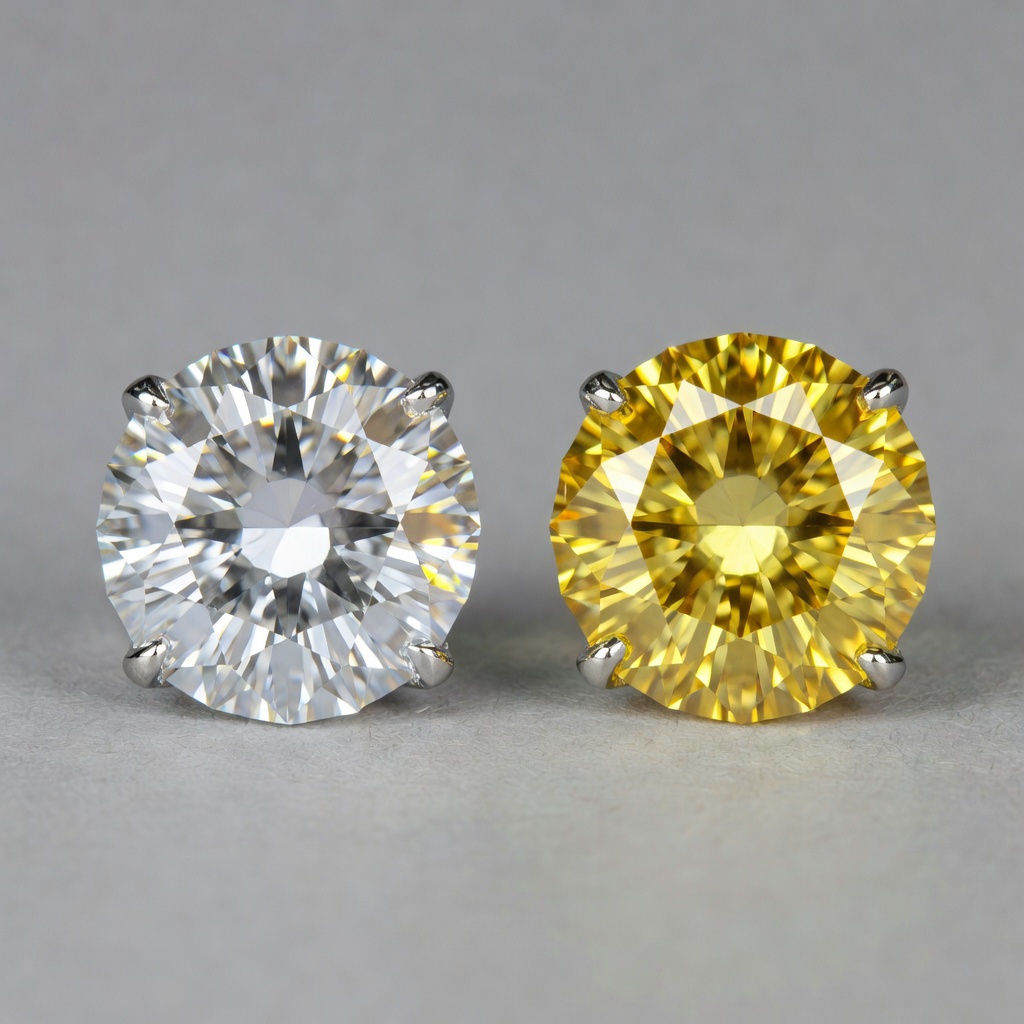
Understanding the Fundamental Differences
When exploring the Diamond vs Yellow Diamond distinction, the primary divergence lies in how gemologists classify and value color within these precious stones. Standard diamonds are graded on the D-to-Z colorless scale established by the Gemological Institute of America (GIA), where D represents completely colorless and Z indicates light yellow or brown tints. In contrast, fancy yellow diamonds transcend this scale entirely, possessing sufficiently saturated yellow coloration that they receive a separate "Fancy" designation based on hue, tone, and saturation rather than absence of color.
The mesmerizing golden hue of natural yellow diamond specimens results from nitrogen molecules absorbing blue light while transmitting yellow wavelengths during the crystallization process. This nitrogen incorporation creates a distinct chemical signature that differentiates fancy yellow diamonds from their colorless counterparts, fundamentally altering how light interacts with the stone's atomic structure. While colorless diamonds strive for chemical purity, fancy yellow diamonds embrace nitrogen's presence as the very element that creates their sunny disposition and rarity factor.
True fancy yellow diamonds represent extraordinary geological rarities, occurring approximately 10,000 times less frequently than colorless diamonds within natural deposits. This scarcity factor significantly impacts valuation, as only one carat of fancy yellow material emerges for every 10,000 carats of white diamond rough mined globally. However, not all yellow-tinted diamonds qualify as fancy; stones grading S-Z on the D-to-Z scale display undesirable "off-color" yellowish tints that actually decrease value, whereas genuine fancy yellow diamonds begin where the D-to-Z scale ends, starting at Fancy Light Yellow with increasingly valuable saturation levels.
Geological Formation and Origins
Both colorless and yellow diamonds originate from carbon crystallization under extreme pressure and temperature conditions approximately 90 to 120 miles beneath Earth's surface within the mantle's kimberlite pipes. These formation zones subject carbon atoms to pressures exceeding 725,000 pounds per square inch and temperatures above 2,000 degrees Fahrenheit, creating the tetrahedral atomic bonds that give diamonds their legendary hardness. The crystallization process typically spans one to three billion years, representing some of Earth's oldest preserved minerals before volcanic eruptions transport them rapidly to the surface.
The critical difference in natural yellow diamond formation involves nitrogen incorporation during this crystallization window, where specific geological conditions allow nitrogen atoms to substitute for carbon atoms within the crystal lattice. Unlike Type IIa colorless diamonds that remain nitrogen-free, Type Ia yellow diamonds contain grouped nitrogen atoms that modify light absorption patterns, creating the characteristic canary to golden coloration. The concentration and arrangement of these nitrogen aggregates determine whether a diamond displays faint yellow tints or achieves the coveted fancy vivid classification that collectors prize.
Geographic distribution patterns reveal that South Africa's Cape Province historically produced the world's most significant fancy yellow diamond deposits, including the legendary Tiffany Yellow Diamond discovered in 1878. Modern mining operations in Russia's Yakutia region, Australia's Argyle mine (now closed), and Canada's Ekati mine continue yielding exceptional specimens, though fancy yellow recovery rates remain consistently low across all operations. For consumers seeking sustainable alternatives, lab grown yellow diamond options created through High Pressure High Temperature (HPHT) and Chemical Vapor Deposition (CVD) methods now offer identical chemical compositions at reduced environmental impact, though these synthetics occupy distinct market tiers regarding investment potential.
Grading Systems and Quality Assessment
The diamond color grading methodology diverges significantly between colorless and fancy yellow categories, requiring distinct evaluative frameworks that potential buyers must understand. Colorless diamonds undergo assessment under controlled lighting conditions where graders compare stones against master diamonds, seeking the absence of color with D, E, and F grades commanding premium prices for their icy whiteness. Conversely, fancy yellow diamonds flip this paradigm entirely, with graders examining the stone face-up to evaluate the presence, distribution, and intensity of yellow coloration using specialized comparison stones.
The GIA's fancy color grading scale for yellow diamonds progresses from Fancy Light through Fancy, Fancy Intense, Fancy Vivid, and Fancy Deep classifications, with Fancy Vivid representing the most saturated and valuable tier. Unlike colorless diamonds where cut primarily determines brilliance, fancy yellow diamonds prioritize color intensity above all other factors, meaning a Fancy Vivid stone with slight inclusions often commands higher prices than a flawless Fancy Light specimen. This hierarchy necessitates different purchasing strategies, as buyers must balance the "C" of Color against Cut, Clarity, and Carat weight differently than they would when selecting traditional white diamonds.
Clarity assessment presents unique challenges in fancy yellow diamond evaluation because inclusions often prove more visible against the colored background compared to colorless stones where light performance can mask imperfections. While a VS2 clarity grade might appear eye-clean in a colorless diamond, identical inclusions might create noticeable contrast within a yellow stone's body color, potentially affecting both beauty and value. Experienced gemologists recommend prioritizing higher clarity grades in fancy yellow purchases, particularly for stones exceeding one carat, where inclusions become increasingly difficult to hide within the color saturation.
Pricing Structures and Market Value
Current market analysis reveals significant yellow diamond pricing variations depending on color intensity, with entry-level Fancy Light yellow diamonds starting around $3,000 to $4,500 per carat compared to $2,500 to $5,000 for equivalent quality colorless stones. However, this apparent parity disappears rapidly as color saturation increases, with Fancy Intense yellow diamonds ranging $8,000 to $15,000 per carat and Fancy Vivid specimens commanding $15,000 to $30,000+ per carat for high-quality examples. The pricing differential becomes even more pronounced in canary diamond specimens—those possessing pure yellow hues without brown or green secondary modifiers—which can achieve premiums of 200-300% over comparable colorless diamonds.
The "Cape Effect" represents a crucial pricing concept that confuses many first-time buyers, referring to the phenomenon where near-colorless diamonds (grades G through J) from South Africa's Cape region often display faint yellow tints that actually decrease their value. These stones occupy an awkward market position, costing less than truly colorless diamonds while lacking the saturation to qualify as fancy yellow, essentially representing the least desirable coloration range. Smart buyers avoid the S-Z "off-color" trap by either selecting stones in the D-F range for maximum whiteness or jumping directly to Fancy Light Yellow or better to ensure their investment appreciates based on intentional color rather than undesirable tinting.
Secondary hue modifiers dramatically impact valuation within the yellow diamond category, with pure yellow stones commanding significant premiums over those showing brownish, greenish, or orangey undertones. A Fancy Vivid Yellow diamond might retail for $25,000 per carat, while a Fancy Vivid Orangy Yellow of identical clarity and cut might fetch only $18,000 per carat due to market preferences for pure canary coloration. This distinction underscores the importance of examining the full GIA color grade description rather than relying solely on the "Fancy" designation when assessing potential purchases.
Investment Potential and Resale Value
Colored diamond investment strategies have evolved significantly over the past two decades, with fancy yellow diamonds demonstrating robust appreciation trajectories that often outperform traditional colorless stones in specific weight categories. Historical data from 2004 to 2024 indicates that Fancy Vivid yellow diamonds have appreciated approximately 200-300%, compared to 100-150% for equivalent quality colorless diamonds, driven largely by increasing scarcity and shifting consumer preferences toward distinctive gemstones. However, this appreciation remains concentrated in the upper echelons of the market, specifically stones exceeding one carat with Fancy Intense or Vivid color grades and VS clarity or better.
The 2020 closure of Australia's Argyle mine, which produced approximately 90% of the world's pink diamonds and significant quantities of fancy yellow material, has created supply constraints that continue driving prices upward for natural specimens. Unlike colorless diamonds that maintain relatively liquid secondary markets through diamond exchanges and dealer networks, fancy yellow diamonds require more specialized sales channels, often involving auction houses or colored diamond specialists to achieve full value realization. This liquidity difference means that while white diamonds might sell within days through standard jewelry buy-back programs, maximizing returns on fancy yellow investments typically requires patience and access to niche collector networks.
Certification becomes paramount when considering diamonds as investment vehicles, with GIA reports serving as the industry standard for verifying natural origin, color grade, and treatment status. Treated yellow diamonds—those subjected to irradiation or High Pressure High Temperature processing to enhance color—carry virtually no investment value despite their aesthetic appeal, making laboratory verification essential before significant capital allocation. For serious investors, accompanying appendix letters documenting the stone's exceptional characteristics, combined with provenance documentation for famous mines like Argyle or South Africa's Cape Province, provide additional value protection and authentication for future resale.
Jewelry Applications and Design Versatility
The resurgence of canary diamond engagement ring designs reflects broader shifts toward personalized bridal jewelry, with celebrities like Carrie Underwood and Heidi Klum showcasing fancy yellow center stones that challenge traditional white diamond dominance. Modern settings increasingly feature halo configurations where smaller colorless diamonds surround a yellow center stone, creating striking contrast that amplifies the golden hue while maintaining traditional brilliance. Three-stone designs pairing a fancy yellow center with white diamond side stones have also gained popularity, offering visual balance that bridges classic and contemporary aesthetics.
Metal selection significantly impacts the visual presentation of both diamond types, requiring thoughtful pairing strategies to maximize aesthetic impact. White diamonds achieve maximum brilliance when set in platinum or white gold, which reflect light back through the stone without adding color casts that might detract from the D-F color investment. Conversely, fancy yellow diamond jewelry often benefits from yellow gold settings that harmonize with the stone's warm tones, creating a cohesive monochromatic appearance that intensifies the perceived color saturation, though white metals can create dramatic contrast that makes the yellow pop aggressively against cool backgrounds.
Design versatility extends beyond engagement rings into statement necklaces, earrings, and cocktail rings where yellow diamonds function as wearable art rather than traditional symbols. While colorless diamonds suit virtually any occasion or wardrobe choice, fancy yellow pieces make intentional style statements that work particularly well with autumnal color palettes, earth tones, and vintage-inspired fashion. The bold personality of yellow diamonds appeals to fashion-forward consumers seeking alternatives to the ubiquitous white diamond aesthetic, though professional environments might favor colorless stones for their subtle sophistication and traditional associations with corporate success.
Durability, Care, and Maintenance
Both colorless and yellow diamonds rank 10 on the Mohs hardness scale, sharing identical durability characteristics that make them suitable for daily wear across generations without scratching or abrasion under normal conditions. This exceptional hardness stems from their identical carbon crystal structure, meaning that natural yellow diamond engagement rings withstand the same rigorous activities as their colorless counterparts, including exposure to household chemicals, ultraviolet light, and temperature variations. However, owners of treated yellow diamonds must exercise additional caution regarding heat exposure, as some color-enhanced stones may experience fading or color shifts when subjected to jewelry repair temperatures exceeding 400 degrees Celsius.
Cleaning protocols remain consistent for both varieties, with ultrasonic cleaners and steam cleaning proving safe for untreated natural stones and most lab-grown alternatives. However, fracture-filled yellow diamonds—those treated with glass-like substances to improve apparent clarity—require gentler cleaning methods using warm soapy water and soft brushes to avoid dislodging filling materials. Professional jewelers recommend disclosing any treatments before maintenance procedures, as standard repair techniques involving high heat could damage treated stones or cause color instability in irradiated specimens.
Insurance considerations differ significantly between the categories due to valuation complexities and replacement challenges. While colorless diamonds enjoy standardized pricing matrices that facilitate straightforward claims processing, fancy yellow diamonds require specialized appraisals from certified gemologists familiar with colored diamond markets to ensure adequate coverage. Policy riders should specifically address "mysterious disappearance" coverage and specify whether replacement requires identical color grading or allows for equivalent value substitutions, given the unique nature of individual fancy yellow specimens that cannot be precisely replicated like colorless stones.
Current Market Trends and Consumer Preferences
Recent market intelligence indicates a 23% increase in fancy yellow diamond searches during 2024, signaling significant consumer interest shifts toward colored gemstones among engagement ring shoppers. This surge accompanies broader demographic changes, with Millennial and Gen Z buyers demonstrating reduced adherence to traditional white diamond expectations, instead prioritizing individuality and self-expression through distinctive center stones. The trend reflects post-pandemic preferences for optimistic, warm-toned jewelry that contrasts with the cooler aesthetics dominating the 2010s, positioning yellow diamonds as symbols of happiness and renewed optimism.
The lab grown yellow diamond sector has expanded dramatically, offering entry points for budget-conscious consumers with prices 40-60% below equivalent natural specimens while maintaining identical chemical and optical properties. These synthetic alternatives appeal to environmentally conscious buyers concerned about mining impacts, though they lack the resale value and rarity premiums associated with natural fancy colored stones. Major retailers now offer extensive lab-grown yellow inventories alongside natural options, creating market segmentation where consumers choose between geological rarity and accessible luxury based on personal values rather than visual differences.
Regional preferences reveal fascinating cultural distinctions in the Diamond vs Yellow Diamond debate, with Asian markets traditionally favoring colorless stones in the D-F range as status symbols of purity and wealth. Conversely, Western markets, particularly the United States and Europe, increasingly embrace colored diamonds as sophisticated alternatives that demonstrate connoisseurship and fashion-forward thinking. This geographic divergence creates arbitrage opportunities for international buyers and influences global mining allocation, with rough producers prioritizing fancy yellow recovery for Western markets while reserving top colorless material for Asian distribution channels.
Expert Buying Guide: How to Choose Between Them
Navigating the choosing between diamonds process requires establishing clear priorities through a budget decision tree that allocates resources effectively between size and color intensity. Buyers with $5,000 to $8,000 might select a 1.00-carat G-color VS1 clarity colorless diamond or alternatively choose a 0.70-carat Fancy Intense Yellow diamond with similar clarity, depending on whether they prioritize traditional brilliance or distinctive personality. Those seeking maximum visual impact should allocate 60% of their budget toward the center stone color grade—whether D-F for white diamonds or Fancy Intense+ for yellow—while reducing expenditures on setting complexity or side stones.
Complexion matching represents an often-overlooked consideration that significantly impacts how diamonds appear when worn. Colorless diamonds complement all skin tones but particularly enhance cooler undertones and fair complexions, creating icy contrast against the skin. Canary diamond pieces generally flatter warmer skin tones with olive, golden, or dark pigmentation, though the universal appeal of yellow means most wearers can successfully incorporate these stones with appropriate metal choices—white metals for cool undertones, yellow metals for warm undertones.
Lifestyle assessment should inform final selections, with professionals in conservative industries such as law, finance, or medicine often selecting colorless diamonds for their understated elegance and traditional associations. Creative professionals, entrepreneurs, and those in fashion-forward industries might find that fancy yellow diamonds better express their personal brand while maintaining the prestige of diamond ownership. Authentication remains critical regardless of choice; always verify natural origin through GIA certification, specifically examining the comments section for treatment disclosures regarding irradiation or HPHT processing that would affect long-term value.
Final Verdict and Recommendations
When weighing Diamond vs Yellow Diamond options, the decision ultimately hinges on whether you value traditional brilliance and liquidity or distinctive character and potential appreciation. Colorless diamonds suit traditionalists seeking maximum light performance, conservative investment profiles, and versatile jewelry that transitions seamlessly between professional and social contexts. Fancy yellow diamonds reward those willing to embrace bold aesthetics, colored gemstone enthusiasts seeking rare geological specimens, and collectors targeting niche markets where scarcity drives long-term value appreciation.
| Characteristic | Colorless Diamonds | Fancy Yellow Diamonds |
|---|---|---|
| Rarity | Common (millions of carats annually) | Extremely Rare (1 in 10,000 natural diamonds) |
| Grading Focus | Absence of color (D-Z scale) | Color intensity and purity (Fancy Light to Vivid) |
| Entry Price (1 carat) | $2,500 - $5,000 | $3,000 - $8,000+ (Fancy Light) |
| Premium Pricing | D-F colors command 20-40% premiums | Fancy Vivid can cost 3x Fancy Light prices |
| Investment Liquidity | High (global dealer networks) | Moderate (specialist/collector markets) |
| Metal Pairing | Best in white gold/platinum | Enhanced by yellow gold; contrasted by white metals |
| Treatment Risks | Minimal (coating rare) | High (irradiation/HPHT common; certification essential) |
| Style Statement | Classic, timeless, understated | Bold, unique, optimistic |
Best practices for purchase remain consistent across both categories: insist on GIA certification for natural stones, work with established jewelers offering reasonable return policies (minimum 30 days), and secure independent appraisals for insurance purposes within 48 hours of acquisition. For fancy yellow diamonds specifically, verify that the certificate specifies "Natural Color" rather than indicating treatments, and consider purchasing slightly below your maximum budget to allow for custom setting modifications that enhance the stone's unique characteristics. Whether selecting the icy perfection of a colorless diamond or the sunny warmth of a canary specimen, prioritize cut quality above all other factors, as this determines the stone's ability to return light and create the scintillation that makes diamonds universally coveted.
Frequently Asked Questions
Are yellow diamonds more expensive than white diamonds?
It depends on intensity. Light fancy yellow diamonds can be similarly priced to good quality white diamonds, but Fancy Intense and Fancy Vivid yellow diamonds command 30-50% higher prices per carat. Canary diamonds with pure yellow hue are typically 2-3x more expensive than comparable colorless stones.
What is the difference between a canary diamond and a regular yellow diamond?
Canary diamond is a trade term for fancy yellow diamonds with pure, intense yellow color without brown or green secondary hues. Only diamonds graded Fancy Intense Yellow or Fancy Vivid Yellow with pure hue can be called canary diamonds. Regular yellow diamonds include lighter shades and those with modifying colors.
Do yellow diamonds sparkle less than white diamonds?
Yellow diamonds sparkle equally brilliantly when well-cut. Their fire may appear slightly warmer due to color filtering, but a properly cut Fancy Yellow diamond will show exceptional brilliance. The cut quality is crucial for both types to maximize light performance.
Are yellow diamonds a good choice for engagement rings?
Yes, yellow diamonds are increasingly popular for engagement rings. They offer unique beauty and symbolize happiness and optimism. Yellow diamonds rank 10 on Mohs scale, making them durable for daily wear. Their distinctive color stands out while maintaining the prestige of a diamond.
How can I tell if a yellow diamond is natural or color-treated?
Always request a GIA or AGS certification, which will disclose any treatments. Natural yellow diamonds show specific color zoning and inclusion patterns under magnification. Treated diamonds (irradiation or HPHT) are significantly less valuable. Reputable jewelers provide full disclosure and certification.
Which holds value better: white or yellow diamonds?
High-quality white diamonds (D-F, VS1+) have more liquid resale markets. However, rare Fancy Vivid yellow diamonds have shown stronger appreciation over the past 15 years. For investment, choose certified natural stones with excellent grades. Avoid treated diamonds for investment purposes.
What metal setting works best for yellow diamonds?
Yellow gold enhances the warm color of yellow diamonds, creating a rich, monochromatic look. White gold or platinum creates contrast, making the yellow color pop more dramatically. Rose gold offers a vintage, romantic aesthetic. The choice depends on personal style and desired visual effect.
Do lab-grown yellow diamonds have the same properties as natural ones?
Lab-grown yellow diamonds have identical chemical, physical, and optical properties to natural ones. They're created using HPHT or CVD methods. The key difference is rarity and value—lab-grown yellow diamonds cost 40-60% less and have minimal resale value compared to natural fancy yellow diamonds.