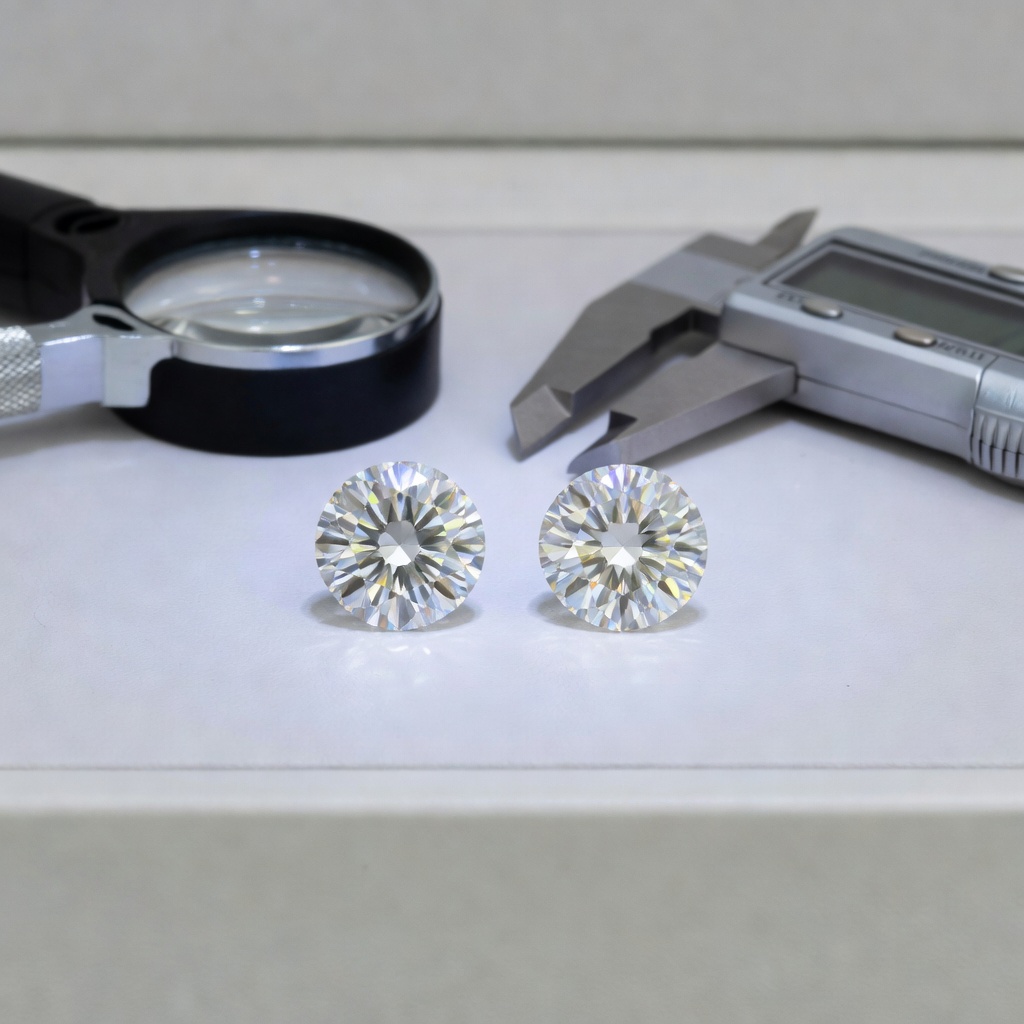
Introduction: Understanding Diamond vs White Topaz
When selecting the perfect center stone for fine jewelry, the comparison between diamond vs white topaz represents one of the most common dilemmas faced by modern consumers. Natural diamonds form deep within the earth's mantle under extreme pressure and temperature over billions of years, emerging as the hardest known natural substance and serving as the cherished birthstone for April. In contrast, white topaz is a silicate mineral that crystallizes in pegmatites and high-temperature quartz veins, offering a colorless appearance that mimics diamond's clarity at a fraction of the cost. Understanding these fundamental differences helps buyers make informed decisions based on their specific needs, budget constraints, and lifestyle requirements.
White topaz has gained significant popularity as a diamond alternative for those seeking affordable diamond alternatives without sacrificing the traditional colorless aesthetic. While both stones appear similar to the untrained eye at first glance, their physical properties, optical performance, and long-term durability vary dramatically. Consumers frequently compare white topaz vs diamond when shopping for engagement rings, anniversary gifts, or fashion jewelry, often drawn to topaz's accessibility while questioning its ability to substitute for diamond's prestige. This comprehensive guide examines every aspect of these two gemstones to help you determine which option aligns with your personal values and practical needs.
Physical Properties: The Science Behind the Stones
The gemstone hardness scale serves as the primary indicator of a stone's ability to resist scratching and surface damage in daily wear. Diamonds rank at the pinnacle of the Mohs scale with a perfect hardness rating of 10, meaning they can only be scratched by other diamonds and maintain their polish indefinitely even under rigorous conditions. White topaz properties place this gemstone at 8 on the Mohs scale, which while still relatively hard compared to many other gems, leaves it vulnerable to abrasion from everyday dust and particles that contain quartz or hardened steel. This two-point difference on the hardness scale translates to exponentially different wear characteristics over the lifetime of a jewelry piece.
Refractive index measurements reveal significant optical differences between these stones, directly impacting how they interact with light. Diamond possesses a refractive index of 2.42, creating the foundation for its legendary brilliance and ability to bend light dramatically within its structure. White topaz exhibits a much lower refractive index of 1.64, resulting in less dramatic light bending and a more subdued optical performance. Additionally, diamonds crystallize in the isometric cubic system, allowing for uniform light return from any angle, while white topaz forms in the orthorhombic crystal system, creating directional optical properties that can appear different depending on viewing angles.
Specific gravity measurements further distinguish these materials, with diamonds typically weighing 3.52 grams per cubic centimeter compared to white topaz's 3.4-3.6 range. Professional gemologists utilize these distinct physical signatures along with thermal conductivity testing to differentiate between the stones accurately. Understanding these scientific fundamentals helps explain why diamond sparkle vs topaz performance differs so dramatically despite their similar colorless appearances.
Visual Differences: Brilliance, Fire, and Sparkle Compared
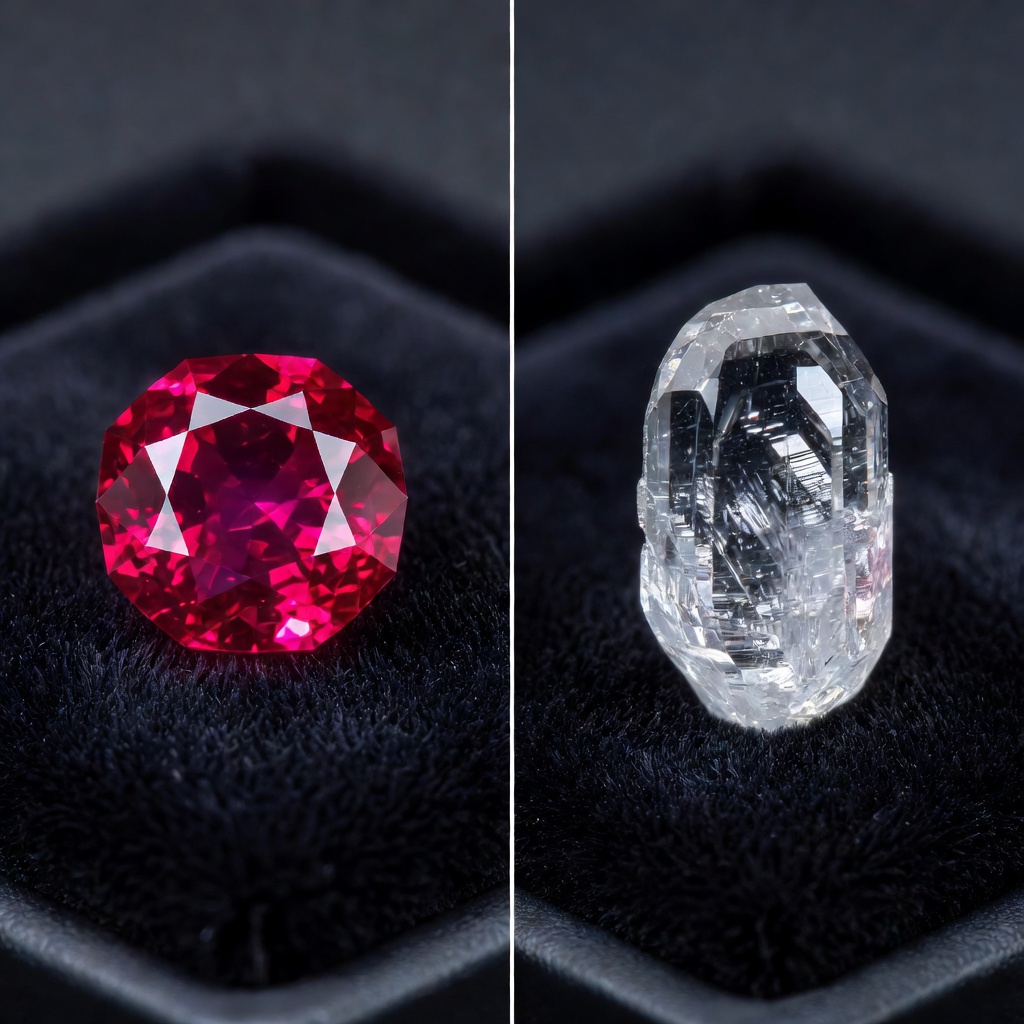
The visual distinction between white topaz vs diamond becomes immediately apparent when observing light performance under various lighting conditions. Diamonds exhibit superior light return and scintillation patterns due to their high refractive index and expert cutting standards, creating the signature "crushed ice" or "hall of mirrors" effect that disperses white light into spectral colors. When exposed to direct sunlight or spot lighting, diamonds display three distinct optical characteristics: brilliance (white light reflection), fire (rainbow color dispersion), and scintillation (the flashing pattern of light and dark areas). These combined effects create the mesmerizing sparkle that has made diamonds the standard for fine jewelry.
White topaz's lower dispersion rate of 0.014 compared to diamond's 0.044 means it produces significantly less fire or rainbow-colored flashes. While a well-cut white topaz will reflect white light effectively, it lacks the prismatic color separation that gives diamonds their distinctive rainbow sparkle, instead appearing more watery or glass-like under magnification. The difference in refractive properties also affects how cut quality impacts each stone; diamond cutters can utilize specific angles and facet arrangements to maximize light return, whereas white topaz cannot achieve the same optical efficiency regardless of cut quality due to its inherent physical limitations.
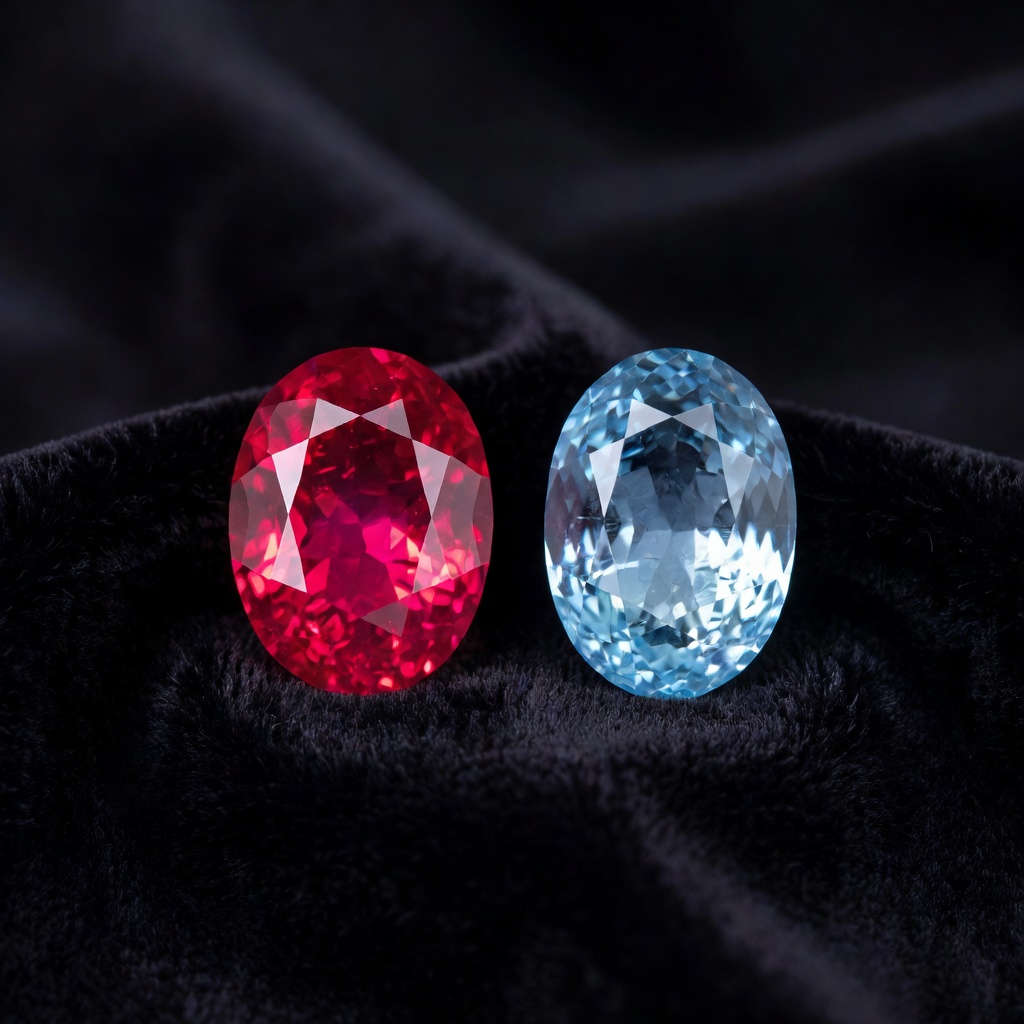
Real-world visual tests to distinguish these stones include observing them in dim lighting conditions, where diamonds maintain their sparkle while white topaz appears noticeably duller. Another practical method involves examining the stone's reflections; diamonds create sharp, distinct reflections of their surroundings, while white topaz produces softer, more diffused images. When viewed side-by-side under jewelry store lighting, the diamond will consistently appear more lively and animated, while the white topaz may look flat or lifeless in comparison despite being perfectly clean and well-cut.
Side-by-Side Comparison: Diamond vs White Topaz
| Characteristic | Diamond | White Topaz |
|---|---|---|
| Mohs Hardness | 10 (Maximum) | 8 |
| Refractive Index | 2.42 | 1.64 |
| Dispersion (Fire) | 0.044 (High) | 0.014 (Low) |
| Price per Carat | $2,000 - $20,000+ | $5 - $50 |
| Durability for Daily Wear | Excellent - Scratch Proof | Moderate - Prone to Abrasion |
| Brilliance/Sparkle | Exceptional - Rainbow Fire | Moderate - White Reflection Only |
| Best Jewelry Applications | Engagement Rings, Heirlooms | Fashion Jewelry, Occasional Wear |
| Long-term Value | Retains/Increases Value | Minimal Resale Market |
Price and Value Analysis: Cost Differences Explained
The white topaz price differential compared to diamond represents one of the most dramatic disparities in the gemstone market, with white topaz typically costing 95 to 99 percent less than equivalent-sized diamonds. While a quality one-carat diamond ranges from $2,000 to over $20,000 depending on cut, color, clarity, and certification, a similar-sized white topaz costs merely $5 to $50 per carat. This massive price gap reflects not only rarity and formation conditions but also market demand, cultural significance, and the established infrastructure supporting diamond trading worldwide. For budget-conscious consumers seeking affordable diamond alternatives, this cost difference makes white topaz immediately attractive for large statement pieces that would otherwise be financially prohibitive.
However, price alone does not tell the complete value story, as diamonds maintain established resale markets and liquidity that white topaz completely lacks. Quality diamonds can be resold through jewelers, auction houses, or private sales, often retaining significant percentages of their original purchase price, particularly for rare colors or large sizes. White topaz possesses virtually no resale market, meaning the initial purchase represents a final consumption expense rather than a store of value. Factors affecting pricing for both stones include cut quality, with poorly cut diamonds still commanding premium prices over well-cut topaz, and carat weight, though topaz prices increase linearly while diamond prices escalate exponentially with size.
Long-term investment perspectives strongly favor diamonds for pieces intended to become family heirlooms or hold sentimental value across generations. Insurance considerations also differ significantly; while diamonds require specialized jewelry insurance riders and professional appraisals, white topaz pieces often cost less than insurance deductibles, making separate coverage unnecessary. When evaluating white topaz vs diamond from a financial standpoint, buyers must determine whether they prioritize immediate visual impact and size (favoring topaz) or long-term durability and asset retention (favoring diamond).
Durability and Wearability for Daily Jewelry
Diamond's superior scratch resistance makes it the undisputed champion for engagement rings and daily-wear jewelry subjected to constant contact with hard surfaces. Because diamond ranks at the top of the gemstone hardness scale, it maintains its polish and facet edges indefinitely, resisting the microscopic abrasions that gradually dull softer stones. This exceptional durability explains why antique diamond jewelry from centuries past still sparkles brilliantly today, while softer gemstones from the same eras show significant wear. For active individuals who rarely remove their jewelry during workouts, household chores, or professional activities, diamond provides peace of mind that the stone will survive decades of rigorous use unscathed.
White topaz engagement ring concerns center primarily on the stone's tendency to develop abrasions and surface wear over relatively short timeframes. With a hardness of 8, white topaz can be scratched by common materials including steel files, masonry dust, and even accumulated particles in household dust that contain quartz particles. Within months of daily wear, the crown facets of a white topaz may develop a network of fine scratches that create a cloudy or milky appearance, significantly diminishing the stone's clarity and light performance. Unlike diamond, which maintains its transparency forever, white topaz requires periodic professional repolishing every few years to restore its original appearance, adding hidden maintenance costs to the initial savings.
Impact resistance comparisons reveal additional vulnerabilities, as both stones can chip or fracture under sufficient force, though white topaz exhibits slightly better toughness against blunt impact despite its inferior hardness. Real-world lifespan expectations for rings worn daily suggest that white topaz will show noticeable wear within six months to two years, while diamonds remain pristine for generations. For jewelry intended as permanent symbols of commitment, the long-term durability advantage of diamond overwhelmingly justifies the higher initial investment, whereas white topaz suits occasional wear pieces or temporary placeholder rings.
Popular Jewelry Applications: Best Uses for Each Stone
Diamonds dominate the bridal and engagement ring market due to their unmatched combination of durability, prestige, and optical performance, establishing the standard against which all diamond alternative options are measured. The traditional solitaire diamond engagement ring represents cultural significance and permanence, with the stone's eternal sparkle serving as a metaphor for enduring love. Beyond bridal jewelry, diamonds excel in anniversary bands, eternity rings, and heirloom pieces designed to pass between generations without degradation. High-end fashion jewelry also utilizes diamonds for statement pieces where maximum impact and longevity justify the premium pricing.
White topaz functions optimally as suitable for occasional wear earrings, pendants, and fashion rings where the stone faces minimal contact with abrasive surfaces. Large cocktail rings featuring white topaz allow wearers to enjoy substantial carat weights and impressive visual presence at cocktail parties or special events without the investment required for diamond. Earrings and pendants protect white topaz more effectively than rings because these pieces encounter fewer hard surfaces during daily activities, preserving the stone's polish for longer periods. Fashion-forward designers frequently incorporate white topaz into trend-driven collections where the jewelry serves current style preferences rather than lifetime commitments.
Setting styles significantly affect stone protection and longevity, with bezel settings offering superior protection for white topaz compared to prong settings that leave edges exposed. For white topaz engagement ring considerations, protective settings with high metal walls surrounding the stone can extend wearable life, though they cannot prevent the eventual surface abrasion that occurs with daily wear. Occasion-based recommendations clearly separate these materials: choose diamond for bridal jewelry, milestone celebrations, and permanent collections, while selecting white topaz for fashion-forward pieces, travel jewelry (to minimize loss risk), or temporary placeholder rings while saving for a diamond upgrade.
Identification Methods: How to Tell Them Apart
Professional gemological tests provide definitive identification through thermal conductivity, spectroscopy, and magnification examination by certified gemologists. Diamonds conduct heat five times faster than copper, allowing diamond testers to distinguish them instantly from white topaz, which conducts heat similarly to glass. Spectroscopic analysis reveals distinct absorption patterns, with diamonds showing specific absorption lines in the blue-violet spectrum that white topaz lacks entirely. Under high-powered magnification, trained professionals observe diamond's singular refractive property (isotropic) versus white topaz's double refraction (anisotropic), which creates doubling of facet edges when viewed through the table.
At-home visual inspection techniques offer preliminary screening methods, including the fog test where you breathe on the stone to create condensation. Diamond's exceptional thermal conductivity causes fog to dissipate almost instantly, while white topaz remains foggy for two to three seconds, though this test requires practice and comparison stones for accuracy. The newspaper test involves placing the stone flat side down over printed text; diamond's high refractive index prevents reading through the stone, while white topaz allows blurred text visibility due to lower light bending. Loupe examination at 10x magnification can reveal doubled facet junctions in white topaz or natural inclusions characteristic of diamonds.
Common mistakes in identification include relying on scratch tests, which are unreliable and potentially damaging to both stones. Amateur attempts to scratch glass or metal with the gemstone risk chipping the stone without providing conclusive results. When uncertainty remains after home testing, seeking certified gemologist appraisal becomes essential, particularly for insurance purposes or high-value purchases. Professional appraisers utilize advanced equipment including refractometers, polariscopes, and specific gravity testing to issue definitive reports that protect consumers from misrepresentation in the marketplace.
Ethical and Environmental Considerations
Diamond mining environmental impact involves significant land displacement, water usage, and energy consumption, particularly for open-pit mining operations that remove tons of earth per carat recovered. Traditional diamond extraction can disrupt local ecosystems, consume substantial fossil fuels, and potentially fund conflict in certain regions, though the Kimberley Process has reduced the flow of conflict diamonds. White topaz mining generally occurs on smaller scales with less environmental disruption, as topaz forms in pegmatite deposits that require less invasive extraction methods than kimberlite pipe mining for diamonds. However, artisanal topaz mining in certain regions may lack oversight regarding worker safety and environmental protections.
Lab-grown diamonds present an ethical alternative comparison for consumers concerned about mining impacts, offering identical chemical and physical properties to mined diamonds without the associated environmental degradation. These laboratory-created stones provide transparency regarding origins while maintaining the durability and beauty of natural diamonds. Fair trade and responsible sourcing options exist for both gemstones, with certain diamond suppliers adhering to strict environmental restoration standards and community support programs. White topaz sourced from specific certified mines ensures that extraction practices meet minimum standards for worker welfare and environmental protection.
Carbon footprint and water usage considerations generally favor white topaz and lab-created diamonds over mined diamonds, though exact comparisons depend on specific mining locations and methods. Consumers prioritizing ethical gemstones should seek retailers who provide chain-of-custody documentation and third-party certifications verifying responsible practices. When comparing lab diamond vs white topaz from an environmental perspective, both offer significant advantages over mined diamonds, with the choice between them depending primarily on desired durability and long-term value rather than environmental impact alone.
Making Your Choice: Decision Framework for Buyers
Budget prioritization represents the primary factor when choosing between these stones, with white topaz making sense when immediate size and presence outweigh longevity concerns. For couples allocating limited funds toward wedding expenses or housing, a white topaz placeholder ring allows for a future diamond upgrade without sacrificing the symbolic moment of proposal. However, when budget permits, investing in a smaller diamond rather than a larger white topaz typically provides greater satisfaction over decades of wear. The diamond vs white topaz buying guide suggests allocating funds based on the jewelry's intended lifespan: temporary fashion pieces justify topaz, while permanent commitments warrant diamond.
Lifestyle assessment plays a crucial role, as active wearers, medical professionals who wash hands frequently, or individuals working with their hands require diamond's durability to prevent rapid deterioration. Those with sedentary lifestyles or who remove jewelry during physical activities may find white topaz sufficient for their needs. Emotional significance and heirloom considerations strongly favor diamond for pieces intended to commemorate major life milestones or pass to future generations, while white topaz suits trend-driven purchases without sentimental attachment. The psychological value of knowing a stone will last forever often outweighs the initial cost savings of choosing a softer gem.
Alternative options like moissanite bridge the gap between these extremes, offering hardness levels of 9.25 (superior to white topaz) with refractive indices exceeding diamond, creating even more fiery sparkle. When evaluating moissanite vs diamond vs white topaz, moissanite provides the best durability-to-price ratio, though it differs visually from diamond with its distinctive rainbow flashes. Buyers should choose white topaz or diamond based on whether they value absolute permanence and prestige (diamond), maximum size on a minimal budget (white topaz), or an intermediate solution combining durability with affordability (moissanite). Consulting with reputable jewelers who can demonstrate all three options side-by-side often clarifies these decisions better than photographs or descriptions alone.
Care and Maintenance Requirements
Cleaning methods vary significantly between these stones, with ultrasonic cleaners safe for diamond but potentially damaging to white topaz due to internal stress fractures and inclusions common in the softer material. Diamonds tolerate ultrasonic cleaning, steam cleaning, and aggressive scrubbing with soft brushes, allowing for easy restoration of maximum brilliance at home using mild soap and warm water. White topaz requires gentler treatment, including soaking in mild detergent solutions followed by careful wiping with microfiber cloths to avoid scratching the surface during cleaning. Avoid exposing white topaz to harsh chemicals, extreme temperature changes, or high-pressure steam that might exacerbate existing internal fractures.
Storage recommendations emphasize separating white topaz from other jewelry to prevent scratching from harder stones, including diamonds, sapphires, and rubies. Individual soft cloth pouches or lined jewelry boxes with separate compartments prevent contact damage when pieces are not being worn. Diamonds, while resistant to scratching, can scratch other jewelry items, warranting similar separate storage to protect gold settings and adjacent gemstones. For travel, white topaz pieces should be packed in rigid containers that prevent compression or impact, whereas diamond jewelry tolerates standard travel jewelry cases with minimal risk.
Professional maintenance schedules differ dramatically, with white topaz requiring repolishing every two to five years depending on wear frequency to remove accumulated surface scratches and restore clarity. Diamonds need only periodic checking of prongs and settings, with professional cleaning recommended annually to remove buildup from lotions and soaps. Common care mistakes that damage white topaz prematurely include wearing the stone during swimming (chlorine exposure), gardening (abrasive soil contact), or sleeping (pressure against hard surfaces). Establishing a relationship with a trusted jeweler who understands these maintenance differences ensures that whichever stone you choose receives appropriate care to maximize its beauty and longevity.
Frequently Asked Questions
Is White Topaz a Real Diamond?
No, white topaz is a completely different gemstone. While both are natural minerals, diamond is pure carbon crystallized under extreme pressure, while white topaz is a silicate mineral with the chemical formula Al₂SiO₄(F,OH)₂. They have different physical properties, hardness levels, and light performance characteristics.
How Can I Tell If My Stone Is Diamond or White Topaz at Home?
Try the fog test: breathe on the stone. Diamond disperses heat instantly so the fog clears immediately, while topaz stays foggy for 2-3 seconds. Also, examine sparkle under bright light—diamond shows more colorful fire. For certainty, have a jeweler perform a thermal conductivity test.
Does White Topaz Sparkle Like a Diamond?
White topaz sparkles significantly less than diamond. Diamond's higher refractive index (2.42 vs 1.64) and dispersion rate (0.044 vs 0.014) create superior brilliance and fire. White topaz appears glassier with white light reflection rather than the rainbow sparkle characteristic of diamonds.
Is White Topaz Durable Enough for an Engagement Ring?
White topaz is not recommended for daily-wear engagement rings. With a hardness of 8 on the Mohs scale, it will develop scratches and abrasions over time, especially on the crown facets. For rings worn daily, diamond (hardness 10) or moissanite (9.25) are much better choices for long-term durability.
How Much Cheaper Is White Topaz Compared to Diamond?
White topaz typically costs 95-99% less than diamond. While a quality 1-carat diamond costs $2,000-$20,000+, a similar-sized white topaz costs $5-$50 per carat. This massive price difference reflects rarity, durability, market demand, and long-term value retention—not just appearance.
Why Does White Topaz Get Cloudy Over Time?
White topaz can appear cloudy due to accumulated scratches on its surface from everyday wear. Unlike diamond's extreme hardness, topaz's softer surface develops micro-abrasions that diffuse light. Additionally, topaz can develop internal stress fractures and may require professional repolishing every few years to restore clarity.
Can White Topaz Be a Good Diamond Alternative for Temporary Jewelry?
Yes, white topaz works well for fashion jewelry, occasional wear pieces, or as a placeholder stone in engagement settings. It's ideal when budget is the primary concern and the jewelry won't face daily wear. However, for permanent fine jewelry like engagement rings, invest in diamond or consider moissanite instead.
What Is the Main Visual Difference Between Diamond and White Topaz?
The primary visual difference is light performance. Diamonds display exceptional brilliance (white light return), fire (rainbow colors), and scintillation (sparkle pattern). White topaz appears more watery or glass-like with limited fire, appears duller in dim lighting, and lacks the 'crushed ice' sparkle effect of a well-cut diamond.