Diamond vs White Sapphire: Understanding the Core Differences
When selecting a center stone for fine jewelry, understanding the fundamental distinctions between these two gemstones becomes essential for making an informed decision. Diamonds consist of pure carbon arranged in an isometric crystal structure, while white sapphires belong to the corundum family, comprising aluminum oxide with trace elements that eliminate color. This mineralogical difference creates distinct optical properties, durability characteristics, and value propositions that significantly impact their performance in jewelry settings. Many consumers mistakenly assume white sapphires serve merely as inexpensive diamond substitutes, yet each stone offers unique aesthetic qualities suited to different preferences and lifestyle needs.
Common misconceptions often lead buyers to expect identical performance from both gemstones, creating disappointment when white sapphires display different light behavior than anticipated. Unlike diamonds, which are prized specifically for their brilliance and fire, white sapphires represent the absence of color in a family celebrated for vibrant blues, pinks, and yellows. Engagement ring shoppers seeking maximum sparkle and those prioritizing subtle elegance will find distinctly different satisfaction levels depending on their choice. Collectors and jewelry enthusiasts should evaluate these stones based on their individual merits rather than viewing one as merely a budget version of the other.
Mineral Composition and Formation
Diamonds form under extreme pressure and temperature conditions approximately 100 miles beneath Earth's surface, with volcanic eruptions bringing them to accessible depths. White sapphires crystallize in metamorphic and igneous environments, often occurring alongside their more famous blue counterparts in deposits across Sri Lanka, Madagascar, and Myanmar. The geological formation process affects inclusion patterns, crystal clarity, and ultimately the cutting styles achievable for each gemstone type. Understanding these origins helps explain why white sapphires typically appear more "sleepy" or translucent compared to the adamantine luster characteristic of diamonds.
Visual Performance: Brilliance, Fire and Sparkle Analysis
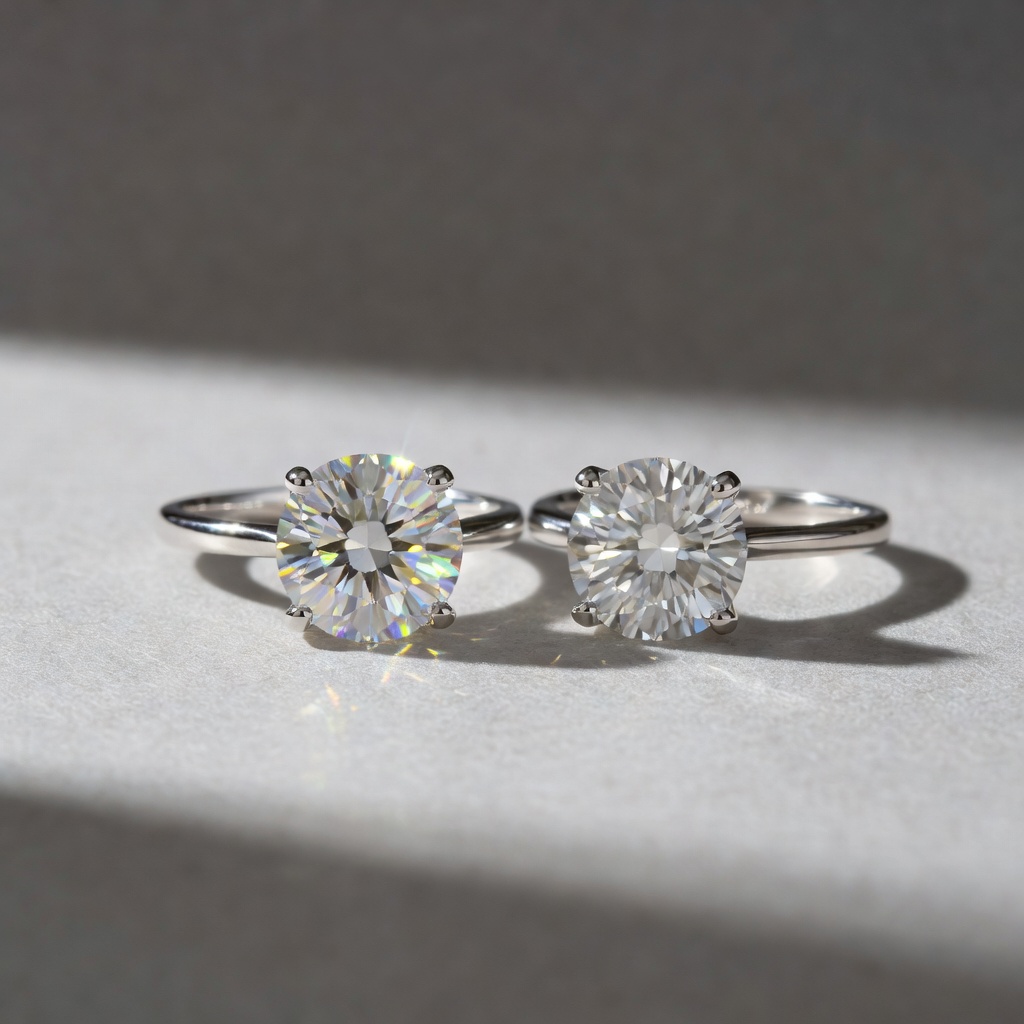
The optical performance gap between these gemstones becomes immediately apparent when observing them under various lighting conditions. Diamonds possess a refractive index of 2.42, significantly higher than white sapphire's 1.77, meaning diamonds bend light more dramatically and return it to the viewer's eye with greater intensity. This difference creates the signature "brilliance" that makes diamonds appear to glow from within, while white sapphires exhibit a softer, more diffuse light reflection similar to glass or ice. When evaluating a diamond alternative for engagement rings, understanding these optical limitations helps set realistic expectations for daily wear appearance.
Dispersion rates further distinguish these stones, with diamonds scoring 0.044 compared to white sapphire's modest 0.018 on the dispersion scale. This measurement quantifies the separation of white light into spectral colors, creating the rainbow "fire" visible in well-cut diamonds. White sapphires display minimal fire, appearing primarily white or slightly silvery rather than throwing colorful flashes when moved. Cut quality affects each material differently; diamonds require precise facet angles to maximize light return, while white sapphires are often cut deeper to minimize the "window" effect where light passes through rather than reflecting back.
Real-World Visual Identification Tests
Several practical tests help distinguish these gemstones without specialized equipment, though professional gemological evaluation remains the gold standard for identification. The tilt test involves observing the stone while slowly angling it away from direct light; diamonds maintain brightness at steeper angles, while white sapphires darken more quickly due to their lower refractive index. The breath test demonstrates thermal conductivity differences, with diamonds dispersing heat instantly and clearing condensation within seconds, whereas sapphires retain fog longer. Loupe examination reveals natural inclusion patterns distinctive to each mineral species, with diamonds typically showing tiny crystals or pinpoints and white sapphires displaying characteristic "silk" or rutile needle inclusions.
Durability and Hardness: Mohs Scale Reality Check
The Mohs hardness scale places diamonds at the absolute peak with a rating of 10, while white sapphires rank closely behind at 9, creating an important distinction for daily wear considerations. This one-point difference represents a significant gap in actual hardness, as diamonds are approximately four times harder than corundum in absolute terms. For engagement rings subjected to constant wear, this hardness differential affects scratch resistance, surface wear patterns, and long-term maintenance requirements. White sapphire engagement rings remain durable enough for daily use but require more mindful care to preserve their polish and facet edges over decades of wear.
Hardness alone does not determine a gemstone's suitability for jewelry; toughness and cleavage characteristics play equally crucial roles in preventing damage. Diamonds possess perfect cleavage in four directions, meaning sharp impacts at specific angles can cause splitting or chipping despite their extreme surface hardness. White sapphires lack cleavage planes but can fracture under severe impact, though they generally resist chipping better than diamonds in certain settings. When evaluating gemstone durability for active lifestyles, consider that while diamonds resist scratching from virtually any material except other diamonds, they remain vulnerable to breakage from hard blows against metal or stone surfaces.
Long-Term Wear Patterns and Practical Implications
After years of daily wear, white sapphires typically develop microscopic surface abrasions on facet junctions and table edges, gradually reducing their polish and light performance. Diamonds maintain their original polish indefinitely under normal conditions, retaining their sharp facet edges and mirror-like surfaces throughout generations. For heirloom pieces intended to last centuries, this difference becomes significant, as white sapphires may require periodic repolishing by skilled lapidaries to restore their original appearance. When choosing between these stones for wedding jewelry, consider whether you prioritize the absolute longevity of diamond or accept the trade-offs associated with white sapphire's more affordable but slightly less durable nature.
Price and Value: Cost-Per-Carat Breakdown
The financial advantage of choosing white sapphire becomes immediately apparent when comparing cost-per-carat metrics, with high-quality white sapphires typically costing 80-90% less than comparable diamonds. A one-carat white sapphire of good clarity might range from $200-$800, while a similar-sized diamond with equivalent visual characteristics commands $4,000-$15,000 depending on cut quality and certification. This dramatic price differential allows couples to allocate resources toward elaborate settings, additional accent stones, or future investments while still obtaining an attractive white gemstone. White sapphire price considerations must include factors beyond the initial purchase, including potential repolishing costs and the stone's minimal resale value compared to diamonds.
Several variables influence white sapphire pricing beyond basic carat weight, including geographical origin, treatment history, and color purity. Sri Lankan (Ceylon) white sapphires often command premium prices due to their reputation for exceptional clarity and ethical mining practices, while Madagascar sources offer more affordable options with slightly different inclusion characteristics. Heat treatments, which improve clarity and color in approximately 90% of white sapphires, affect pricing differently than in diamonds, where treatments significantly devalue the stone. Diamond pricing follows the strict 4Cs methodology with exponential increases for larger stones, whereas white sapphire pricing scales more linearly, making large statement stones particularly affordable.
Investment and Resale Considerations
Unlike blue sapphires or rubies, white sapphires hold minimal investment value and limited resale markets, typically returning only 10-30% of original purchase prices if sold. Diamonds, particularly those certified by the Gemological Institute of America (GIA), maintain stronger secondary markets, often retaining 50-70% of retail value depending on market conditions and brand recognition. However, both gemstones perform poorly as pure financial investments compared to precious metals or securities. When evaluating value, consider whether you prioritize the immediate budget savings of white sapphire or the long-term asset retention potential of diamond, recognizing that sentimental value typically outweighs monetary considerations for engagement jewelry.
Quality Grading: How Diamonds and Sapphires Are Evaluated
The grading systems for these gemstones differ fundamentally in standardization, precision, and the factors considered most important for valuation. Diamonds undergo rigorous evaluation through the universally accepted 4Cs system: Cut, Color, Clarity, and Carat weight, with GIA certification providing detailed reports on each characteristic. This standardization allows precise comparison between stones and establishes consistent pricing benchmarks across the global market. White sapphire grading lacks such universal standardization, with evaluations focusing primarily on color purity, transparency, and absence of the inclusions common to corundum minerals.
White sapphire clarity assessment requires understanding specific inclusion types that differ markedly from diamond characteristics. While diamonds are graded for inclusions like feathers, crystals, and clouds, white sapphires frequently contain rutile silk, color zoning, and healing fissures that affect transparency rather than durability. Heat treatment, which dissolves silk inclusions to improve clarity, is standard practice for white sapphires and should be disclosed by reputable dealers, though it does not drastically affect pricing as it does for colored varieties. Diamond grading strictly penalizes treatments and enhancements, with clarity-enhanced diamonds receiving significant price reductions and specific disclosure requirements.
Certification and Documentation Standards
When purchasing either gemstone, insist upon documentation from reputable gemological laboratories to verify authenticity and treatment history. GIA reports for diamonds provide precise measurements, proportion analysis, and plotted diagrams of inclusion locations, offering buyers confidence in their investment. For white sapphires, seek certificates from the American Gemological Laboratories (AGL), GIA, or recognized independent appraisers who can confirm natural origin, geographic source, and any treatments applied. Be wary of vague "certificates" issued by sellers themselves rather than independent labs, as these often lack the technical detail necessary for accurate valuation or insurance purposes.
Ethical and Environmental Impact: Sourcing Considerations
Modern consumers increasingly prioritize ethical sourcing and environmental sustainability when selecting gemstones, creating complex considerations for both diamond and white sapphire purchases. The Kimberley Process Certification Scheme attempts to prevent conflict diamonds from entering legitimate markets, though critics note its limitations in addressing human rights abuses, environmental degradation, and smuggling loopholes. White sapphire mining, particularly in Sri Lanka, often involves small-scale artisanal operations with lower environmental impact than large-scale diamond extraction, though Madagascar sources have raised concerns regarding labor practices and ecological disruption. Understanding these nuances helps buyers align their purchases with personal values regarding social responsibility.
The emergence of lab-grown diamonds has disrupted traditional ethical debates by offering chemically identical stones without mining impacts, creating a new tier in the diamond alternative market. These laboratory-created diamonds require significant energy for production but eliminate concerns regarding conflict financing, child labor, and habitat destruction associated with extractive industries. Natural white sapphires generally possess lower carbon footprints than mined diamonds due to less intensive extraction methods, though transportation and cutting processes contribute to environmental costs for both materials. When comparing lab-grown diamond options to natural white sapphires, consider that lab-grown diamonds offer diamond brilliance with reduced ethical concerns, while white sapphires provide natural origin at lower price points with different optical characteristics.
Sustainable Jewelry Practices
Beyond the gemstones themselves, consider the broader sustainability practices of jewelers and mining operations when making purchasing decisions. Recycled precious metals for settings reduce mining demand regardless of center stone choice, while vintage or estate jewelry offers both environmental benefits and unique design opportunities. Some white sapphire dealers specialize in exclusively Sri Lankan sources known for strict environmental regulations and fair labor practices, providing alternatives to stones from less regulated origins. When evaluating ethical claims, request specific documentation regarding sourcing rather than accepting vague "conflict-free" labels that may not address the full spectrum of environmental and social concerns.
Engagement Ring Suitability: Expert Recommendations
Selecting the appropriate center stone for an engagement ring requires balancing aesthetic preferences, lifestyle factors, and long-term maintenance expectations. White sapphire engagement ring designs benefit significantly from specific setting styles that maximize the stone's appearance while protecting its vulnerabilities. Halo settings featuring small diamond melee surrounding the center stone create complementary sparkle that compensates for white sapphire's lower brilliance, creating an overall luminous effect that satisfies buyers seeking brightness without diamond prices. Bezel settings offer superior protection for white sapphires by surrounding the girdle with metal, preventing chipping at vulnerable edges while creating a modern, sleek aesthetic.
Solitaire settings, while classic and popular, present challenges for white sapphires by exposing the stone to potential damage and making their less dramatic light performance more obvious. High-profile settings that elevate the stone above the band increase the risk of impact damage for both gemstones but particularly threaten white sapphires with their slightly lower toughness. Metal selection affects appearance significantly; platinum and white gold complement white sapphires' cool tones, while yellow gold can create contrast that makes the sapphire appear tinted or less pure. For diamonds, metal choice matters less optically, though warm-toned golds can mask lower color grades in the stone itself.
Lifestyle Compatibility and Maintenance Planning
Active individuals or those working in hands-on professions should carefully consider durability differences when choosing between these stones. Medical professionals, artists, and athletes might prefer diamonds for their resistance to grease buildup and ability to maintain sparkle despite frequent hand-washing or physical activity. Office professionals or those seeking vintage-inspired elegance may find white sapphires perfectly suitable, provided they commit to regular cleaning schedules and occasional professional inspections. Celebrity trends show increasing interest in white sapphires among environmentally conscious public figures, though traditional diamond engagement rings remain the dominant choice for red carpet appearances requiring maximum brilliance.
Care and Maintenance Requirements
Proper maintenance protocols differ significantly between these gemstones due to their distinct physical properties and interaction with environmental factors. Both stones tolerate ultrasonic cleaning well, though white sapphires benefit more frequently from this deep-cleaning method due to their tendency to attract oil and soap residue. Steam cleaning requires caution with white sapphires containing heat-sensitive inclusions or fracture fillings, whereas diamonds generally withstand professional steam cleaning without issue. Home cleaning solutions work effectively for both when using mild dish soap and warm water with soft brushes, though white sapphires require more frequent attention to maintain their appearance.
The "oil slick" or buildup phenomenon particularly affects white sapphires, creating a cloudy or greasy appearance that significantly reduces transparency and sparkle within weeks of professional cleaning. This occurs because white sapphires' crystal structure and typical cutting styles accumulate hand lotions, cooking oils, and soap residue more readily than diamonds' non-porous surfaces. Regular cleaning every two weeks maintains white sapphires' appearance, while diamonds typically remain brilliant for months between cleanings. Professional inspections every six months ensure prong security and check for loose stones, particularly important for white sapphires set in rings subjected to daily wear and potential impacts.
Storage and Protection Strategies
Storing these gemstones requires understanding their relative hardness and potential for mutual damage. Diamonds can scratch white sapphires if stored together without separation, potentially damaging facet surfaces over time. Store white sapphire jewelry in individual soft pouches or lined compartments away from harder gemstones and metal jewelry that might cause abrasion. When traveling, carry white sapphire pieces in rigid cases that prevent compression or impact, as their edges are more susceptible to chipping than diamonds when subjected to pressure. Avoid exposing either stone to harsh chemicals, though white sapphires show particular sensitivity to chlorine and hydrofluoric acid found in some cleaning products.
Making Your Decision: Practical Choice Framework
Determining whether to choose white sapphire or diamond requires honest assessment of priorities across budget, aesthetics, and practical lifestyle considerations. White sapphire makes financial sense when couples prioritize size over sparkle, allowing for impressive carat weights and elaborate settings while maintaining reasonable budgets. If you admire vintage jewelry aesthetics or prefer subtle, sophisticated brilliance rather than dramatic flashes of light, white sapphires offer distinct beauty that diamonds cannot replicate. However, those seeking maximum light performance, minimal maintenance, and traditional investment value should consider whether diamond or lab-grown diamond alternatives better serve their long-term satisfaction.
Lifestyle assessment proves crucial for this decision, as active wearers, medical professionals, and individuals with hands-on careers benefit from diamond's superior resistance to grease and grime. Conversely, those working in office environments or who appreciate the unique "sleepy" elegance of white sapphires may find the maintenance trade-offs acceptable given the cost savings. When evaluating moissanite vs white sapphire as diamond alternatives, remember that moissanite actually exceeds diamond in brilliance and fire while white sapphire offers a more subdued, natural appearance closer to diamond's hardness than moissanite's 9.25 rating suggests. The choice ultimately hinges on whether you prioritize maximum visual impact, natural origin, or specific aesthetic qualities that align with personal style preferences.
Comparison with Other Diamond Alternatives
Beyond the diamond vs white sapphire comparison, modern buyers should evaluate how these stones compare to moissanite and lab-grown diamonds before finalizing decisions. Moissanite offers superior brilliance to both options at prices between white sapphire and lab-grown diamonds, though its double refraction creates a distinctive "disco ball" effect some find artificial. Lab-grown diamonds provide identical chemical composition and optical properties to mined diamonds at 70-80% cost reductions, positioning them between white sapphires and natural diamonds in pricing. White sapphires distinguish themselves through natural origin and unique aesthetic qualities rather than attempting to mimic diamond performance exactly, appealing to buyers seeking authenticity over simulation.
Final Verdict: Which Gemstone Wins for Your Needs
After evaluating optical performance, durability, value, and ethical considerations, the optimal choice depends entirely on individual priorities and intended use cases. Diamonds excel in scenarios requiring maximum brilliance, minimal maintenance, and long-term value retention, making them ideal for traditional engagement rings and heirloom jewelry. White sapphires serve perfectly for fashion jewelry, vintage-inspired designs, and budget-conscious buyers who appreciate subtle elegance over dramatic sparkle. Neither gemstone represents an objectively superior choice; rather, each serves different aesthetic preferences, ethical priorities, and financial constraints.
| Characteristic | Diamond | White Sapphire |
|---|---|---|
| Hardness (Mohs Scale) | 10 (Highest) | 9 (Excellent) |
| Refractive Index | 2.42 (High brilliance) | 1.77 (Moderate brilliance) |
| Dispersion (Fire) | 0.044 (Strong rainbow flashes) | 0.018 (Minimal fire) |
| Price per Carat | $4,000-$15,000+ | $200-$800 |
| Durability | Excellent hardness, cleavage vulnerability | Excellent scratch resistance, better toughness |
| Maintenance | Low (clean 2-3 times yearly) | High (clean every 2 weeks) |
| Resale Value | 50-70% of retail | 10-30% of retail |
| Best Setting Styles | Solitaire, pavé, any style | Halo, bezel, protective settings |
| Visual Character | Brilliant, fiery, adamantine luster | Soft, velvety, glass-like |
Choose diamonds when seeking a traditional engagement ring with maximum sparkle, minimal upkeep, and potential long-term value retention. Opt for white sapphires when prioritizing budget flexibility, natural gemstone appeal, and vintage aesthetics over modern brilliance. When purchasing either stone, work exclusively with reputable jewelers who provide independent laboratory certification and detailed disclosure of treatments or enhancements. Ask specific questions about origin, cutting quality, and maintenance requirements before committing to either option. Red flags include reluctance to provide certification, pressure to purchase without inspection, or claims that white sapphires are "just like diamonds" without explaining the significant optical and maintenance differences between these distinct gemstone species.
Frequently Asked Questions
Can Most People Tell the Difference Between Diamond and White Sapphire With Naked Eye?
To the untrained eye, white sapphires can appear similar to diamonds initially, but differences become obvious in certain lighting. Diamonds display significantly more sparkle (brilliance) and colorful flashes (fire) due to their higher refractive index and dispersion. White sapphires appear more 'sleepy' or glassy, especially when dirty. Side-by-side comparisons make the difference immediately apparent, and jewelers can identify them instantly using magnification and light behavior tests.
Why Is White Sapphire So Much Cheaper Than Diamond if It's Almost as Hard?
Hardness is just one factor in gemstone pricing. White sapphires are cheaper primarily due to supply and market perception. Sapphires are more abundant in nature, and white is the least desirable color in the corundum family (compared to blue or pink). Diamonds benefit from century-long marketing creating perceived rarity and desirability. Additionally, diamond cutting requires specialized equipment and expertise that adds cost, while diamond grading certifications are more expensive and standardized than sapphire evaluations.
Does White Sapphire Get Cloudy Over Time Like Cubic Zirconia?
Unlike cubic zirconia which degrades permanently, white sapphire doesn't inherently become cloudy. However, it accumulates oils, lotions, and soap residue much faster than diamonds due to its different crystal structure and typical cutting style. This buildup creates a cloudy appearance that regular cleaning restores. Professional cleaning every 6-12 months maintains its appearance, while diamonds stay brilliant longer between cleanings. Properly maintained white sapphires remain clear indefinitely.
Is White Sapphire Durable Enough for an Engagement Ring I'll Wear Daily?
Yes, white sapphire (Mohs 9) is durable enough for daily wear in engagement rings, but requires more mindful care than diamond (Mohs 10). It resists scratching from most household activities but can be scratched by harder materials like diamond jewelry stored together, or certain industrial substances. The bigger concern is chipping from sharp impacts at vulnerable points. For very active lifestyles or hands-on professions, diamond's superior toughness and resistance to grease buildup makes it more practical long-term.
What About Lab-Grown Diamond vs White Sapphire - Which Is Better Value?
Lab-grown diamonds typically cost 70-80% less than mined diamonds but remain 3-4x more expensive than white sapphire. They offer identical visual performance and durability to mined diamonds. If budget is primary concern, white sapphire saves more money. If you want diamond's brilliance and long-term value retention, lab-grown diamonds are superior. The choice depends on whether you prioritize maximum savings (sapphire) or authentic diamond characteristics without mining concerns (lab-grown diamond).
Do White Sapphires Have Resale Value Like Diamonds?
White sapphires have minimal resale value, typically 10-30% of original purchase price, as they're not investment-grade gems. The market favors colored sapphires. Diamonds, particularly certified stones from reputable brands, retain 50-70% of value, with certain rare diamonds appreciating. However, both pale compared to gold's liquidity. Buy white sapphires for beauty and budget, not investment. Consider insurance for both, but don't expect profit from either gemstone resale.
Which Setting Styles Work Best for White Sapphire to Maximize Its Appearance?
Halo settings with small diamond melee are ideal for white sapphires, as surrounding diamonds create sparkle compensating for the center stone's lower brilliance. Bezel settings protect sapphire's edges from chipping. Avoid high-profile solitaire settings that expose the stone to damage and make its less-dramatic light performance obvious. Pavé bands add overall sparkle. Choose white gold or platinum to match sapphire's cool tone. Yellow gold can make white sapphires appear slightly tinted by contrast.