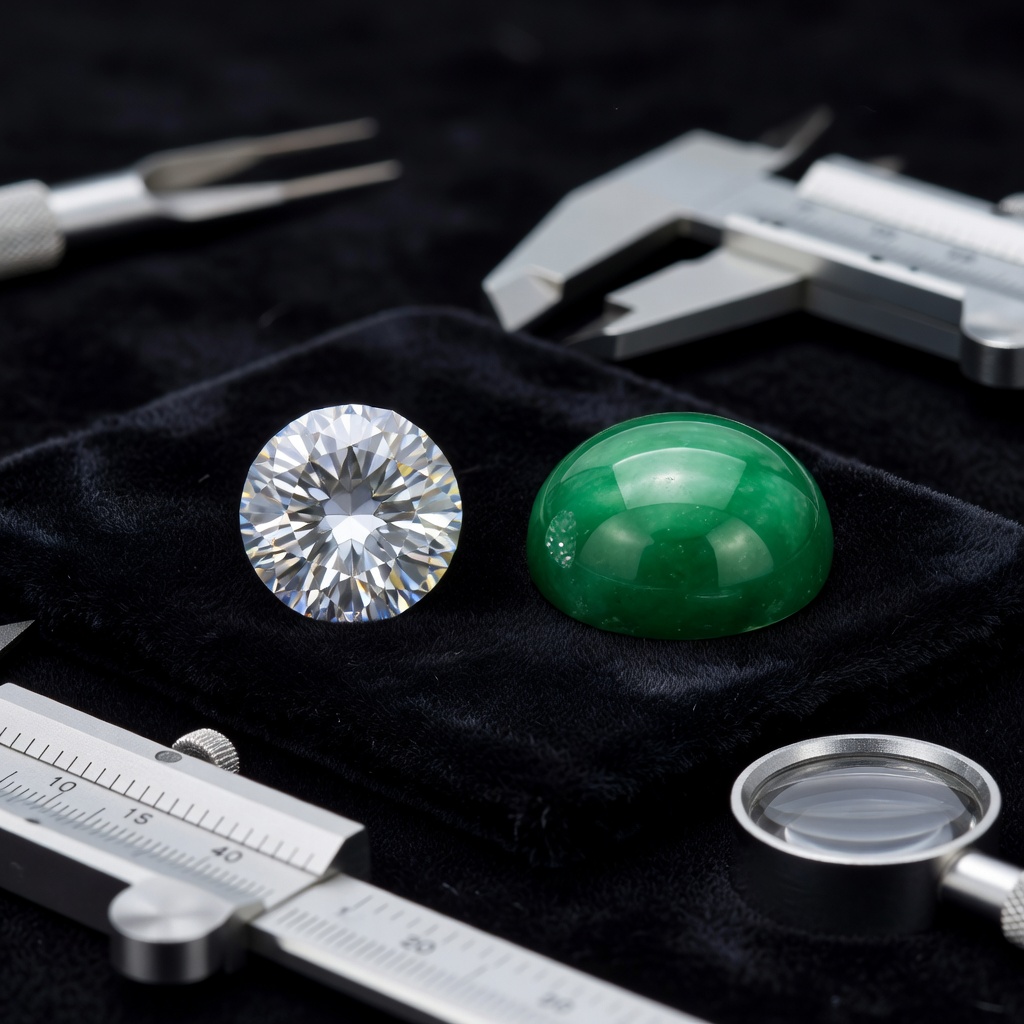
Understanding Diamond vs Variscite: A Complete Gemstone Comparison Guide
When selecting the perfect gemstone for jewelry or investment, understanding the fundamental differences between mineral varieties proves essential for making an informed decision. The comparison of diamond vs variscite represents one of the most extreme contrasts in the gemstone world, pitting the hardest known natural substance against a relatively soft, collector-focused phosphate mineral. While diamonds have dominated the luxury jewelry market for centuries as symbols of eternal commitment and portable wealth, variscite offers a unique aesthetic appeal with its distinctive green hues and web-like matrix patterns that appeal to collectors and bohemian jewelry enthusiasts. This comprehensive gemstone comparison guide examines these two minerals across multiple dimensions—including chemical composition, durability, value retention, and practical applications—to help you determine which stone aligns with your specific needs, budget, and lifestyle requirements.
Chemical Composition and Geological Formation
The fundamental differences between diamond and variscite begin at the molecular level, where their distinct chemical compositions dictate their physical properties and formation environments. Diamond consists of pure carbon atoms arranged in an isometric crystal structure, formed under immense pressure exceeding 45,000 atmospheres and temperatures around 1,300°C at depths of 150 to 200 kilometers within the Earth's mantle. These ancient crystals, typically 1 to 3.5 billion years old, journeyed to the surface through rare volcanic eruptions called kimberlite pipes, carrying these mantle fragments upward at rapid velocities to prevent graphite formation.
Variscite presents a dramatically different chemical profile as a hydrated aluminum phosphate mineral with the formula AlPO₄·2H₂O, belonging to the orthorhombic crystal system. Unlike diamonds formed deep within the planet, variscite develops in near-surface environments through the weathering and alteration of aluminum-rich rocks in phosphate-rich solutions, typically forming within sedimentary or igneous rock cavities. These deposits represent relatively recent geological events, often forming during the Cretaceous period or later, when phosphate solutions percolated through bedrock cavities and gradually deposited these green minerals over thousands of years.
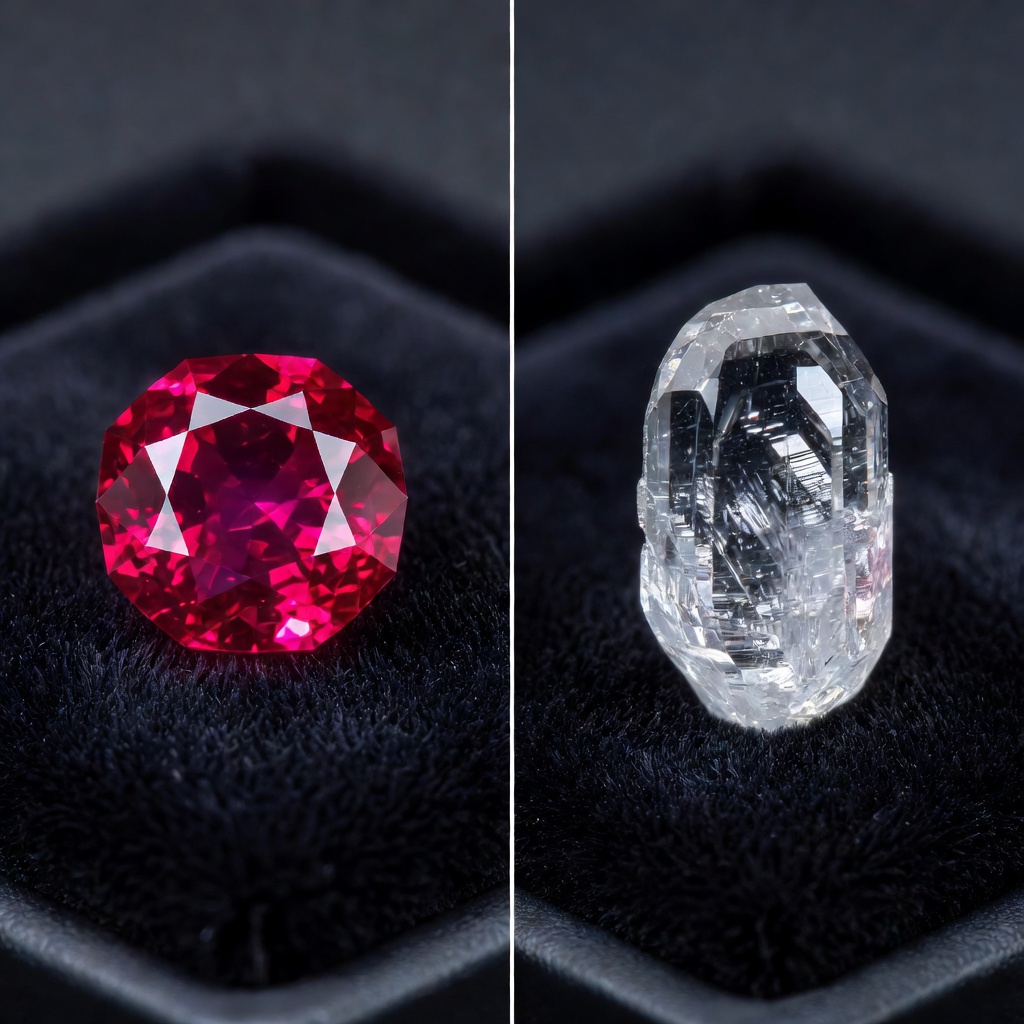
Practical gemologists utilize these compositional differences for identification purposes, as the phosphate mineral vs carbon gemstone distinction becomes apparent under standard testing procedures. Diamond's pure carbon content renders it immune to acids and resistant to most chemical reactions, while variscite's phosphate composition makes it susceptible to dissolution in hydrochloric acid and vulnerable to heat damage. When examining rough specimens, diamonds display distinctive crystal habits including octahedrons, cubes, and dodecahedrons with adamantine luster, whereas variscite typically appears as encrusting masses, nodules, or vein fillings with a waxy to dull luster that requires polishing to reveal its true beauty.
Hardness and Durability: The Mohs Scale Reality
Understanding the variscite hardness Mohs scale rating proves crucial for anyone considering this mineral for jewelry applications, as the disparity between these gemstones regarding durability could not be more pronounced. Diamond stands alone at the apex of the Mohs hardness scale with a perfect 10 rating, making it approximately 160 times harder than corundum (ruby and sapphire at 9) and effectively immune to scratching by any other natural material except another diamond. This exceptional hardness, combined with its high toughness (resistance to breaking), allows diamonds to withstand decades of daily wear in engagement rings and bracelets without losing their polish or developing surface abrasions.
Variscite measures merely 3.5 to 4.5 on the Mohs hardness scale, placing it in the same vulnerability range as household items like fluorite or nickel coins. This relatively soft nature means that everyday dust, which often contains quartz particles (hardness 7), can scratch variscite's surface during normal handling or wear. When comparing diamond durability comparison factors, variscite additionally exhibits poor toughness due to its uneven fracture pattern and inherent porosity, making it susceptible to chipping or breaking if subjected to impact against hard surfaces or if caught on doorways or furniture.
Jewelry designers must account for these durability differences when creating settings for these stones. Diamonds tolerate tension settings, prong mounts, and exposed edge designs because their hardness protects them from the metal itself and daily environmental hazards. Conversely, variscite demands protective bezel settings that encase the stone's edges and girdle, preventing direct contact with hard surfaces. For collectors considering variscite cabochons, storing these pieces separately in soft cloth pouches prevents contact with harder gemstones like garnets (6.5-7.5) or tourmalines (7-7.5) that could mar the surface during storage.
Visual Characteristics and Aesthetic Appeal
The optical properties of diamond vs variscite create distinctly different visual experiences that appeal to divergent aesthetic preferences and jewelry styles. Diamond's legendary beauty stems from its exceptional refractive index of 2.42 and high dispersion rate of 0.044, which splits white light into spectral colors creating the phenomena known as brilliance (white light reflection), fire (colored light dispersion), and scintillation (flashing sparkles). These optical properties allow master cutters to create precise facet arrangements that maximize light return, making diamonds appear to glow from within even under minimal lighting conditions.
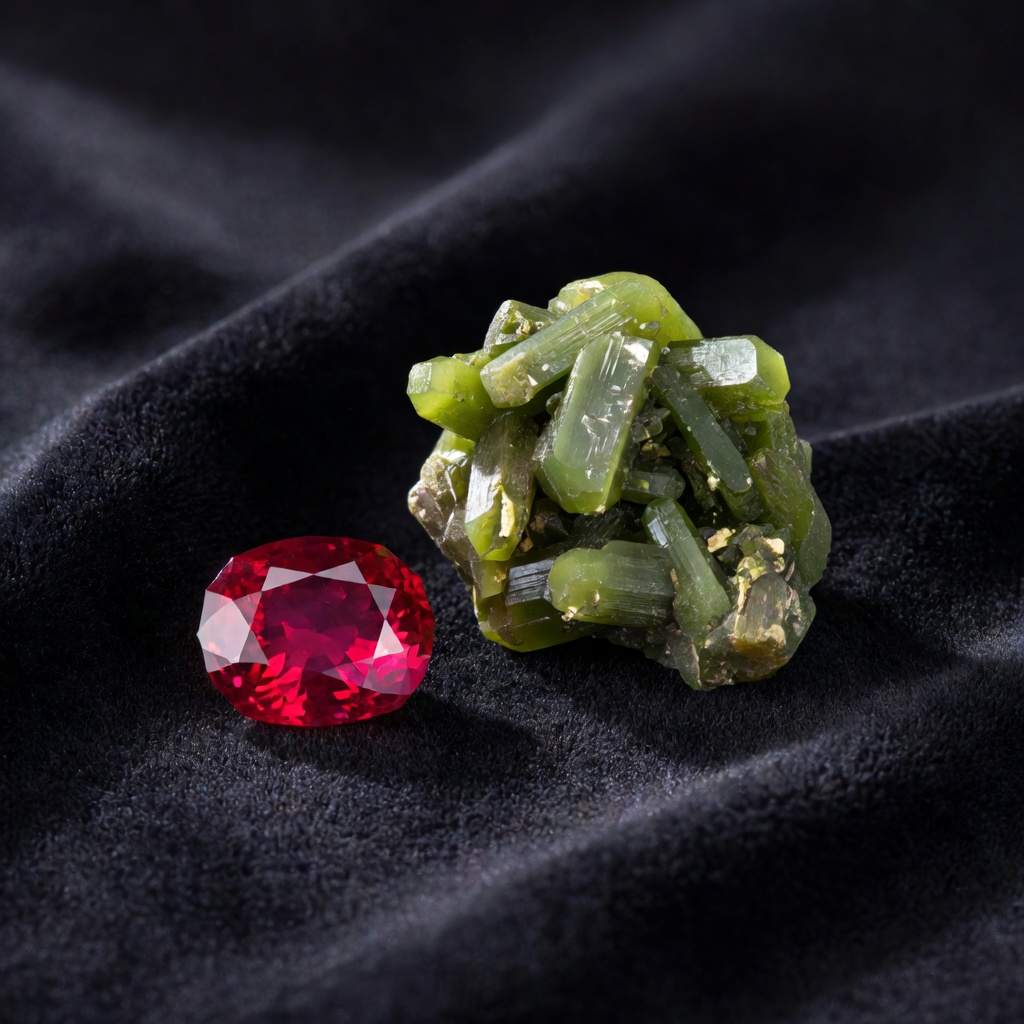
Green variscite properties center on its distinctive coloration rather than optical performance, displaying shades ranging from pale apple green to deep emerald or blue-green tones caused by chromium and vanadium trace elements. Unlike diamond's transparency and clarity grades, variscite typically presents as opaque to translucent with distinctive matrix patterns—web-like or dendritic inclusions of brown, yellow, or black minerals (often crandallite or wardite) that create unique landscape-like appearances within each stone. These matrix patterns serve as nature's fingerprints, ensuring no two variscite specimens appear identical, whereas diamonds of similar cut and clarity grades may look virtually indistinguishable.
Cutting styles reflect these optical differences: diamonds undergo precise brilliant cutting with 57 or 58 facets designed to maximize light performance, while variscite almost exclusively appears as cabochons (domed, unfaceted shapes), beads, or carved objects that showcase its color and patterns rather than sparkle. Jewelry designers working with variscite often select thick cabochons with high domes to display the stone's depth and matrix beauty, sometimes backing the stones with dark materials to enhance their green intensity. When pairing these stones with metals, diamonds traditionally complement white gold and platinum to emphasize their colorless purity, while variscite's earthy green tones pair beautifully with sterling silver, copper, or yellow gold settings that enhance its organic, Southwestern aesthetic.
Rarity, Sources, and Ethical Considerations
The global distribution and sourcing of these minerals reveal contrasting market dynamics that affect availability, pricing, and ethical procurement strategies. Diamonds occur on every continent except Antarctica, with major mining operations concentrated in Botswana, Russia, Canada, Australia, and the Democratic Republic of Congo, producing approximately 130 million carats annually. This widespread distribution, combined with sophisticated mining technology, ensures steady commercial availability despite diamonds' geological rarity, though individual high-quality stones (D-color, Flawless clarity) remain exceptionally scarce.
Rare variscite sources remain limited to specific geological localities, with the finest material historically originating from the Little Green Monster Mine and other Utah deposits in the United States, alongside significant finds in Nevada, Queensland (Australia), and the original type locality in Vogtland, Germany. Unlike diamond's industrial-scale extraction, variscite mining typically involves small-scale operations, rockhounding, or artisanal digging in limited surface deposits, making large, high-quality specimens genuinely scarce collector's items. The closure of historic Utah mines has further restricted supply of premium green variscite with intense color and minimal matrix, driving up prices for museum-quality pieces.
Ethical gemstone mining considerations differ significantly between these stones. The diamond industry operates under the Kimberley Process Certification Scheme, designed to prevent conflict diamonds from entering legitimate markets, though critics argue the protocol has limitations regarding environmental impact and labor practices. Canadian diamonds offer traceable ethical alternatives with strict environmental standards. Variscite sourcing typically involves minimal ethical concerns due to small-scale operations, though collectors should verify that specimens were legally collected from claims or purchased from reputable dealers who respect mining rights and environmental regulations. When investing in either stone, requesting documentation regarding origin and treatment (diamonds may be lab-grown or treated; variscite may be stabilized or dyed) ensures transparent transactions aligned with ethical consumption values.
Value Analysis and Investment Potential
Understanding the financial implications of purchasing either gemstone requires examining their vastly different value propositions, market liquidity, and appreciation potential. Diamond pricing follows established metrics based on the 4 Cs (Carat weight, Cut, Color, and Clarity), with natural diamonds ranging from $2,000 to $25,000+ per carat for investment-grade stones, while lab-grown alternatives offer 60-85% savings. Diamonds maintain liquid secondary markets through buy-back programs, auction houses, and dealer networks, though retail consumers typically recoup only 20-40% of original purchase prices unless holding exceptional rarity factors such as fancy vivid colors or flawless clarities above 5 carats.
Variscite value operates within a completely different economic framework, with material typically retailing between $5 and $50 per carat for jewelry-grade stones, while exceptional specimens with intense emerald-green color, minimal matrix, and large size (20+ carats) might command $100 to $300 per carat from specialized collectors. Unlike diamonds, variscite lacks standardized grading systems, making valuation subjective and dependent on color saturation, matrix pattern aesthetics, size, and origin prestige (Utah material typically commands premiums). The gemstone investment guide perspective suggests that while diamonds function as portable wealth and inflation hedges for high-net-worth individuals, variscite represents a speculative collectible market where values appreciate based on supply scarcity and lapidary artistry rather than commodity trading.
Case studies illustrate these differences: A 1-carat D-Flawless brilliant diamond purchased in 2010 for $15,000 might resell today for $18,000-$22,000, demonstrating steady appreciation and liquidity. Conversely, a rare 50-carat Utah variscite cabochon with exceptional green color purchased for $2,500 in 2010 might today command $4,000-$5,000 from specialized collectors, representing higher percentage gains but requiring specialized knowledge to locate buyers. For budget-conscious consumers seeking green gemstones, variscite offers affordable entry points into fine jewelry, while diamonds require significant capital but provide greater financial security and universal recognition.
Comparative Analysis: Diamond vs Variscite Specifications
| Characteristic | Diamond | Variscite |
|---|---|---|
| Mohs Hardness | 10 (Hardest natural substance) | 3.5-4.5 (Soft, requires protection) |
| Chemical Composition | Pure Carbon (C) | Hydrated Aluminum Phosphate (AlPO₄·2H₂O) |
| Primary Colors | Colorless to yellow/brown; fancy colors rare | Green to blue-green with matrix patterns |
| Refractive Index | 2.42 (High brilliance) | 1.56-1.59 (Low, waxy luster) |
| Price Range (Per Carat) | $2,000-$25,000+ (natural) | $5-$50 (jewelry grade) |
| Best Jewelry Applications | Rings, bracelets, daily wear items | Pendants, earrings, brooches, carvings |
| Care Requirements | Ultrasonic and steam cleaning safe | Gentle soap only; avoid chemicals/ultrasonic |
| Formation Environment | Earth's mantle (150+ km depth) | Near-surface sedimentary deposits |
| Investment Liquidity | High (global markets established) | Low (niche collector market) |
Jewelry Applications and Design Suitability
The practical applications of diamond vs variscite in jewelry design reflect their respective durability profiles and aesthetic characteristics, dictating appropriate settings, styles, and wear frequencies. Diamond jewelry durability makes these stones suitable for every conceivable jewelry application, from engagement rings subjected to daily wear for decades to tennis bracelets that withstand constant wrist contact with desks and keyboards. Prong settings, which expose maximum surface area to light, work excellently for diamonds because their hardness prevents the metal from scratching the stone, while tension settings showcase diamonds' brilliance without obscuring edges.
Variscite jewelry settings require more strategic planning to protect the stone while showcasing its unique beauty. Jewelry designers typically reserve variscite for pendants, earrings, and brooches—items that experience minimal impact and abrasion compared to rings or bracelets. When incorporated into rings, variscite demands protective bezel settings that encircle the stone's girdle with metal, preventing edge chips and providing a buffer against direct blows. Cabochon cuts (domed, unfaceted) work best for variscite, as faceting would create vulnerable thin edges prone to chipping, whereas the rounded dome distributes pressure while displaying the stone's matrix patterns and color depth.
Metal pairing strategies differ significantly between these gemstones. Diamonds traditionally pair with white metals (platinum, white gold) to enhance their colorless appearance, though yellow and rose gold settings create vintage or warm contemporary aesthetics. Variscite's green variscite appearance complements earth-tone metals: sterling silver provides affordable contrast that highlights the stone's color, while copper settings enhance the stone's warm matrix tones, and yellow gold creates luxurious Southwestern or bohemian styles. For designers creating statement pieces, variscite works beautifully in combination with other soft stones like opal or chrysocolla in occasional-wear necklaces, while diamonds anchor heirloom pieces intended for daily wear and generational transfer.
Care, Cleaning, and Maintenance Requirements
Proper maintenance protocols for these gemstones diverge dramatically based on their chemical stability and physical durability, requiring owners to adopt species-specific care routines to preserve beauty and value. Diamond care remains remarkably straightforward due to the stone's chemical inertness and extreme hardness. Owners can safely clean diamond jewelry using ultrasonic cleaners, which use high-frequency sound waves to dislodge dirt from settings, or steam cleaners that blast away accumulated lotions and oils. Even harsh chemicals like chlorine or bleach rarely damage diamonds themselves (though they may attack metal settings), making diamonds ideal for active lifestyles and frequent wear.
Variscite care instructions demand significantly more caution due to the stone's porous phosphate composition and low hardness. Owners must avoid ultrasonic cleaners entirely, as the vibrations can cause existing fractures to propagate or loosen stones from their settings. Chemical cleaning agents, including commercial jewelry dips, ammonia, acids, and even prolonged exposure to chlorine, can etch variscite's surface or dissolve its phosphate content, permanently dulling the polish. Instead, variscite requires gentle cleaning using only lukewarm water, mild dish soap, and a soft cotton cloth or brush with natural bristles—never stiff brushes or abrasive materials that might scratch the surface.
Storage protocols highlight another practical difference in gemstone maintenance guide recommendations. Diamonds can be stored together in jewelry boxes without risk of mutual scratching, though they may scratch other softer gemstones or metals. Variscite requires individual storage in soft cloth pouches or lined compartments, separated from all other jewelry items, as even casual contact with harder stones like quartz (7), topaz (8), or sapphire (9) can permanently scar variscite's surface. When traveling, variscite pieces should be wrapped in acid-free tissue and placed in rigid containers to prevent crushing, while diamond jewelry travels safely in standard jewelry rolls. Professional maintenance for diamonds involves annual prong checks and cleaning, whereas variscite benefits from minimal handling and should be inspected by jewelers only when necessary, as even bench tools can damage the soft stone if improperly handled.
Metaphysical Properties and Symbolic Meanings
Beyond their physical properties, diamond and variscite carry distinct energetic associations and symbolic meanings that influence buyer preferences in the metaphysical and spiritual communities. Diamond symbolism centers on themes of invincibility, clarity, and amplification—deriving from the stone's name (adamas in Greek, meaning "unbreakable") and its ability to refract light into rainbow spectrums. As the April birthstone and traditional 60th and 75th wedding anniversary gift, diamonds represent unbreakable commitments, mental clarity, and the crown chakra's activation, believed to amplify the energy of other stones and the intentions of the wearer. Crystal practitioners value diamonds for their high-frequency vibrations that stimulate creativity, imagination, and spiritual enlightenment while providing protection against electromagnetic frequencies and negative energies.
Variscite meaning and properties emphasize grounding, heart-centered healing, and emotional tranquility. Often called the "Stone of Courage and Prophecy" among Native American traditions, variscite resonates with the heart chakra, promoting compassion, unconditional love, and inner peace. Unlike diamond's activating, energizing properties, variscite offers calming, centering vibrations that help relieve stress, anxiety, and excessive mental chatter, making it popular for meditation practices and emotional healing work. The stone's green color connects it to nature spirits and earth energy, believed to enhance prosperity consciousness while maintaining spiritual equilibrium.
Historical lore surrounding these stones reveals cultural usage patterns that persist in modern crystal healing. Ancient Hindus believed diamonds protected against snakes, fire, poison, and illness when worn as talismans, while Medieval Europeans thought diamonds could cure mental illness and drive away evil spirits if worn during battle. Variscite holds particular significance in Southwestern Native American traditions, where it was carved into amulets, fetishes, and ceremonial objects to ensure safe passage into the afterlife and enhance communication with spirit guides. Modern practitioners often combine both stones in healing layouts, placing diamonds at the crown chakra to open spiritual channels while positioning variscite over the heart chakra to ground high-vibration energies into emotional experience, creating a bridge between celestial and terrestrial consciousness.
Final Verdict: Choosing Between Diamond and Variscite
Making the final decision between diamond vs variscite requires honest assessment of your lifestyle, budget constraints, aesthetic preferences, and intended use for the jewelry piece. When choosing between diamond and variscite for significant purchases like engagement rings or daily-wear heirlooms, diamonds remain the undisputed champion due to their unmatched durability, liquidity as investments, and cultural recognition. If your lifestyle involves manual labor, active sports, or you simply prefer low-maintenance jewelry that withstands decades of daily wear without special precautions, diamond provides the only practical solution among these two options. Additionally, if you view your purchase as a store of value or potential emergency asset, diamonds offer recognized, liquid markets that variscite cannot match.
However, variscite emerges as the superior choice for specific niches: collectors seeking unique specimens with natural artistry, individuals drawn to Southwestern or bohemian aesthetics who appreciate organic matrix patterns over geometric brilliance, and budget-conscious buyers wanting large, colorful stones without five-figure investments. If you primarily wear jewelry for special occasions, work in office environments without physical hazards, and value metaphysical properties emphasizing peace and grounding over amplification and activation, variscite offers distinctive beauty at accessible price points. The stone particularly suits artists, spiritual practitioners, and those seeking conversation pieces that showcase nature's organic creativity rather than human-cut precision.
Consider hybrid approaches that leverage the strengths of both materials: a diamond engagement ring paired with variscite-accented anniversary pendants, or a variscite statement necklace complemented by diamond stud earrings for versatile wardrobe options. Some contemporary designers create innovative pieces combining both stones, using diamonds as protective accents around variscite centers, or incorporating variscite beads with diamond spacers in occasional-wear bracelets. Ultimately, this gemstone buying guide suggests that neither stone supersedes the other universally; rather, they serve different purposes in a well-rounded jewelry collection. Diamonds anchor your portfolio with timeless durability and value retention, while variscite adds character, color diversity, and artistic expression for those moments when you want to wear something that tells a different story than traditional brilliance.
Frequently Asked Questions
Is Variscite as Hard as Diamond?
No, variscite is significantly softer than diamond. While diamond ranks 10/10 on the Mohs hardness scale (the hardest natural substance), variscite only measures 3.5-4.5. This means variscite can be scratched by household dust (quartz, hardness 7) and requires protective settings, whereas diamond can only be scratched by another diamond.
Can Variscite Be Used in an Engagement Ring?
Variscite is not recommended for engagement rings or daily-wear jewelry due to its low hardness (3.5-4.5 Mohs). It scratches and abrades easily with normal wear. If used in rings, it requires protective bezel settings and should be reserved for occasional wear. Diamond remains the superior choice for engagement rings due to its unmatched durability.
Which Is More Valuable, Diamond or Variscite?
Diamond is significantly more valuable than variscite. Quality diamonds range from $2,000 to $25,000+ per carat depending on the 4 Cs, while variscite typically costs $5-$50 per carat. Even high-grade variscite with intense green color and attractive matrix patterns rarely exceeds $100 per carat, making it an affordable collector's stone rather than an investment gem.
How Can I Tell the Difference Between Variscite and Turquoise?
While both are green phosphate minerals, variscite tends to be greener (emerald to apple green) compared to turquoise's blue-to-blue-green spectrum. Variscite often displays yellowish or brownish matrix patterns, whereas turquoise typically shows black or brown matrix. Variscite is slightly softer (3.5-4.5) than turquoise (5-6), and variscite lacks the waxy luster typical of high-grade turquoise.
Is Variscite Rarer Than Diamond?
High-quality variscite is actually rarer than diamond in terms of geological occurrence, with significant deposits limited to Utah, Nevada, and Queensland. However, diamonds command much higher prices due to controlled supply chains, marketing, and industrial demand. While diamonds are widely distributed globally, exceptional variscite specimens with deep green color and minimal matrix are scarce collector's items.
What Are the Best Uses for Variscite in Jewelry?
Due to its softness, variscite works best in protected jewelry designs such as pendants, earrings, and brooches that avoid impact. It's ideal for cabochons, beads, and carved objects rather than faceted stones. Variscite pairs beautifully with silver and copper settings and is popular in Southwestern and bohemian jewelry styles where its unique green color and natural patterns are showcased.
Can You Wear Variscite Every Day?
Daily wear of variscite is not recommended. At 3.5-4.5 on the Mohs scale, variscite can be scratched by common materials including household dust, keys, and other jewelry. It also has poor toughness and can fracture if knocked against hard surfaces. Reserve variscite for occasional wear and store it separately in a soft cloth to preserve its polish and prevent damage.
Does Variscite Have Any Special Metaphysical Properties Compared to Diamond?
Yes, variscite and diamond have distinctly different metaphysical associations. Variscite is known as a 'stone of courage and prophesy,' associated with heart chakra healing, inner peace, and emotional clarity. It's considered calming and grounding. Diamond, conversely, is associated with crown chakra activation, mental clarity, invincibility, and amplification of energy. While diamond energizes and activates, variscite soothes and centers.