Understanding the Diamond vs Turquoise Debate
When selecting the perfect gemstone for jewelry, collectors and consumers often find themselves weighing the merits of Diamond vs Turquoise in a fascinating gemstone comparison that spans geology, aesthetics, and cultural significance. Both stones command attention in the jewelry market, yet they occupy distinctly different niches—one representing the pinnacle of precious stones and the other embodying the earthy charm of semi-precious materials. Understanding the fundamental distinctions between these gems requires examining their geological origins, physical durability, market values, and symbolic meanings to make an informed purchasing decision.
The classification of precious vs semi-precious stones provides the initial framework for understanding these gems, with diamonds representing the traditional "big four" precious gems alongside rubies, sapphires, and emeralds, while turquoise falls into the broader semi-precious category. However, this distinction hardly tells the complete story, as high-quality turquoise specimens can command prices that rival lower-grade diamonds, and both stones carry profound cultural weight across different civilizations. Whether you seek the brilliant fire of a faceted diamond or the organic matrix patterns of turquoise, understanding these materials' unique characteristics ensures your jewelry selection aligns with your lifestyle, budget, and aesthetic preferences.
Origins and Natural Formation
The geological journeys of diamonds and turquoise represent two radically different processes that occurred over vastly different timescales deep within Earth's crust. Diamonds form approximately 100 miles beneath Earth's surface in the mantle layer, where carbon atoms crystallize into cubic structures under extreme pressure of 725,000 pounds per square inch and temperatures exceeding 2,000 degrees Fahrenheit. These conditions existed primarily between 1 billion to 3.3 billion years ago, making many diamonds older than life itself, before volcanic eruptions rapidly transported them to the surface through kimberlite pipes.
In contrast, turquoise stone creation occurs much closer to Earth's surface through a secondary geological process involving the percolation of copper-rich water through fissures in aluminum-rich rocks such as limonite or sandstone. Over millions of years, these solutions deposit hydrated phosphate and copper minerals that gradually solidify into the characteristic blue-green material we recognize as turquoise. This formation process requires specific arid environmental conditions where water tables fluctuate, explaining why significant turquoise deposits cluster in regions like the American Southwest, Iran, Egypt, and China's Tibet Autonomous Region.
The geographic distribution of these gems significantly impacts their availability and market positioning. African mines, particularly those in Botswana, Russia, Canada, and Australia, dominate diamond production, with these regions yielding the majority of gem-quality rough that supplies the global diamond jewelry market. Conversely, turquoise production centers on historic mining districts including Arizona's Sleeping Beauty mine (now largely depleted), Nevada's Royston and Carico Lake mines, and the famed Nishapur deposits in Iran. The rarity factors affecting both stones differ substantially—while diamonds benefit from controlled distribution networks, high-quality untreated turquoise becomes increasingly scarce as historic mines close, creating fascinating supply dynamics in the gemstone comparison.
Physical Properties and Durability
Understanding the Mohs hardness scale proves essential when evaluating these gemstones for jewelry applications, as this measurement directly correlates with a stone's ability to resist scratching and maintain its polish over time. Diamonds occupy the absolute pinnacle of this scale with a perfect 10 rating, making them the hardest known natural material capable of scratching any other substance while remaining virtually impervious to damage from daily contact. This exceptional hardness combines with diamonds' unique toughness—the resistance to breaking, chipping, or cracking—to create a gem uniquely suited for lifelong wear in engagement rings and heirloom pieces.
Turquoise presents a dramatically different durability profile with a Mohs hardness rating between 5 and 6, placing it in the same range as glass and significantly softer than quartz, which registers at 7. This relative softness stems from turquoise's cryptocrystalline structure and inherent porosity, characteristics that make the stone susceptible to scratching, abrasion, and chemical damage from cosmetics, perfumes, and household cleaners. The specific gravity of turquoise ranges from 2.31 to 2.84, notably lighter than diamond's 3.52, resulting in jewelry pieces that feel less substantial while offering comfortable wear for larger statement designs.
Practical gemstone durability considerations should guide your selection based on intended use and lifestyle factors. Active individuals or those seeking daily-wear pieces should consider diamonds for rings and bracelets that encounter frequent impact, while turquoise excels in protected settings such as pendants, earrings, and occasional-wear statement pieces. Impact resistance varies significantly between these materials—diamonds can chip along cleavage planes if struck at specific angles, though this requires considerable force, whereas turquoise may crack or fracture under moderate impact due to its aggregate mineral composition and natural veining.
Appearance, Color and Visual Appeal
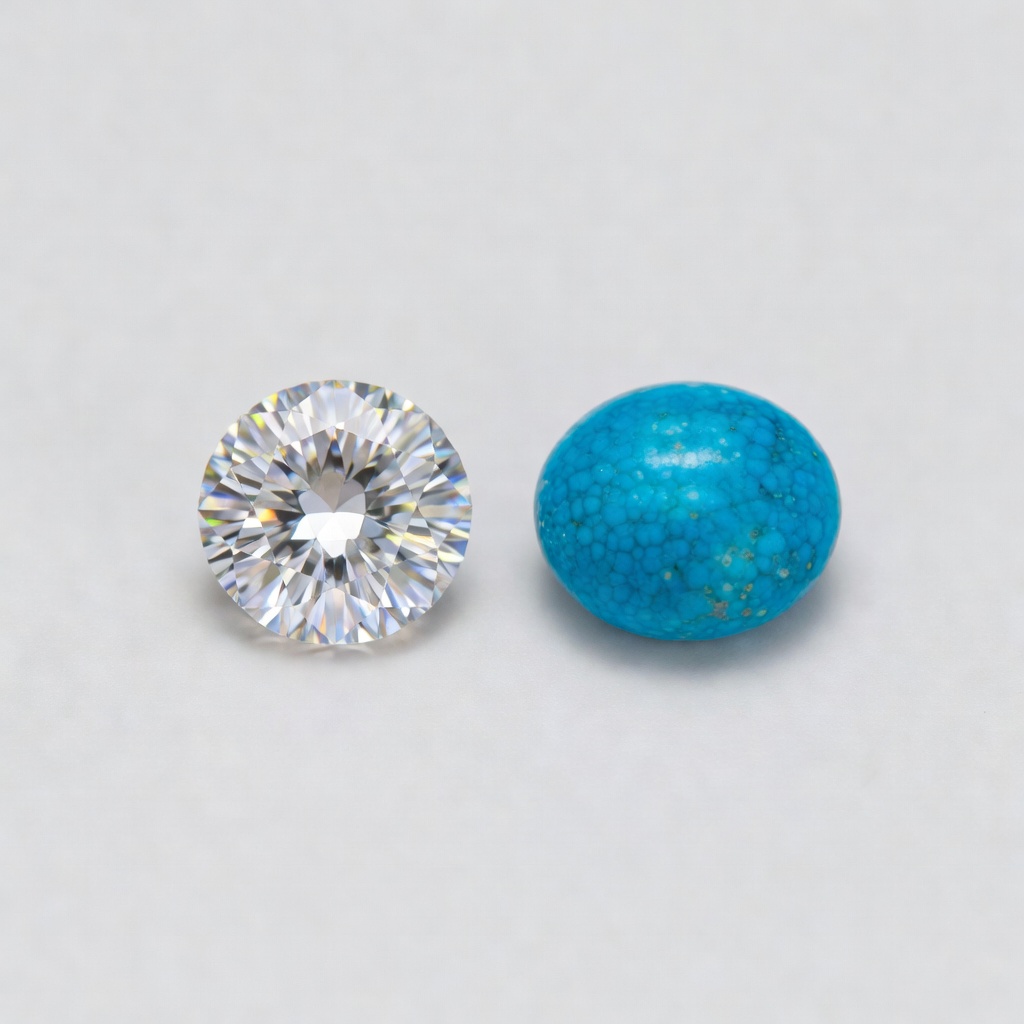
The visual characteristics of diamond jewelry center on brilliance, fire, and scintillation—optical properties resulting from a diamond's high refractive index of 2.42 and strategic faceting patterns that maximize light return. Colorless diamonds graded D through F on the GIA color scale exhibit exceptional transparency that allows light to enter, disperse into spectral colors (fire), and reflect back to the eye with dazzling intensity. Even fancy colored diamonds, including rare pinks, blues, and yellows, maintain this inherent brilliance while adding chromatic variety to high-end collections.
Turquoise value derives from entirely different aesthetic criteria, with collectors prizing the stone's opaque body color ranging from sky blue to apple green, often accented by distinctive matrix patterns of dark brown, black, or gold veining. These matrix patterns, formed by the inclusion of host rock materials such as limonite or sandstone, create unique fingerprints that distinguish genuine turquoise from synthetic imitations and enhance the stone's organic, earthy appeal. Unlike diamonds, which undergo faceting to maximize light performance, turquoise traditionally receives cabochon cuts—smooth, polished domes that showcase color consistency and matrix patterns while protecting the stone's edges from chipping.
Lighting conditions dramatically affect the presentation of both gemstones, requiring careful consideration for display and wear environments. Diamonds perform optimally under direct spotlighting or natural sunlight, where their facets create spectacular light shows, though they maintain sparkle even in subdued lighting due to their high refractive qualities. Turquoise presents consistently across lighting conditions but reveals subtle color variations under different sources—incandescent lighting may enhance warmer green tones while natural daylight emphasizes the coveted robin's egg blue associated with high-grade Persian and Sleeping Beauty specimens.
| Characteristic | Diamond | Turquoise |
|---|---|---|
| Mohs Hardness | 10 (Highest possible) | 5-6 (Moderate) |
| Price Range (Per Carat) | $1,000 - $25,000+ | $1 - $500+ |
| Formation Environment | Earth's mantle (100+ miles deep) | Near-surface, arid climates |
| Primary Cut Style | Faceted (brilliant, step, mixed) | Cabochon (smooth dome) |
| Optical Property | Transparent, brilliant, fiery | Opaque, waxy to subvitreous luster |
| Durability for Daily Wear | Excellent | Fair (requires protection) |
| Primary Symbolism | Eternal love, strength, luxury | Protection, healing, wisdom |
| Birthstone Month | April | December |
| Care Requirements | Ultrasonic, steam, soap safe | Avoid chemicals, cosmetics, water |
| Investment Liquidity | High (established resale markets) | Moderate (specialized collectors) |
Price, Value and Market Factors
Diamond price determination follows the internationally recognized 4Cs grading system established by the Gemological Institute of America, evaluating cut quality, clarity grades, color absence (or presence in fancy colors), and carat weight. Premium pricing emerges for stones exhibiting Excellent or Ideal cut grades that maximize light performance, IF (Internally Flawless) to VVS clarity grades with minimal inclusions, and colorless D-E-F grades in the white diamond category. Market prices typically range from $1,000 per carat for commercial-quality stones to $12,000+ per carat for exceptional specimens exceeding one carat with top-tier grades across all four criteria.
Turquoise value assessment operates on a distinctly different paradigm that prioritizes color intensity, matrix pattern desirability, geographic origin, and treatment status. The most valuable specimens display an intense, uniform medium blue coloration without matrix (termed "clear" or "limpid") or with intricate spiderweb matrix patterns, particularly from the now-closed Sleeping Beauty mine in Arizona or the historic Nishapur mines in Iran. Treatment significantly impacts value, with natural, untreated turquoise commanding premium prices ($50-$500+ per carat) while stabilized or reconstituted material accessible at entry-level price points ($1-$20 per carat).
The resale value and market demand dynamics differ substantially between these gemstones, influencing their viability as liquid assets or heirlooms. Diamonds benefit from established secondary markets, certification systems, and consistent global demand driven by bridal industry traditions, allowing for relatively predictable resale values typically ranging from 25% to 60% of retail depending on quality and market conditions. Turquoise markets remain more specialized and collector-driven, with values appreciating most significantly for documented specimens from depleted mines, high-grade natural Persian material, or historic Native American jewelry pieces with provenance, though liquidity requires access to specialized dealers or auction houses focused on mineral specimens or Southwestern art.
Symbolism and Cultural Meaning
The gemstone symbolism associated with diamonds has evolved significantly over centuries, transitioning from ancient talismans of invincibility to modern emblems of romantic commitment and economic status. Contemporary Western culture overwhelmingly associates diamonds with eternal love, strength, and the enduring nature of marriage, largely due to De Beers' twentieth-century marketing campaigns that established the "diamond engagement ring" tradition. Beyond romantic contexts, diamonds represent clarity of thought, abundance, and manifesting abundance in metaphysical traditions, while their optical purity has made them symbols of perfection and moral incorruptibility across various philosophical systems.
Turquoise carries perhaps the richest cultural heritage of any semi-precious stone, with archaeological evidence of its use dating back 7,500 years to ancient Egypt, where it adorned the burial mask of King Tutankhamun and represented the color of the heavens. Native American cultures throughout the Southwestern United States hold turquoise as sacred, associating it with the sky, water, and protection against negative energies, while using it extensively in ceremonial jewelry, amulets, and architectural inlay work. The stone appears consistently in creation stories across Pueblo, Navajo, and Apache traditions, often representing the union of sky and earth or serving as offerings to bring rain and prosperity.
The birthstone meaning connections provide additional personal significance for individuals born in specific months, with diamonds serving as the official April birthstone and turquoise representing December alongside blue zircon and tanzanite. April-born individuals wearing diamonds are said to benefit from enhanced inner strength and clarity of purpose, while December birthstone recipients connect with turquoise's associations with good fortune, success, and protection during travel. These symbolic associations influence gift-giving traditions and personal jewelry collections, with many individuals choosing their birthstone regardless of the precious vs semi-precious distinction to harness perceived metaphysical benefits or honor personal milestones.
Best Jewelry Applications for Each Stone
Selecting appropriate jewelry designs requires matching gemstone durability and aesthetic characteristics to intended wear patterns and stylistic preferences. Diamond jewelry excels in applications requiring maximum durability and timeless elegance, particularly engagement rings, wedding bands, anniversary bands, and tennis bracelets that withstand daily wear and active lifestyles. The stone's brilliance complements both classic solitaire settings and modern halo designs, while its neutral coloration pairs seamlessly with any wardrobe palette or metal choice, making it the ultimate versatile luxury material.
Turquoise stone applications favor designs that protect the gem while showcasing its distinctive color and matrix patterns, making it ideal for statement necklaces, cuff bracelets with protective bezels, dangle earrings, and cocktail rings reserved for special occasions. The gem's opaque nature and organic textures align perfectly with bohemian, Southwestern, and artisan jewelry styles, where it often appears in cluster designs with coral, lapis lazuli, or spiny oyster shell in traditional Native American squash blossom necklaces and concho belts. Contemporary designers increasingly incorporate turquoise into modern minimalist settings that contrast the stone's rustic character with clean geometric metalwork.
Metal pairing recommendations enhance each gemstone's natural beauty while providing practical protection and stylistic coherence. Diamonds achieve maximum brilliance when set in white metals such as platinum or white gold, which reflect light back through the stone, though yellow gold and rose gold settings create warm, vintage-inspired aesthetics currently trending in bridal markets. Turquoise traditionally pairs with sterling silver or oxidized silver to emphasize its cool blue tones, though high-karat yellow gold creates striking contrast in luxury Southwestern designs, and copper settings enhance the stone's green color variations while developing complementary patinas over time.
Care, Maintenance and Longevity
Maintaining diamond jewelry requires relatively straightforward cleaning protocols that leverage the stone's chemical inertness and exceptional hardness. Professional jewelers routinely use ultrasonic cleaners that vibrate away accumulated dirt and oils from behind settings, while steam cleaners provide deep sanitization without scratching the surface. Home maintenance involves simple solutions of warm water and mild dish soap applied with soft-bristled brushes, followed by thorough rinsing and drying with lint-free cloths, allowing owners to maintain brilliance without specialized equipment or concerns about chemical damage.
Turquoise care demands significantly more vigilance due to the stone's porous nature and sensitivity to chemical agents that can alter color or damage structure. Owners must avoid exposing turquoise to cosmetics, perfumes, hairsprays, and household cleaners containing ammonia, acids, or alcohol, as these substances can penetrate the stone's surface and cause permanent discoloration or deterioration of stabilizing resins. Storage requires separation from harder gemstones to prevent scratching, preferably in soft cloth pouches or individual compartments, and cleaning should involve only damp cloth wiping without submersion in water, which can affect untreated specimens.
Professional maintenance schedules should reflect each stone's durability profile and setting complexity. Diamond pieces benefit from annual professional inspections to check for loose prongs, worn settings, or accumulated buildup in hard-to-reach areas, with repolishing services available every decade or so to restore luster to worn facet junctions. Turquoise jewelry requires gentler professional cleaning using specialized methods that avoid steam or ultrasonic exposure, with settings checked semi-annually due to the stone's softness potentially causing loosening in bezels or prongs. Long-term preservation for both materials involves secure storage in climate-controlled environments away from direct sunlight, though turquoise particularly benefits from stable humidity levels to prevent dehydration and color fading in extremely arid conditions.
Investment and Collectible Potential
Evaluating diamonds as investment vehicles requires understanding their role as traditional stores of value rather than rapid appreciation assets, with market performance tied to global economic conditions, currency fluctuations, and retail market dynamics. Certified diamonds with exceptional grades (D-F color, IF-VVS clarity, Excellent cut) from reputable laboratories like GIA tend to retain value most effectively, while branded diamonds from houses like Tiffany or Cartier command premiums in secondary markets due to provenance and craftsmanship associations. However, retail markup structures mean immediate resale typically yields 25-50% of purchase price, with liquidity best achieved through diamond districts, auction houses, or buy-back programs rather than consumer-to-consumer markets.
High-end turquoise collectibles represent a more specialized but potentially lucrative niche for knowledgeable collectors focused on rare varieties and historical significance. Persian turquoise from the Nishapur mines, particularly material mined before modern political disruptions, commands premium prices for its intense robin's egg blue color and hardness superior to most American varieties. The Sleeping Beauty mine's closure in 2012 transformed its output into instant collectibles, with untreated clear blue specimens appreciating significantly, while Lone Mountain, Lander Blue, and Bisbee turquoise from specific Nevada and Arizona claims achieve four-figure prices per carat for exceptional matrix patterns or color intensity.
Market trends indicate divergent trajectories for these gemstone categories, with diamond markets facing disruption from laboratory-grown alternatives and shifting bridal demographics, while natural turquoise experiences supply constraints from depleted mines and increasing environmental regulations on mining operations. Investment-worthy pieces in either category require documentation—GIA certificates for diamonds establishing the 4Cs, and provenance documentation for turquoise verifying mine origin and treatment status. Diversified collectors often allocate portions of portfolios to both categories: diamonds for liquidity and inflation hedging, and rare turquoise for speculative appreciation driven by scarcity and growing interest in Native American art and ethical mineral sourcing.
Final Verdict: Which Gemstone Should You Choose?
Determining the winner in the Diamond vs Turquoise debate ultimately depends on aligning gemstone characteristics with personal lifestyle factors, aesthetic preferences, and value priorities rather than objective superiority. Active individuals with demanding careers, hands-on hobbies, or preferences for daily-wear jewelry without removal should gravitate toward diamonds for their unparalleled durability and low-maintenance requirements, accepting the higher diamond price points as investments in longevity and versatility. Conversely, those seeking distinctive artistic expression, cultural connection to Southwestern or Native American traditions, or metaphysical properties associated with protection and healing will find turquoise offers irreplaceable character despite requiring mindful handling.
Budget-based decision making reveals interesting value propositions across different price tiers, with entry-level turquoise providing accessible luxury for fashion jewelry enthusiasts while investment-grade diamonds require substantial capital commitment. Style considerations favor diamonds for classical elegance, minimalist aesthetics, and formal occasions where understated luxury prevails, while turquoise satisfies bohemian individuality, artistic expression, and casual elegance in vacation or resort settings. Many sophisticated collectors ultimately choose both, deploying diamonds for bridal and professional contexts while incorporating turquoise for weekend wear, travel jewelry, or statement pieces that express personality and cultural appreciation.
Specific occasion recommendations can guide final selections: choose diamonds for engagement rings, wedding bands, professional milestone celebrations, and any jewelry intended for daily heirloom wear across generations. Select turquoise for graduation gifts symbolizing protection during new journeys, retirement presents representing wisdom earned, or "push presents" celebrating December births with personalized birthstone meaning. The most satisfying collections often include strategic combinations, such as diamond-accented turquoise rings that protect the softer central stone while adding sparkle, or rotating wardrobe selections that match the gemstone to the day's activities and attire.
Frequently Asked Questions
Which is more expensive, diamond or turquoise?
Diamonds are significantly more expensive, ranging from $1,000 to $12,000+ per carat for quality stones, while turquoise typically costs $1 to $100 per carat depending on quality and origin. However, exceptional specimens of both gems can exceed these ranges—rare fancy colored diamonds command millions per carat at auction, while untreated Persian turquoise or historic Sleeping Beauty specimens with perfect color can reach $500+ per carat.
Can turquoise be worn everyday like a diamond?
Turquoise requires more careful wear due to its 5-6 Mohs hardness and porous nature. It's best for occasional wear or protected settings, while diamonds (10 Mohs) are ideal for daily wear jewelry. If you desire everyday turquoise, consider earrings or pendants that avoid impact and chemical exposure, rather than rings or bracelets that encounter frequent contact with hard surfaces and cleaning agents.
Is turquoise an acceptable engagement ring stone?
While turquoise can be used for non-traditional engagement rings, its softness makes it less practical for lifelong daily wear. Many couples choose turquoise for alternate or temporary rings, or select designs with protective bezel settings and remove the ring during activities involving impact, chemicals, or water exposure. Some modern couples opt for turquoise inlay bands combined with durable metal cores or use the stone for promise rings rather than primary bridal jewelry.
What does diamond symbolize versus turquoise?
Diamonds symbolize eternal love, strength, and commitment in modern Western culture. Turquoise represents protection, healing, wisdom, and connection to nature across many ancient cultures. While diamonds emphasize permanence and romantic partnership in contemporary contexts, turquoise carries broader spiritual significance as a master healing stone that bridges earth and sky, making it popular for travelers, spiritual practitioners, and those seeking emotional balance.
How can I identify real turquoise from imitation?
Real turquoise has natural matrix patterns, cooler temperature, and varies in hardness. Synthetic turquoise often appears too uniform. Professional gemological testing provides definitive authentication. Additional indicators include weight (real turquoise feels substantial for its size), color variation (natural stones show subtle shifts rather than perfect uniformity), and the hot needle test (plastics and resins used in imitations emit chemical odors when heated, while natural stone remains odorless). Reputable dealers provide certificates of authenticity for high-value specimens.
Do diamonds retain value better than turquoise?
Generally yes, diamonds have established resale markets and historically hold value well. High-quality untreated turquoise from famous mines can appreciate but has a less liquid market. Diamond resale benefits from standardized grading systems and universal recognition, while turquoise valuation requires specialized knowledge and connections to collectors or dealers in Native American art and mineral specimens. However, vintage turquoise jewelry with documented provenance often appreciates faster percentage-wise than commercial-grade diamonds over decades.
Which metals pair best with diamonds versus turquoise?
Diamonds pair beautifully with white gold, platinum, and yellow gold for classic looks. Turquoise traditionally shines in sterling silver, oxidized silver, or yellow gold bohemian settings. Rose gold creates warm, contemporary contrasts with diamonds, while copper and brass settings enhance turquoise's green tones and develop complementary patinas. For mixed designs featuring both stones, white gold or platinum provides neutral backgrounds that allow the diamond's brilliance and turquoise's color to coexist without visual competition.
Are diamonds and turquoise ever used together in jewelry?
Yes, designers often pair diamonds and turquoise for striking contrast. The combination appears in high-end Southwestern-inspired pieces where diamonds accentuate turquoise's vibrant color. Contemporary designers create "halo" effects surrounding turquoise cabochons with diamond micropavé, or use diamond channels to frame turquoise inlay work in wedding bands and cuff bracelets. This juxtaposition of precious and semi-precious materials, combined with faceted and cabochon textures, creates visually dynamic pieces that appeal to collectors seeking unique artistic expressions.