Understanding the Diamond vs Topaz Comparison for Your Jewelry Collection
When selecting the perfect center stone for an engagement ring or statement jewelry piece, many consumers find themselves weighing the merits of diamond versus topaz. This comparison has become increasingly common as budget-conscious buyers seek beautiful alternatives to traditional precious gemstones. While both stones can exhibit stunning clarity and brilliance, they represent fundamentally different categories within the gemstone hierarchy. Diamonds are pure crystalline carbon formed under extreme geological pressure, whereas topaz belongs to the silicate mineral family with entirely distinct physical and optical properties. Understanding the critical differences in hardness, light performance, and long-term value between these two gemstones will empower you to make an informed decision that aligns with your lifestyle, budget, and aesthetic preferences.
Chemical Composition and Crystalline Structure
The fundamental distinction between diamond and topaz begins at the molecular level, where their differing atomic architectures create vastly different material properties. Diamond consists of pure carbon atoms arranged in an isometric cubic crystal system, with each carbon atom forming strong covalent bonds with four neighboring atoms in a tetrahedral structure. This configuration occurs only under immense pressure—approximately 725,000 pounds per square inch—and temperatures exceeding 2,000 degrees Fahrenheit, typically 90 to 150 miles deep within Earth's mantle. The resulting material represents the hardest natural substance known to science, explaining why diamonds have become synonymous with endurance and permanence in jewelry applications.
Topaz, conversely, is an aluminum fluorosilicate mineral with the chemical formula Al₂SiO₄(F,OH)₂, crystallizing in the orthorhombic system. Unlike diamonds, which require subduction zones and volcanic pipes to reach the surface, topaz forms within igneous rocks and hydrothermal veins at relatively shallow depths of 1 to 2 miles below the surface. These crystals develop in pegmatites and rhyolites where fluorine-rich vapors interact with aluminum-rich minerals during the final cooling stages of magma chambers. This difference in formation environments means that while gem-quality diamonds require billions of years to form and specific geological events to transport them upward, topaz crystals can grow to enormous sizes—sometimes weighing thousands of carats—in relatively short geological timeframes.
Hardness, Durability and Wearability
The disparity in hardness between these gemstones represents one of the most significant practical considerations for jewelry buyers. Diamond ranks at the maximum position of 10 on the Mohs scale of mineral hardness, making it the standard against which all other materials are measured. This exceptional hardness means that diamonds can scratch any other substance, including sapphires, rubies, and of course, topaz, while remaining virtually immune to scratching themselves. For daily wear jewelry such as engagement rings that encounter constant contact with hard surfaces, door frames, and other materials, this hardness translates to a lifetime of maintained polish and clarity without surface abrasion.
Topaz ranks at 8 on the Mohs scale, which while still considered hard in mineralogical terms, represents a significant functional difference from diamond in jewelry applications. More critically, topaz exhibits perfect basal cleavage parallel to its basal pinacoid, meaning that a sharp blow can cause the stone to split cleanly along specific crystal planes. This brittleness makes topaz vulnerable to chipping and cracking when worn in rings or bracelets that experience impact during daily activities. Gem cutters and jewelers must exercise extreme caution when faceting and setting topaz to avoid activating these cleavage planes.
Diamond vs Topaz Comparison Table
| Characteristic | Diamond | Topaz |
|---|---|---|
| Chemical Composition | Pure Carbon (C) | Aluminum Fluorosilicate (Al₂SiO₄(F,OH)₂) |
| Mohs Hardness | 10 (Hardest natural substance) | 8 (Can be scratched by corundum) |
| Refractive Index | 2.42 | 1.61-1.64 |
| Dispersion (Fire) | 0.044 (High) | 0.014 (Low) |
| Cleavage | None (conchoidal fracture) | Perfect basal cleavage |
| Price Range (Per Carat) | $3,000 - $15,000+ | $20 - $600 |
| Specific Gravity | 3.52 | 3.4-3.6 |
| Optical Character | Singly refractive | Doubly refractive |
| Best Applications | Daily wear, engagement rings | Earrings, pendants, occasional wear |
Optical Properties: Brilliance, Fire and Luster
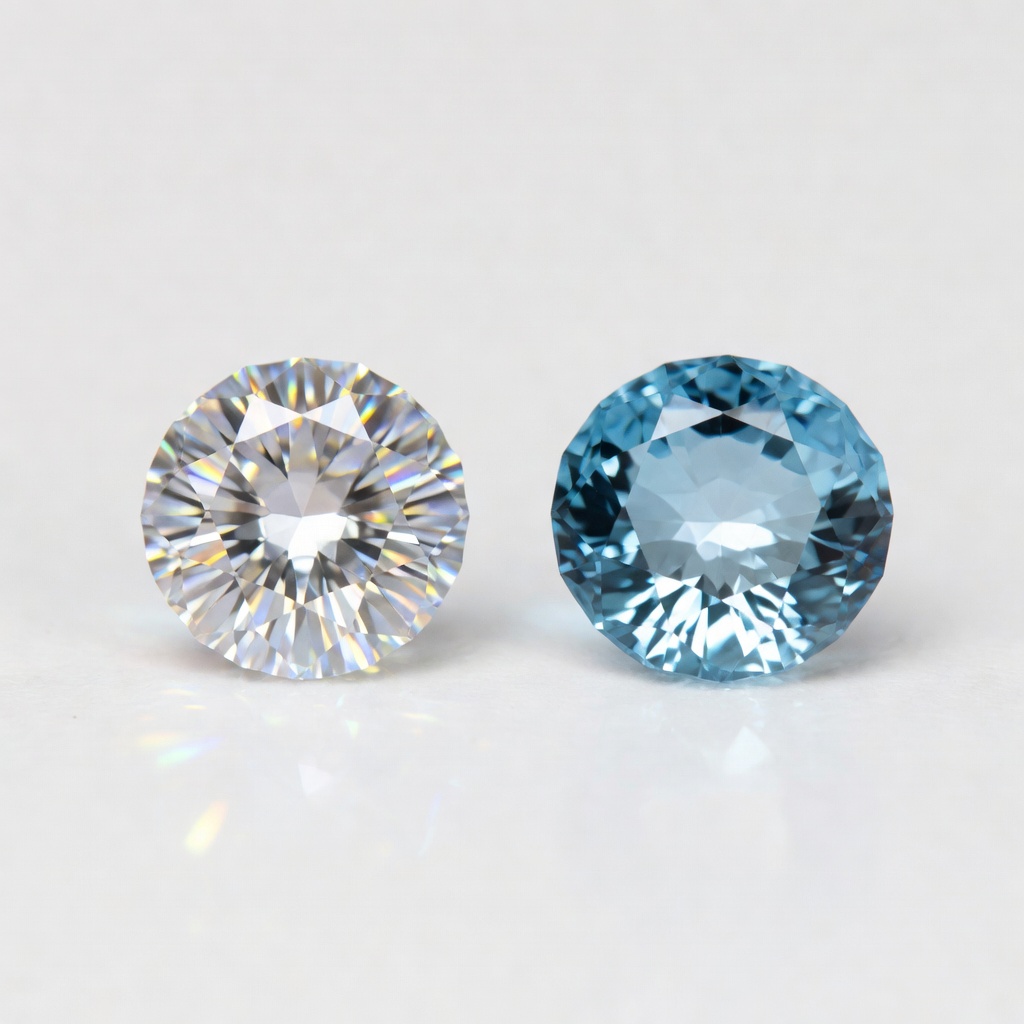
When evaluating white topaz versus diamond for their visual performance, the optical properties reveal why diamonds command premium prices despite appearing superficially similar to the untrained eye. Diamond possesses a refractive index of 2.42, which represents the highest value for any natural transparent gemstone. This measurement indicates how much light bends when entering the material, and diamonds' high refractive index, combined with expert cutting proportions, creates the intense brilliance—that bright white light return—associated with exceptional gemstones. When a diamond moves under light, it produces a distinctive pattern of bright and dark areas known as "scintillation," creating that coveted sparkle that seems to emanate from within the stone itself.
Topaz exhibits a refractive index of only 1.61-1.64, which produces noticeably less brilliance than diamond. While a well-cut white topaz can appear bright, it lacks the "life" and intensity of diamond, often presenting a somewhat "sleepy" or subdued appearance compared to the electric sparkle of its carbon-based counterpart. The dispersion value—the ability to split white light into spectral colors, creating "fire"—further differentiates these stones, with diamond measuring 0.044 versus topaz's modest 0.014. This means that while diamonds flash with rainbow colors, particularly under incandescent lighting, topaz displays minimal colorful fire. Additionally, diamond exhibits adamantine luster, appearing mirror-like and metallic in its reflectivity, while topaz displays vitreous luster, resembling glass rather than metal.
Color Varieties and Enhancement Treatments
Natural diamonds occur in a spectrum ranging from completely colorless (D-grade) to fancy vivid colors including pink, blue, yellow, and green, with colorless stones and rare fancy colors commanding the highest premiums in the market. The Gemological Institute of America (GIA) grades diamond color on a scale from D (colorless) to Z (light yellow or brown), with each grade representing subtle differences in hue that significantly impact value. Blue diamonds, such as the famous Hope Diamond, derive their color from trace boron impurities and represent some of the rarest and most valuable gemstones on Earth, often fetching millions of dollars per carat at auction.
Topaz naturally occurs in colorless, yellow, brown, orange (imperial topaz), pink, and pale blue varieties, though the vast majority of commercial blue topaz has been treated through irradiation and heat treatment processes. Natural blue topaz is extremely rare; instead, colorless or pale blue rough material undergoes neutron bombardment in nuclear reactors or electron treatment in linear accelerators to alter the crystal structure and produce the vibrant Swiss Blue, London Blue, and Sky Blue varieties found in jewelry stores. This treatment is permanent and stable, but requires disclosure under Federal Trade Commission guidelines. White topaz serves as the most common diamond alternative, offering a colorless appearance at a fraction of the cost, though it lacks the optical performance and durability of diamond. When purchasing blue topaz versus diamond, consumers should understand that the blue color in topaz is typically induced, whereas blue diamonds are natural phenomena formed over billions of years.
Price, Value and Investment Considerations
The financial disparity between these gemstones represents perhaps the most practical consideration for buyers navigating the diamond and topaz differences in the marketplace. Fine quality diamonds typically range from $3,000 to $15,000 or more per carat, depending on the four Cs—cut, color, clarity, and carat weight—with exceptional stones commanding significantly higher premiums. This pricing structure reflects not only the rarity of gem-quality diamonds and the costs associated with mining and cutting, but also the established global market that treats diamonds as fungible assets with standardized grading systems. When properly certified by laboratories such as GIA or IGI, diamonds retain approximately 50 to 70 percent of their retail value on the secondary market, making them suitable for collateral, estate planning, and long-term wealth preservation.
Topaz, conversely, represents an accessible entry point into fine jewelry, with prices ranging from $20 to $600 per carat for most commercial qualities, and only exceptional imperial topaz or large natural pink specimens exceeding $1,000 per carat. This affordability stems from the relative abundance of topaz deposits in Brazil, Nigeria, and other locations, combined with efficient treatment processes that enhance color in otherwise inexpensive rough material. However, topaz possesses minimal resale value and essentially no investment market; most jewelers will not purchase used topaz jewelry, and the stone depreciates significantly after the initial retail purchase. For budget-conscious consumers seeking diamond alternative gemstones for fashion jewelry or occasional wear pieces, topaz offers size and presence impossible to achieve with diamond at comparable price points, provided they understand the stone represents decorative rather than investment value.
Origins, Ethical Sourcing and Lab-Grown Options
The provenance of these gemstones carries significant ethical and environmental implications that increasingly influence consumer purchasing decisions. Diamond mining has historically faced scrutiny regarding conflict diamonds—stones mined in war zones and sold to finance armed conflict against legitimate governments—though the Kimberley Process Certification Scheme has reduced the flow of such stones since 2003. Additionally, large-scale diamond mining operations in Botswana, Canada, and Russia have implemented environmental rehabilitation programs and community benefit initiatives, though artisanal mining in some regions continues to raise concerns about labor practices and ecological disruption. For ethically minded consumers, Canadian diamonds with provenance documentation or stones from specific responsible mines offer peace of mind regarding sourcing.
Topaz mining generally generates fewer ethical controversies, with major deposits in Brazil, Pakistan, and Nigeria operating under varying degrees of regulation. The gemstone is often recovered as a byproduct of other mining operations or through small-scale artisanal methods that have lower environmental impact than industrial diamond extraction. Regarding laboratory-grown options, synthetic diamonds have achieved widespread commercial availability and consumer acceptance, offering chemically, physically, and optically identical stones to mined diamonds with guaranteed ethical sourcing and reduced environmental footprint. These lab-grown diamonds provide the hardness and brilliance of natural diamonds at 30 to 50 percent lower cost. Synthetic topaz, however, is not commercially produced because natural material is abundant and inexpensive, making laboratory synthesis economically unviable. Certification standards vary dramatically between the two: diamonds require grading reports from recognized laboratories (GIA, IGI, AGS) to establish quality and value, while topaz lacks standardized grading, typically sold with generic descriptions of color and clarity without independent laboratory verification.
Identification and Distinguishing Tests
Professional gemologists employ several definitive tests to distinguish between diamond and topaz, though visual examination under magnification provides the first clues for experienced observers. The most significant visual difference involves birefringence—the double refraction of light caused by topaz's orthorhombic crystal structure. When viewing a topaz through the table facet with a jeweler's loupe, the pavilion facets appear doubled or ghosted, whereas diamond, being isometric and singly refractive, shows only single, sharp facet junctions. This doubling effect in topaz creates a slightly fuzzy appearance compared to the knife-sharp clarity of diamond facets under magnification.
Thermal conductivity testing provides the most common field identification method, as diamonds conduct heat five times faster than copper, while topaz conducts heat poorly. Electronic diamond testers measure the rate at which heat dissipates from a probe tip; diamond registers immediately, while topaz shows no reaction or a delayed response. Advanced gemological laboratories utilize refractometers to measure refractive index (2.42 for diamond versus 1.61-1.64 for topaz), spectroscopes to analyze absorption spectra, and specific gravity testing to differentiate these materials definitively. For consumers attempting home identification, the fog test—breathing on the stone to create condensation—provides a rudimentary clue: diamond disperses heat so rapidly that condensation evaporates instantly, while topaz remains fogged for several seconds, though this test is not definitive and professional evaluation remains essential for high-value purchases.
Best Jewelry Applications and Setting Recommendations
Selecting the appropriate gemstone for specific jewelry applications requires careful consideration of wear patterns and setting designs that maximize beauty while minimizing damage risk. Diamonds excel in engagement rings, wedding bands, and daily wear pieces due to their unmatched hardness and resistance to abrasion. Their durability allows for delicate setting styles, including high prong settings that maximize light exposure, tension settings that suspend the stone between metal bands, and intricate pave work that places numerous small diamonds in close proximity. Because diamonds resist chipping and scratching, they withstand the impacts inherent in hand-wearing jewelry, maintaining their beauty through decades of continuous wear without requiring special precautions during activities.
Topaz gemstone durability limitations necessitate more protective setting strategies and restricted use cases. Due to its perfect cleavage and relative softness, topaz performs best in earrings, pendants, and brooches—jewelry items that experience minimal impact during wear. When set in rings, topaz requires protective mountings such as bezel settings that surround the girdle with metal, halo settings that provide a buffer against direct impact, or thick prong configurations that offer substantial protection against snagging and bumping. Jewelry designers often recommend reserving topaz rings for occasional wear rather than daily use, removing the jewelry during household chores, exercise, and activities involving hand tools. For statement pieces where size matters more than durability—such as cocktail rings or anniversary gifts—blue topaz offers impressive visual presence at accessible prices, provided the wearer understands the maintenance requirements and vulnerability to damage.
Final Verdict: Choosing Between Diamond and Topaz
The decision between diamond and topaz ultimately hinges on creating a realistic matrix that weighs budget constraints against functional requirements and symbolic importance. For engagement rings representing lifelong commitment, heirloom jewelry intended for generational transfer, or daily wear pieces that must withstand decades of use without degradation, diamond remains the essential choice despite its premium cost. The stone's unparalleled hardness ensures that it will look identical in fifty years to the day it was purchased, while its superior brilliance satisfies the desire for maximum optical performance. When budget limitations make natural diamonds prohibitive, lab-grown diamonds offer identical physical properties with ethical sourcing, providing a middle ground between natural diamond prestige and topaz affordability.
Topaz makes practical sense for fashion-forward consumers seeking large, eye-catching stones for occasional wear jewelry, collectors appreciating the subtle beauty of imperial topaz, or buyers prioritizing size over longevity. A five-carat blue topaz pendant provides dramatic color and presence at a price point where a comparable diamond would cost twenty to thirty times more. However, purchasers must enter the transaction with realistic expectations regarding the stone's limitations, treating topaz as a beautiful but temporary addition to a jewelry collection rather than a permanent investment. By understanding the fundamental diamond and topaz differences in durability, optics, and value retention, consumers can select the gemstone that genuinely serves their needs rather than making compromises that lead to disappointment or premature wear.
Frequently Asked Questions
Is topaz a real diamond?
No, topaz is a completely different gemstone species. Diamond is pure crystalline carbon, while topaz is an aluminum fluorosilicate mineral. They differ in hardness (10 vs 8 on Mohs scale), optical properties, and chemical composition. White topaz may resemble diamond visually but lacks its brilliance, fire, and durability.
Which is harder, diamond or topaz?
Diamond is significantly harder, ranking 10 on the Mohs scale—the maximum rating and hardest natural substance known. Topaz ranks at 8, which means diamond can easily scratch topaz, but topaz cannot scratch diamond. This hardness difference is crucial for daily wear jewelry durability.
Can most people tell the difference between diamond and topaz?
To the untrained eye, white topaz can mimic diamond, but several visual cues reveal the difference. Diamonds display superior brilliance and colorful fire (dispersion). Topaz shows a 'sleepy' or less lively appearance and may exhibit doubled facet edges when viewed under magnification due to its birefringence.
Is white topaz a good diamond alternative for engagement rings?
White topaz is not recommended for engagement rings. While affordable, its lower hardness (8 vs 10) means it will scratch and abrade over time, losing polish and clarity. Its perfect cleavage makes it vulnerable to chipping, and it lacks diamond's exceptional brilliance. For daily wear, moissanite or sapphire are better alternatives.
Why are blue topaz stones so much cheaper than blue diamonds?
Blue topaz is abundant and commonly treated (irradiated and heated) to enhance color, with production costs under $100 per carat. Blue diamonds are extraordinarily rare natural occurrences formed over billions of years, with prices reaching $1 million+ per carat for vivid shades. The rarity, durability, and market demand create this massive price disparity.
Will topaz scratch or damage more easily than diamond?
Yes, significantly. Topaz can be scratched by everyday materials like quartz (7 hardness) found in household dust. Over time, topaz jewelry shows wear on facet junctions and tables. Diamond is nearly impervious to scratching and maintains its polish indefinitely under normal wear conditions.
How do jewelers test for diamond vs topaz?
Professional jewelers use thermal conductivity testers—diamonds disperse heat instantly while topaz does not. They also examine optical properties: diamonds show single refraction; topaz displays birefringence (doubled images). Advanced testing includes measuring refractive index, specific gravity, and examining crystal structure under magnification.
Which gemstone is better for investment purposes?
Diamonds are vastly superior for investment. They have established global markets, standardized grading (4Cs), and hold resale value of 50-70%. Topaz has no investment market, minimal resale value, and is considered a semi-precious decorative stone. Rare natural pink or imperial topaz may have collector value but lacks liquid investment market liquidity.