Diamond vs Tiger's Eye: A Comprehensive Overview
When selecting the perfect gemstone for jewelry or collection, the comparison between diamond and tiger's eye represents one of the most striking contrasts in the mineral world. Diamond stands as the premier precious gem, revered for millennia as the ultimate symbol of luxury and endurance, while tiger's eye emerges as a distinctive semi-precious stone celebrated for its mesmerizing optical effects and earthy elegance. Understanding the fundamental differences between these two gemstones helps collectors and jewelry enthusiasts make informed decisions aligned with their specific needs, aesthetic preferences, and budget constraints.
The primary reasons for comparing these seemingly disparate stones often center on budget considerations for significant purchases, distinctive aesthetic preferences that favor unique character over traditional sparkle, and the symbolic meanings that resonate with individual spiritual beliefs. While diamonds command attention through brilliant light performance and prestige, tiger's eye attracts those seeking grounding energy and chatoyant beauty at a fraction of the cost. This comprehensive guide explores the geological origins, physical properties, market values, and practical applications of both gemstones to equip you with the knowledge necessary for your next jewelry acquisition or investment decision.
Throughout this detailed analysis, you will discover the scientific distinctions in formation processes and durability metrics, learn how the Mohs hardness scale impacts daily wear decisions, and understand the significant pricing disparities that make tiger's eye an accessible diamond alternative for fashion jewelry. We will examine how visual characteristics differ between diamond brilliance and tiger's eye chatoyancy, investigate the metaphysical properties that drive demand in crystal healing communities, and provide actionable care instructions to preserve your gemstone investments for generations.
Origin and Geological Formation
The geological journeys that create diamonds and tiger's eye stones differ dramatically in both environment and timeframe, resulting in distinct crystalline structures that define their physical properties. Diamonds form from pure carbon crystallization occurring more than 100 miles beneath Earth's surface, where extreme pressure exceeding 725,000 pounds per square inch and temperatures above 2,000 degrees Fahrenheit transform carbon atoms into the hardest known natural substance. This remarkable diamond formation process requires between 1 to 3 billion years to complete, with volcanic eruptions eventually carrying these precious crystals to surface-level deposits where miners can extract them.
Conversely, tiger's eye formation represents a fascinating example of pseudomorphism, where one mineral replaces another while maintaining the original mineral's fibrous structure. This metamorphic transformation begins with crocidolite asbestos fibers, which become encased in quartz and gradually replaced by silica and iron oxide over millions of years. The parallel alignment of these iron-rich fibers creates the stone's signature chatoyant effect, while the golden and brown colorations result from oxidized iron within the quartz matrix. This unique formation process occurs primarily within folded and faulted rock formations where hot, silica-rich solutions permeate existing mineral deposits.
Geographic distribution patterns for these gemstones reveal distinct mining locales that influence availability and market dynamics. Diamond production concentrates heavily in Russia, Botswana, and Canada, where modern industrial mining operations extract stones from kimberlite pipes and alluvial deposits. Major players like Alrosa and De Beers control significant portions of the global supply chain. Tiger's eye sources remain more geographically diverse but centered historically in South Africa, particularly the Northern Cape province, with additional significant deposits found throughout Western Australia and regions of India. These gemstone origins not only affect supply logistics but also contribute to the cultural significance and historical lore surrounding each stone in its native regions.
Physical Properties and Durability Analysis
Understanding the Mohs hardness scale proves essential when evaluating gemstone durability comparison between these two distinct materials, as hardness directly impacts scratch resistance and long-term wearability. Diamonds rank as the ultimate standard with a perfect 10 on the Mohs scale, meaning they can scratch virtually any other material while remaining impervious to damage from everyday contact with household dust, which typically contains quartz particles rating 7 on the same scale. Tiger's eye measures between 6.5 and 7 on the Mohs hardness scale, positioning it as moderately durable but significantly more susceptible to surface abrasions and scratches compared to its carbon-based counterpart.
However, diamond hardness does not equate to indestructibility, a common misconception among jewelry buyers. Despite their supreme resistance to scratching, diamonds possess perfect cleavage in four directions, making them surprisingly brittle when subjected to sharp impacts or improper setting techniques. A significant blow to a diamond's girdle or point can cause the stone to chip or split along these cleavage planes. Tiger's eye, while softer, actually offers superior toughness due to its fibrous, interlocking quartz structure without cleavage planes, allowing it to absorb impact better than diamond in certain situations. This distinction makes tiger's eye surprisingly resilient for cabochon cuts and beads despite its lower hardness rating.
Specific gravity measurements reveal additional physical distinctions between these gemstones, affecting how stones feel when worn and their relative weights per carat. Diamonds possess a specific gravity of approximately 3.52, meaning they feel notably heavy for their size compared to many other gems. Tiger's eye demonstrates a lighter specific gravity ranging from 2.64 to 2.71, resulting in stones that feel slightly less dense when held in the hand. This density difference influences jewelry design considerations, as larger tiger's eye cabochons can be set comfortably in earrings and pendants without excessive weight pulling on earlobes or chains, whereas similarly sized diamonds would create substantially heavier pieces requiring more robust settings and support structures.
Visual Characteristics: Brilliance vs Chatoyancy
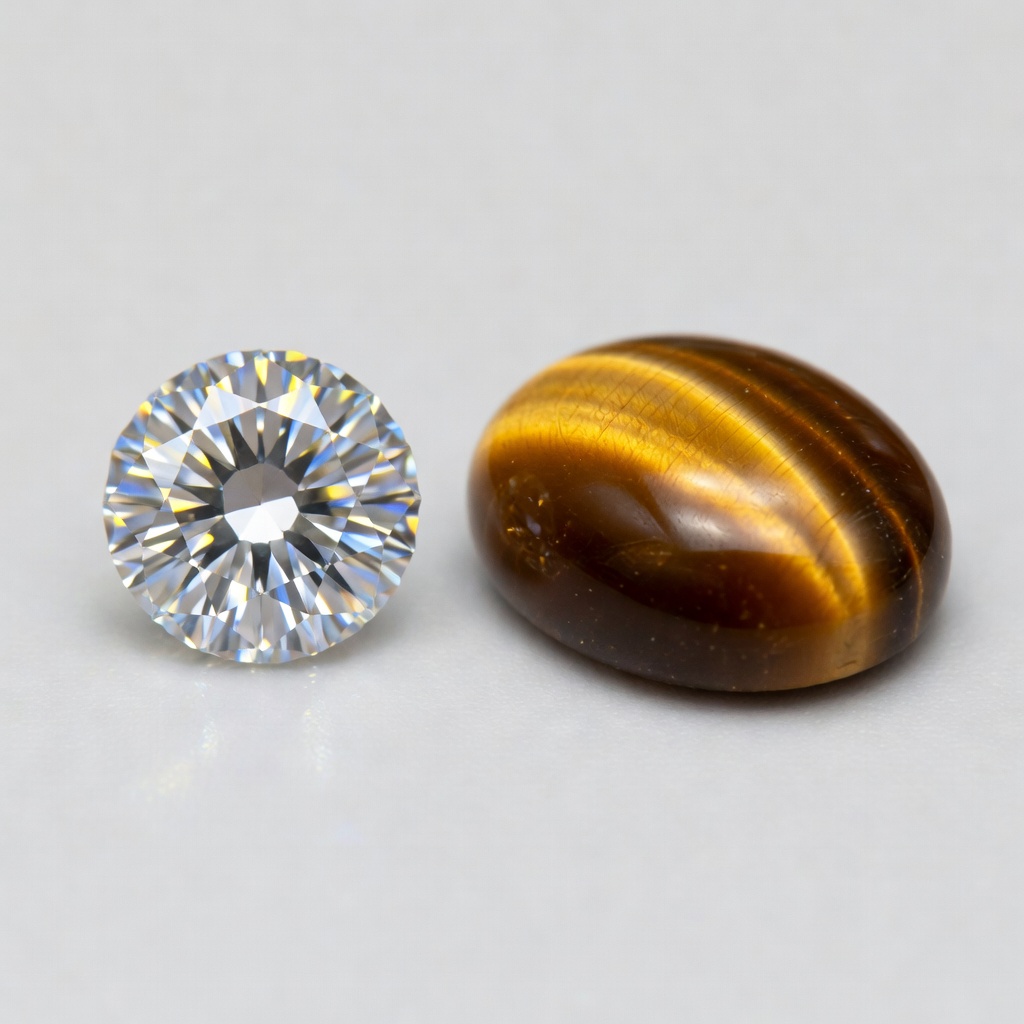
The optical phenomena displayed by diamonds and tiger's eye stones represent polar opposite approaches to light interaction, creating distinctly different aesthetic experiences for observers. Diamond brilliance emerges from a combination of the stone's exceptionally high refractive index of 2.42, which measures how much light bends when entering the material, and the precise mathematical faceting techniques developed over centuries to maximize light return. When properly cut, diamonds exhibit three critical optical properties: brilliance (white light reflection), fire (spectral color dispersion), and scintillation (flashes of light when the stone moves). These characteristics create the unmistakable sparkle that has made diamonds the standard for engagement rings and formal jewelry across cultures.
Tiger's eye chatoyancy presents an entirely different visual phenomenon rooted in the stone's unique internal architecture rather than faceting precision. This optical effect, also known as the cat's eye effect, occurs when light reflects off the parallel asbestos fibers preserved within the quartz matrix, creating a silky, luminous band that appears to move across the stone's surface as it rotates. Unlike the multidirectional sparkle of faceted diamonds, tiger's eye displays a concentrated line of light that shifts position with the viewer's perspective, creating a dynamic, almost liquid appearance. This chatoyant band typically appears golden or silver against the stone's characteristic honey-brown background, though variations exist in red tiger's eye (created through heat treatment) and blue hawk's eye (the natural pre-oxidation state).
Color ranges and treatment possibilities further differentiate these gemstones in terms of versatility and market availability. Diamonds span the entire spectrum from completely colorless (graded D-F) through fancy vivid colors including blue, pink, yellow, and green, with color intensity significantly impacting diamond value per carat. Natural fancy colored diamonds command premium prices often exceeding their colorless counterparts. Tiger's eye maintains a more limited but distinctive palette centered on golden-brown, red, and blue-gray variations, with the most valuable specimens displaying sharp, well-defined chatoyant bands against uniformly colored backgrounds. While diamond cutters must carefully consider angles and proportions to maximize optical performance, tiger's eye lapidaries typically employ cabochon cuts—smooth, domed surfaces without facets—to best display the fibrous structure and chatoyancy that define this unique gemstone.
Pricing and Value Factors
The economic disparity between diamond and tiger's eye markets reflects fundamentally different supply chains, demand structures, and rarity factors that prospective buyers must understand before making purchasing decisions. Diamond pricing follows the internationally recognized 4Cs system—cut, color, clarity, and carat weight—with prices ranging from approximately $1,500 per carat for commercial-quality stones to well over $20,000 per carat for exceptional D-color, internally flawless specimens. Fancy colored diamonds and those with exceptional cut grades command even higher premiums, with rare pinks and blues selling for millions per carat at auction. This pricing structure creates significant barriers to entry for average consumers while establishing diamonds as portable wealth stores and status symbols.
Tiger's eye affordability presents a stark contrast to the diamond market, with quality specimens typically retailing between $1 and $5 per carat for jewelry-grade material. Even exceptional large cabochons with sharp chatoyancy rarely exceed $10 per carat unless they represent unusual color variations or museum-quality specimens. This dramatic price differential means a consumer could purchase several hundred high-quality tiger's eye stones for the price of a single modest diamond. The affordability stems from abundant natural deposits, relatively straightforward mining operations, and the absence of centralized cartel control over supply. For budget-conscious buyers seeking substantial visual impact without financial strain, tiger's eye offers remarkable value propositions as a diamond alternative in fashion jewelry and metaphysical collections.
Value retention and investment potential diverge significantly between these gemstones, influencing whether buyers should view their purchase as a decorative accessory or a financial asset. Certified diamonds, particularly those accompanied by GIA (Gemological Institute of America) reports, maintain established resale markets and generally retain substantial portions of their original value, though retail markups often exceed 100%, meaning immediate resale typically yields 30-50% of purchase price. Tiger's eye, while offering immediate aesthetic satisfaction and personal enjoyment, provides minimal investment appreciation potential and lacks standardized certification systems or liquid secondary markets. However, exceptional specimens with unusual chatoyancy or significant size may appeal to mineral collectors, offering modest appreciation potential within niche collecting communities focused on gemological curiosities rather than traditional jewelry investments.
Metaphysical Properties and Symbolic Meanings
Beyond their physical attributes, diamonds and tiger's eye stones carry profound symbolic weight across diverse cultural traditions and contemporary spiritual practices, influencing buyer preferences based on personal beliefs and intentions. Diamond symbolism spans millennia and continents, representing eternal love and unbreakable commitment in Western marriage traditions while signifying invincibility, purity, and spiritual enlightenment in ancient Hindu and Buddhist texts. The Sanskrit word for diamond, "vajra," translates to thunderbolt, reflecting beliefs that these stones formed from lightning strikes and possessed the power to protect warriors in battle. In modern crystal healing paradigms, diamonds serve as energy amplifiers, believed to enhance the properties of other stones, promote clarity of thought, and stimulate the crown chakra for heightened spiritual connection.
Tiger's eye meaning centers on courage, protection, and personal empowerment, drawing associations from the stone's resemblance to the watchful eye of the big cat. Ancient Roman soldiers wore tiger's eye into battle believing it offered protective energies and sharpened their senses during combat. In contemporary metaphysical practices, practitioners consider tiger's eye a stone of the mind, enhancing decision-making abilities, promoting mental clarity, and grounding spiritual energy into practical action. Crystal healers specifically associate this gemstone with the solar plexus chakra, the energy center governing willpower, self-confidence, and personal identity. Meditators often use tiger's eye to balance emotional extremes, fostering calmness during stressful situations while maintaining the alertness necessary for taking decisive action.
Modern applications of these gemstones in holistic wellness reveal distinct therapeutic approaches suited to different personality types and healing goals. Energy workers recommend diamonds for individuals seeking to amplify their intentions, break through limiting beliefs, or enhance their meditation practices with high-vibration energy. The stone's clarity and brilliance serve as metaphors for mental transparency and goal achievement. Conversely, tiger's eye suits those requiring grounding and protection from negative energies, particularly individuals navigating major life transitions or seeking to overcome fear and anxiety. Many holistic practitioners create combination grids using both stones, placing diamonds at the crown to elevate consciousness while positioning tiger's eye at the solar plexus to ensure that spiritual insights translate into practical, confident action in the physical world.
Jewelry Applications and Setting Considerations
Practical jewelry design considerations differ substantially when working with diamonds versus tiger's eye, requiring distinct approaches to setting styles, metal choices, and wearability factors. Diamond jewelry dominates the bridal industry, with solitaire engagement rings, eternity bands, and tennis bracelets representing standard benchmarks for fine jewelry. The exceptional diamond hardness allows for delicate prong settings that maximize light exposure while maintaining structural integrity through decades of daily wear. Jewelers frequently employ four or six-prong settings, bezel mounts, and tension settings to showcase diamonds in platinum, white gold, yellow gold, and rose gold without concern for the stone abrading the metal or losing polish through contact.
Tiger's eye jewelry demands different setting strategies that account for its softer nature and distinctive visual properties. This gemstone excels in statement rings, bold pendant designs, and beaded necklaces where its chatoyant band becomes the focal point. Unlike diamonds, which require faceting to achieve optical performance, tiger's eye performs best as cabochons—smooth, rounded shapes without facets—that display the characteristic cat's eye effect. Protective settings prove essential for tiger's eye durability; bezel settings that wrap the stone's edges in metal provide superior protection compared to exposed prong settings. The stone's golden-brown coloration pairs exceptionally well with yellow gold, which complements its warm tones, and oxidized sterling silver, which creates rustic, organic aesthetics popular in bohemian and artisan jewelry styles.
Design versatility comparisons reveal that diamonds accommodate virtually any jewelry genre from ultra-modern minimalist pieces to vintage-inspired filigree designs, transitioning seamlessly between casual and formal contexts. Their colorless nature allows them to complement all metal types and gemstone accents without clashing. Tiger's eye offers more specialized design applications, thriving in artisan, tribal, and nature-inspired collections where its earthy character enhances organic motifs. Jewelry designers often incorporate tiger's eye into men's jewelry collections, leather-wrapped bracelets, and macramé designs where its masculine energy and protective symbolism resonate with specific demographics. When creating mixed-stone pieces, designers must position tiger's eye away from harder stones like diamonds in the same piece to prevent scratching, often using spacer beads or separate stations in multi-gemstone necklaces and bracelets.
Care, Cleaning, and Maintenance Requirements
Proper maintenance protocols vary significantly between these gemstones due to their differing chemical compositions and hardness levels, requiring owners to adopt species-specific care routines to preserve their jewelry's beauty. Diamond care benefits from the stone's chemical inertness and supreme hardness, allowing owners to clean their pieces using ultrasonic cleaners, steam cleaning systems, and most commercial jewelry cleaning solutions without risking damage to the gemstone itself. The only caution involves stones with significant inclusions or fractures, where ultrasonic vibrations might exacerbate existing weaknesses. Regular cleaning maintains diamond brilliance by removing skin oils, lotions, and environmental grime that can temporarily dull the stone's surface without scratching it.
Cleaning tiger's eye requires significantly gentler approaches due to its composite nature and sensitivity to thermal shock and chemical exposure. Owners should clean tiger's eye jewelry using only warm soapy water—mild dish soap works effectively—and a soft microfiber cloth or soft-bristled brush. Harsh chemicals including bleach, ammonia, and abrasive cleaners can damage the iron oxide components within the stone or attack any dyes used to enhance red or blue varieties. Ultrasonic cleaners and steam systems pose particular risks for tiger's eye, as the heat and vibrations may cause the stone to crack or separate along fibrous planes. Additionally, prolonged exposure to direct sunlight or heat sources can fade the stone's vibrant colors over time, necessitating storage away from windows and heating vents.
Storage recommendations emphasize the hardness differential between these materials to prevent accidental damage to softer stones or other jewelry pieces. Diamonds should be stored separately in individual fabric-lined compartments or soft pouches, not primarily to protect the diamond, but to prevent it from scratching other jewelry items, including gold, silver, and softer gemstones. Many jewelry collectors maintain dedicated diamond boxes with divided sections ensuring stones cannot contact one another. Tiger's eye storage requires protection from both harder stones and environmental factors; wrapping pieces in soft cloth or storing them in fabric-lined jewelry boxes prevents surface scratches while maintaining stable temperature and humidity levels. When traveling, tiger's eye pieces benefit from padded jewelry rolls that prevent impact damage, while diamond pieces require secure, tamper-evident containers that protect against loss or theft given their substantial value.
Investment Potential and Market Demand
Evaluating these gemstones through an investment lens reveals distinctly different asset classes with varying liquidity, appreciation potential, and market volatility characteristics. Diamond investment has historically functioned as a concentrated store of wealth, with high-quality stones serving as portable, internationally recognized assets that hedge against currency fluctuations and economic instability. The established infrastructure of certification laboratories, particularly the Gemological Institute of America (GIA), provides standardized grading that facilitates transparent pricing and resale transactions. However, modern investors face new challenges from lab-grown diamonds, which chemically and physically match natural stones but sell for 60-80% less, potentially disrupting traditional value retention models for natural diamonds in the coming decades.
Tiger's eye occupies a different market position entirely, functioning primarily as a collector's mineral rather than a financial investment vehicle. While exceptional specimens featuring rare color variations, exceptional chatoyancy, or significant size (exceeding 50 carats with perfect banding) may appreciate modestly within specialized mineral collecting communities, the stone lacks the standardized grading systems, liquid secondary markets, and institutional demand necessary for serious investment portfolios. Tiger's eye value remains driven by decorative and metaphysical demand rather than scarcity, with new deposits continually entering the market and preventing the supply constraints that typically drive investment-grade appreciation. Collectors seeking tiger's eye should focus on acquiring unusual specimens for personal enjoyment rather than retirement planning.
Current market trends indicate divergent trajectories for these materials that potential buyers should consider. The diamond industry faces disruption from ethical sourcing concerns, lab-grown alternatives, and changing millennial preferences regarding luxury consumption, though high-quality natural diamonds with exceptional provenance maintain strong demand among ultra-high-net-worth individuals. Conversely, tiger's eye experiences steady demand growth within the metaphysical healing sector and sustainable fashion movements, where consumers prioritize affordable, naturally sourced materials with spiritual significance over traditional luxury markers. Artisan jewelry makers increasingly incorporate tiger's eye into eco-conscious collections, while crystal therapy practitioners drive consistent wholesale demand for high-grade rough material. These trends suggest diamonds may face price volatility in coming years while tiger's eye maintains stable, modest pricing accessible to entry-level collectors and spiritual practitioners.
Final Verdict: Choosing the Right Gemstone
Selecting between diamond and tiger's eye ultimately requires honest assessment of budget parameters, lifestyle factors, and personal value systems rather than adhering to traditional jewelry norms. Budget considerations present the most immediate deciding factor; diamonds require significant financial investment even for modest-sized stones, often necessitating financing options or extended saving periods for engagement ring purchases. Tiger's eye offers immediate accessibility, allowing collectors to acquire substantial, visually striking pieces without financial strain, making it ideal for fashion jewelry enthusiasts who prefer variety over singular investment pieces. For consumers prioritizing diamond alternatives that provide distinctive character without luxury pricing, tiger's eye delivers exceptional aesthetic impact per dollar spent.
Lifestyle factors significantly influence which gemstone suits specific wearers best. Individuals with active lifestyles, manual occupations, or preference for low-maintenance jewelry may find tiger's eye surprisingly practical despite its softer nature, as its toughness and absence of cleavage planes make it more resistant to chipping than diamond during physical impacts. However, those seeking heirloom pieces intended for daily wear across generations, particularly for wedding jewelry that must withstand decades of continuous use, benefit from diamond's scratch resistance and established repair infrastructure. Traditional engagement scenarios still favor diamonds for their cultural associations with permanence and prestige, though non-traditional couples increasingly choose tiger's eye for promise rings or commitment jewelry that prioritizes unique symbolism and metaphysical protection over conventional status displays.
| Characteristic | Diamond | Tiger's Eye |
|---|---|---|
| Mohs Hardness | 10 (Highest rating) | 6.5-7 (Moderate) |
| Price per Carat | $1,500 - $20,000+ | $1 - $5 |
| Optical Effect | Brilliance, Fire, Scintillation | Chatoyancy (Cat's Eye) |
| Primary Jewelry Use | Engagement rings, Fine jewelry | Statement pieces, Beads, Talismans |
| Durability Concerns | Brittle cleavage, Can chip | Scratch-prone, Avoid chemicals |
| Investment Potential | High (Certified stones) | Low (Decorative value) |
| Care Requirements | Ultrasonic safe, Low maintenance | Gentle cleaning only, No heat |
| Symbolic Meaning | Eternal love, Purity, Strength | Courage, Protection, Confidence |
| Best Metal Pairing | All metals (Platinum, Gold, Silver) | Gold, Silver, Rustic settings |
Personal preference alignment represents the final and perhaps most important consideration in this gemstone buyers guide. Choose diamond when seeking maximum prestige, sparkle, and traditional luxury, particularly for milestone celebrations where cultural expectations favor the "forever" symbolism associated with these stones. Opt for tiger's eye when drawn to organic aesthetics, metaphysical properties, and distinctive visual character that sparks conversation and personal connection. Many collectors ultimately incorporate both stones into their jewelry wardrobes, reserving diamonds for formal occasions and significant life events while enjoying tiger's eye for daily wear, spiritual practice, and creative fashion expression. The ideal choice honors your individual aesthetic sensibilities, practical needs, and the specific intentions you bring to your jewelry collection.
Frequently Asked Questions
Which is more expensive, diamond or tiger's eye?
Diamonds are significantly more expensive, costing $1,500-$20,000+ per carat, while tiger's eye is highly affordable at $1-$5 per carat. A one-carat diamond could cost the same as 300-400 quality tiger's eye stones. This dramatic price difference reflects diamond's rarity, mining complexity, and established luxury market positioning compared to tiger's eye's abundant natural deposits and accessible mining operations.
Can tiger's eye be worn daily like a diamond?
Tiger's eye can be worn daily with proper care, but it's softer (6.5-7 on Mohs scale) than diamond (10), making it more prone to scratches. Protective settings and avoiding impact will help maintain its appearance. While diamonds resist surface scratching from everyday contact with dust and debris, tiger's eye owners should remove their jewelry during activities involving hard surfaces or abrasive materials, and consider bezel settings that protect the stone's edges from direct contact.
What are the main visual differences between diamond and tiger's eye?
Diamonds display brilliant sparkle, fire, and light dispersion from faceted cuts. Tiger's eye shows a silky, cat's-eye chatoyant band across its surface with a warm golden-brown luster, typically cut as cabochons. While diamonds return light through precisely angled facets creating multidirectional sparkle, tiger's eye reflects light off parallel internal fibers creating a single moving line of light that shifts as the stone rotates, producing an entirely different aesthetic experience rooted in organic patterns rather than geometric precision.
Is tiger's eye a good alternative to diamond for engagement rings?
Tiger's eye can be a unique, budget-friendly alternative, but it's not traditional. Its softer nature and distinctive appearance suit non-conventional couples prioritizing symbolism and affordability over prestige. Couples choosing tiger's eye for commitment jewelry should understand that the stone may show wear over decades of daily use, requiring occasional repolishing, and should select protective settings that minimize exposure to impact. This choice signals a preference for individuality and metaphysical meaning over traditional luxury markers.
How do I verify authentic tiger's eye versus imitation?
Real tiger's eye shows natural chatoyancy that moves when rotated under light, has fibrous structure visible under magnification, and maintains consistent golden-brown coloring. Glass imitations look too perfect and lack depth. Authentic specimens display subtle color variations and inclusions within the fibrous structure, while plastic or glass fakes often appear uniformly colored with surface-level "cat's eye" effects painted or molded rather than emerging from internal fiber alignment. Temperature testing also helps; genuine tiger's eye feels cool to the touch initially and warms slowly, while glass heats quickly.
Does diamond have metaphysical properties like tiger's eye?
Yes, diamonds are believed to amplify energy, promote clarity, and enhance spiritual connection. However, tiger's eye is more prominent in crystal healing for courage, protection, and grounding. Diamond energy is often described as high-frequency and cleansing, associated with crown chakra activation and the removal of energetic blockages, while tiger's eye operates on a more grounding frequency connected to the solar plexus chakra, making it more accessible for beginners in crystal work and those seeking practical, actionable energy rather than elevated spiritual states.
Which gemstone is better for investment purposes?
Diamonds are superior investments with established resale markets, certification systems, and value retention. Tiger's eye offers minimal investment potential but provides affordable beauty for personal collections. Investment-grade diamonds require specific characteristics including high color grades (D-F), clarity ratings (VVS or better), and excellent cut proportions, typically accompanied by GIA certification. Tiger's eye should be purchased for enjoyment and metaphysical use rather than financial appreciation, as the market lacks the liquidity and standardization necessary for serious investment returns.
How should I clean and care for tiger's eye jewelry differently from diamond jewelry?
Diamonds can withstand ultrasonic cleaners and most chemicals. Tiger's eye requires gentle cleaning with warm soapy water and a soft cloth only. Avoid ultrasonic cleaners, harsh chemicals, and extreme heat for tiger's eye. Additionally, tiger's eye should be stored away from direct sunlight to prevent color fading, while diamonds can be stored in standard jewelry boxes without light concerns. When traveling, pack tiger's eye in padded containers to prevent cracking from impacts that would not damage diamond, and always remove tiger's eye before swimming in chlorinated pools or hot tubs.