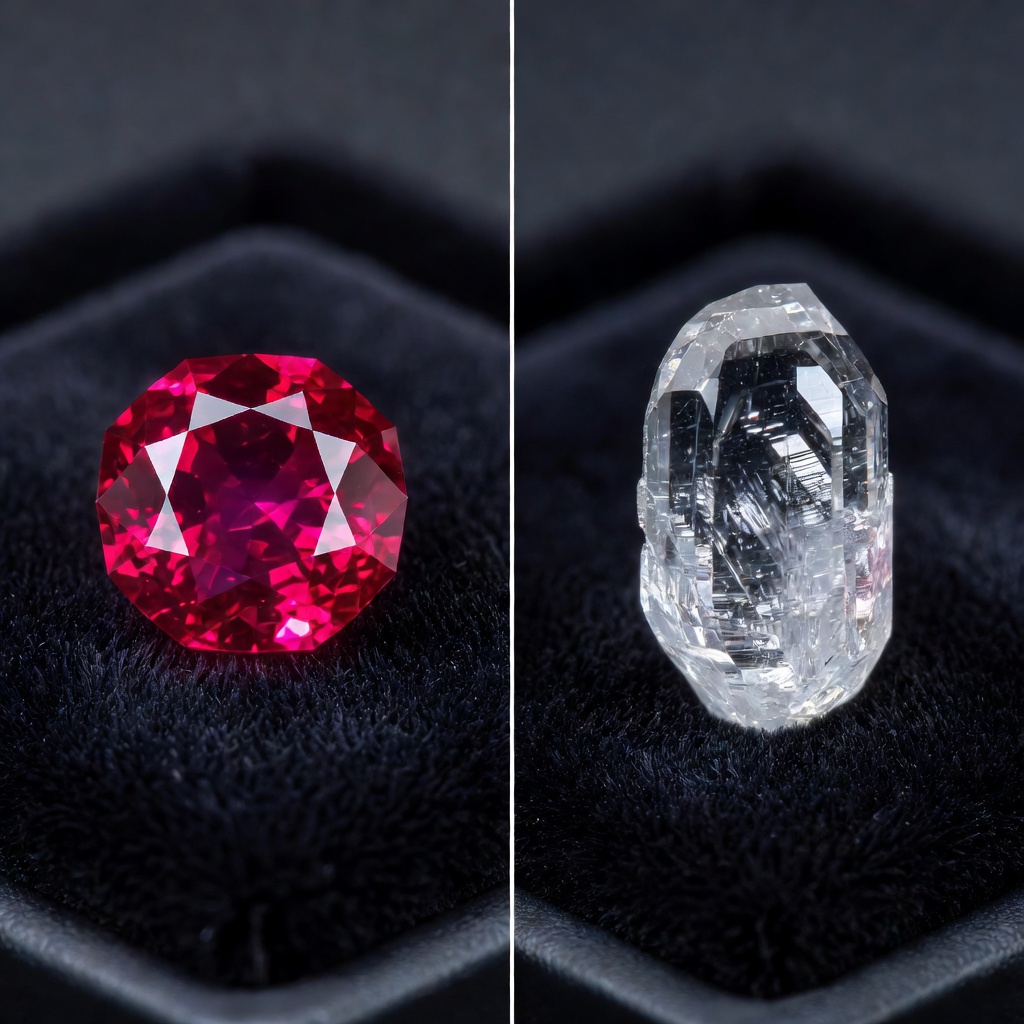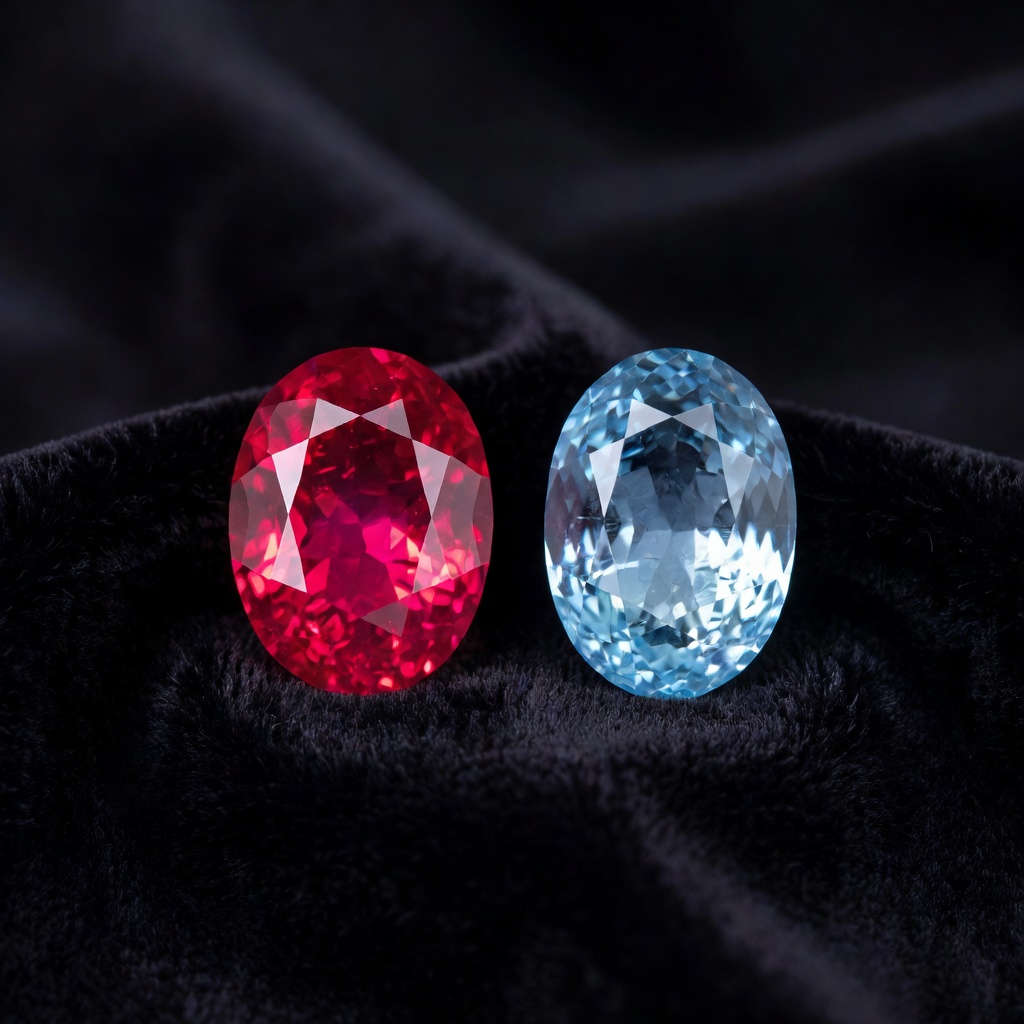
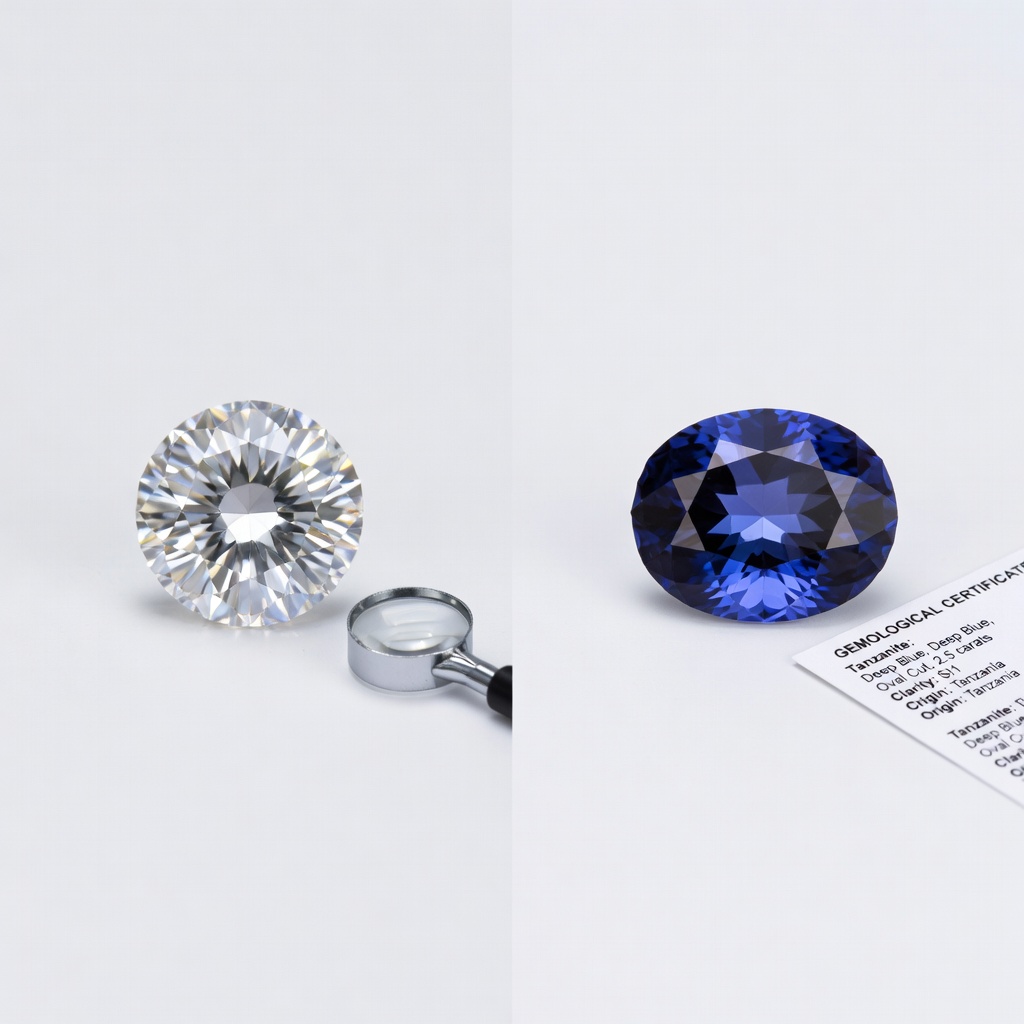
Two Distinctive Precious Stones
When selecting a centerpiece for fine jewelry, the choice often narrows to the timeless brilliance of diamonds versus the captivating allure of tanzanite. While diamonds have reigned supreme as the traditional premier gemstone for centuries, tanzanite has emerged as one of the most compelling diamond alternatives since its discovery in the late 1960s. This comparison between diamond vs tanzanite reveals two vastly different gems—one representing geological endurance and market establishment, the other embodying singular rarity and contemporary sophistication.
Understanding the key differentiators between these precious stones requires examining their origins, physical durability, market positioning, and cultural significance. Diamonds form under immense pressure deep within the earth over billions of years, while tanzanite appears as a geological miracle found in only one location on the planet. Whether you are considering an engagement ring, building a gemstone investment portfolio, or simply seeking a statement piece, this comprehensive analysis will guide you through the critical comparison criteria necessary for making an informed purchasing decision.
Origin and Rarity: Natural Formation and Geographic Source
The geological journeys of these gemstones could not be more distinct, directly impacting their availability and status among rare gemstones. Diamonds crystallize approximately 90 to 120 miles beneath Earth's surface under extreme pressure and temperature conditions, requiring 1 to 3 billion years to form. These ancient stones travel to the surface via volcanic eruptions, with major mining operations currently active in Russia, Botswana, Canada, and Australia. This global distribution creates a controlled scarcity model that has sustained the diamond industry for generations.
Tanzanite presents a radically different origin story that underscores its classification as a true rare gemstone. Discovered only in 1967 by Maasai tribesmen near Mount Kilimanjaro in Tanzania, this blue-violet variety of zoisite appears exclusively within a mere 4-square-kilometer mining area in the Merelani Hills. Gemologists estimate that tanzanite is 1,000 times rarer than diamonds based on geological surveys, with current mining projections suggesting complete depletion of viable deposits within the next 20 to 30 years. This finite supply creates an urgency for collectors seeking to acquire stones before the mines exhaust their reserves.
Supply chain dynamics further differentiate these gems. Diamond availability, while marketed as scarce, benefits from extensive global reserves and strategic stockpiling that stabilize market availability. Conversely, tanzanite's single-source dependency means that political instability, mining regulations, or natural disasters in northern Tanzania could instantly impact global supply. For investors and collectors, this geological singularity makes tanzanite one of the most intriguing rare gemstones available in the modern market.
Physical Properties and Durability Analysis
Understanding the physical limitations of each stone proves essential when evaluating their suitability for daily wear and long-term ownership. On the Mohs hardness scale, which measures a mineral's resistance to scratching, diamonds achieve a perfect 10—the hardest known natural substance. This exceptional diamond hardness means these gems resist scratches from virtually any other material, maintaining their polish and surface integrity indefinitely under normal conditions.
Tanzanite durability presents more nuanced considerations for prospective buyers. Ranking 6 to 7 on the Mohs scale, tanzanite shares hardness characteristics with gemstones like emerald and peridot. While sufficiently hard for jewelry use, this rating indicates that tanzanite can be scratched by harder materials including sapphire, ruby, and certainly diamond. More concerning is tanzanite's perfect cleavage in one direction, meaning the stone can split cleanly if struck with sufficient force along specific crystallographic planes.
Toughness, distinct from hardness, measures resistance to breaking and chipping. Despite their supreme hardness, diamonds possess moderate toughness due to cleavage planes that can cause brittleness under hard impacts. Tanzanite exhibits fair to poor toughness, requiring protective mounting strategies for jewelry intended for daily wear. When selecting a tanzanite engagement ring, jewelers strongly recommend bezel settings or protective halos that shield the stone's edges from accidental knocks against hard surfaces. Diamonds, conversely, accommodate any setting style from delicate prongs to tension mounts without special protective considerations.
Color Grading and Visual Characteristics
The visual distinction between these gems extends far beyond their base colors, encompassing complex interactions with light that define their aesthetic appeal. Diamonds undergo rigorous color grading on a D-to-Z scale, with D representing completely colorless stones commanding premium prices. The diamond industry historically prioritized the absence of color, though fancy colored diamonds—including pinks, blues, and yellows—now command extraordinary premiums when they occur naturally. This emphasis on clarity and brilliance creates a gemstone prized for its ability to separate white light into spectral colors, creating the famous "fire" that captivates viewers.
Tanzanite offers a completely different visual experience rooted in its unique trichroic nature, meaning the stone displays three different colors depending on the viewing angle. Crystallographically, tanzanite shows blue, violet, and burgundy axes, though heat treatment typically enhances the desirable blue-violet combination while suppressing the brownish tones. Premium tanzanite specimens display a vivid, saturated violet-blue reminiscent of fine sapphire, with the most valuable stones showing strong blue dominant hues in daylight that shift to violet under incandescent lighting.
Brilliance comparisons reveal diamonds as superior light performers, with refractive indices and dispersion rates that create exceptional sparkle and fire. Tanzanite offers a more subdued, velvety color saturation that absorbs rather than reflects light aggressively. When choosing between these precious stones comparison factors should include lighting conditions—diamonds perform brilliantly under spotlights and direct sun, while tanzanite's rich coloration shows beautifully in softer, diffused lighting environments. For jewelry enthusiasts seeking dramatic size and color impact without the stark brilliance of diamond, tanzanite provides an sophisticated alternative that draws attention through depth of color rather than flash.
Price Comparison and Market Value Factors
The economic landscape separating these gemstones reveals significant disparities in pricing structures and value determinants that influence purchasing decisions. Current market data indicates that quality tanzanite typically ranges from $300 to $800 per carat for fine specimens, whereas comparable quality diamonds in the one-carat range command $3,000 to $15,000 per carat depending on cut, color, clarity, and carat weight. This substantial price differential means consumers can acquire a five-carat tanzanite with exceptional color for less than the cost of a one-carat diamond of moderate quality.
Value assessment follows different methodologies for each stone. Diamond valuation relies on the standardized 4Cs system (Cut, Color, Clarity, Carat) established by the Gemological Institute of America, creating transparent pricing benchmarks recognized globally. Tanzanite valuation emphasizes color intensity above all factors, with deep blue-violet hues commanding premiums similar to fine sapphire. Size significantly impacts tanzanite pricing, as larger crystals displaying saturated color become exponentially rarer, whereas diamond pricing follows more linear carat-weight progressions until reaching significant milestones (1ct, 2ct, etc.).
Market dynamics further illuminate the tanzanite vs diamond value proposition. Diamond prices maintain relative stability due to De Beers' historical market control and the establishment of the Central Selling Organization, though recent changes have introduced more price volatility. Tanzanite prices demonstrate higher volatility but show consistent long-term appreciation driven by genuine scarcity rather than artificial supply constraints. For budget-conscious buyers seeking visual impact, tanzanite offers extraordinary value, allowing the acquisition of substantial, vividly colored center stones that would be financially prohibitive in diamond equivalents.
Investment Potential and Resale Value
Evaluating these stones through an investment lens requires understanding liquidity, market infrastructure, and appreciation potential within the gemstone investment sector. Diamonds benefit from the world's most established secondary market for gemstones, with certified stones typically retaining 50 to 70 percent of retail value upon resale through diamond exchanges, auction houses, and specialized dealers. GIA-certified diamonds with excellent cuts and high color grades offer the most liquid form of gemstone wealth, convertible to cash within days through global markets.
Tanzanite investment characteristics diverge significantly from this established model. While geological scarcity suggests strong long-term appreciation potential, particularly for investment-grade stones exceeding five carats with vivid color saturation, the secondary market remains limited and specialized. Selling tanzanite requires finding collectors or dealers specifically interested in colored gemstones, often necessitating longer timeframes and accepting lower liquidity premiums. However, historical data since tanzanite's discovery shows price appreciation outpacing inflation and many traditional investments, particularly as mining depths increase and ore quality decreases.
Liquidity comparisons strongly favor diamonds for investors requiring quick asset conversion. A one-carat D-flawless diamond can be sold in New York, Antwerp, or Dubai within 48 hours at established market rates. Tanzanite liquidation might require weeks or months to locate appropriate buyers, particularly for non-certificated stones or standard commercial qualities. Serious gemstone investment portfolios often include both asset types—diamonds for stability and liquidity, tanzanite for speculative growth tied to mine depletion timelines. Prospective investors should acquire tanzanite through reputable dealers providing origin certification and laboratory reports to maximize future resale potential.
Comprehensive Comparison: Diamond vs Tanzanite
| Characteristic | Diamond | Tanzanite |
|---|---|---|
| Mohs Hardness | 10 (Highest possible) | 6-7 (Moderate hardness) |
| Geographic Source | Global (Russia, Botswana, Canada, Australia) | Exclusive to Tanzania (4km² area) |
| Price per Carat (Fine Quality) | $3,000 - $15,000 (1ct range) | $300 - $800 |
| Color Range | Colorless (D-Z) to Fancy Colors | Blue-violet to violet-blue (trichroic) |
| Rarity Factor | Controlled scarcity with global reserves | Geologically rare; single source; depletion estimated 20-30 years |
| Ideal Setting | Any setting (prong, bezel, tension, pave) | Protective settings (bezel, halo) recommended |
| Daily Wear Suitability | Excellent for continuous wear | Requires caution; remove during activities |
| Investment Liquidity | High; global resale market | Low to moderate; specialized buyers required |
| Brilliance/Fire | Exceptional light dispersion | Velvety color saturation; moderate brilliance |
| Symbolism | Eternal love, strength, status | Transformation, spiritual awareness, new beginnings |
| Cleaning Requirements | Ultrasonic cleaning safe | Gentle soap and water only |
| Typical Use | Engagement rings, everyday jewelry, investment | Statement pieces, special occasion jewelry, collector items |
Jewelry Applications and Design Considerations
Practical jewelry design requirements differ substantially between these stones, influencing setting choices and wearability scenarios. For engagement ring applications, diamonds remain the undisputed champion of durability, capable of withstanding decades of daily wear including household cleaning, manual activities, and exposure to various chemicals without damage. A diamond engagement ring requires minimal lifestyle adjustments, maintaining its appearance through years of continuous wear with only routine cleaning maintenance.
Tanzanite engagement ring designs demand more strategic planning to protect the stone while maximizing its visual impact. Jewelers recommend raised bezel settings that wrap the stone's girdle with metal, or substantial halo designs where surrounding diamonds create a protective barrier against impacts. Prong settings, while maximizing light entry, leave tanzanite vulnerable to chipping at the corners and edges. Couples selecting tanzanite for engagement rings should commit to removing the ring during sports, gardening, cooking, and cleaning activities to prevent thermal shock or physical damage.
Design versatility extends to metal pairings and stylistic applications. Diamonds complement all precious metals equally, from yellow gold's warm tones to platinum's cool white sheen, adapting to vintage, modern, and avant-garde designs with equal success. Tanzanite performs optimally in white gold or platinum settings that enhance its blue tones, though rose gold creates striking contemporary combinations emphasizing the stone's violet aspects. Size considerations heavily favor tanzanite for bold statement pieces—acquiring a ten-carat tanzanite with exceptional color remains feasible for many budgets, whereas a ten-carat diamond of similar quality represents a multi-million dollar acquisition accessible only to ultra-high-net-worth collectors.
Symbolic Meaning and Cultural Significance
Beyond physical properties and market values, the cultural narratives surrounding these gemstones influence emotional connections and gifting traditions. Diamonds carry millennia of symbolism associated with invincibility, eternal love, and unbreakable commitment, largely derived from their name originating from the Greek "adamas" meaning unconquerable. As the April birthstone and the traditional centerpiece of Western engagement rings since De Beers' 1947 "A Diamond is Forever" campaign, diamonds represent established luxury, social status, and time-honored romantic traditions.
Tanzanite offers fresher symbolic associations that resonate with contemporary spiritual and personal growth narratives. Recognized as an official December birthstone since 2002 (alongside turquoise and zircon), tanzanite represents transformation, spiritual awareness, and new beginnings—meanings derived partly from its relatively recent discovery and the Maasai tradition of gifting blue stones to new mothers. The gem's pleochroic nature, shifting between blue and violet, symbolizes multidimensional perception and the integration of heart and mind.
Cultural perception positions diamonds as the conservative, traditional choice signaling adherence to established norms and financial security. Tanzanite appeals to individuals seeking differentiation, representing discernment and individuality in gemstone selection. While diamonds communicate "I have arrived" within traditional social hierarchies, tanzanite signals "I choose differently"—appealing to artistic professionals, spiritual seekers, and those valuing geological rarity over marketing heritage. Both stones carry legitimate prestige, but they speak to different value systems and personal identities within the spectrum of precious stones comparison.
Care, Maintenance, and Longevity
Proper maintenance protocols ensure these investments retain their beauty across decades, though care requirements differ significantly based on material properties. Diamond maintenance remains straightforward due to the stone's chemical inertness and extreme hardness. Owners can safely clean diamond jewelry using ultrasonic cleaners, steam cleaners, or commercial jewelry cleaning solutions without risk of damage. The stone's affinity for grease requires regular cleaning to maintain brilliance, as skin oils and lotions temporarily reduce fire and scintillation until removed.
Tanzanite care demands gentler approaches reflecting its moderate hardness and sensitivity to thermal shock. Never expose tanzanite to ultrasonic or steam cleaning, as internal fractures may expand or surface coatings may degrade under vibration and heat. Instead, clean tanzanite using lukewarm water with mild dish soap, gently brushing with a soft toothbrush to remove accumulated oils and debris. Rinse thoroughly and pat dry with a lint-free cloth to prevent water spots on the polished surface.
Storage practices prevent accidental damage to both stones and surrounding jewelry pieces. Always store tanzanite separately from harder gemstones, particularly diamonds, as contact can scratch the tanzanite's surface. Individual fabric-lined compartments or soft pouches prevent abrasion during storage. For diamond storage, while the stone itself won't scratch, it can damage other jewelry pieces—diamonds should also be stored separately to protect gold settings and neighboring gems. Professional maintenance schedules recommend annual prong inspections for both stones to prevent loss, with tanzanite additionally requiring repolishing every five to ten years if worn frequently, as the surface gradually accumulates fine scratches that reduce luster.
Final Verdict: Choosing Between Diamond and Tanzanite
Selecting between these remarkable gemstones ultimately requires honest assessment of lifestyle, budget constraints, and personal aesthetic preferences. Active individuals with hands-on careers or athletic pursuits should prioritize diamond's unmatched durability, accepting the higher cost as insurance against damage during daily activities. Those with sedentary professions who appreciate ritualistic jewelry care may find tanzanite's unique beauty worth the protective protocols required for safekeeping.
Budget considerations heavily favor tanzanite for buyers seeking visual impact and size. A three-month salary budget might acquire a modest half-carat diamond of good quality, or alternatively, purchase a spectacular five-carat tanzanite displaying mesmerizing violet-blue depths. For anniversary gifts or self-purchase jewelry where durability concerns rank secondary to aesthetic drama, tanzanite offers extraordinary value propositions impossible to match with diamond equivalents.
Personal style alignment provides the final determinant in this precious stones comparison. Traditionalists drawn to timeless elegance, those working in conservative professional environments, or individuals seeking maximum liquidity for future resale should select diamond. Contemporary aesthetes, collectors fascinated by geological rarity, and those who view jewelry as personal expression rather than social signaling will find tanzanite's singular beauty and origin story more compelling. Neither choice represents compromise—both stones rank among earth's most treasured materials, offering distinct pathways to owning a piece of geological history.
Frequently Asked Questions
Which is more valuable: diamond or tanzanite?
Diamonds are significantly more valuable per carat, with fine diamonds costing $3,000-15,000 per carat versus quality tanzanite at $300-800 per carat. However, tanzanite is geologically rarer (found in only one location on Earth), while diamonds' value is supported by market control and centuries of tradition.
Is tanzanite durable enough for an engagement ring?
Tanzanite requires protective settings for engagement rings due to its 6-7 Mohs hardness. Opt for bezel or halo settings and remove during activities. Diamonds (10 Mohs) are ideal for daily wear without special precautions. Tanzanite can work but demands more care than diamond.
Why are diamonds more expensive than tanzanite if tanzanite is rarer?
Diamond prices reflect 150+ years of marketing, controlled supply distribution, and universal recognition. Tanzanite's single-source rarity is geological fact, but it's a newer gemstone (discovered 1967) with smaller market demand and less established resale infrastructure, keeping prices lower despite true scarcity.
Does tanzanite hold its value like diamonds do?
Diamonds have a stable, liquid resale market, typically retaining 50-70% of retail value. Tanzanite's resale market is limited and less liquid, though investment-grade stones (5+ carats, vivid color) may appreciate long-term due to mine depletion. Buy tanzanite for enjoyment, not quick resale.
Can tanzanite be worn every day?
With precautions, yes. Tanzanite's 6-7 hardness makes it vulnerable to scratching and chipping. Avoid wearing during manual labor, sports, or cleaning. Store separately from harder gems. For daily wear without worry, diamond remains the superior choice.
How can I tell the difference between diamond and tanzanite?
Tanzanite displays distinct blue-violet color with pleochroism (color shifts when rotated). Diamonds are colorless to near-colorless with exceptional brilliance and fire. Under magnification, tanzanite shows inclusions typical of its formation, while diamonds have unique crystal structures. A gemological test confirms identity.
Is tanzanite considered a precious gemstone?
Tanzanite is classified as a 'precious colored gemstone' along with ruby, sapphire, and emerald by the GIA. While diamonds have historically held the 'precious' designation alone, tanzanite's rarity, beauty, and market acceptance have earned it precious gemstone status in modern gemology.
Which gemstone is better for investment purposes?
For stable, liquid investment: diamonds with GIA certification. For speculative, long-term appreciation: investment-grade tanzanite (5+ carats, top color). Diamonds offer predictability; tanzanite offers scarcity-driven growth potential but with higher risk and less market liquidity.