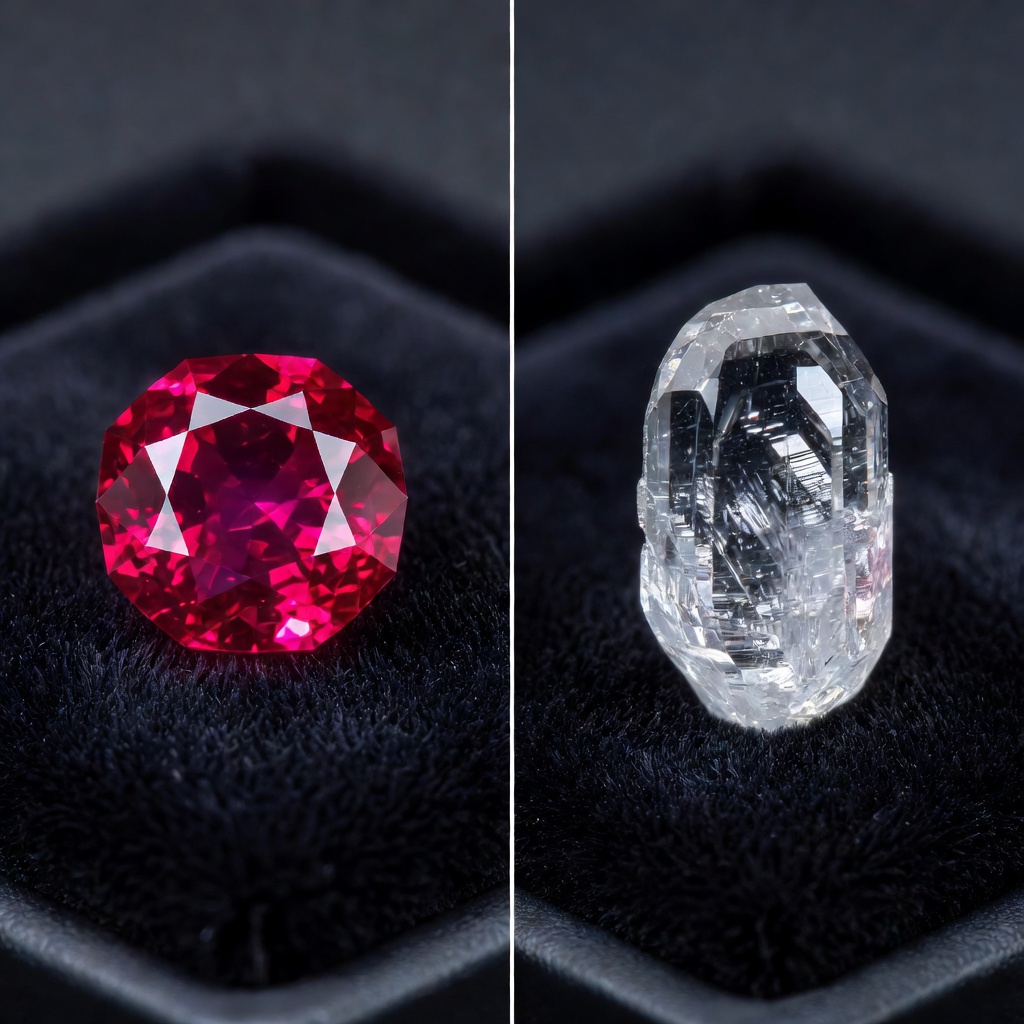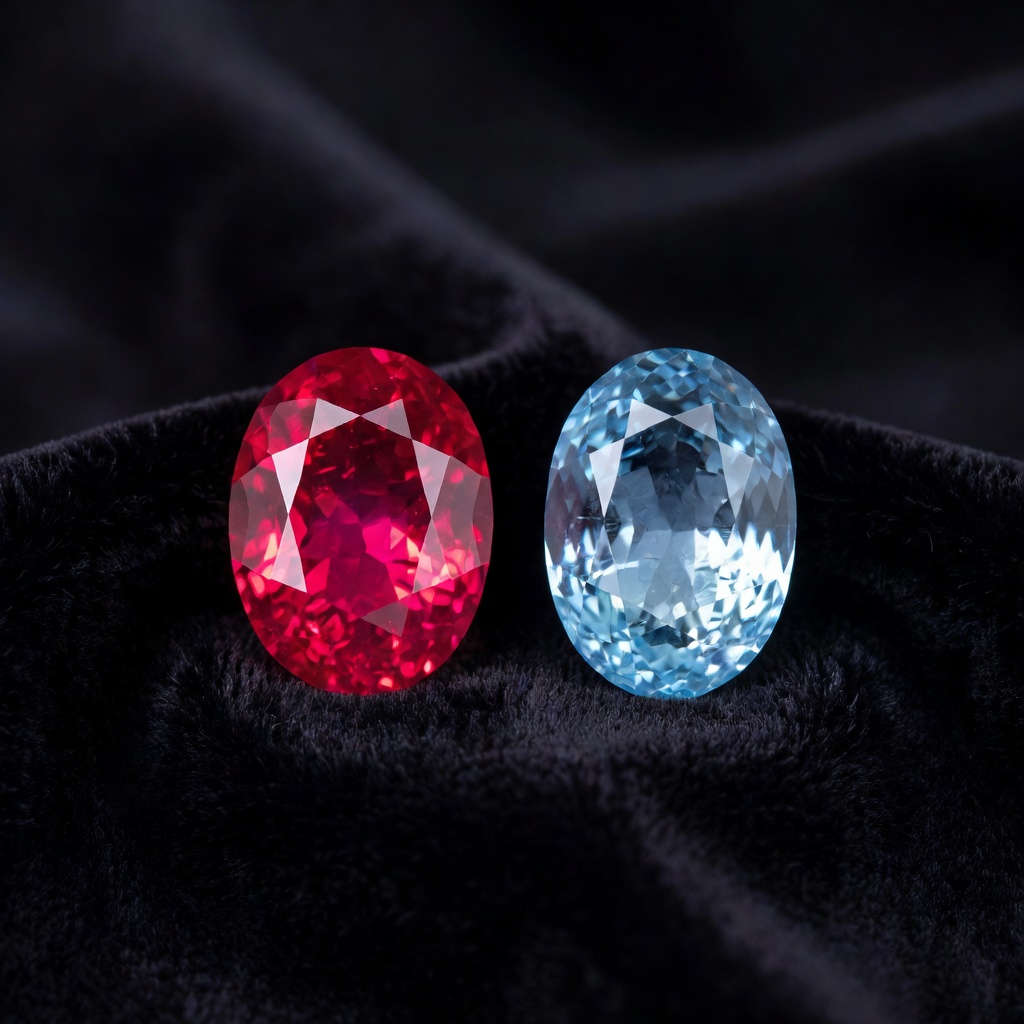
The Ultimate Showdown of Precious Stones
When collectors and jewelry enthusiasts discuss the pinnacle of gemstone desirability, two names consistently emerge at opposite ends of the accessibility spectrum: the ubiquitous diamond and the elusive taaffeite. This comprehensive Diamond vs Taaffeite analysis reveals why these stones represent fundamentally different approaches to luxury, rarity, and value preservation in the modern jewelry market. While diamonds have dominated engagement rings and investment portfolios for over a century through strategic marketing and consistent supply, taaffeite remains the hidden treasure known only to serious gemologists and ultra-high-end collectors.
Understanding the distinction between these precious materials requires examining multiple criteria including geological formation, physical durability, optical performance, and market liquidity. Unlike typical rare gemstones comparisons that pit similar stones against one another, contrasting diamond with taaffeite illuminates the vast chasm between commercial availability and mathematical scarcity. Whether you are considering a significant jewelry purchase, diversifying your investment portfolio, or simply expanding your gemological knowledge, this detailed examination will provide the actionable insights necessary to make an informed decision between these extraordinary minerals.
Origins and Discovery: From Billion-Year Formation to Laboratory Accident
The Ancient Birth of Diamonds
Diamonds form under extraordinary conditions approximately 100 miles beneath Earth's surface, where temperatures exceed 2,000 degrees Fahrenheit and pressures reach 725,000 pounds per square inch. These carbon crystals develop over one to three billion years within the earth's mantle before volcanic eruptions transport them upward through kimberlite pipes at rapid velocities. Modern diamond mining operations span the globe, with major production centers in Botswana, Russia, Canada, and Australia yielding approximately 150 million carats annually, making them geographically widespread despite their ancient origins.
Taaffeite's Accidental Discovery
In 1945, Austrian gemologist Richard Taaffe purchased a collection of cut stones from a Dublin jeweler, noticing that one particular mauve gem displayed subtle gemological differences from the spinel it resembled. Upon conducting chemical analysis, Taaffe discovered he had identified the only gemstone in history first recognized from a faceted specimen rather than rough crystal material. This precious stone rarity moment revolutionized gemology, establishing taaffeite as a distinct mineral species with the chemical formula BeMgAl₄O₈, distinguishing it from its close cousin spinel.
Current Geographic Sourcing
Contemporary diamond mining represents a massive industrial enterprise with operations on nearly every continent, utilizing advanced open-pit and underground extraction methods to meet global demand. Conversely, taaffeite sourcing remains restricted to alluvial deposits in Sri Lanka and limited occurrences in Tanzania, with gem-quality material appearing in quantities of less than one significant stone per year. This stark contrast in availability underscores why taaffeite price per carat varies dramatically based on size and color quality, while diamond pricing follows more predictable market patterns.
Physical Properties and Durability Analysis
Mohs Hardness and Wear Resistance
When evaluating gemstones for jewelry applications, hardness represents a critical factor determining longevity and maintenance requirements. Diamonds rank at the absolute peak of the taaffeite hardness mohs scale comparison, registering a perfect 10 as the hardest known natural substance, capable of scratching any other material including fellow diamonds. Taaffeite demonstrates respectable durability at 8 to 8.5 on the Mohs scale, exceeding most colored gemstones but falling significantly short of diamond's scratch resistance, making it vulnerable to abrasion from daily wear against harder materials.
Crystal Structure and Cleavage
The isometric crystal system of diamonds creates perfect octahedral cleavage planes, meaning these stones can split cleanly along specific directions despite their extreme hardness, requiring careful setting to avoid sharp impacts. Taaffeite crystallizes in the hexagonal system with no cleavage planes, instead displaying conchoidal fracture patterns similar to quartz, which actually provides better resistance to chipping during accidental impacts despite its lower overall hardness. These structural differences influence setting choices, with diamonds requiring protection against hard blows while taaffeite needs guarding against surface scratches and abrasions.
Specific Gravity and Density
Diamonds possess a specific gravity of 3.52, feeling relatively lightweight for their size compared to many colored gemstones. Taaffeite exhibits a higher specific gravity ranging from 3.60 to 3.61, giving cut stones a perceptibly heavier feel when handled. This density difference assists gemologists in preliminary identification, though definitive differentiation requires refractive index testing and spectroscopic analysis to confirm chemical composition.
Visual Characteristics: Brilliance, Fire, and Color Spectrum
Optical Performance Metrics
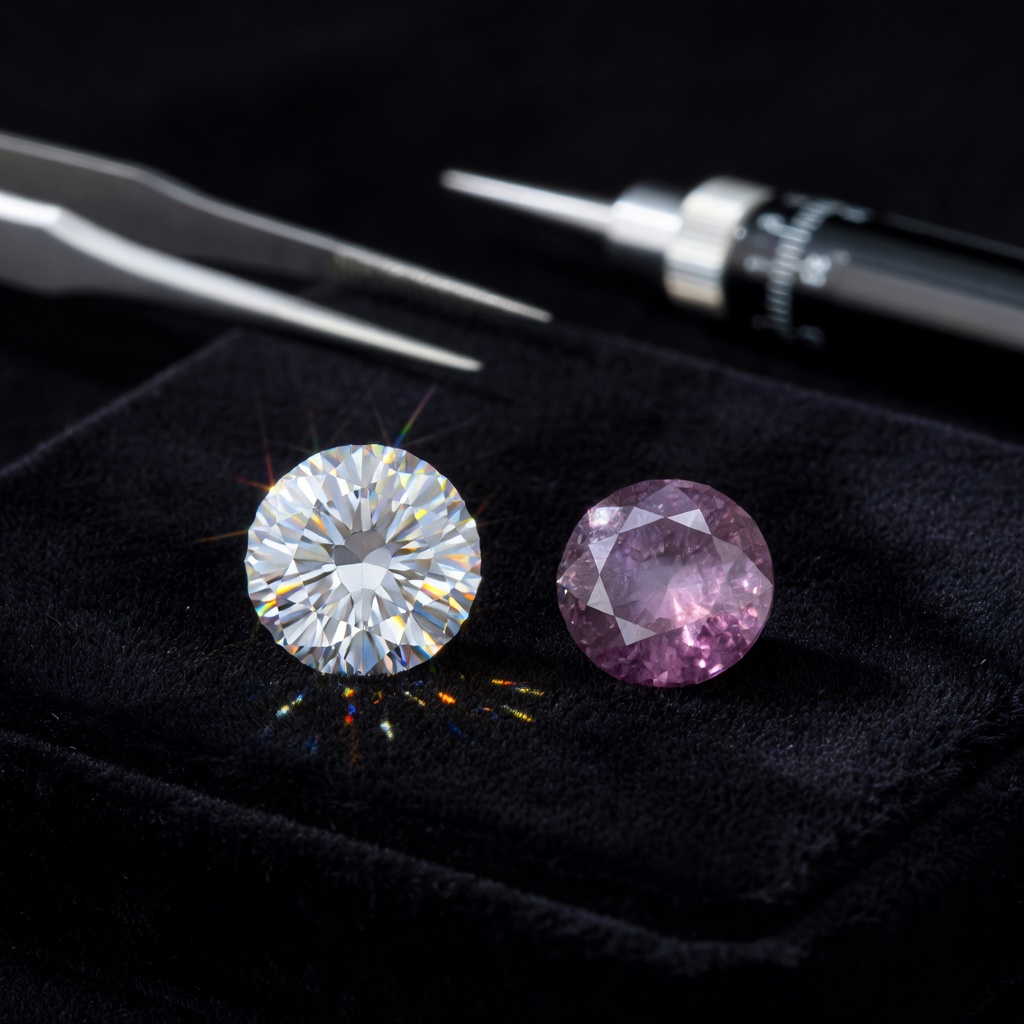
The refractive index measures how much light bends when entering a gemstone, directly influencing brilliance and sparkle. Diamonds boast an exceptional refractive index of 2.42 combined with high dispersion (0.044), creating the characteristic fire and scintillation that have made them the standard for engagement rings worldwide. Taaffeite exhibits a lower refractive index of approximately 1.72 with minimal dispersion (0.019), resulting in a more subdued, silky luster rather than explosive brilliance, lending the stone an elegant, understated appearance prized by sophisticated collectors.
Color Variations and Rarity
Diamonds occur across a broad spectrum from completely colorless (D grade) through yellow and brown tints, with fancy colored varieties including blue, pink, and green commanding premium prices due to their scarcity. Taaffeite naturally appears in delicate mauve, violet, and purple hues, with the rarest red and color-change varieties (appearing different colors under incandescent versus daylight) representing the most valuable specimens in existence. These color-change taaffeites, displaying purple-to-blue or mauve-to-gray transformations, rival alexandrite in their optical rarity while exceeding it in absolute scarcity.
Clarity and Inclusion Patterns
Most diamonds contain microscopic inclusions or birthmarks that gemologists use for identification, with flawless specimens representing less than one percent of production and commanding significant premiums. Taaffeite typically exhibits exceptional clarity with few visible inclusions, though stones may contain characteristic octahedral negative crystals or healing fractures that distinguish them from similar-looking spinel. When examining gemstone brilliance under magnification, experts note that taaffeite's inclusions differ markedly from diamond's typical pinpoint or feather patterns.
The Rarity Factor: Quantifying True Scarcity
Production Statistics and Availability
The global diamond industry produces approximately 150 million carats annually, with gem-quality stones representing roughly twenty percent of total output, creating a steady supply of millions of carats suitable for fine jewelry. In stark contrast, fewer than fifty taaffeite specimens were known to exist for decades following the stone's discovery, and even today, only a handful of faceted stones exceeding one carat enter the market each year. This precious stone rarity distinction represents one of the most extreme disparities in the gem world, making taaffeite approximately one million times scarcer than diamond on a carat-for-carat basis.
Marketing Myths Versus Mathematical Reality
While De Beers historically controlled diamond supply to maintain artificial scarcity perceptions, modern market dynamics have democratized diamond ownership, with stones available at virtually every price point from industrial quality to investment-grade collectors' items. Taaffeite suffers from no such marketing manipulation; its rarity is a mathematical certainty based on geological formation requirements that demand specific beryllium-rich environments rarely encountered in nature. Unlike diamonds, which occur in quantifiable deposits, taaffeite appears as isolated alluvial pebbles without primary host rock discoveries, suggesting formation conditions so specific that locating commercial deposits remains impossible.
Collector Demand and Museum Specimens
Major natural history museums including the Smithsonian Institution and London's Natural History Museum display taaffeite as among their rarest holdings, with some specimens valued at over $100,000 per carat for museum-quality examples. Diamond collections, while prestigious, rarely achieve such singular status unless featuring exceptional fancy colors or historical provenance. This rare gemstones comparison reveals that while diamonds represent accessible luxury, taaffeite embodies unobtainable exclusivity reserved for the world's most discerning collectors.
Market Value and Investment Potential
Price Per Carat Analysis
Commercial quality diamonds typically range from $3,000 to $30,000 per carat depending on cut, color, clarity, and carat weight, with consistent pricing available through established retail channels. Taaffeite price per carat varies dramatically based on color and size, with smaller mauve stones starting around $1,500 per carat while exceptional red or color-change specimens exceeding five carats can command $35,000 or more per carat at auction. This pricing disparity reflects not only rarity but also market liquidity differences, with diamonds offering immediate cash conversion while taaffeite sales require specialized auction houses or private treaty transactions.
Liquidity and Resale Considerations
Diamonds maintain established resale markets through dealers, auction houses, and online platforms, though retail purchasers typically recover only twenty to sixty percent of original purchase prices due to markups. Taaffeite represents an illiquid asset class with no standardized pricing, requiring months or years to locate appropriate buyers willing to pay premiums for extreme rarity. For gemstone investment value portfolios, diamonds offer stability and wealth preservation, while taaffeite functions as a speculative alternative investment with potential for dramatic appreciation but limited exit strategies.
Long-term Appreciation Trends
Over the past three decades, high-quality diamonds have appreciated roughly three to five percent annually, tracking inflation while providing tangible asset security during economic volatility. Taaffeite has demonstrated sporadic but significant value increases, with documented cases of stones appreciating ten-fold over twenty years as awareness grows among ultra-high-net-worth collectors. However, this appreciation remains dependent on continued collector interest and the unlikely discovery of new deposits, making taaffeite suitable only for diversified portfolios that can absorb total loss scenarios.
| Characteristic | Diamond | Taaffeite |
|---|---|---|
| Mohs Hardness | 10 (Hardest natural substance) | 8-8.5 (Moderate durability) |
| Annual Production | ~150 million carats | <10 gem-quality stones |
| Price Range (per carat) | $3,000 - $30,000+ | $1,500 - $35,000+ |
| Color Range | Colorless to Fancy (Blue, Pink, Yellow) | Mauve, Violet, Red, Color-Change |
| Refractive Index | 2.42 (High brilliance) | 1.72 (Subdued luster) |
| Primary Sources | Botswana, Russia, Canada, Australia | Sri Lanka, Tanzania |
| Best Jewelry Use | Daily wear (Rings, Bracelets) | Occasional wear (Pendants, Earrings) |
| Investment Liquidity | High (Established resale markets) | Low (Auction/Private sale only) |
| Synthetic Availability | Common (Lab-grown diamonds) | Essentially non-existent |
| Certification | GIA, IGI, AGS standard | Requires specialized labs (SSEF, GIA) |
Jewelry Applications and Practical Wearability
Engagement Ring Suitability
When selecting center stones for engagement rings intended for daily wear over decades, diamond alternative stones must meet stringent durability requirements that only a few minerals satisfy. Diamonds remain the supreme choice for active lifestyles, resisting scratches from household dust (which contains quartz at 7 on the Mohs scale), impacts from daily activities, and chemical exposure from cleaning products. Taaffeite, while suitable for careful wearers, risks surface abrasion and facet junction rounding over years of continuous use, making it better suited for protective settings or occasional-wear pieces rather than solitaire engagement rings subjected to daily rigors.
Setting Requirements and Protective Mounting
Diamonds accommodate virtually any setting style from delicate prongs to tension settings, though jewelers must account for cleavage planes when designing mountings that might receive sharp blows. Taaffeite requires protective settings such as bezels or half-bezels that shield the girdle and crown from direct impact and abrasion, limiting design flexibility but ensuring longevity. Jewelry designers working with taaffeite typically create custom pieces that position the stone in pendants, earrings, or brooches where contact with hard surfaces remains minimal, preserving the stone's polish and facet integrity.
Design Flexibility and Availability Constraints
The abundant supply of diamonds in virtually every cut style, from classic round brilliants to fancy princess, cushion, and emerald cuts, allows unlimited design creativity and immediate availability. Taaffeite's extreme scarcity means collectors must design jewelry around available stones rather than specifying desired shapes, with most specimens cut as ovals, cushions, or rounds to maximize weight retention from rough crystals. This constraint transforms taaffeite jewelry into bespoke art pieces where the gemstone dictates the design, contrasting sharply with diamond jewelry where design concepts drive stone selection.
Authentication and Identification Challenges
Distinguishing Taaffeite from Lookalikes
Due to its visual similarity to mauve spinel and purple sapphire, taaffeite requires sophisticated gemological testing for positive identification beyond visual examination. Professional gemologists utilize refractometers to measure the refractive index (1.72 for taaffeite versus 1.71-1.73 for spinel), spectroscopes to detect chromium absorption lines unique to taaffeite, and specific gravity testing to differentiate these closely related minerals. Unlike diamonds, which display distinctive brilliance and often obvious inclusions, taaffeite demands laboratory certification from recognized institutions such as GIA or SSEF to confirm authenticity and prevent costly misidentification.
Diamond Certification Standards
The diamond industry operates under standardized grading systems administered by laboratories including the Gemological Institute of America (GIA), International Gemological Institute (IGI), and American Gem Society (AGS), providing consistent evaluations of cut, color, clarity, and carat weight. These certifications include laser inscriptions and detailed plotting diagrams that facilitate resale and insurance valuation worldwide. Taaffeite certification remains less standardized, with only major laboratories capable of issuing reliable reports that document color variety, geographic origin, and treatments, making provenance documentation crucial for maintaining value.
Synthetic and Simulant Considerations
Lab-grown diamonds have flooded the market, offering chemically identical stones at forty to sixty percent price reductions, requiring advanced spectroscopic testing to distinguish from natural specimens. Conversely, synthetic taaffeite production remains commercially unviable due to the mineral's complex chemistry and extreme rarity, meaning virtually all taaffeite on the market is natural and untreated. However, simulants such as synthetic spinel or colored cubic zirconia sometimes appear misrepresented as taaffeite, necessitating professional verification before significant purchases.
Care, Maintenance, and Longevity
Cleaning Protocols and Chemical Resistance
Diamonds tolerate aggressive cleaning methods including ultrasonic cleaners, steam cleaners, and ammonia-based solutions, allowing owners to maintain sparkle with minimal effort at home or through professional jewelers. Taaffeite requires gentle care using warm soapy water and soft brushes only, as ultrasonic vibrations may loosen stones in settings while harsh chemicals can potentially damage the surface polish over extended exposure. When maintaining gemstone jewelry collections, store taaffeite pieces separately from diamonds and sapphires to prevent harder stones from scratching the taaffeite's surface during storage.
Professional Maintenance Schedules
Diamond jewelry benefits from annual professional inspections to check for loose prongs and accumulated dirt in settings, with polishing services available to restore scratched mountings while the stone remains unaffected. Taaffeite pieces require less frequent cleaning but more careful inspection for surface abrasions, with repolishing services available through specialized lapidaries familiar with the stone's unique optical properties. Insurance valuations for taaffeite should be updated every two to three years due to market volatility, whereas diamond appraisals follow more predictable five-year schedules.
Storage and Transportation Security
Store taaffeite jewelry in individual soft cloth pouches or lined compartments away from diamonds, moissanite, and corundum (ruby/sapphire) to prevent contact scratching. When traveling, carry taaffeite pieces in hand luggage with detailed documentation and photographs for customs declarations and insurance purposes, as their extreme value and rarity make them targets for theft. Unlike diamonds, which can be replaced through commercial channels, losing a taaffeite stone represents an irreplaceable loss of a unique geological specimen, warranting enhanced security measures.
Final Verdict: Which Gemstone Deserves Your Investment?
Lifestyle Matching and Wear Patterns
Selecting between these stones ultimately depends on intended use and personal lifestyle factors rather than单纯 monetary considerations. Active individuals seeking daily-wear jewelry for engagements or professional environments should choose diamonds for their unmatched durability and maintenance convenience. Collectors and connoisseurs who view jewelry as portable art and investment vehicles may prefer taaffeite for its exclusivity, accepting the limitations on wear frequency as a reasonable trade-off for owning one of earth's rarest materials.
Portfolio Diversification Strategies
From a gemstone investment value perspective, diamonds function as blue-chip assets providing portfolio stability, liquidity, and inflation hedging similar to gold or sovereign bonds. Taaffeite represents venture capital within mineral portfolios, offering asymmetric return potential where values might multiply dramatically if demand increases or new deposits remain undiscovered, balanced against the risk of total illiquidity during market downturns. Sophisticated collectors often maintain core diamond holdings while allocating five to ten percent of alternative investments to ultra-rare species like taaffeite.
Emotional Significance Versus Mathematical Scarcity
Diamonds carry profound cultural significance symbolizing eternal love, achievement, and status, backed by generations of marketing and social tradition that ensures continued demand regardless of geological abundance. Taaffeite appeals to the intellect and collector's instinct, representing mathematical certainty of rarity in a world of manufactured scarcity, appealing to those who value geological uniqueness over social convention. Whether choosing the accessible brilliance of diamond or the whispered exclusivity of taaffeite, both stones offer legitimate pathways to owning pieces of earth's geological history, distinguished primarily by whether you seek to display your stone daily or preserve it as a legacy asset for future generations.
Frequently Asked Questions
Is Taaffeite really rarer than Diamond?
Yes, Taaffeite is significantly rarer than Diamond. While millions of carats of diamonds are mined annually, gem-quality Taaffeite is so scarce that fewer than 50 specimens were known to exist for decades after its discovery. Even today, only a handful of faceted Taaffeite stones enter the market each year, making it one of the rarest gemstones on earth.
Can Taaffeite be used as an alternative to Diamond in engagement rings?
While Taaffeite is beautiful, it ranks 8-8.5 on the Mohs hardness scale compared to Diamond's perfect 10. This makes Taaffeite susceptible to scratching from daily wear. Additionally, its extreme rarity and high value make it impractical for engagement rings. Diamonds remain superior for daily-wear jewelry due to their unmatched durability and availability.
Why is Taaffeite sometimes less expensive than Diamond despite being rarer?
Price follows supply and demand economics. Diamonds benefit from massive marketing campaigns, established retail infrastructure, and consumer recognition. Taaffeite suffers from obscurity—most consumers don't know it exists, limiting demand. However, museum-quality Taaffeite specimens, especially red or color-change varieties, often exceed Diamond prices per carat at auction.
How can I tell the difference between Diamond and Taaffeite?
Professional gemological testing is required. Diamonds have a higher refractive index (2.42) creating more brilliance, while Taaffeite (1.72) shows different optical properties. Taaffeite typically appears in mauve, violet, or purple hues, whereas most Diamonds are colorless. A gemologist will use refractometers, spectroscopes, and specific gravity testing for definitive identification.
Which gemstone holds its value better over time, Diamond or Taaffeite?
Diamonds offer liquidity and stable value retention due to established markets, though retail markups often exceed resale values. Taaffeite represents a speculative investment—extremely difficult to sell quickly but potentially appreciating dramatically due to absolute scarcity. For wealth preservation, Diamonds are safer; for appreciation potential, Taaffeite offers higher risk/reward.
What colors do Taaffeite and Diamond come in?
Diamonds range from colorless (D grade) through yellow/brown tints, with fancy colors including blue, pink, yellow, and green. Taaffeite naturally occurs in mauve, violet, purple, red, and color-change varieties (appearing different colors under various lighting). Red Taaffeite is the rarest and most valuable variety, commanding higher prices than most colored Diamonds.
Where can I buy authentic Taaffeite gemstones?
Authentic Taaffeite is available only through specialized high-end auction houses (Christie's, Sotheby's), select estate jewelers, or dedicated rare gemstone dealers. Unlike Diamonds, Taaffeite is never found in mall jewelry stores. Always require certification from recognized laboratories like GIA or SSEF, and expect to pay premium prices due to extreme scarcity.
Is Taaffeite harder than Sapphire or Ruby?
No, Taaffeite ranks 8-8.5 on the Mohs scale, while Sapphire and Ruby (corundum) rank 9. This means Taaffeite is softer than corundum but harder than most other gemstones like Topaz (8) or Quartz (7). However, Taaffeite is significantly harder than Emerald (7.5-8) and suitable for occasional wear jewelry with protective settings.