Why Compare These Two Gemstones?
When selecting the perfect center stone for an engagement ring or statement jewelry piece, the comparison between Diamond vs Swiss Blue Topaz represents one of the most dramatic contrasts in the gem world. While diamonds have dominated the bridal market for nearly a century, Swiss Blue Topaz has emerged as a compelling contender for budget-conscious buyers seeking bold color and impressive size. Understanding the fundamental differences between these stones helps shoppers navigate everything from durability concerns to long-term value retention.
This comparison primarily benefits three distinct groups: couples seeking engagement rings on a strict budget, fashion-forward buyers wanting vibrant blue statement pieces, and collectors exploring diamond alternatives without sacrificing visual impact. The decision-making process typically revolves around four critical factors: daily wear durability, initial investment cost, symbolic meaning, and aesthetic preferences for either colorless brilliance or vivid blue saturation.
Origin and Formation: Natural vs. Enhanced Beauty
The Ancient Origins of Natural Diamonds
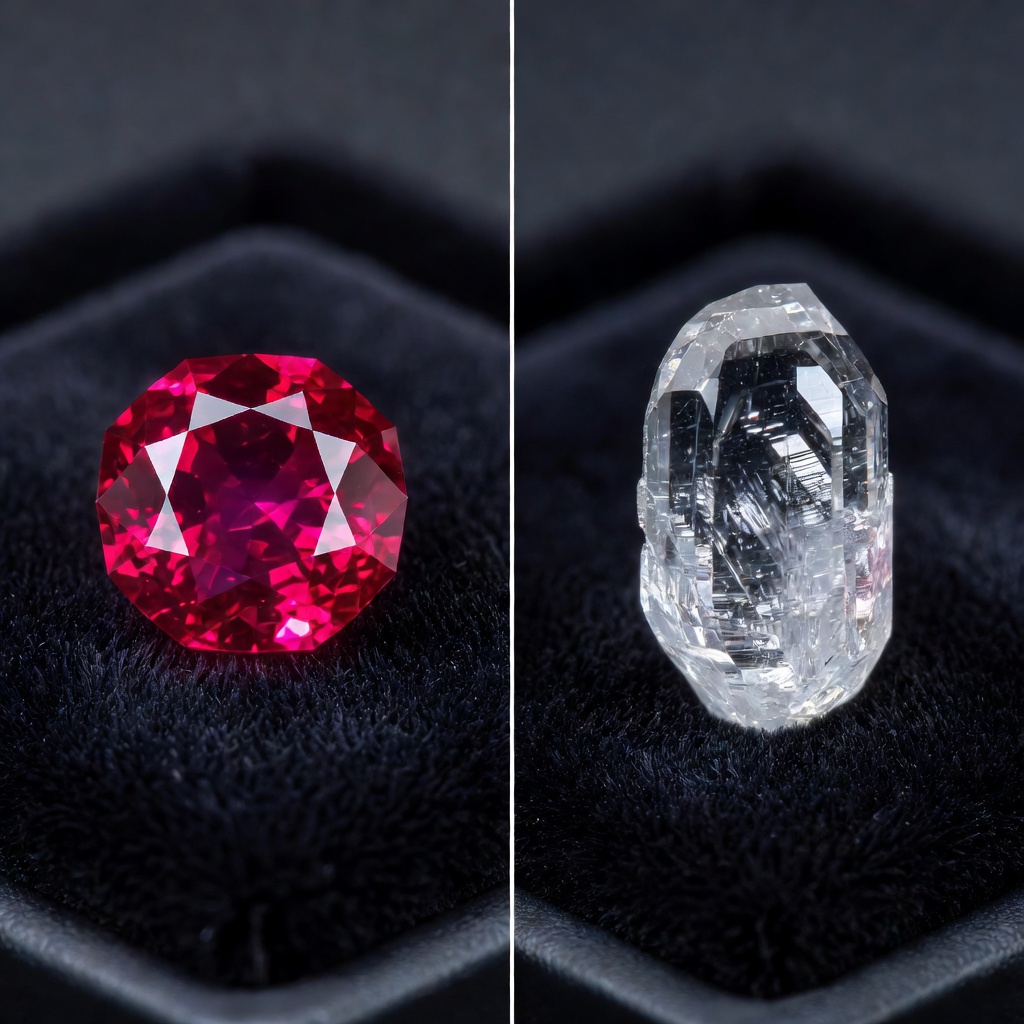
Diamonds form approximately 100 miles beneath Earth's surface in the mantle's high-pressure, high-temperature environment over one to three billion years. Carbon atoms crystallize into the isometric structure we treasure, eventually reaching the surface through rare volcanic eruptions called kimberlite pipes. Major mining operations in Botswana, Russia, Canada, and Australia extract these prehistoric gems, with each location producing diamonds featuring distinct trace element signatures that gemologists can identify.
The Transformation of Swiss Blue Topaz
Unlike diamonds, Swiss Blue Topaz begins as colorless or pale natural topaz found in pegmatite deposits across Brazil, Nigeria, and Sri Lanka. To achieve its characteristic electric blue hue, rough topaz undergoes a sophisticated treatment process involving electron bombardment or neutron irradiation followed by controlled heat treatment. This permanent color enhancement transforms otherwise inexpensive white topaz into the vibrant gemstone prized in contemporary jewelry, though the final product is considered a treated rather than naturally colored stone.
Understanding Treatment Disclosure
Ethical jewelers always disclose the treated nature of Swiss Blue Topaz, as Federal Trade Commission guidelines require transparency about enhancement processes. While the starting material is genuinely mined from the earth, the vivid color results from human intervention rather than geological processes. This distinction matters for collectors prioritizing natural rarity, though treated topaz offers an affordable entry point into fine jewelry that natural blue gemstones like sapphire or aquamarine cannot match at comparable sizes.
Visual Characteristics: Color, Brilliance, and Fire
The Diamond's Optical Performance
Diamonds exhibit exceptional light performance through a combination of brilliance (white light reflection), fire (dispersion into spectral colors), and scintillation (sparkle from movement). Gemologists grade diamonds on the D-to-Z color scale, with truly colorless stones commanding premium prices. When expertly cut, a diamond returns approximately 80% of incident light to the viewer's eye, creating the unmistakable flash that has defined luxury jewelry for generations. The round brilliant cut maximizes these optical properties through precisely angled 57 or 58 facets designed to optimize light return.
The Distinctive Appeal of Swiss Blue Topaz
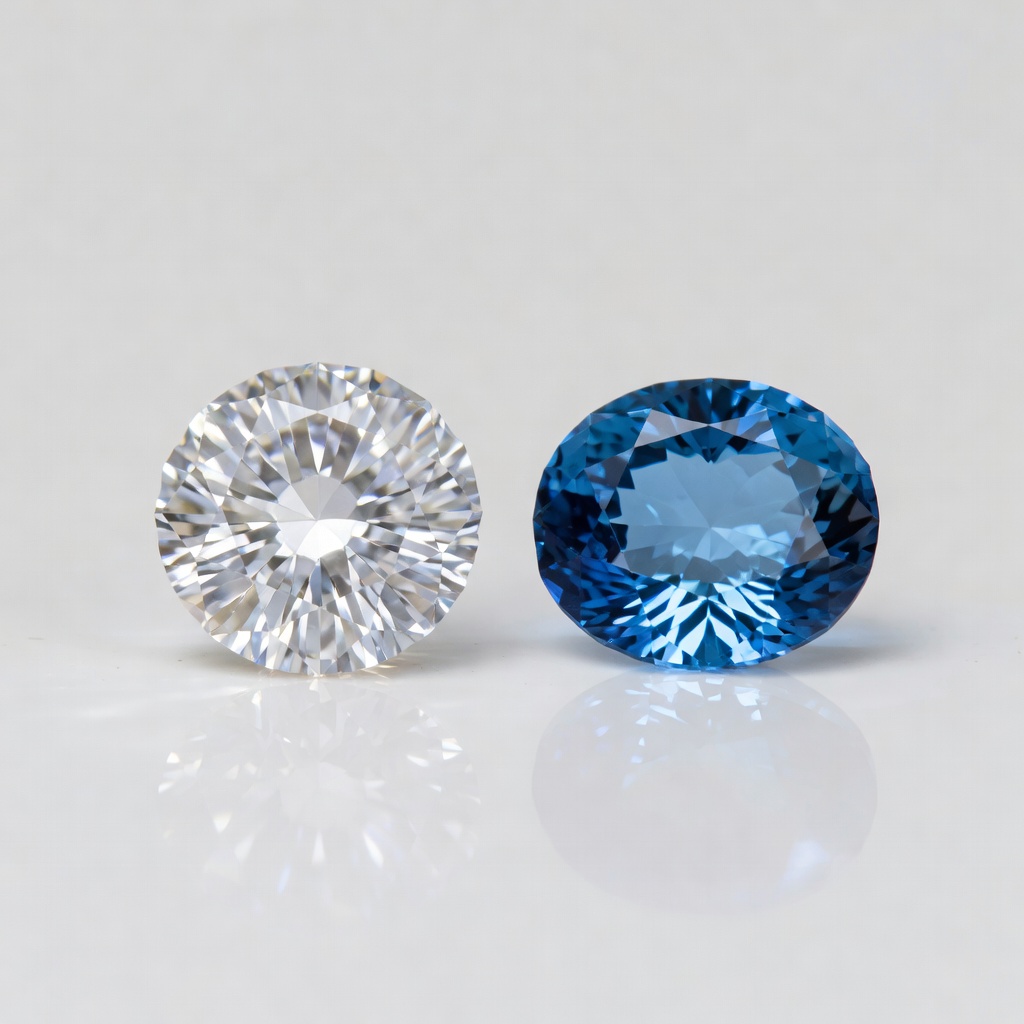
Swiss Blue Topaz offers a completely different visual experience characterized by consistent, saturated electric blue color ranging from sky blue to deep azure. Unlike diamonds, which derive value from absence of color, Swiss Blue Topaz commands attention through its uniform hue. The stone typically exhibits high clarity with few visible inclusions, and while it lacks diamond's fire and dispersion, it compensates with exceptional transparency and a glass-like luster. Step cuts such as emerald or asscher shapes particularly suit topaz, as these cuts emphasize clarity and color over brilliance while minimizing the windowing effect common in lighter gems.
Durability and Hardness: Daily Wear Considerations
Understanding the Mohs Hardness Scale
The Mohs hardness scale provides essential guidance for predicting how gemstones withstand daily wear, with diamond occupying the apex at 10/10 as the hardest known natural material. This extreme hardness means diamonds resist scratching from any other substance, making them ideal for engagement rings worn continuously for decades. Conversely, Swiss Blue Topaz ranks 8/10 on the Mohs hardness scale, indicating substantial durability for jewelry but presenting vulnerabilities that diamond owners never consider.
Toughness and Cleavage Concerns
Hardness measures scratch resistance, but toughness indicates resistance to breaking or chipping. Diamonds possess perfect cleavage in four directions, meaning a sharp blow can split them along specific crystallographic planes, though this rarely occurs in well-protected settings. Swiss Blue Blue Topaz exhibits basal cleavage, making it particularly susceptible to chipping if struck at the wrong angle. For active individuals working with their hands or participating in sports, diamond's superior combination of hardness and toughness provides peace of mind that Swiss Blue Topaz cannot match, though topaz remains suitable for earrings and pendants that face less mechanical stress.
Protective Setting Strategies
When selecting Swiss Blue Topaz for rings, choose bezel settings or protective halo designs that cushion the girdle and corners from impacts. V-prongs work well for pointed cuts like marquise or pear shapes, while cathedral settings raise the stone above the finger to reduce contact with hard surfaces. For diamonds, four-prong solitaire settings remain popular for maximizing light exposure, though six-prong configurations offer enhanced security for daily wear. Platinum and palladium settings provide superior protection compared to gold for both stones due to their density and strength.
Price Comparison: Budget Reality Check
Diamond Pricing Structures
Quality diamonds command prices ranging from $3,000 to $15,000 or more per carat depending on the four Cs: cut, color, clarity, and carat weight. A one-carat round brilliant diamond with G color and VS2 clarity typically retails between $5,000 and $7,000, while two-carat stones of similar quality easily exceed $15,000. Fancy shapes like ovals or cushions offer slight savings, but the financial commitment remains substantial regardless of cut choice.
The Affordability of Swiss Blue Topaz
Swiss Blue Topaz price points revolutionize the economics of fine jewelry, with commercial quality stones ranging from $5 to $50 per carat and premium specimens rarely exceeding $100 per carat. A stunning five-carat Swiss Blue Topaz center stone might cost $200-$400 total, while a comparable sized diamond would command $50,000 or more. This dramatic differential allows buyers to allocate budgets toward intricate custom settings, complementary accent stones, or multiple jewelry pieces rather than investing solely in the center gem.
Total Project Cost Analysis
When calculating total engagement ring costs, a Swiss Blue Topaz ring in 14k white gold might total $800-$1,500 including the setting, while an equivalent diamond ring starts at $4,000 and quickly escalates. For fashion jewelry, Swiss Blue Topaz pendants and earrings offer accessible luxury, allowing consumers to own substantial gemstone jewelry without financing plans or significant savings. However, buyers should factor in potential replacement costs, as Swiss Blue Topaz may require replacement after years of hard wear, whereas diamonds typically last generations.
Symbolism and Meaning: What Each Stone Represents
The Cultural Weight of Diamonds
Diamonds carry centuries of symbolic baggage as emblems of eternal love, invincibility, and social status. De Beers' 20th-century marketing cemented the association between diamond rings and marriage proposals, creating cultural expectations that persist globally. Beyond romance, diamonds represent achievement and permanence, often marking significant milestones like anniversaries or career successes. This rich symbolism adds intangible value to diamond purchases, particularly for engagement ring comparison scenarios where tradition heavily influences decision-making.
The Metaphysical Properties of Blue Topaz
Swiss Blue Topaz resonates with meanings of clear communication, emotional balance, and creative expression. Crystal practitioners associate blue topaz with the throat chakra, believing it facilitates honest dialogue and truth-telling. Unlike diamonds' association with romantic commitment, blue topaz carries softer, more introspective energy connected to self-realization and artistic inspiration. Modern couples increasingly select blue topaz to symbolize unique relationships that prioritize mutual understanding and emotional clarity over traditional status symbols.
Evolving Interpretations in Contemporary Jewelry
Millennial and Gen Z buyers increasingly reject the notion that love's value correlates with stone price, viewing Swiss Blue Topaz as a conscious alternative that prioritizes personal meaning over market-driven expectations. For second marriages or non-traditional partnerships, blue topaz offers a fresh symbolic start unburdened by previous cultural baggage. Fashion buyers appreciate the stone's ability to coordinate with both professional wardrobes and casual attire, making it a versatile expression of personal style rather than a static status marker.
Best Jewelry Applications: Where Each Stone Shines
Engagement and Bridal Applications
Diamonds remain the undisputed champions for engagement rings and bridal jewelry intended for daily, lifelong wear. Their unmatched durability supports intricate designs featuring exposed prongs and delicate galleries without compromising structural integrity. For heirloom pieces intended to pass through generations, diamonds provide the longevity necessary to become family treasures. Three-stone rings, halo settings, and solitaires all showcase diamond's optical properties while withstanding decades of continuous wear.
Fashion and Statement Jewelry Opportunities
Swiss Blue Topaz excels in cocktail rings, pendants, and earrings where the stone faces less mechanical stress than finger rings. Large carat weights that would cost fortunes in diamonds become accessible statement pieces in topaz, perfect for special occasions and rotating jewelry collections. The vivid blue pairs beautifully with white gold and platinum for cool, contemporary aesthetics, while yellow gold settings create striking contrast reminiscent of vintage Mediterranean jewelry. For right-hand rings or promise jewelry, topaz offers substantial visual impact without the financial pressure of diamond alternatives.
Metal Pairing Recommendations
White metals including platinum, palladium, and white gold emphasize the cool tones in Swiss Blue Topaz while providing durable settings that compensate for the gem's relative softness. Diamonds adapt to any metal choice, though white metals enhance colorless stones while yellow or rose gold can mask slight color tints in lower-grade diamonds. For mixed metal designs, Swiss Blue Topaz creates cohesive looks when paired with sterling silver or white gold, whereas diamonds bridge different metal colors effortlessly due to their neutral coloration.
Care and Maintenance Requirements
Diamond Maintenance Protocols
Diamonds tolerate aggressive cleaning methods including ultrasonic cleaners, steam cleaning, and ammonia-based solutions without damage. However, oils and lotions can temporarily dull diamond's brilliance by creating surface films, requiring only warm soapy water and a soft brush for restoration. Professional inspections every six months ensure prongs remain tight and the stone hasn't loosened through daily impacts. Despite their hardness, diamonds can scratch other jewelry, necessitating separate storage in fabric-lined compartments or individual pouches.
Swiss Blue Topaz Care Guidelines
Swiss Blue Topaz demands gentler treatment due to its Mohs hardness of 8 and sensitivity to thermal shock. Avoid ultrasonic cleaners and steamers, as vibrations and heat can exacerbate existing fractures or weaken treated stones. Clean instead using lukewarm water with mild dish soap and a soft cloth or baby toothbrush. Remove topaz rings before household cleaning, swimming in chlorinated pools, or applying beauty products, as harsh chemicals can damage the stone's surface or setting. Store topaz jewelry separately from harder gems like sapphires, rubies, or diamonds to prevent surface scratches.
Long-Term Preservation Strategies
For both stones, professional polishing every few years removes microscopic scratches that accumulate on metal settings and gemstone surfaces. Consider removing any gemstone ring during high-impact activities, though this precaution proves especially critical for Swiss Blue Topaz. When traveling, carry jewelry in rigid cases rather than soft pouches to prevent compression damage. Insurance appraisals should be updated every two to three years for diamonds, while Swiss Blue Topaz pieces require less frequent valuation updates due to their stable, lower market values.
Investment Value and Resale Market
Diamond Value Retention Realities
While diamonds retain value better than most gemstones, buyers should understand that retail diamonds typically depreciate 30-50% immediately upon purchase due to retail markups. However, high-quality diamonds above one carat with excellent cut grades and D-F color ratings maintain wholesale value relatively well, particularly during economic inflation periods. The resale market favors certified stones from recognized laboratories like GIA or AGS, with fancy colored diamonds (excluding treated stones) appreciating significantly over decades. For true investment-grade stones, expect to pay premium prices for flawless, colorless diamonds exceeding two carats.
The Swiss Blue Topaz Market Position
Swiss Blue Topaz possesses minimal resale value due to abundant supply and the treatment processes that create its desirable color. Unlike natural blue sapphires or untreated blue diamonds, treated topaz remains readily available in commercial quantities, preventing scarcity-driven price appreciation. However, when calculating blue gemstone value from a "cost per wear" perspective, an affordable Swiss Blue Topaz ring worn frequently for five years may deliver better practical value than an expensive diamond worn rarely due to insurance concerns or fear of loss.
Market Demand and Future Projections
The diamond market faces evolving demand patterns as lab-grown alternatives disrupt traditional pricing, while Swiss Blue Topaz maintains steady popularity in fashion jewelry without significant price volatility. Neither stone represents a liquid financial investment comparable to gold or securities, though diamonds offer better collateral value for loans or emergency sales. Collectors seeking appreciation potential should consider untreated natural topaz in rare colors like imperial pink or natural blue, though these command significantly higher prices than treated Swiss Blue varieties.
Final Verdict: Making Your Decision
The choice between Diamond vs Swiss Blue Topaz ultimately reflects personal priorities regarding budget, lifestyle, and symbolic meaning. Budget-conscious couples seeking maximum visual impact for minimal investment will find Swiss Blue Topaz delivers extraordinary size and color at prices accessible to most buyers. Traditionalists prioritizing heirloom quality and daily durability should select diamonds despite the significant cost premium, particularly for engagement rings worn continuously throughout active lifestyles.
Consider your daily activities honestly before deciding: office professionals wearing rings primarily for social occasions can successfully wear Swiss Blue Topaz with proper care, while nurses, construction workers, or athletes need diamond's superior resilience. For those seeking middle ground, consider Swiss Blue Topaz for earrings or pendants while choosing diamond for rings, or explore compromise options like white sapphire or moissanite that bridge the durability gap between topaz and diamond.
Diamond vs Swiss Blue Topaz Comparison Table
| Characteristic | Diamond | Swiss Blue Topaz |
|---|---|---|
| Mohs Hardness | 10/10 (Hardest natural substance) | 8/10 (Durable but scratchable) |
| Price per Carat | $3,000 - $15,000+ | $5 - $50 |
| Color Range | Colorless to near-colorless (D-Z scale) | Vibrant electric blue (treated) |
| Brilliance/Fire | Exceptional dispersion and scintillation | High transparency, minimal fire |
| Origin | Natural formation over billions of years | Natural topaz with irradiation treatment |
| Durability | Excellent for daily wear | Good with protective settings required |
| Resale Value | Retains 50-70% of wholesale value | Minimal to no resale market |
| Best Use | Engagement rings, heirloom pieces | Fashion jewelry, pendants, earrings |
| Cleaning Method | Ultrasonic, steam, or chemical safe | Gentle soap and water only |
| Symbolism | Eternal love, luxury, commitment | Communication, clarity, healing |
Frequently Asked Questions
Is Swiss Blue Topaz a good alternative to diamond for engagement rings?
Swiss Blue Topaz works for engagement rings if budget is priority, but diamonds are superior for daily durability. Topaz at 8 Mohs can scratch over time, while diamonds at 10 Mohs resist virtually all wear. Consider topaz for occasional wear rings or if the wearer is very careful.
How much cheaper is Swiss Blue Topaz compared to diamond?
Swiss Blue Topaz costs approximately $5-$50 per carat, while quality diamonds range from $3,000-$15,000+ per carat. This means topaz is 99% cheaper, allowing you to get a much larger stone for under $500 versus $10,000+ for a comparable diamond size.
Can Swiss Blue Topaz scratch easily compared to diamond?
Yes, Swiss Blue Topaz can scratch more easily. Topaz ranks 8 on the Mohs scale, meaning it can be scratched by harder materials like sapphires or diamonds. Everyday dust (quartz at 7 Mohs) won't scratch it, but contact with other jewelry can. Diamonds resist scratching from all materials except other diamonds.
Does Swiss Blue Topaz look like a blue diamond?
No, they look distinctly different. Swiss Blue Topaz has a consistent, vibrant electric blue color. Blue diamonds are extremely rare and have a much lighter, often grayish-blue hue with exceptional fire. The intense blue of treated topaz is more saturated than natural blue diamonds and lacks diamond's unique light dispersion.
Which gemstone holds its value better: diamond or Swiss Blue Topaz?
Diamonds hold value significantly better. While both lose value after retail purchase, diamonds retain 50-70% of wholesale value. Swiss Blue Topaz has virtually no resale value due to its abundance and treatment process. Buy diamonds for investment; buy topaz for beauty and budget.
Is Swiss Blue Topaz natural or synthetic?
Swiss Blue Topaz is made from natural topaz that undergoes treatment. The starting material is genuine topaz from the earth, but the vibrant blue color is created through irradiation and heat treatment. The treatment is stable and permanent, but the final color is not naturally occurring.
Can you tell diamond and Swiss Blue Topaz apart with the naked eye?
Yes, easily. The color is the biggest giveaway - Swiss Blue Topaz is distinctly blue while diamonds are colorless or near-colorless. Additionally, diamonds show exceptional brilliance and fire (rainbow flashes) compared to topaz's more subtle white light reflection. A jeweler's loupe also reveals different faceting patterns and inclusions.
Which is better for daily wear: diamond or Swiss Blue Topaz?
Diamonds are vastly superior for daily wear due to their unmatched hardness (10/10 Mohs) and toughness. Swiss Blue Topaz requires more careful handling - remove before strenuous activities, avoid impacts, and store separately from harder gems. For rings worn daily, especially engagement rings, diamonds are the practical choice.